

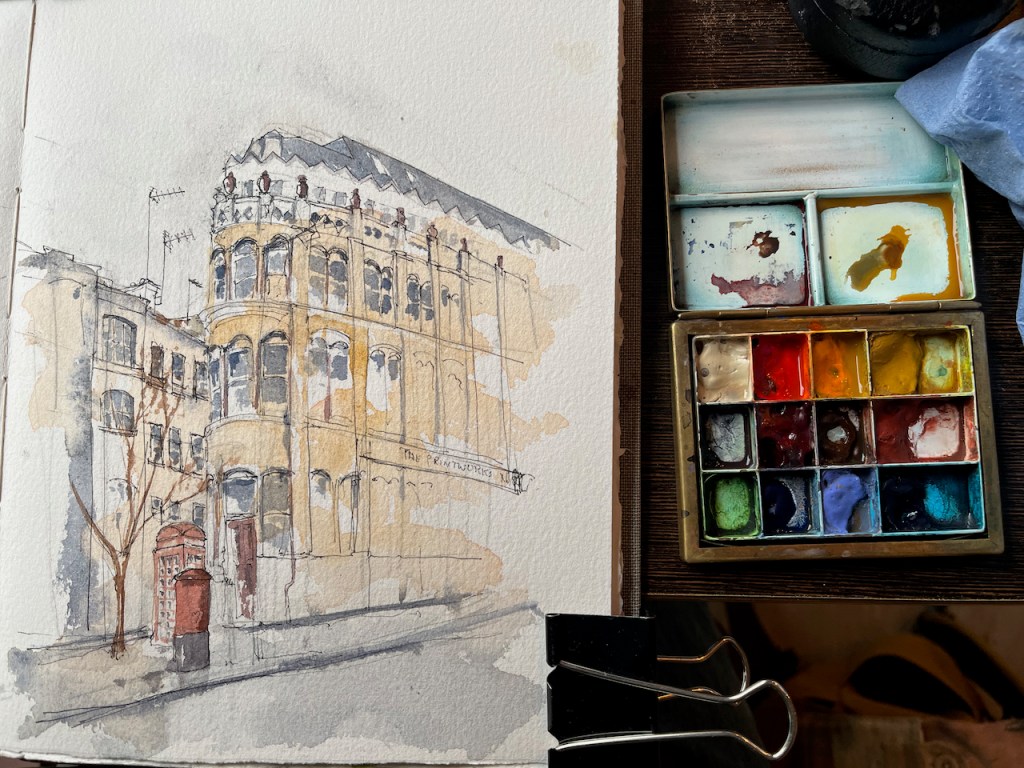
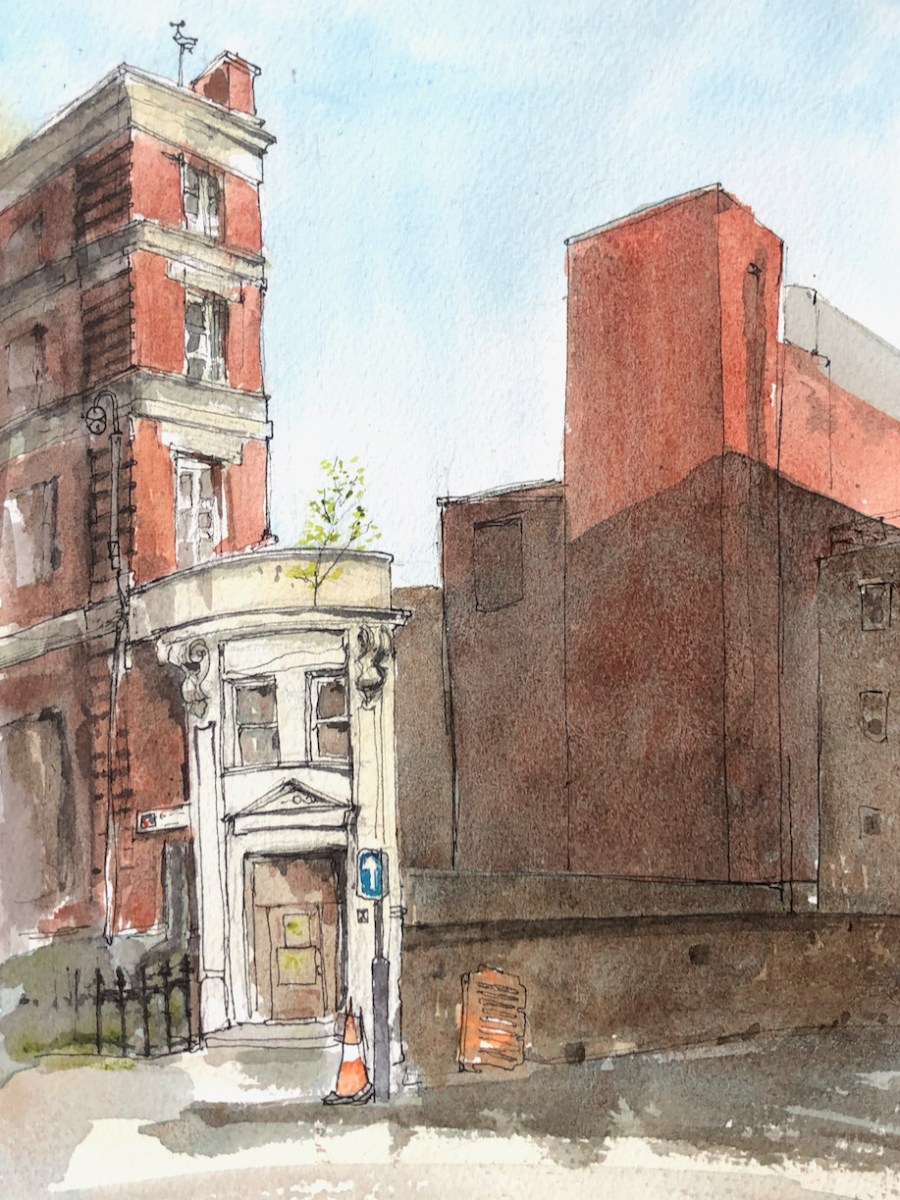
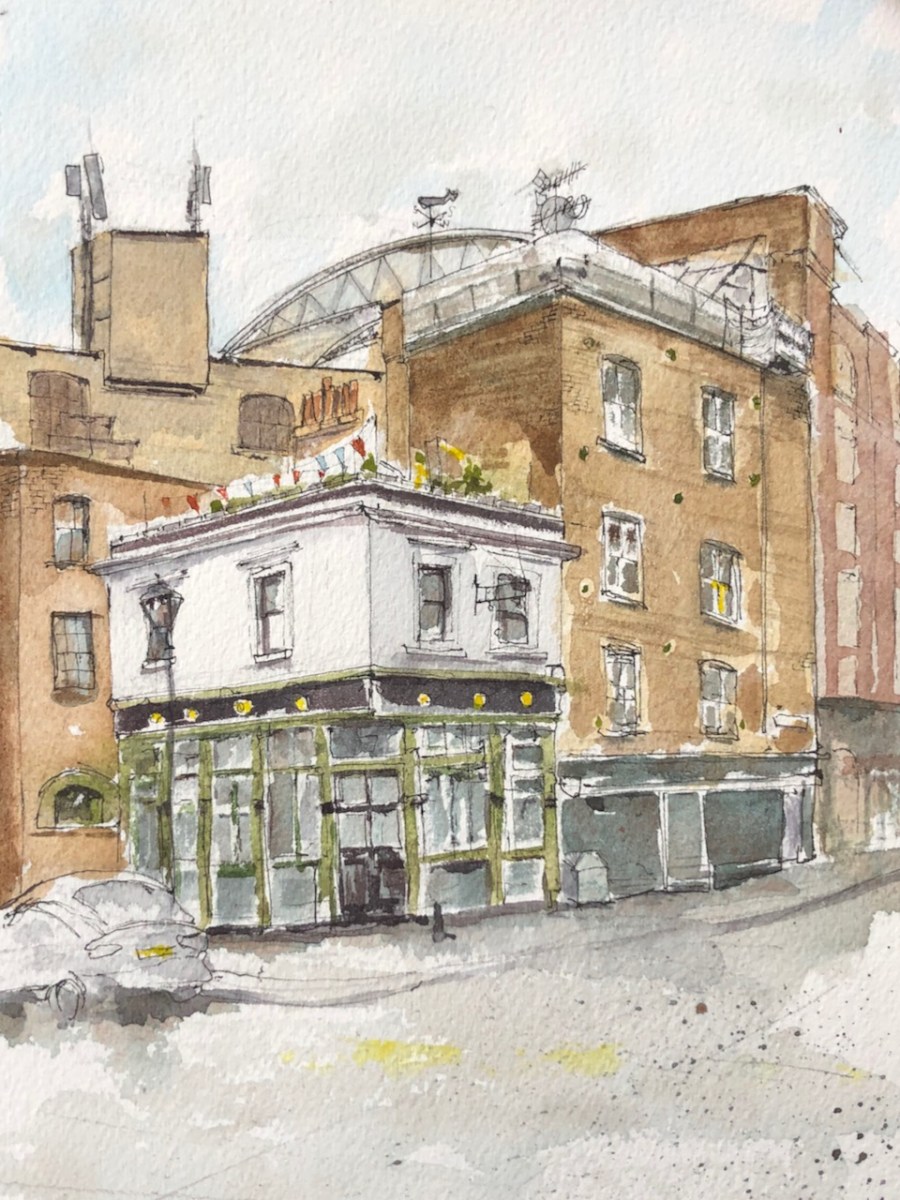
This building is at the junction of Clerkenwell Road and Albermarle Way.
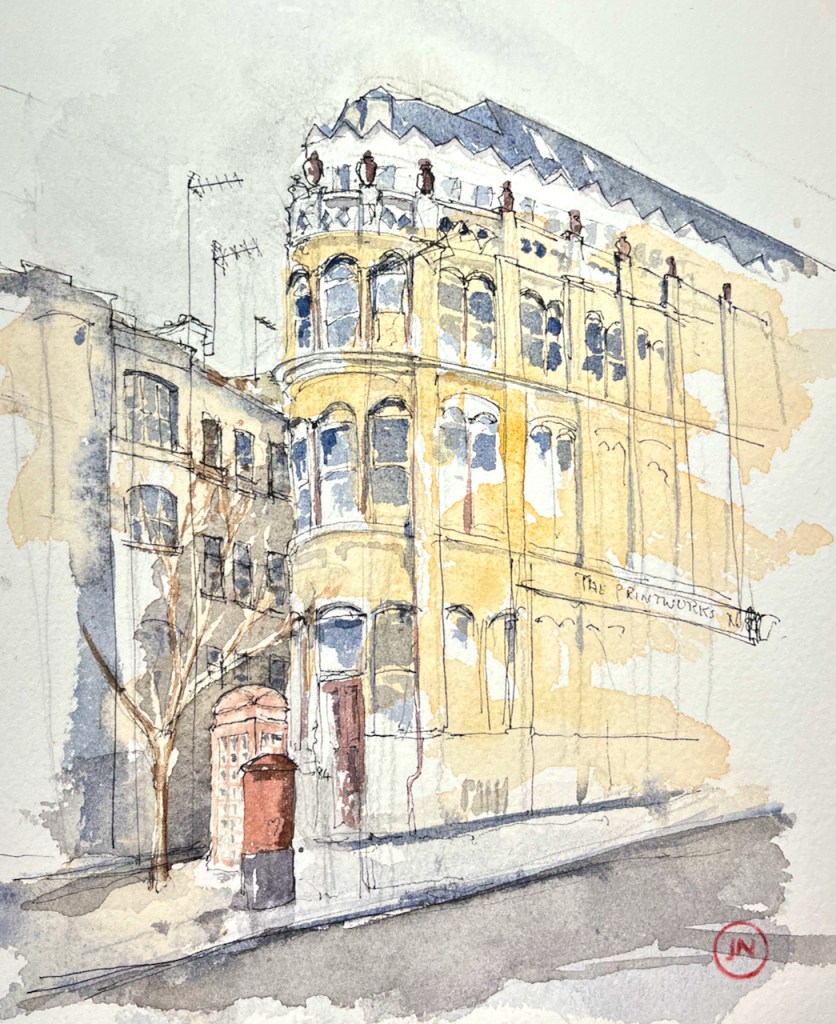
The land, on the recently established Clerkenwell Road, was bought in 1879 by a jeweller, Edward Culver, who funded a new factory for his business on in this rapidly developing area. The building cost £11,ooo, and was finished in October 1879. His business occupied it until about 1894. (from British History online, see Note 1)
In 1915, the ground floor and basement were converted for use by the “London County & Westminster Bank” (Note 1). This turned out to be a long tenancy. A photo in the London Picture Archives shows that a descendant of the same bank, the National Westminster Bank, was there in 1976. (Notes 2 and 3).
The ground floor is now a design company, “Frem”. Before that, it was a hairdressers. The building is labelled “The Printworks” but I am unable to discover when, or indeed if, it was a printworks.
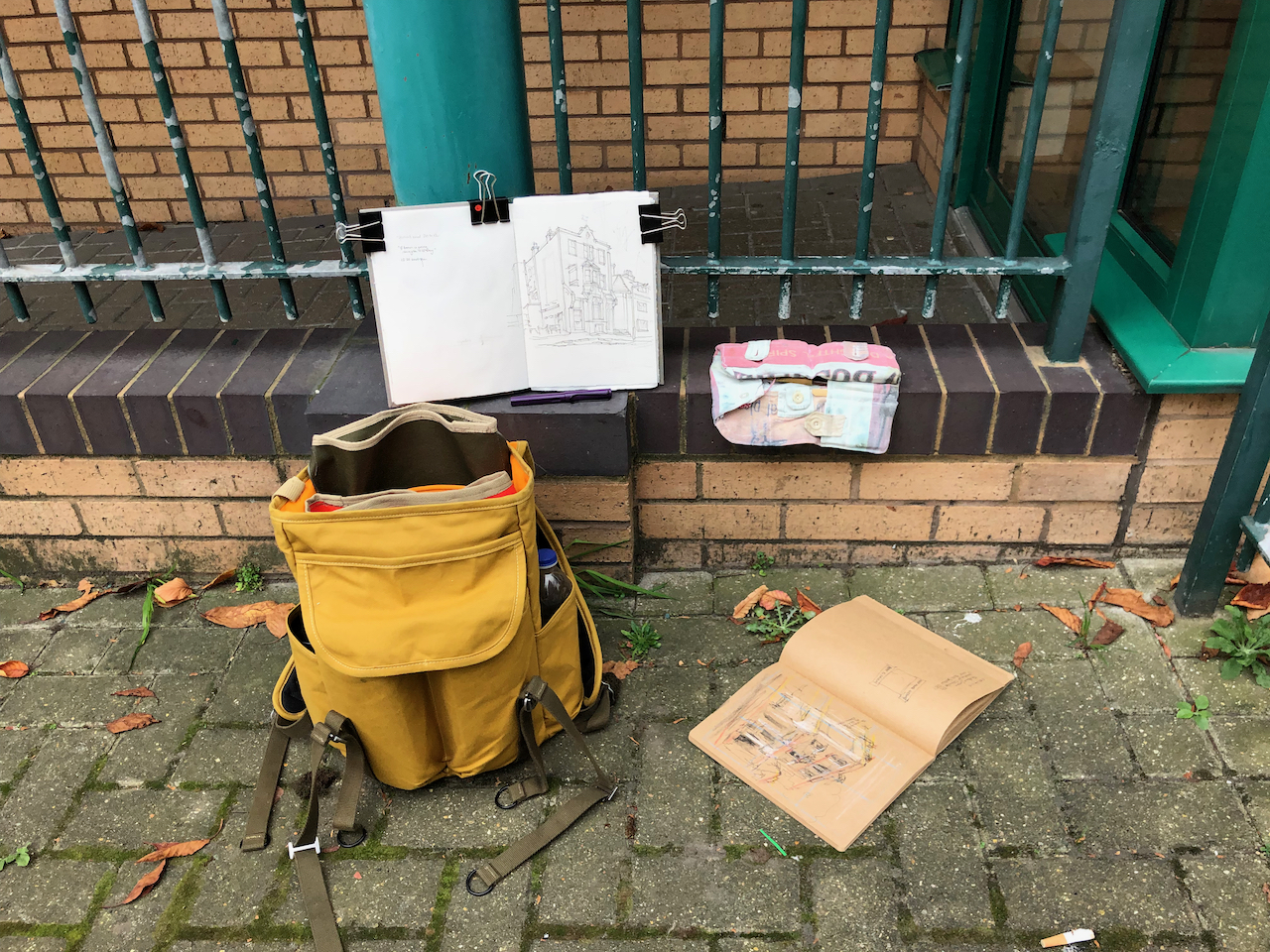
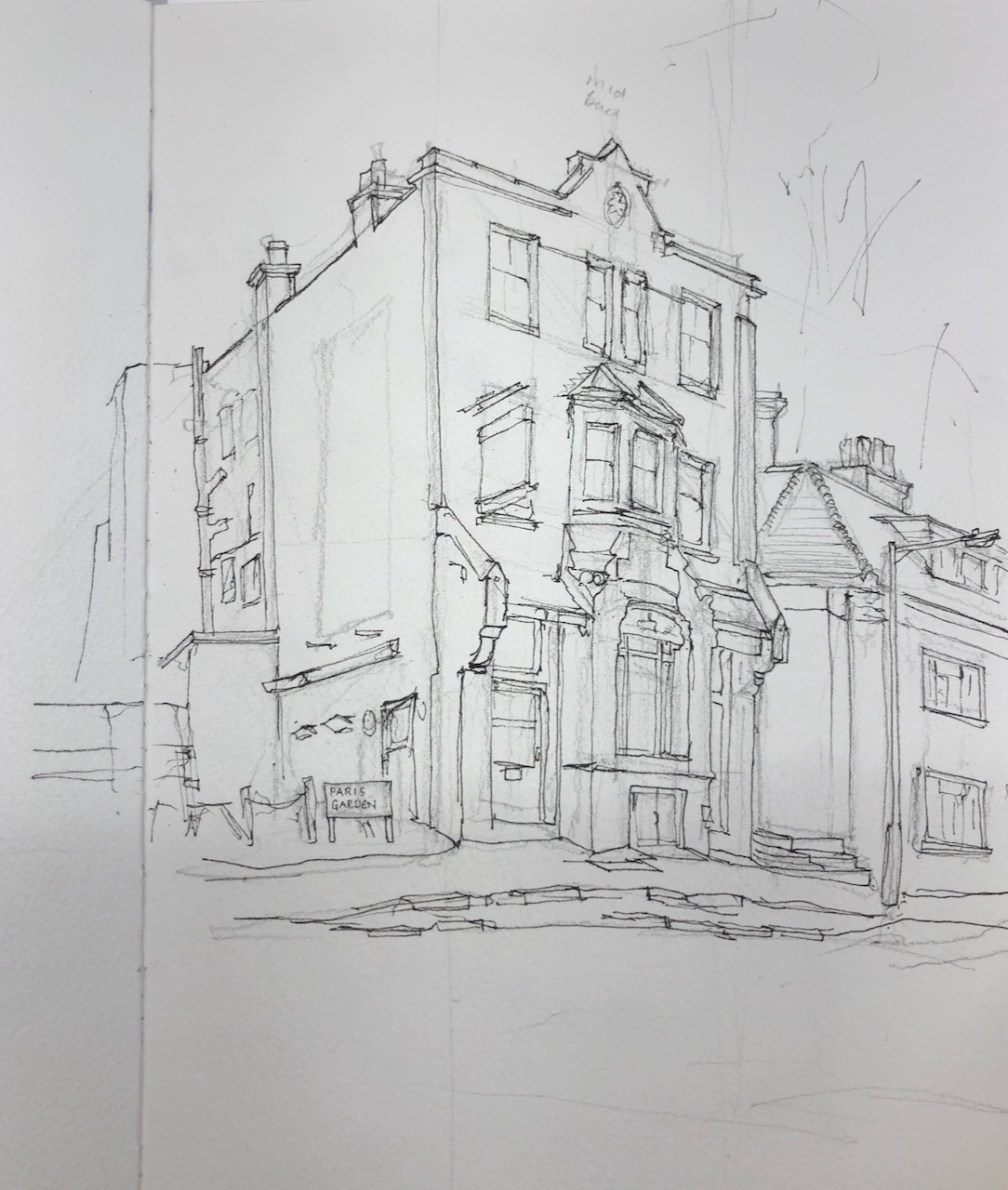
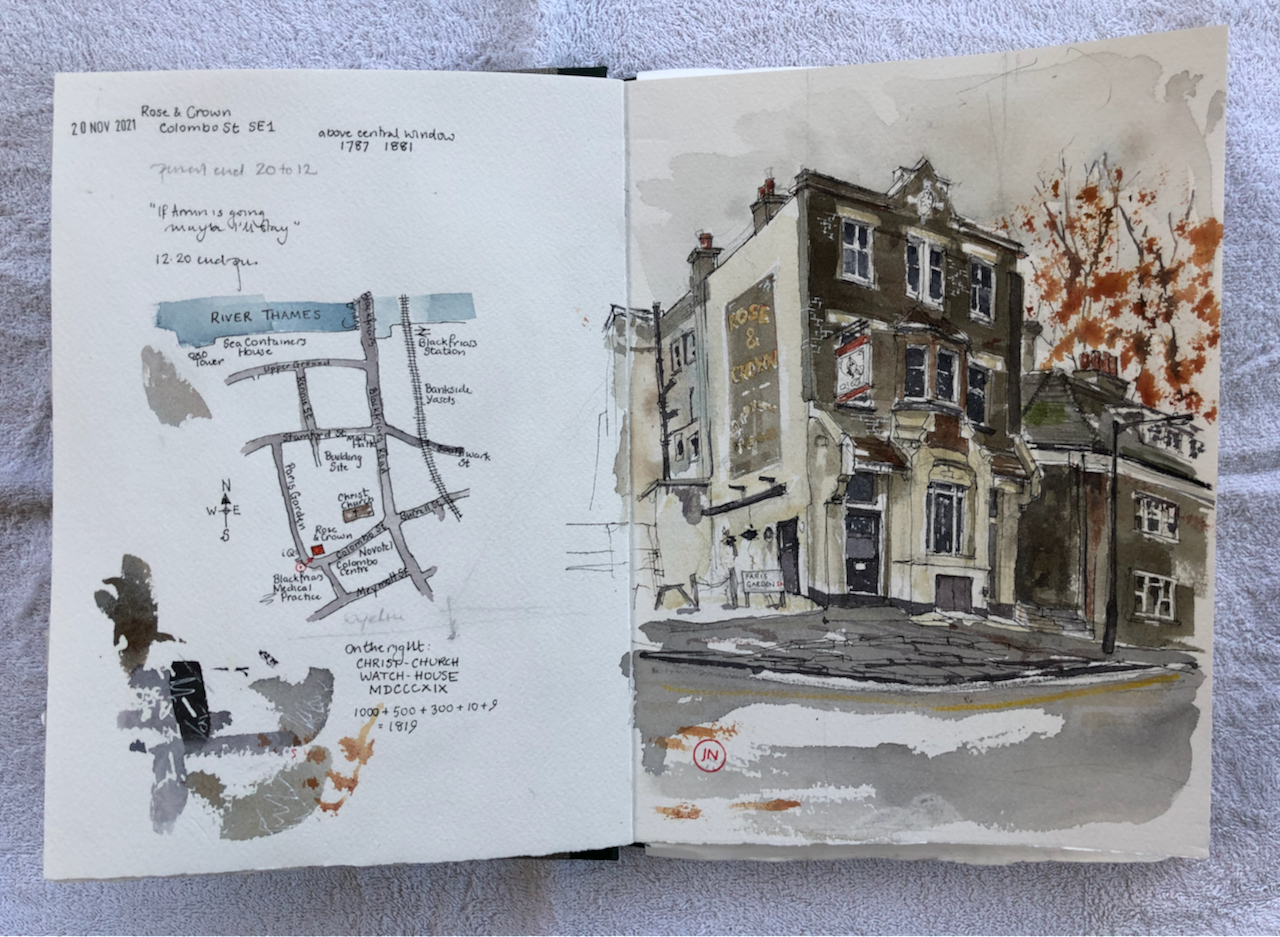
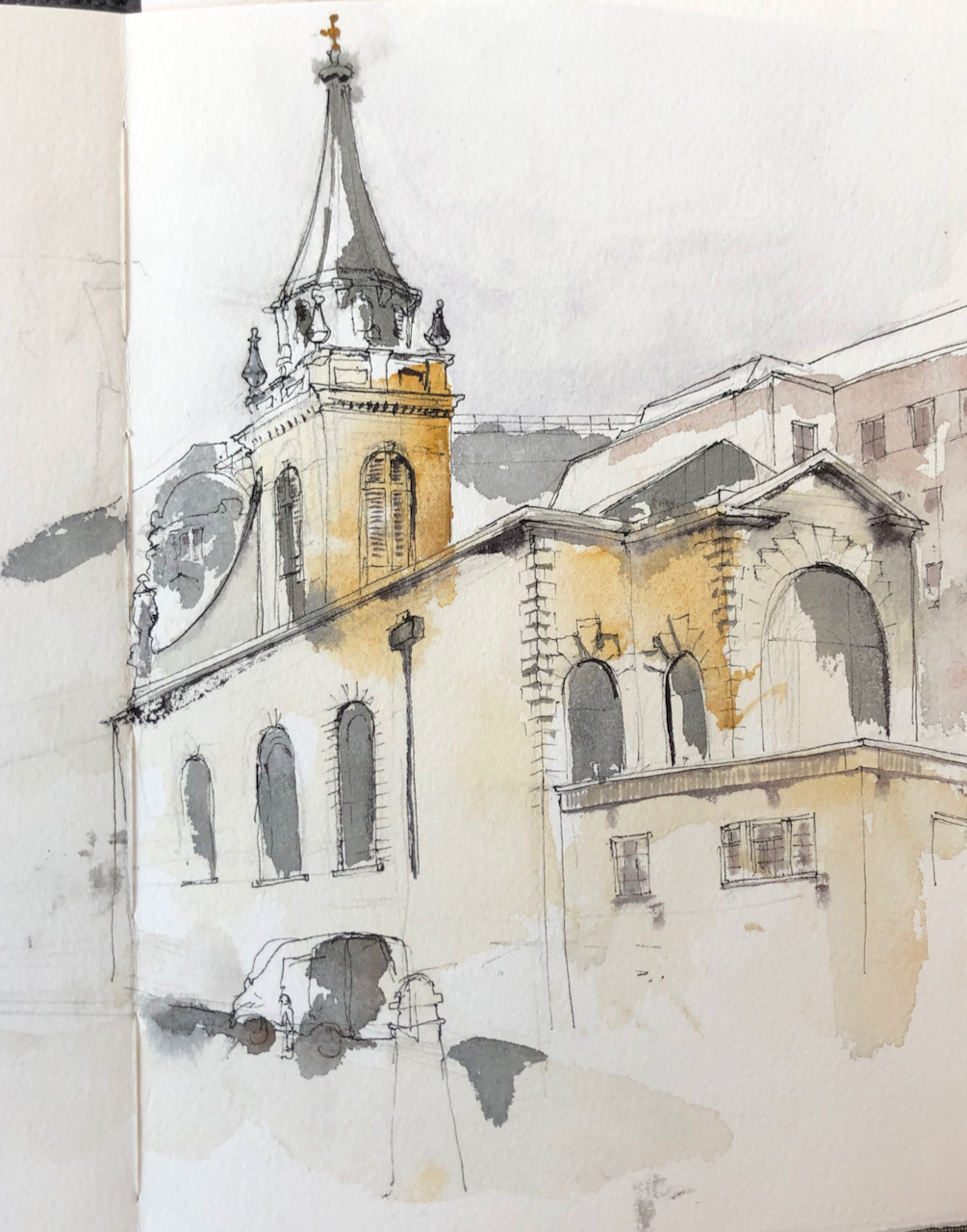
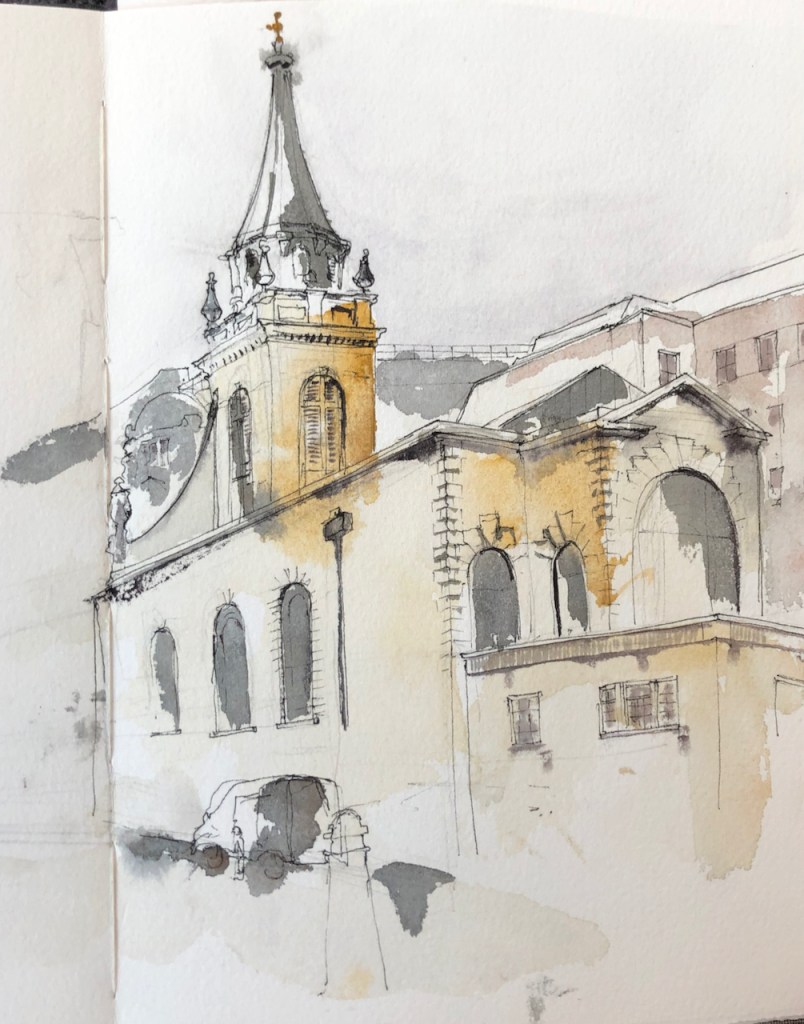
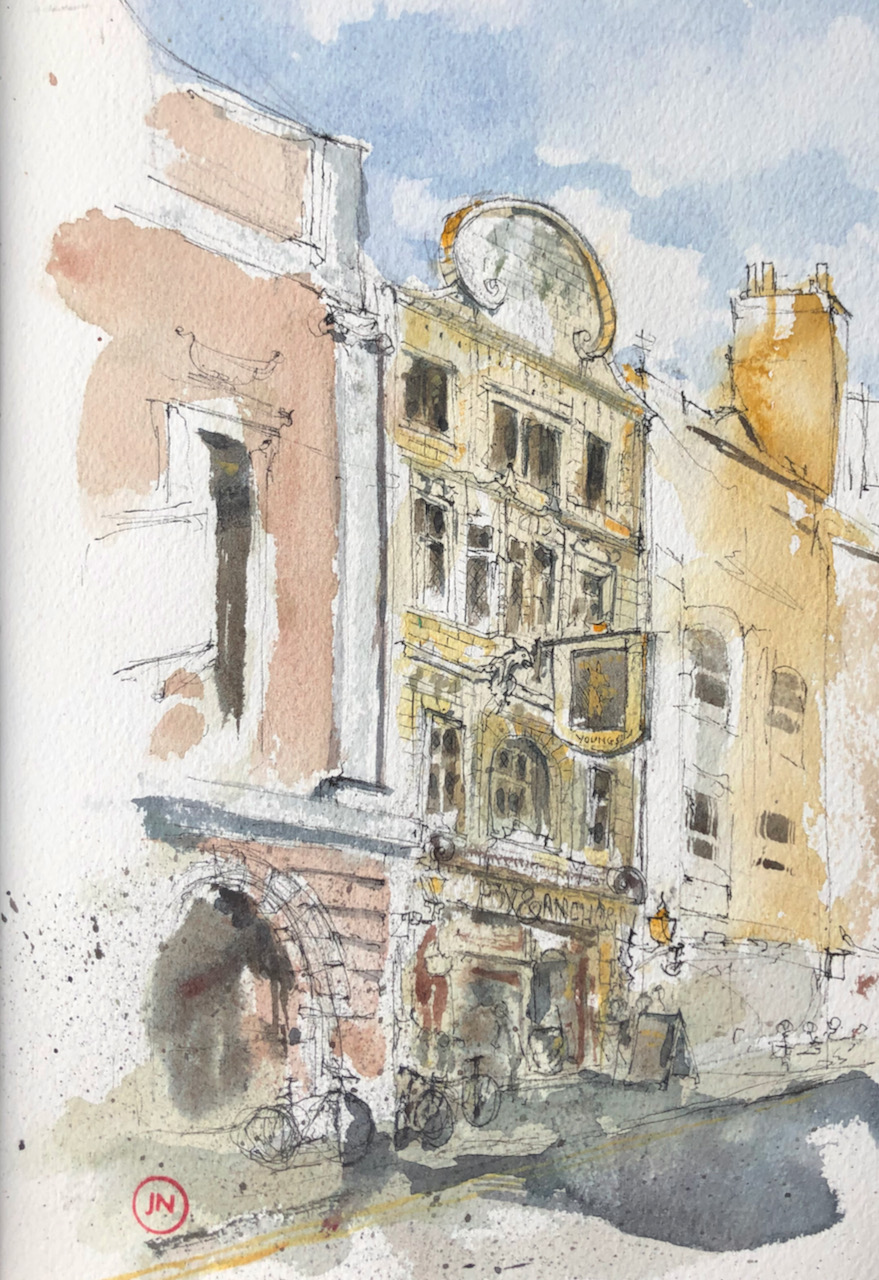
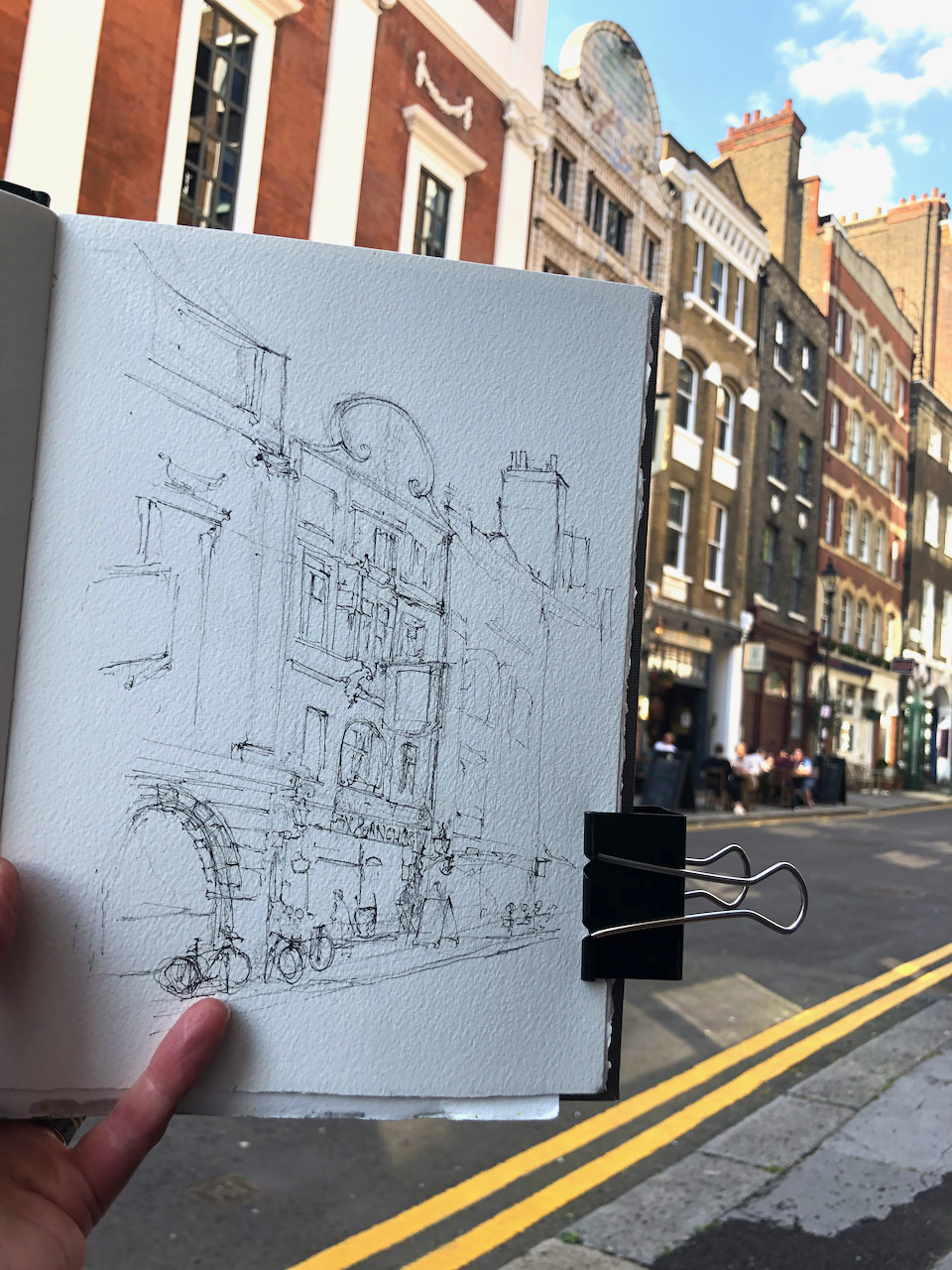
I sketched the building from the corner of the Clerkenwell Road and St John’s Lane. On the other side of the road, I saw a man come and lay out a large flexible chess mat on the stone bench in St John’s Square.
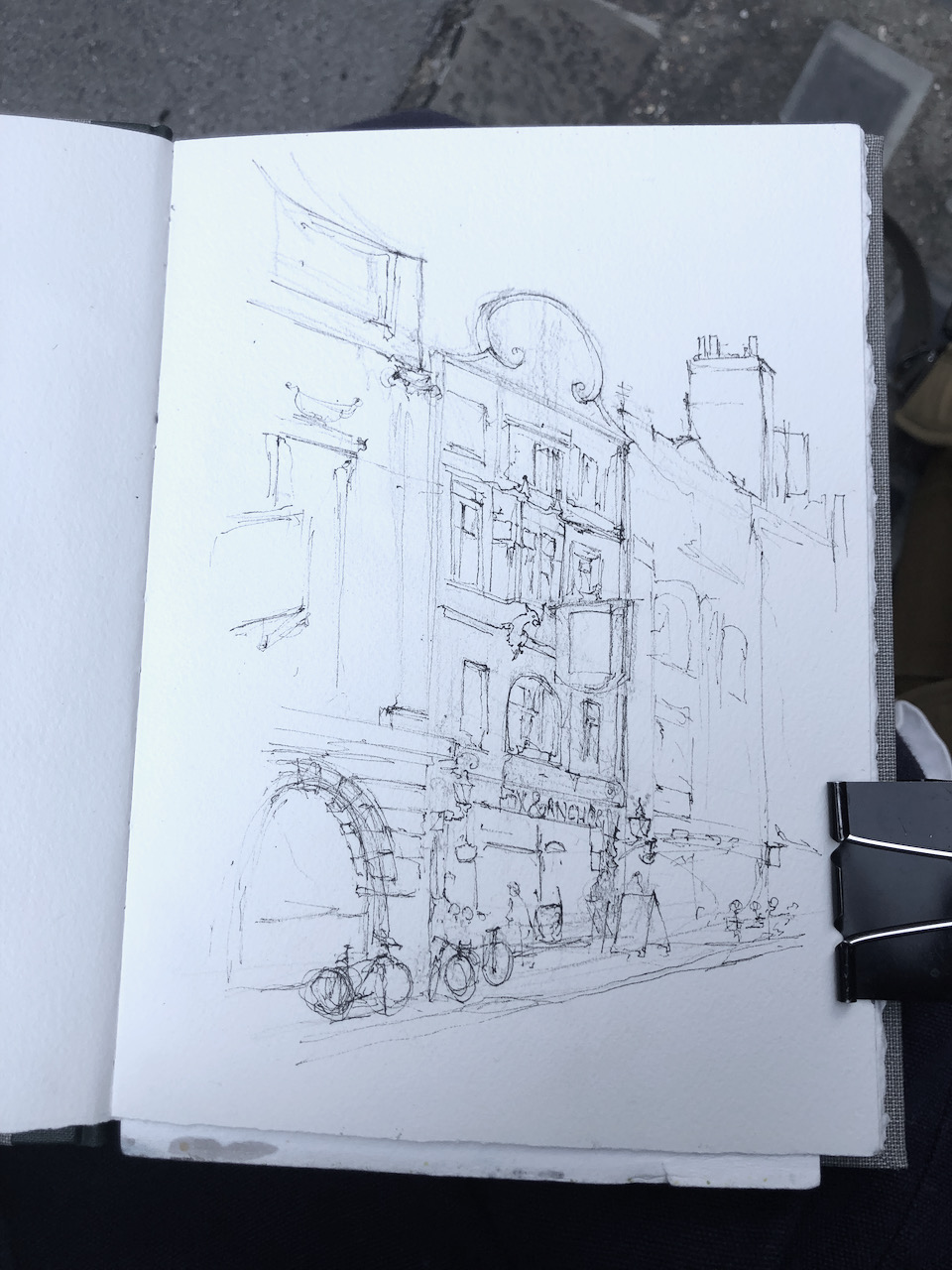
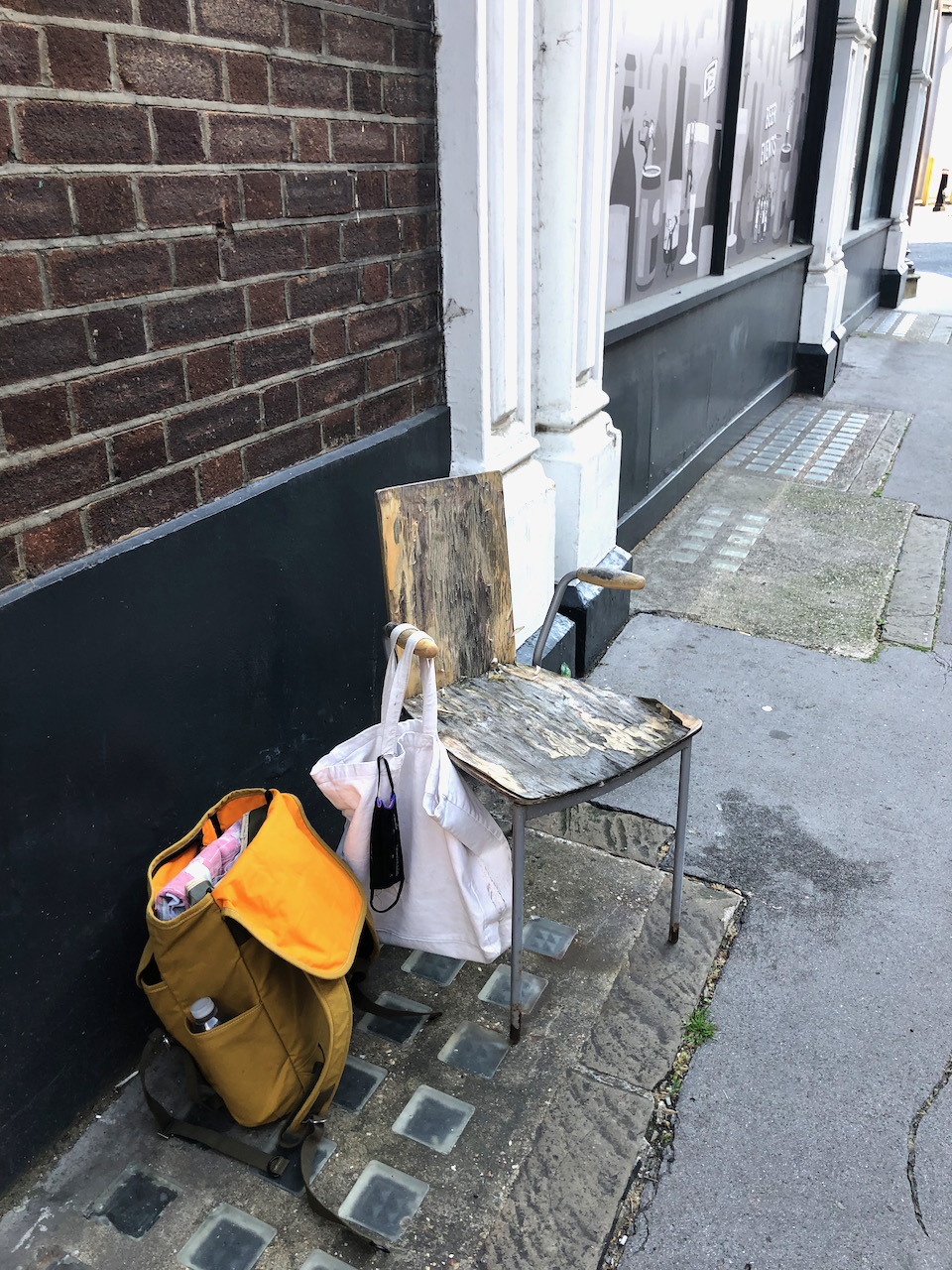
Later, a woman appeared at my elbow carrying a green metal chair. “Would you like to sit down while you draw?” she asked. I would indeed. She told me she was from the café just up the road. Very grateful, I sat down and continued sketching. By the time I’d finished the pen sketch, there were several dozen people clustered round the bench in St John’s Square. There were now many chess sets laid out. And I was very cold.
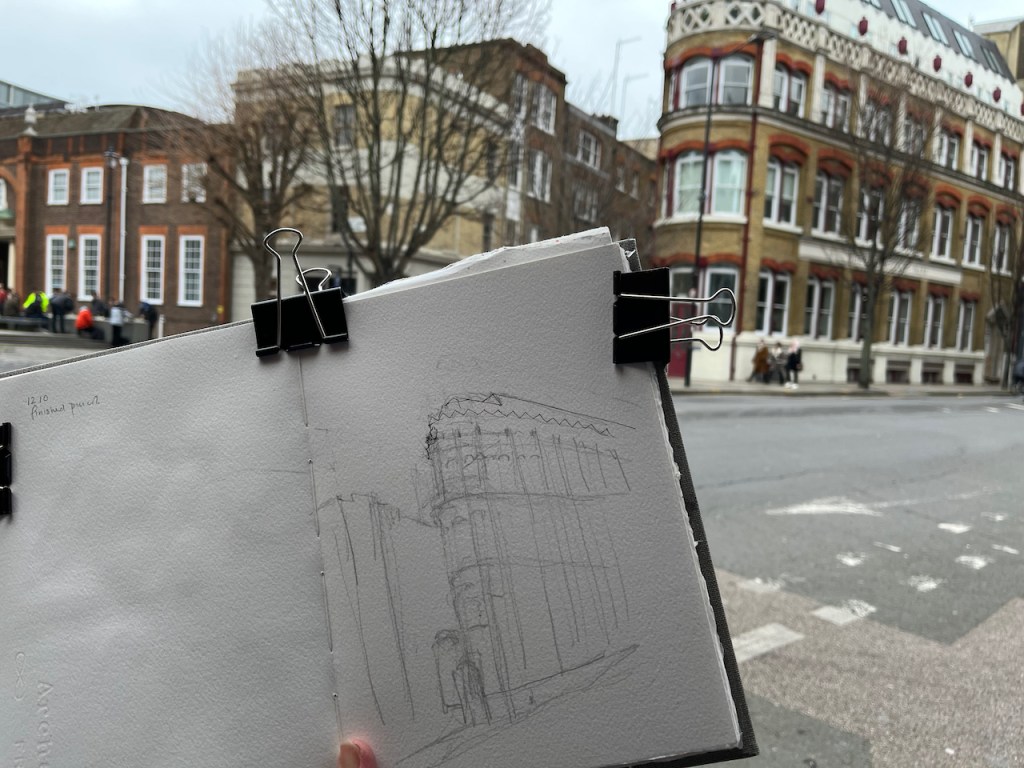
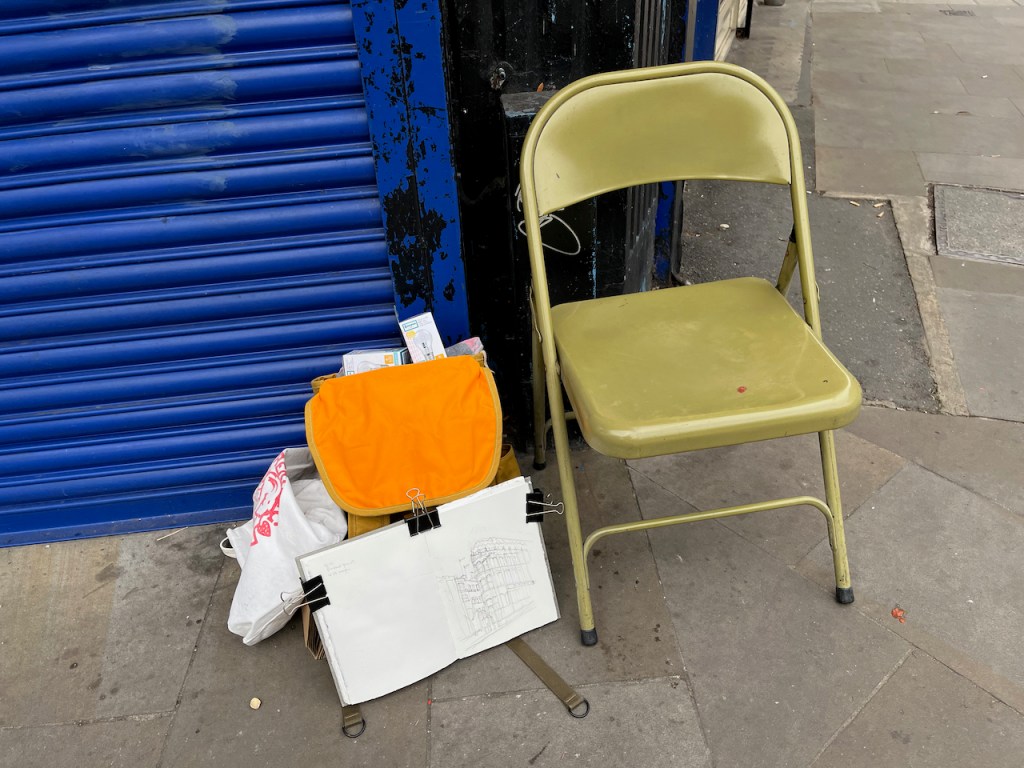
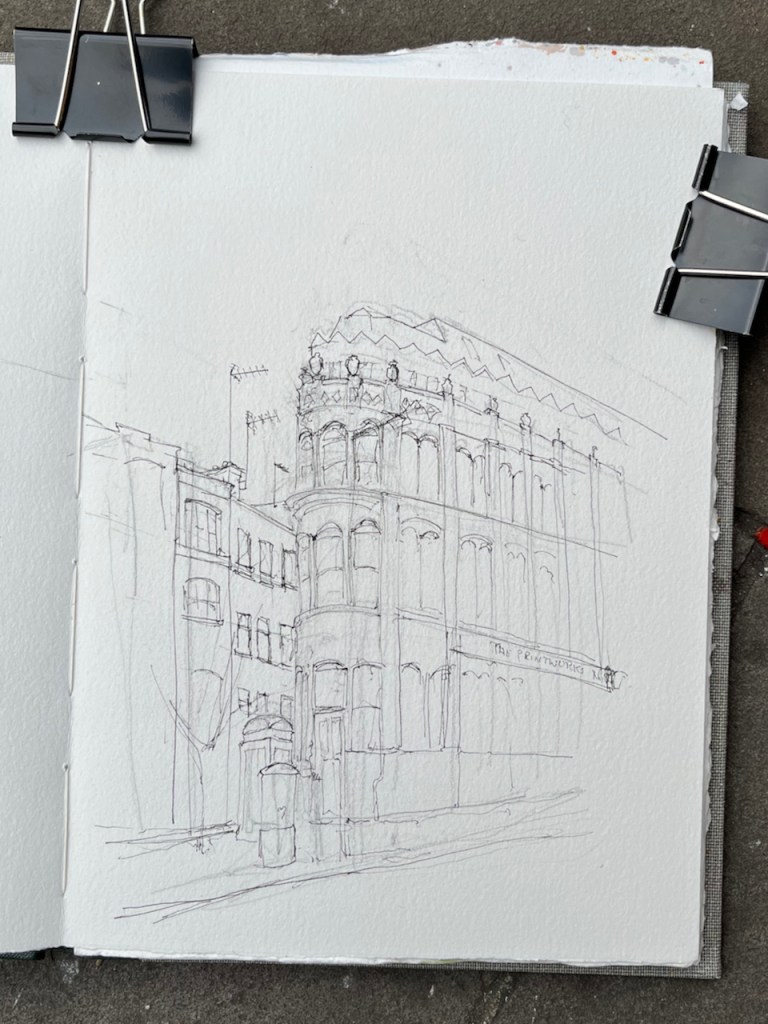
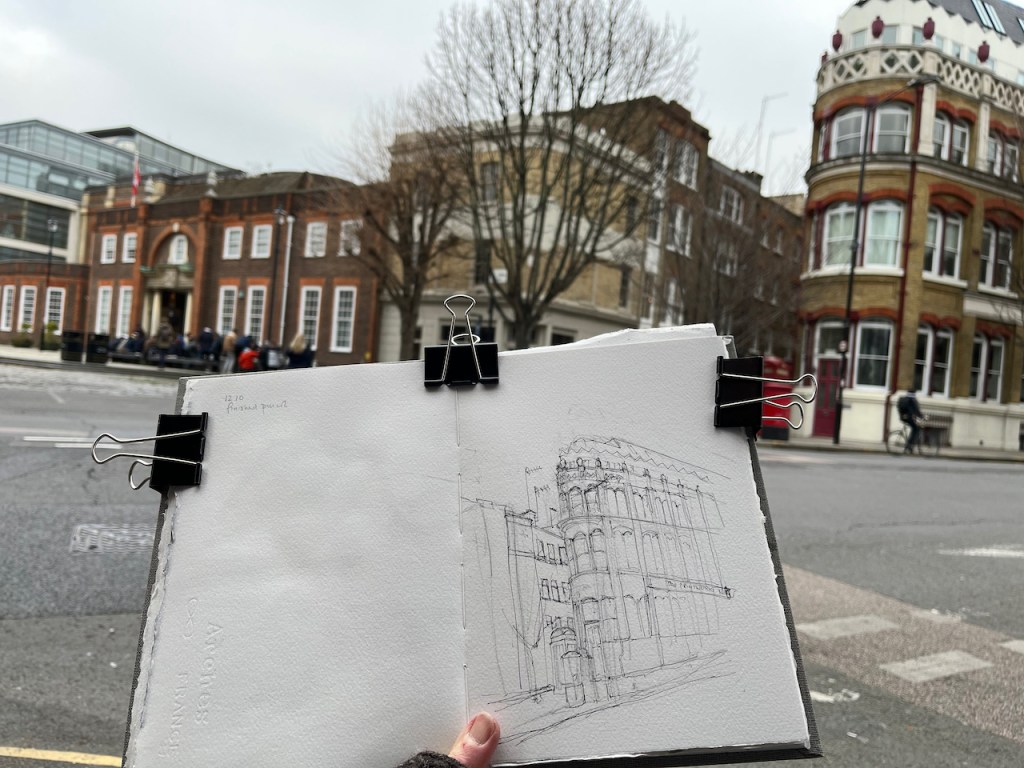
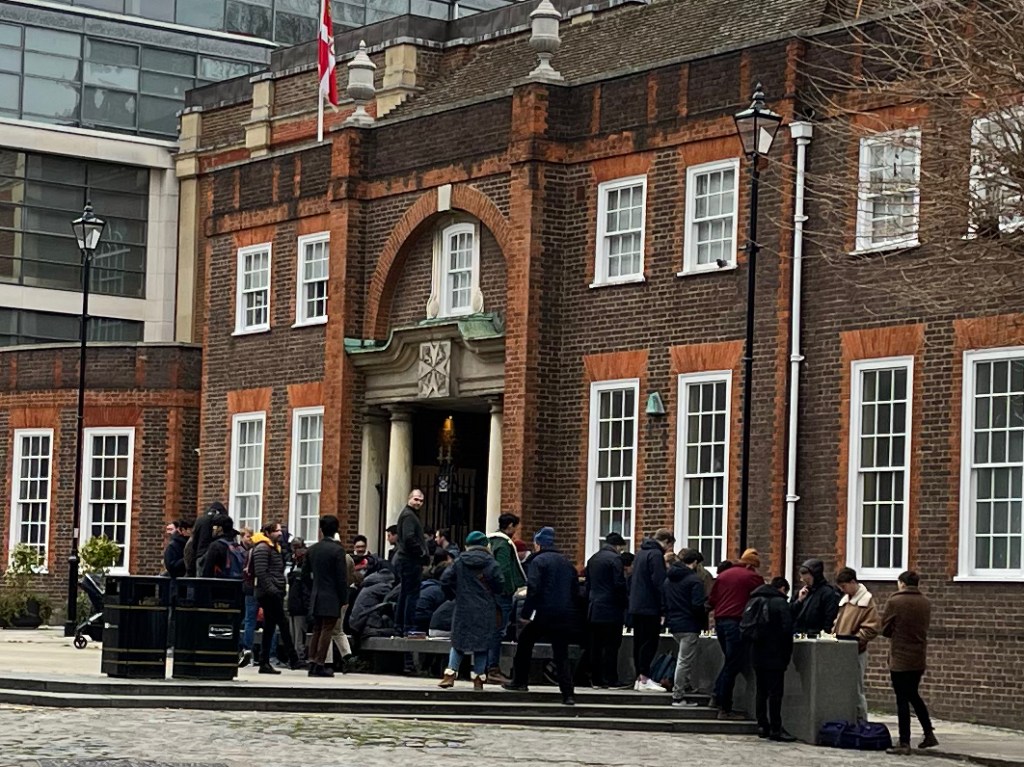

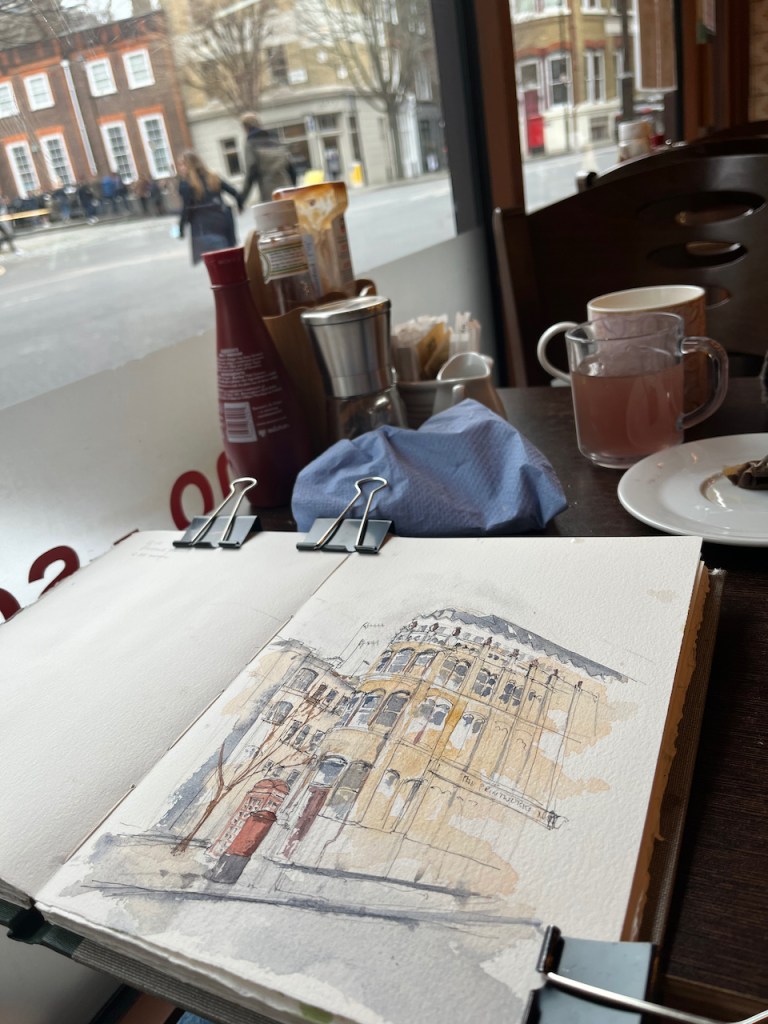
I picked up the green chair and went to the café to give it back. It was warm and friendly in there, so I stopped for a coffee. I learned that the chess players come every Saturday. First there were just a few, now there are dozens. The youngest is 7 years old. As I drank my coffee, some of the chess players came into the café, hopping from one leg to the other with the cold, as I had done earlier. They bought takeaway coffee or hot chocolate, left a phone to charge up by the till, and took off again to join the fray.
The friendly proprietor of the café admired my picture and pointed out that I could see the building, if I took a certain table by the window. “Then you can do the colour”, she said. I could. She brought a cup of water, a porcelain saucer, and a large amount of paper towel. This is a lady who knows what watercolour painters need. A mug of tea arrived as well. Comfortable and warm, I continued my sketch.


If some of these road names seem familiar to you, it might be because this area is the setting for much of the story in the novel “Troubled Blood” by Robert Galbraith aka JK Rowling.

————————————————————–
Note 1: 84 Clerkenwell Road, early history: ‘Clerkenwell Road’, in Survey of London: Volume 46, South and East Clerkenwell, ed. Philip Temple (London, 2008), pp. 385-406. British History Online http://www.british-history.ac.uk/survey-london/vol46/pp385-406 [accessed 22 January 2022].
Note 2: 1976 photo: London Picture Archive, Record 60792, on this link
Note 3: NatWest Group has an excellent History section on its website: https://www.natwestgroup.com/heritage.html?intcam=. The current “NatWest” is the result of the acquisition of over 250 banks over several centuries. The London County and Westminster Bank was one of them.
London & Westminster Bank Ltd (1833-1909) opened in 1834 with a head office at 38 Throgmorton Street and a branch at 9 Waterloo Place. It acquired a succession of other banks, then in 1909 it amalgamated with London & County Banking Co to form London County & Westminster Bank Ltd. London County and Westminster Bank underwent a number of amalgamations and mergers, notably merging with the National Provincial Bank in 1968 eventually to form the National Westminster Bank in 1970.

















 Jane Sketching