6 St Chad’s Place – Jamboree WC1X

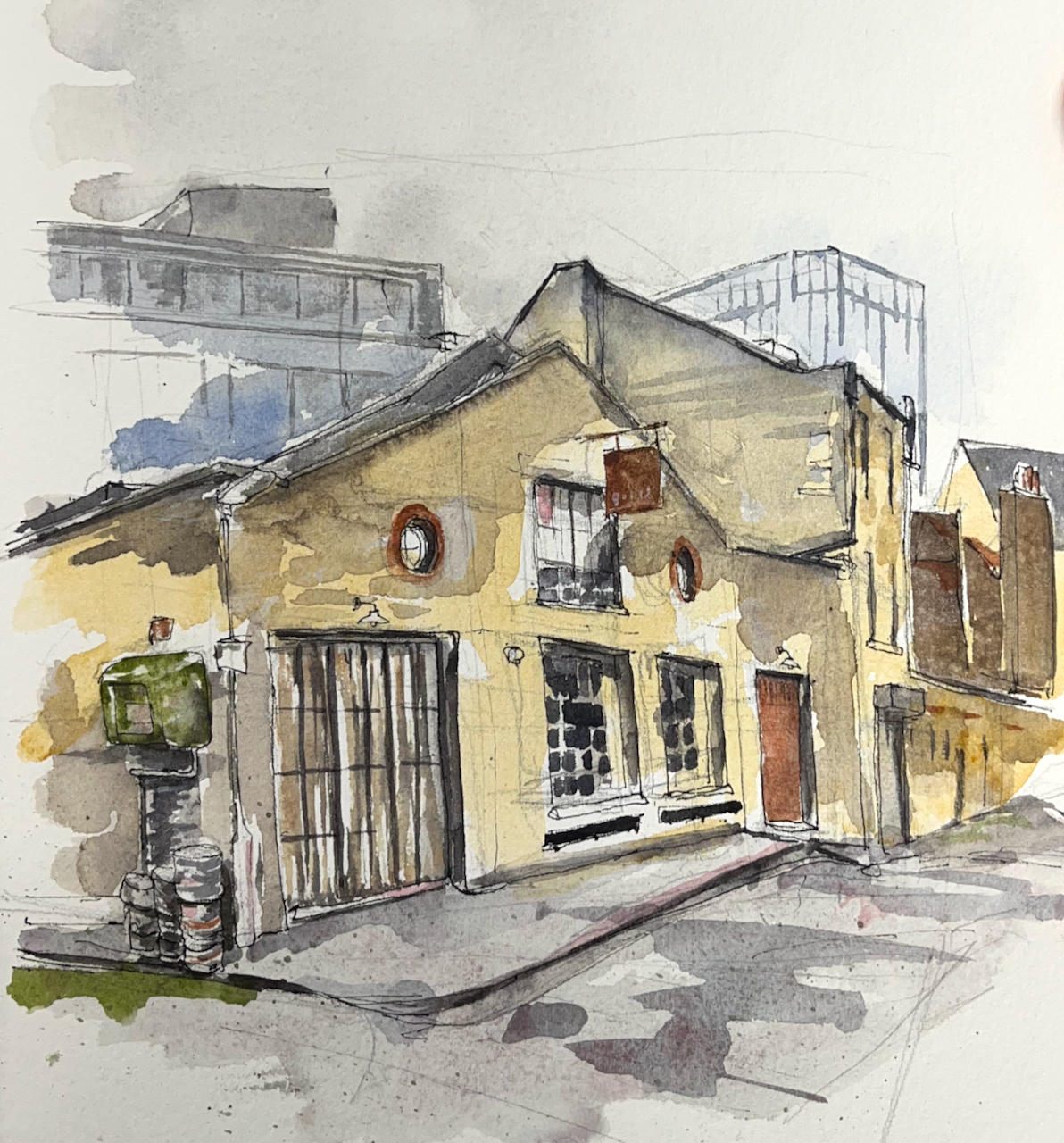
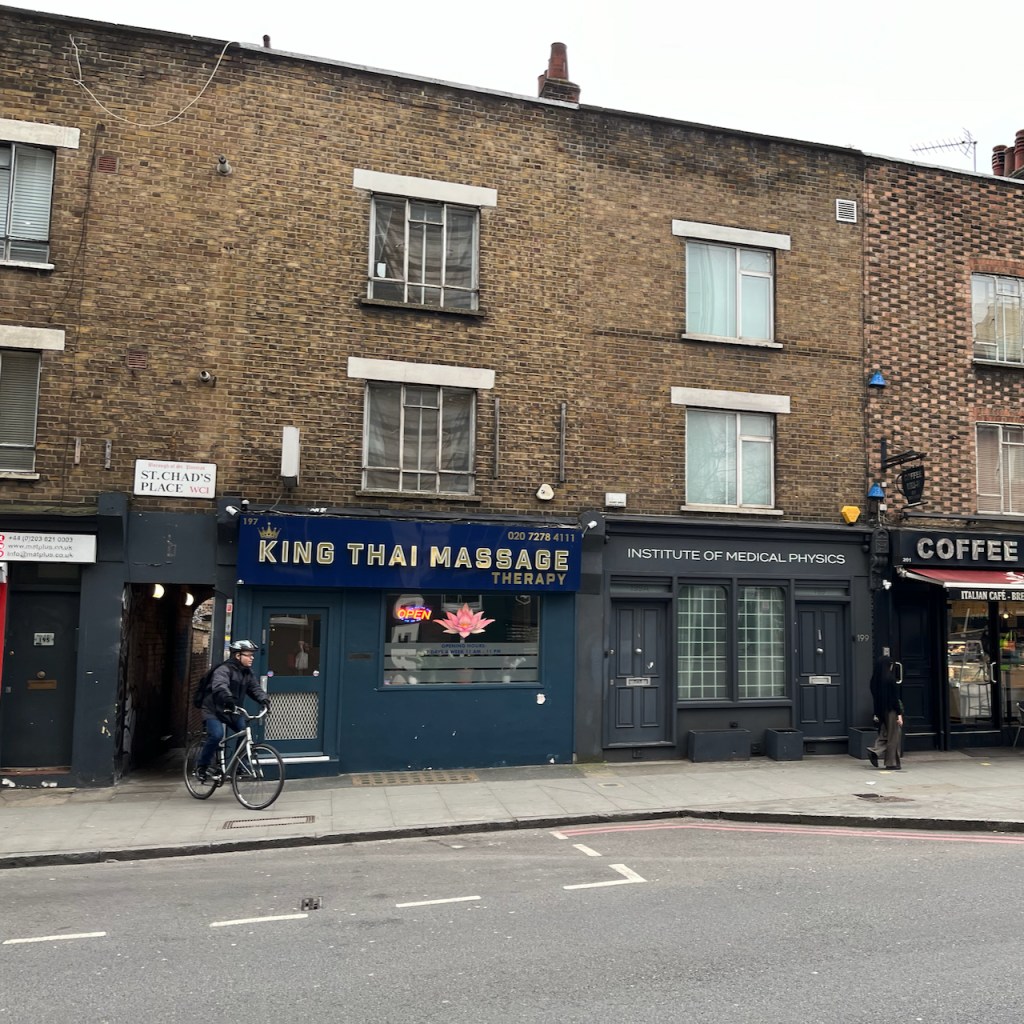
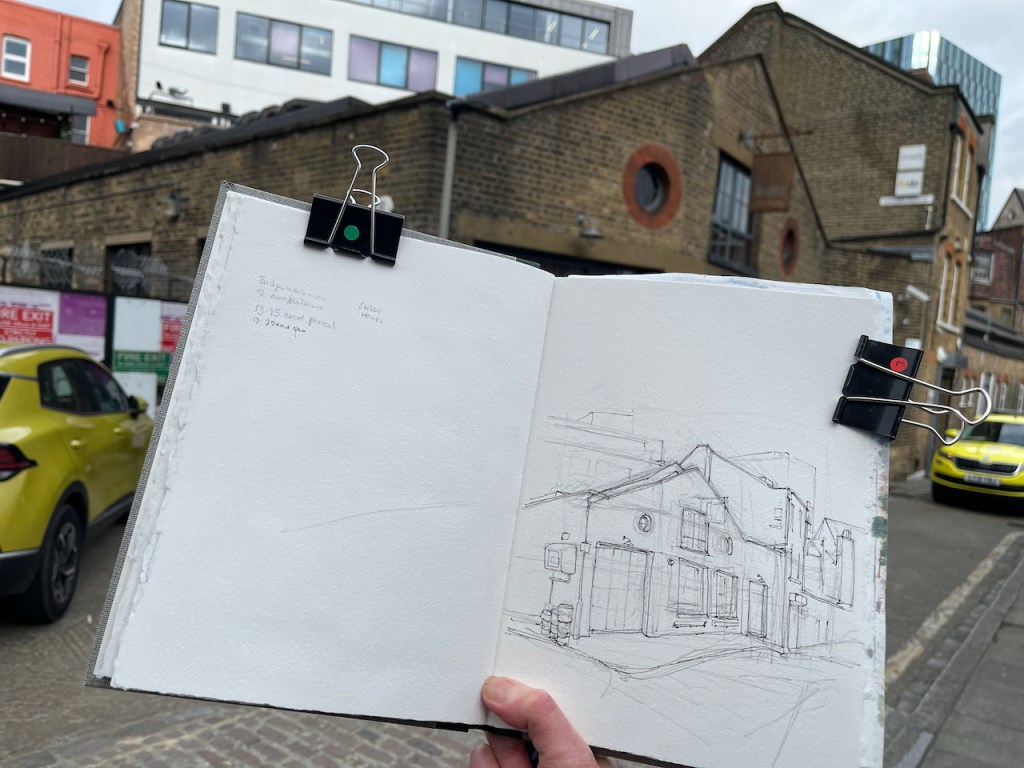
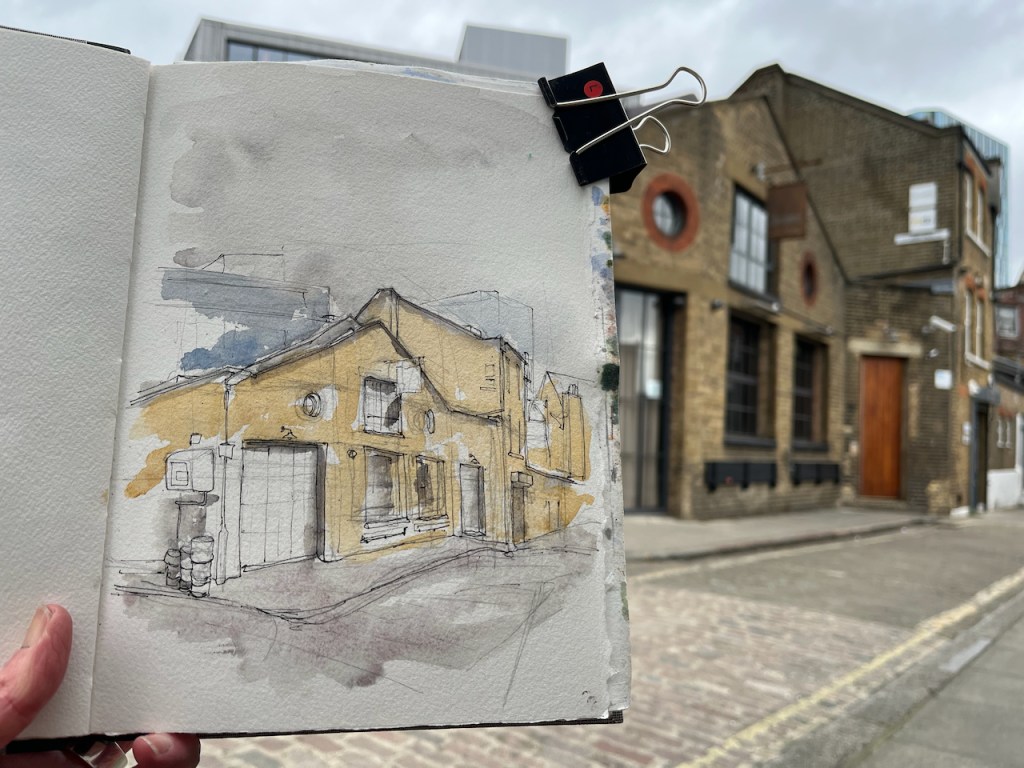
I went to sketch this place in a back alley near Kings Cross because I enjoyed the geometry of the roof, spotted on a morning run some time ago.

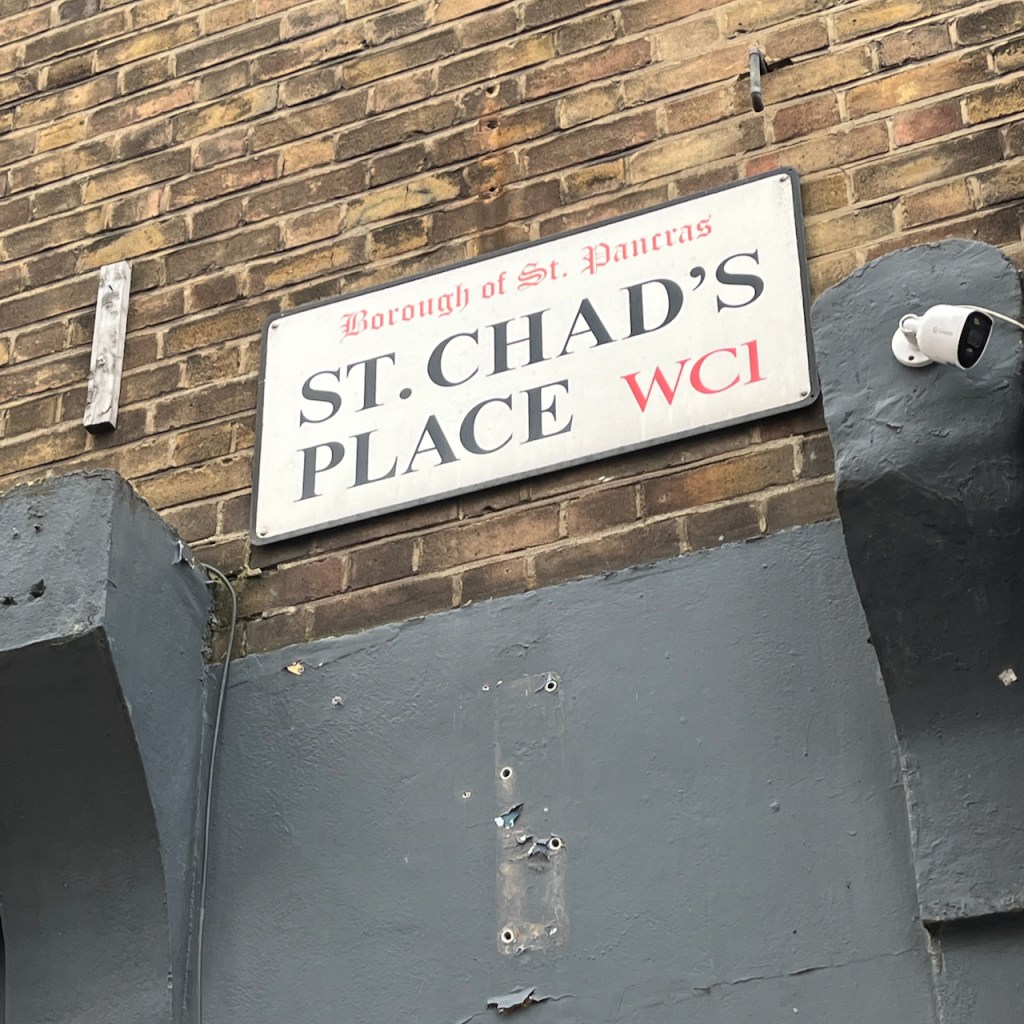
6 St Chad’s Place, Jamboree, London WC1X 9HH – sketched 6 February 2024 2pm in Sketchbook 14

This is “Jamboree” where there is live music, dancing and events: It is open Tuesday evening to Sunday.

“music forms from around the world, cabaret, European folk, dances.”

(https://www.jamboreevenue.co.uk/)

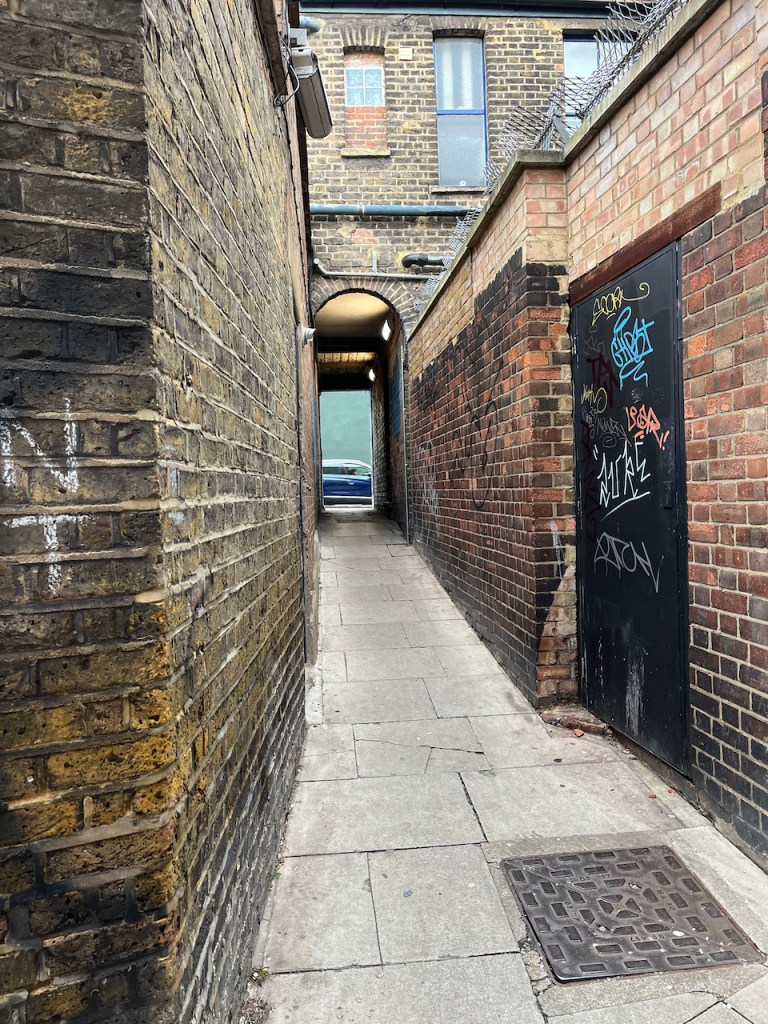
I was expecting the hidden alleyway to be deserted on a Tuesday lunchtime, and so it was for the first hour. But then it became suddenly busy. A small ambulance backed carefully down the alleyway in front of me and parked. Its doors opened and two paramedics went round to the back of the car. They lifted out their equipment and walked calmly off down the alley. After that excitement, a certain calm returned to the alley, insofar as calm is possible a few hundred metres from Kings Cross.

I carried on sketching, now working on the beer barrels to the left of the picture. But the calm did not last long. Two cars arrived and people dressed in orange hi-vis vests scrambled out. They unlocked a gate off the picture to the left, and went in, leaving their car on the pavement. Then a van arrived, it parked directly in front of me, and a further person in a hi-vis outfit got out. He looked across the bonnet of his van and saw me sketching. “Oh, sorry,” he said, “Am I in your way?” I said that yes, he kind of was. I stood ready, however, to concede the space to him, as he looked important and determined in his bright orange overalls and hard hat. But to my surprise he grinned at me, “Ten minutes! I’ll be just ten minutes!”. He rushed off through the gate where the other people had gone. I abandoned the beer barrels and worked on the roofs.

The roofs were quite a challenge, and they productively occupied the 8 minutes until the driver came rushing back out, looking triumphant, accompanied by a selection of the people who’d arrived earlier. “I told this woman I’d be ten minutes,” he explained to his entourage. He raised a hand to me in greeting, got into his car and rumbled off, leaving the other people standing on the cobbles. I asked them what they were working on. “The bridge,” they said. Oh yes, I was standing on a bridge. The train lines were below.

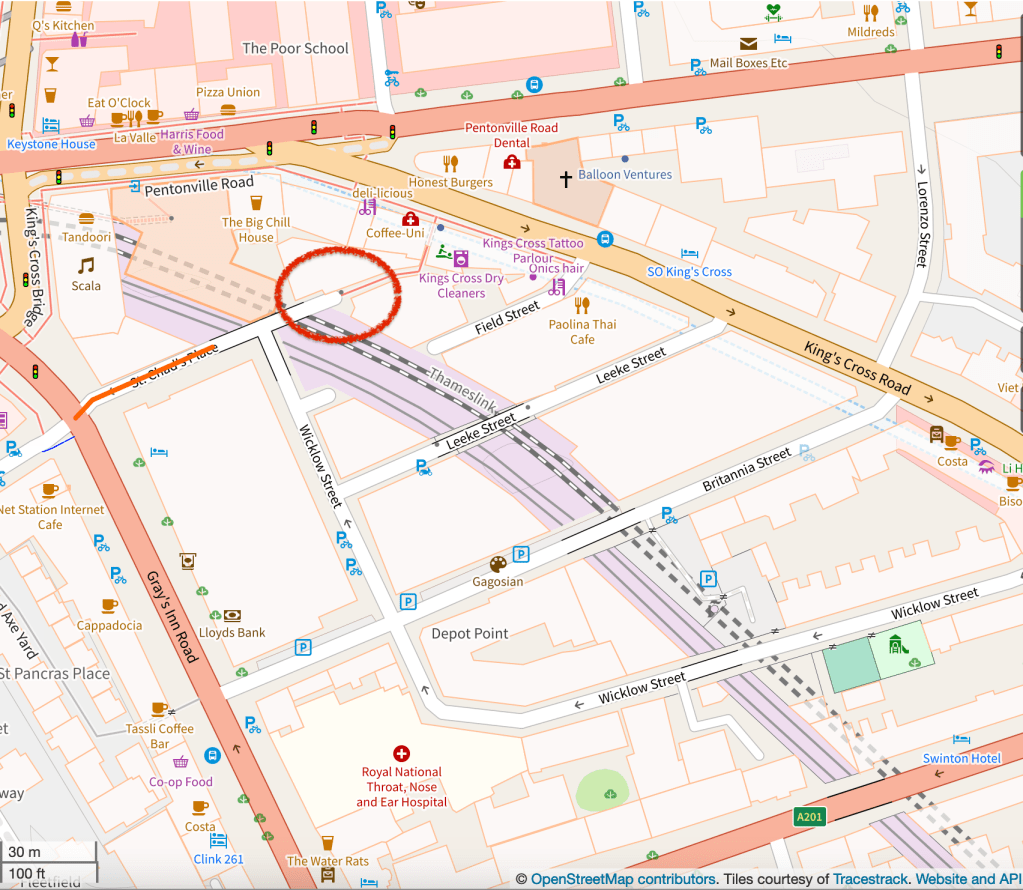
Annotated Google map of the location.

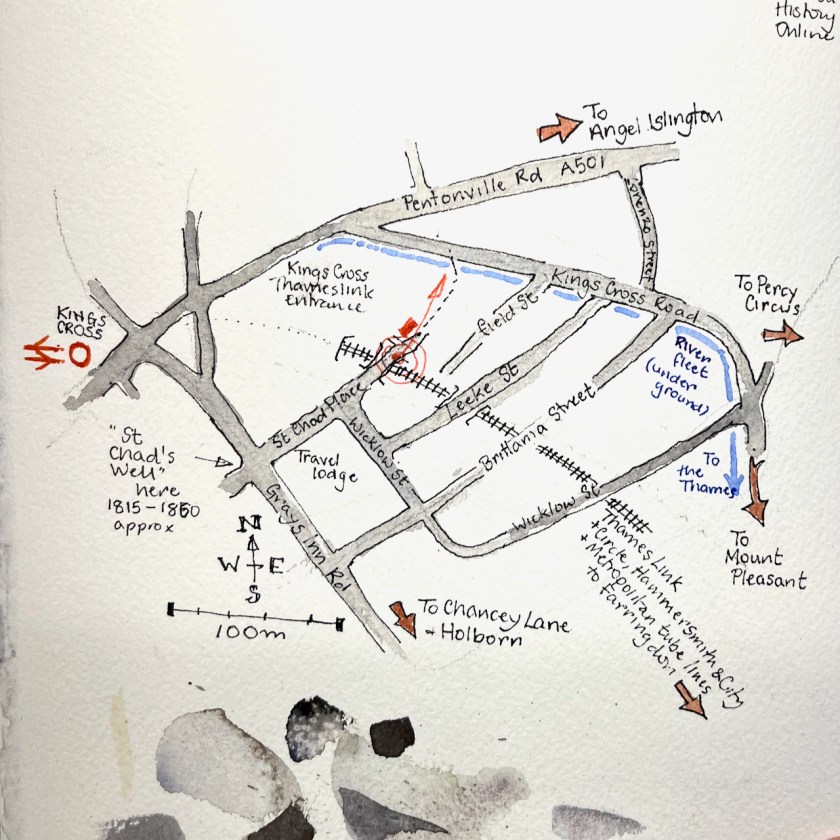
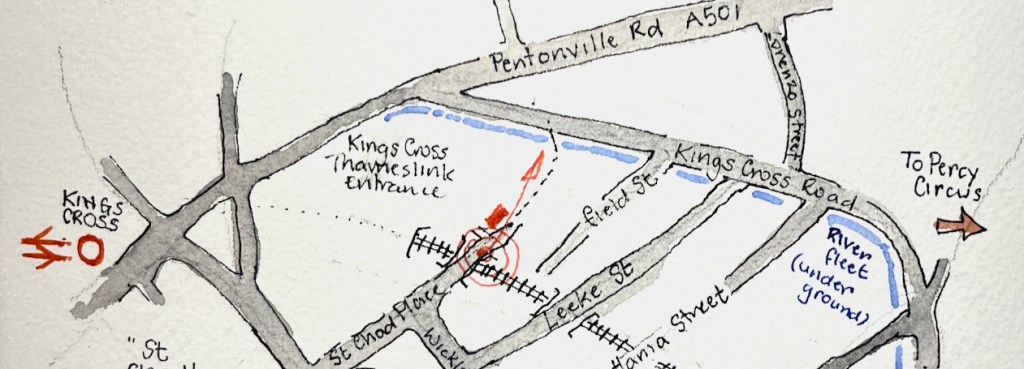
It’s in a labyrinth of roads and railway lines just to the east of Kings Cross mainline station.Here are some maps to show the location. Walk east from Kings Cross, about 10 minutes.

On the maps, the blue line represents the River Fleet, which is alongside the Kings Cross Road, underground. It flows from left to right across the map (West to East) and then heads South down to join the Thames beneath Blackfriars Bridge.

The river Fleet, before it became an underground sewer in 1825, flowed along the western side of Pancras Road and then eastward along the south side of the common, crossing the old highway (now Gray’s Inn Road) north of St. Chad’s Place.

‘Battle Bridge Estate’, in Survey of London: Volume 24, the Parish of St Pancras Part 4: King’s Cross Neighbourhood, ed. Walter H Godfrey and W McB. Marcham (London, 1952), pp. 102-113. British History Online http://www.british-history.ac.uk/survey-london/vol24/pt4/pp102-113 [accessed 7 February 2024].

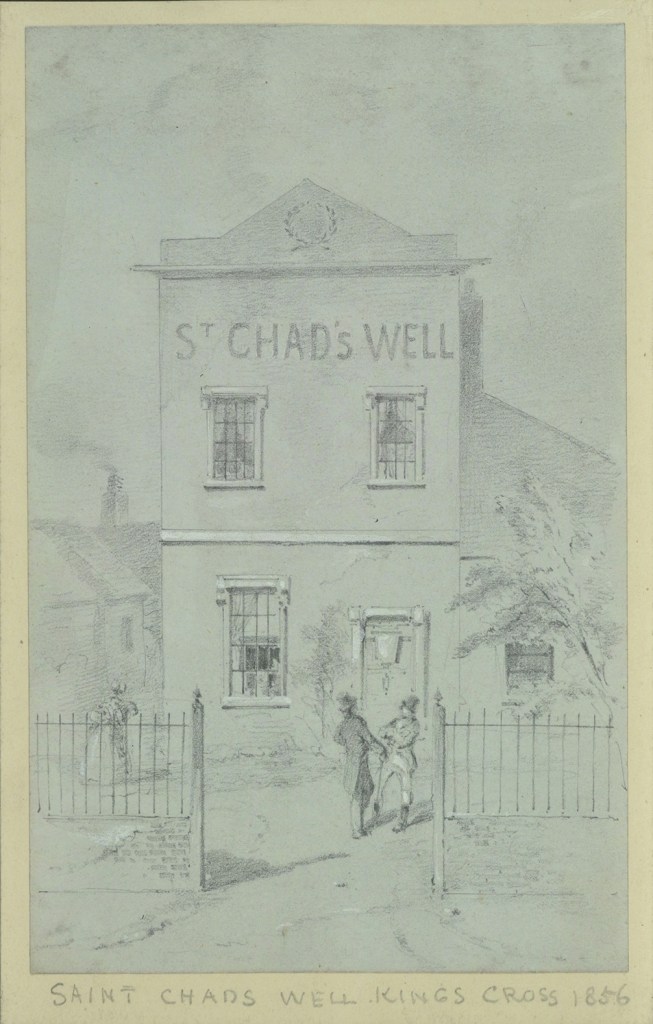
St Chad’s Place slopes down towards the River Fleet. This area was once the location of St Chad’s Well, a spring said to have health-giving properties. It operated from about 1815 to 1860. I found a picture in the London Picture Archives, reproduced below with their permission.

Image © London Metropolitan Archives, City of London Metropolitan Prints Collection LPA 006123 St Chads Well Catalogue No: SC_PZ_SP_01_556 Accession No: Saint Pancras P 01688 Date of execution: 1856
Record No: 305367 used with permission under licence dated 08/02/2024

The website “A London Inheritance” has an informative article about St Chad’s Place and the Well: https://alondoninheritance.com/london-streets/st-chads-place-and-a-lost-well/, which is well worth a read.

A river, a bridge, a well, a passage and a music venue. It’s amazing what you find.

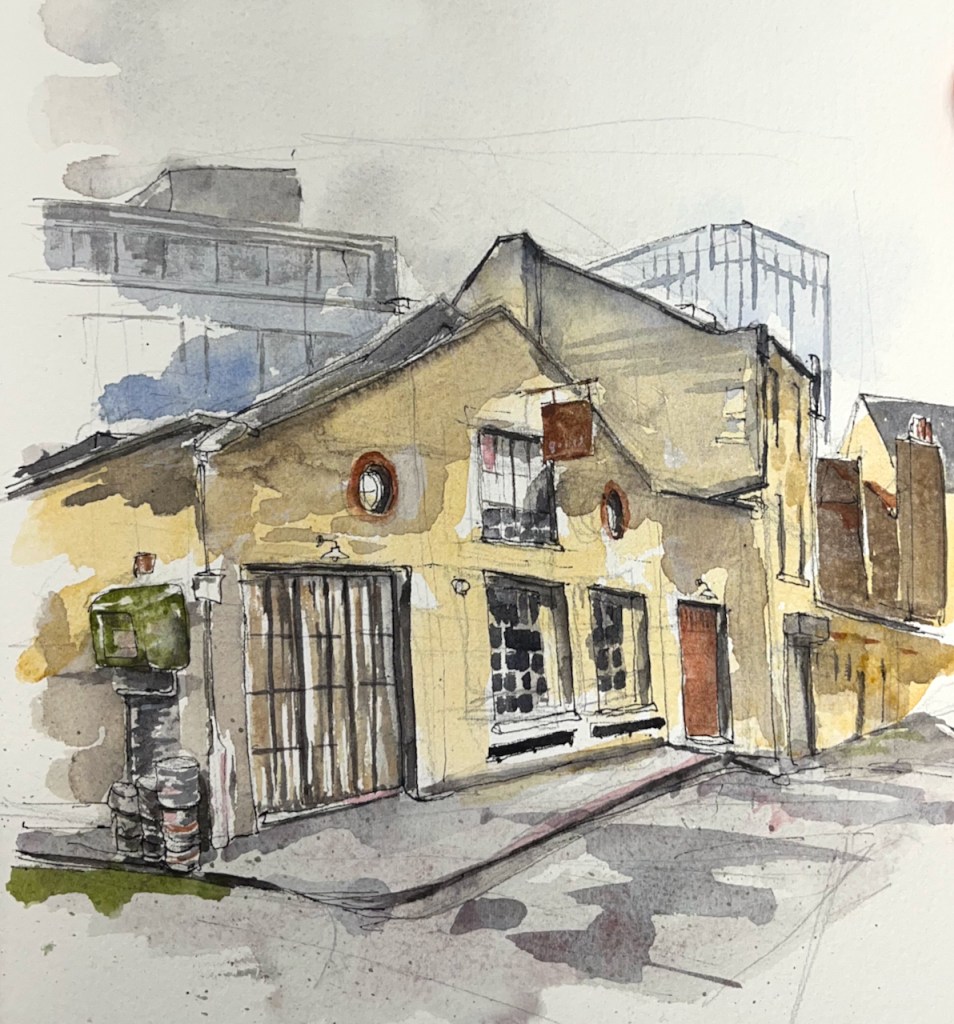
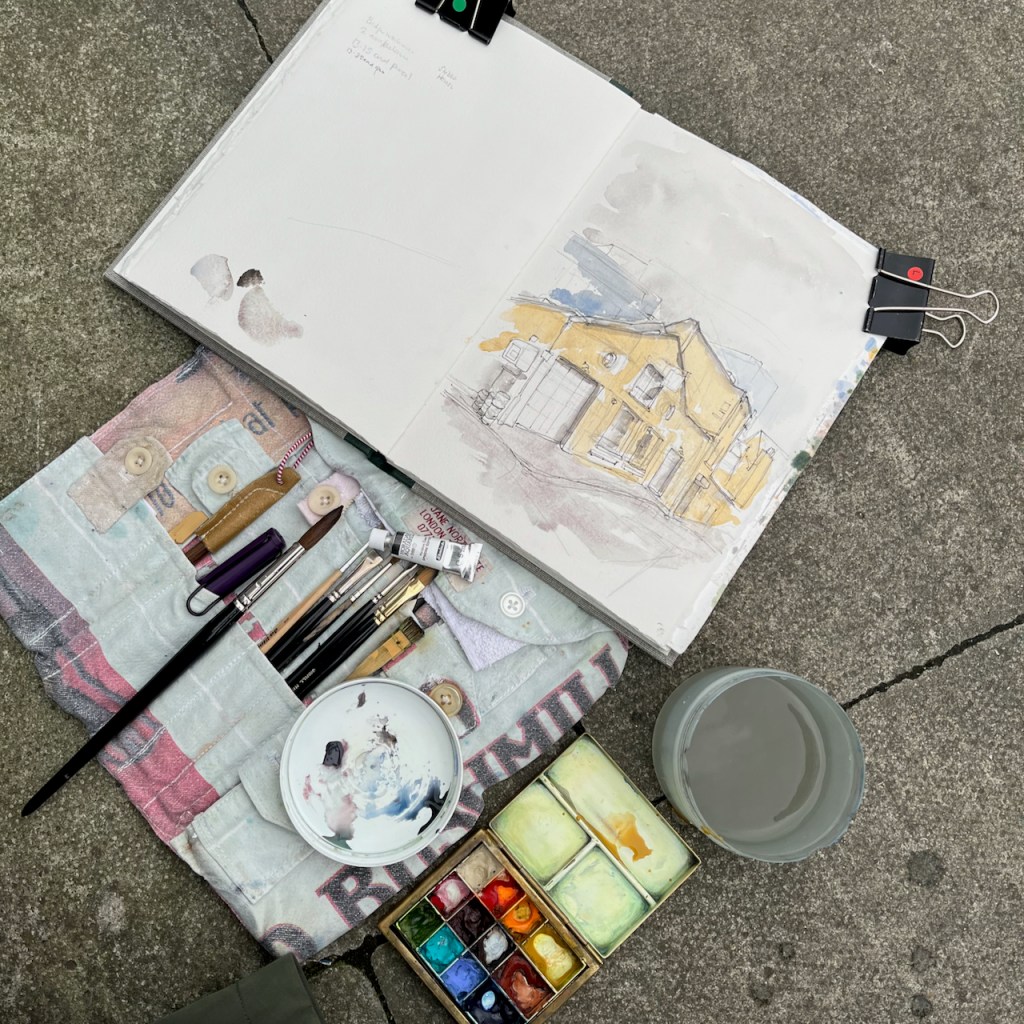
Here is work in progress on the sketch:

The colours are:

  • For the sky and pavement – a special new colour, Schminke Horadam “Random grey” – “formulated each year from surplus pigments”. This is the 2022 edition.
  • Rose madder permanent – also on the pavement
  • Mars Yellow
  • Ultramarine Blue
  • Green Serpentine Genuine
  • Buff Titanium
  • Fired Gold Ochre in the brickwork
  • Burnt Umber
Arches Aquarelle paper in a sketchbook made by Wyvern Bindery (Sketchbook 14).

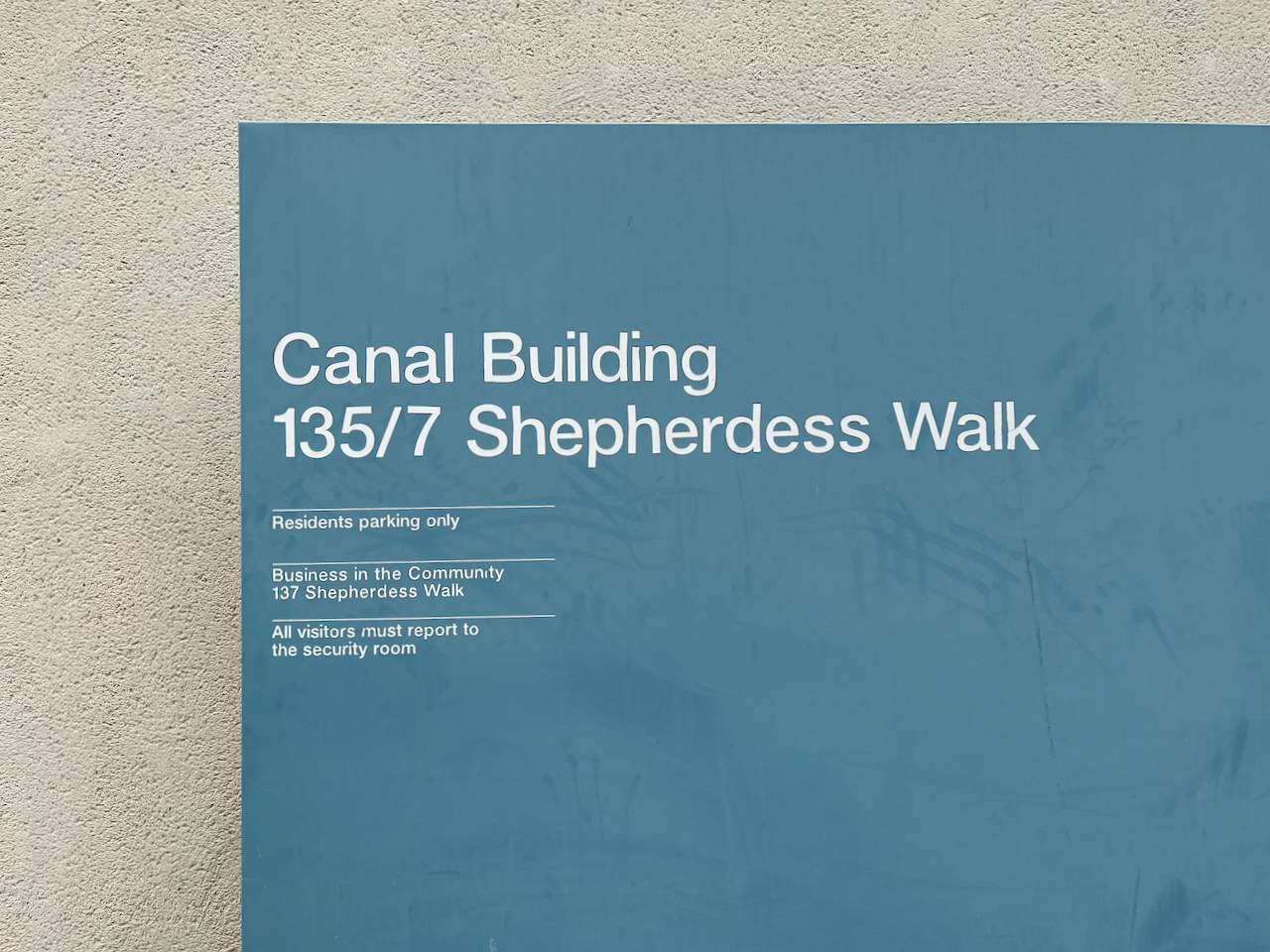
Canal Building, 135/7 Shepherdess Walk, N1

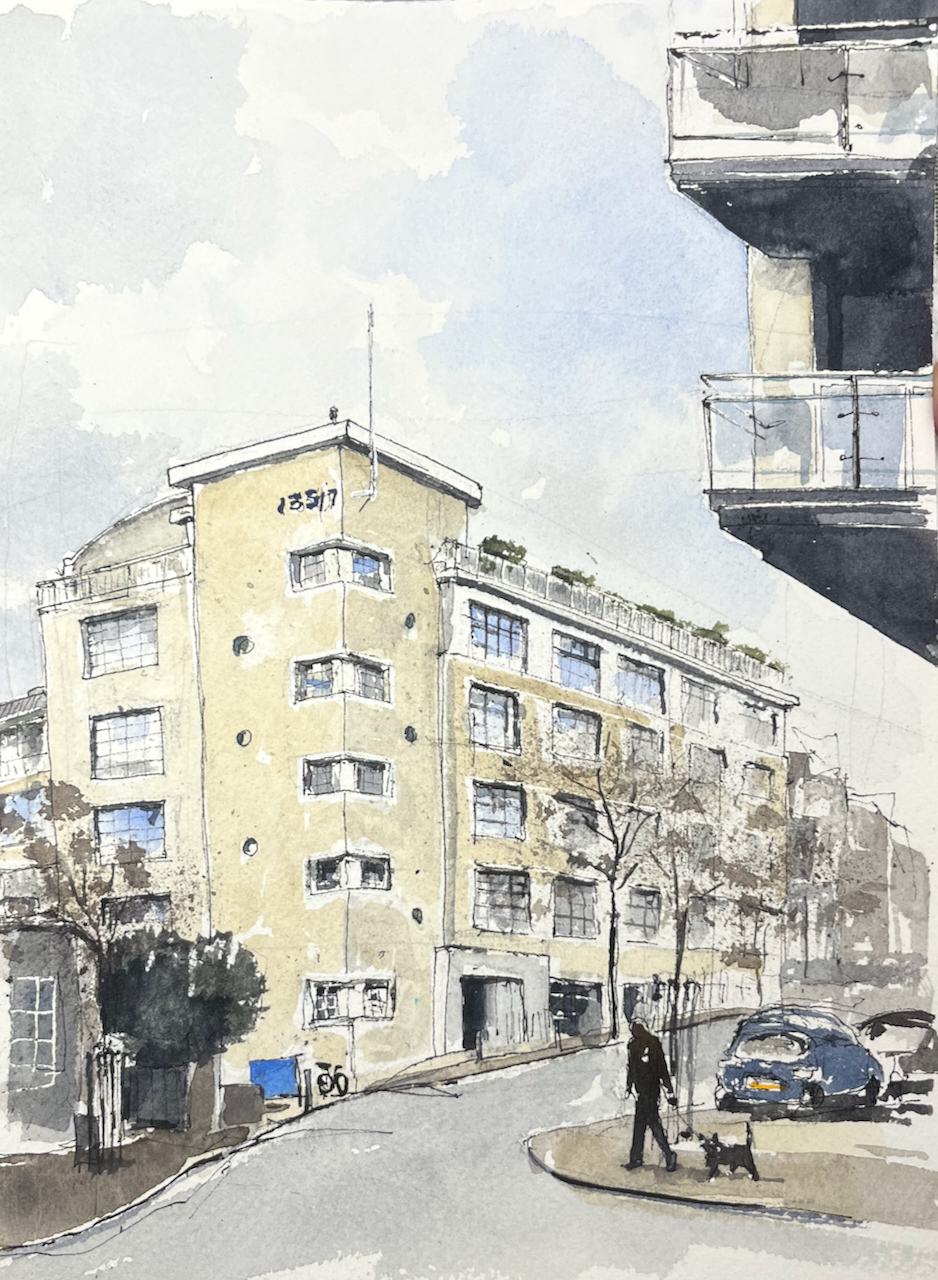
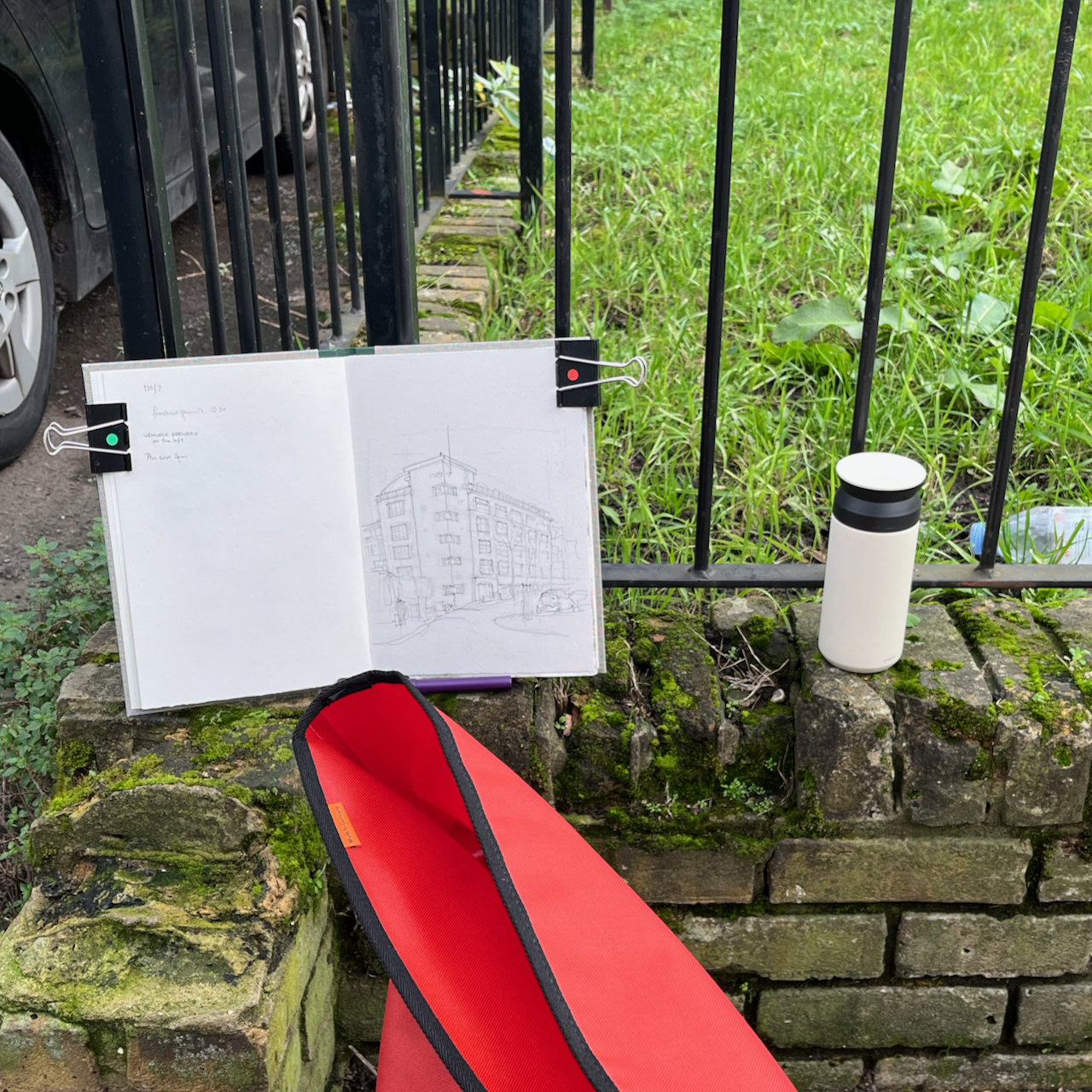
Here is The Canal Building, at the north end of Shepherdess Walk, sketched yesterday from the junction with Eagle Wharf Road.

Canal Building, Shepherdess Walk, London N1, sketched 29 December 2023 in Sketchbook 14

The building overhanging, in the top right of the drawing is part of Angel Wharf, 164 Shepherdess Walk. Shepherdess Walk leads over the Regents Canal, the bridge is just behind the cars in the picture. The buildings you see above the cars are on the other sidee of the canal. On the left is the “Wenlock Brewery”.

There is a tiny object on the roof of the Canal Building, next to the flagpole. It was hard to see what it was, but it looked like a wooden owl.

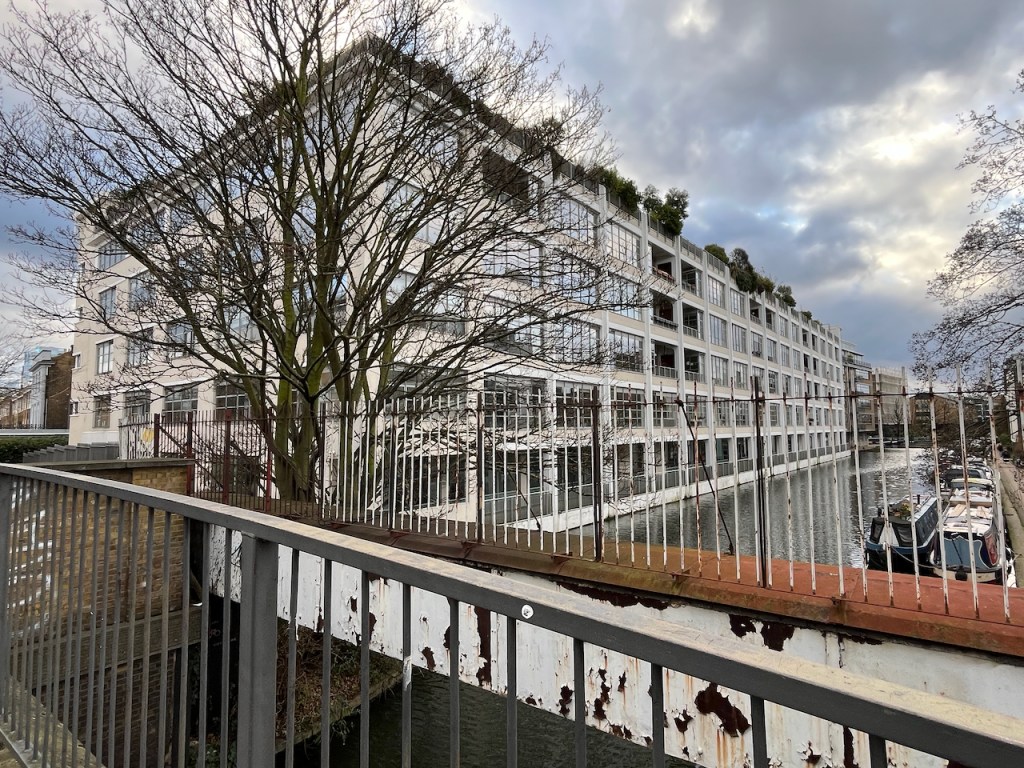
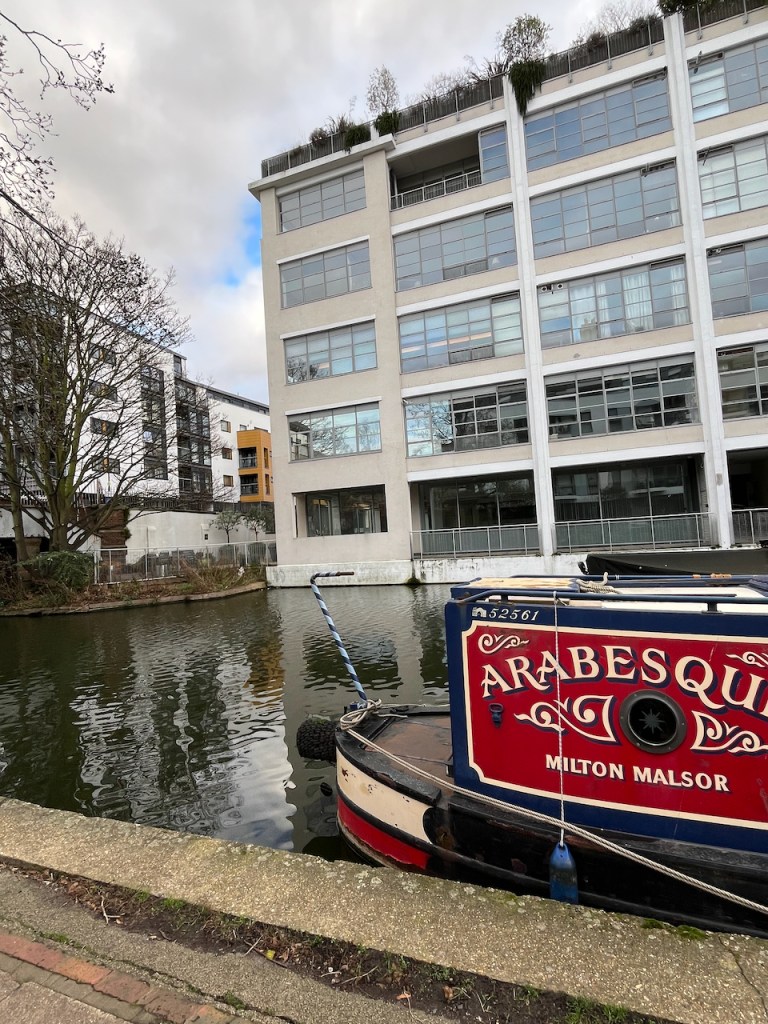
The Canal Building is a former 1930s Art Deco warehouse. In 2000, it was converted into apartments and commercial space to the design of the architects Child Graddon Lewis. This building gained the architects a place amongst the finalists for the 2023 Architecture Today Awards, in the category “Mixed Use and Retail”. There are 35 new apartments, 45 live/work units and 1100 sq metres of commercial space. Here are photos of the building from the canal side.

I did the pen on location and added the colour at my desk later. It was cold outside and I was sitting on a damp stone wall. Many people were out and about in the area, and two of them stopped to say hello and look at the drawing.

There are just three main colours in the sketch: Buff Titanium, Burnt Umber and Ultramarine Blue.

  • Buff Titanium for the Canal Building
  • All greys and blacks are Ultramarine Blue plus Burnt Umber
  • Ultramarine Blue for the blue car, the blue notice, and in the sky
  • The trees are Burnt Umber
  • And that’s it! There is a bit of Mars Yellow for the car number plate.

All colours are Daniel Smith except the blue, which is Schminke Horadam.

This is my first sketch in a new sketchbook!

Sketchbook 14

Here are some other sketches I’ve done in Shepherdess Walk:

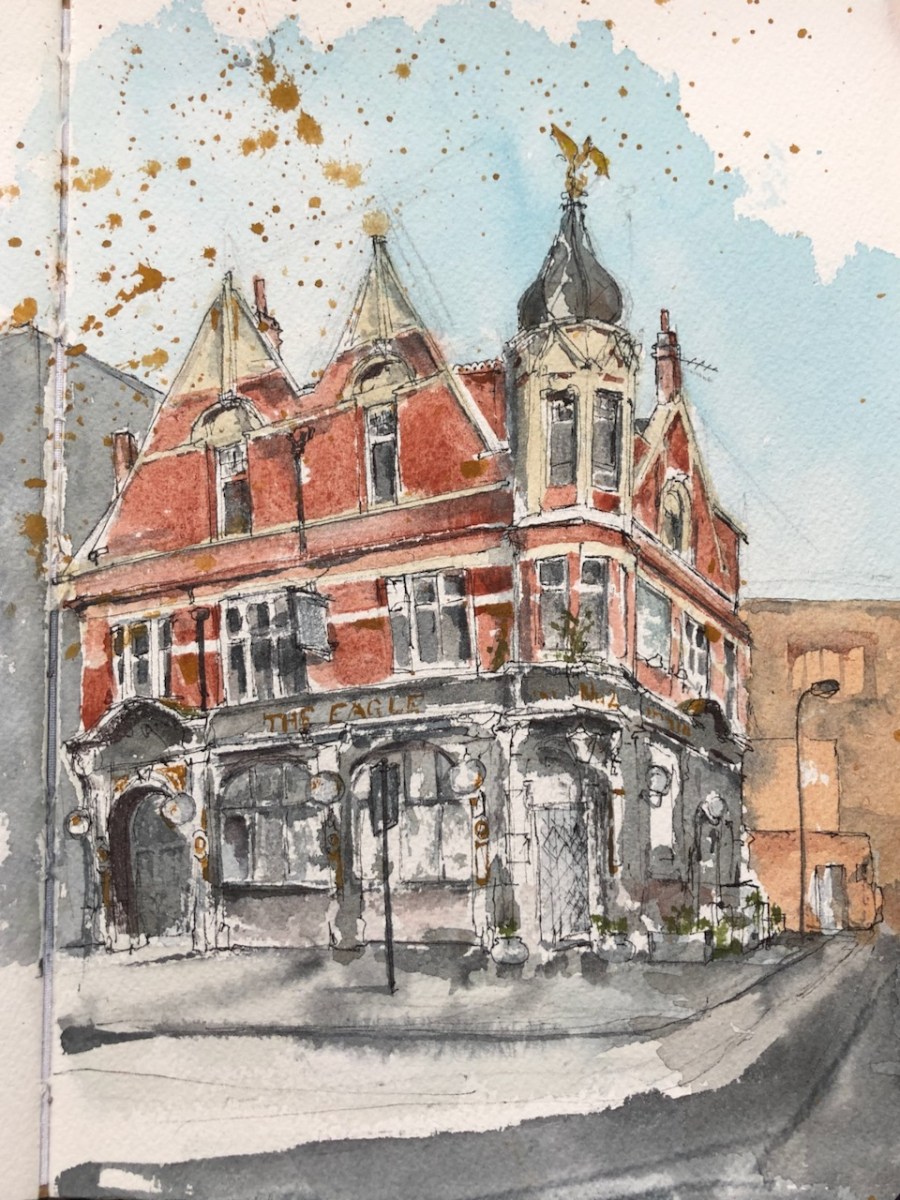
The Eagle, 2 Shepherdess Walk

Here is The Eagle. This is a very old pub, located at a significant junction on City Road. In the picture above, the alley on the right of the pub is called “Shepherdess Place”. It leads to a police car park, and several…

Read more…

Plumage House, N1

Here is Plumage House, 106 Shepherdess Walk, London N1. This was a feather factory. According to Spitalfields Life this operated until 1994. The building is now rather shabby, though in a dignified way. I wonder what will happen to it? In the drawing,…

Read more…

55 Holywell Lane, London EC2, Village Underground

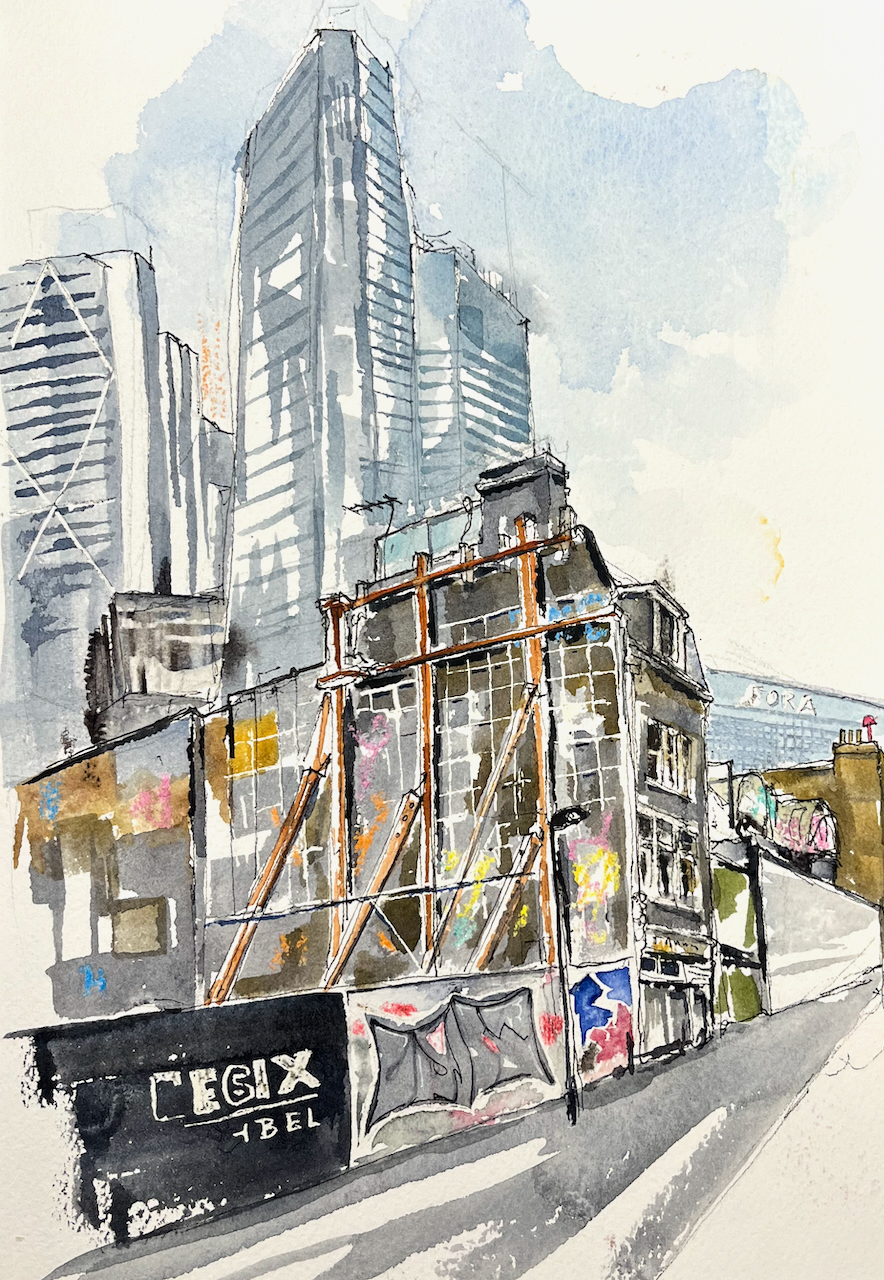
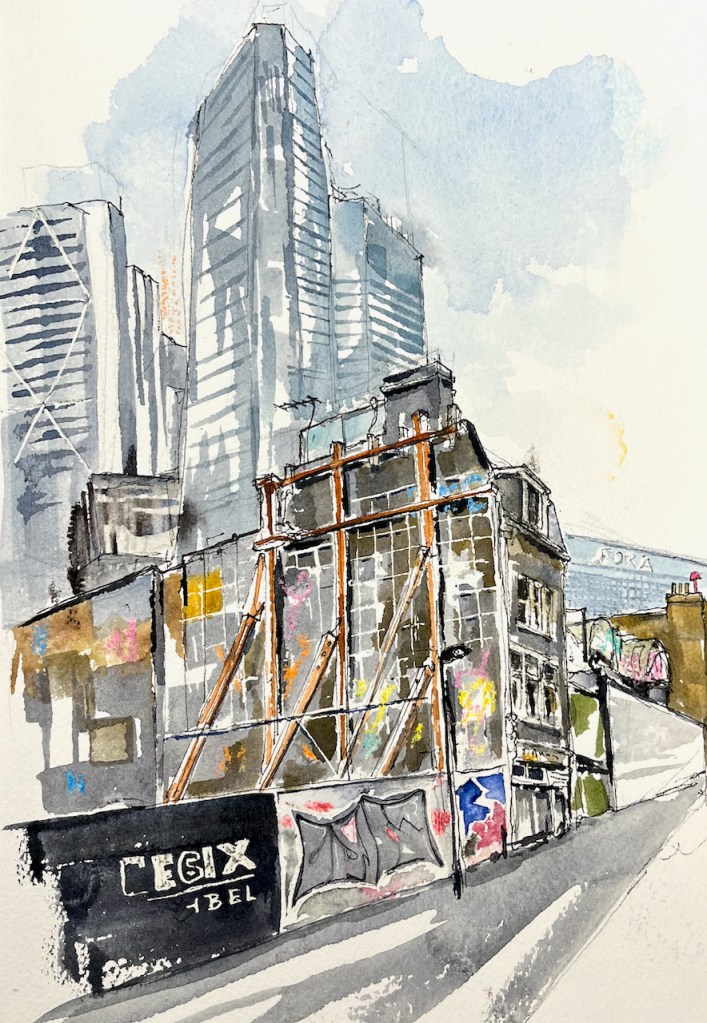
55 Holywell Lane, London EC2A 3PQ, sketched 17 November 2023 in Sketchbook 13

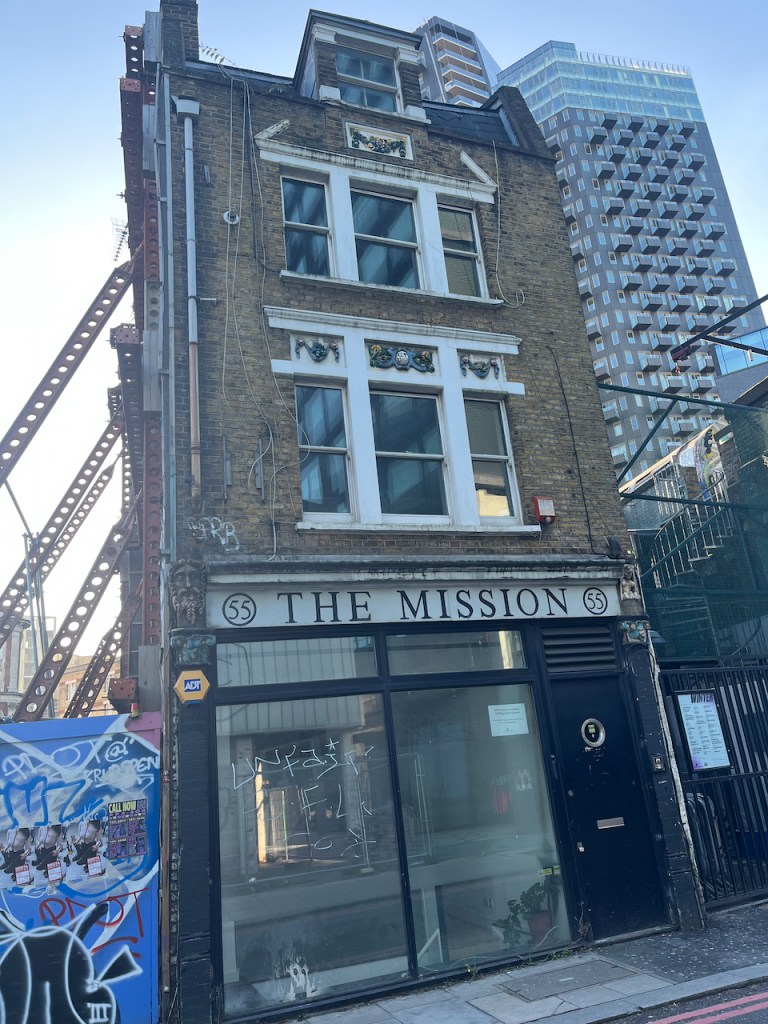
This apparently dilapidated building stands on the edge of a building site in Shoreditch. The flaking shopfront announces “The Mission”. It looks dusty and closed up.


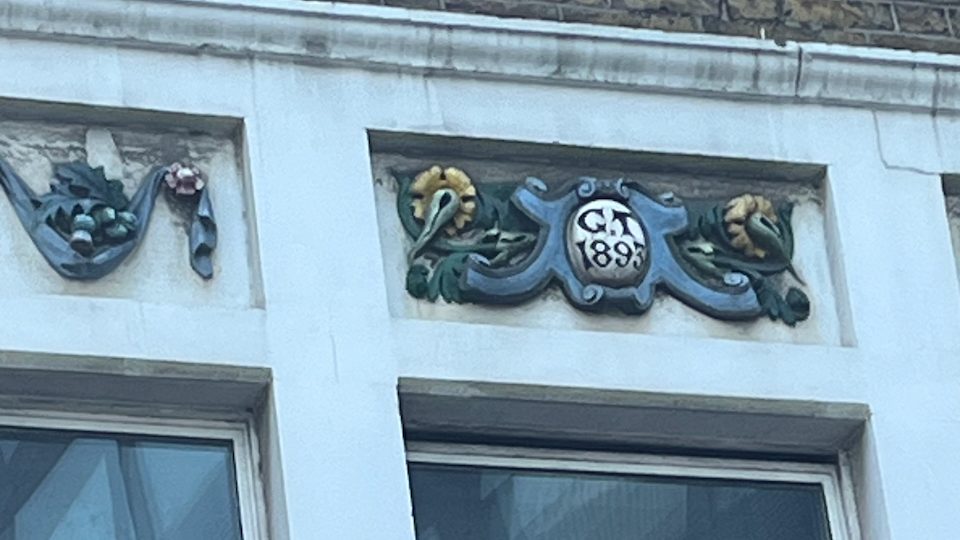
This is 55 Holywell Lane. The Victorian decorations on the front of the building say “G.T. 1893”.


Despite appearances, the building is in active use. It is part of “Village Underground” – “part creative community, part arts venue”. “home to cutting edge culture, clubbing and live music” founded in 2006.
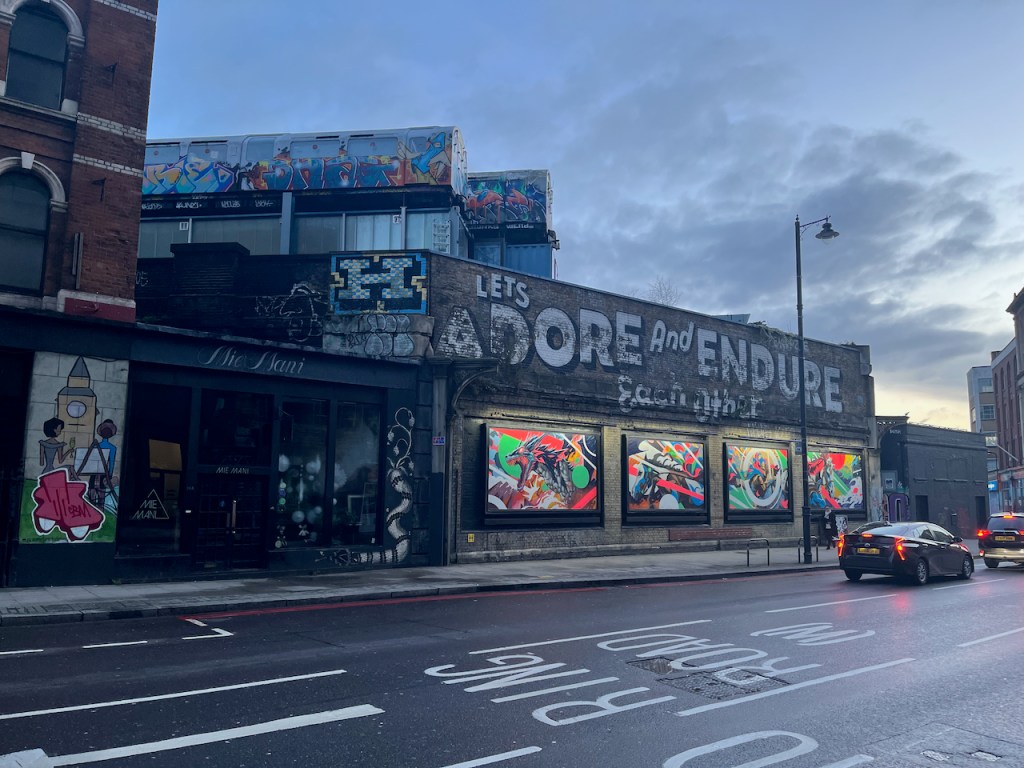
In the centre right of the drawing you can see the underground train carriages, hoisted on top of the venue.
Their website says

“It’s a strange little haven of calm in the carriages, above the chaos of Shoreditch, enclosed by skyscrapers on each side, where we grow fruit and veg in our little rooftop garden, get excited about new bands and parties, plot and plan how to improve the venue, decide which shows to book, and try to get more people to come to our shows. “

https://villageunderground.co.uk/about/history/


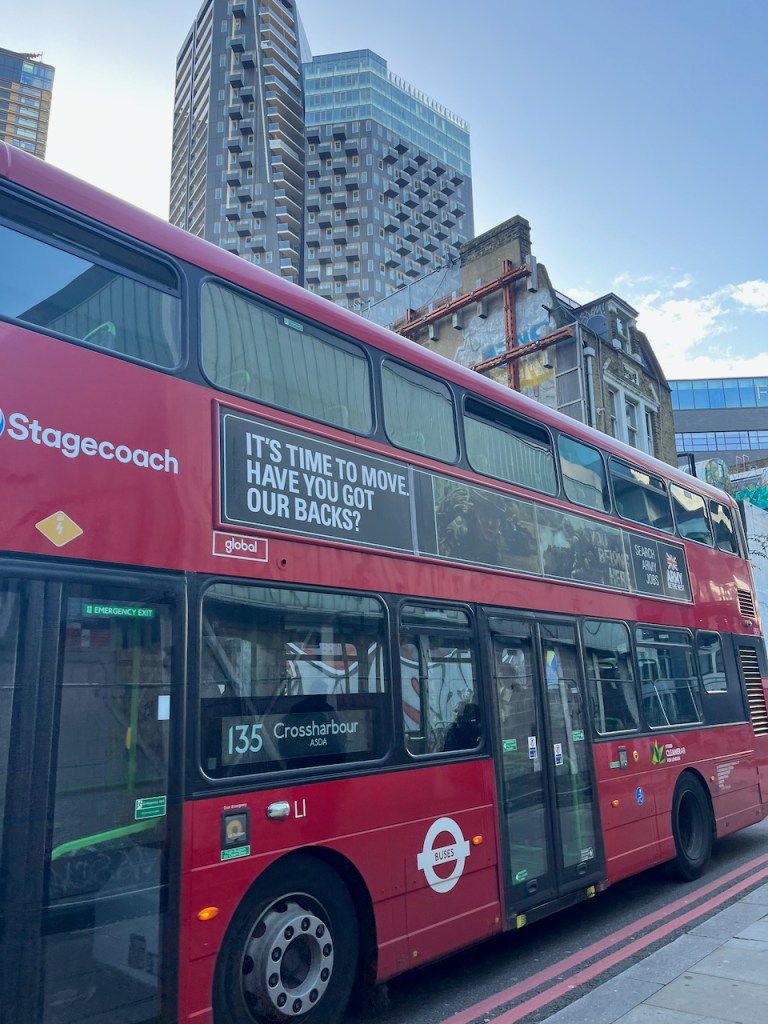
This is an area of London undergoing transition. In the background of my drawing you can see the huge residential and office towers next to Liverpool Street Station: “The Stage” and “Principal Place”. I sketched the picture standing under the elevated overground railway line, next to a building site. On the white wall shown to the right of my drawing, people were making a large mural, an advertisement for a whisky brand. The number 135 double-decker buses came past at what seemed like extraordinary frequency.


Cars and buses queued in this small street waiting to cross Shoreditch High St. It was a narrow pavement, and not a great place to sketch. But two people came and looked at the drawing: it’s a great skyline, they observed, looking at the view. And it is.

Here is the view of the site from Great Eastern Street early in the morning. The underground train carriages are visible top left.

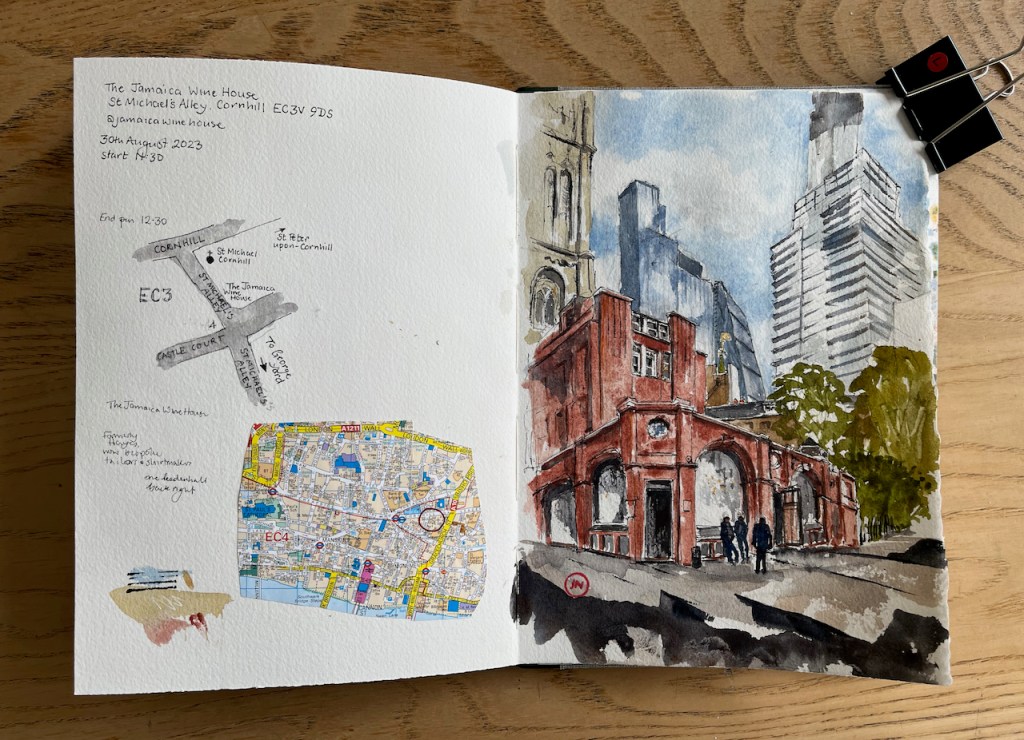
The Jamaica Wine House, EC3

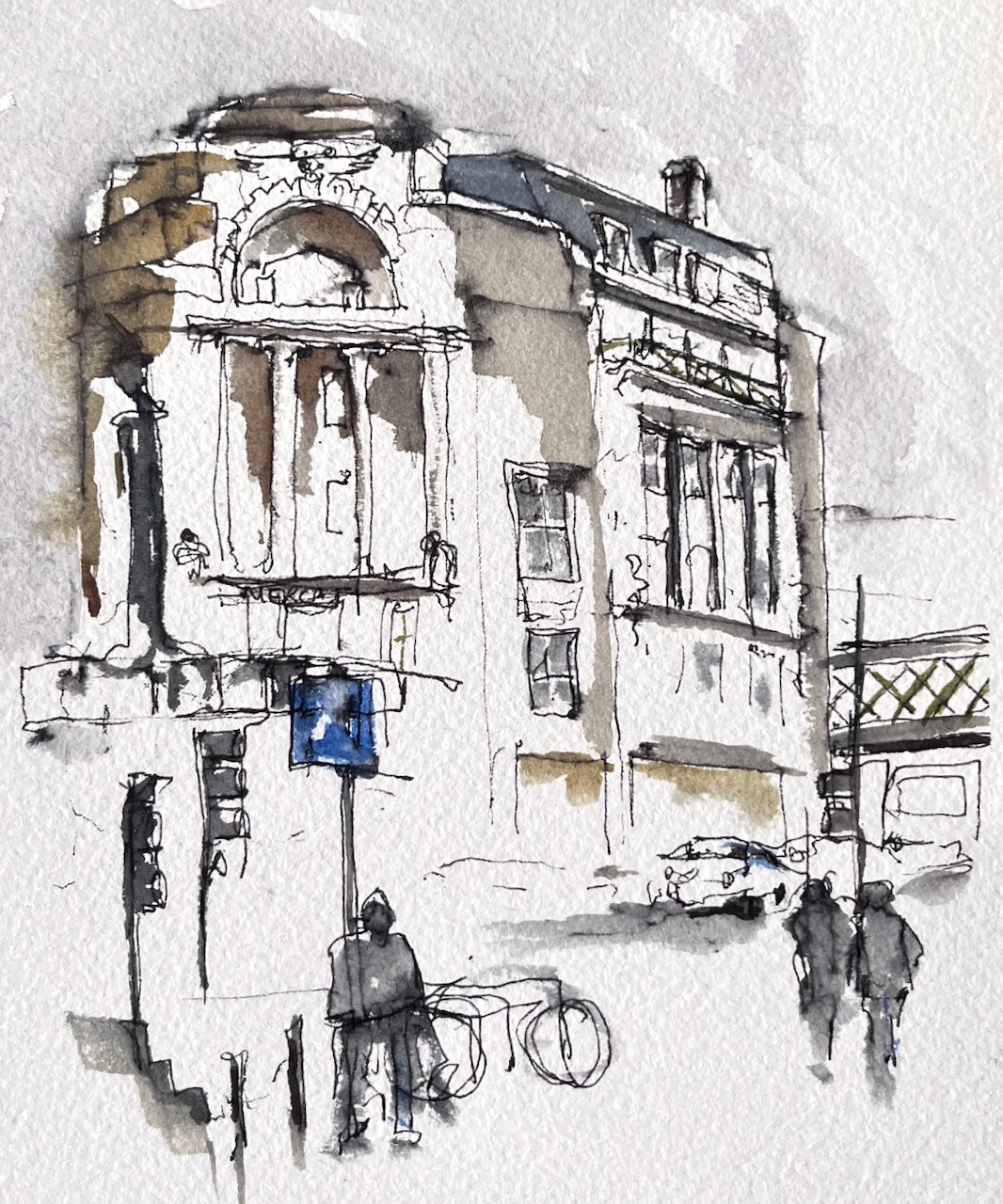
I walked through the City lanes towards London Bridge and passed by the Jamaica Wine House embedded, as it seemed, in a canyon amongst towers.

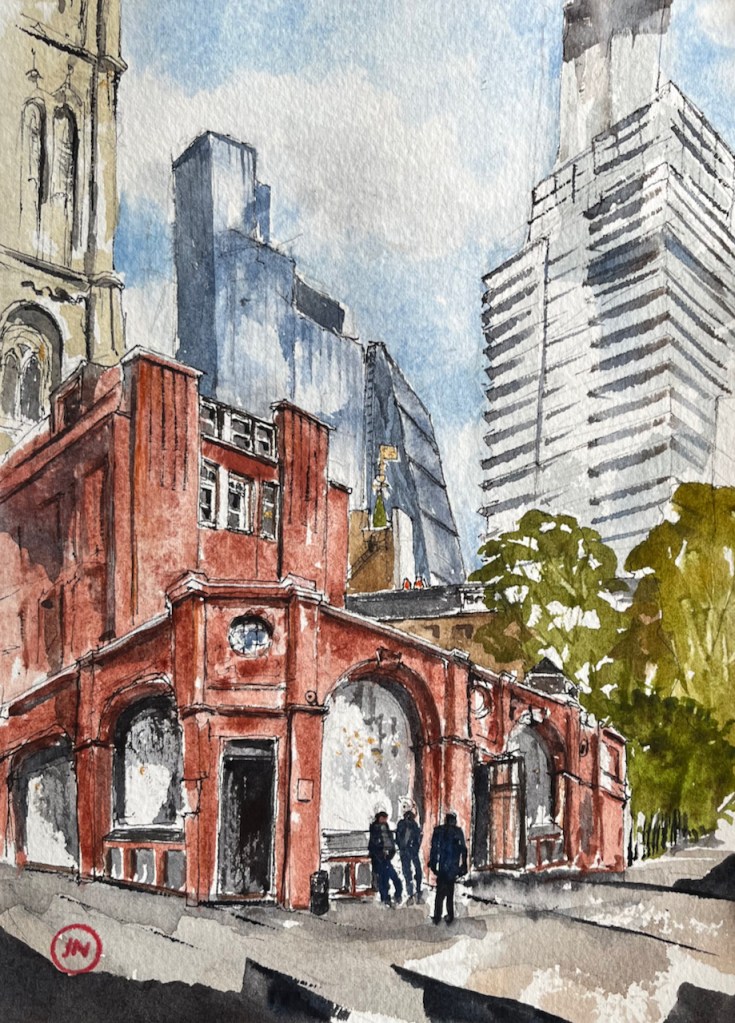
Jamaica Wine House, 12:30pm 30th August 2023 in Sketchbook 13.

The Cheesegrater and 22 Bishopsgate are the office blocks in the left background and One Leadenhall is under construction on the right.

This is a very old part of the City. Although some buildings have changed, the road layout still retains something of the feeling of Dickensian London. There has been a pub or coffee house on the site of the Jamaica Wine House since 1652. The current building dates from 1868 according to the Historic England List Entry (number 1079156).

Off the picture to the left is MacAngusWainright bespoke tailors and shirtmakers, at number 4 St Michael’s Alley. This shop used to be John Haynes&Co, the jewellers.

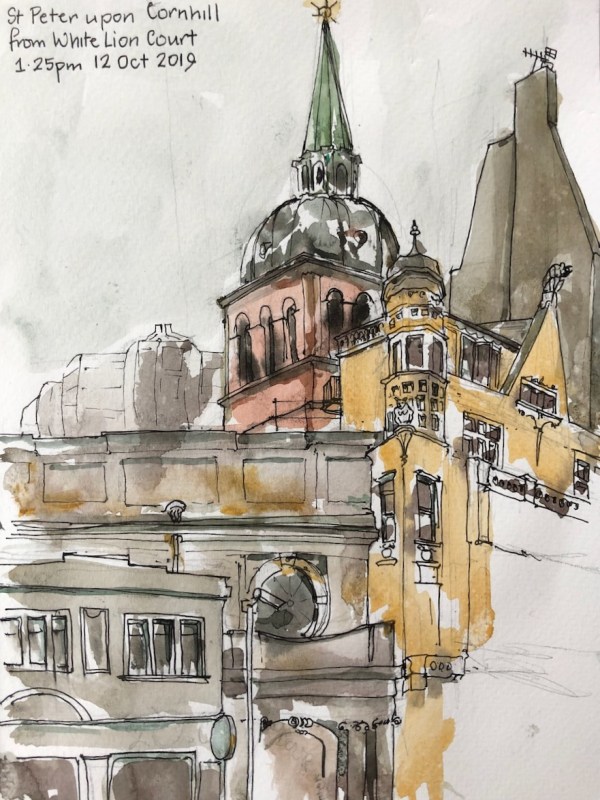
St Michael Cornhill is visible to the left in the background, and you can just see the weathervane on St Peter upon Cornhill in the centre of the picture.

My drawing of St Peter upon Cornhill is in this post:

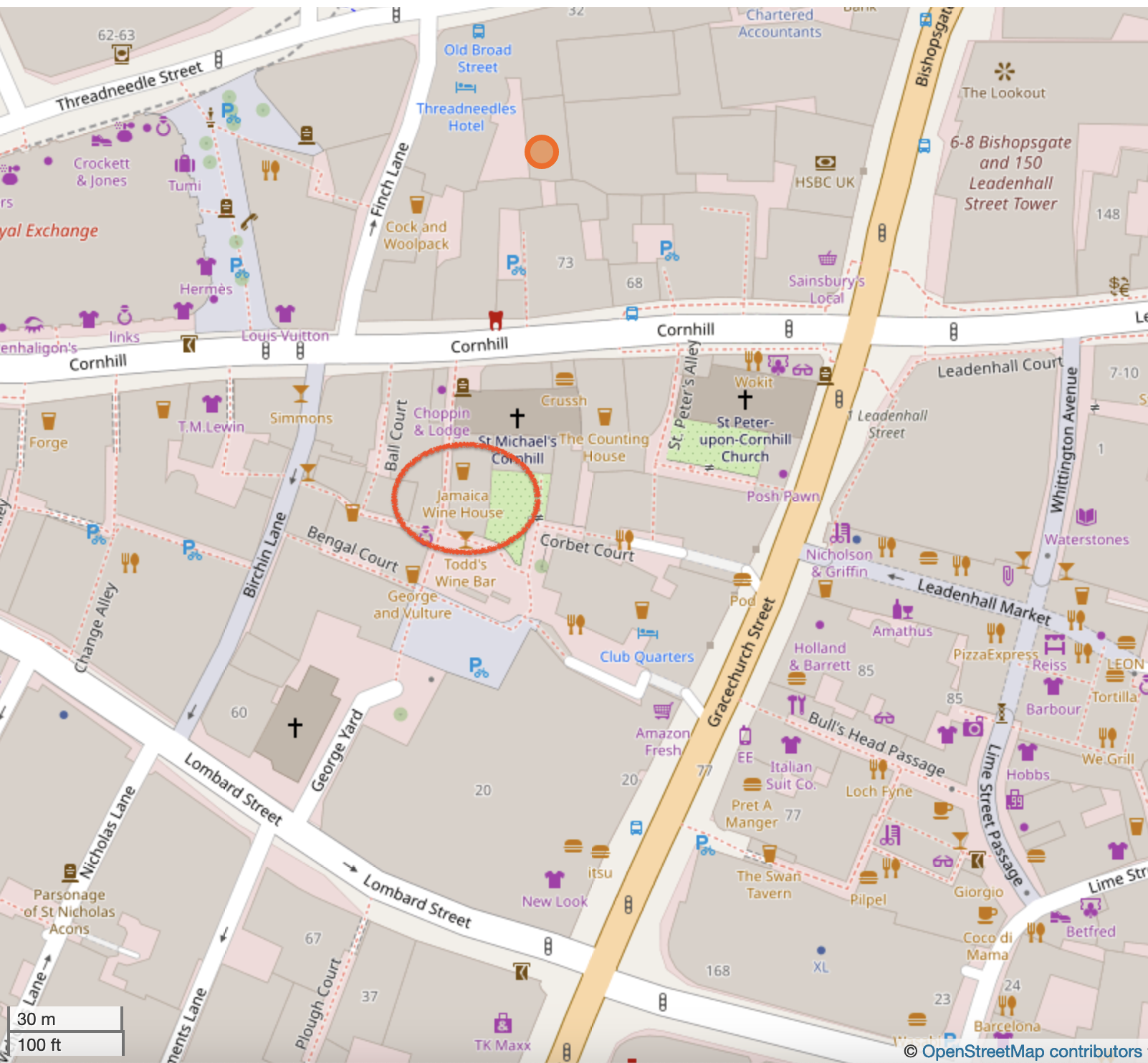
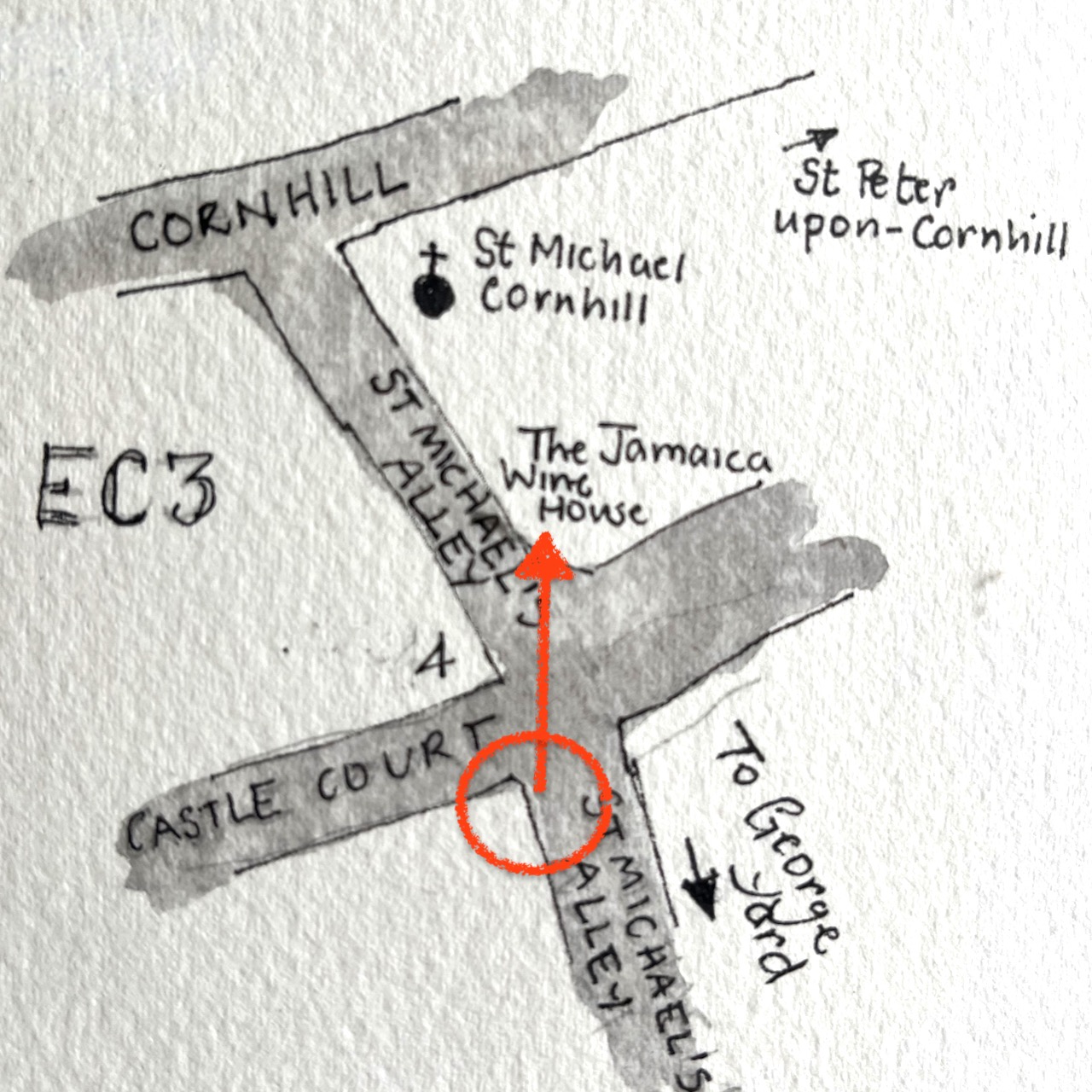
Location of the Jamaica Wine House in the alleys between Lombard Street and Cornhill. (Map (c) OpenStreetMap contributors)

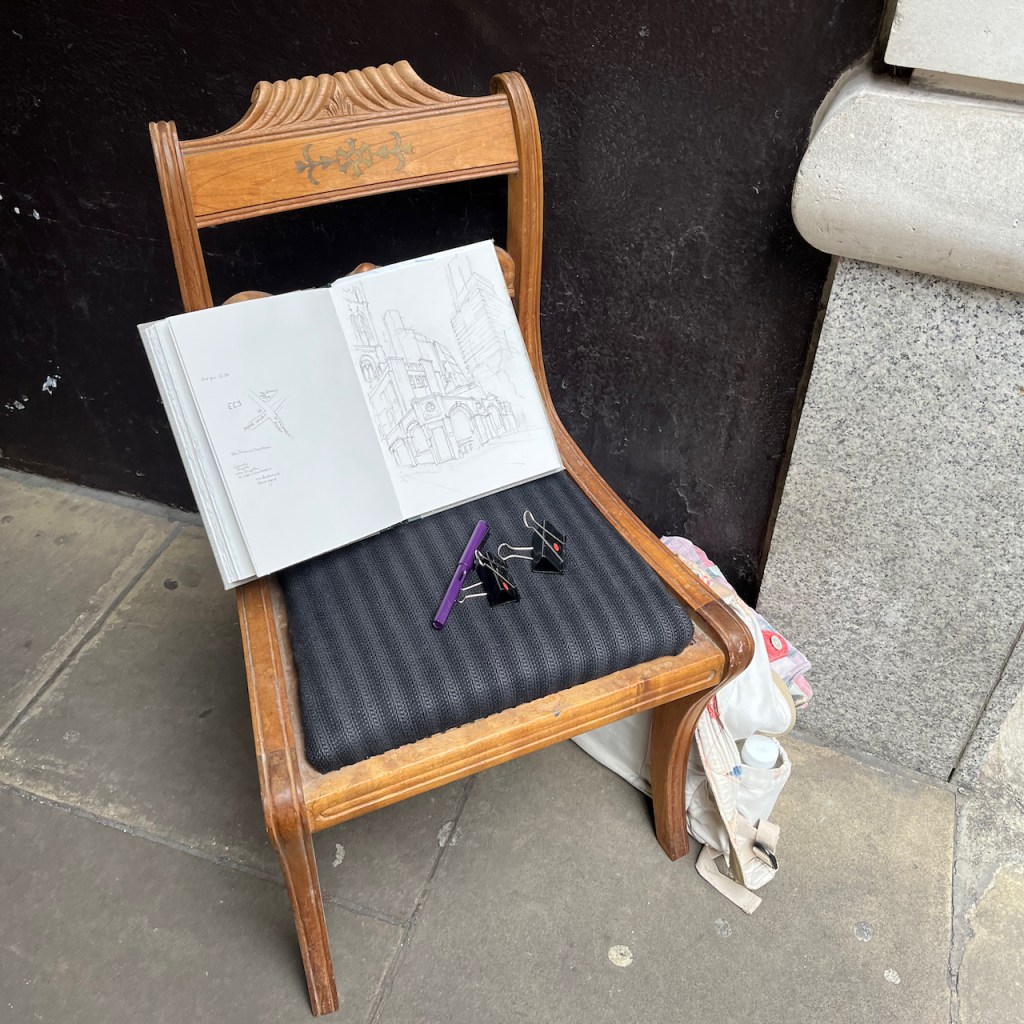
The picture took an hour on location and I finished it at my desk.

The colours in the picture are:

  • Fired Gold Ochre – my go-to colour for brick and sandstone
  • Ultramarine blue, Lavender, and Cerulean Blue for the sky
  • Burnt Umber in the sky
  • All greys and blacks are Ultramarine Blue with Burnt Umber
  • There’s a bit of Iridescent Gold on the weathervane of St Peter upon Cornhill
  • The trees in St Michael’s garden are Serpentine Genuine with some Permanent Yellow Medium.
  • St Michael on Cornhill is Buff Titanium with some Burnt Umber and Ultramarine Blue.

Done on Arches 300gsm NOT watercolour paper in a sketchbook by Wyvern Bindery, Hoxton. Thank you to McAngusWainwright, city tailor, for the kind loan of the chair.

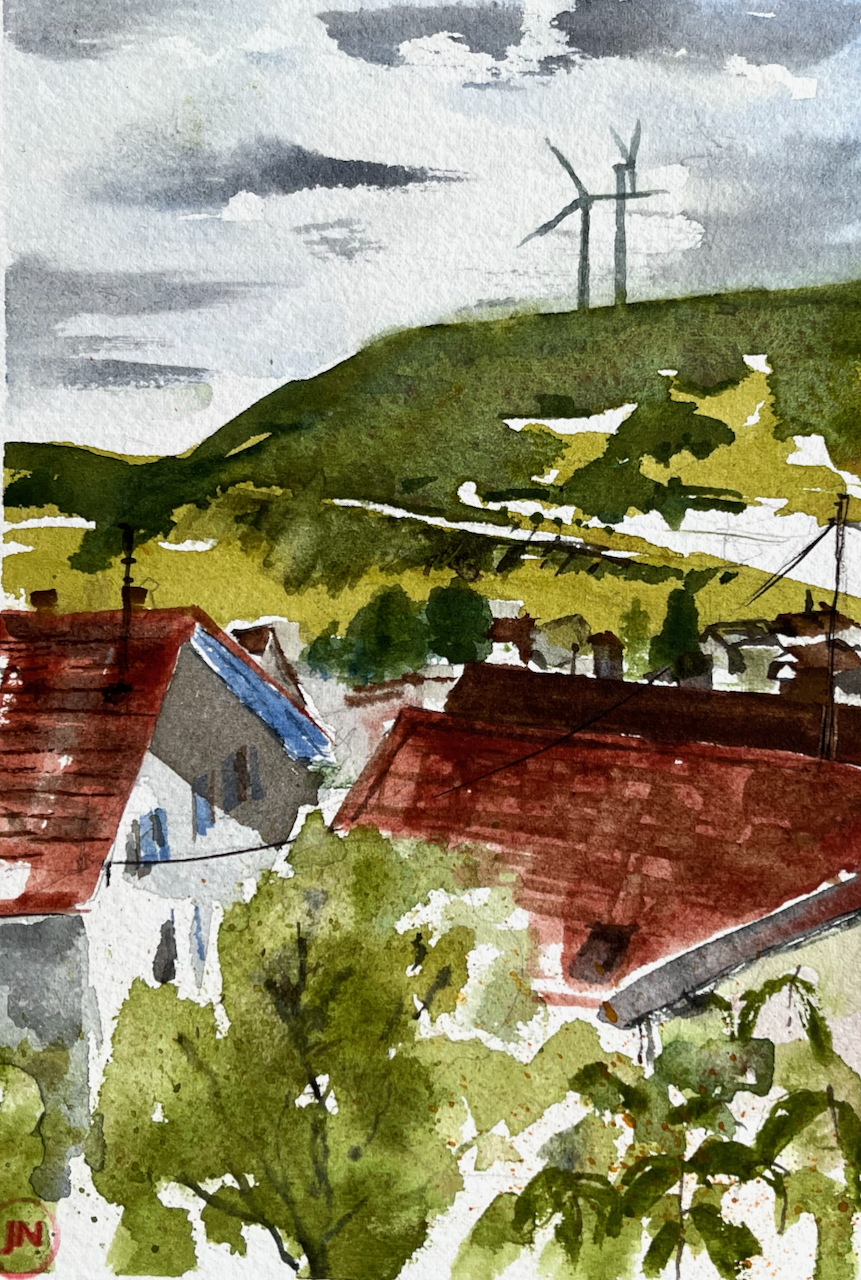
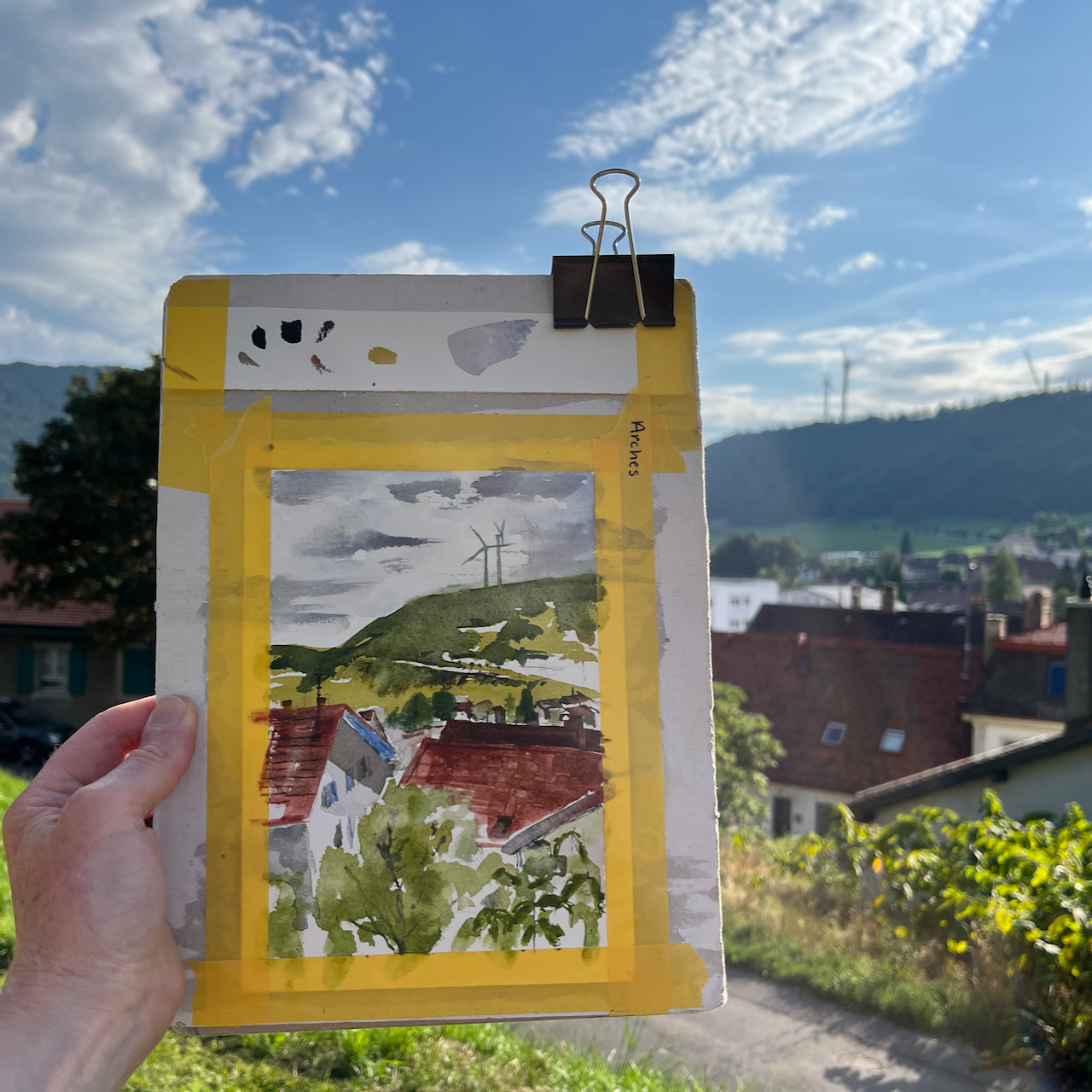
Wind turbine construction in Sainte-Croix, Vaud, Switzerland

In the Swiss hotel there was much talk about the wind turbines. They are being constructed on a nearby hill. I could see them from a bench by the church.

People said, you should go up there and see them, you can get very close. So on Sunday afternoon, we visited the construction site. There are information placards and a visitor car-park. Plenty of local people were up there viewing the machinery. The general atmosphere was one of curiosity and admiration.

It was a Sunday afternoon family outing: Let’s go and see the wind turbine construction site…

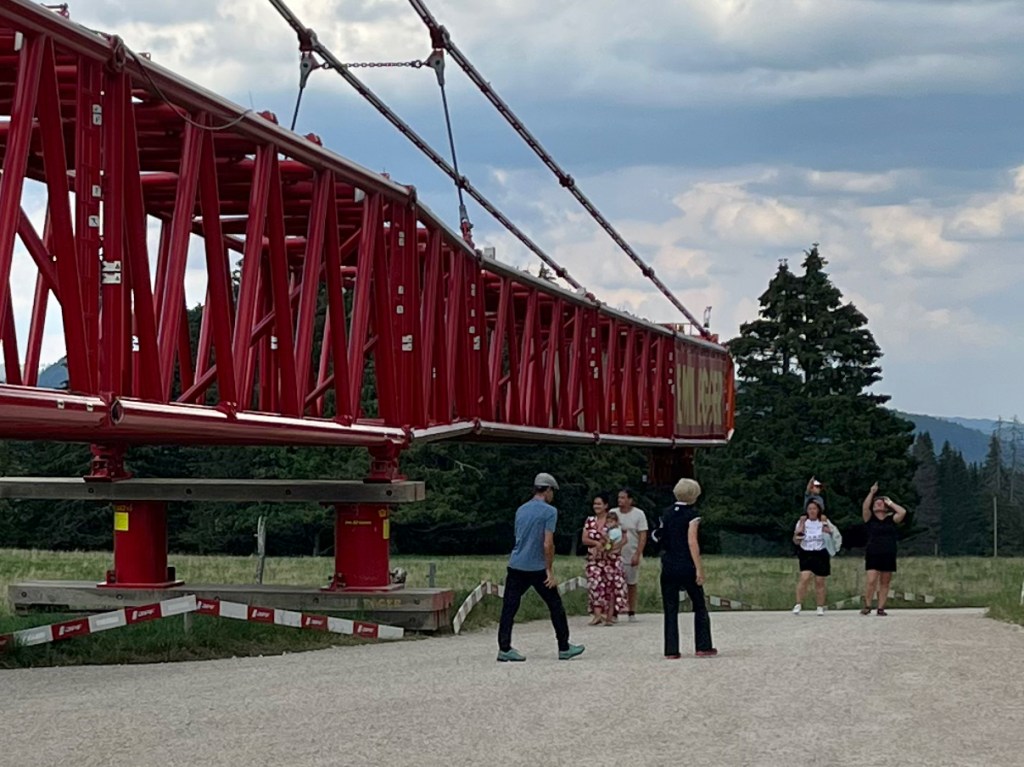
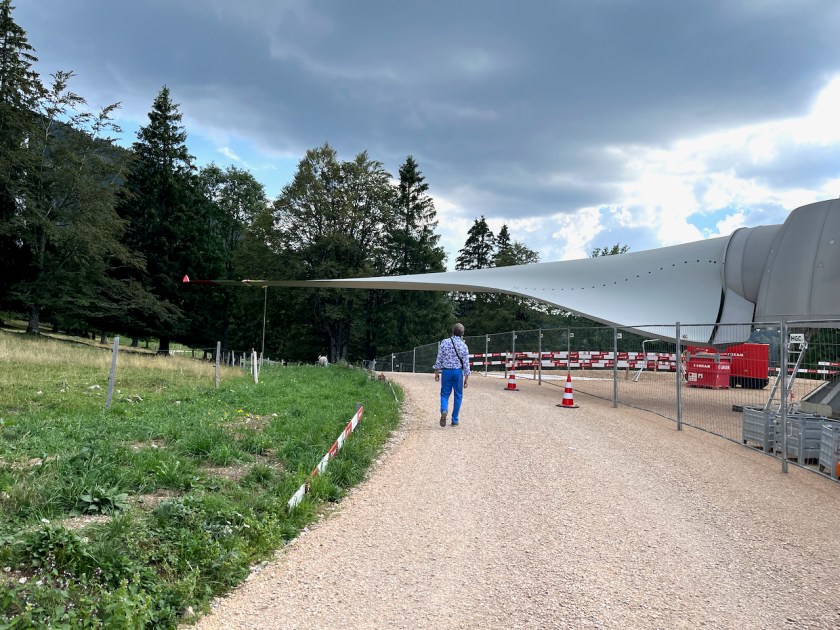
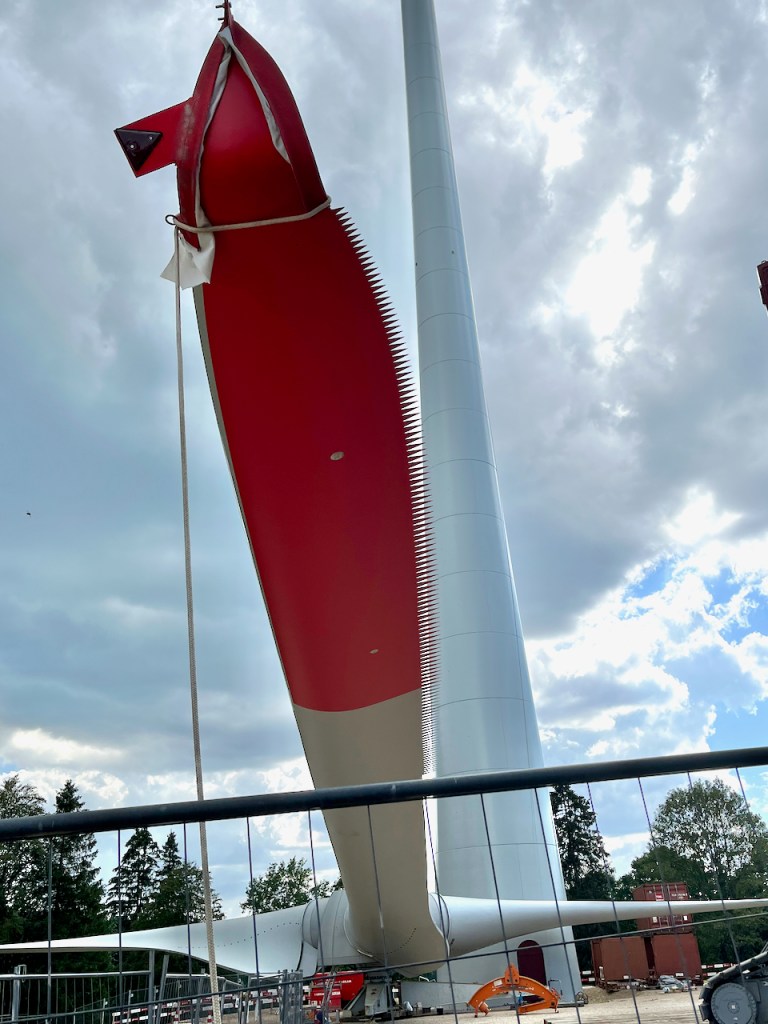
The blades are huge. 43 m.

The enormous blades, ready to raise.

As a British person, I was surprised at the openness. As it was the weekend, the site had no workers. The fascinating machinery was separated from us by some notional fences. It was supervised only by a few CCTV cameras on a stand. Perhaps there were also hidden ones. As you see from the photos, we could get close, and walk freely around the crane. My Swiss companion was surprised at my surprise.

It was also remarkable how positive the feeling was amongst the sightseers. A local person said that in the past they had been opposed to the turbines, but now that construction was started, they could see how clean and organised it was. “It’s better than a nuclear power station!” they observed. There’s no immediate benefit for the local people: they do not get a reduction on their bills. “But it’s better for everyone.” I was told.

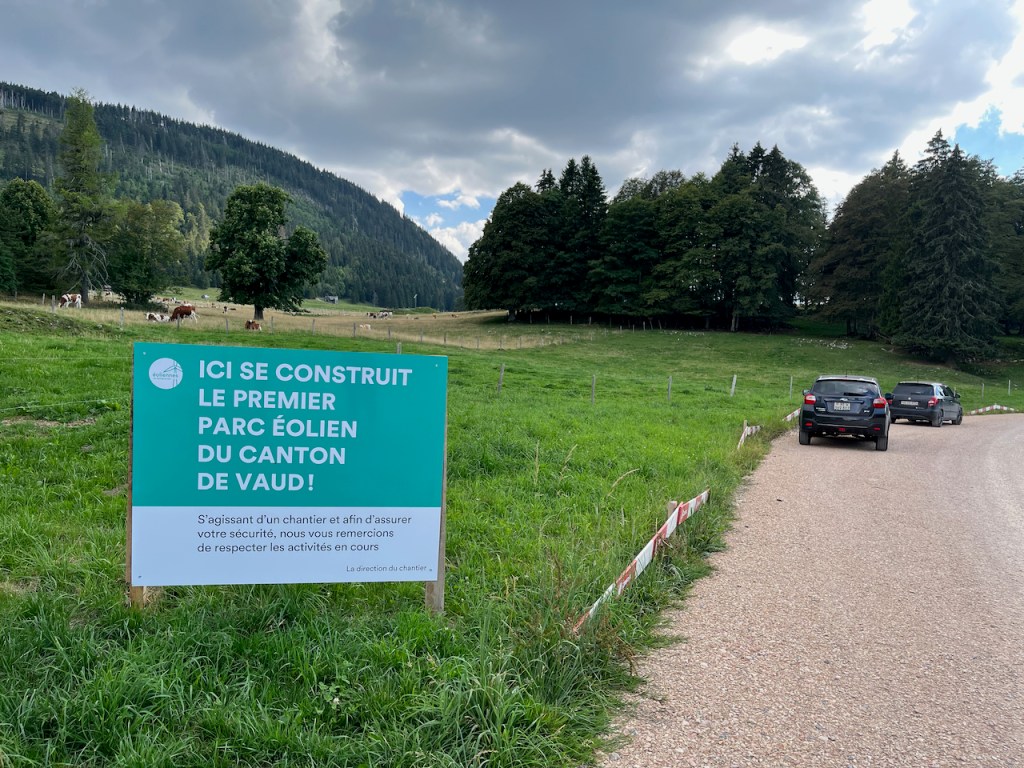
“Here we are building the first Wind Turbine park in the Canton of Vaud”. Note the line of cars to the right: local people have come to visit the construction site.

The next day, Monday, my host came rushing up to me as I returned from a walk. “Quick, look! They are raising…”. We found a vantage point. There, on the distant hill, the blades were being raised up the mast by the crane. They moved very slowly, but definitely, “like the hands of a watch” said my host. For that Swiss person, this engineering feat had become a source of local pride.

Urban sketching, Shetland and the journey south 2023

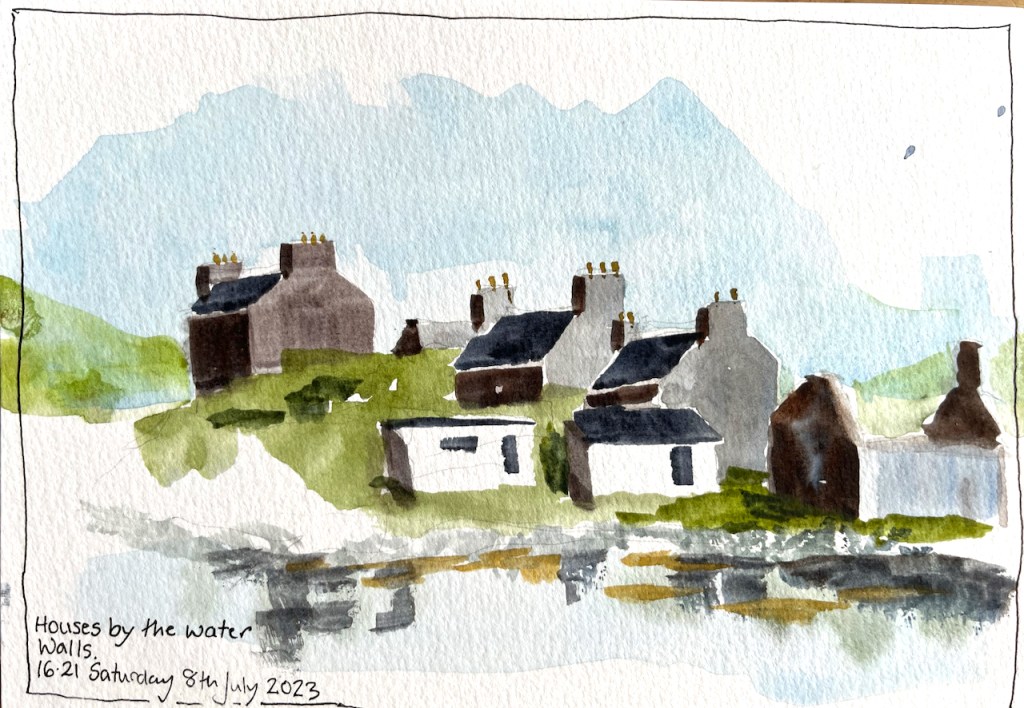
Here is a postcard which I made at the end of a long hot walk. It shows the houses in Walls, on Shetland West Side.

Houses by the water, Walls, Shetland. Postcard sketch A5, 8th July 2023

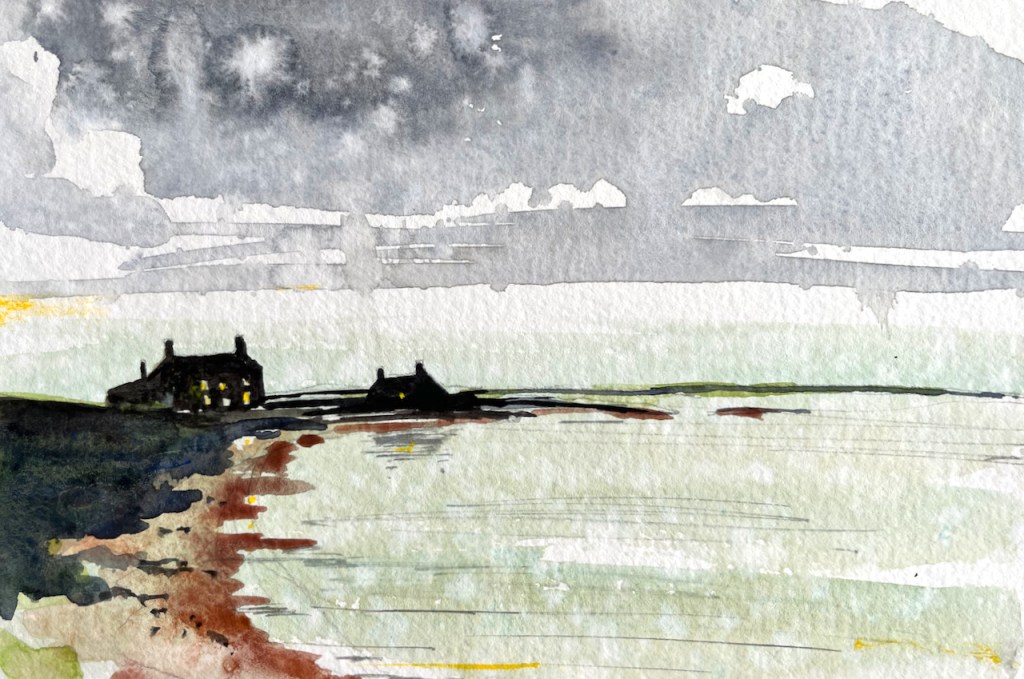
Here is Burrastow House and Burrastow Cottage, an evening view. I sketched this on top of a sky view I’d sketched earlier, but which had been spotted by rain, as you see.

Burrastow House and cottage, evening view. A5 postcard.

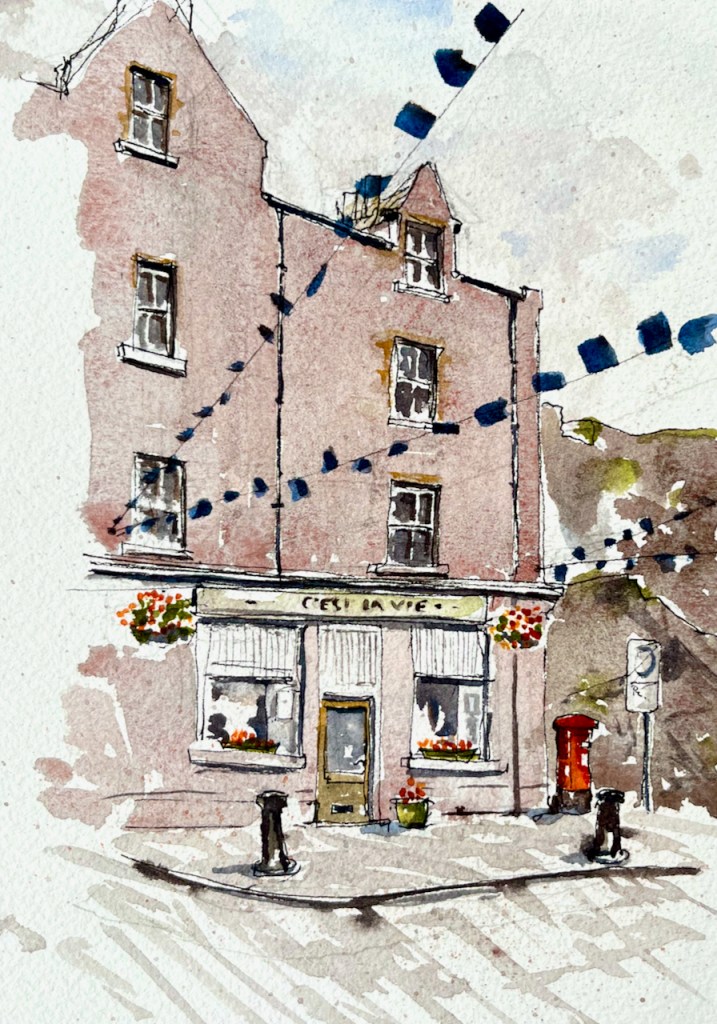
This is a restaurant in Lerwick: “C’est la vie”.

“C’est la vie” French restaurant, Lerwick, postcard sketch A5, August 3rd 2023

The flags are to welcome the “Tall Ships” which came to Lerwick earlier in the week. The restaurant was closed, I was waiting to see if it opened. Then the rain started. Then the restaurant opened and I finished the sketch inside. Then I walked to the Ferry Terminal.

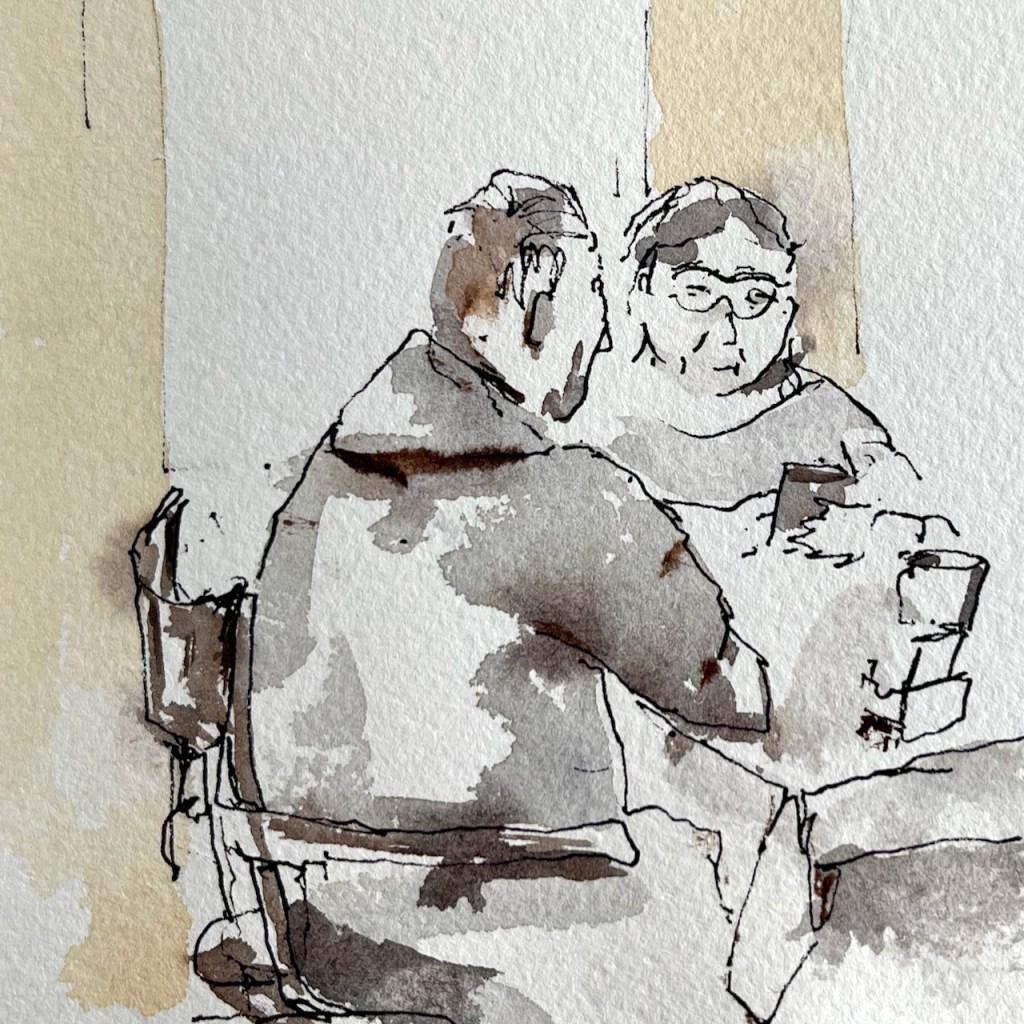
On the ferry, I made quick sketch of people at breakfast.

On board MV Hrossey, approaching Aberdeen. Breakfasters in the lounge. August 4th 2023. Vintage paper company sketchbook, A5

Here is my final sketch of the expedition. On the train at Aberdeen, I looked out of the window.


I have a sketchbook full of images. Here’s a quick flip through showing random glimpses of the visit: (19 second silent video)

London Liverpool Street, EC2

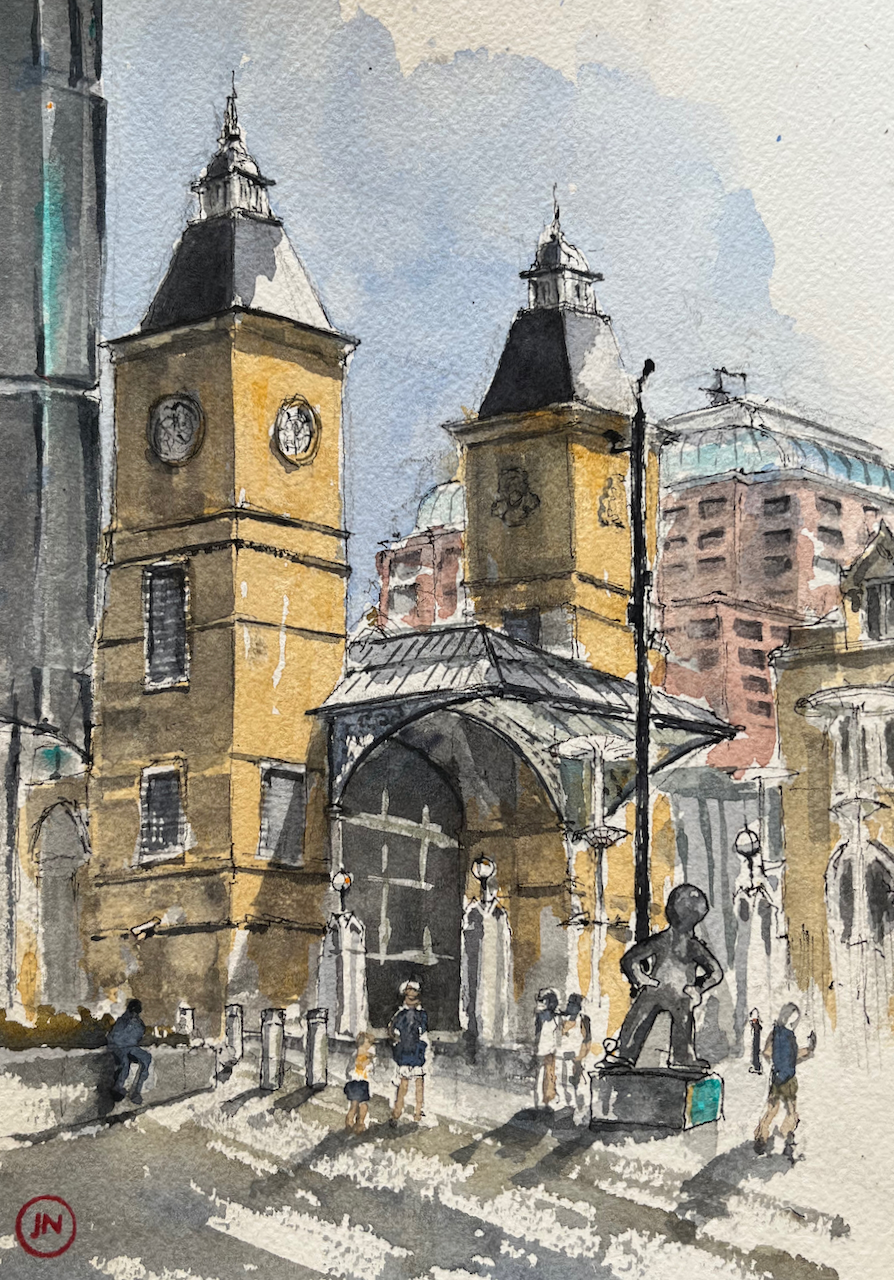
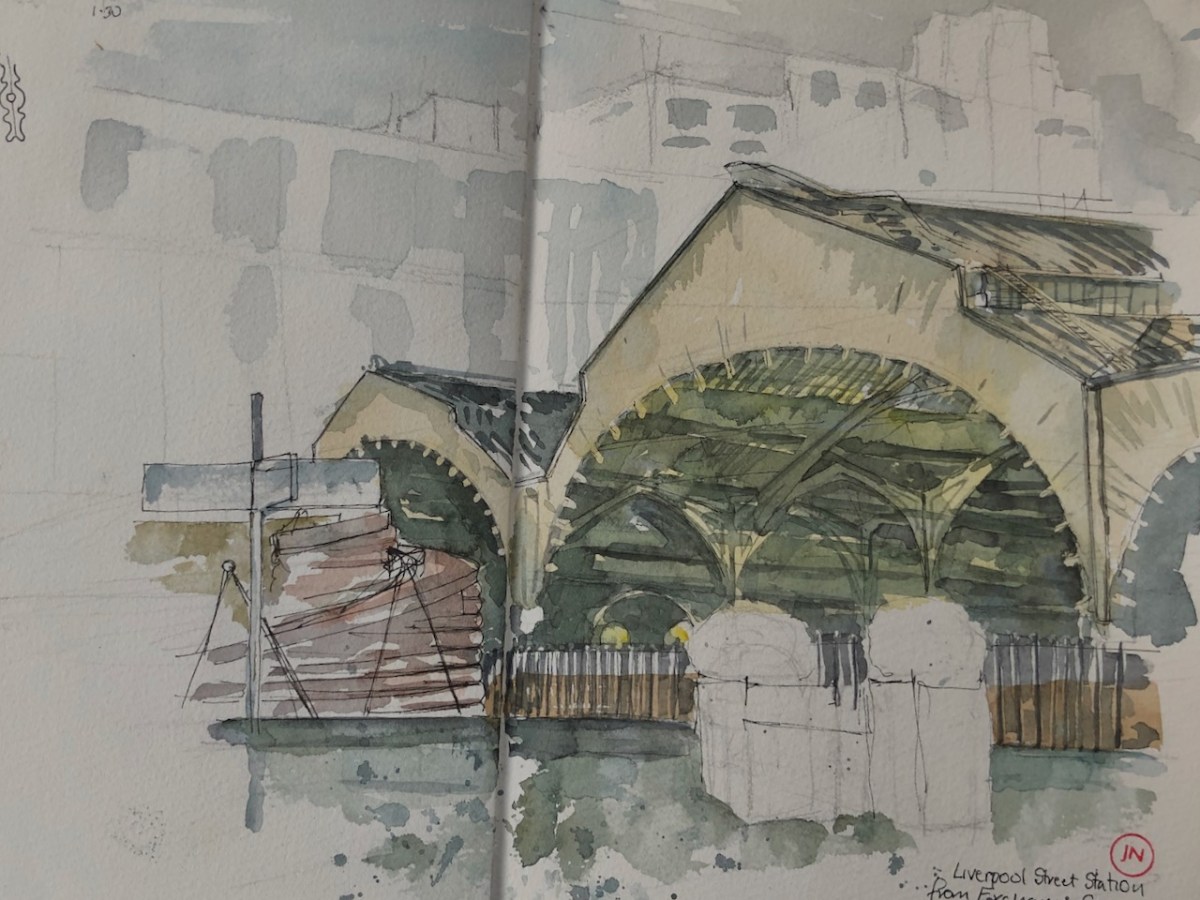
Here is Liverpool Street Station, main entrance, sketched today from outside the “Railway Tavern”.

Liverpool Street Station, 25th June 2023, 1pm. 8″ x 10″ in sketchbook 13.

The humanoid figure on the plinth is Morph, part of a temporary art trail.

The area in front of the main entrance is like an art installation in itself, a collector’s assembly of street furniture: two different types of bollards, long ribbons of fencing, several species of street lamps, and that enormous CCTV stand which is just behind Morph. It’s surprising that people can find their way into the station in amongst the obstacles. I haven’t drawn them all.

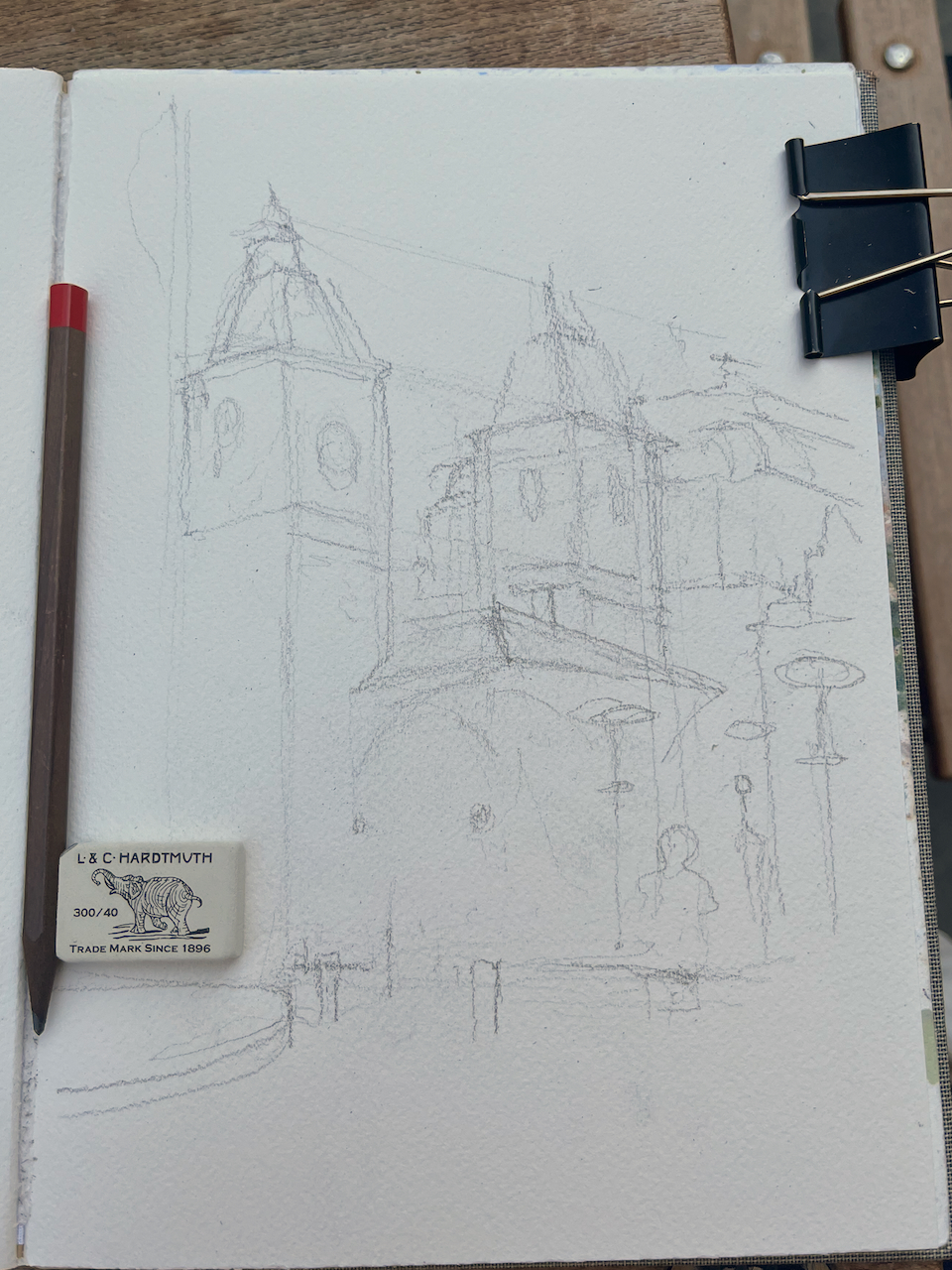
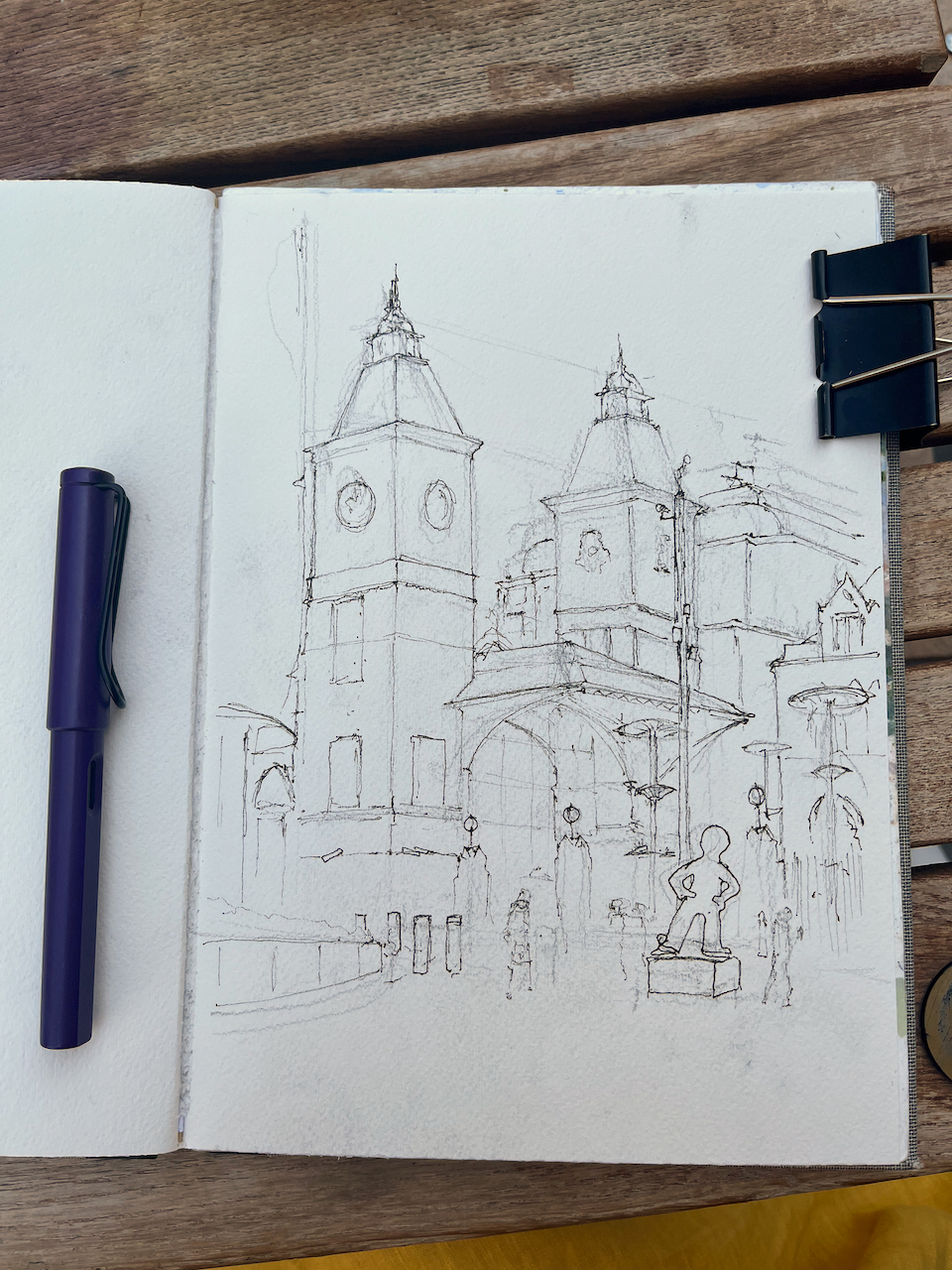
Here’s work in progress on the sketch:

This section of Liverpool Street Station was built in 1875 as the new London terminus of the Great Eastern Railway. The building on the right of my drawing is the edge of the former Great Eastern Hotel (1884), now the Andaz London Liverpool Street. The pink building in the background is an office block on Bishopsgate.

I’ve sketched in this area before. This post contains more information about the history of Liverpool Street:

Liverpool Street Station from Exchange Square

Here are the magnificent 19th Century arches of Liverpool Street Station, seen from Exchange Square. Liverpool Street Station opened in 18751 Now the question is: what curve is that arch? I thought it might be a CYCLOID. A cycloid is the shape made by a dot on the edge of a rolling wheel. I made…

Keep reading

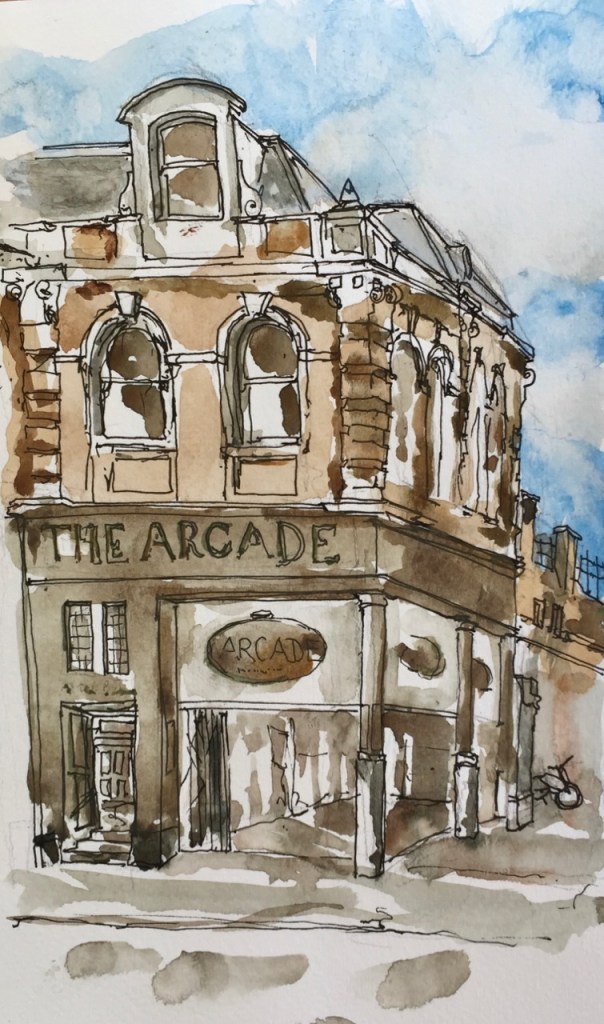
In 2019 I sketched the entrance to “The Arcade” which is shown on my sketch map. See this post for more about this sketch of The Arcade.

Compton, St John’s Square, London EC1

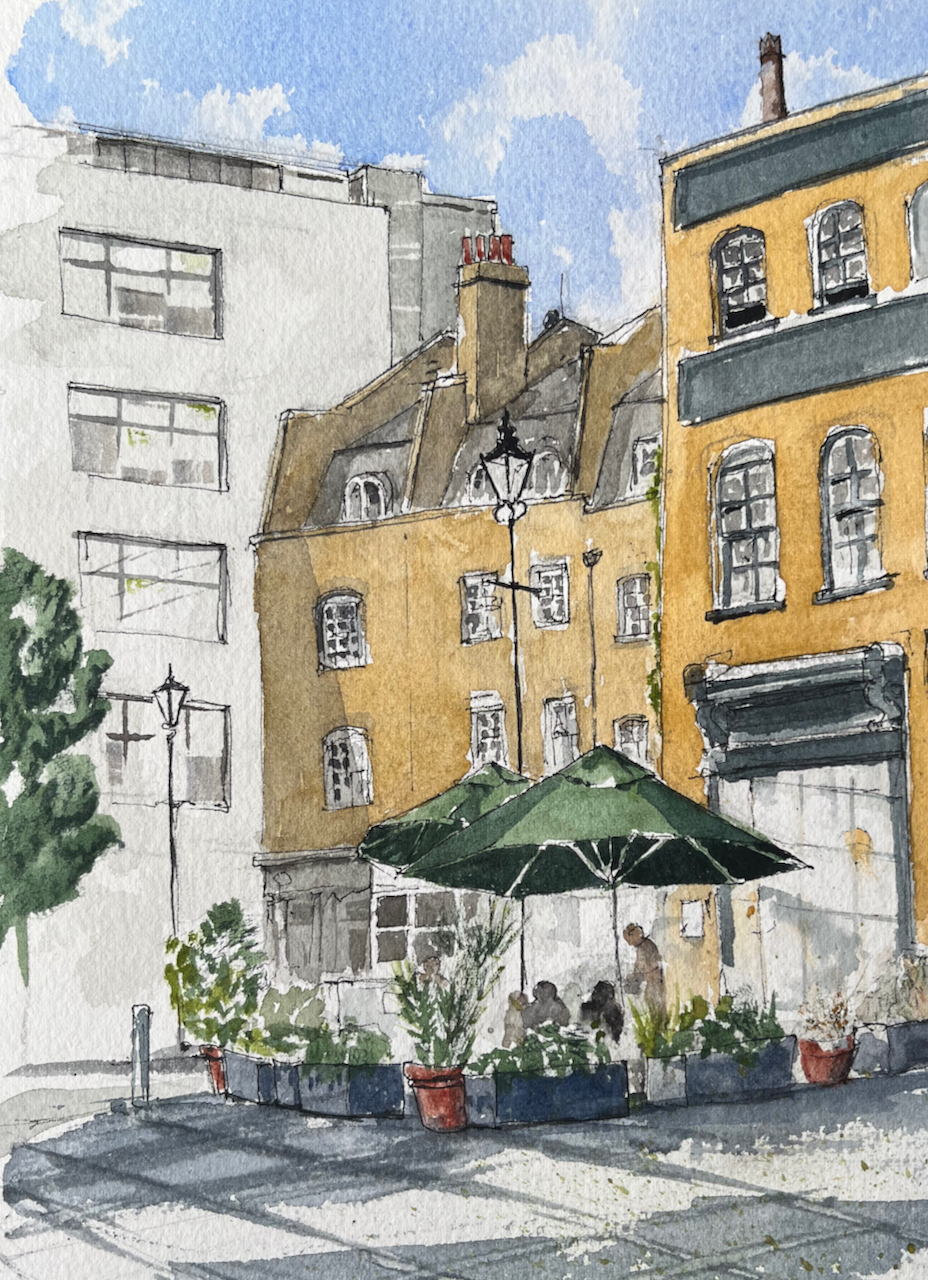
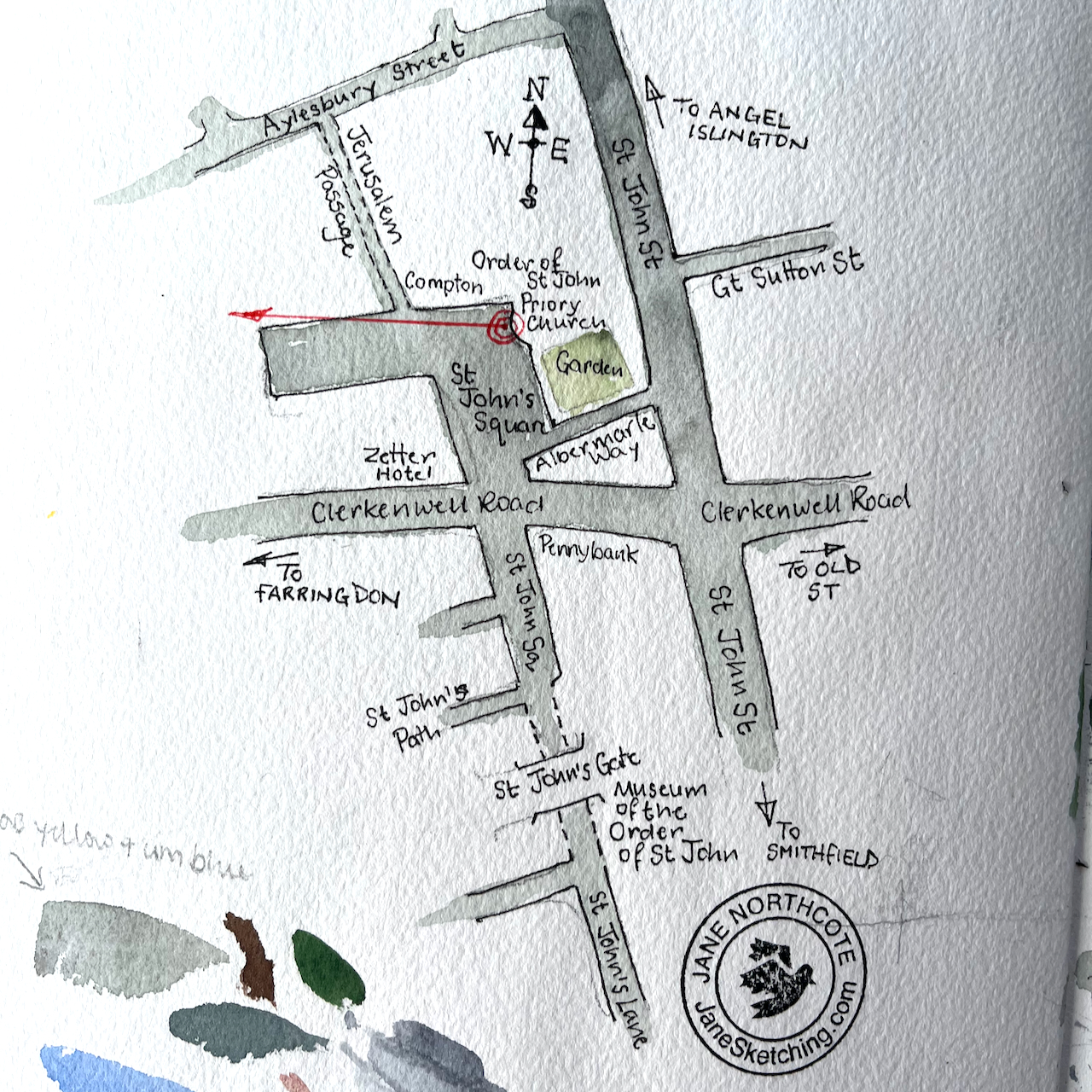
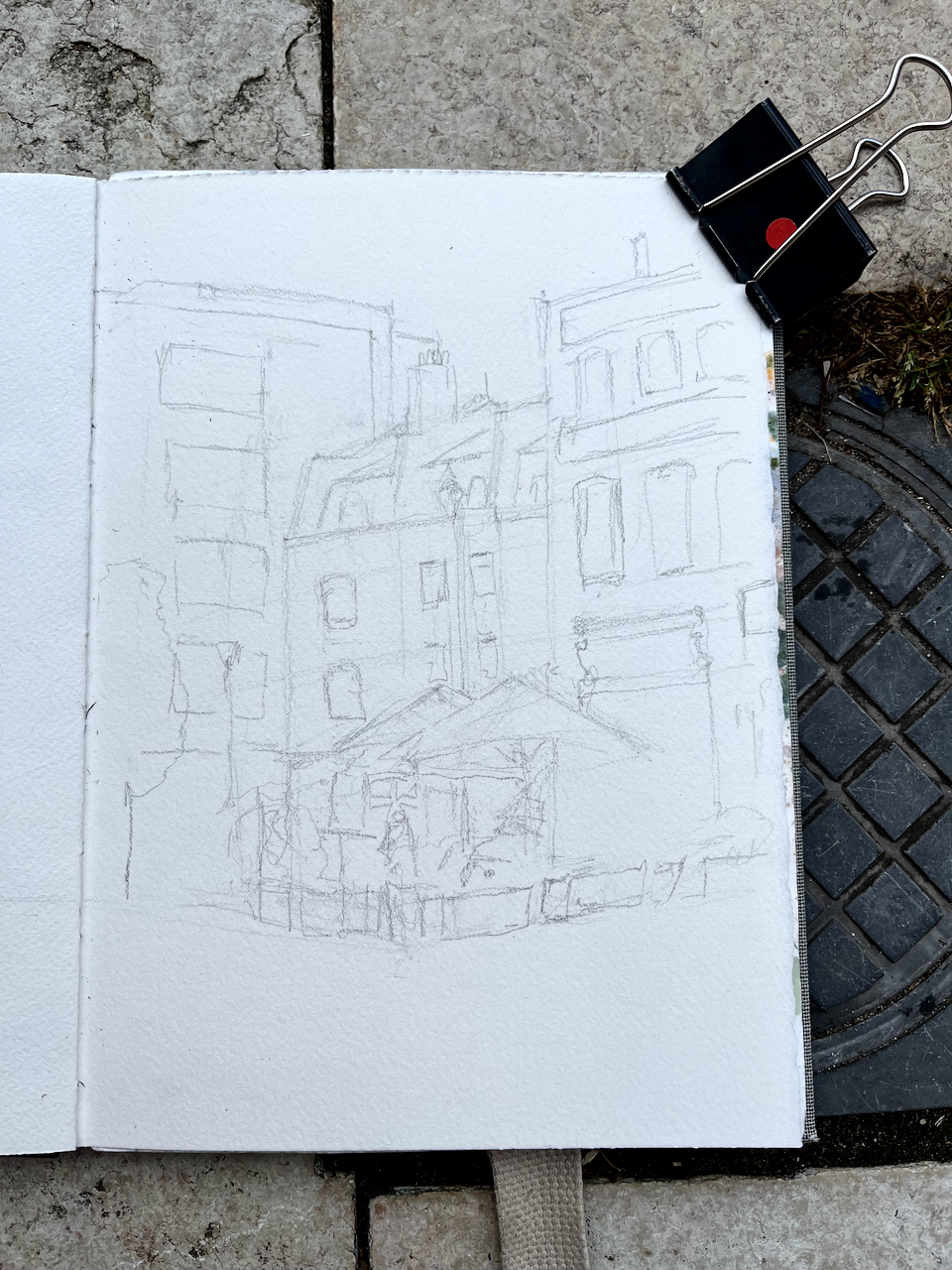
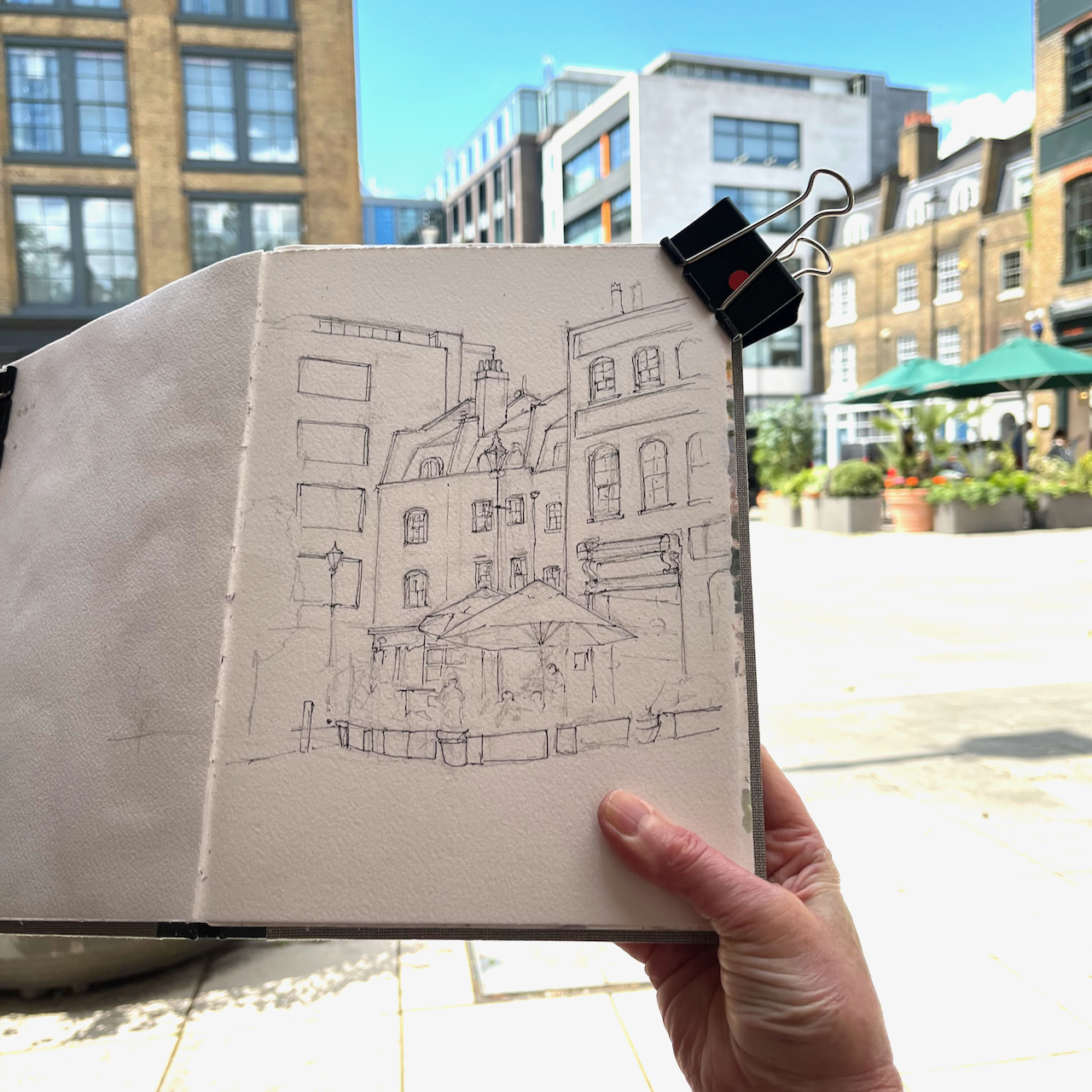
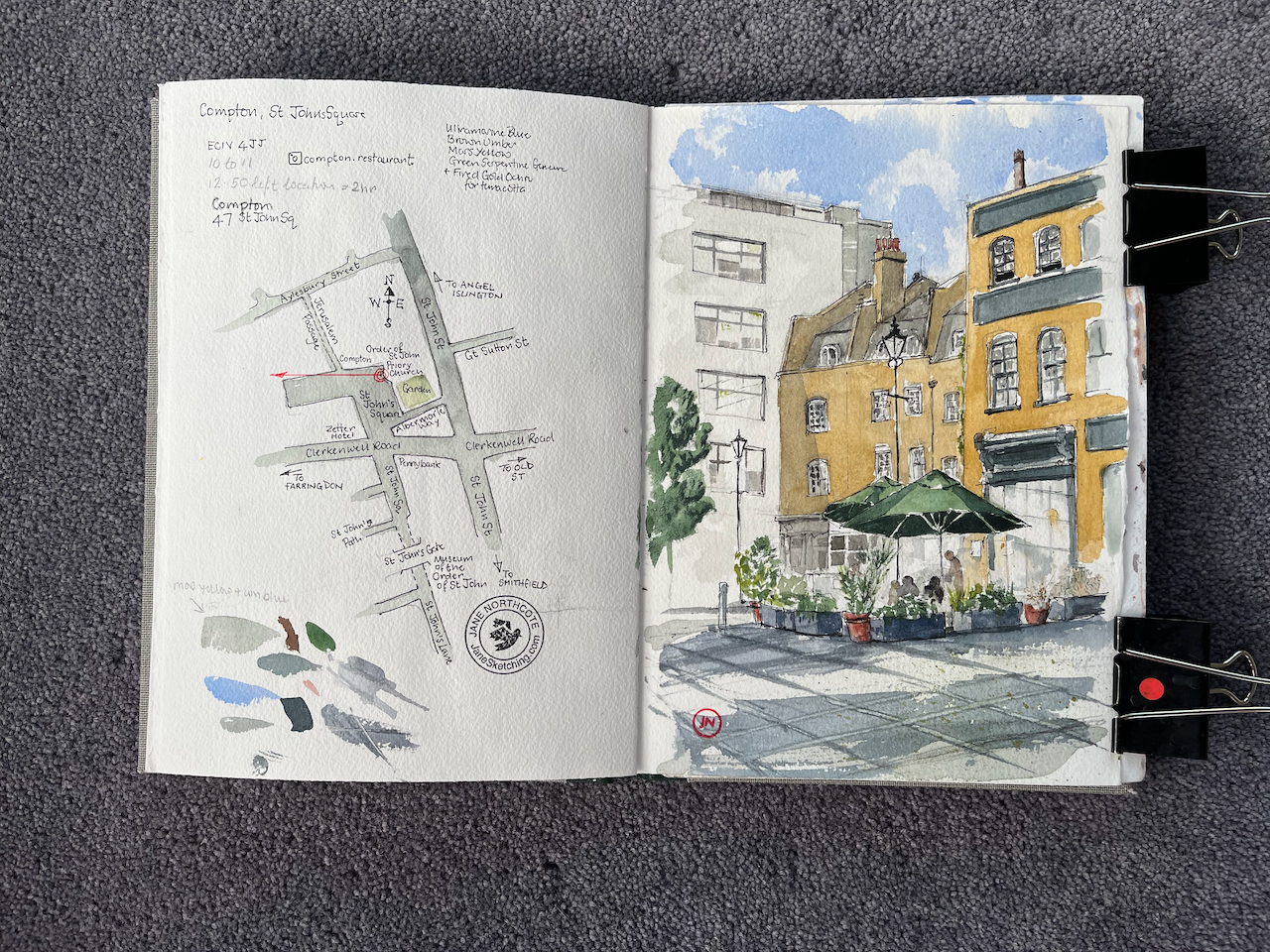
Clerkenwell has many interesting corners. Here is a view across St John’s Square. I sketched it earlier today, sitting on the step of the Priory Church of the Order of St John. The restaurant is called “Compton”.

View across St John’s Square, Compton restaurant, 21 June 2023, in sketchbook 13

Here’s a map:

Thank you to the kind person from the Priory Church. They emerged from the door behind me. There I was, low down on the step, at the pen-and-ink stage, with my materials laid out neatly on the stone. They obviously had not expected anyone to be sitting on the step. I had not expected anyone to come out of the dark door. It had looked as if it had been closed shut for millennia. After a moment of surprise, politeness prevailed and we both said hello. Thereafter, I grouped my materials into a compact heap, and they came and went, tolerating me amiably, and skirting around me to operate the card key system.

This picture has just four main colours: Ultramarine blue, Brown umber, Mars yellow, and Green Serpentine Genuine. The only other colour is Fired Gold Ochre for the terracotta: the chimneys and the flowerpots. All colours are Daniel Smith watercolours.

Here is work in progress:

London Wall EC2: the hanging bridge

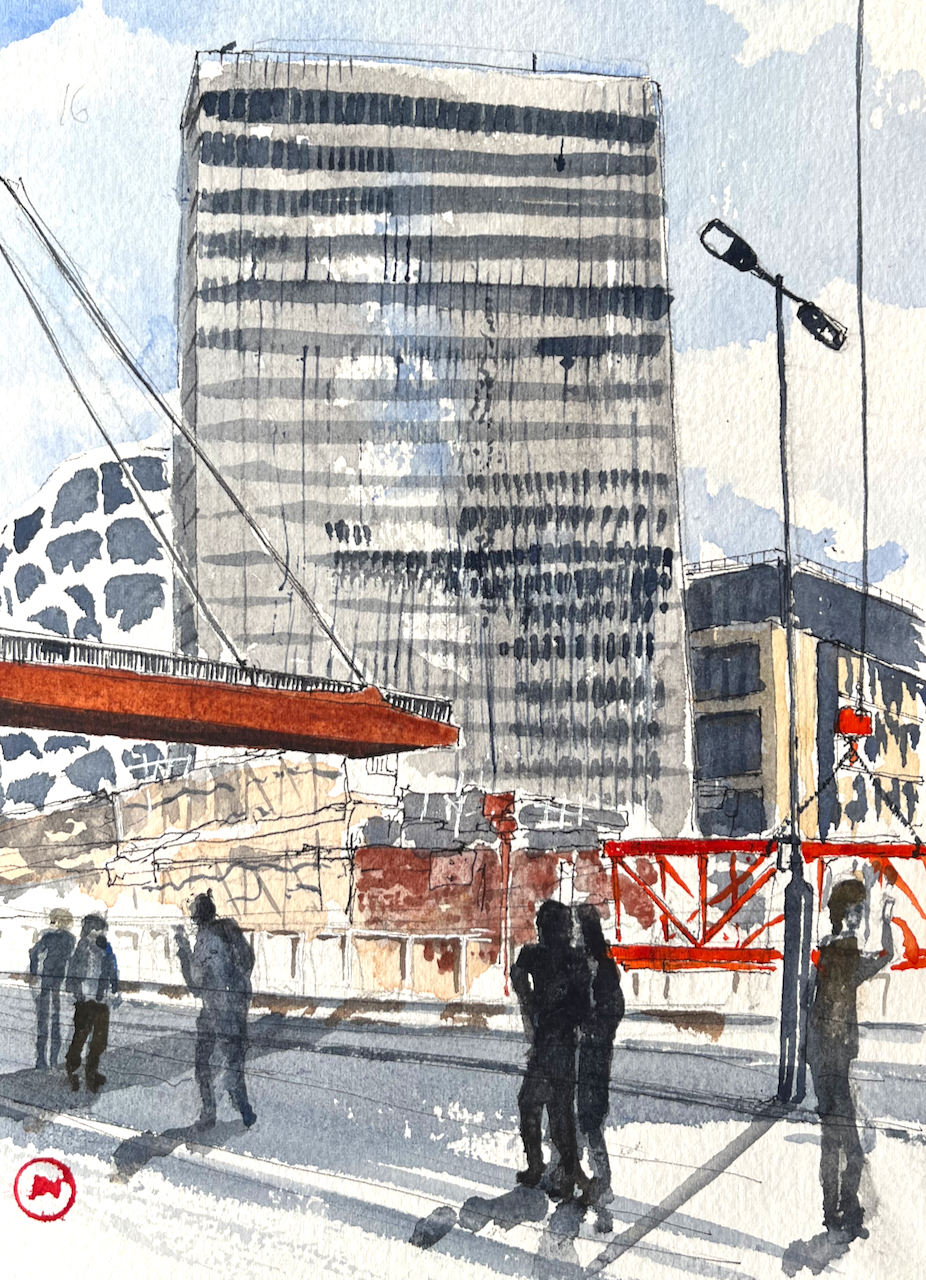
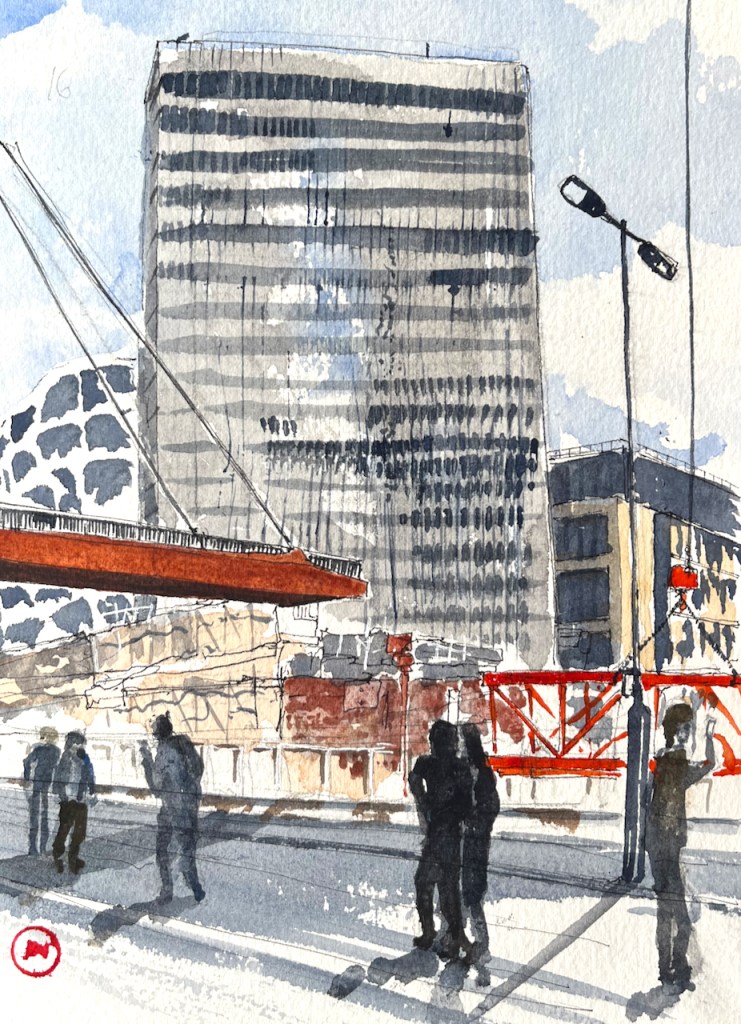
Here is an amazing sight: the hanging bridge over London Wall.

London Wall, hanging bridge. 24 May 2023, about 1pm, 7″ x 10″ in Sketchbook 13

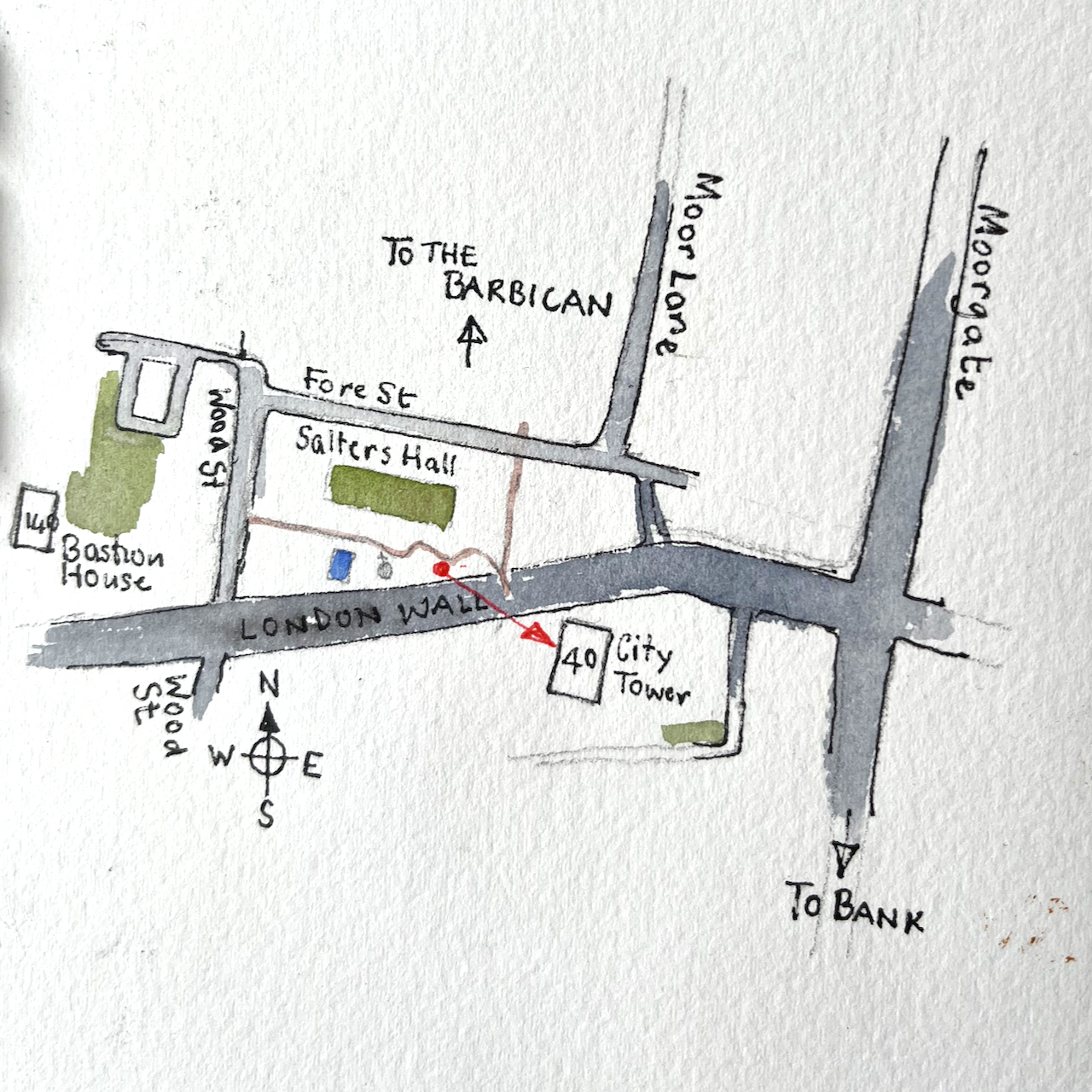
The large building in the centre of the picture is City Tower, 40 London Wall. In front of it is a demolition site where City Place House used to be. The bridge used to connect to City Place House. Now this building has gone, the bridge hangs in space.

In my previous drawing I sketched while listening to the guitar music of Hidè Takemoto. For this drawing, the acoustic accompaniment was mostly percussion. The building site was active. Spasmodic grinding and crashing signalled the removal of concrete. Metallic hammering came from scaffolding under construction.
The big red grid on the right of my picture was hauled upwards and out of sight before I finished drawing it. It was going to be part of a second crane. It arrived on a large lorry which would also have been in the picture if it had stayed still long enough. Immediately it arrived, workers secured chains to the red structure and it was manoeuvred off the lorry. Hardly anyone on the pavement paid any attention to all this thrilling activity across the road. One person, the slim figure to the right of my picture, stopped and took a selfie.

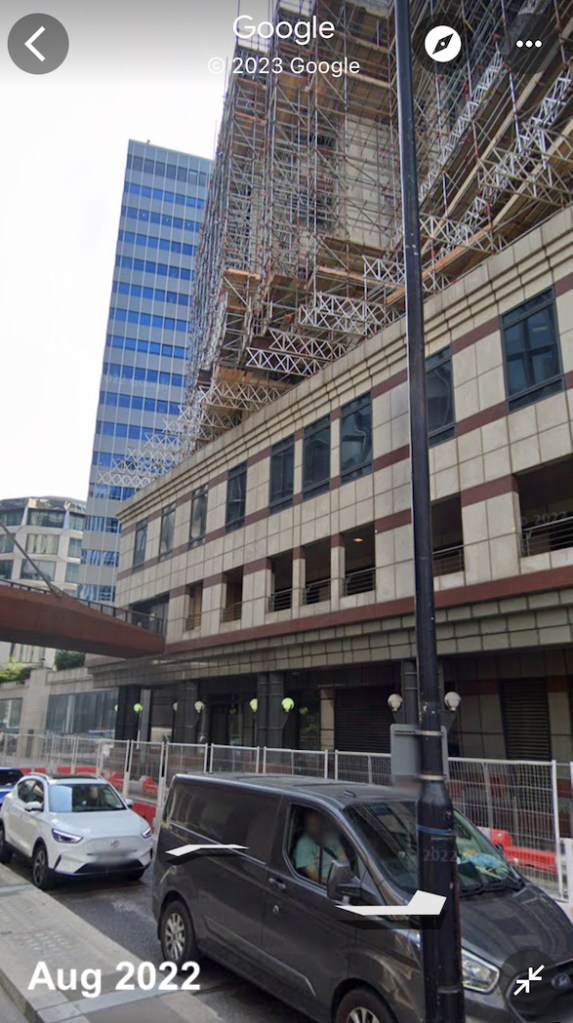
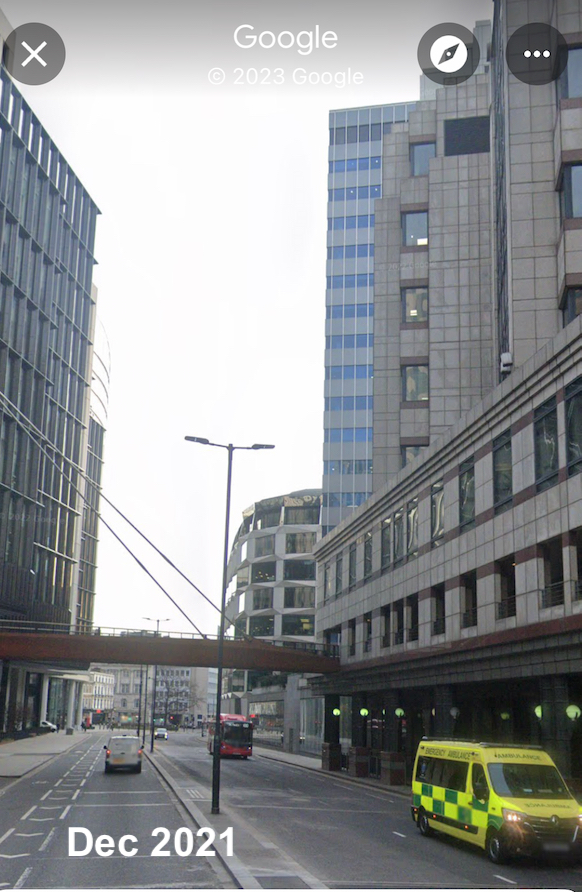
GoogleMaps allows us to travel not only in space but also in time. Here are some screengrabs so you can see the City Place House (on the right) which has now disappeared.

As you see, City Tower used to be obscured by City Place House. It will be obscured again when the next huge building goes up.

The bridge in the pictures above is the “new bridge”. It was installed as part of the London Wall Place development (off the picture to the left). The “old bridge” took a slightly different route. Again, GoogleMaps provides an image. Notice the previous lampposts, with the flying saucer lights.

The “old bridge” across London Wall, July 2008.
City Place House, on the right, is the building which is now being demolished.

I sketched City Place House before it was demolished. This post (click below) gives information about the old building which has been demolished and the new building which is planned.

City Place House

An email from an ever-vigilant neighbour alerted me to the Planning Application for City Place House and the adjacent tower, City Tower. This application is currently under consideration. I hastened to go and have a look at the buildings, before they get swathed in white plastic. City Tower has been there since 1967. It is…

Click here to read this post..

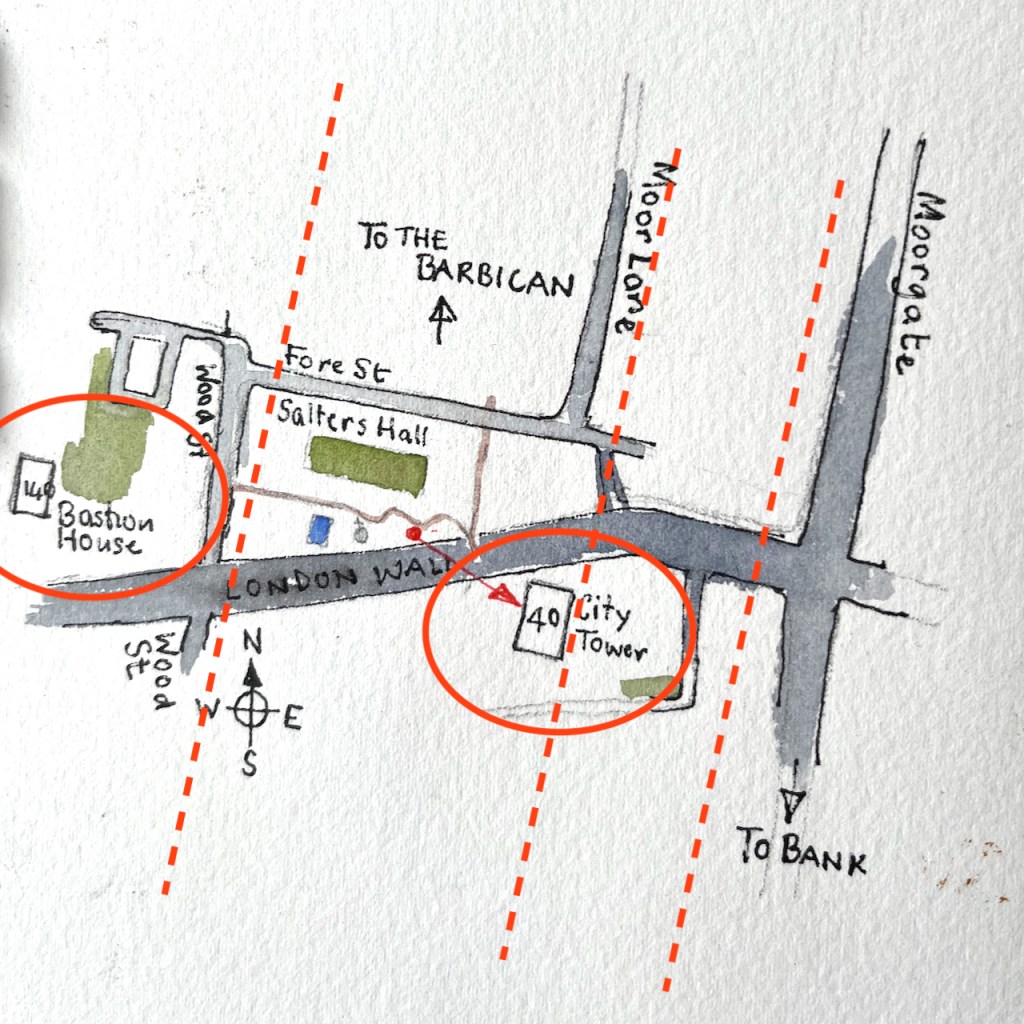
City Tower is not being demolished. This is of interest because its sister building Bastion House, constructed at the same time, is deemed “unsafe” by the City of London, and is scheduled for demolition to make way for the “London Wall West” project. It’s curious that City Tower is evidently not “unsafe” and is standing proud, in use into the future.

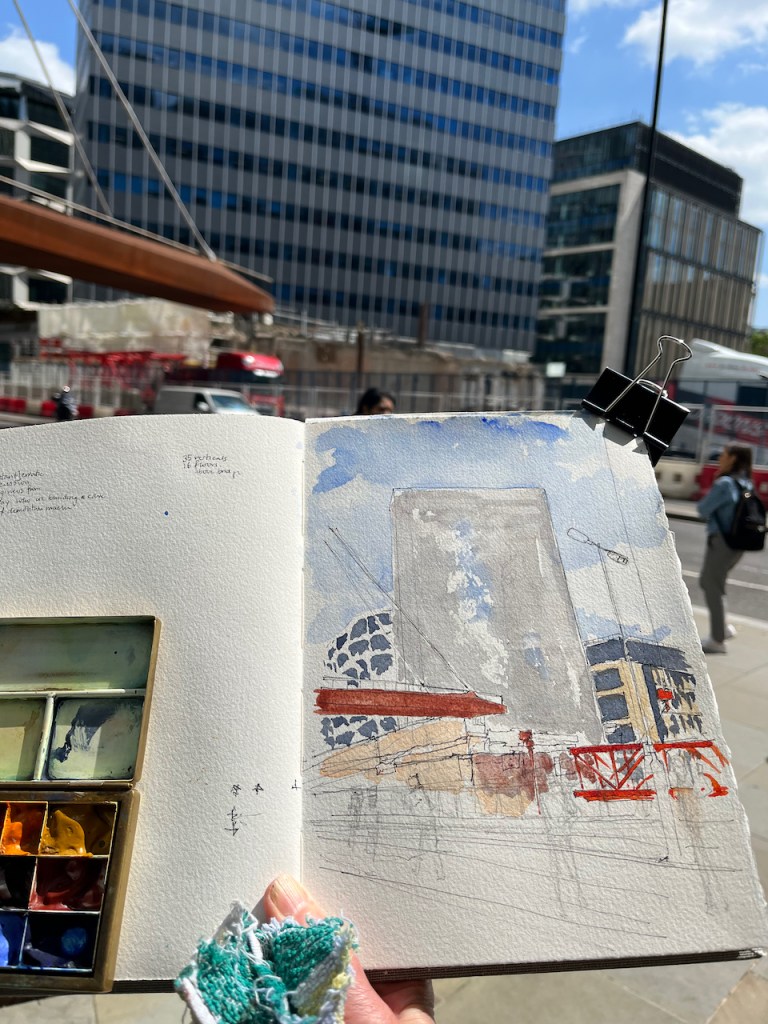
I made a special tool to draw the many windows on City Tower.

City Tower has 35 verticals. I made a special comb from cocktail sticks to scrape the paint into the required number of vertical lines.

The colours are:

  • Ultramarine Blue and Lavender for the sky.
  • All the greys are Ultramarine Blue and Burnt Umber
  • The bridge is Fired Gold Ochre, with some Transparent Pyrrol Orange
  • The red is Transparent Pyrrol Orange
  • Mars Yellow is on the distant building and the scaffolding plastic

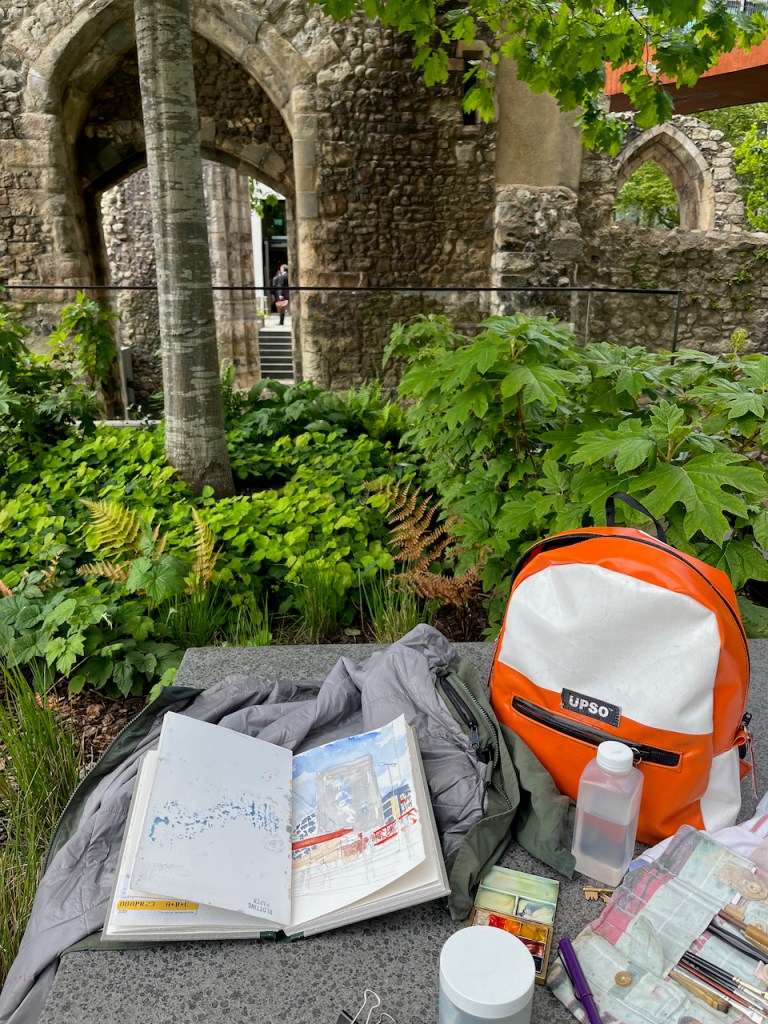
I put down the first wash on site and finished the picture at my desk.

Market Keepers’ House, Newcastle

Near Newcastle Central Station there is a new development called the “Centre for Life” Times Square, Newcastle upon Tyne NE1 4EP. It includes scientific research establishments, an interactive science museum for children, and various cafés and events spaces. It was built 1996-2000 to the designs of Terry Farrell and Partners on parts of an old cattle market. In the centre of the wide windswept space is this delightful building, from another era.

Market Keepers’ House, Times Square, Newcastle NE1, sketched from the Centre for Life museum café, 7th April 2023 in Sketchbook 13. About 9″ x 7″.

It is the Market Keepers’ House, 1840, designed by John Dobson, a prolific Newcastle architect of the time. His work is everywhere in the City. He designed the Church of St Thomas the Martyr, for example, and the Central Station. And he also gave us this miniature masterpiece, with its pleasing curves and symmetry. The building was restored in 1998 by Ainsworth Spark. This information is from “Pevsner Architectural Guides, Newcastle and Gateshead” by Grace McCombie 2009. We arrived at Times Square after following “Walk 5” in the book.

The people in the foreground are refuse collectors and cleaners. The two on the right are just coming off shift and the person on the left is just coming on shift. There is a lively exchange of views about their boss, a comparison of anecdotes concerning the unbelievable behaviour of the general public, and an analysis of recent decisions by the manager of Newcastle United. I couldn’t, of course, hear a word they were saying. Their articulate body language inspired me to pay attention to their conversation and include them in the picture.