
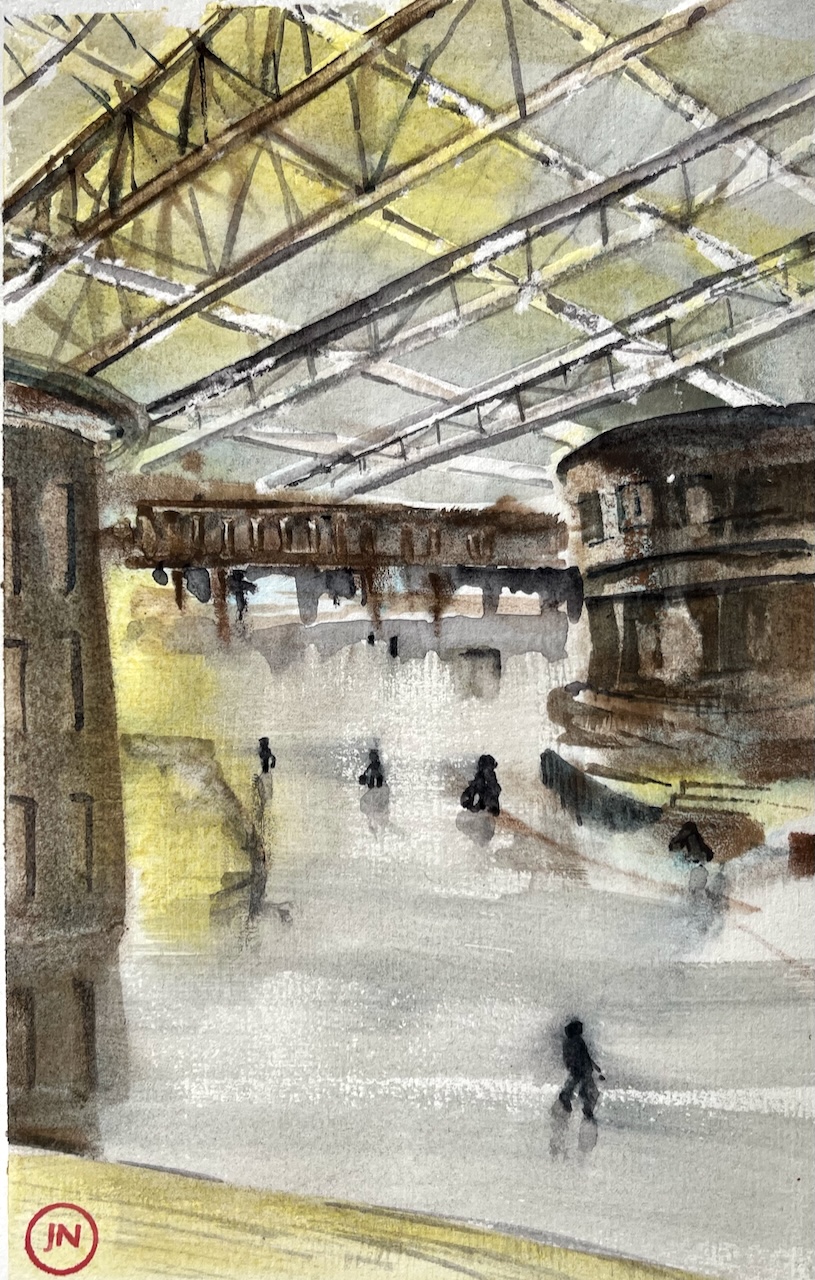
Here is a view of Glasgow Central Station from the window of a winebar which overlooks the concourse.
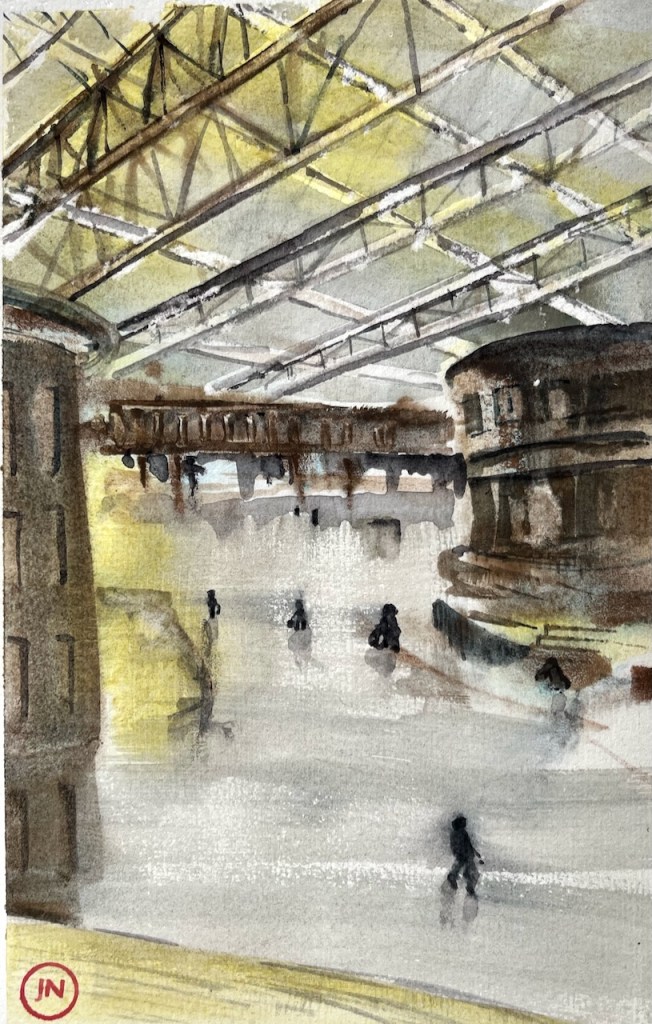
The wine bar is part of the hotel “voco® Grand Central Glasgow”.
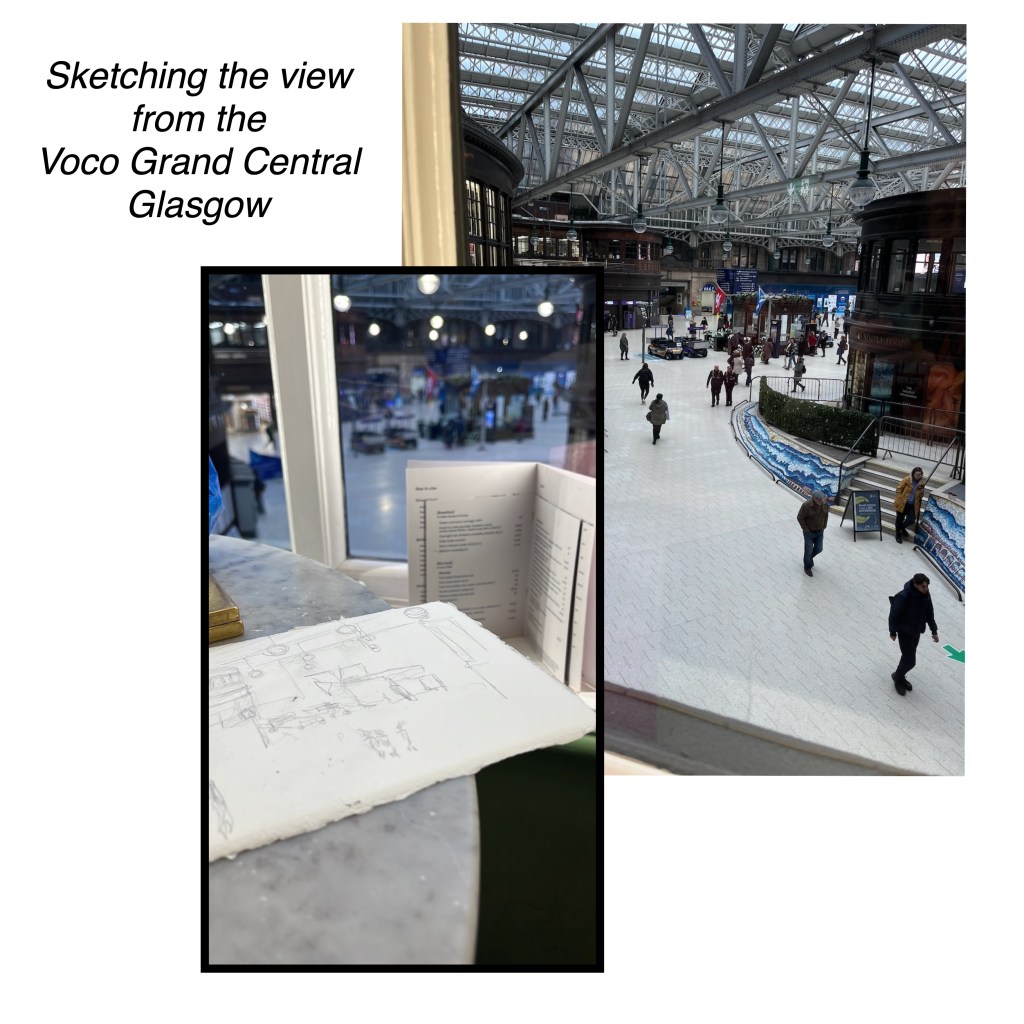
Here is a view of Glasgow Central Station from the window of a winebar which overlooks the concourse.
The wine bar is part of the hotel “voco® Grand Central Glasgow”.
On my way up to the West of Scotland I had a day in Glasgow. The overnight train had arrived at 07:30 and the bus to Oban didn’t leave until 18:05. I emerged from Glasgow Central into the mist and fine rain, and walked up the hill to find the “Buchanan Bus Station”. My idea was to stash my bag in the Left Luggage facility and then spend my time exploring Glasgow.
Glasgow at 07:30 on a wet morning in March is not so very enticing. I had the lowest possible expectations as I entered the bus station. Although huge, the bus station had been difficult to find, hidden as it is behind a monumental building called “Buchanan Galleries”. This is neither a “gallery” of the art sort, nor a shopping centre, as far as I could work out. It is a multi-story car-park. Every shop I had passed on the way up had been closed, possibly permanently, or so it seemed to me. There was a wind, I was getting wet, and I was hungry. Despite the confident announcements on its website, I was starting to think that the Left Luggage at Buchanan Bus Station would be closed.
But, contrary to all expectations, the Left Luggage Office was lit up, the door open, and everything looked new and clean inside. Even better, a cheerful man in a beanie hat soon appeared behind the desk, took charge of my pack, and efficiently operated the locker system. I exchanged a £5 note for a receipt with a code, put the receipt deep within my pockets, and set off into the grey morning feeling a lot more cheerful.
This came to typify my experience of Glasgow: a grey and wet city enlivened by cheerful welcoming people.
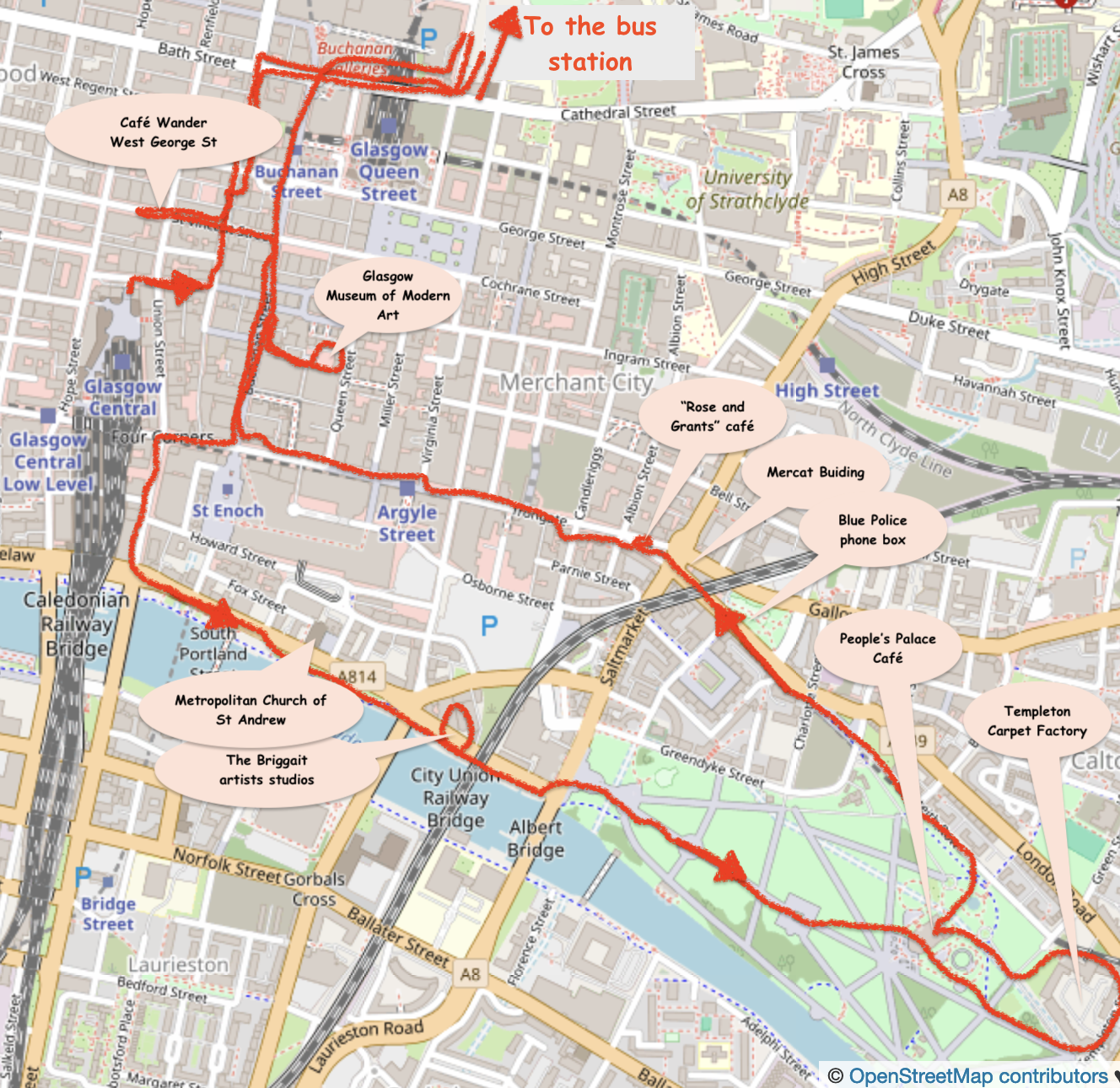
Walking out of the bus station, and wandering at random through the grid of streets, I spotted the “Café Wander” in a basement. This is at 110 West George St and was a great find: welcoming people, a big mug of tea, food, and a charging point for my phone. No rush, I could think and sketch, and feel as though I’d arrived. I decided to head for the river. A river tells you about a city.
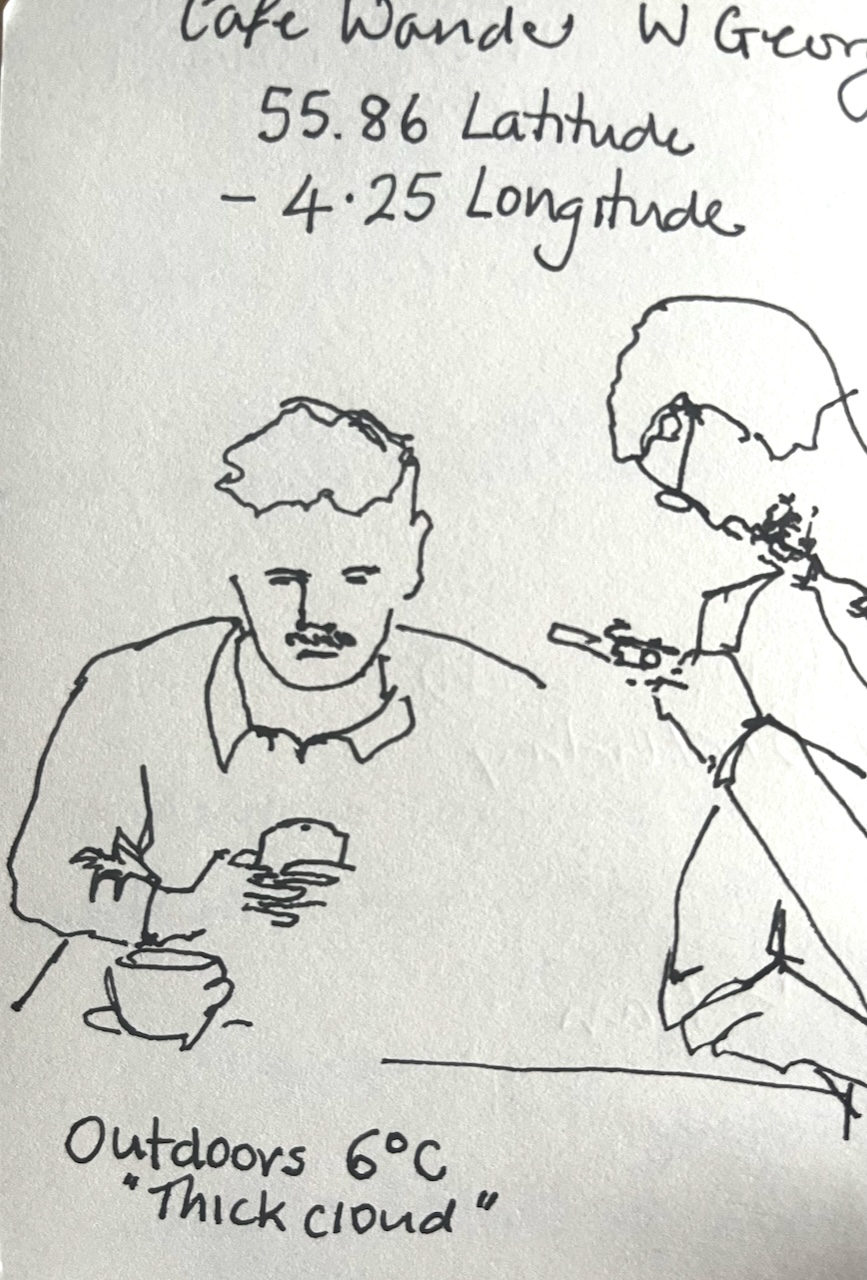
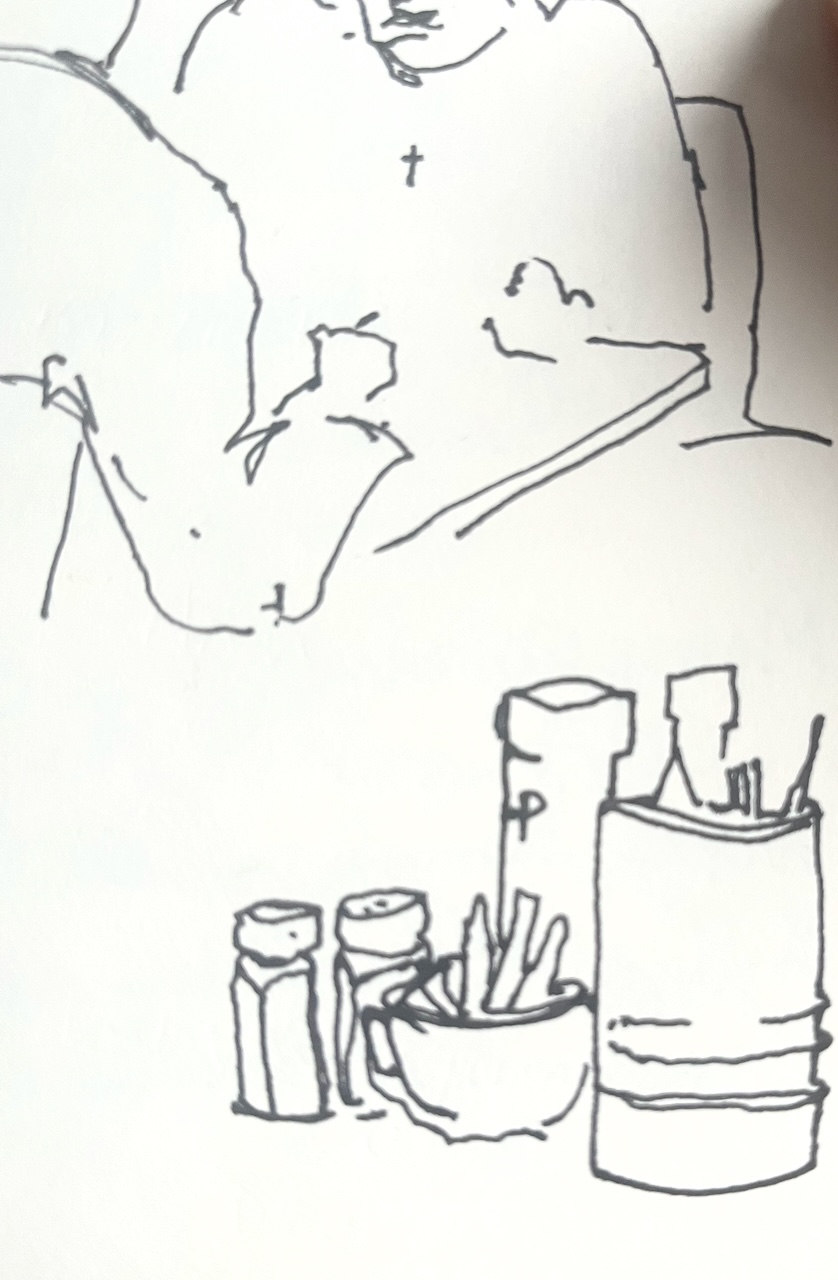
The amazing thing about Glasgow is that there are these magnificent buildings, and a lot of them are apparently empty. Or at least they are empty from the 2nd floor up. At street level there is a band of multi-coloured shopfronts, some shuttered. Higher up the Victorian optimism and wealth proclaims itself in ornamented facades, fancy windows, sculptures, and carved names of proud institutions: “St Vincents Chambers”, “Bank of Scotland”. But these higher floors are deserted. The windows are dusty, the facades chipped, the statues dark with dust. But still.
The river told me nothing about Glasgow, except that Glasgow seems to ignore its river. There is a main road, a magnificently restored catholic church, and a succession of buildings which in London would be converted to luxury flats but which in Glasgow remain as buildings awaiting their future. By the time I reached the park, I was really cold. Hacking my way against what was now a biting wind, I encountered a small round woman with a small round dog, coming the other way. She caught my eye and laughed, holding firmly on to the dog’s lead as though it anchored her to the ground. “Bitter!” she announced, still laughing. I agreed that it was.
I wanted to ask her some important questions, such as whether the “People’s Palace” had a café, and what was that brightly coloured building in the misty distance? But conversation was going to be impossible in that wind, so she and I passed each other in amicable silence, allies against the elements.
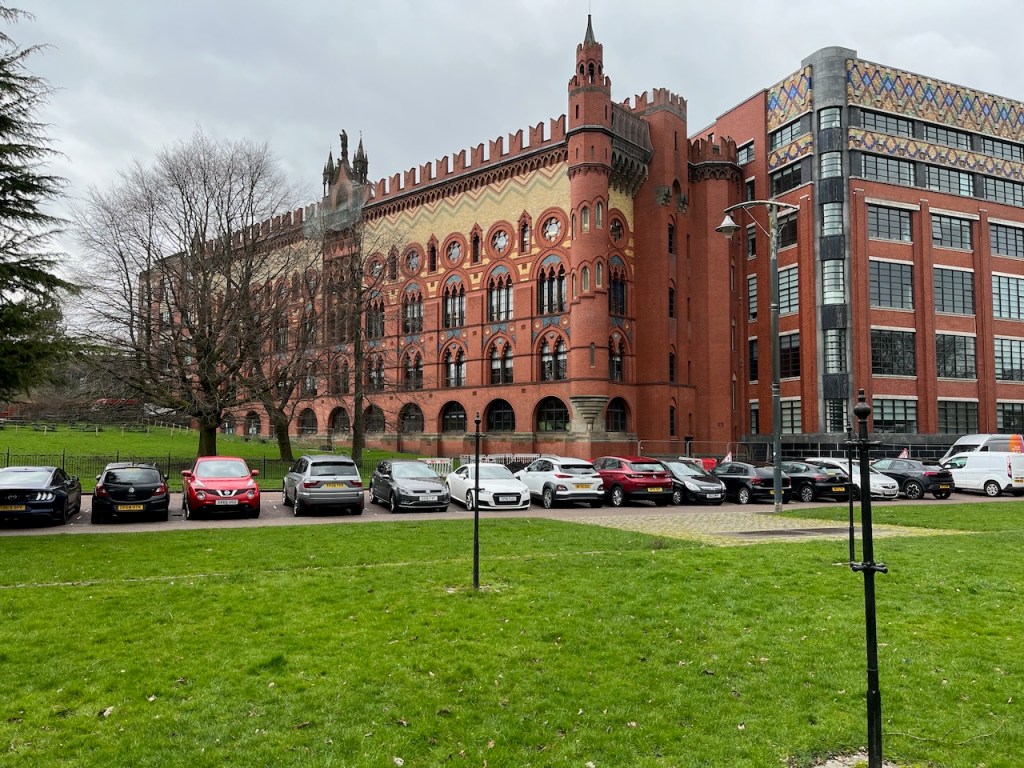
The brightly coloured building was called “Templeton Buildings”. It had no café, and no information. There was a bar, predictably closed. I circumnavigated it, and then set off for the “People’s Palace”. In the distance I’d seen someone come out, but they could have been a builder or a janitor.
It was now raining in earnest. All my papers, tickets and art equipment were in dry-bags inside my backpack, which had been a good precaution. I’ve been in Scotland before. The People’s Palace appeared out of the mist, a huge Victorian edifice, looking formidable and very closed. It was not closed. There was a board outside. A café! I pushed open the door, ready to be rebuffed at any moment, but no, inside was warmth and light, a museum of some sort, public toilets, and a café.

I more or less fell into the café. The friendly person at the counter gave me a guided tour of the home-made cakes, evidently from personal experience. Since he looked like someone who knew his cakes, I accepted his recommendation for the coconut sponge and took a window seat by an old fashioned radiator that was pumping out heat. From there, I watched through the window at coach tours who arrived to look at a fountain in the rain. This is the Doulton Fountain, gifted to Glasgow in 1888 by the Doulton Pottery in Lambeth, London. It would look very nice in the sun: a good sketching subject.
The friendly cake-expert directed me to information panels which told me about Templeton Buildings. This is the former Templeton Carpet Factory, which ceased operation only in 1980.
Eventually, fortified by cake, I was off again in the rain which had abated slightly. I was determined to sketch at least one of the Glasgow buildings. I came to the end of a long road, there was the Mercat Building.

This was a very quick sketch, on an A5 card, done from a doorway as the rain came down. I stopped before all the colours ran together and retreated into “Rose and Grant”, another welcoming café where the people were not atall put out by my washing my brushes in their water glass and spreading out my watercolour equipment on the table, making copious use of the supplied paper napkins for art purposes.
My tour of Glasgow included the Museum of Modern Art, which has a peaceful library in the basement, as well as small galleries where the pictures have commendably large-type curation. Not crowded. Easy to navigate. Friendly.
I ended up back at Buchanan Street Bus Station, successfully retrieved my pack and was early for my bus.
Glasgow is definitely a City to return to.
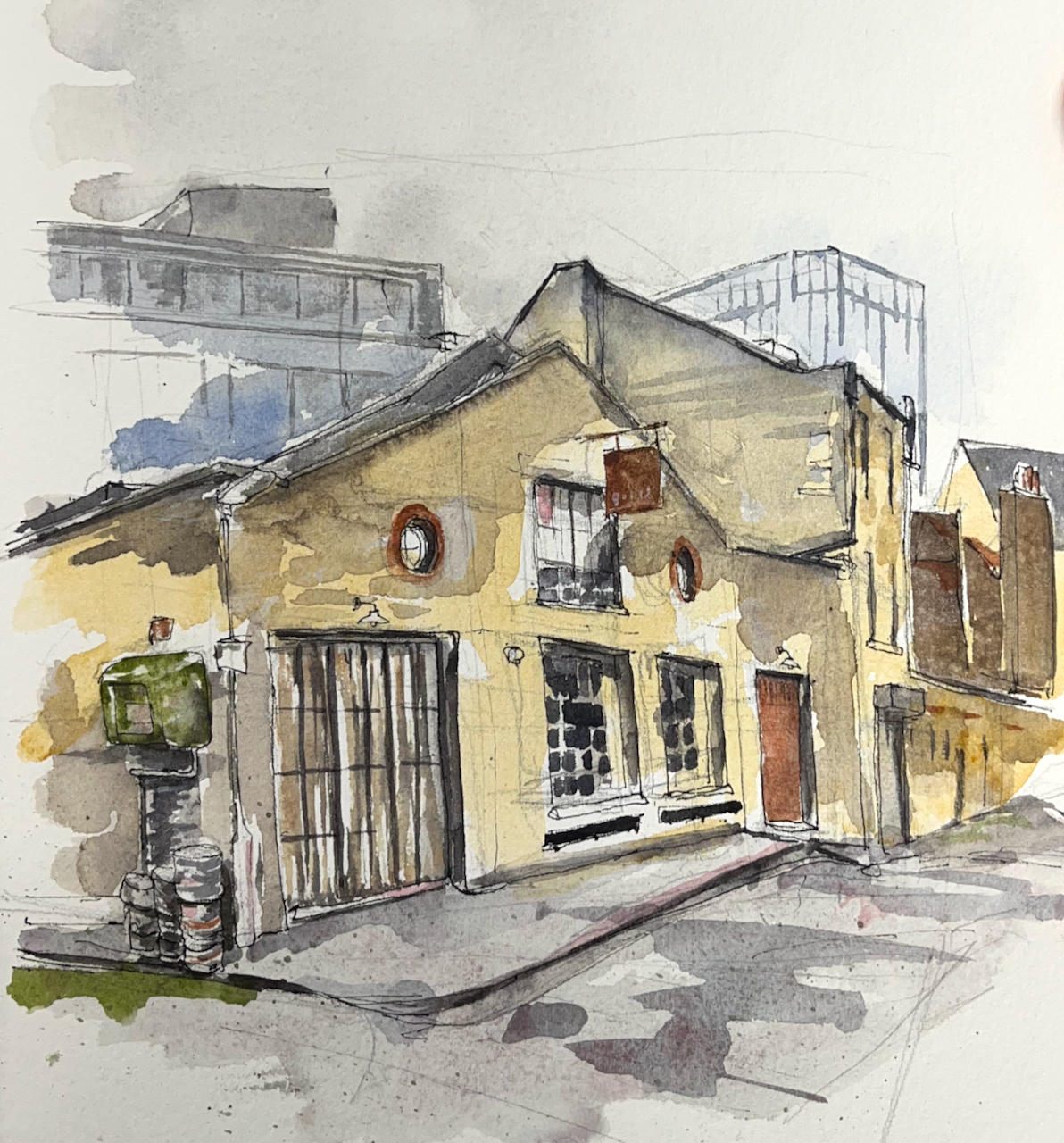
I went to sketch this place in a back alley near Kings Cross because I enjoyed the geometry of the roof, spotted on a morning run some time ago.
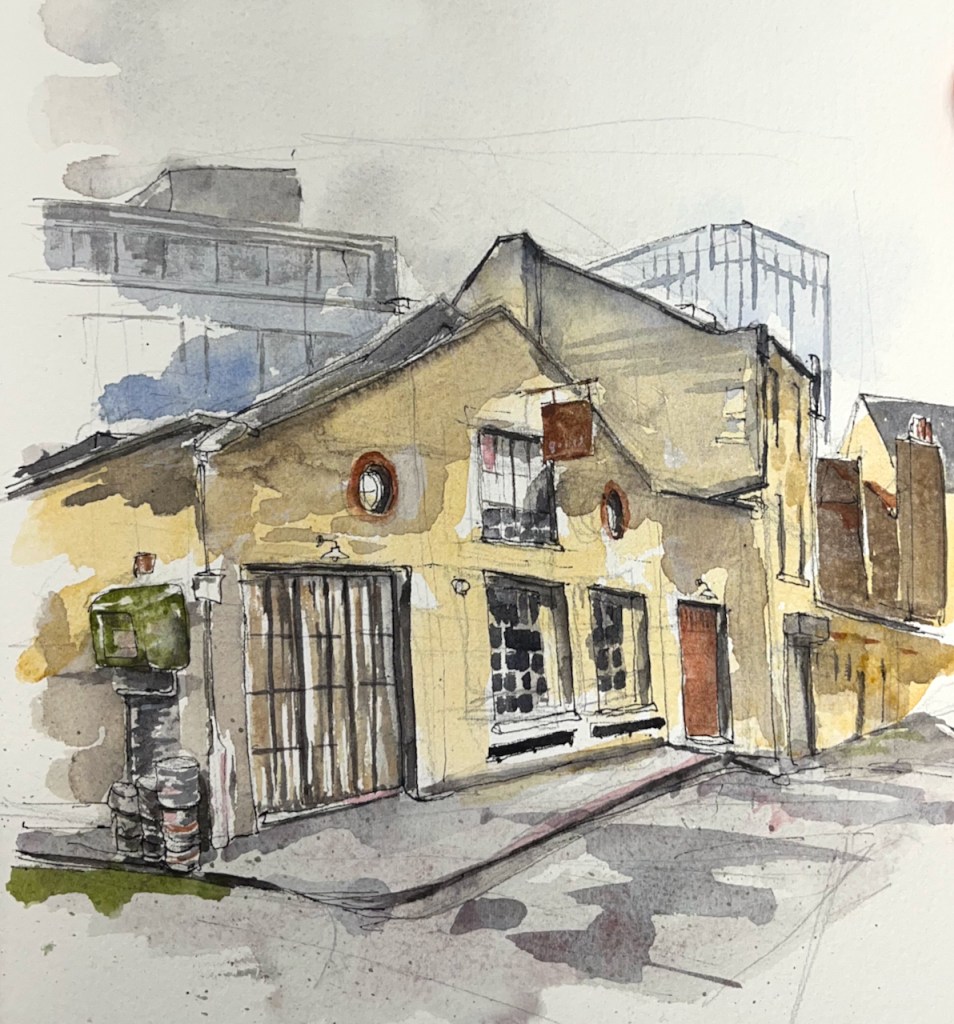
This is “Jamboree” where there is live music, dancing and events: It is open Tuesday evening to Sunday.
“music forms from around the world, cabaret, European folk, dances.”
(https://www.jamboreevenue.co.uk/)
I was expecting the hidden alleyway to be deserted on a Tuesday lunchtime, and so it was for the first hour. But then it became suddenly busy. A small ambulance backed carefully down the alleyway in front of me and parked. Its doors opened and two paramedics went round to the back of the car. They lifted out their equipment and walked calmly off down the alley. After that excitement, a certain calm returned to the alley, insofar as calm is possible a few hundred metres from Kings Cross.

I carried on sketching, now working on the beer barrels to the left of the picture. But the calm did not last long. Two cars arrived and people dressed in orange hi-vis vests scrambled out. They unlocked a gate off the picture to the left, and went in, leaving their car on the pavement. Then a van arrived, it parked directly in front of me, and a further person in a hi-vis outfit got out. He looked across the bonnet of his van and saw me sketching. “Oh, sorry,” he said, “Am I in your way?” I said that yes, he kind of was. I stood ready, however, to concede the space to him, as he looked important and determined in his bright orange overalls and hard hat. But to my surprise he grinned at me, “Ten minutes! I’ll be just ten minutes!”. He rushed off through the gate where the other people had gone. I abandoned the beer barrels and worked on the roofs.
The roofs were quite a challenge, and they productively occupied the 8 minutes until the driver came rushing back out, looking triumphant, accompanied by a selection of the people who’d arrived earlier. “I told this woman I’d be ten minutes,” he explained to his entourage. He raised a hand to me in greeting, got into his car and rumbled off, leaving the other people standing on the cobbles. I asked them what they were working on. “The bridge,” they said. Oh yes, I was standing on a bridge. The train lines were below.

It’s in a labyrinth of roads and railway lines just to the east of Kings Cross mainline station.Here are some maps to show the location. Walk east from Kings Cross, about 10 minutes.
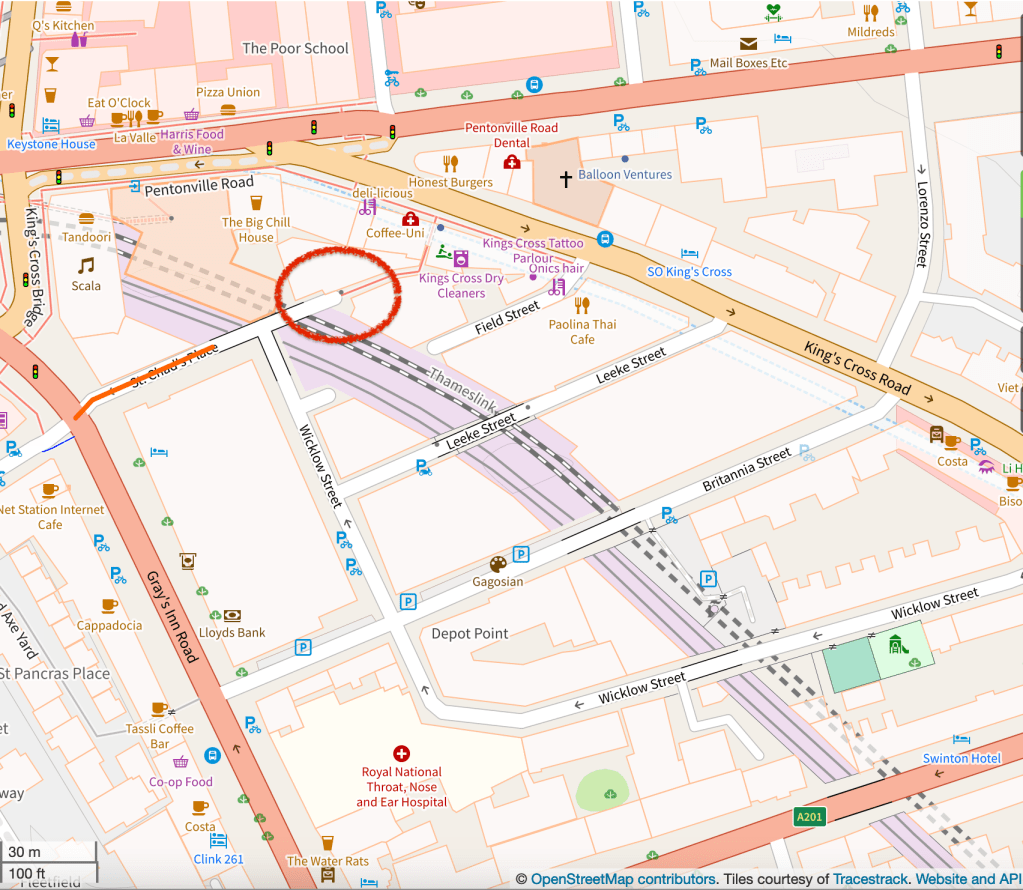
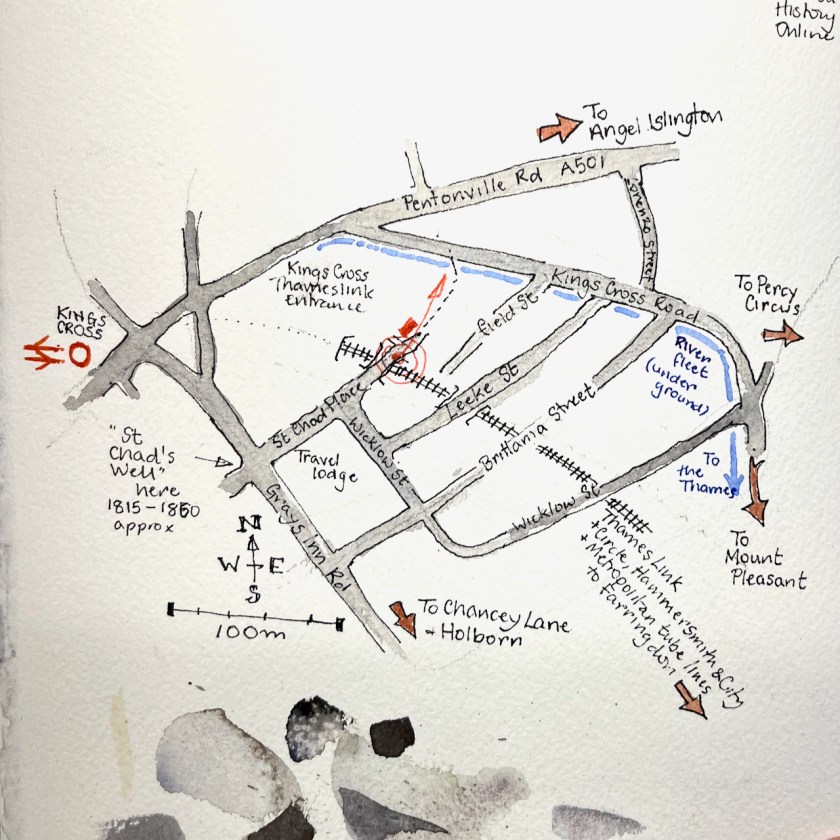
On the maps, the blue line represents the River Fleet, which is alongside the Kings Cross Road, underground. It flows from left to right across the map (West to East) and then heads South down to join the Thames beneath Blackfriars Bridge.
The river Fleet, before it became an underground sewer in 1825, flowed along the western side of Pancras Road and then eastward along the south side of the common, crossing the old highway (now Gray’s Inn Road) north of St. Chad’s Place.
‘Battle Bridge Estate’, in Survey of London: Volume 24, the Parish of St Pancras Part 4: King’s Cross Neighbourhood, ed. Walter H Godfrey and W McB. Marcham (London, 1952), pp. 102-113. British History Online http://www.british-history.ac.uk/survey-london/vol24/pt4/pp102-113 [accessed 7 February 2024].
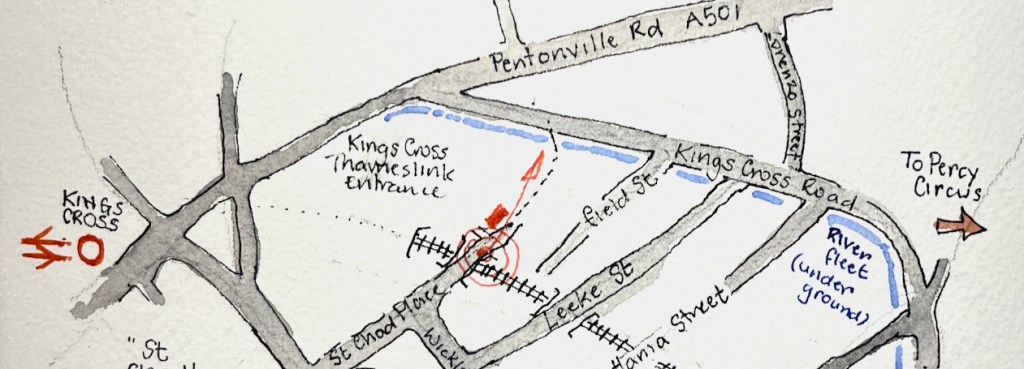
St Chad’s Place slopes down towards the River Fleet. This area was once the location of St Chad’s Well, a spring said to have health-giving properties. It operated from about 1815 to 1860. I found a picture in the London Picture Archives, reproduced below with their permission.
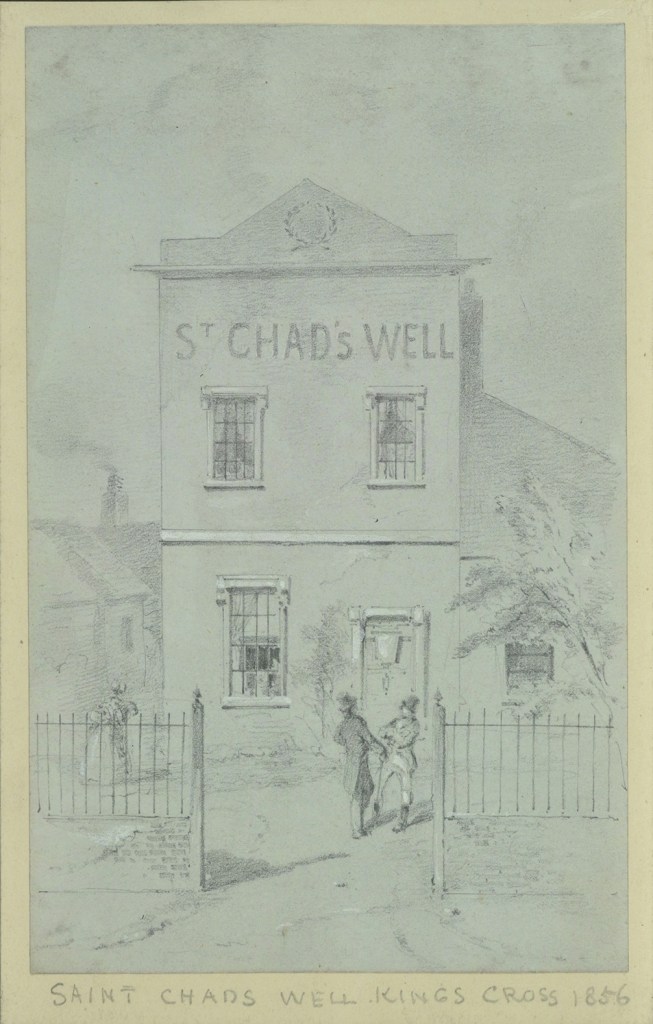
The website “A London Inheritance” has an informative article about St Chad’s Place and the Well: https://alondoninheritance.com/london-streets/st-chads-place-and-a-lost-well/, which is well worth a read.
A river, a bridge, a well, a passage and a music venue. It’s amazing what you find.


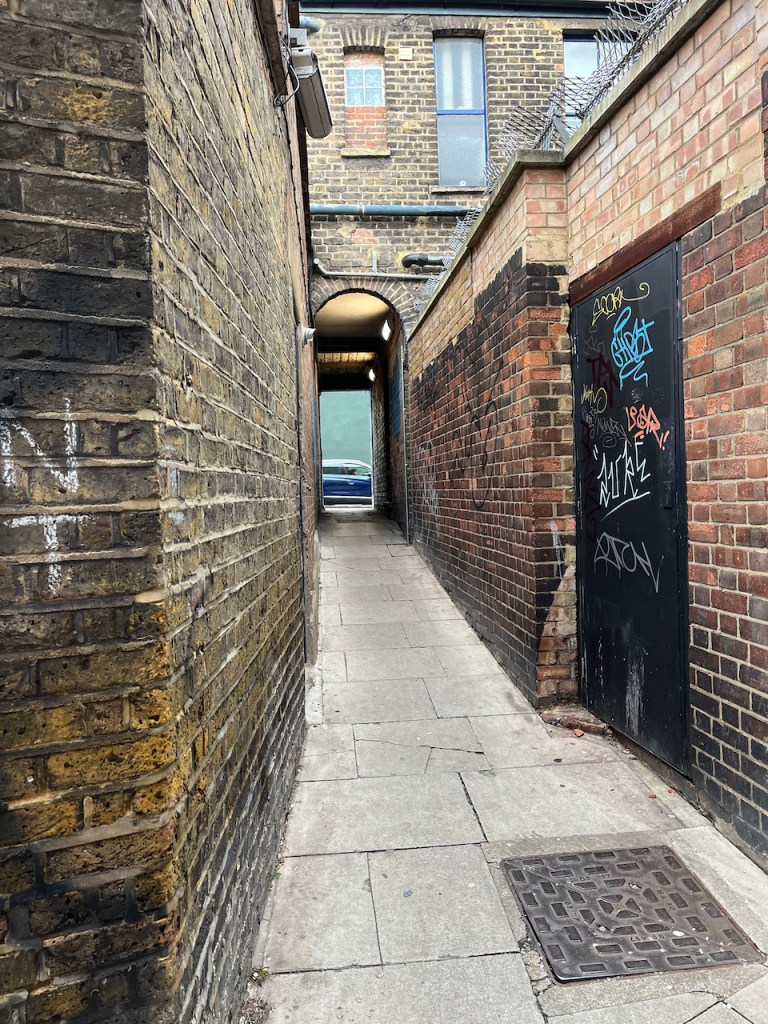
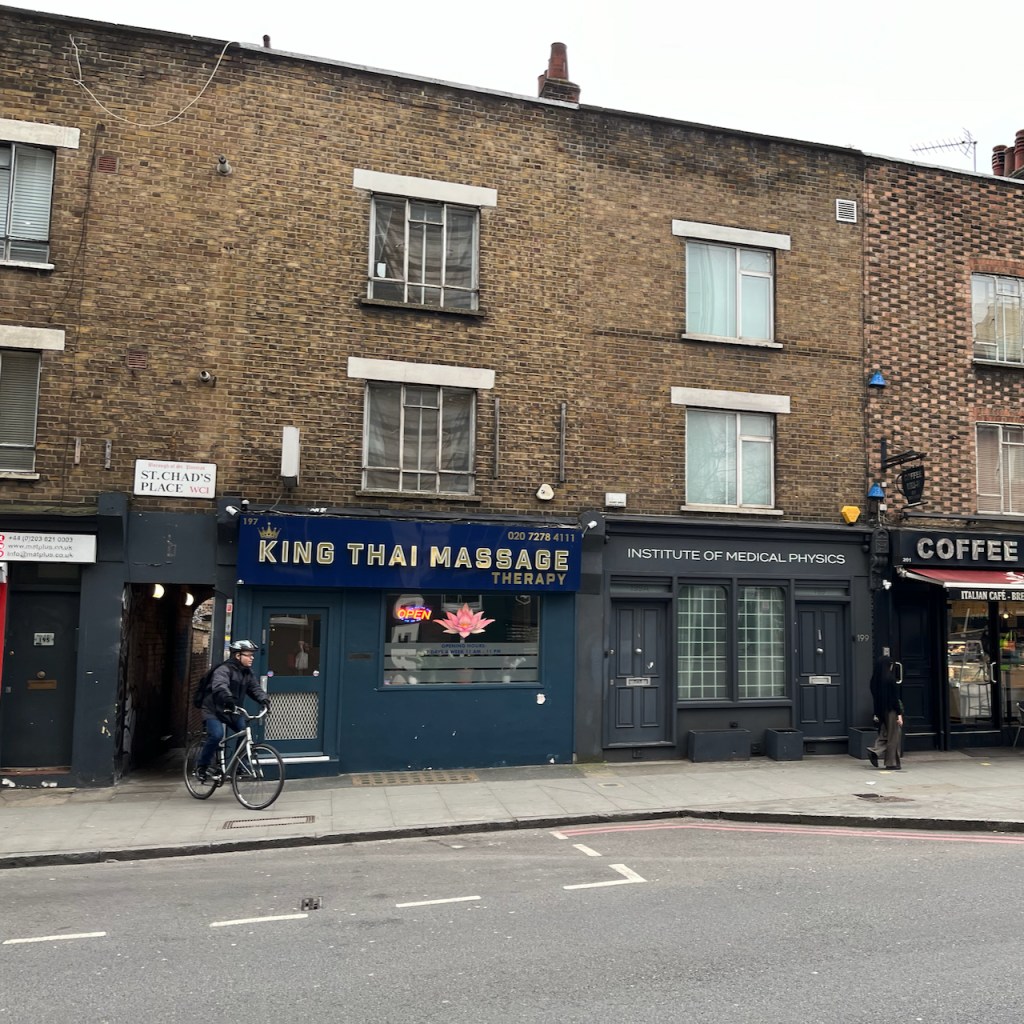
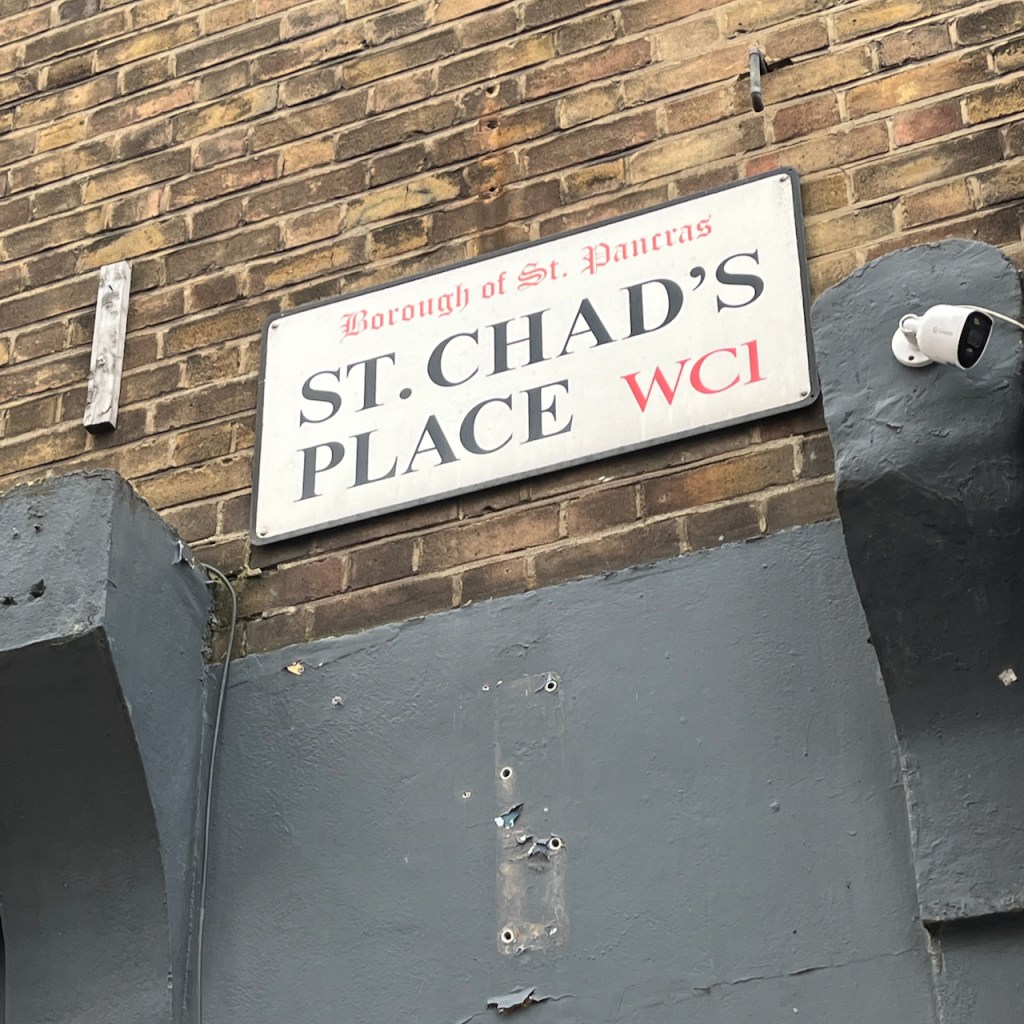
Here is work in progress on the sketch:
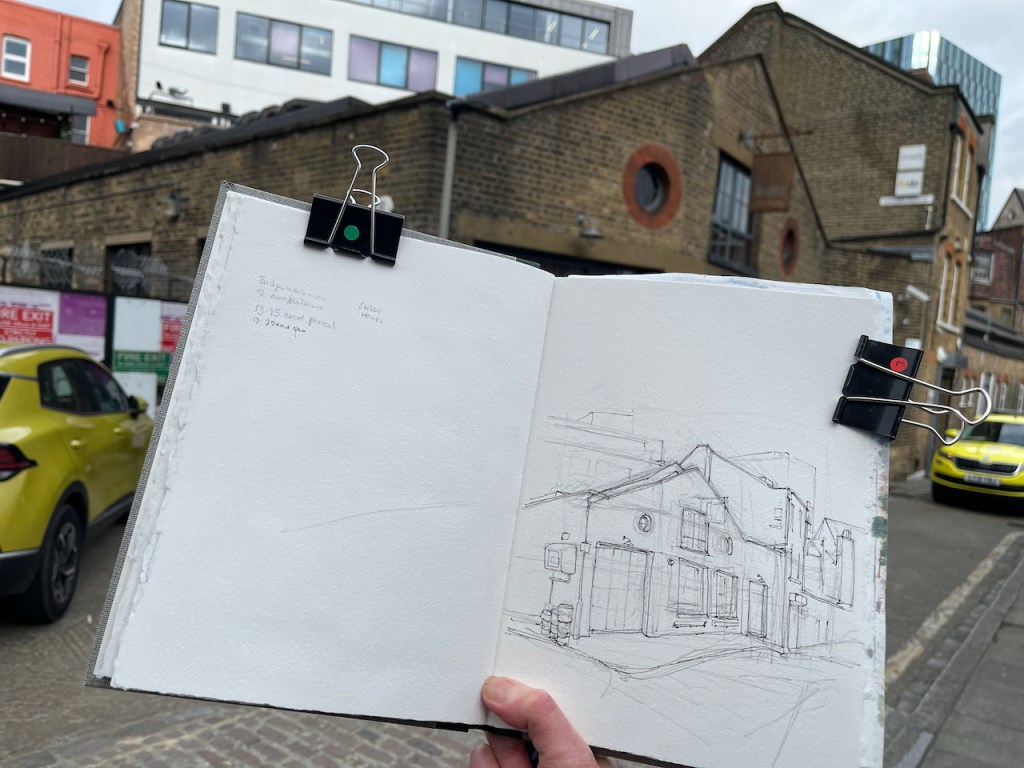
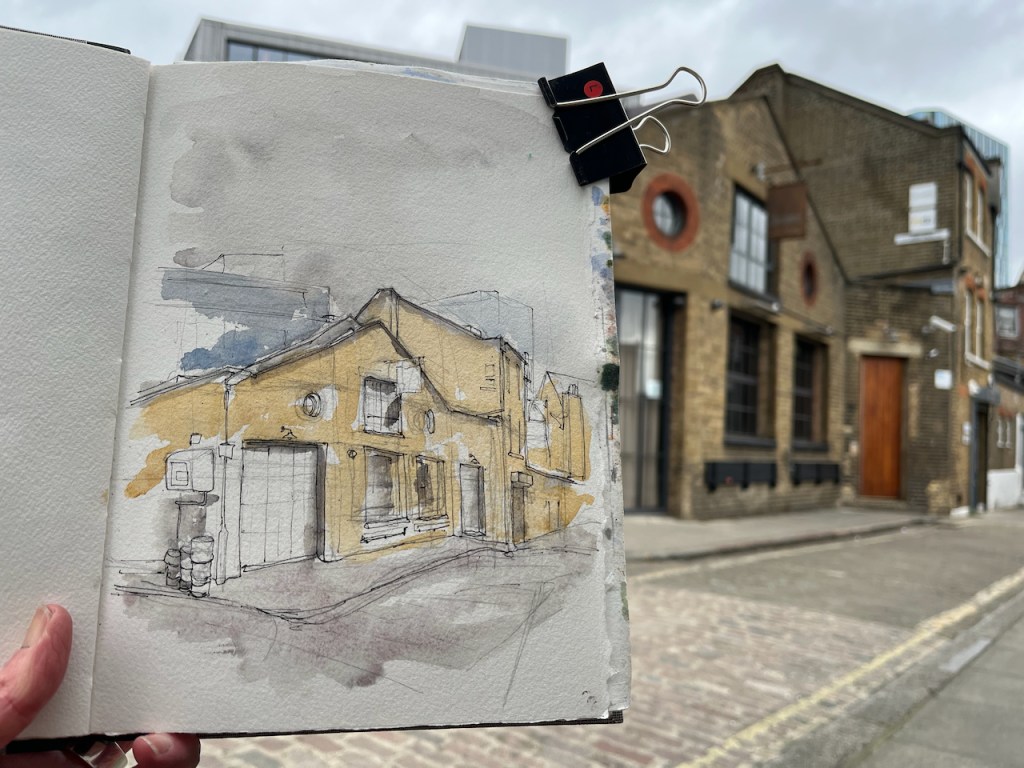
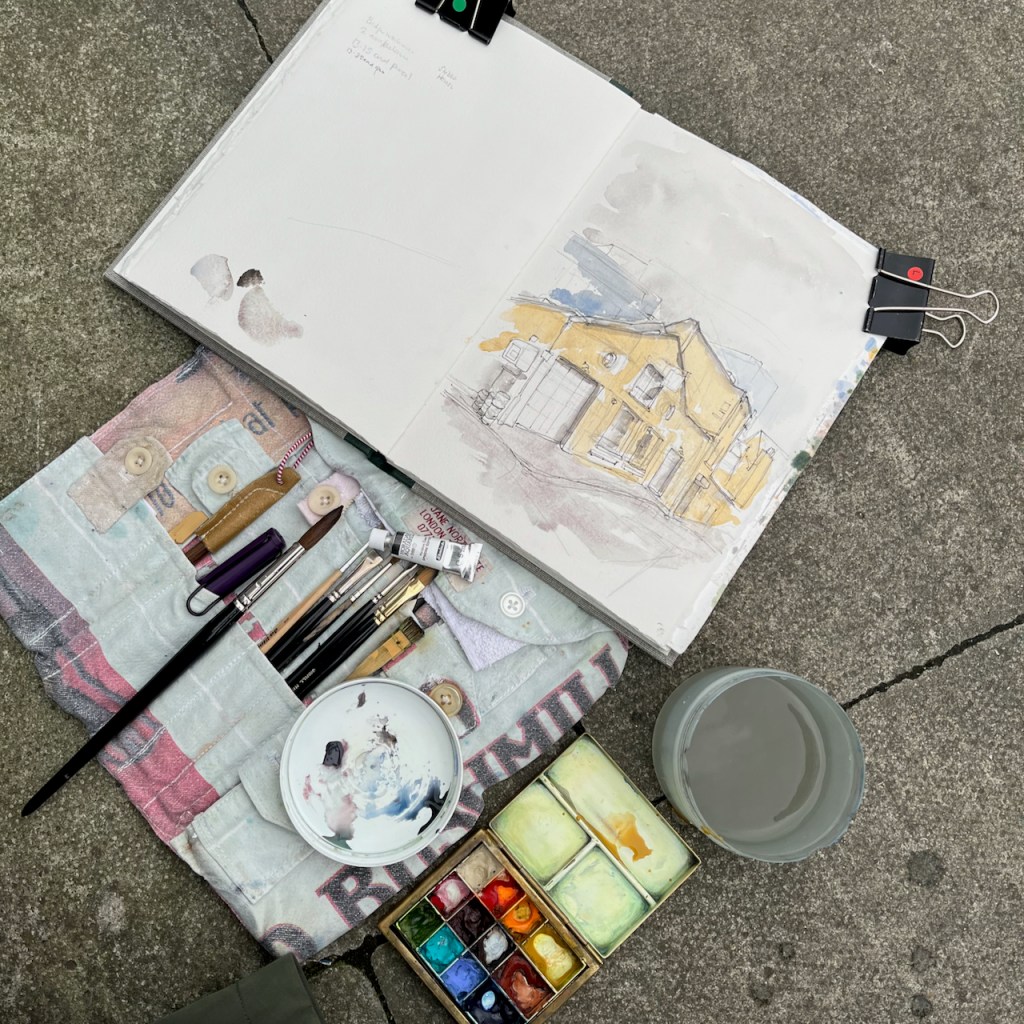
The colours are:

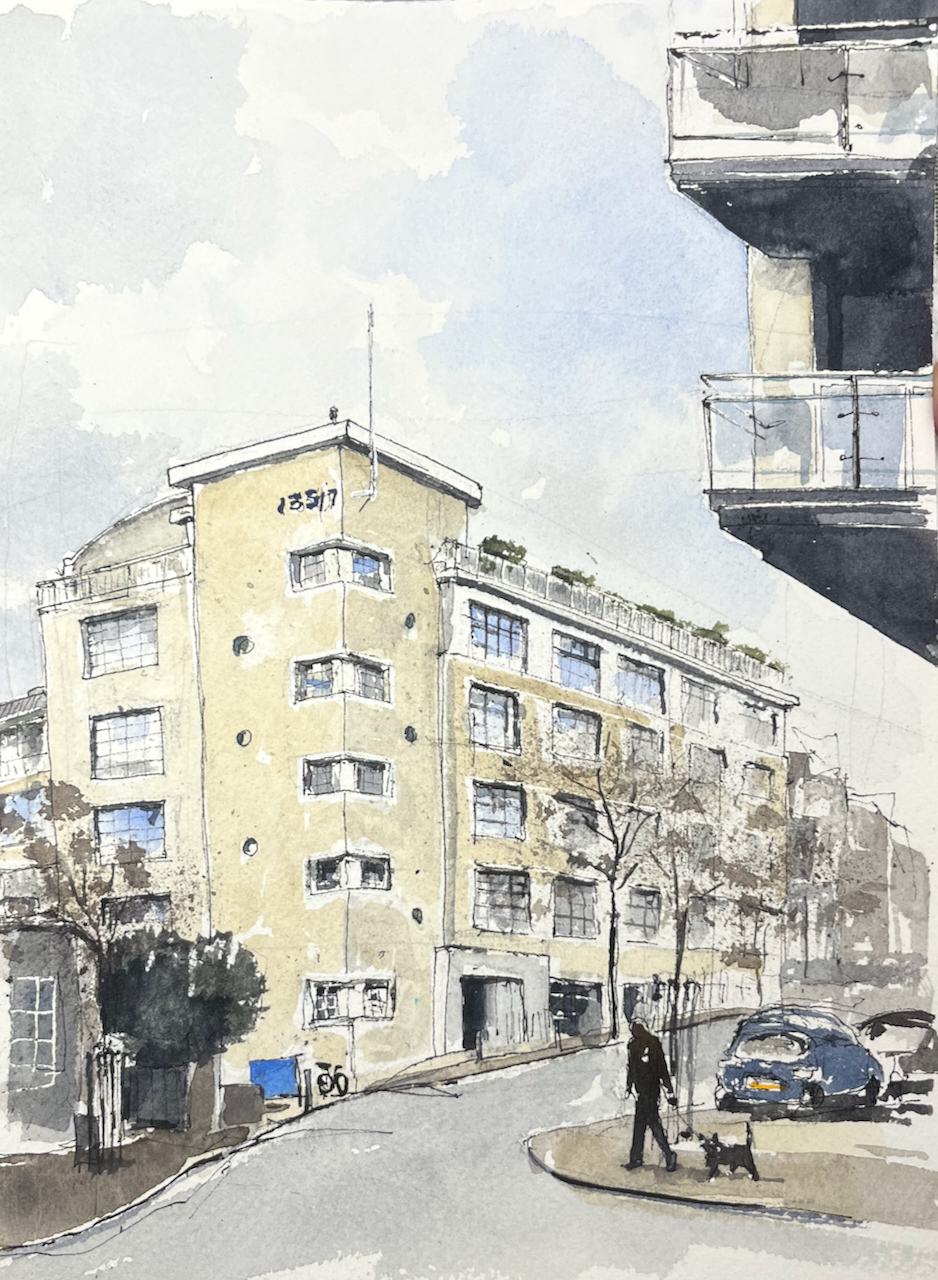
Here is The Canal Building, at the north end of Shepherdess Walk, sketched yesterday from the junction with Eagle Wharf Road.

The building overhanging, in the top right of the drawing is part of Angel Wharf, 164 Shepherdess Walk. Shepherdess Walk leads over the Regents Canal, the bridge is just behind the cars in the picture. The buildings you see above the cars are on the other sidee of the canal. On the left is the “Wenlock Brewery”.
There is a tiny object on the roof of the Canal Building, next to the flagpole. It was hard to see what it was, but it looked like a wooden owl.
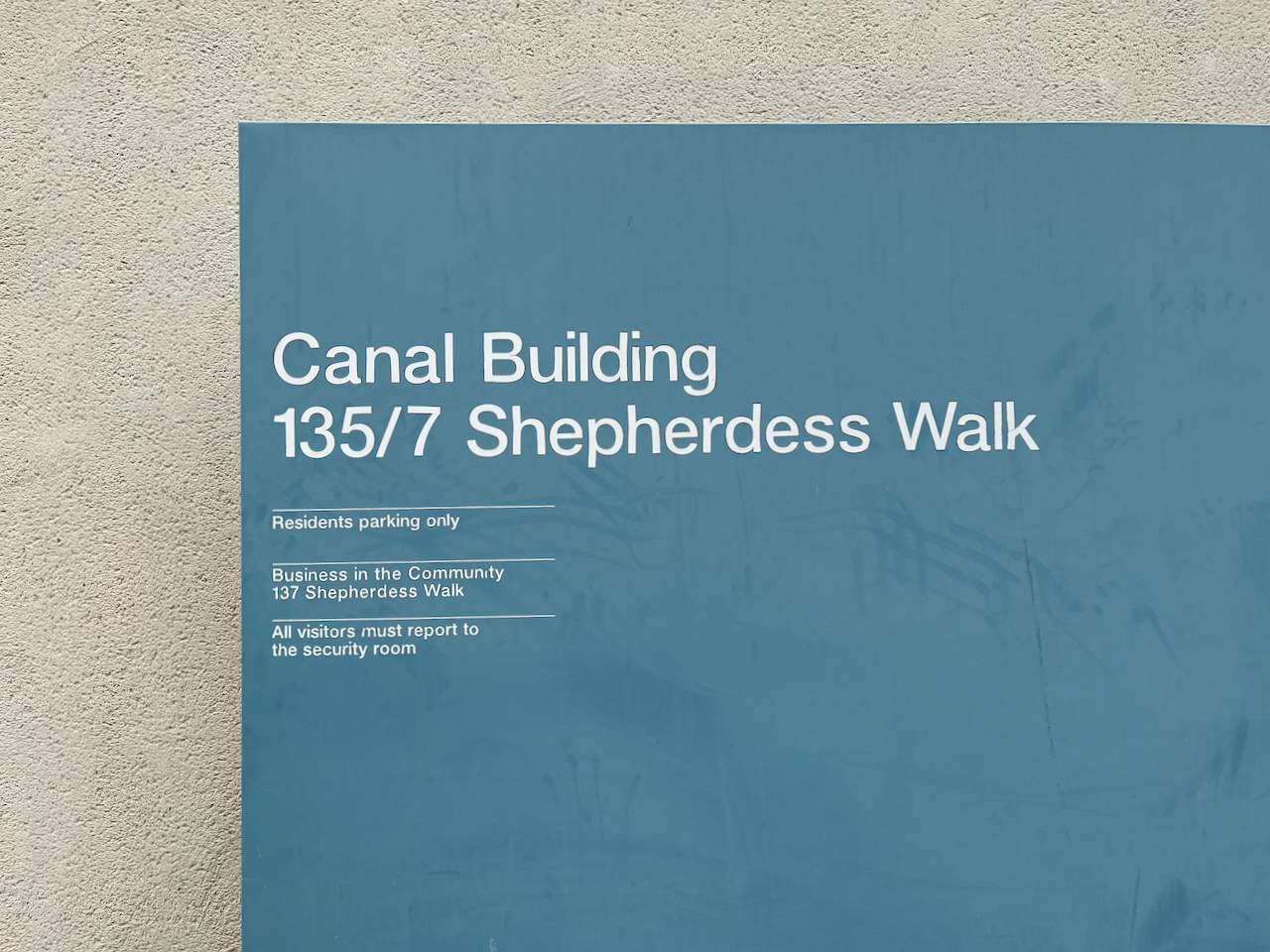
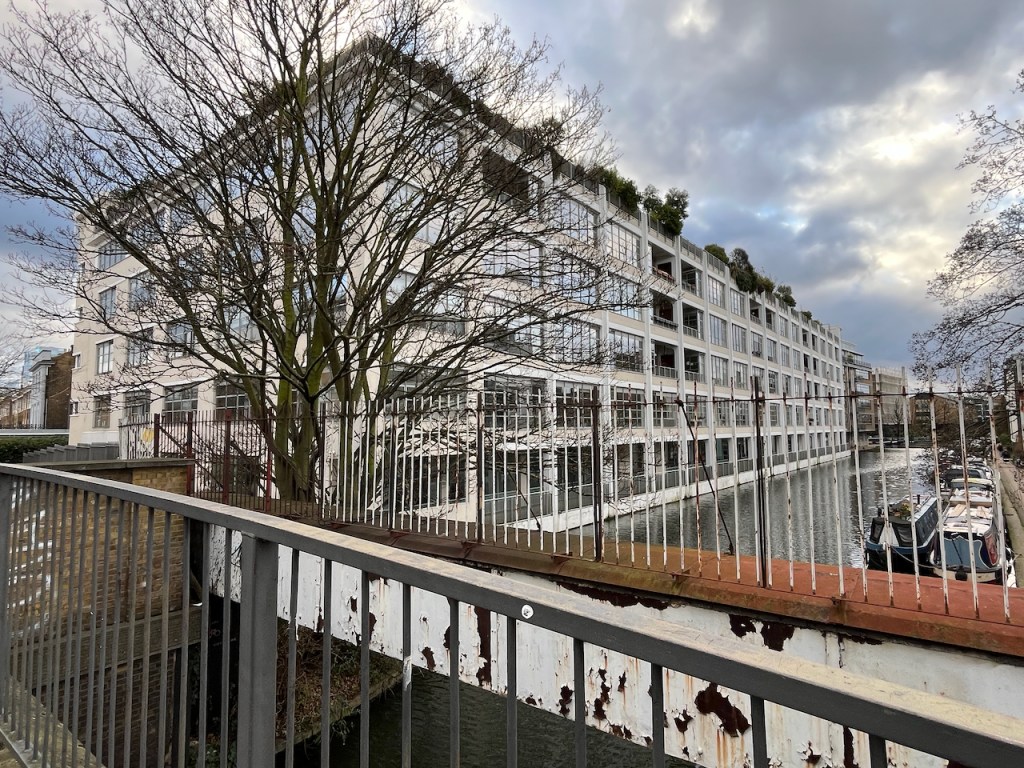
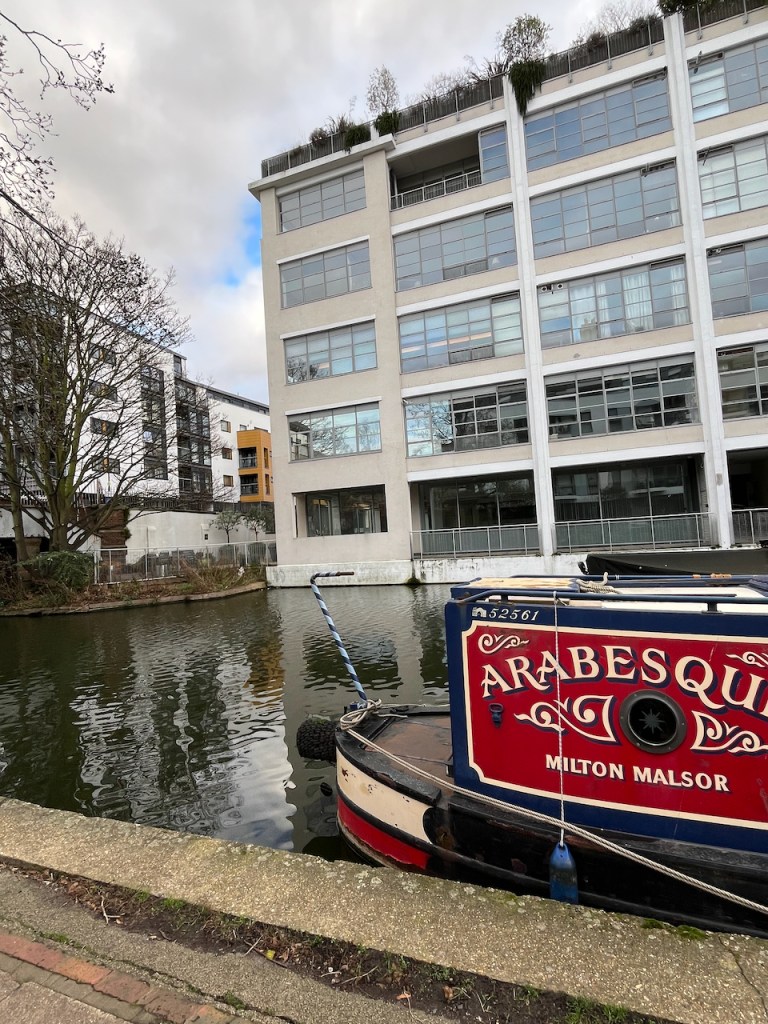
The Canal Building is a former 1930s Art Deco warehouse. In 2000, it was converted into apartments and commercial space to the design of the architects Child Graddon Lewis. This building gained the architects a place amongst the finalists for the 2023 Architecture Today Awards, in the category “Mixed Use and Retail”. There are 35 new apartments, 45 live/work units and 1100 sq metres of commercial space. Here are photos of the building from the canal side.
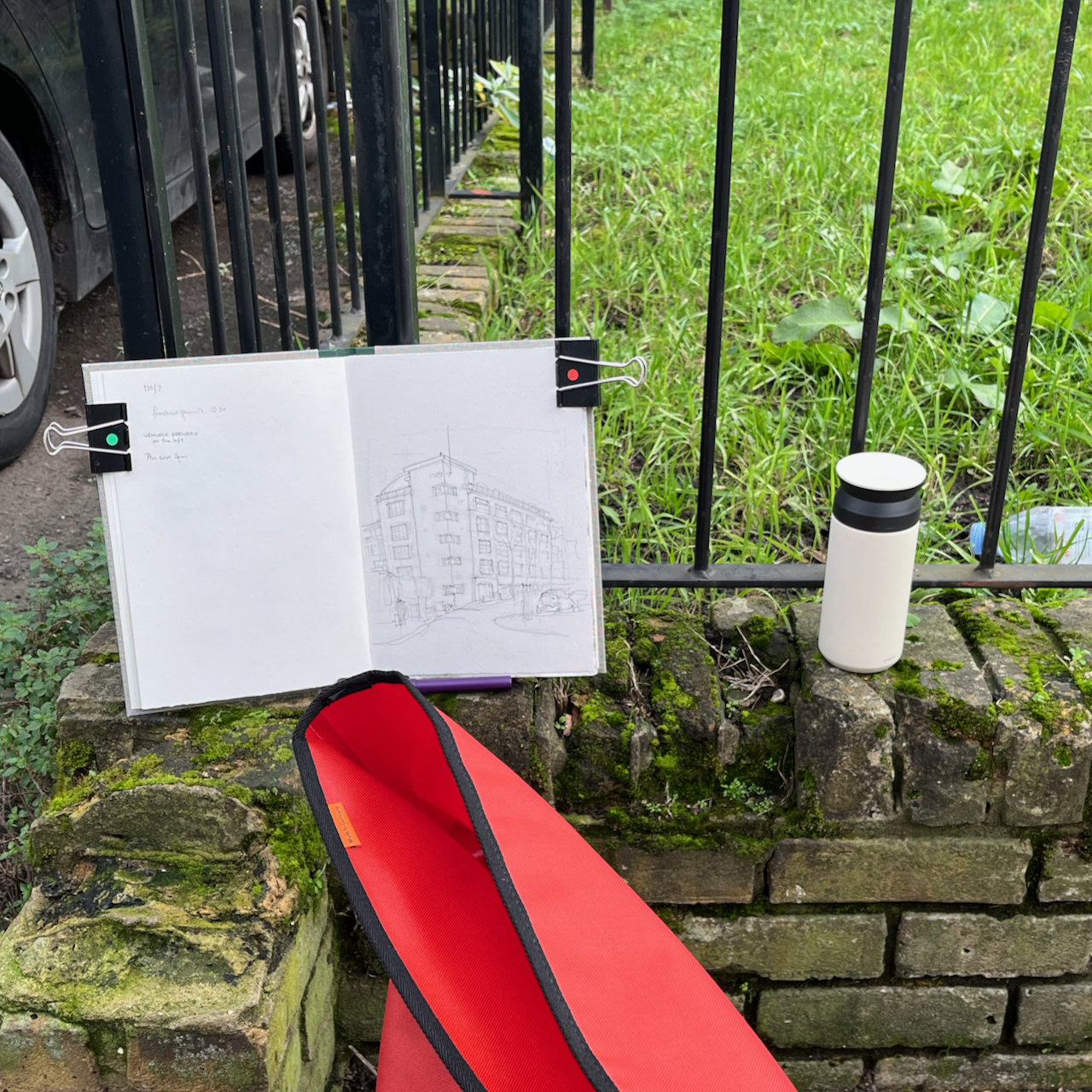
I did the pen on location and added the colour at my desk later. It was cold outside and I was sitting on a damp stone wall. Many people were out and about in the area, and two of them stopped to say hello and look at the drawing.


There are just three main colours in the sketch: Buff Titanium, Burnt Umber and Ultramarine Blue.
All colours are Daniel Smith except the blue, which is Schminke Horadam.
This is my first sketch in a new sketchbook!

Here are some other sketches I’ve done in Shepherdess Walk:
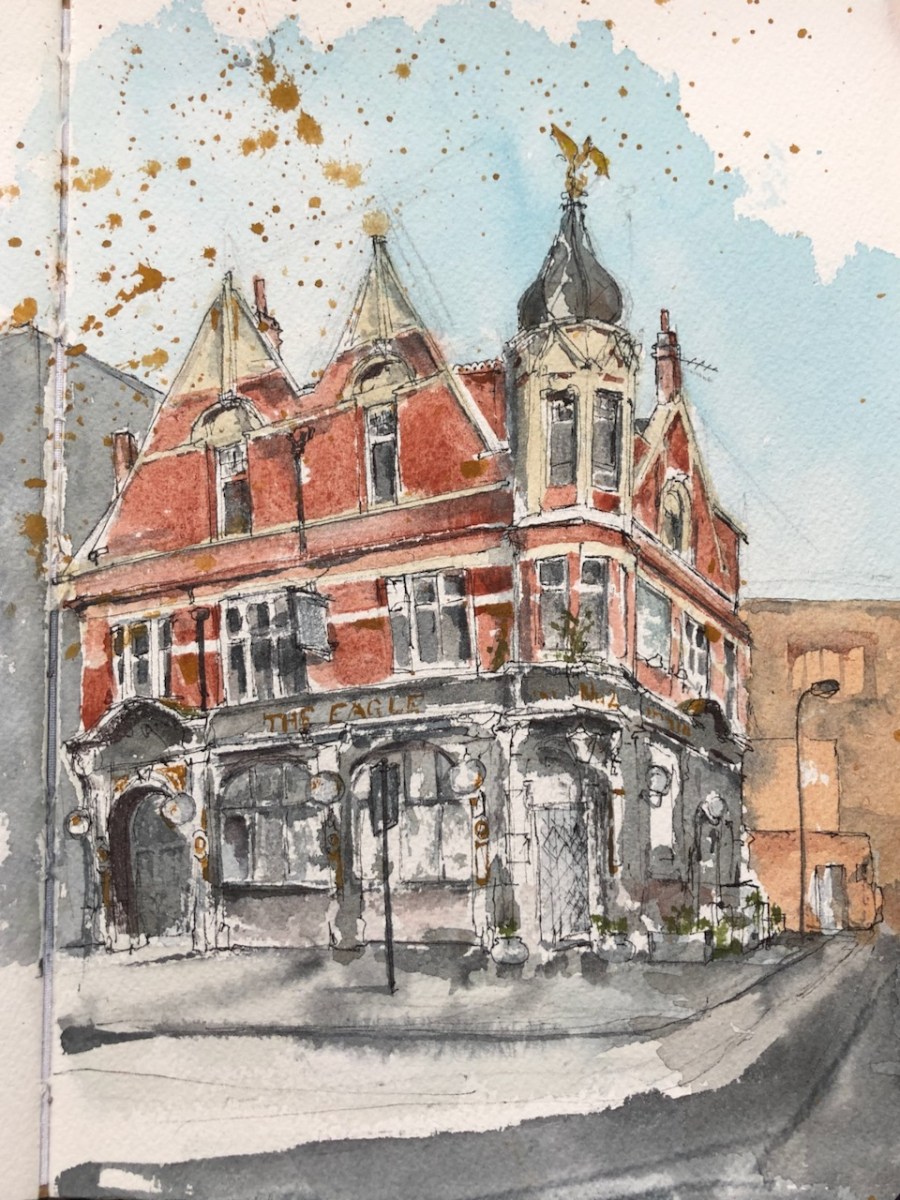
Here is The Eagle. This is a very old pub, located at a significant junction on City Road. In the picture above, the alley on the right of the pub is called “Shepherdess Place”. It leads to a police car park, and several…
Read more…Here is Plumage House, 106 Shepherdess Walk, London N1. This was a feather factory. According to Spitalfields Life this operated until 1994. The building is now rather shabby, though in a dignified way. I wonder what will happen to it? In the drawing,…
Read more…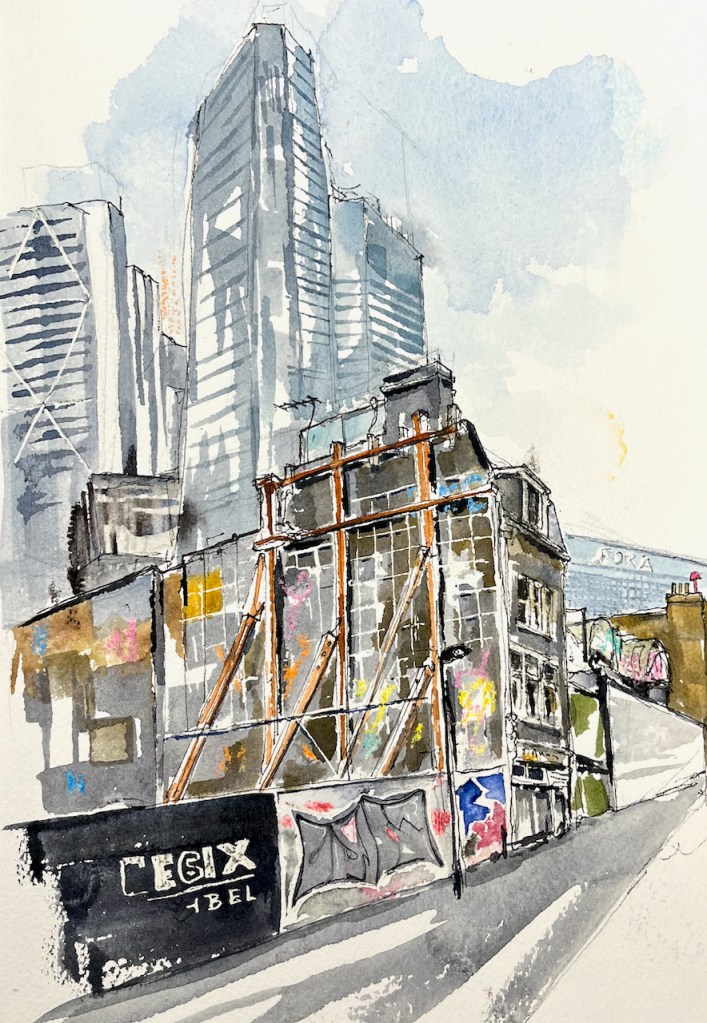
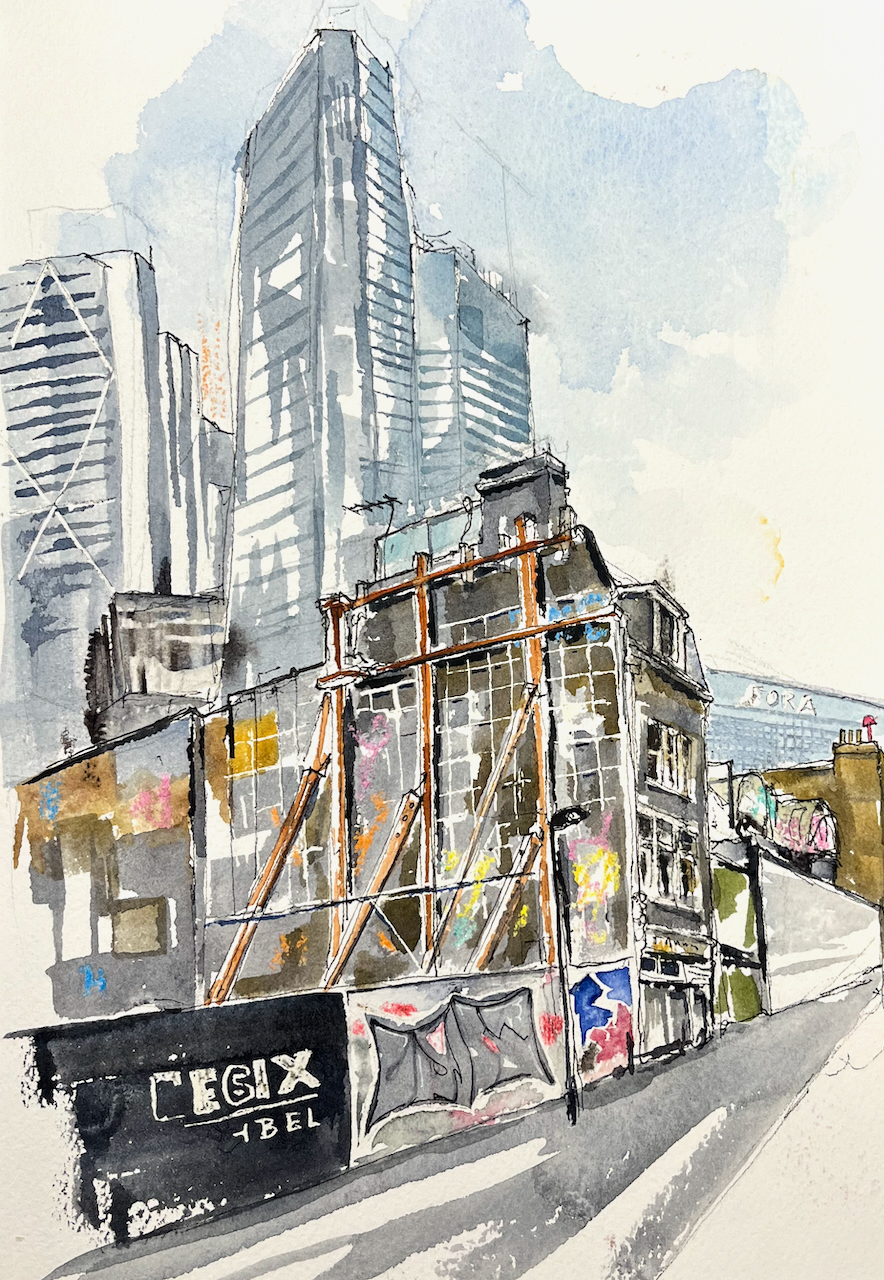
This apparently dilapidated building stands on the edge of a building site in Shoreditch. The flaking shopfront announces “The Mission”. It looks dusty and closed up.
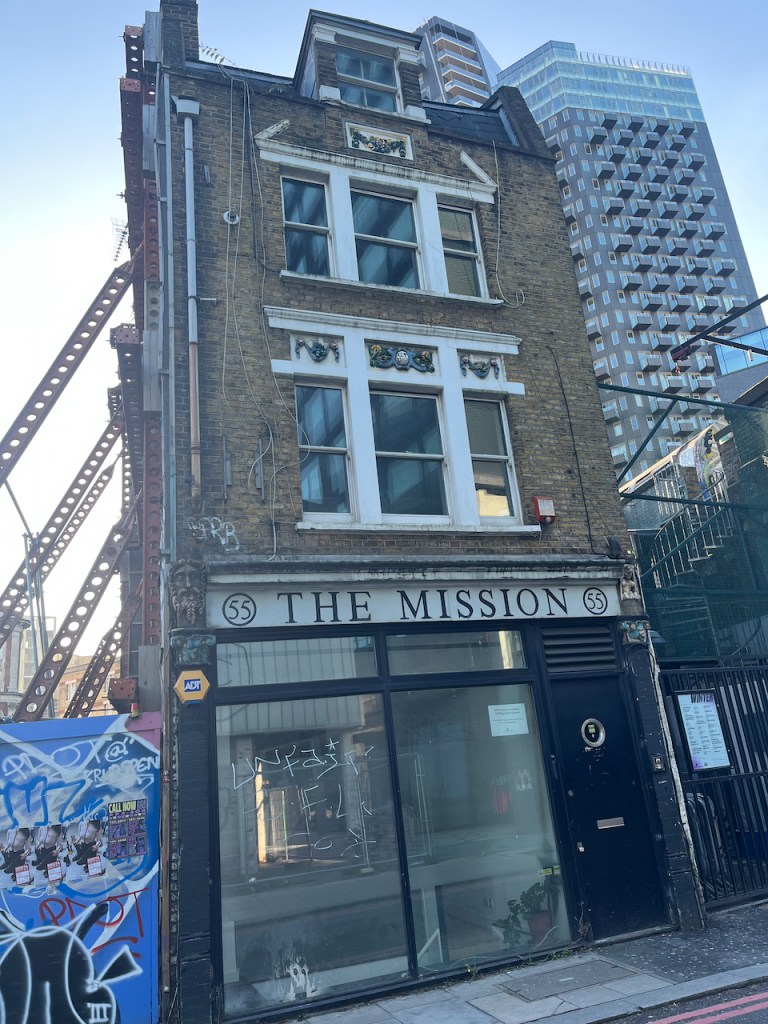
This is 55 Holywell Lane. The Victorian decorations on the front of the building say “G.T. 1893”.
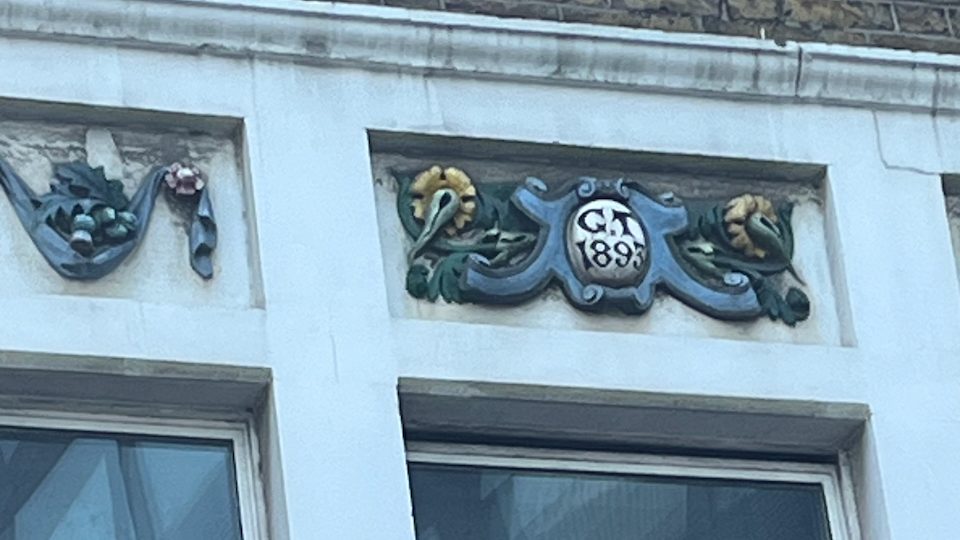
Despite appearances, the building is in active use. It is part of “Village Underground” – “part creative community, part arts venue”. “home to cutting edge culture, clubbing and live music” founded in 2006.
In the centre right of the drawing you can see the underground train carriages, hoisted on top of the venue.
Their website says
“It’s a strange little haven of calm in the carriages, above the chaos of Shoreditch, enclosed by skyscrapers on each side, where we grow fruit and veg in our little rooftop garden, get excited about new bands and parties, plot and plan how to improve the venue, decide which shows to book, and try to get more people to come to our shows. “
https://villageunderground.co.uk/about/history/
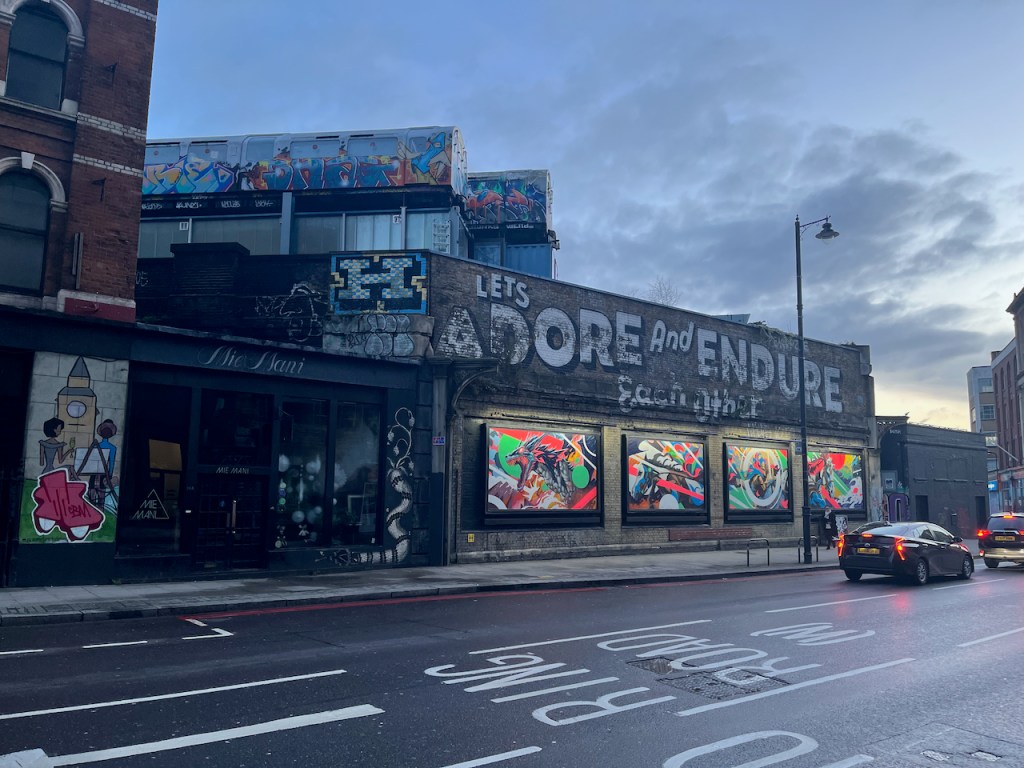
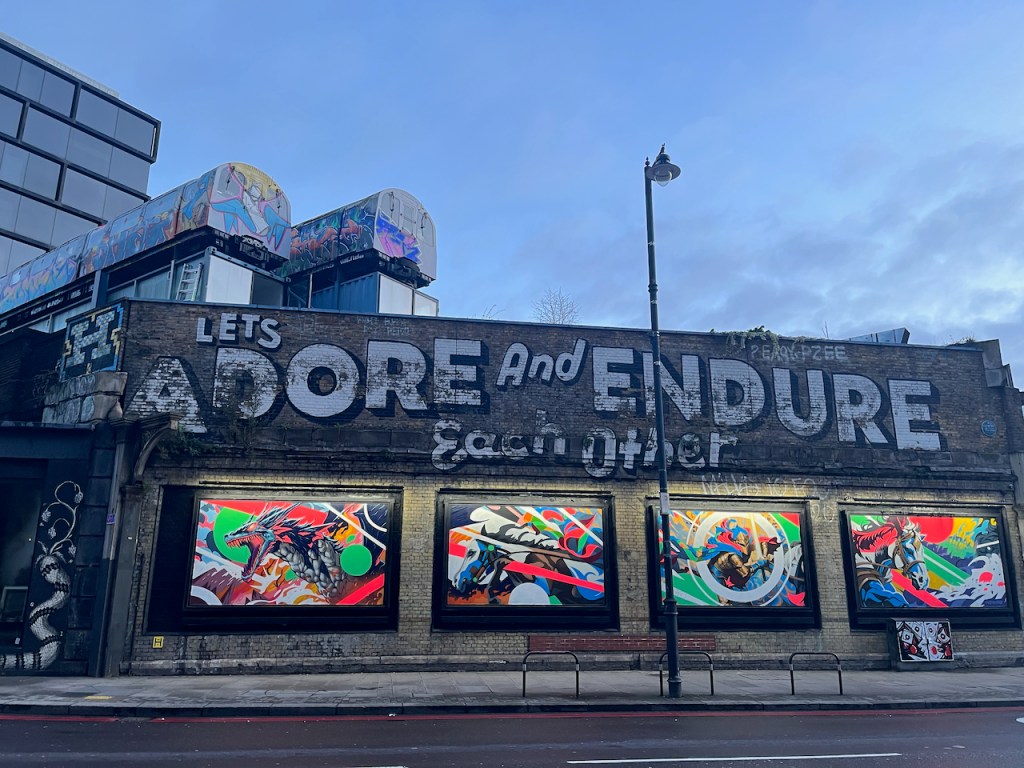
This is an area of London undergoing transition. In the background of my drawing you can see the huge residential and office towers next to Liverpool Street Station: “The Stage” and “Principal Place”. I sketched the picture standing under the elevated overground railway line, next to a building site. On the white wall shown to the right of my drawing, people were making a large mural, an advertisement for a whisky brand. The number 135 double-decker buses came past at what seemed like extraordinary frequency.
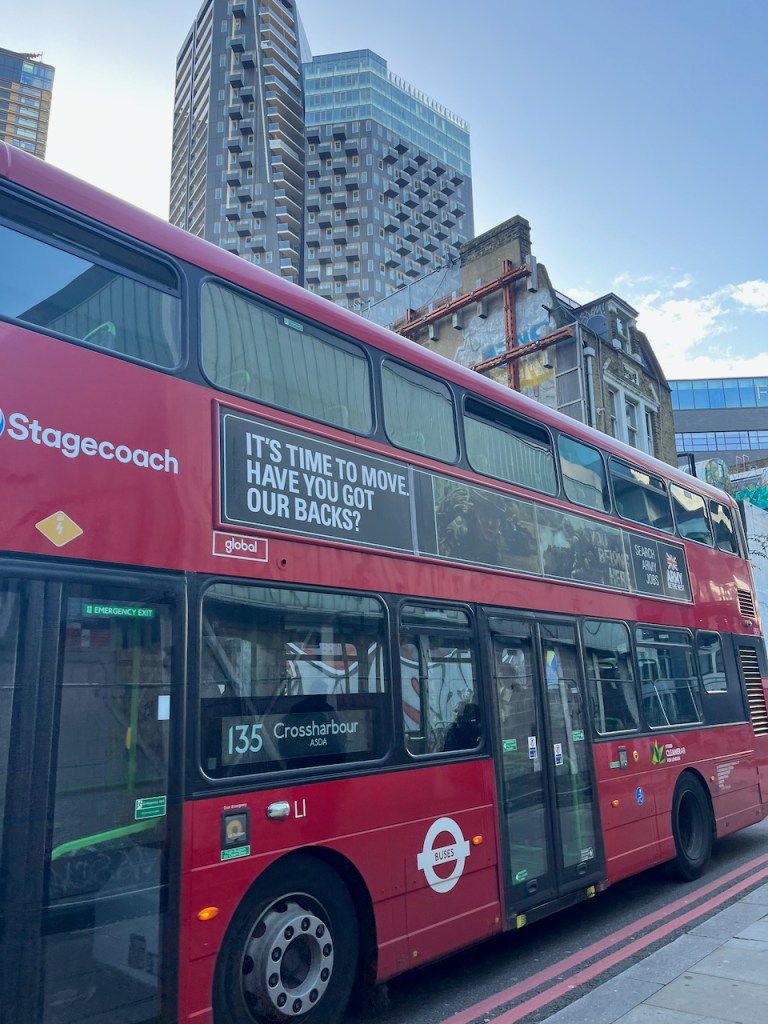
Cars and buses queued in this small street waiting to cross Shoreditch High St. It was a narrow pavement, and not a great place to sketch. But two people came and looked at the drawing: it’s a great skyline, they observed, looking at the view. And it is.

Here is the view of the site from Great Eastern Street early in the morning. The underground train carriages are visible top left.
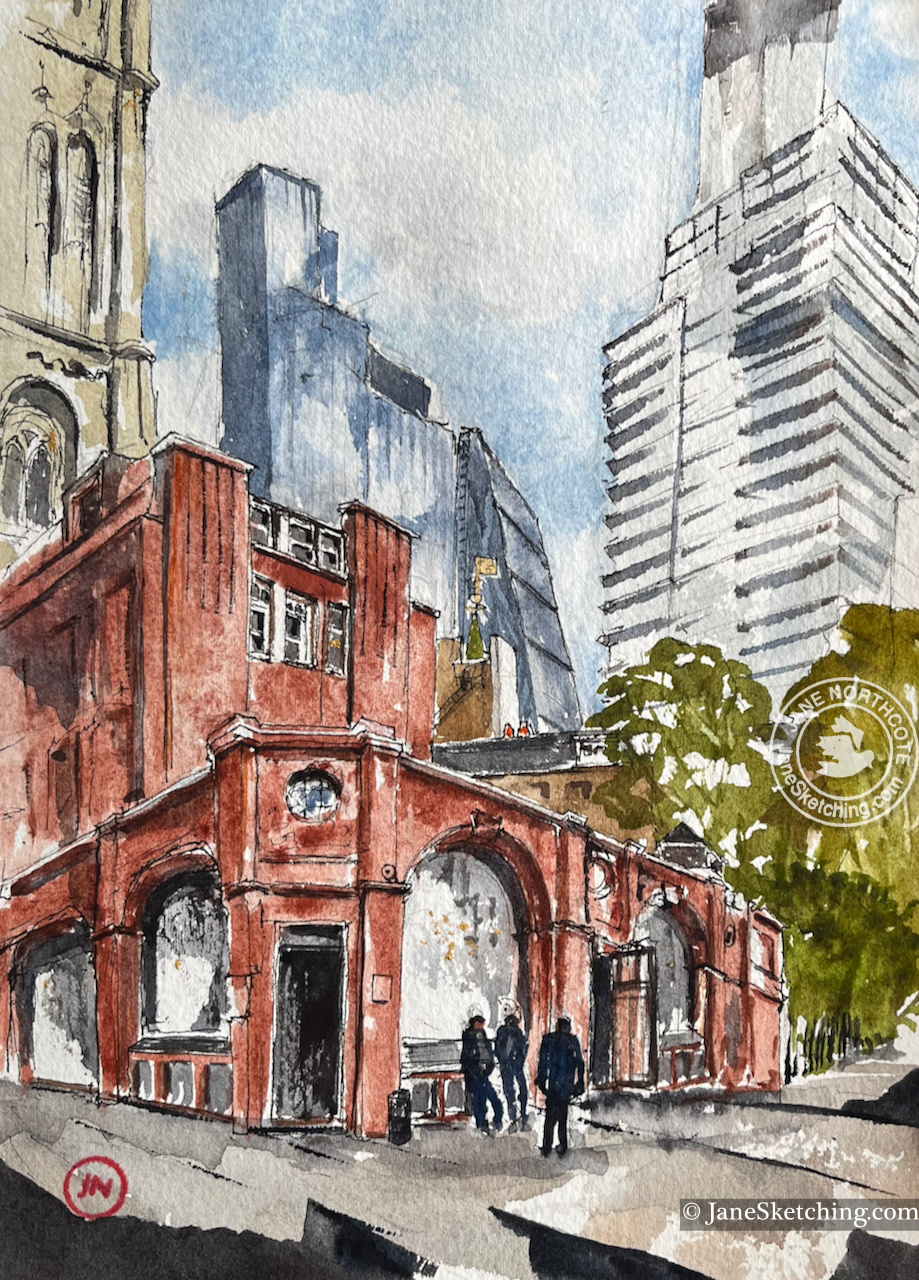
I walked through the City lanes towards London Bridge and passed by the Jamaica Wine House embedded, as it seemed, in a canyon amongst towers.
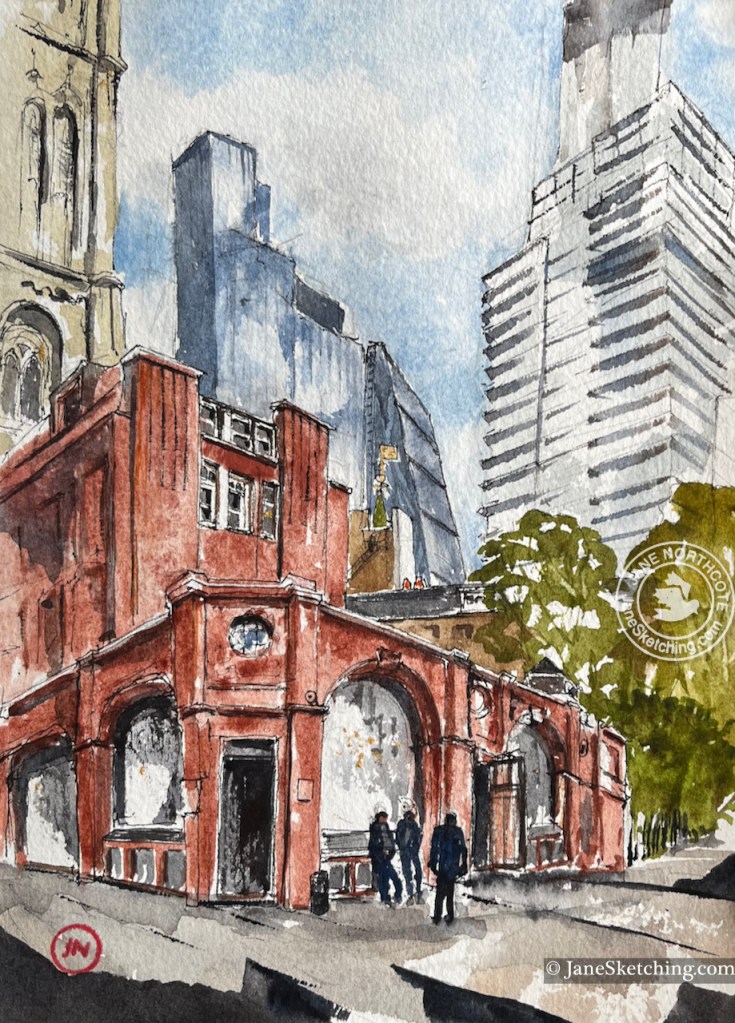
The Cheesegrater and 22 Bishopsgate are the office blocks in the left background and One Leadenhall is under construction on the right.
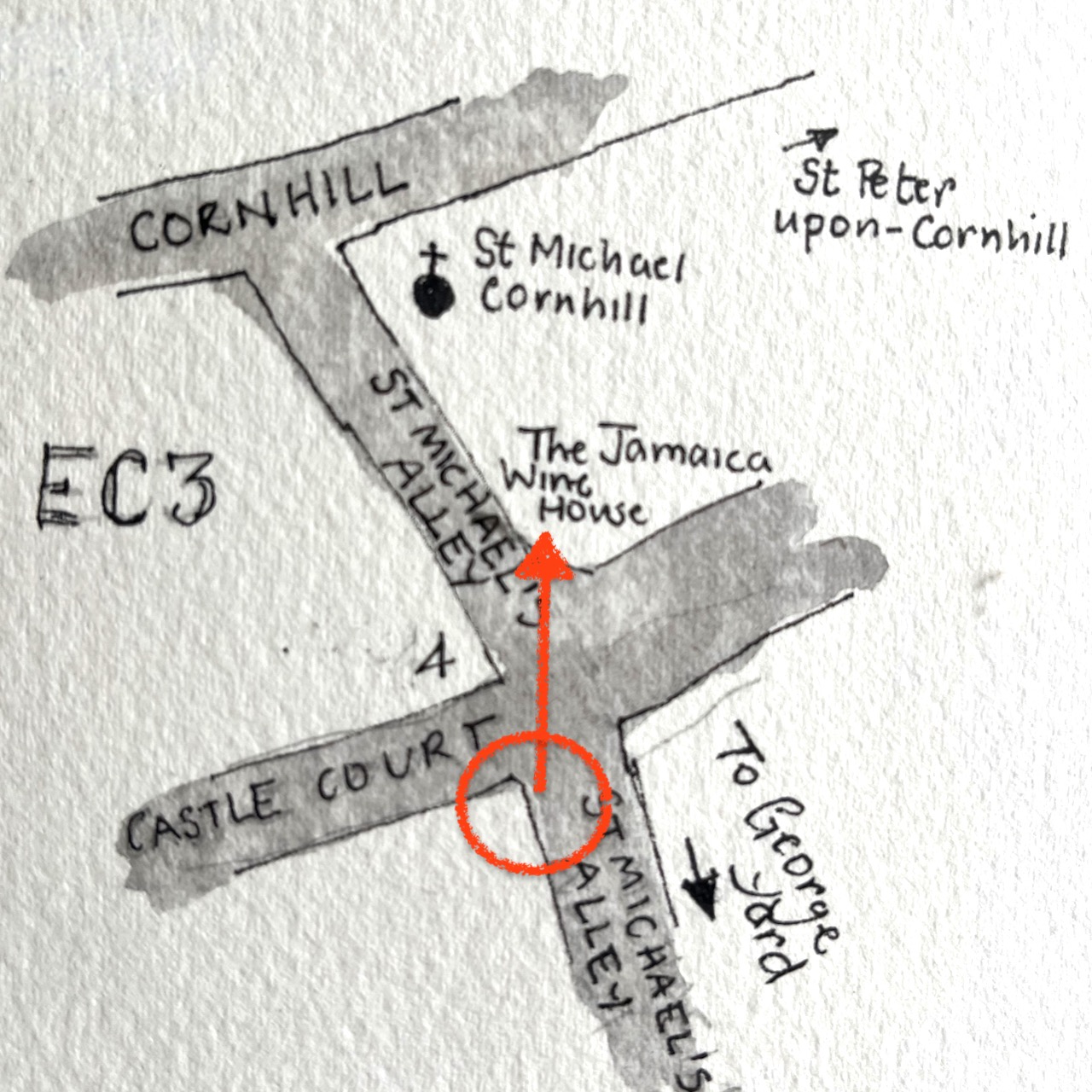
This is a very old part of the City. Although some buildings have changed, the road layout still retains something of the feeling of Dickensian London. There has been a pub or coffee house on the site of the Jamaica Wine House since 1652. The current building dates from 1868 according to the Historic England List Entry (number 1079156).
Off the picture to the left is MacAngusWainright bespoke tailors and shirtmakers, at number 4 St Michael’s Alley. This shop used to be John Haynes&Co, the jewellers.
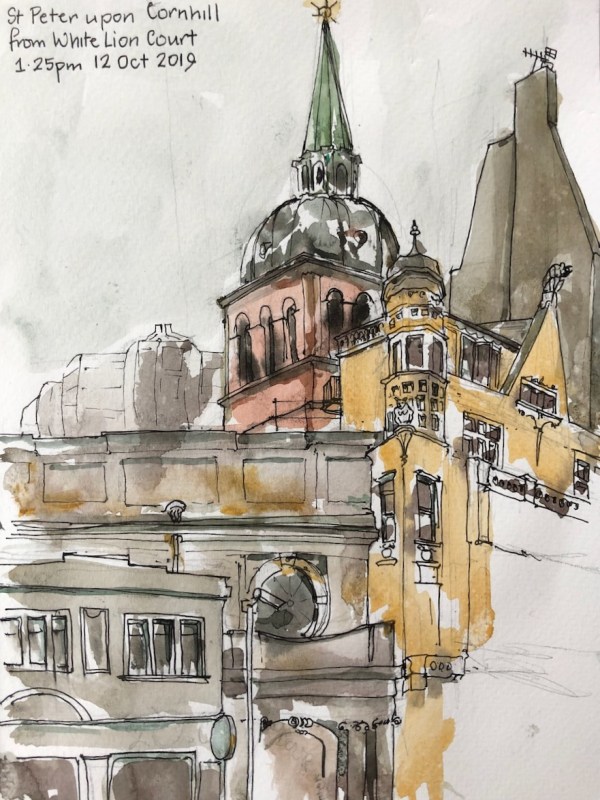
St Michael Cornhill is visible to the left in the background, and you can just see the weathervane on St Peter upon Cornhill in the centre of the picture.
My drawing of St Peter upon Cornhill is in this post:
I went out to look for more gas lights in the City. There was rain, and the back alleys were wet. I couldn’t find any more gaslights. At the South East extreme…
read about St Peter upon Cornhill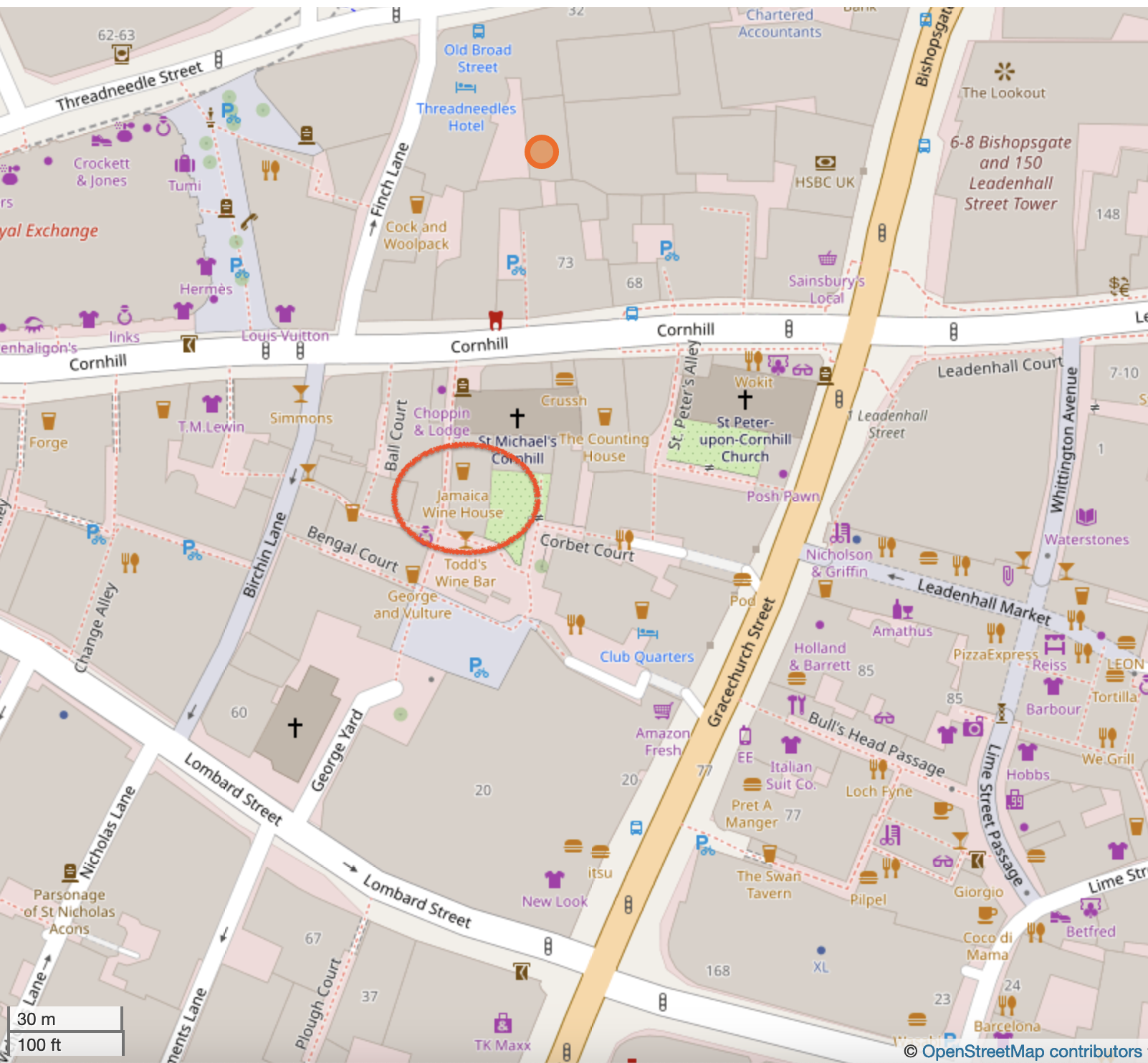
The picture took an hour on location and I finished it at my desk.

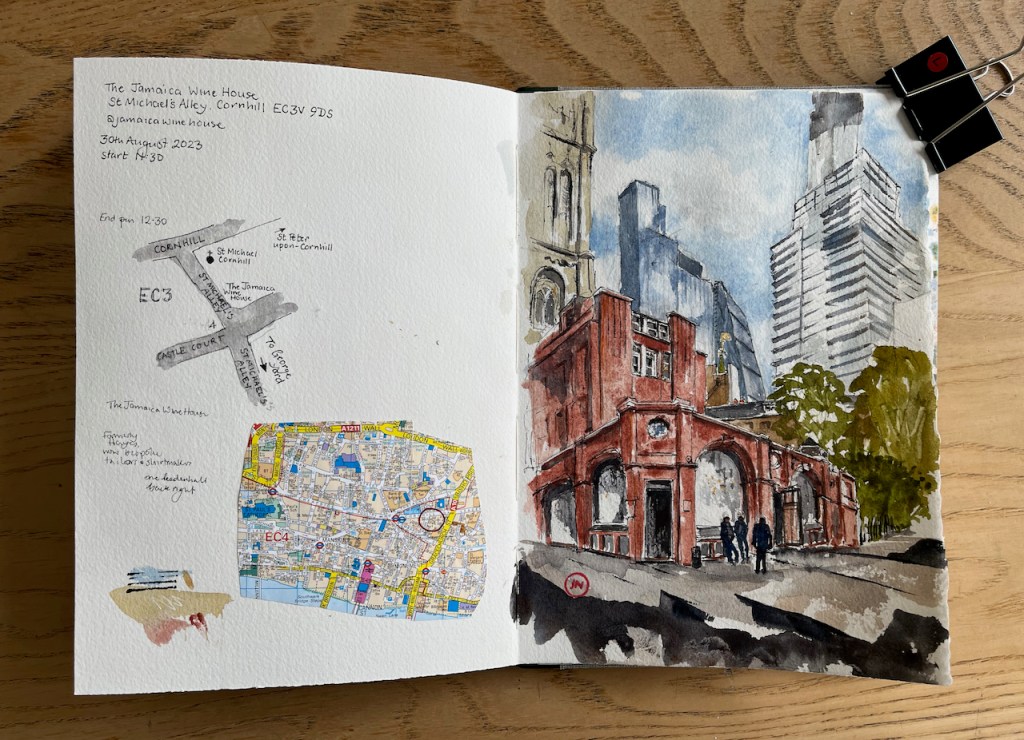


The colours in the picture are:
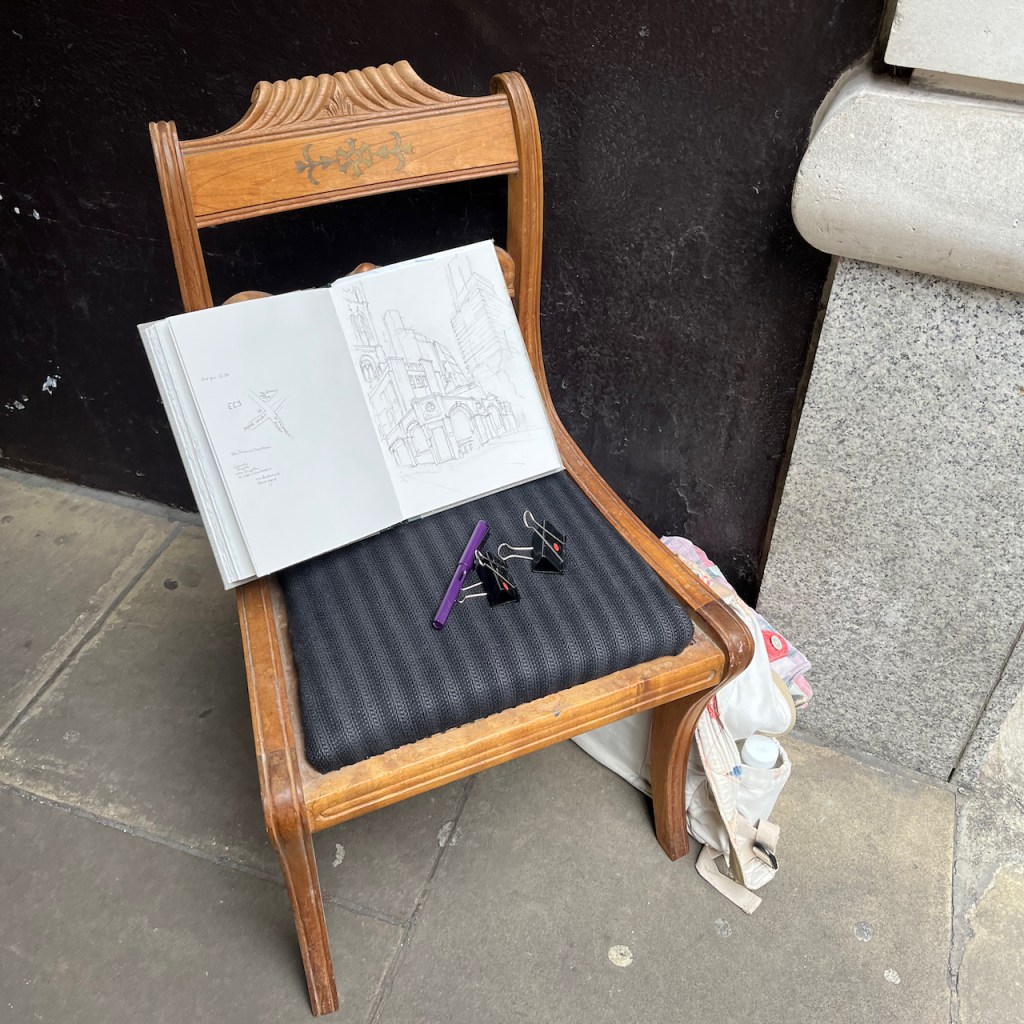
Done on Arches 300gsm NOT watercolour paper in a sketchbook by Wyvern Bindery, Hoxton. Thank you to McAngusWainwright, city tailor, for the kind loan of the chair.
In the Swiss hotel there was much talk about the wind turbines. They are being constructed on a nearby hill. I could see them from a bench by the church.
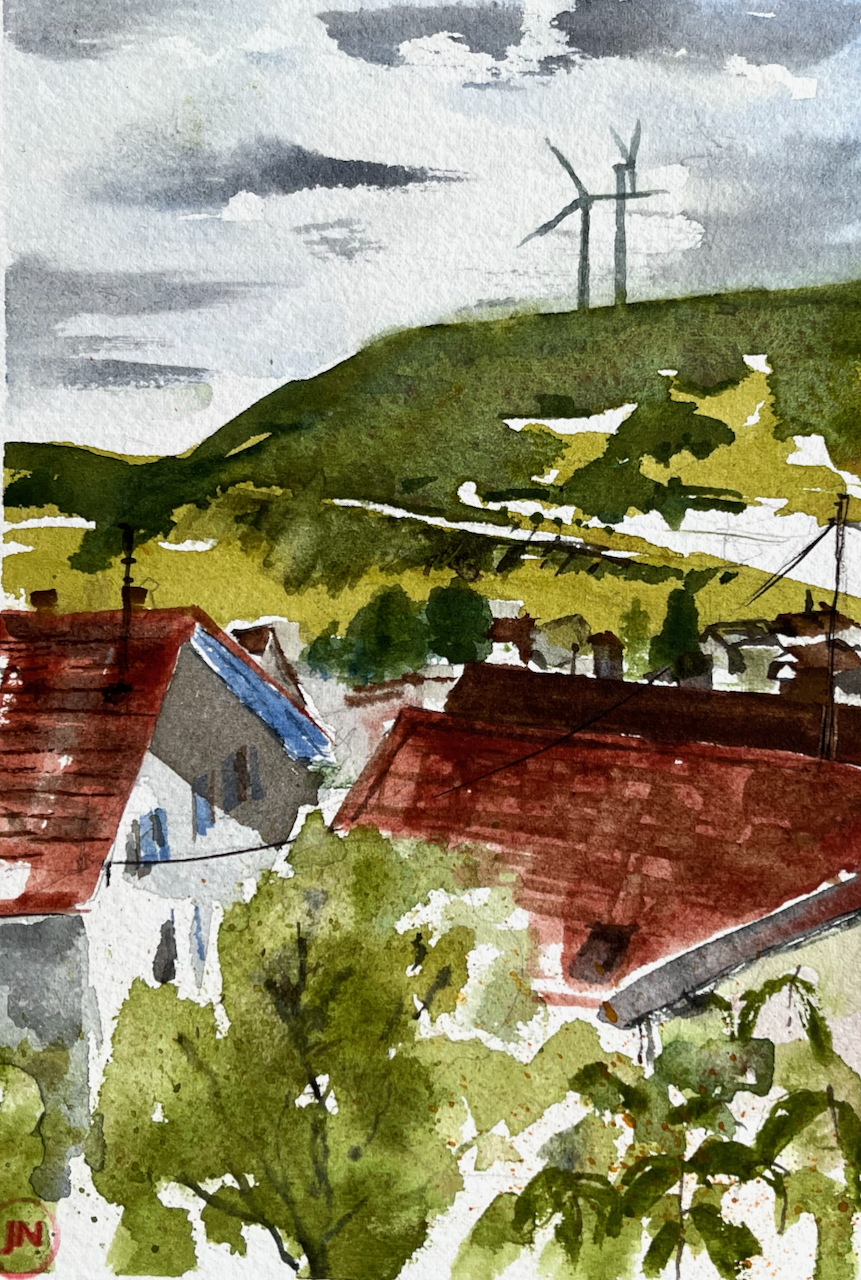
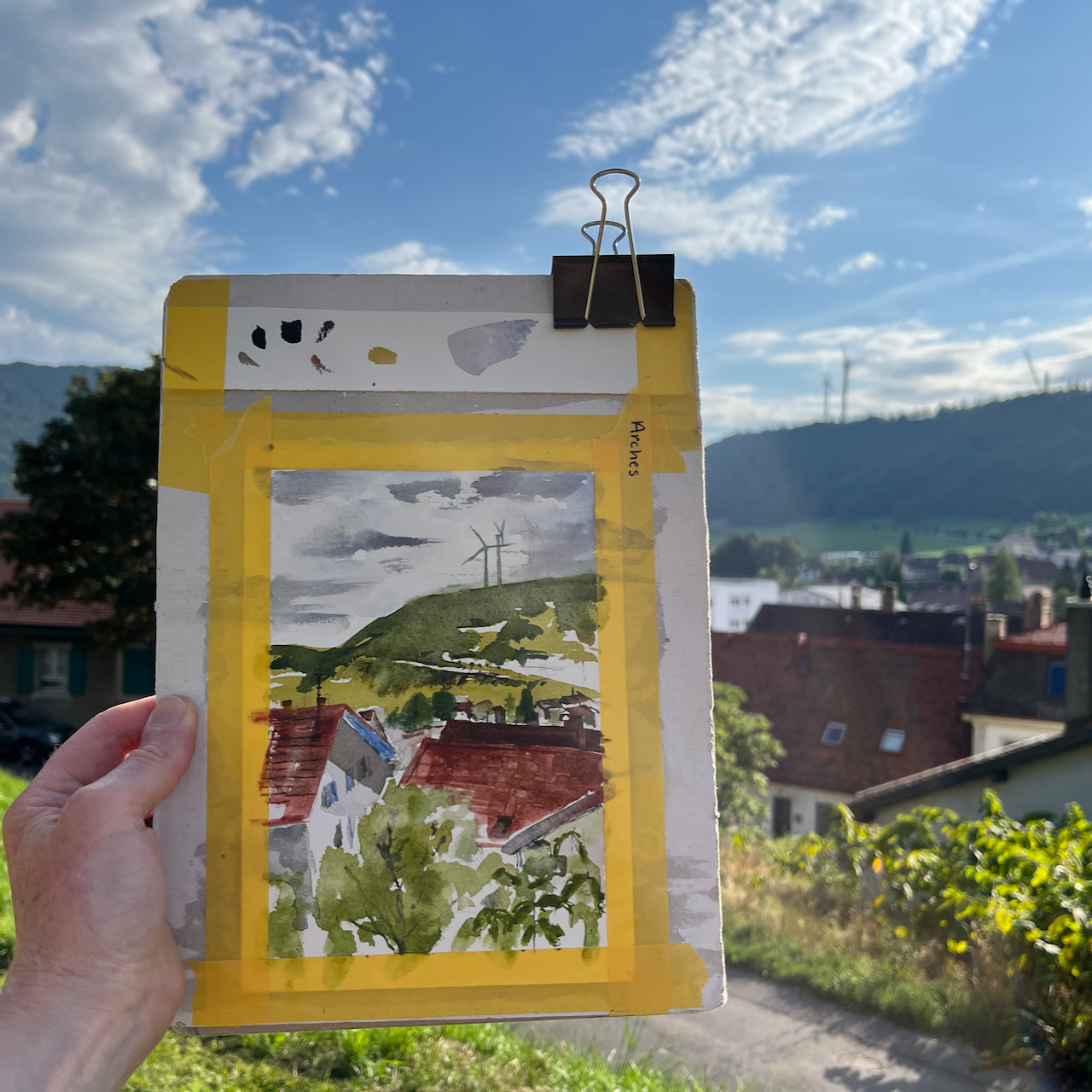
People said, you should go up there and see them, you can get very close. So on Sunday afternoon, we visited the construction site. There are information placards and a visitor car-park. Plenty of local people were up there viewing the machinery. The general atmosphere was one of curiosity and admiration.
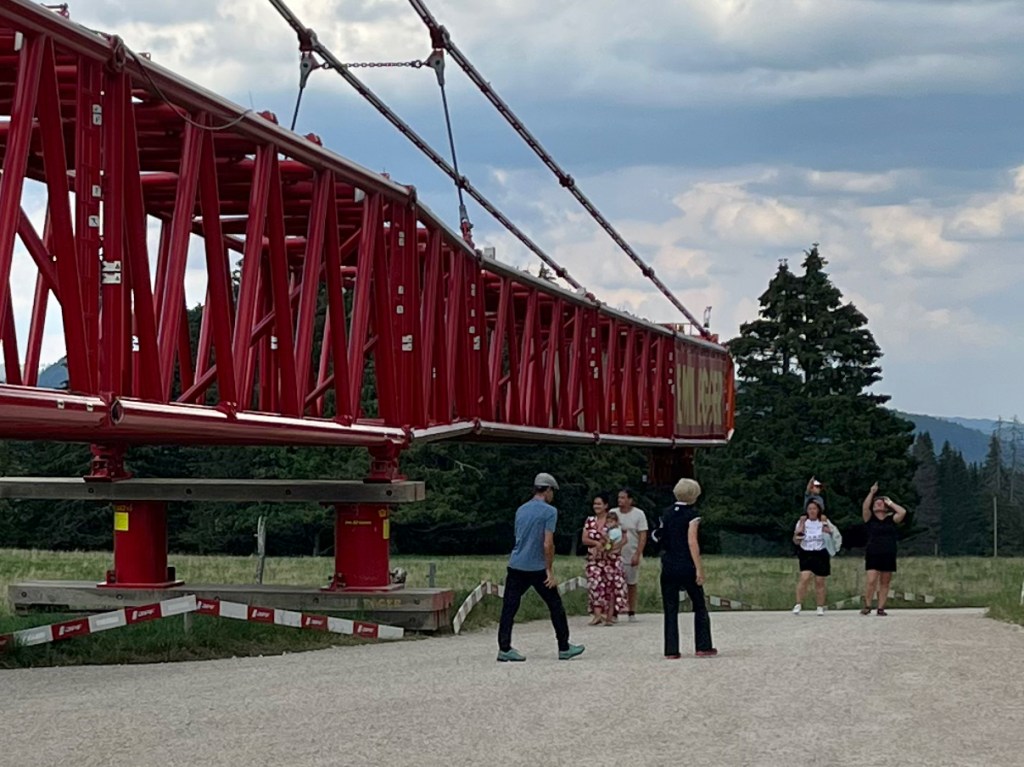
The blades are huge. 43 m.
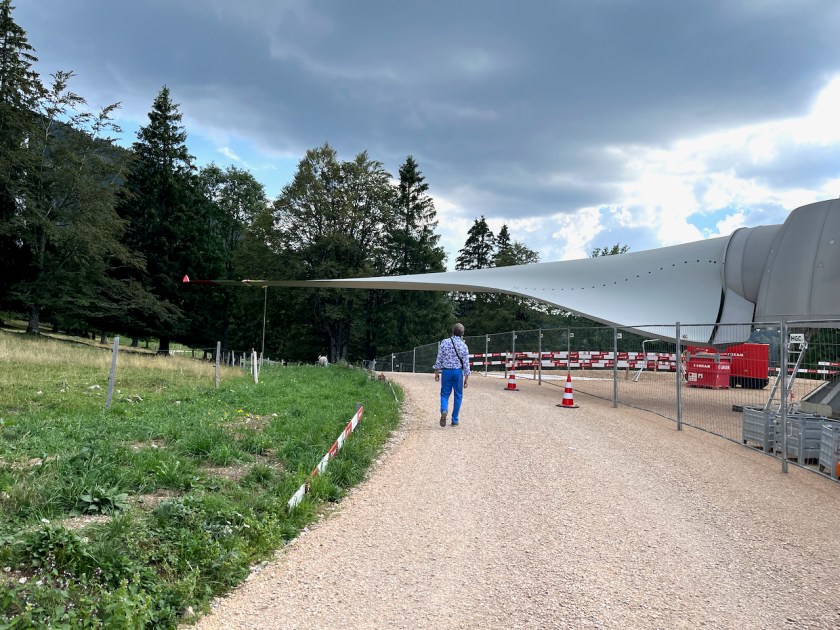
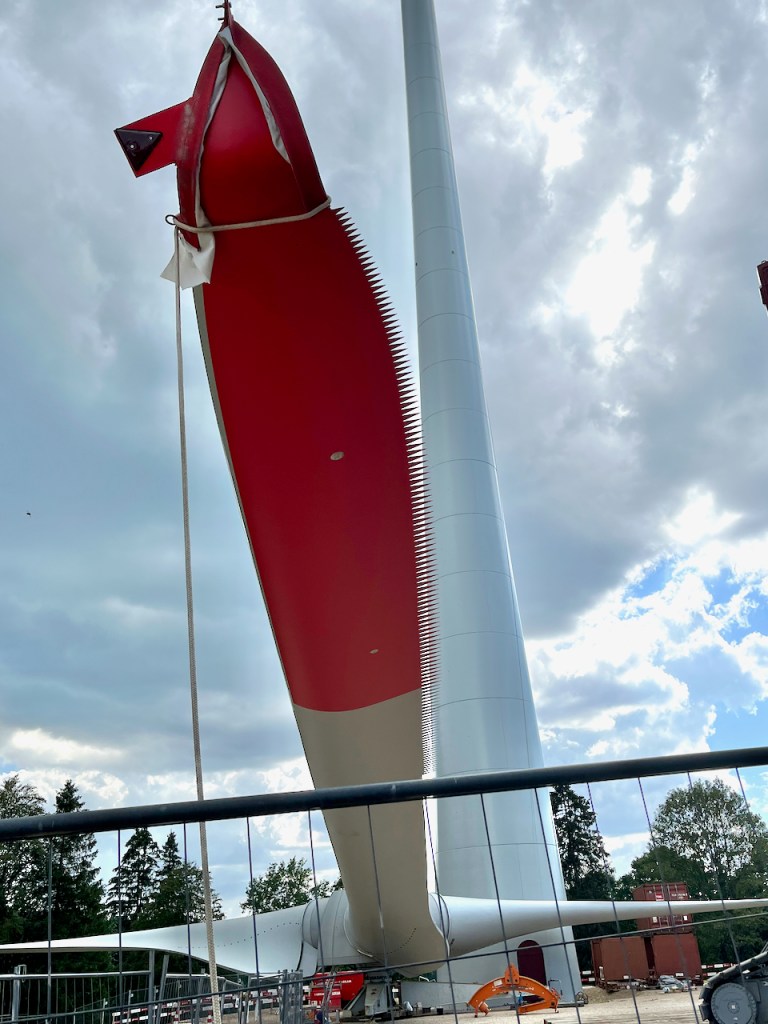

As a British person, I was surprised at the openness. As it was the weekend, the site had no workers. The fascinating machinery was separated from us by some notional fences. It was supervised only by a few CCTV cameras on a stand. Perhaps there were also hidden ones. As you see from the photos, we could get close, and walk freely around the crane. My Swiss companion was surprised at my surprise.
It was also remarkable how positive the feeling was amongst the sightseers. A local person said that in the past they had been opposed to the turbines, but now that construction was started, they could see how clean and organised it was. “It’s better than a nuclear power station!” they observed. There’s no immediate benefit for the local people: they do not get a reduction on their bills. “But it’s better for everyone.” I was told.
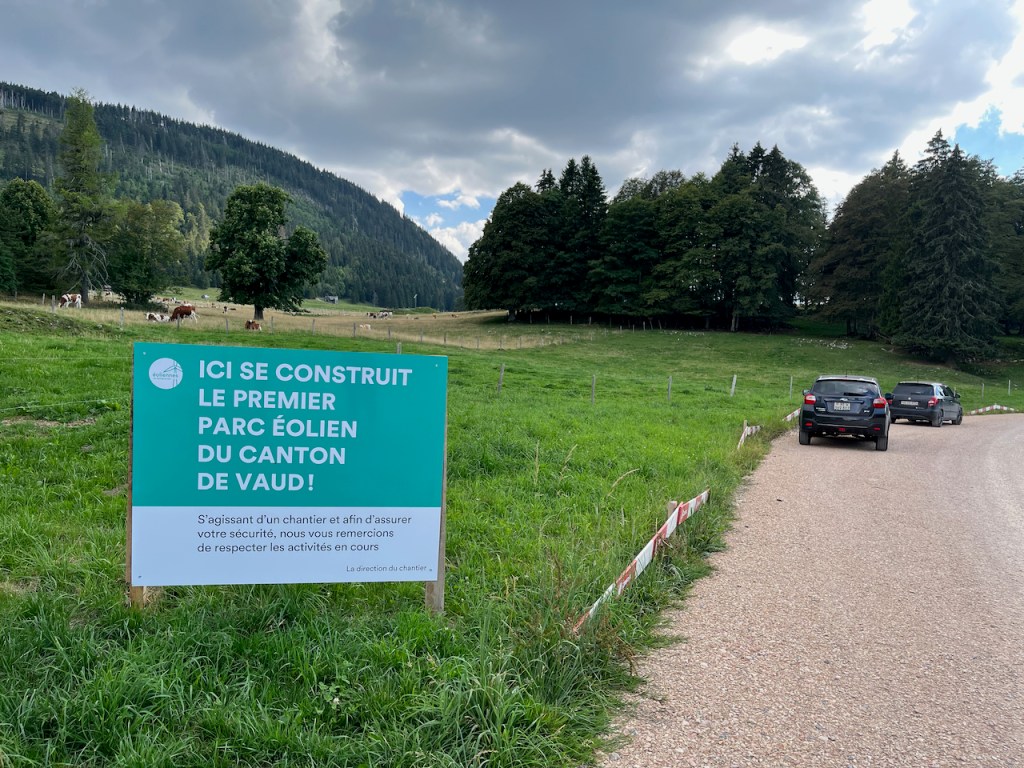
The next day, Monday, my host came rushing up to me as I returned from a walk. “Quick, look! They are raising…”. We found a vantage point. There, on the distant hill, the blades were being raised up the mast by the crane. They moved very slowly, but definitely, “like the hands of a watch” said my host. For that Swiss person, this engineering feat had become a source of local pride.
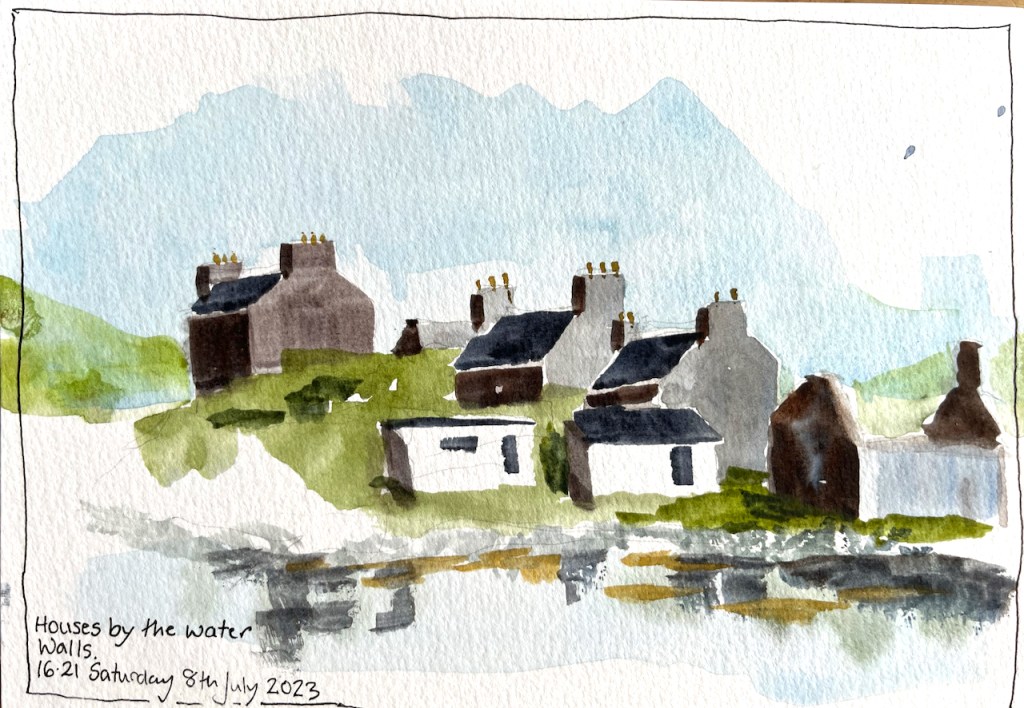
Here is a postcard which I made at the end of a long hot walk. It shows the houses in Walls, on Shetland West Side.
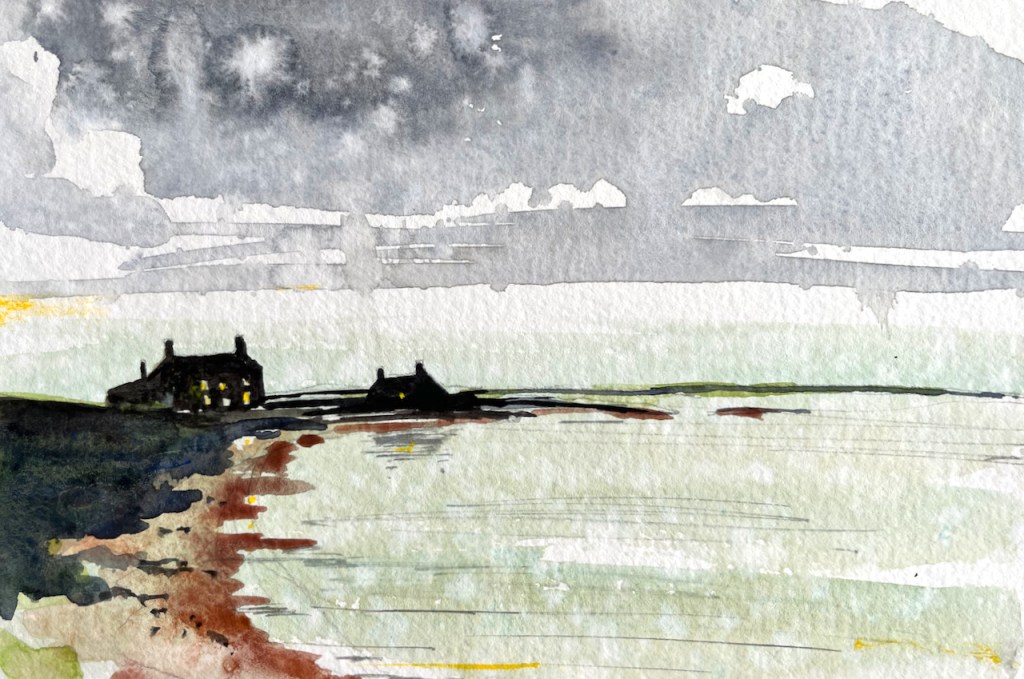
Here is Burrastow House and Burrastow Cottage, an evening view. I sketched this on top of a sky view I’d sketched earlier, but which had been spotted by rain, as you see.
This is a restaurant in Lerwick: “C’est la vie”.
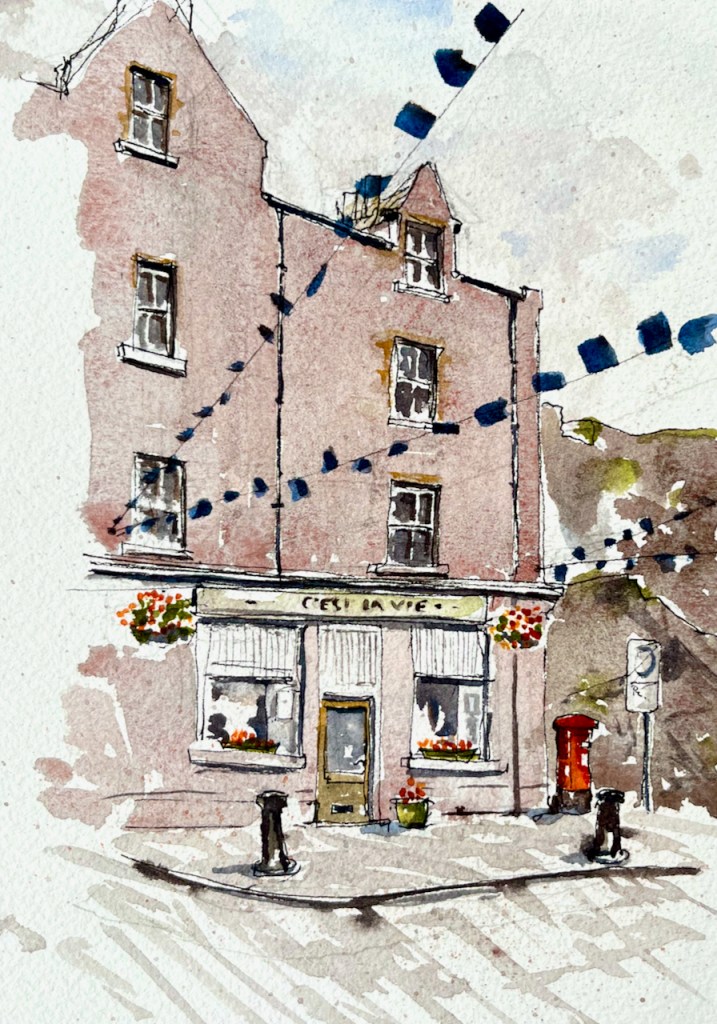
The flags are to welcome the “Tall Ships” which came to Lerwick earlier in the week. The restaurant was closed, I was waiting to see if it opened. Then the rain started. Then the restaurant opened and I finished the sketch inside. Then I walked to the Ferry Terminal.
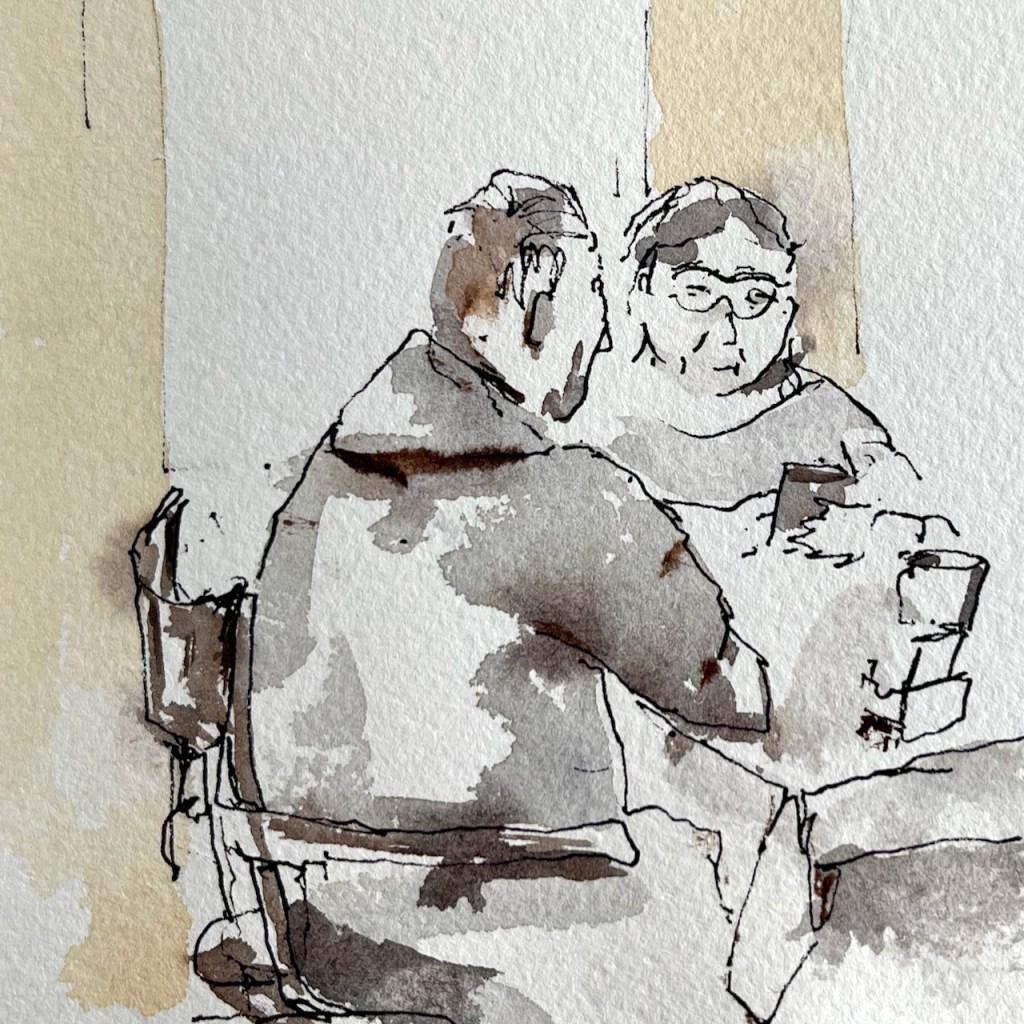
On the ferry, I made quick sketch of people at breakfast.
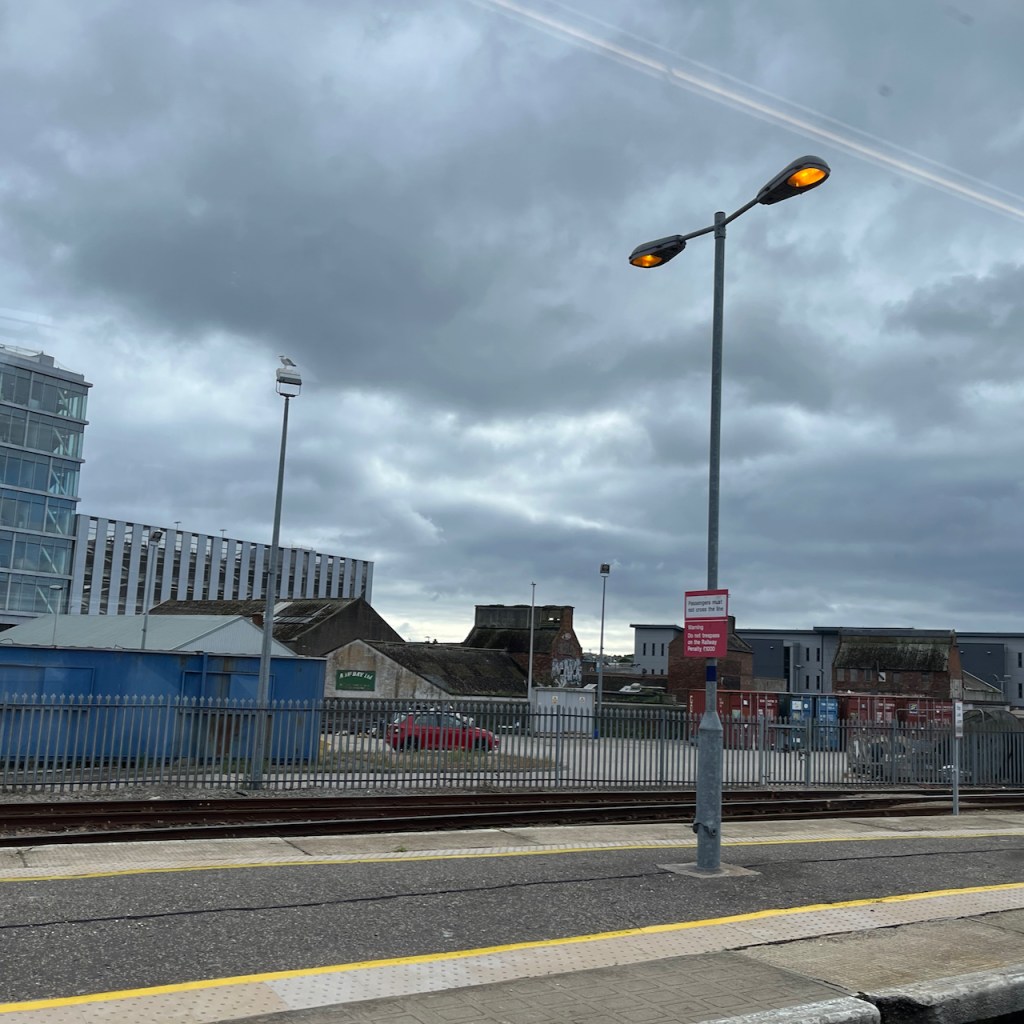
Here is my final sketch of the expedition. On the train at Aberdeen, I looked out of the window.

I have a sketchbook full of images. Here’s a quick flip through showing random glimpses of the visit: (19 second silent video)
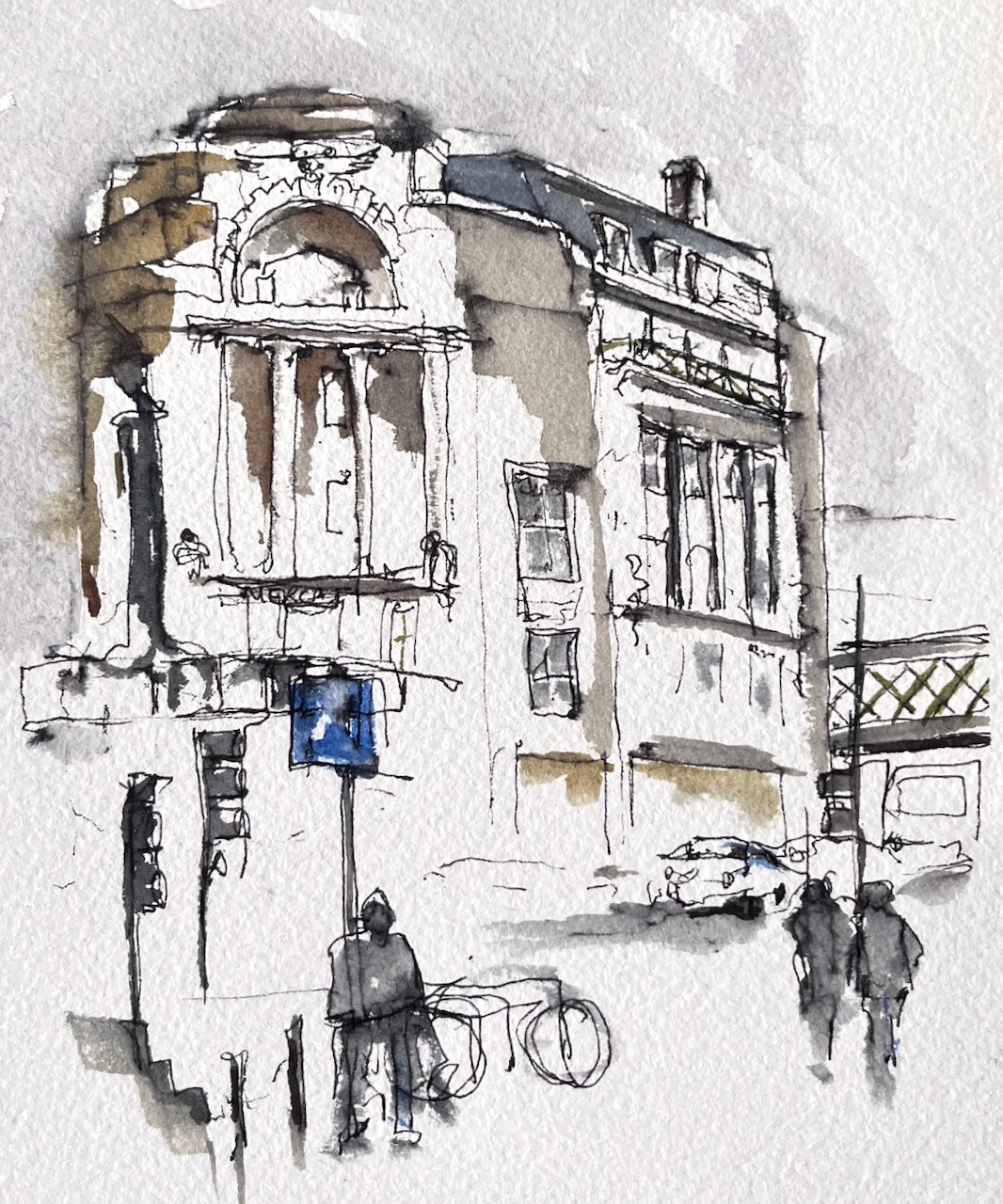
Here is Liverpool Street Station, main entrance, sketched today from outside the “Railway Tavern”.
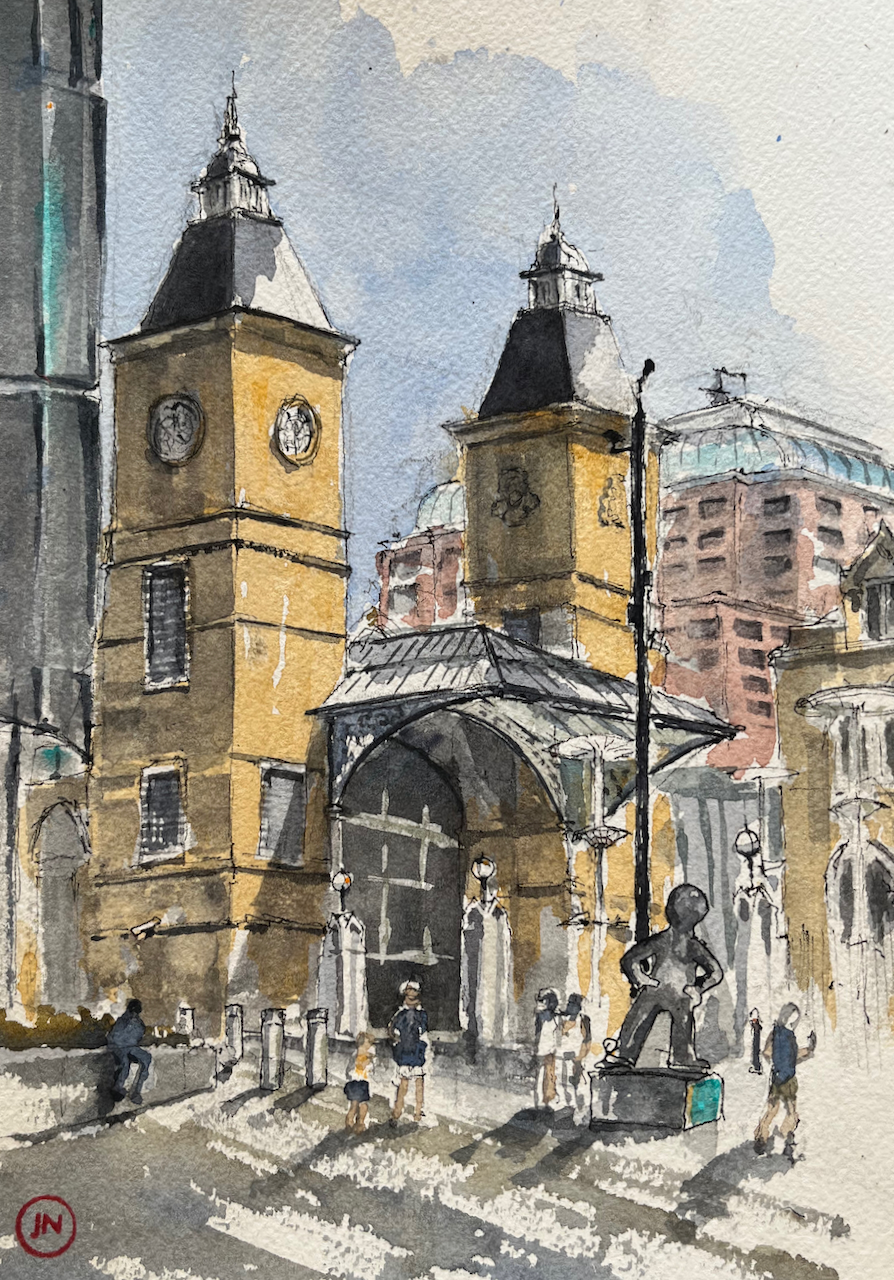
The humanoid figure on the plinth is Morph, part of a temporary art trail.
The area in front of the main entrance is like an art installation in itself, a collector’s assembly of street furniture: two different types of bollards, long ribbons of fencing, several species of street lamps, and that enormous CCTV stand which is just behind Morph. It’s surprising that people can find their way into the station in amongst the obstacles. I haven’t drawn them all.
Here’s work in progress on the sketch:
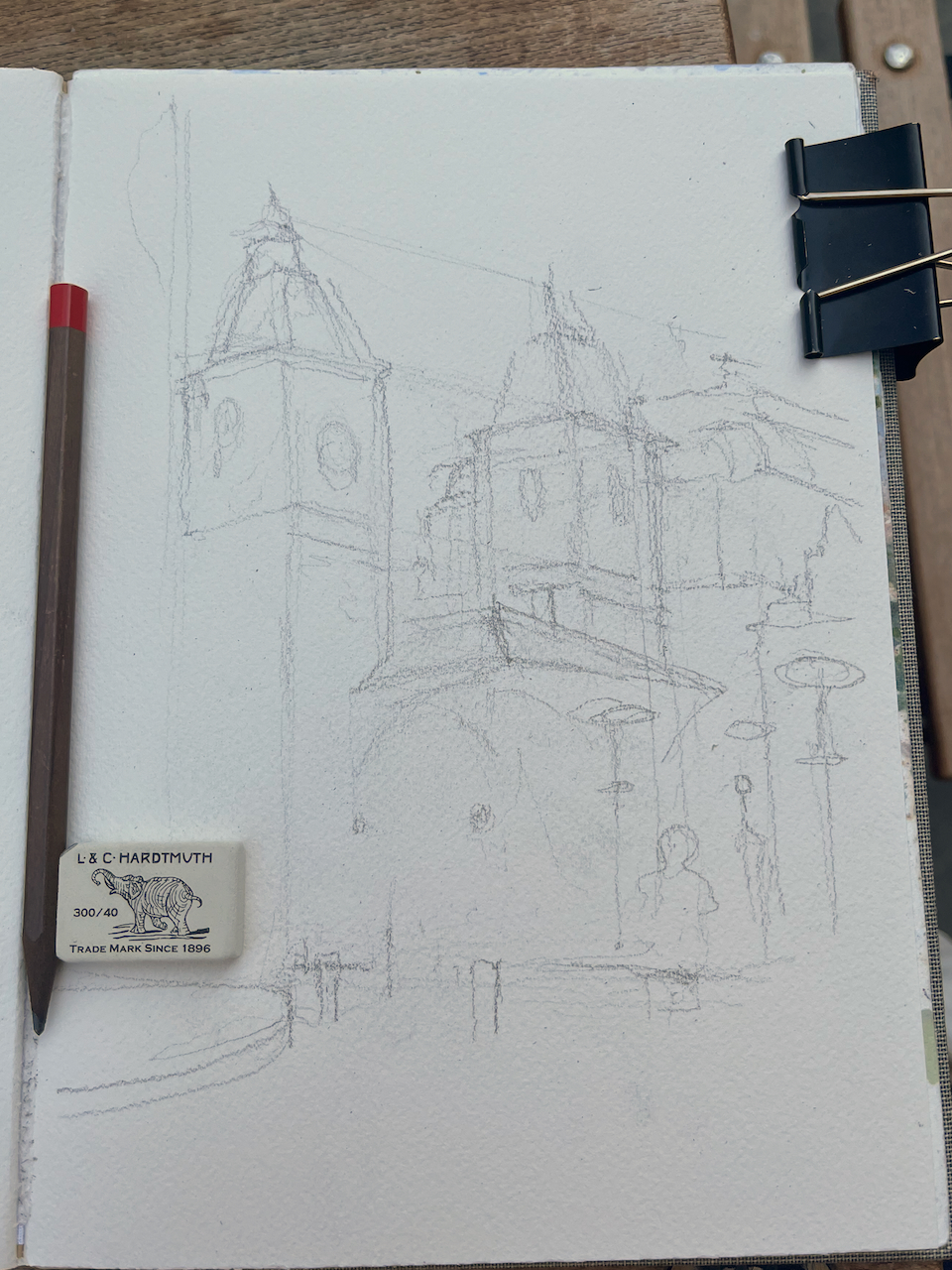
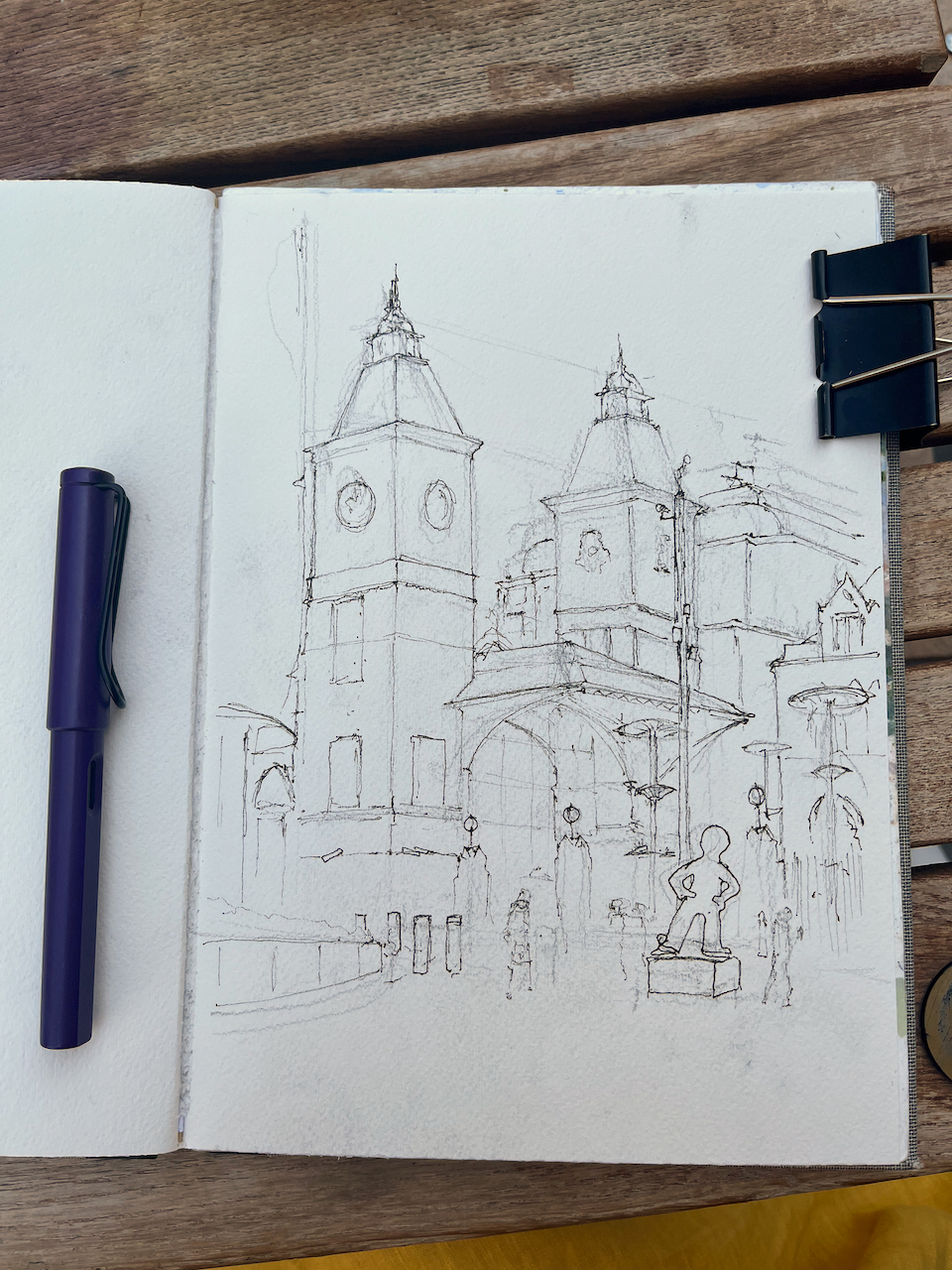


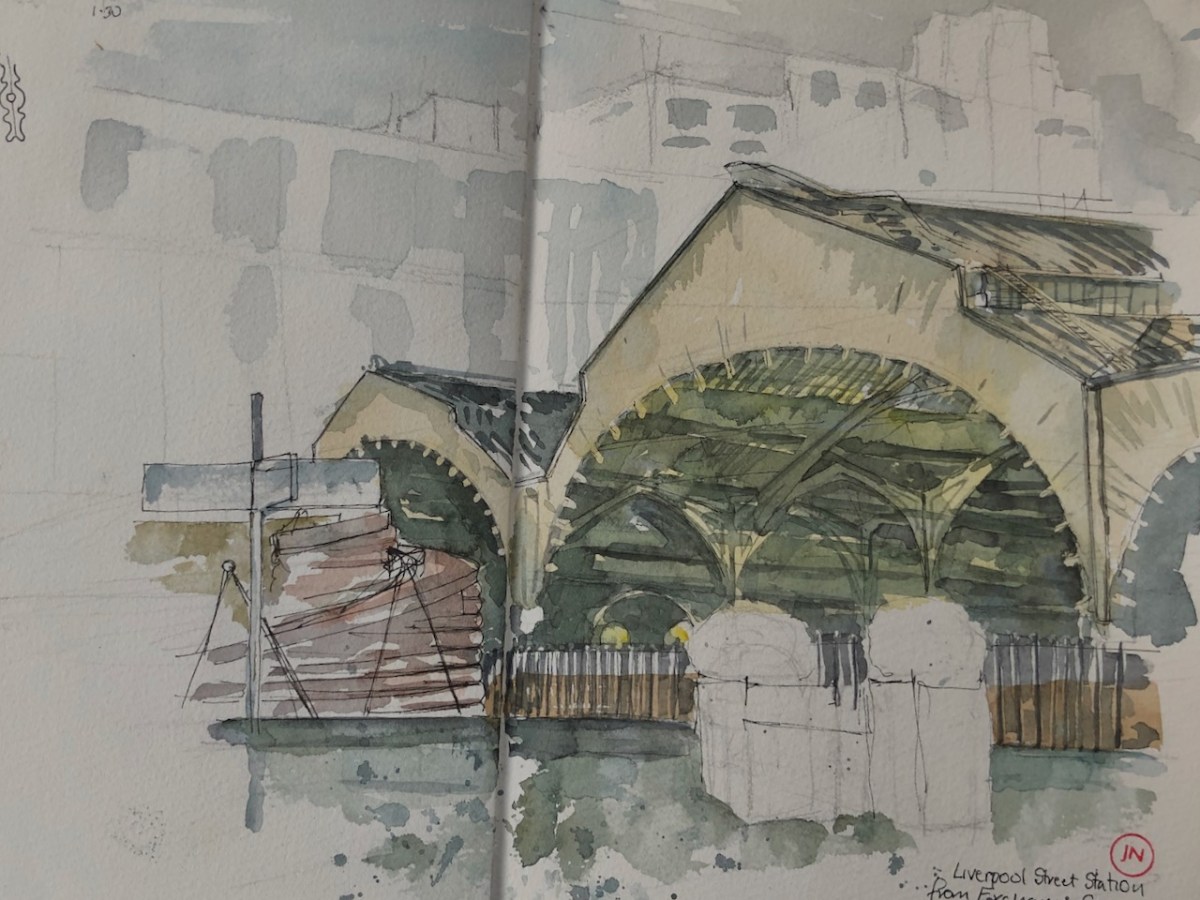
This section of Liverpool Street Station was built in 1875 as the new London terminus of the Great Eastern Railway. The building on the right of my drawing is the edge of the former Great Eastern Hotel (1884), now the Andaz London Liverpool Street. The pink building in the background is an office block on Bishopsgate.


I’ve sketched in this area before. This post contains more information about the history of Liverpool Street:
Here are the magnificent 19th Century arches of Liverpool Street Station, seen from Exchange Square. Liverpool Street Station opened in 18751 Now the question is: what curve is that arch? I thought it might be a CYCLOID. A cycloid is the shape made by a dot on the edge of a rolling wheel. I made…
Keep reading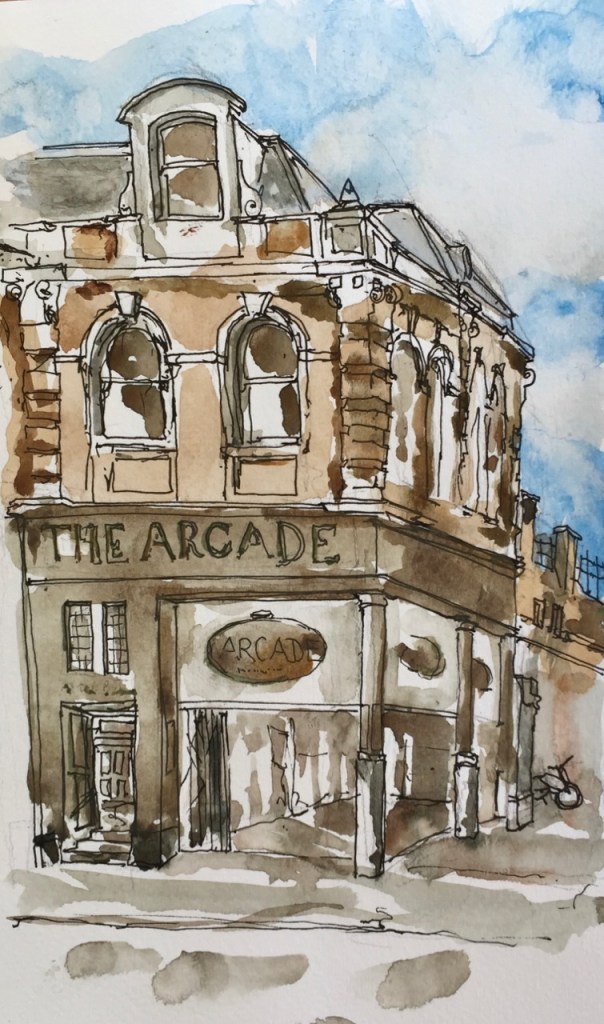
In 2019 I sketched the entrance to “The Arcade” which is shown on my sketch map. See this post for more about this sketch of The Arcade.
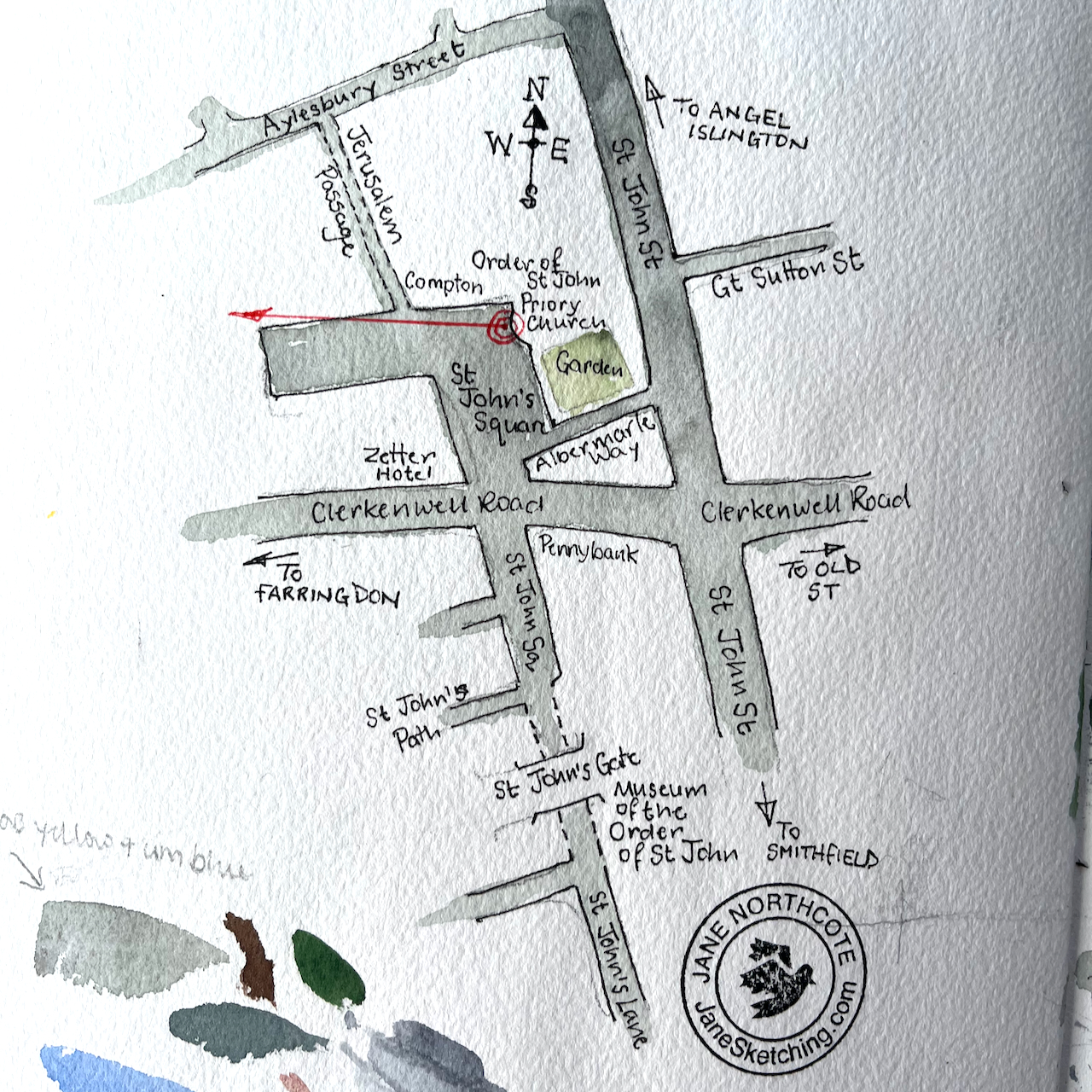
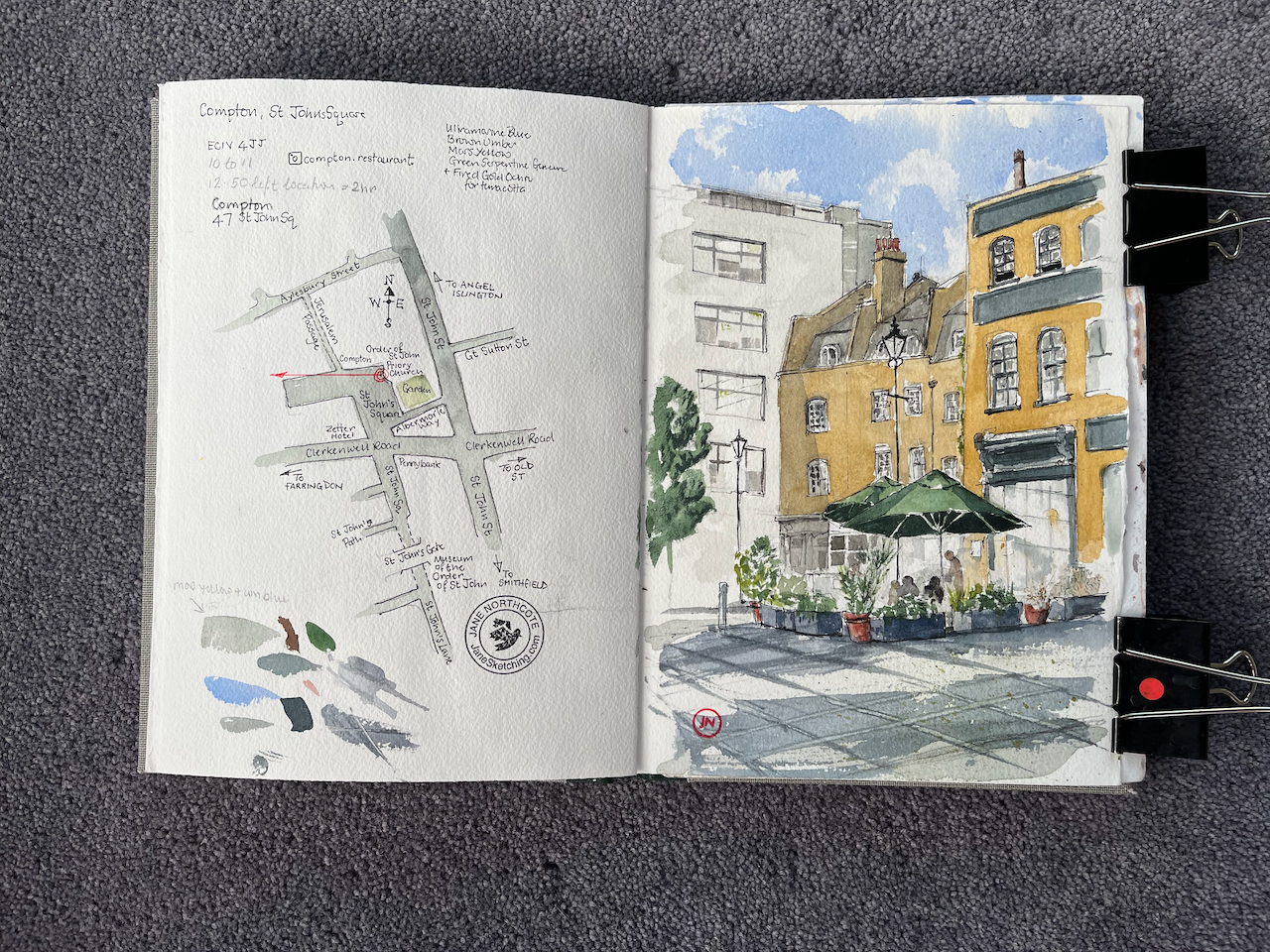
Clerkenwell has many interesting corners. Here is a view across St John’s Square. I sketched it earlier today, sitting on the step of the Priory Church of the Order of St John. The restaurant is called “Compton”.

Here’s a map:
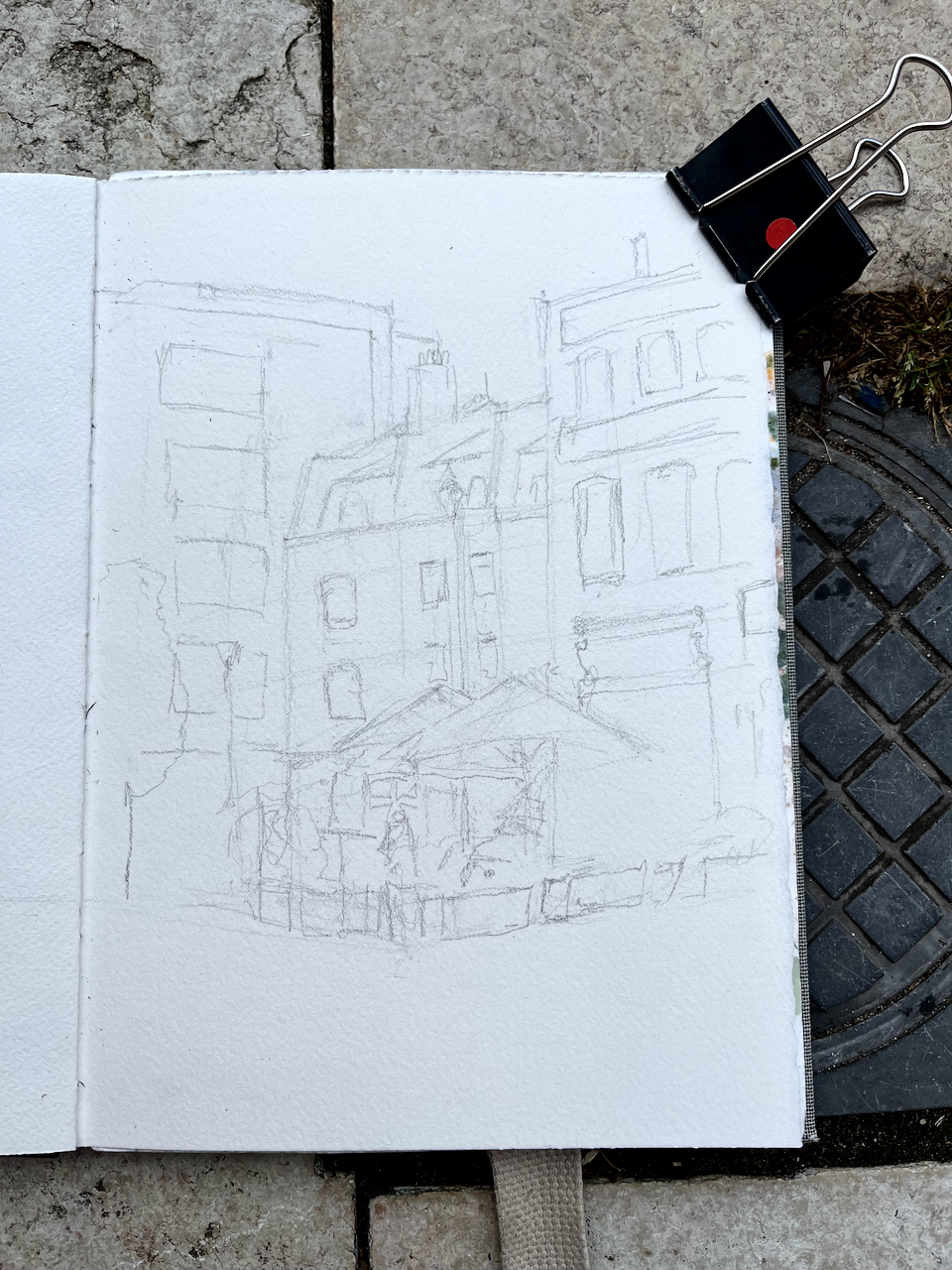
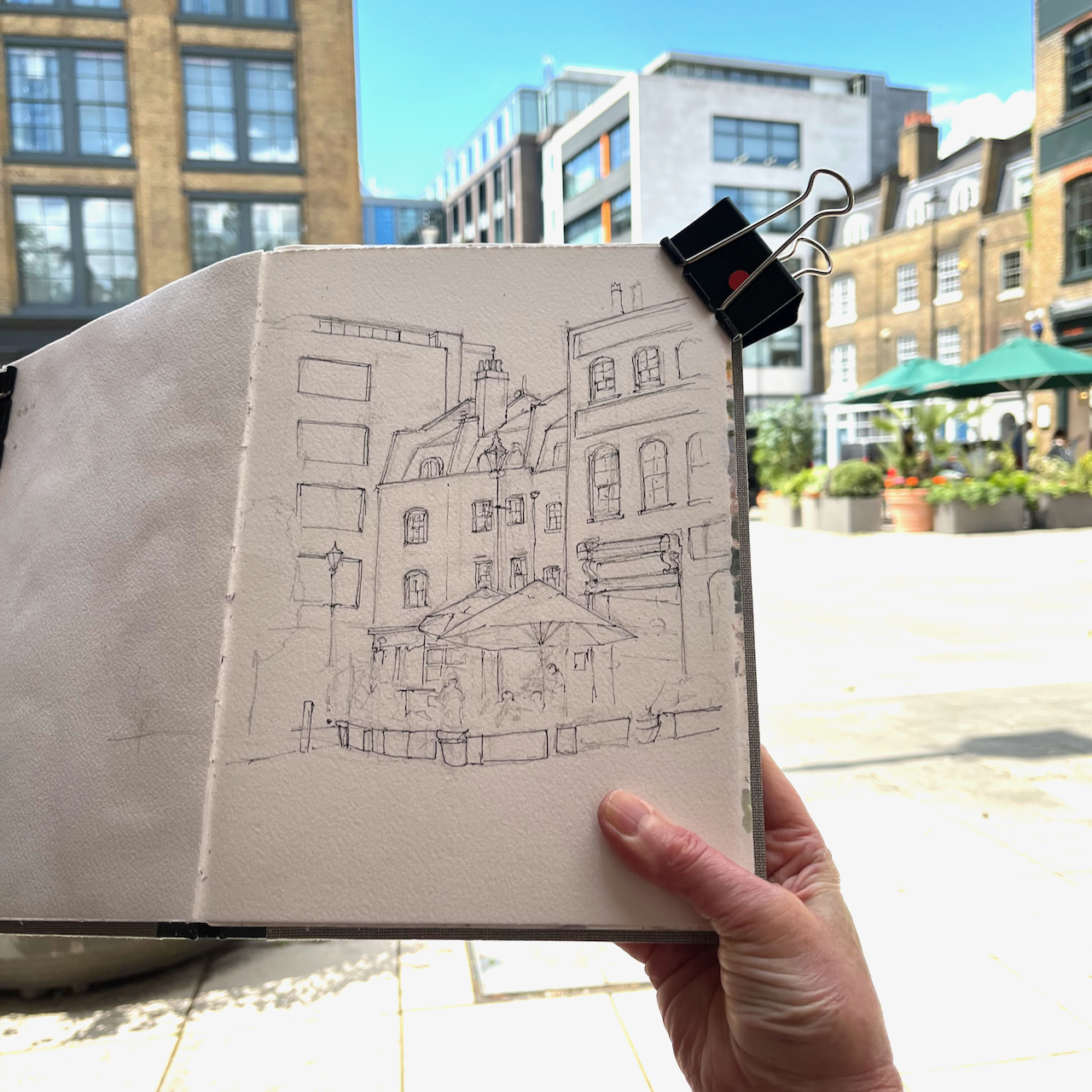
Thank you to the kind person from the Priory Church. They emerged from the door behind me. There I was, low down on the step, at the pen-and-ink stage, with my materials laid out neatly on the stone. They obviously had not expected anyone to be sitting on the step. I had not expected anyone to come out of the dark door. It had looked as if it had been closed shut for millennia. After a moment of surprise, politeness prevailed and we both said hello. Thereafter, I grouped my materials into a compact heap, and they came and went, tolerating me amiably, and skirting around me to operate the card key system.
This picture has just four main colours: Ultramarine blue, Brown umber, Mars yellow, and Green Serpentine Genuine. The only other colour is Fired Gold Ochre for the terracotta: the chimneys and the flowerpots. All colours are Daniel Smith watercolours.
Here is work in progress:





 Jane Sketching