London Wall EC2: the hanging bridge

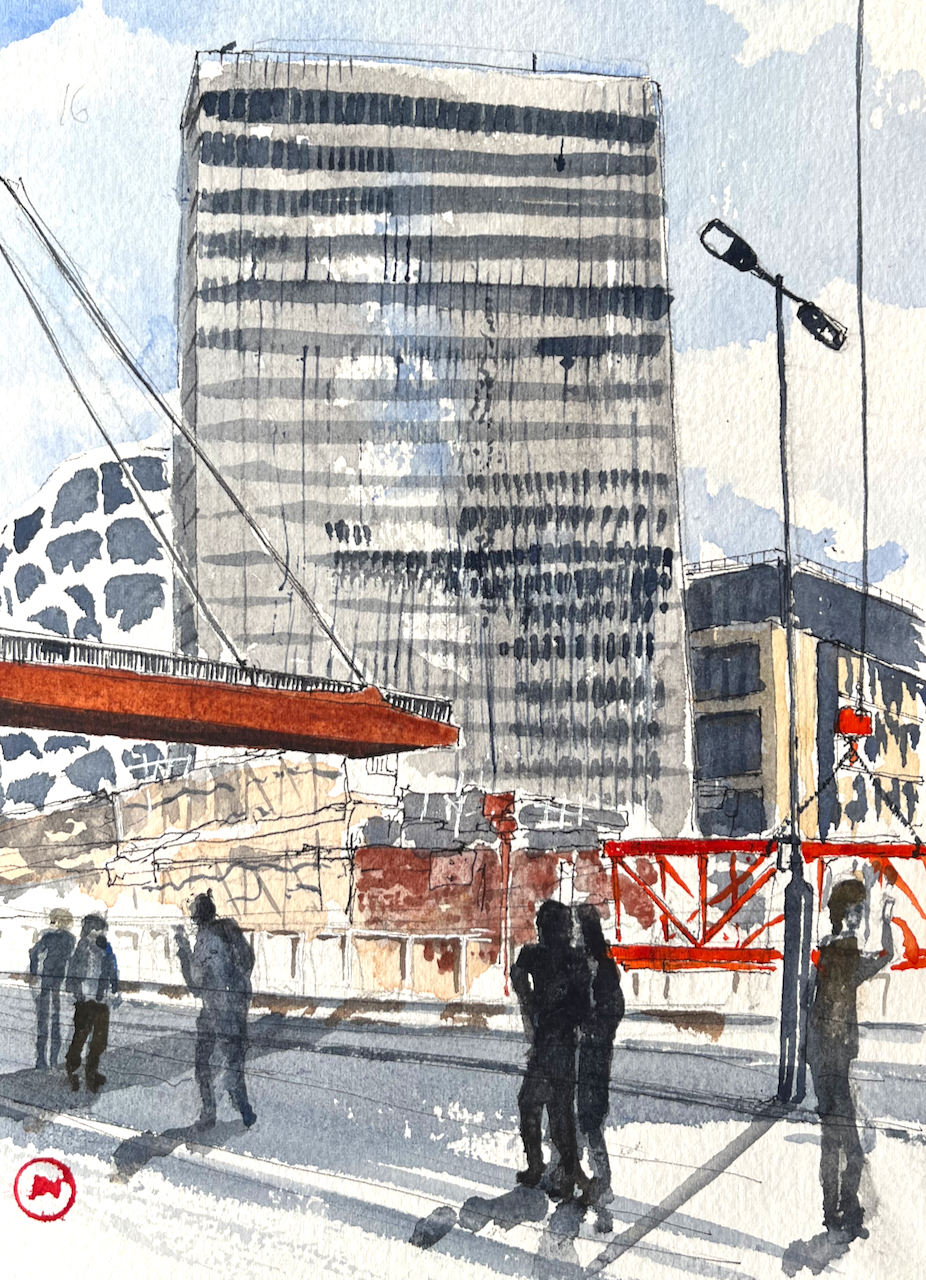
Here is an amazing sight: the hanging bridge over London Wall.
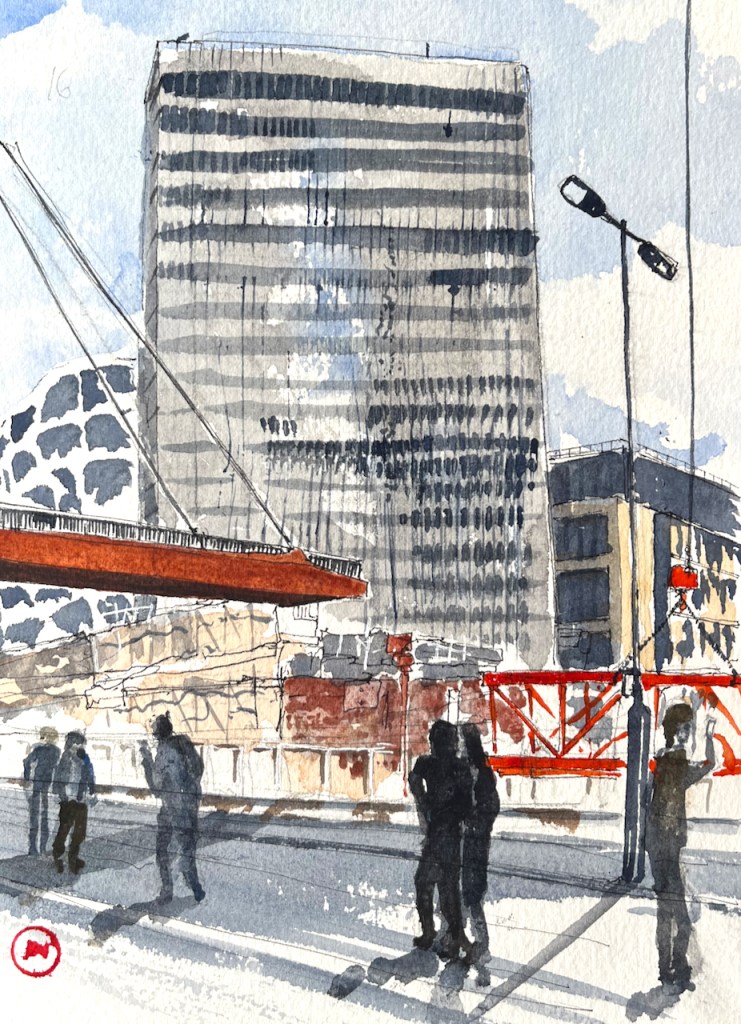
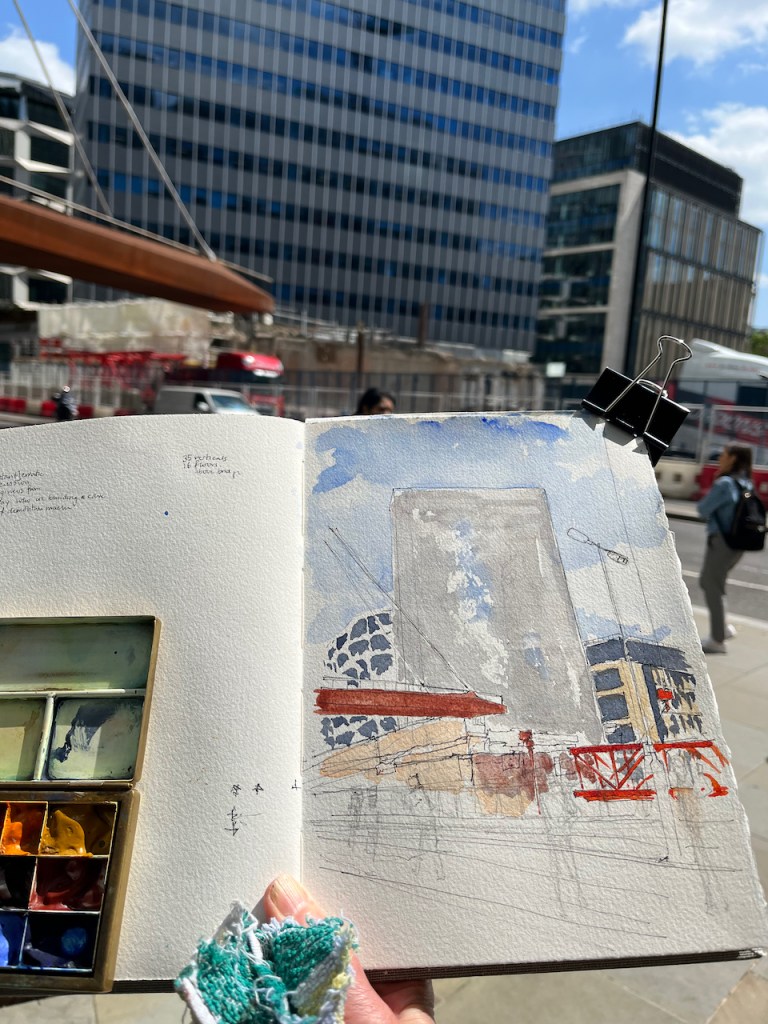
London Wall, hanging bridge. 24 May 2023, about 1pm, 7″ x 10″ in Sketchbook 13

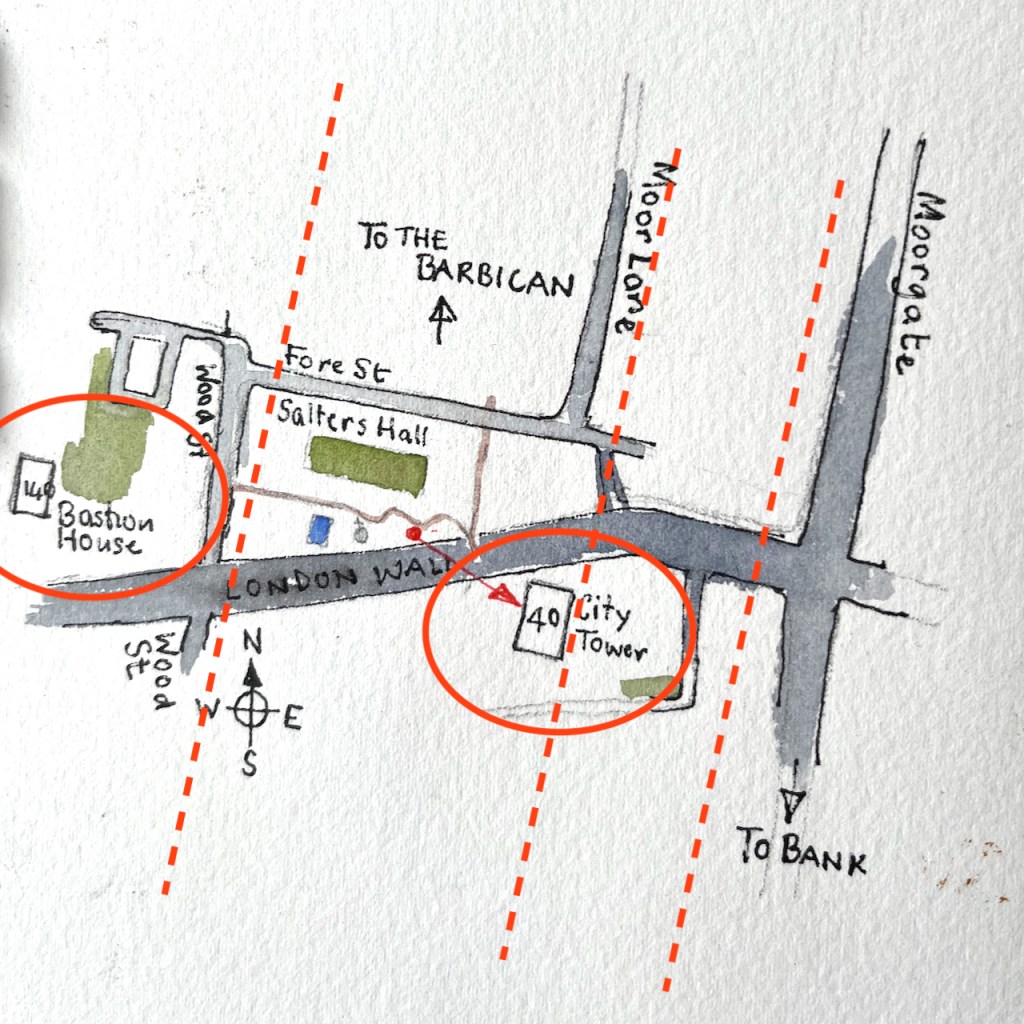
The large building in the centre of the picture is City Tower, 40 London Wall. In front of it is a demolition site where City Place House used to be. The bridge used to connect to City Place House. Now this building has gone, the bridge hangs in space.

In my previous drawing I sketched while listening to the guitar music of Hidè Takemoto. For this drawing, the acoustic accompaniment was mostly percussion. The building site was active. Spasmodic grinding and crashing signalled the removal of concrete. Metallic hammering came from scaffolding under construction.

The big red grid on the right of my picture was hauled upwards and out of sight before I finished drawing it. It was going to be part of a second crane. It arrived on a large lorry which would also have been in the picture if it had stayed still long enough. Immediately it arrived, workers secured chains to the red structure and it was manoeuvred off the lorry. Hardly anyone on the pavement paid any attention to all this thrilling activity across the road. One person, the slim figure to the right of my picture, stopped and took a selfie.

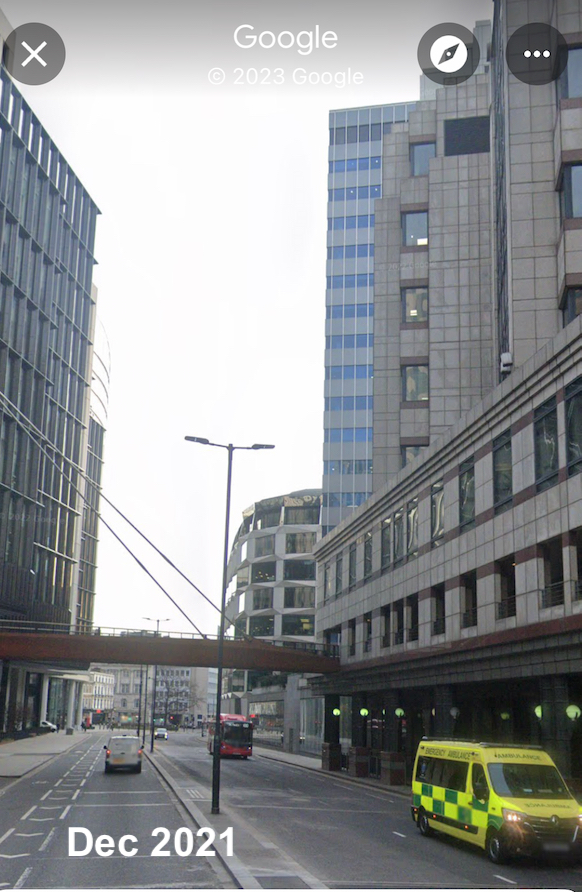
GoogleMaps allows us to travel not only in space but also in time. Here are some screengrabs so you can see the City Place House (on the right) which has now disappeared.

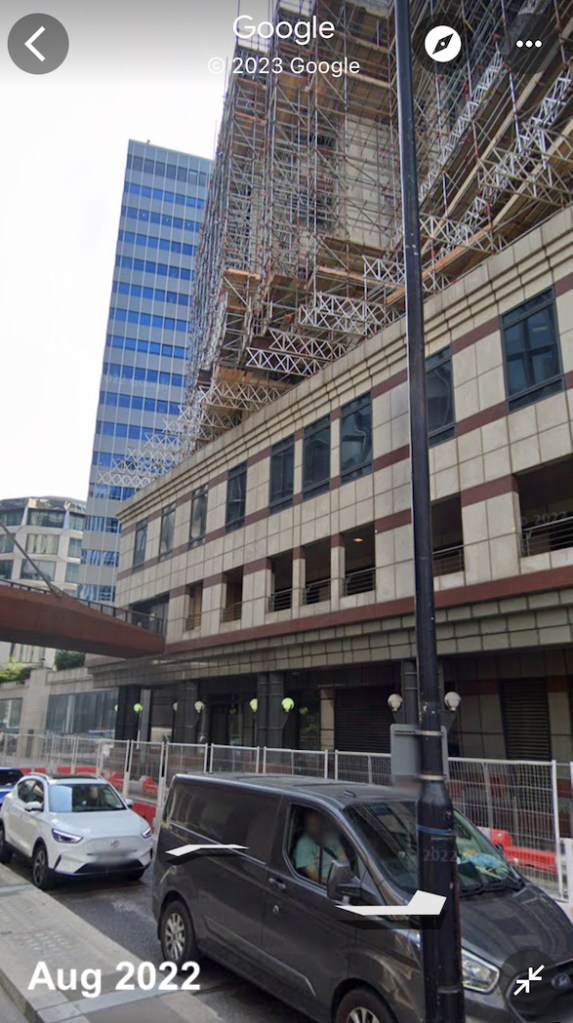
As you see, City Tower used to be obscured by City Place House. It will be obscured again when the next huge building goes up.

The bridge in the pictures above is the “new bridge”. It was installed as part of the London Wall Place development (off the picture to the left). The “old bridge” took a slightly different route. Again, GoogleMaps provides an image. Notice the previous lampposts, with the flying saucer lights.

The “old bridge” across London Wall, July 2008.
City Place House, on the right, is the building which is now being demolished.

I sketched City Place House before it was demolished. This post (click below) gives information about the old building which has been demolished and the new building which is planned.
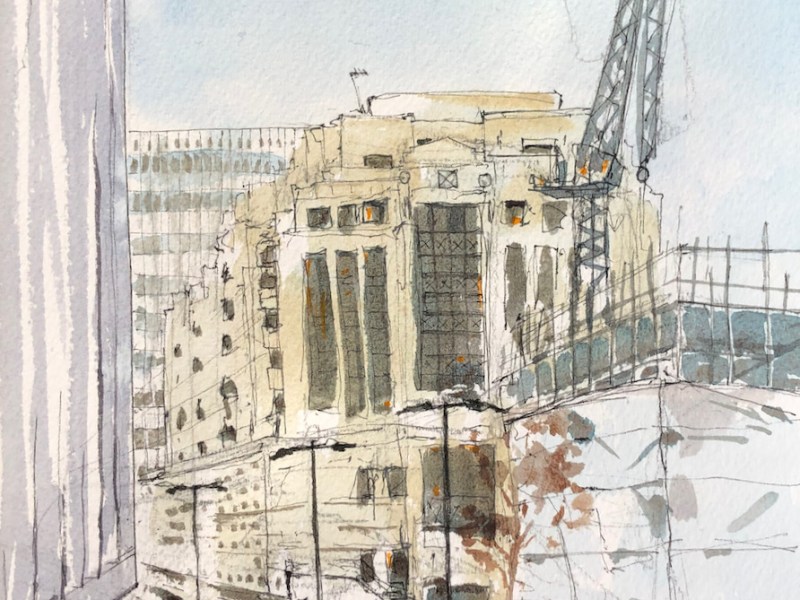
City Place House

An email from an ever-vigilant neighbour alerted me to the Planning Application for City Place House and the adjacent tower, City Tower. This application is currently under consideration. I hastened to go and have a look at the buildings, before they get swathed in white plastic. City Tower has been there since 1967. It is…

Click here to read this post..

City Tower is not being demolished. This is of interest because its sister building Bastion House, constructed at the same time, is deemed “unsafe” by the City of London, and is scheduled for demolition to make way for the “London Wall West” project. It’s curious that City Tower is evidently not “unsafe” and is standing proud, in use into the future.
I made a special tool to draw the many windows on City Tower.

City Tower has 35 verticals. I made a special comb from cocktail sticks to scrape the paint into the required number of vertical lines.

The colours are:

  • Ultramarine Blue and Lavender for the sky.
  • All the greys are Ultramarine Blue and Burnt Umber
  • The bridge is Fired Gold Ochre, with some Transparent Pyrrol Orange
  • The red is Transparent Pyrrol Orange
  • Mars Yellow is on the distant building and the scaffolding plastic
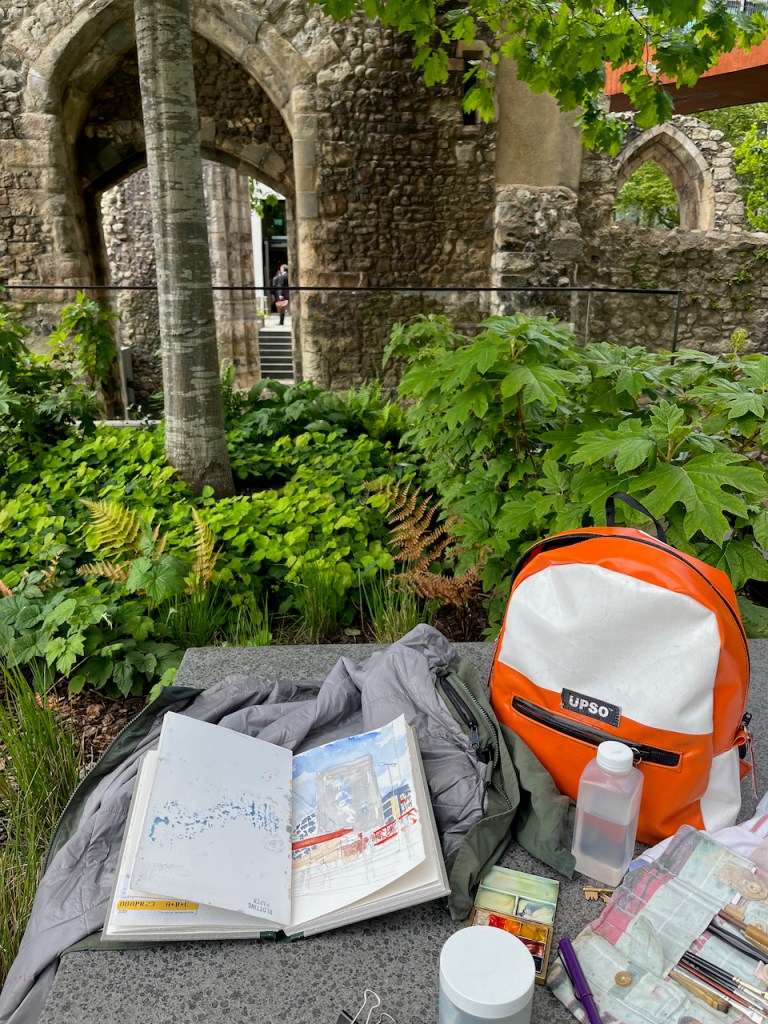
I put down the first wash on site and finished the picture at my desk.
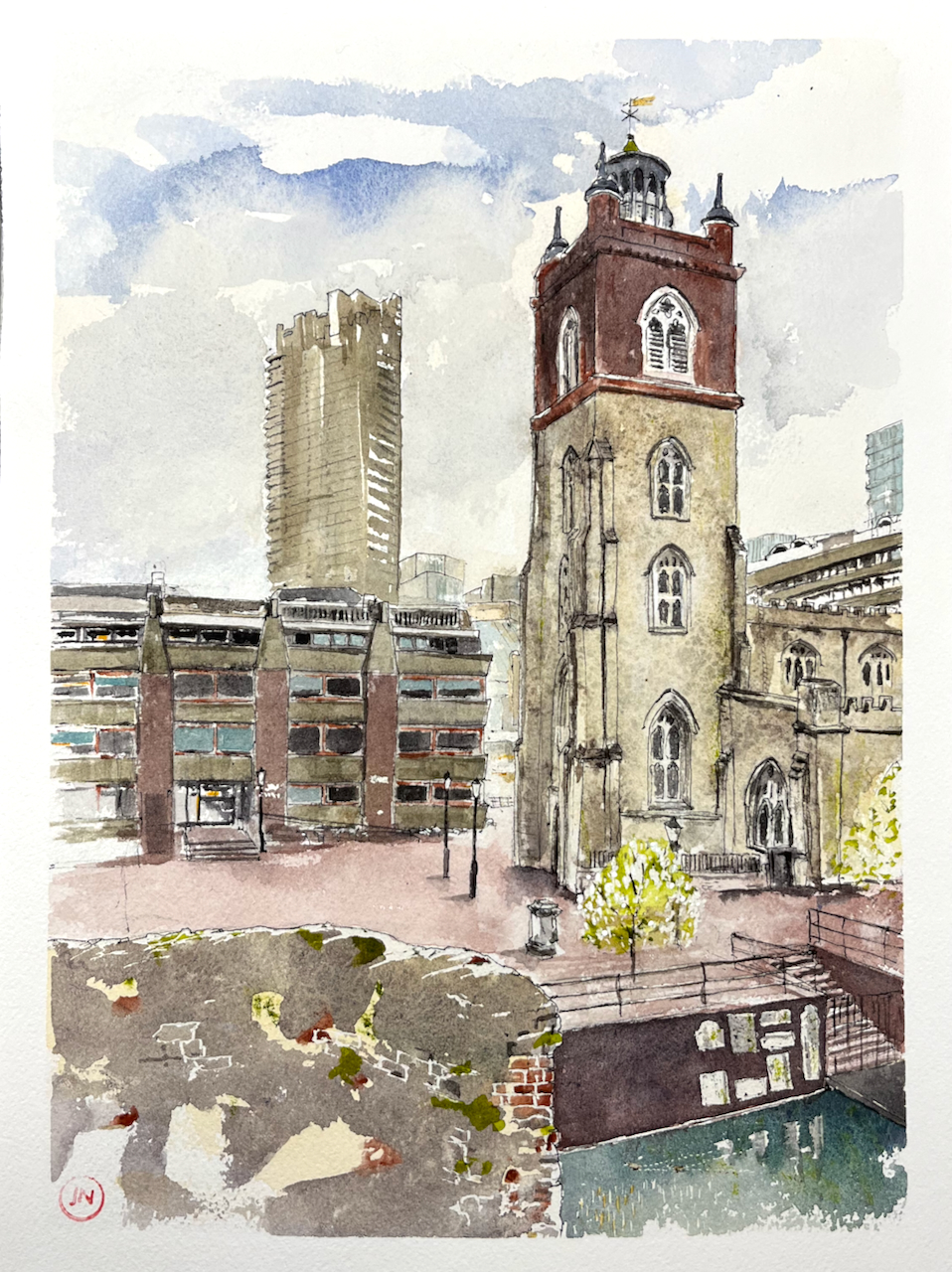
St Giles from Wallside, Barbican EC2

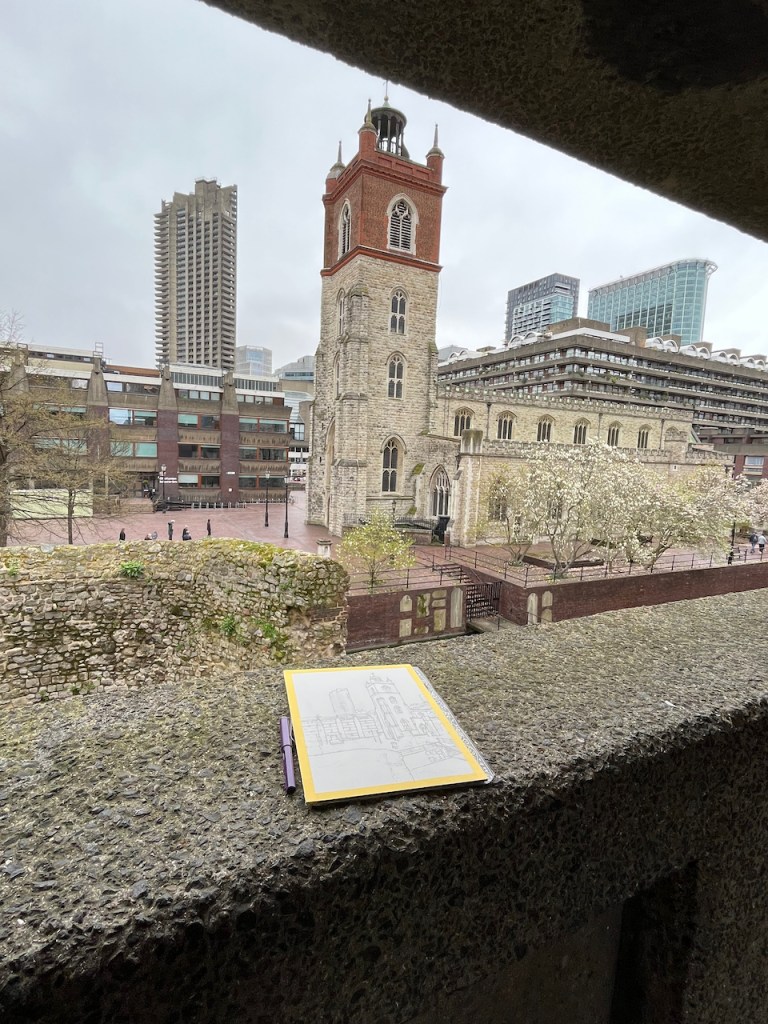
Here is St Giles’ Church, Cripplegate, seen from the public walkway at Wallside. The church is surrounded by the Barbican Estate. Cromwell Tower is in the background. The City of London School for Girls is the lower building, centre and left. Through the gap between the church and the school, you can just glimpse the Barbican Centre.

The magnolia was in bloom!

St Giles from Wallside, Barbican, 1 April 2023 12″ x 9″ [Commission]

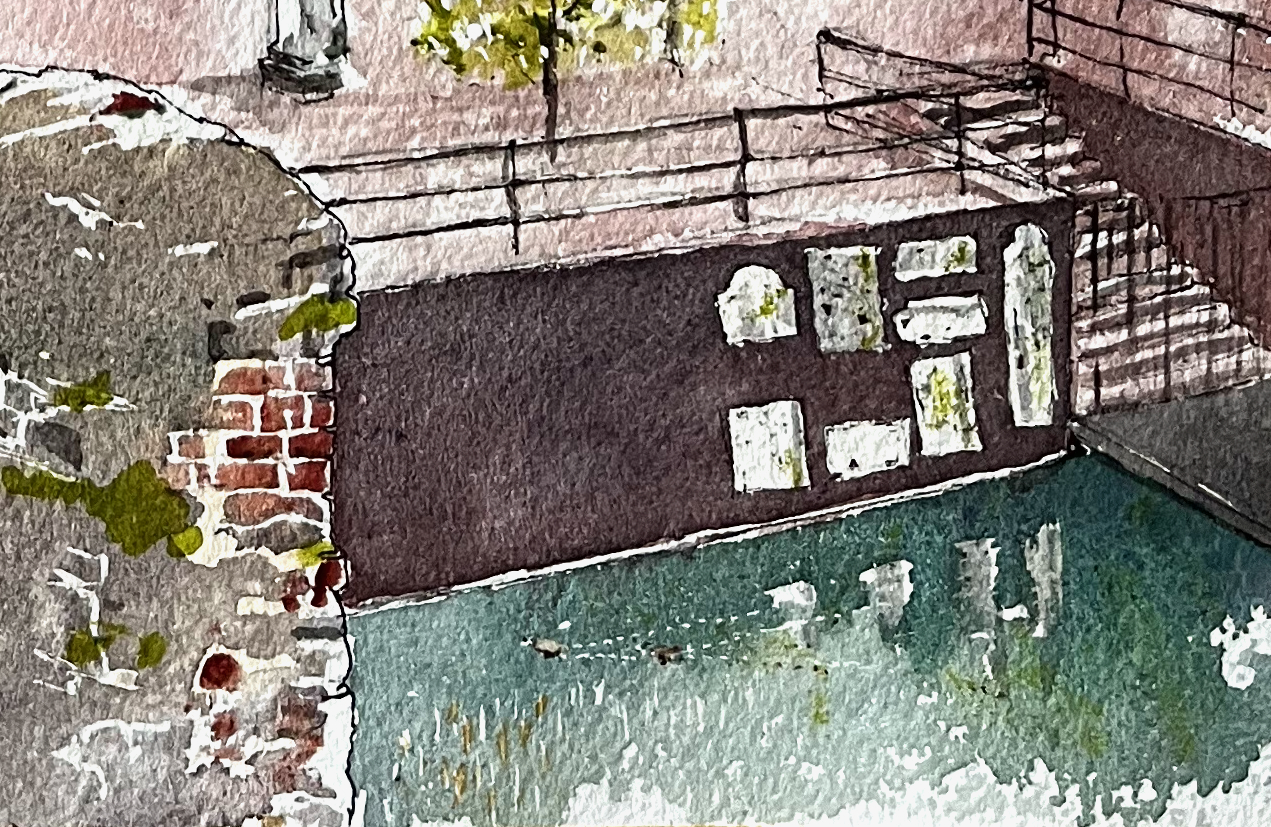
I painted this as a commission, for some clients who wanted this particular view. A special request for this commission was that I showed two ducks. These are small, but they are there!

Ducks on the lake.

The white shapes on the lakeside wall are gravestones.

Old London Wall is on the left: part stone, part brick. This is the old Roman wall round the City of London.

Thank you to my clients for this commission and for their permission to post the picture here online. It was a real pleasure to do.

The colours I used are:

For the sky: a pale yellow wash of permanent yellow deep, followed by a grey made from ultramarine blue and burnt umber, with some ultramarine blue for the blue bits.

For the church: the stone is a pale yellow wash of permanent yellow deep, then a dilute buff titanium wash. I put salt on it to get some texture. Then the dark areas are a grey made from ultramarine blue and burnt umber.

The top part of the church, St Giles Terrace and all the reddish/purple brickwork is a combination of perylene maroon, burnt umber, fired gold ochre, and a bit of ultramarine blue for the dark areas.

The lake, which really is that green colour, is ultramarine blue, plus some serpentine genuine which makes it granulate.

All concrete is the same mix of burnt umber and ultramarine blue with some mars yellow.

Old London wall is the pale yellow wash of permanent yellow deep, with a second wash of lunar blue with burnt umber. Lunar blue is highly granulating, which gives a wonderful stone effect. The bricks are fired gold ochre.

All green plants are green gold, and there’s also some green gold on the stonework of the church, to show the lichen.

The weathervane is Liquitex gold ink, applied with a fine brush.

The line drawing is done with a Lamy Safari fountain pen, using De Atramentis Black ink, which is waterproof.

The white parts of the picture, for example the lines between the bricks on Old London Wall, (and the ducks) are done using a resist. This is a rubbery substance, applied before putting on any paint. The resist I use is called Pebeo Drawing Gum. I put it on using a dip pen to get the fine lines. After the paint is dry, I rub it off, and the parts where it was show up white. There are also a few tiny dots of white gouache paint on the magnolia tree.

The paper is Arches Aquarelle 300gsm 12″ x 9″ in a block.

Work in progress. Arches Aquarelle block, Lamy Safari pen. The yellow is masking tape, which I put round to make the picture easier to handle and to give a crisp edge to the work. The people on St Giles Terrace were practising Tai Chi. It was very relaxing to watch them. See the green lichen on the concrete. And the magnolia.

Handyside Gardens, Kings Cross, N1

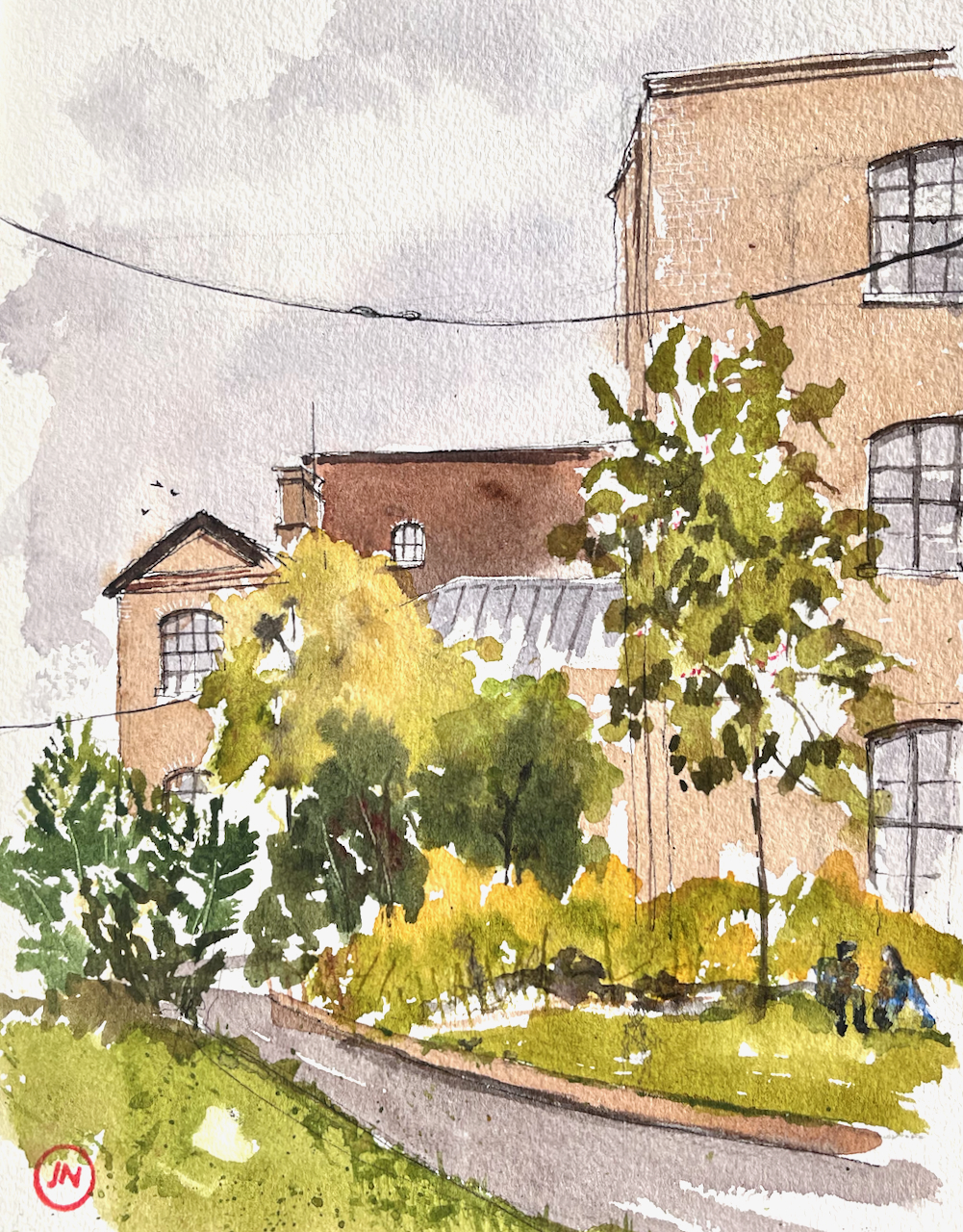
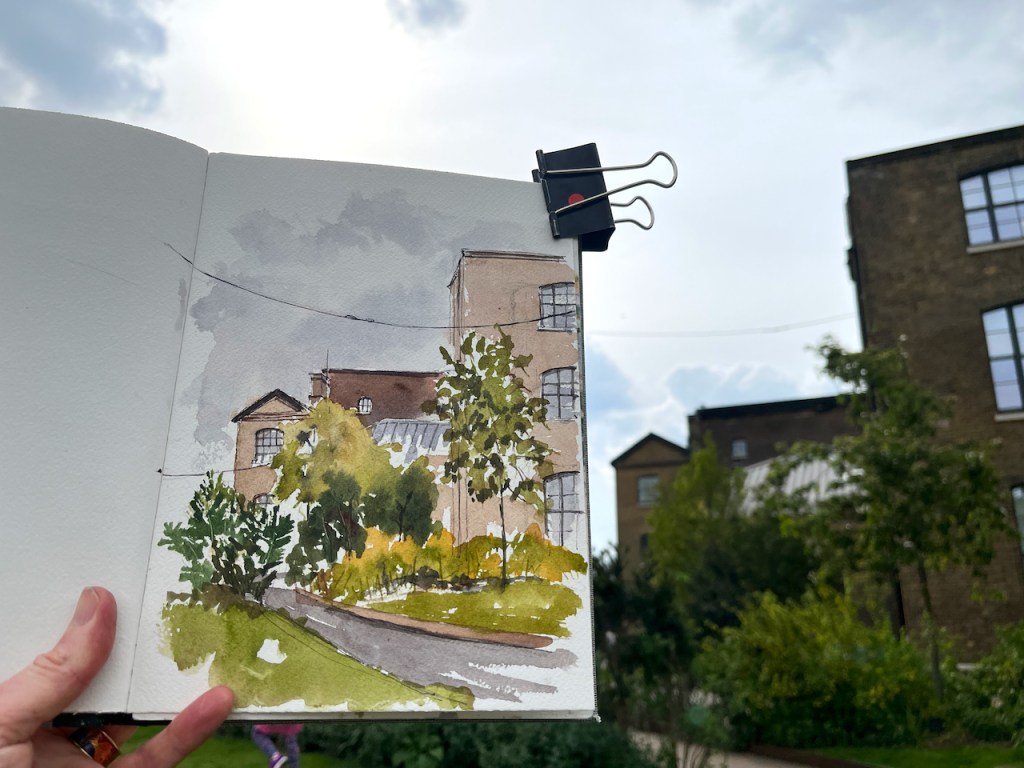
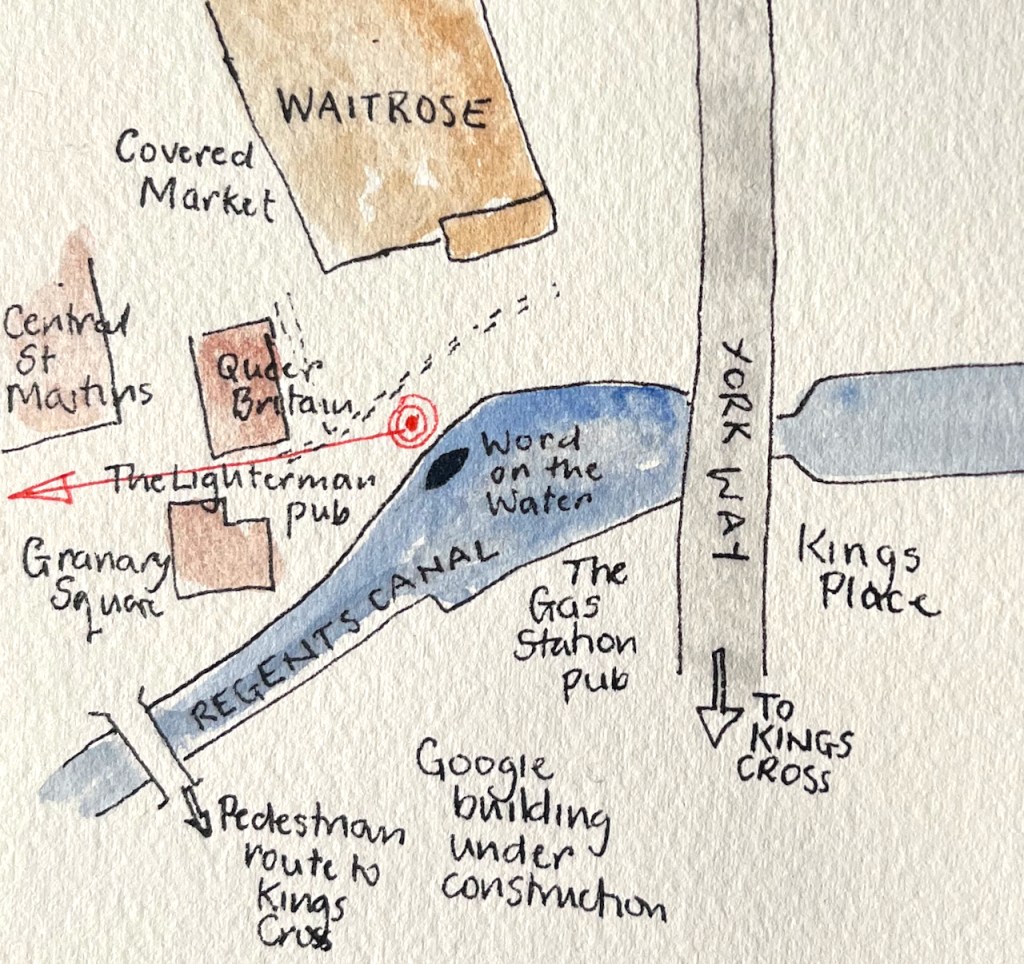
Here’s the view from Handyside Garden, which is just north of the canal, part of the new Kings Cross development, Coal Drops Yard.

From Handyside Gardens, 30th April 2023, in Sketchbook 13, 10″ x 7″

People rested on the grass eating takeaway food from containers. Children toddled under supervision. I painted.

On the roof of the barge “Word on the Water”, Hidè Takemoto played detailed guitar tunes. I recognised “Recuerdos de la Alhambra” by Tarrega, which I hadn’t heard for years. Each thread of the tune was insistent: the low climbing bass, the vibrating tremolo and the soaring high points, speaking clearly. It was perfect on that warm evening. He went on to play tunes I did not recognise: navigating his way through rhythms and moods. He gave us controlled and technical melodies and then, suddenly, wild abstract rock. A really talented musician.

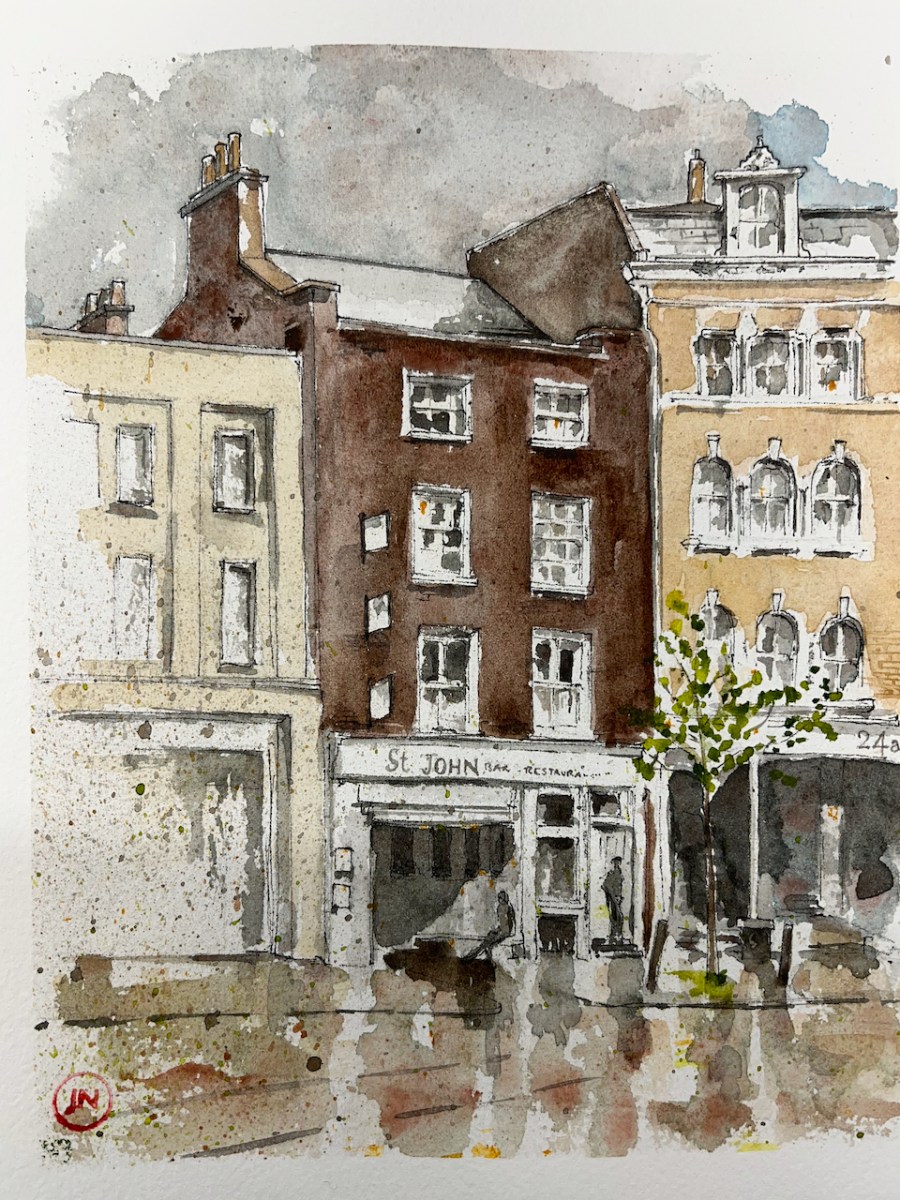
St John St EC1M, numbers 55-65, looking south

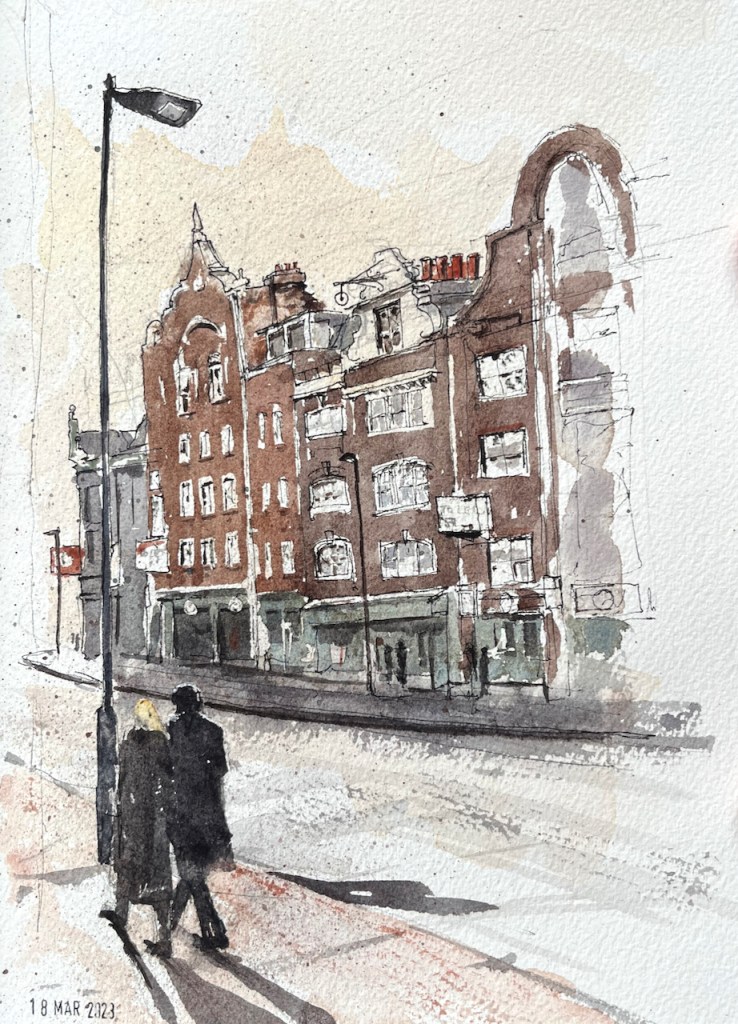
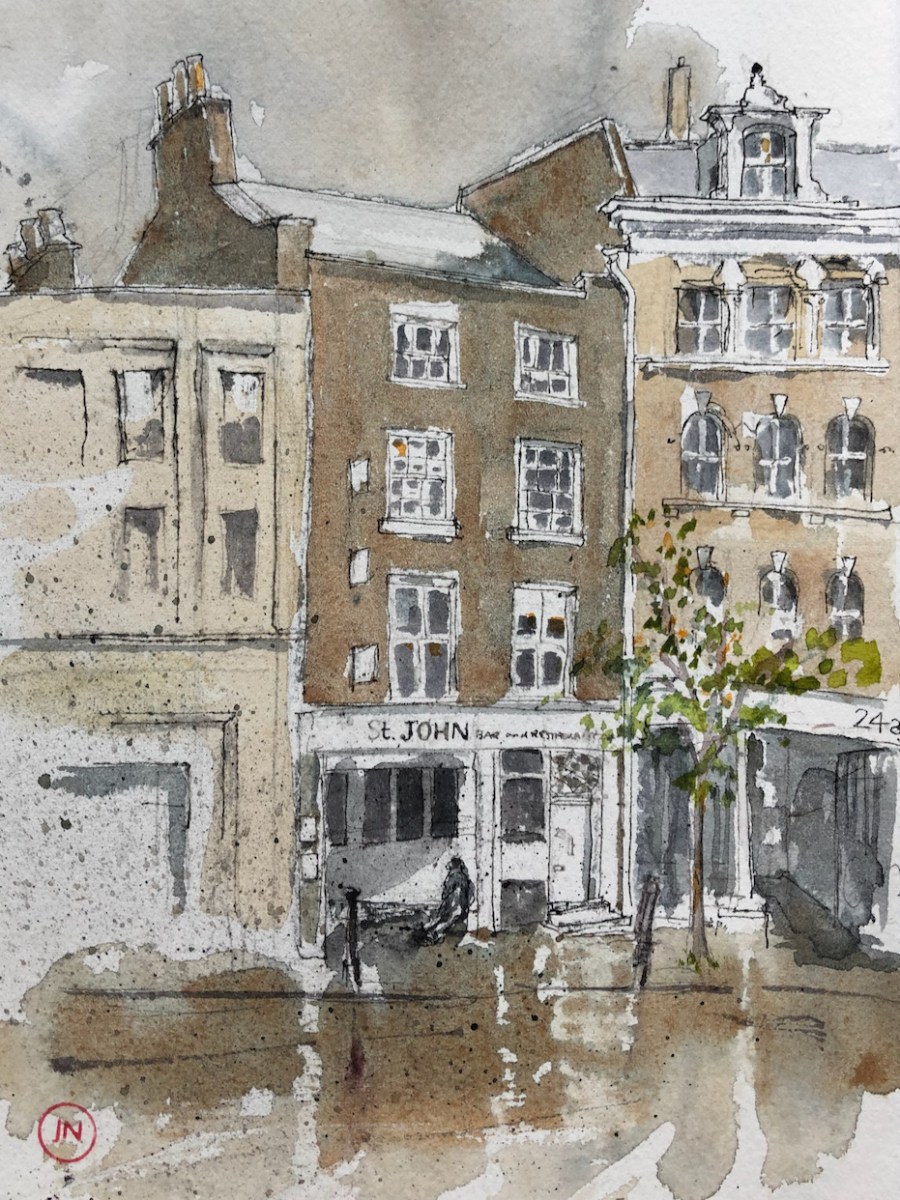
Here is a sketch looking south down St John St, Islington, towards Smithfield Meat Market, which is off to the left. The building with the pointed gable is the pub “The White Bear”.

55-65 St John St, London EC1M. 18 March 2023 in Sketchbook 13
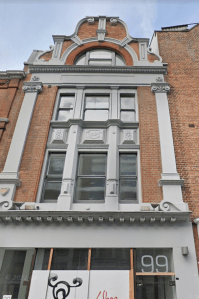
No. 99: the former “Horns”, no longer a pub.

The White Bear has “1899” written on its tall gable. “British History Online” points to two pubs built around that time on St John St, of which only the White Bear survives as a pub:

.. two public houses from the same period: the White Bear at No. 57 [], rebuilt in 1898–9 by the City of London Brewery Co., along with the adjoining house No. 59; and the former Horns of 1887 at No. 99, by Alexander & Gibson, architects []

British History Online https://www.british-history.ac.uk/survey-london/vol46/pp203-221

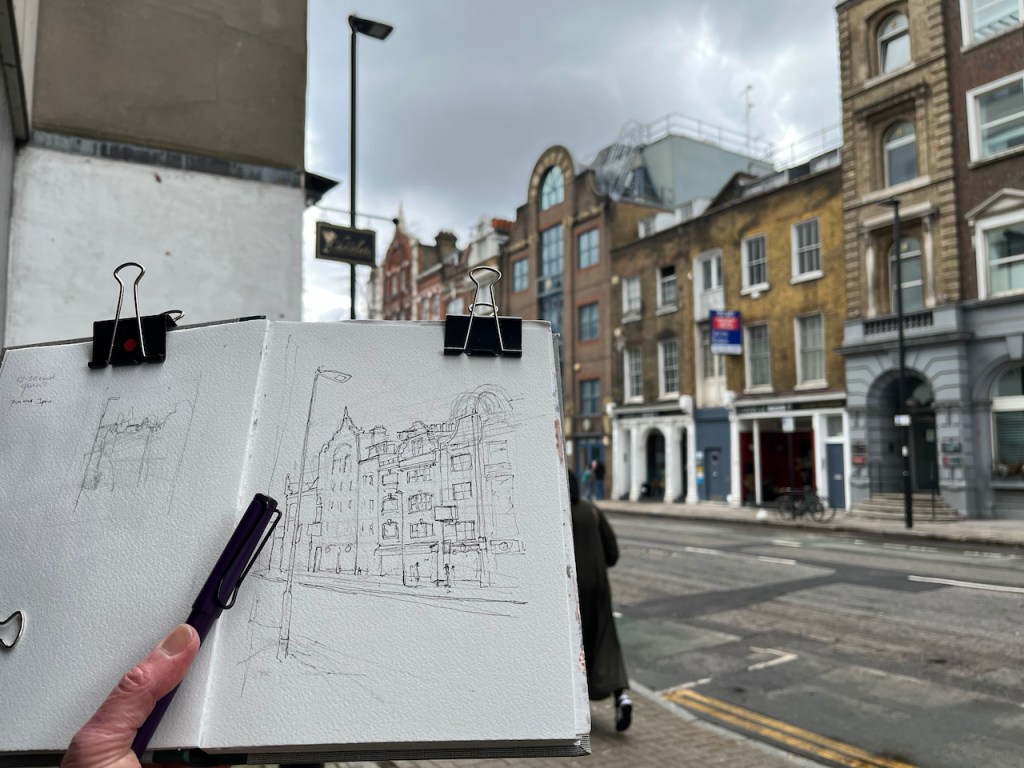
Here is a map and a photo of the ink drawing. I was sketching on a somewhat damp day, ‘rain with sunny intervals’. I went home at this point to finish the colours at my desk.
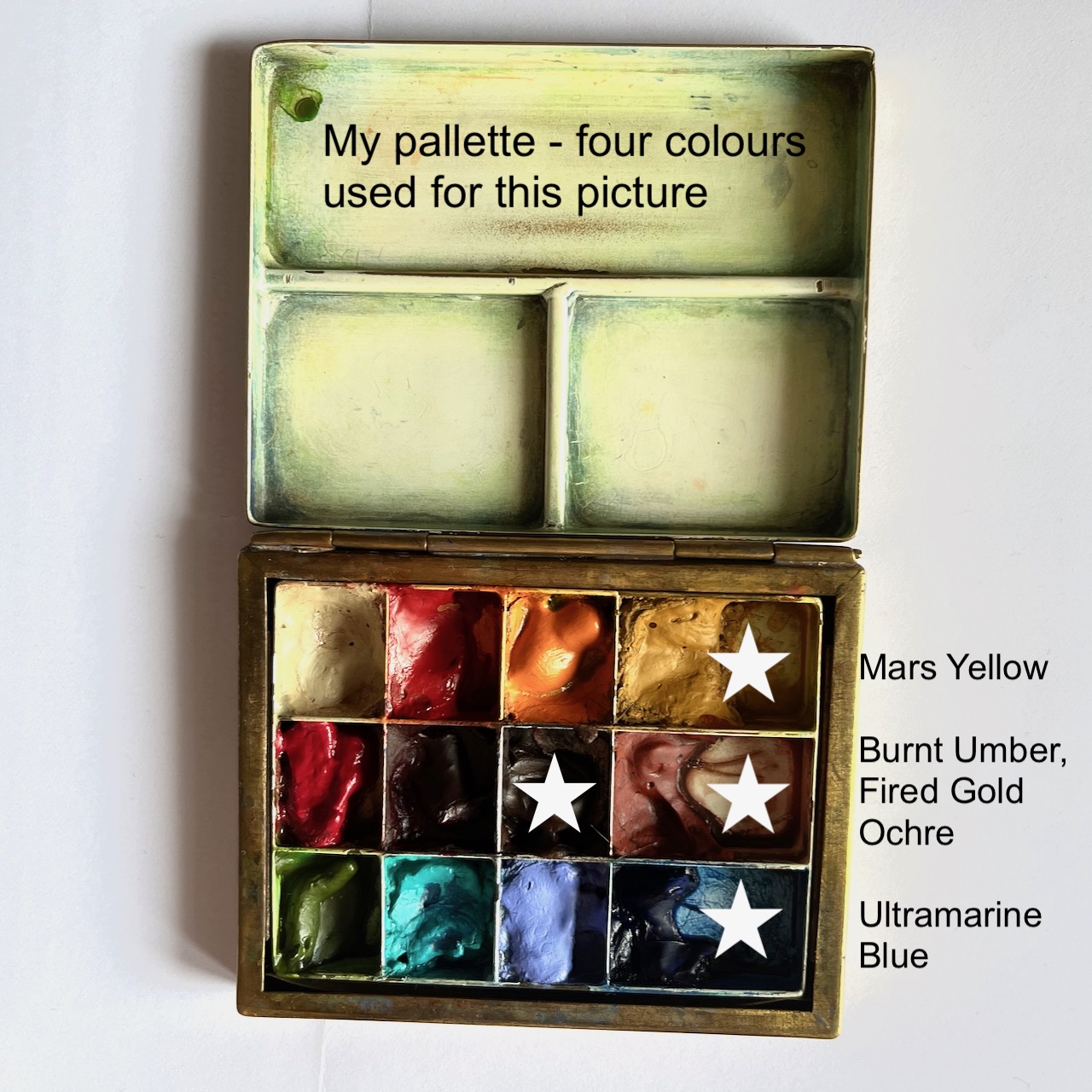
Here are the colours I used in this sketch. As you see, there are only four.

Here are a few other sketches I’ve done in the area.

77 St John St EC1M: the ASLEF building

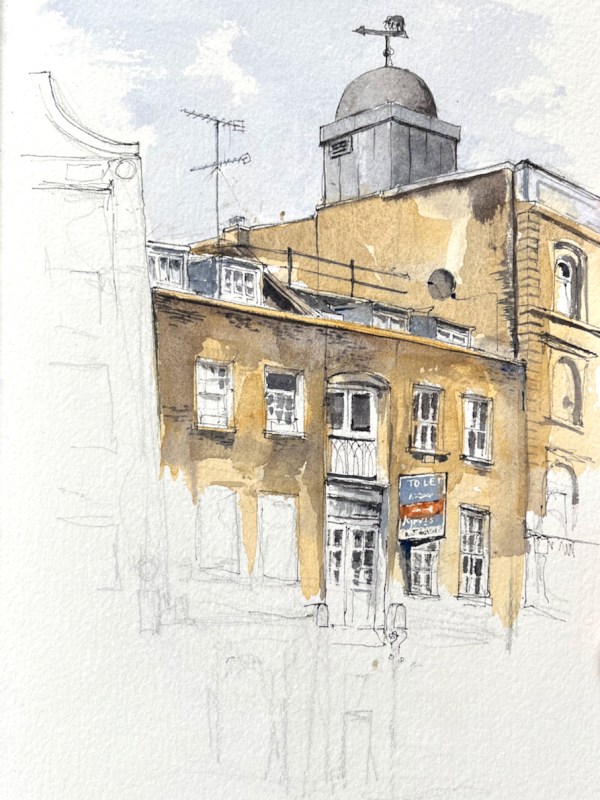
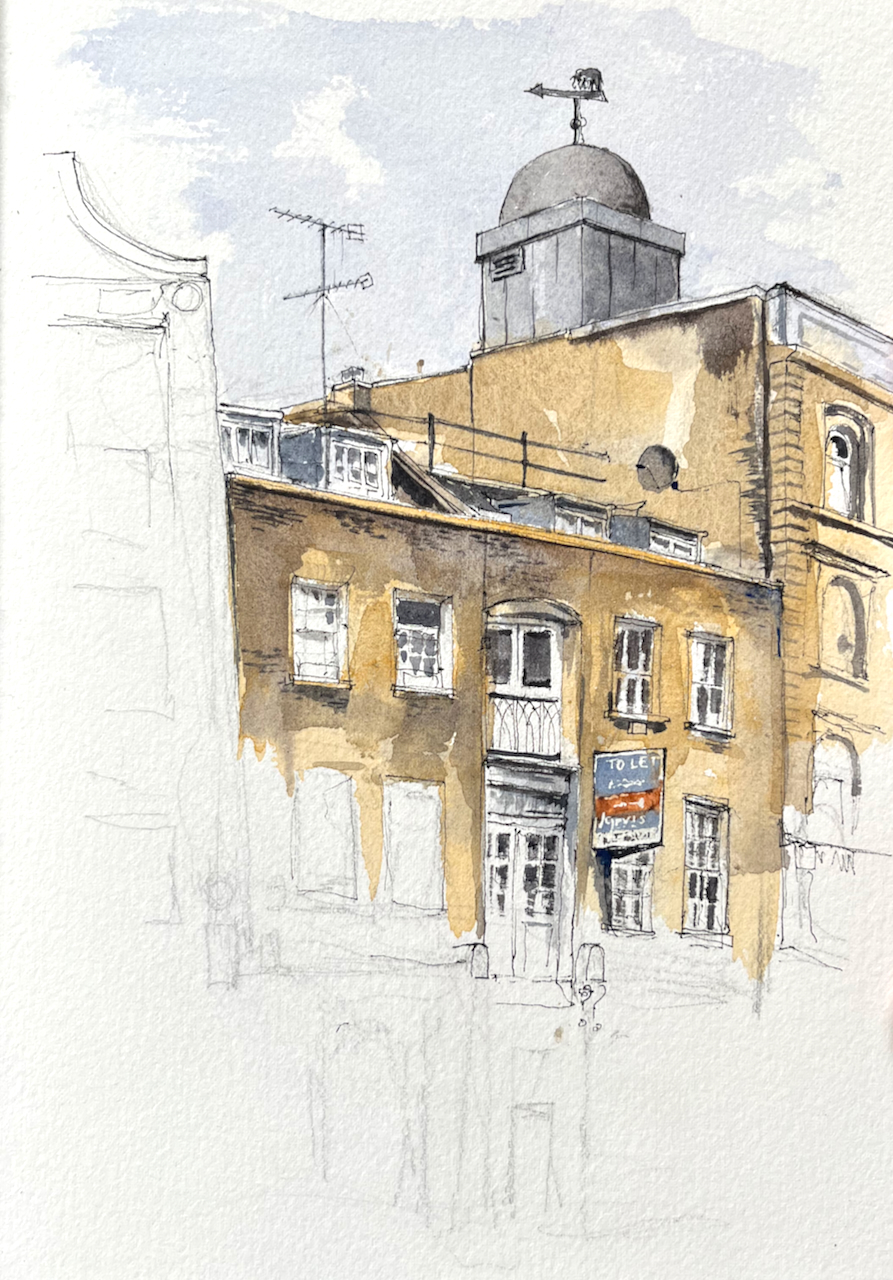
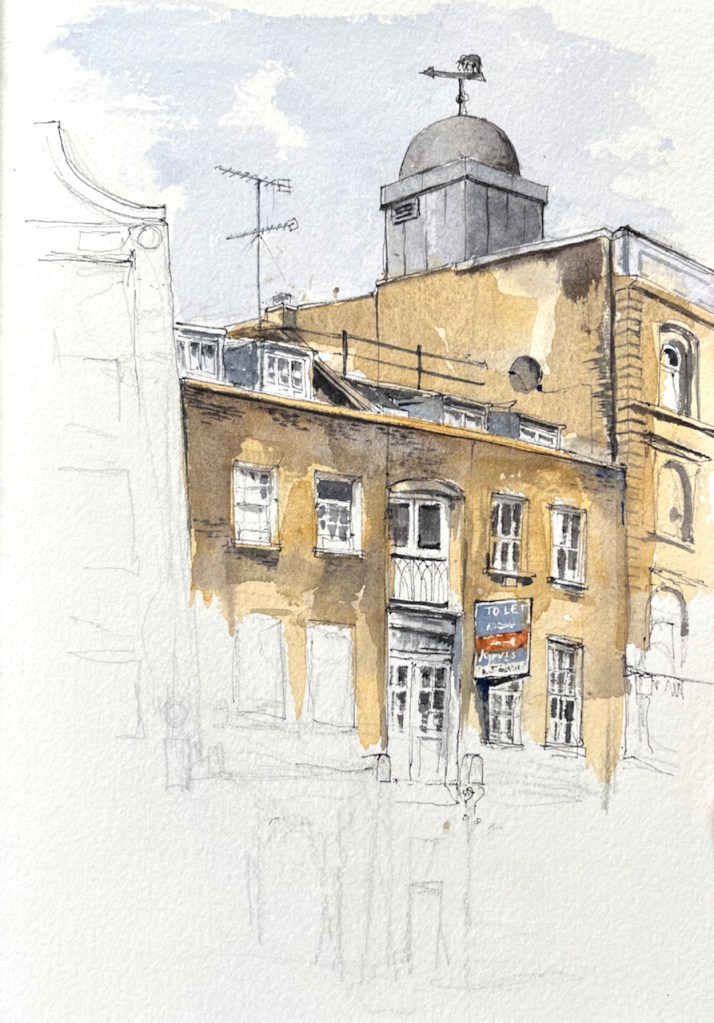
Next time you are walking along St John St, look out for this dome, with the elephant wind vane. It’s on the West side, just a bit further North than the White Bear pub.

77 St John St EC1M, 9″ x 7″ in Sketchbook 13, 17th March 2023

I can’t find out anything about why there’s an elephant up there. The wind vane is on number 77 St John St, currently occupied by, amongst others, ASLEF the train drivers union, and “Liberation – Justice for Colombia”

JFC was set up in 2002 by the British trade union movement to support Colombian civil society in its struggle for human rights, labour rights, peace and social justice.

All JFC work is carried out in response to the demands of our partners in Colombia: the political activists, trade unionists, peasant organisations, human rights defenders, and other civil society groups who are on the front line in demanding peace and social justice.

JFC promotes links of solidarity between British and Irish trade unions and organisations in Colombia and gives a political voice internationally to Colombian civil society through our work in the British, Irish and EU Parliaments

“Justice for Colombia website: https://justiceforcolombia.org

The building in the centre of my drawing is numbers 69, 71 and 73 St John St. These buildings are listed Grade II, list entry no: 1195730.

In 2015 there was an application to build another floor on top of number 69, for residential use. As part of the planning submission, the applicant commissioned a detailed historical study from Paul Edwards, Dip Arch (Oxford) IHBC, Historic Environment Specialist. His 15-page report provides fascinating information about the houses. For example:

Nos 69-73 are depicted in Tallis London Street View, drawn 1838-1840,
… There were three bays, at the centre an alley leading to an internal yard flanked by buildings of
three storeys and attics, each with two windows each side of the alley.
The facades had classical Georgian or Regency proportions, with tall
sash windows at 1st and second floor levels and continuous small pane shop windows at ground floor level. A gambrel roof was set behind an eaves parapet.
The northern house was leased by John Newton a cork manufacturer
who took over the whole premises and whose firm remained there
until the First World War.
The ground floor front of No 69 was re-modelled in the mid-19th century with arched openings and Ionic pilasters in stucco. The shop front of No 73 dates from 1884. There had been a fire in the cork
warehouse in 1882 which was then partly rebuilt with No 69 being extended over the alley between the two houses. In 1896 the two buildings were made into one.

Paul Edwards, 69 St John Street, Islington, Historic Asset Assessment (Version 1) February 2015.

The proposal was rejected by the Islington planning officer in 2018, after appeal.

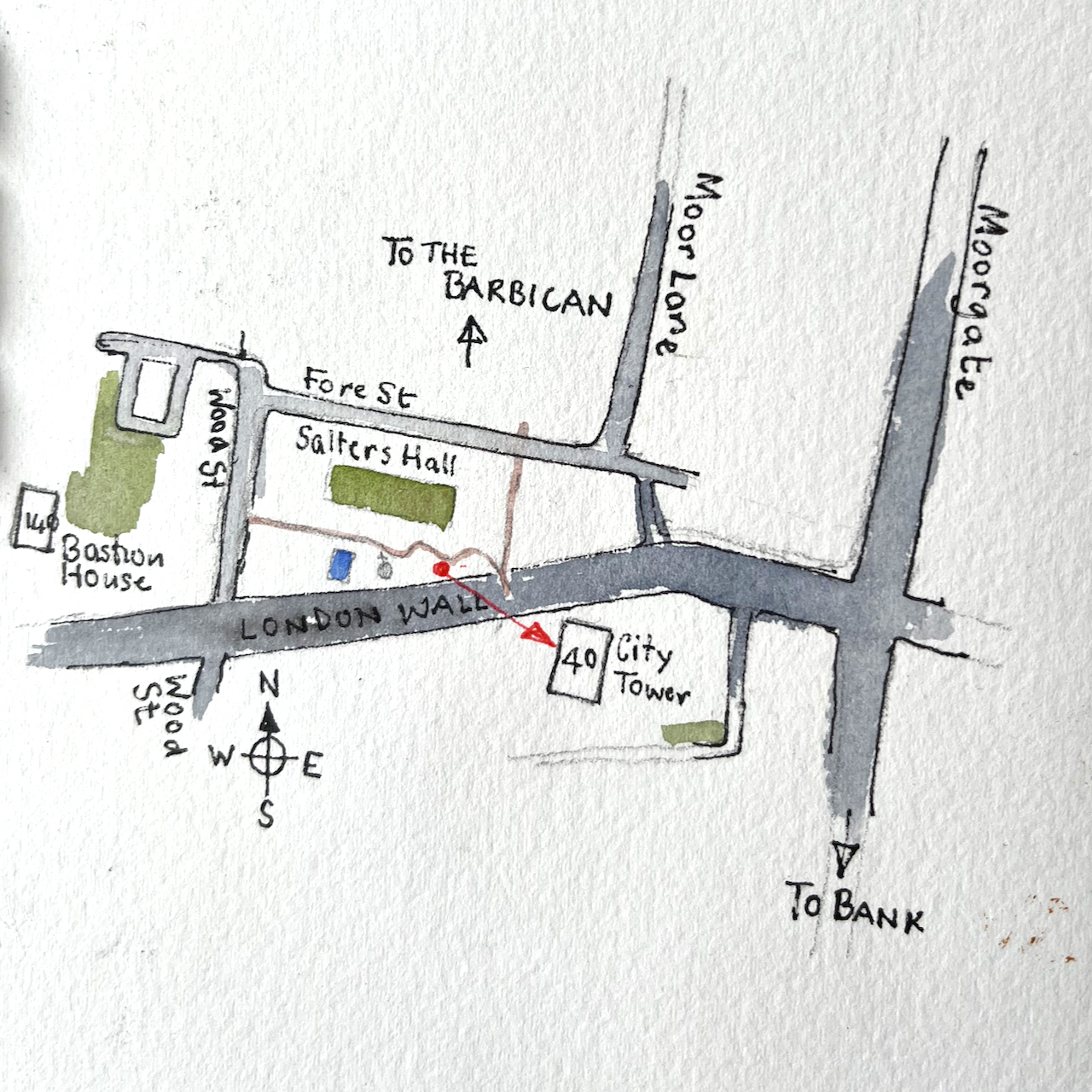
Here is a sketch map showing where I was standing and my view-line:

St John Street is a fascinating area, with layers of history, and still evolving. I’ve sketched here a number of times.

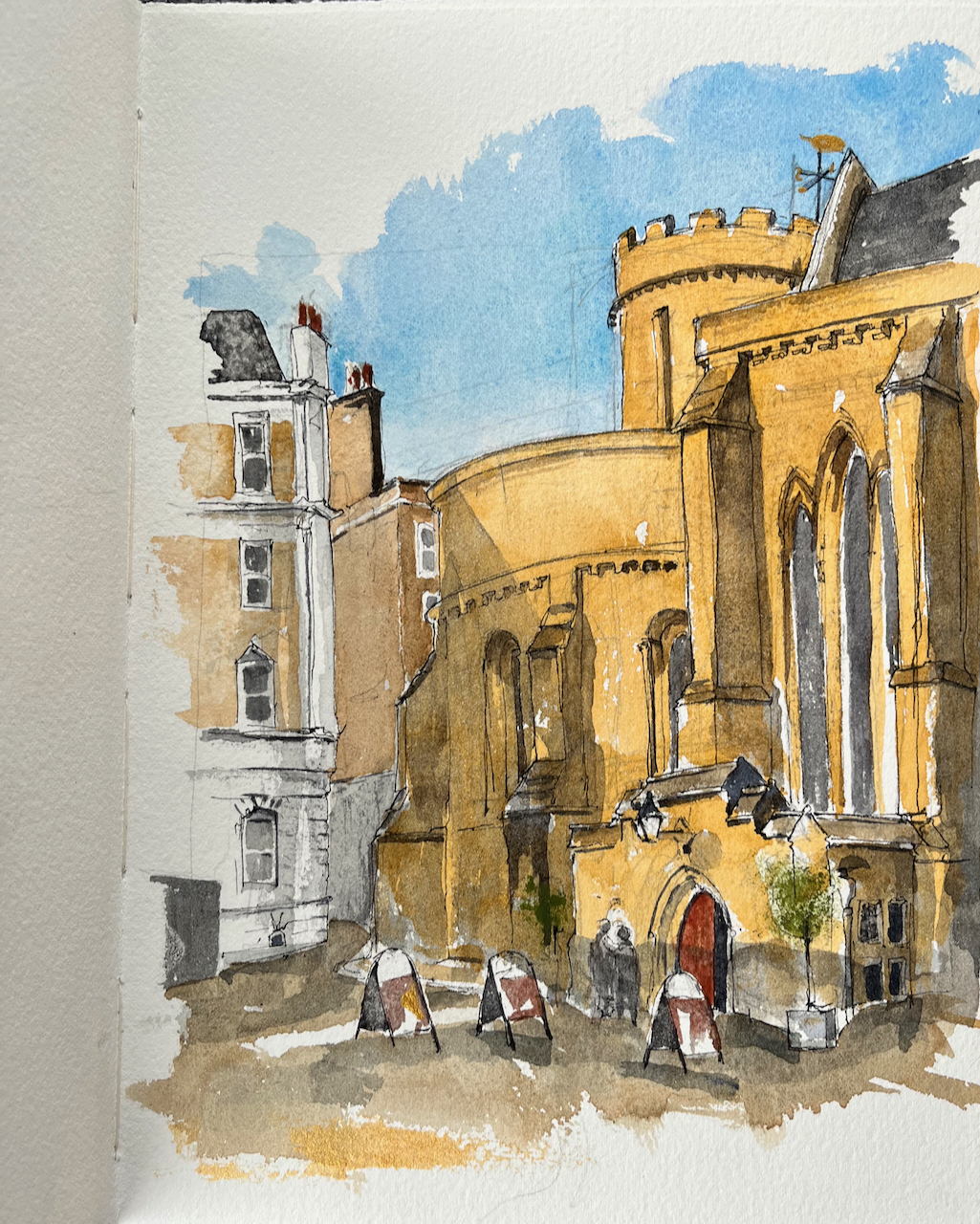
The Temple Church, Temple, London EC4

The Inns of Court are an ancient area of London, around Fleet Street, close to the Royal Courts of Justice. It’s an area of narrow lanes and quiet courtyards. Lawyers’ practices are there.

In amongst the buildings is this church, which opened on 10 February 1185.

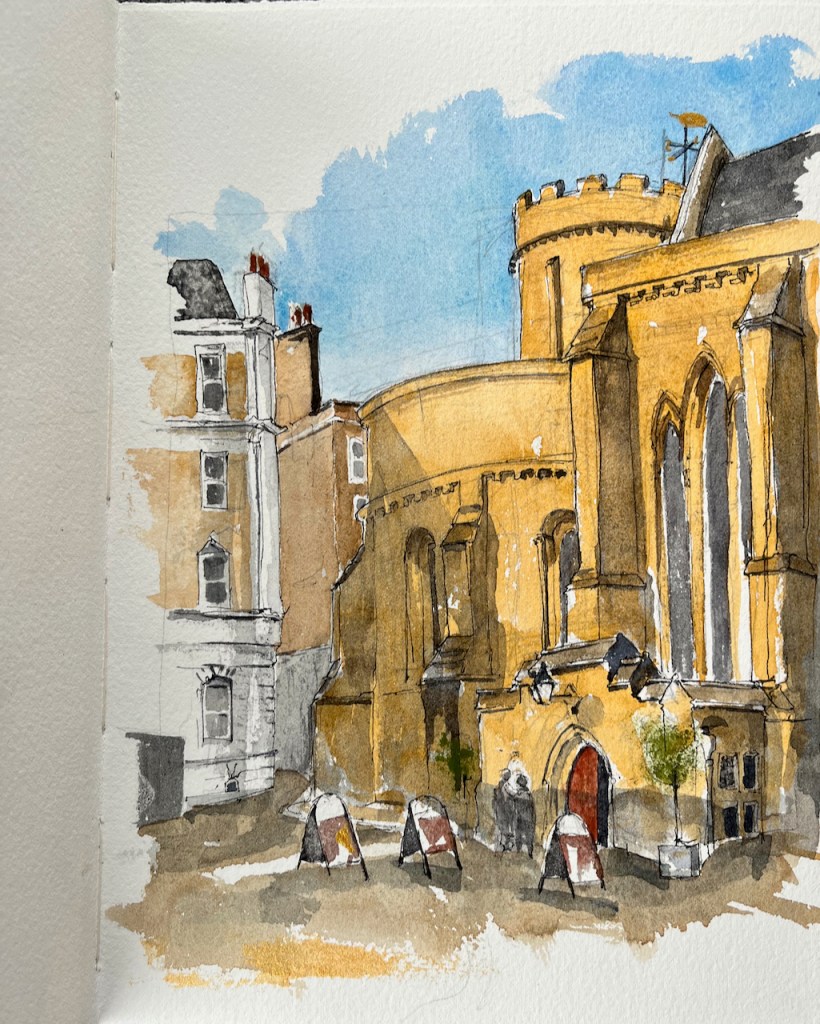
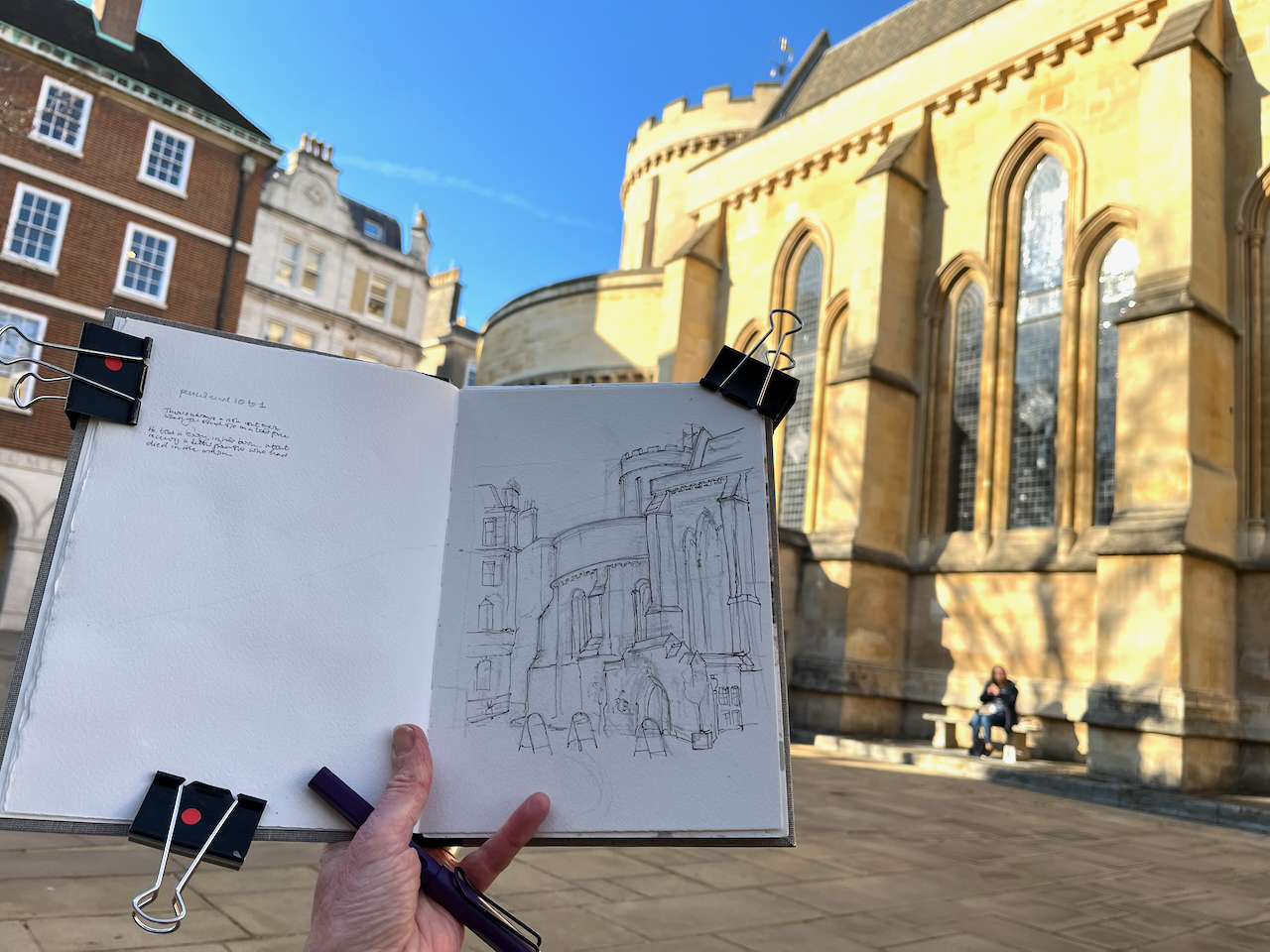
Temple Church, 14th February 2023, in sketchbook 13

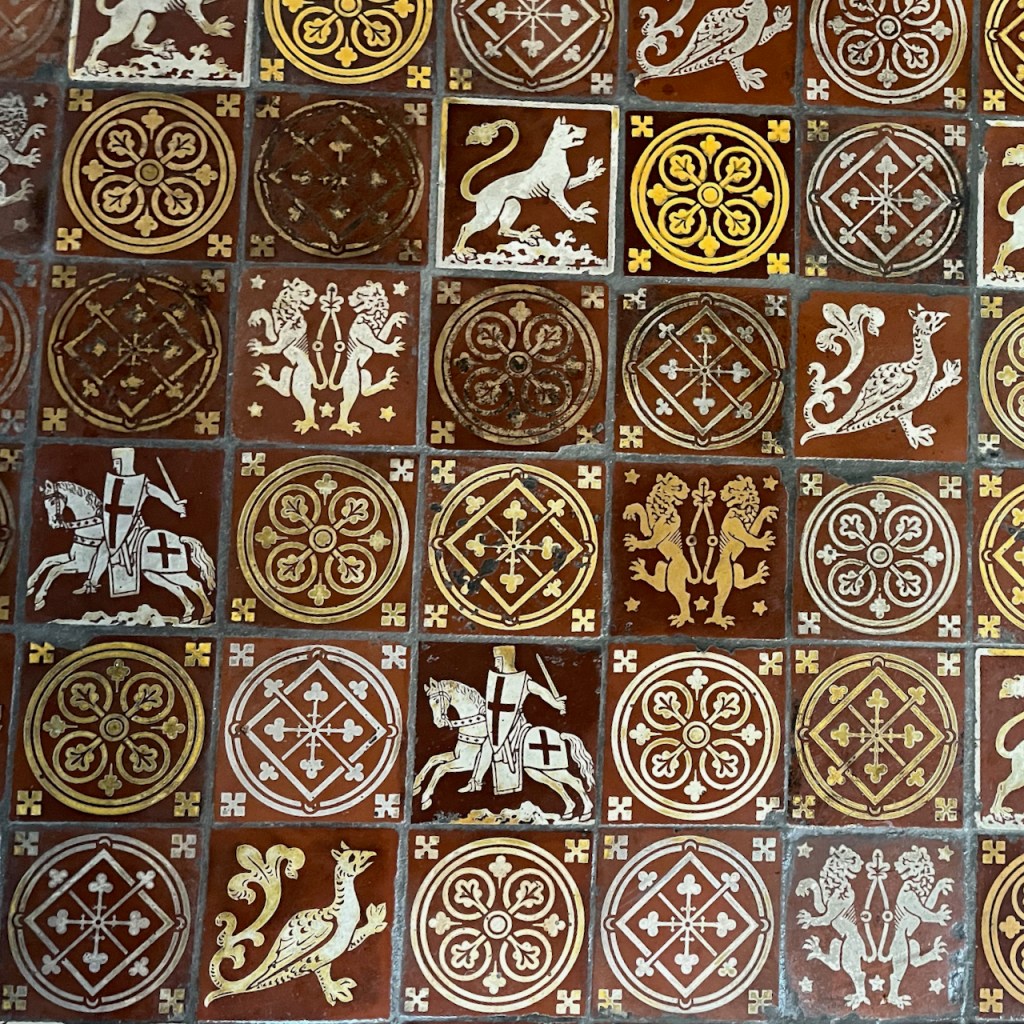
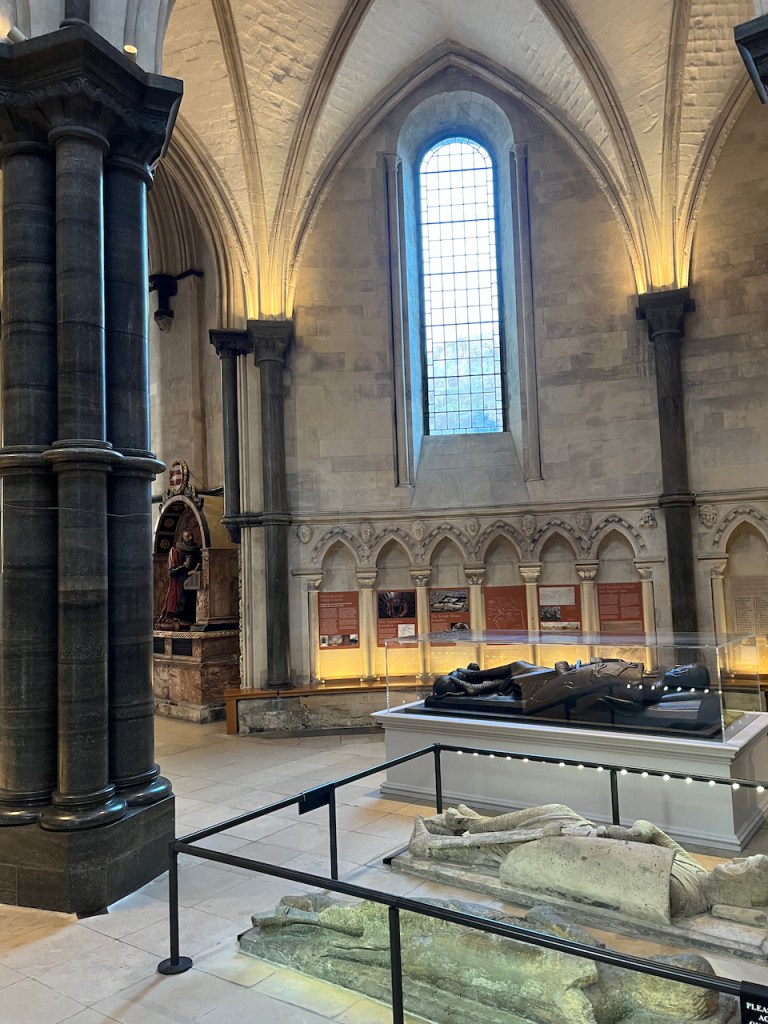
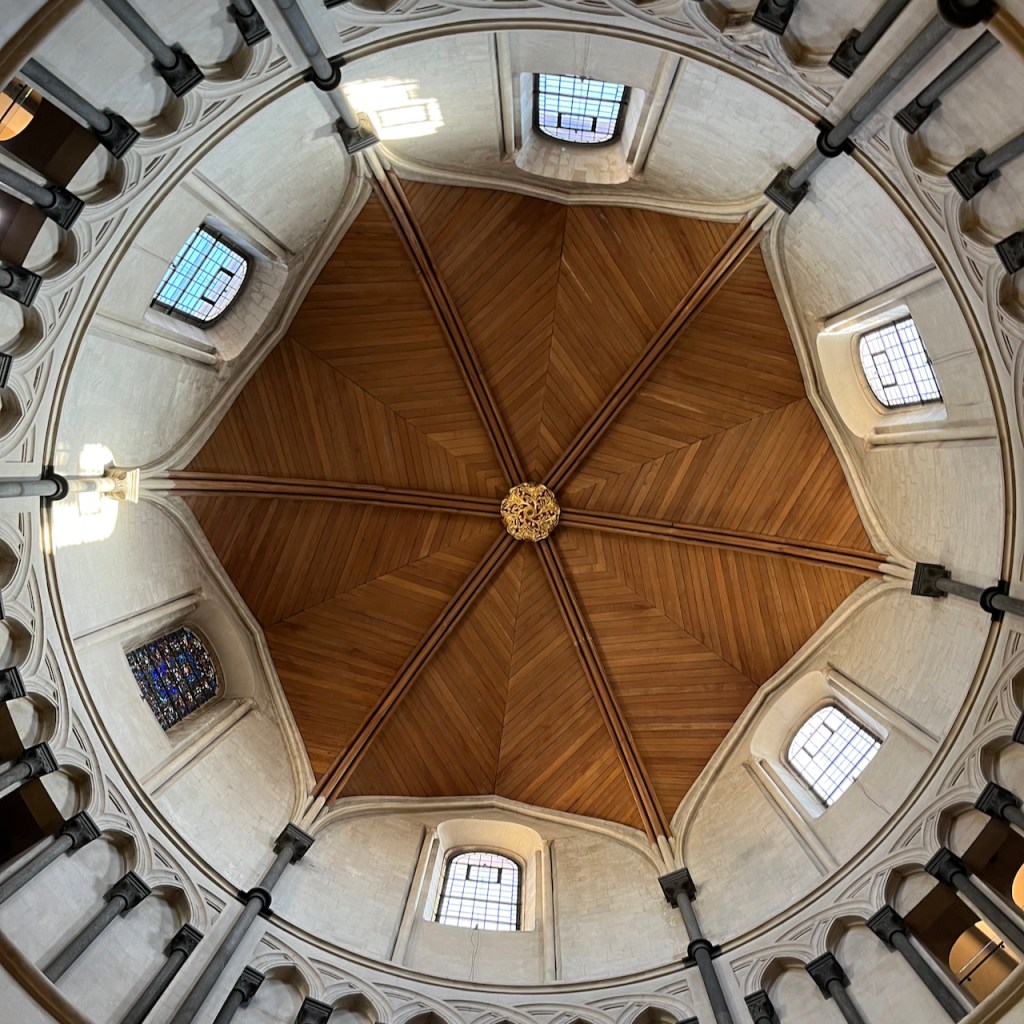
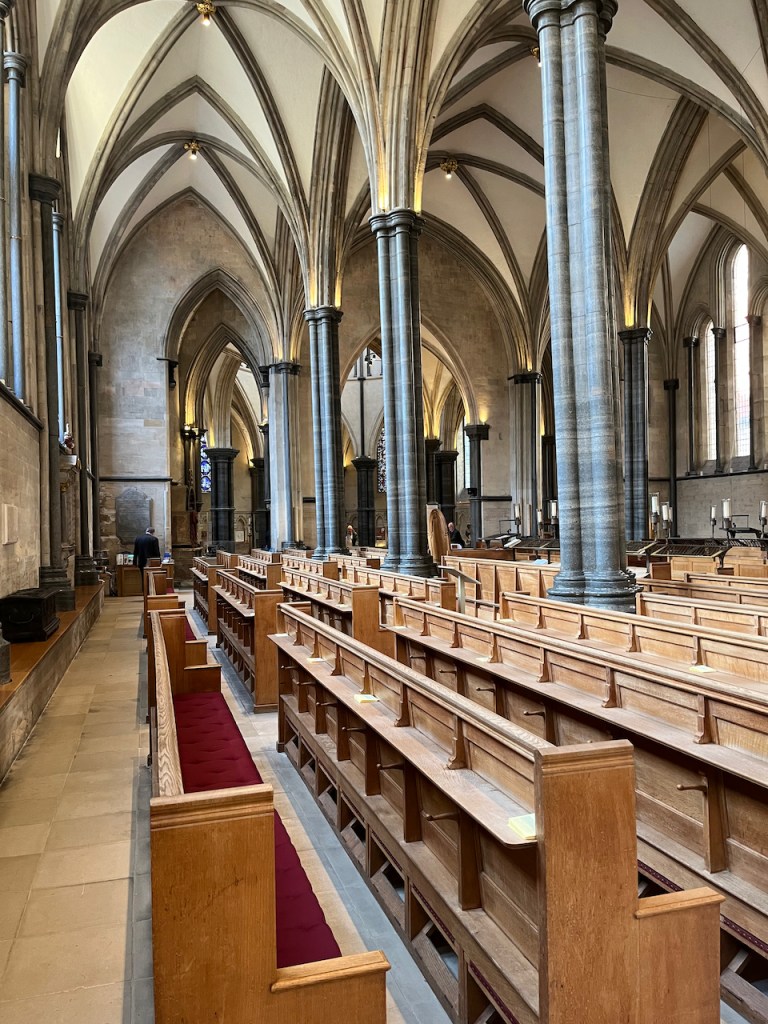
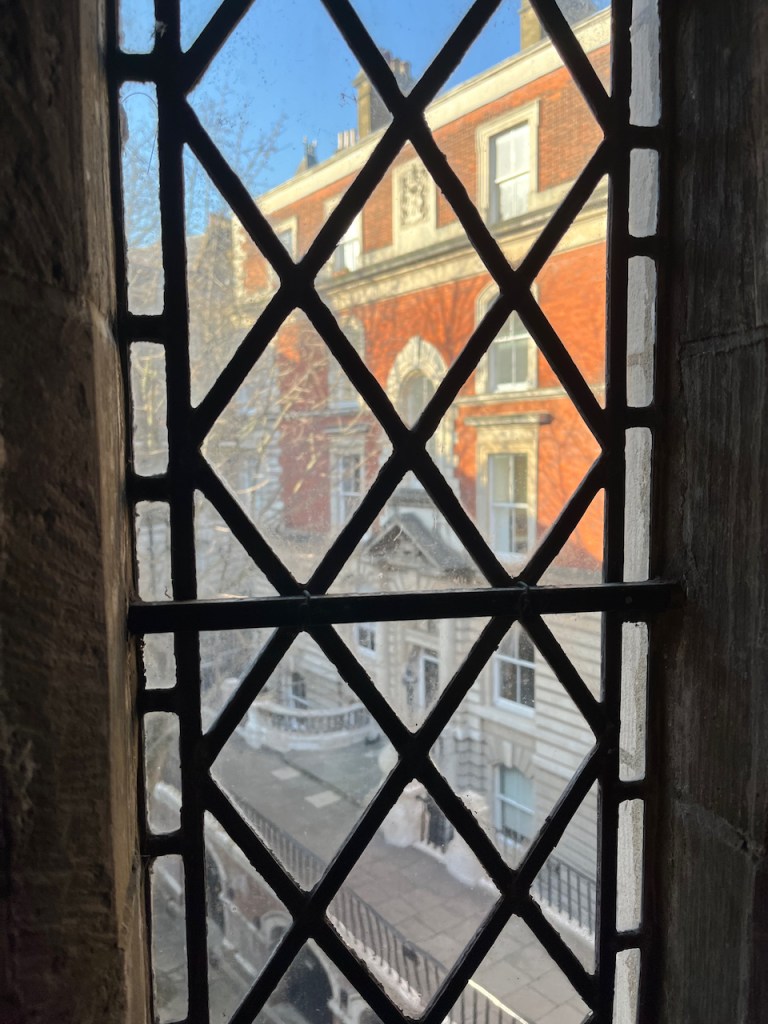
The church is open to visitors. I went in. It’s a splendid space, very calm, beautifully vaulted. You can even go up a narrow winding staircase inside the round structure I have drawn. Here are some photos of the inside.

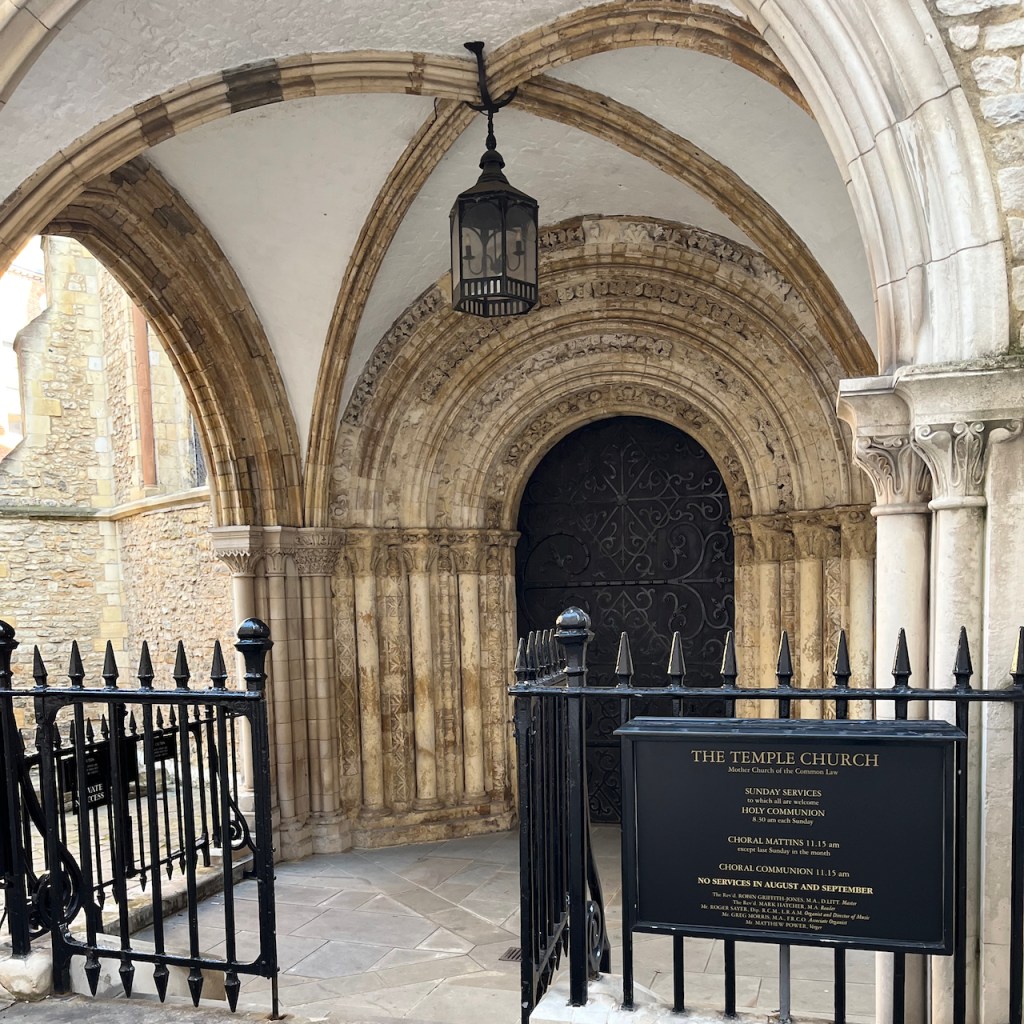
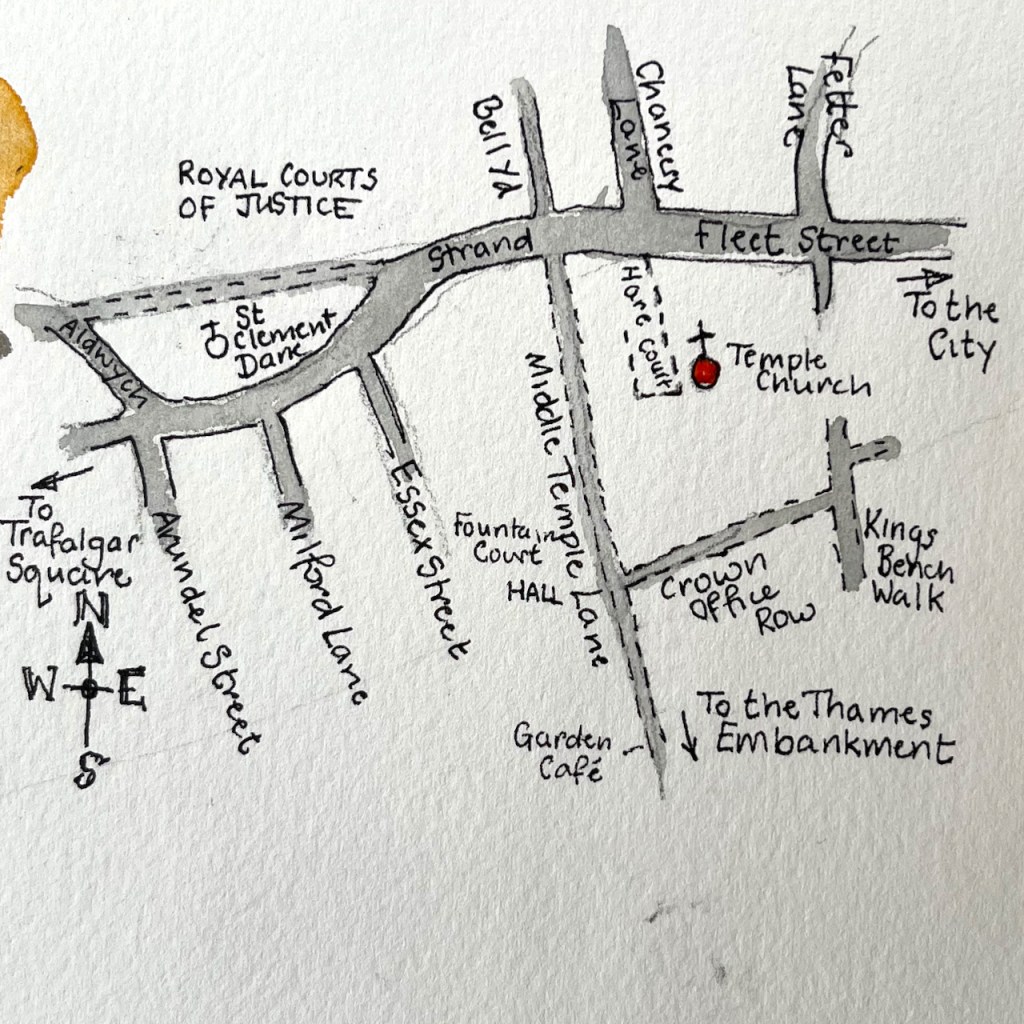
Here’s a map and a photo of the Norman arch on the outside

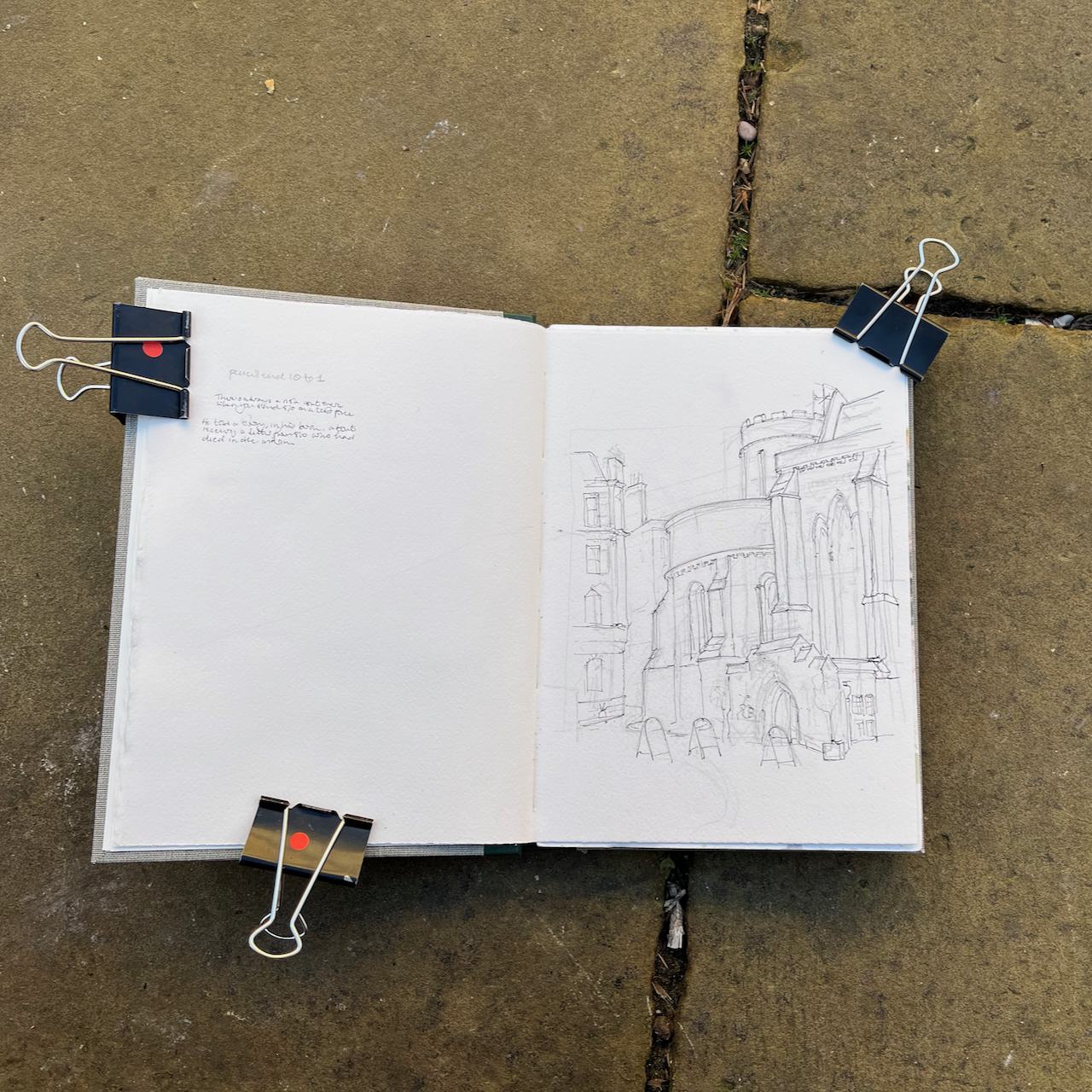
Here are some work-in-progress photos.

Carting Lane Sewer Gas Destructor Lamp, London WC2

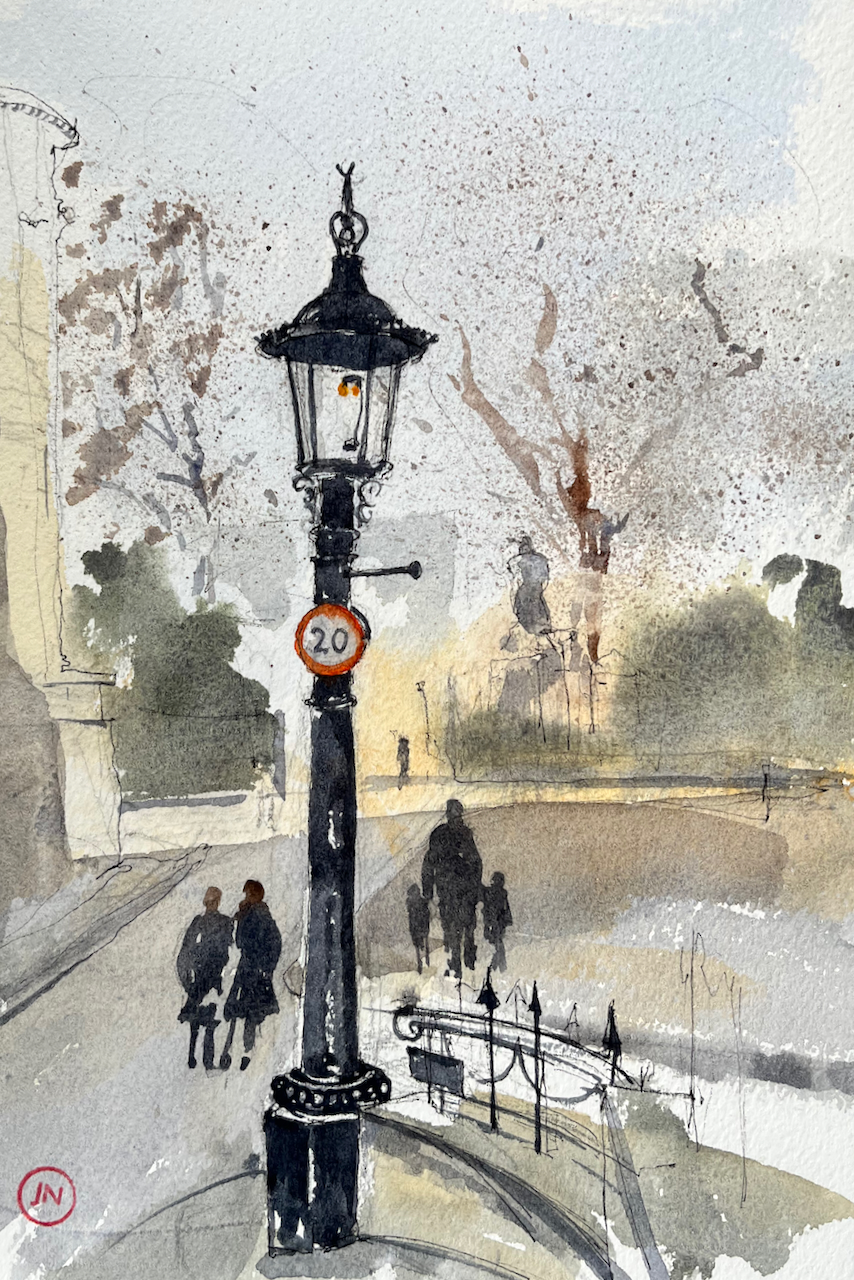
This lamp burns gas from the sewers. It’s an engineering marvel from the Victorian age, together with Wapping Hydraulic Power Station, the Embankment and Tower Bridge. Amazingly, it’s still standing, and still burning sewer gas, now renamed “biogas”. The notice on the fence says:

The adjacent street light is the last remaining sewer gas destructor lamp in the City of Westminster. Installed in association with Sir Joseph Bazalgette’s revolutionary Victoria Embankment sewer which opened in 1870, this cast iron ornamental lamp standard with original lantern continues to burn residual biogas.

City of Westminster, notice in Carting Lane
Carting Lane Sewer Gas Destructor Lamp, sketched 13 Feb 2023, 2pm in Sketchbook 13.

The original purpose of the lamps was not to light the streets but to burn off sewer gas, with the aim of reducing odours, exterminating bacteria in the sewer gas and reducing the explosion risk. Some town gas is drawn in with the sewer gas to make sure the lamp stays alight and does its job. The lamp is alight night and day. This was alight at 2pm.
There’s an article about the lamps on this link .

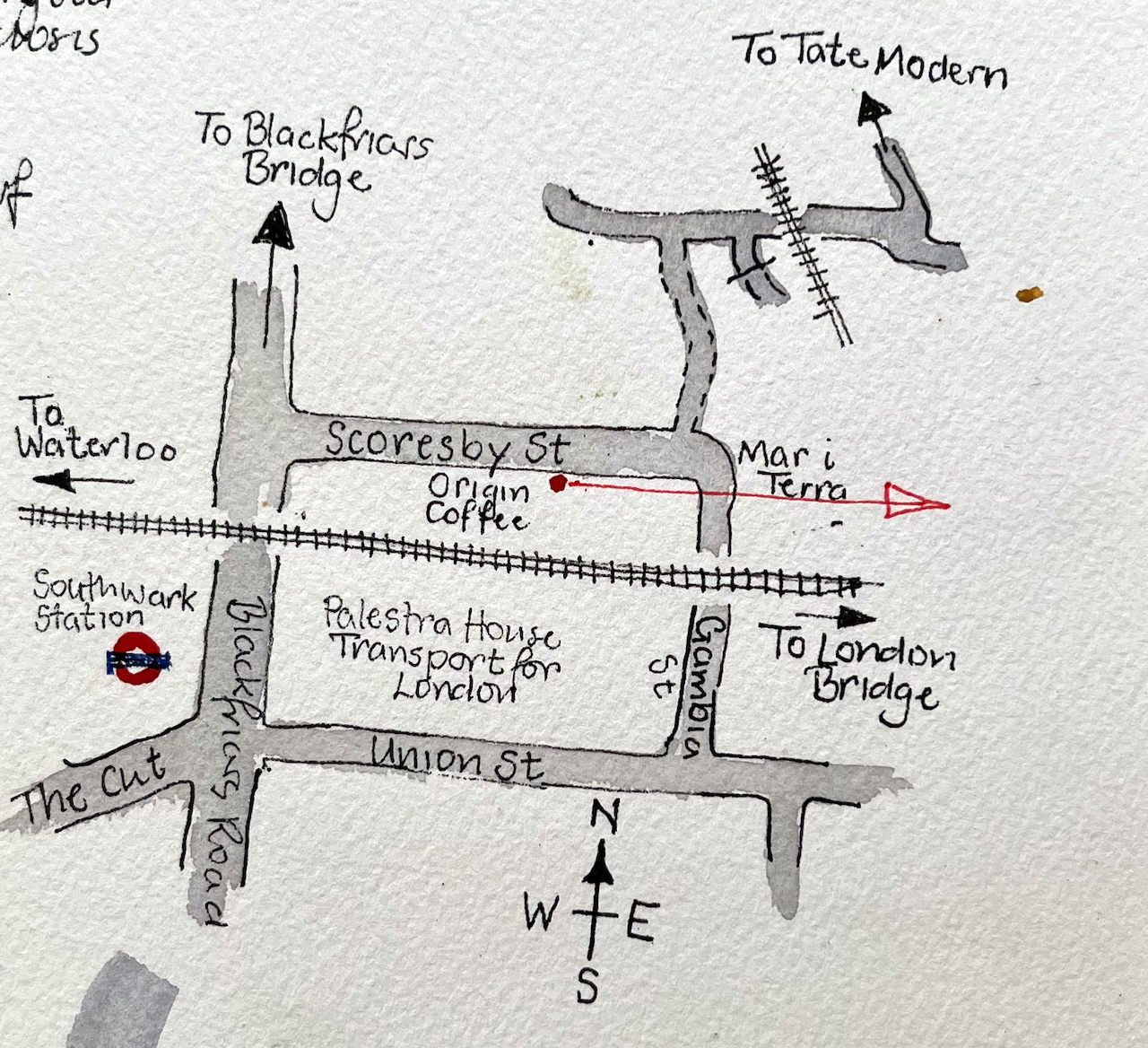
Carting Lane runs down from the Strand to the Thames Embankment, right next to the Savoy Hotel. I drew the picture standing above the lamp, looking down the lane towards the Thames. Here’s a map.

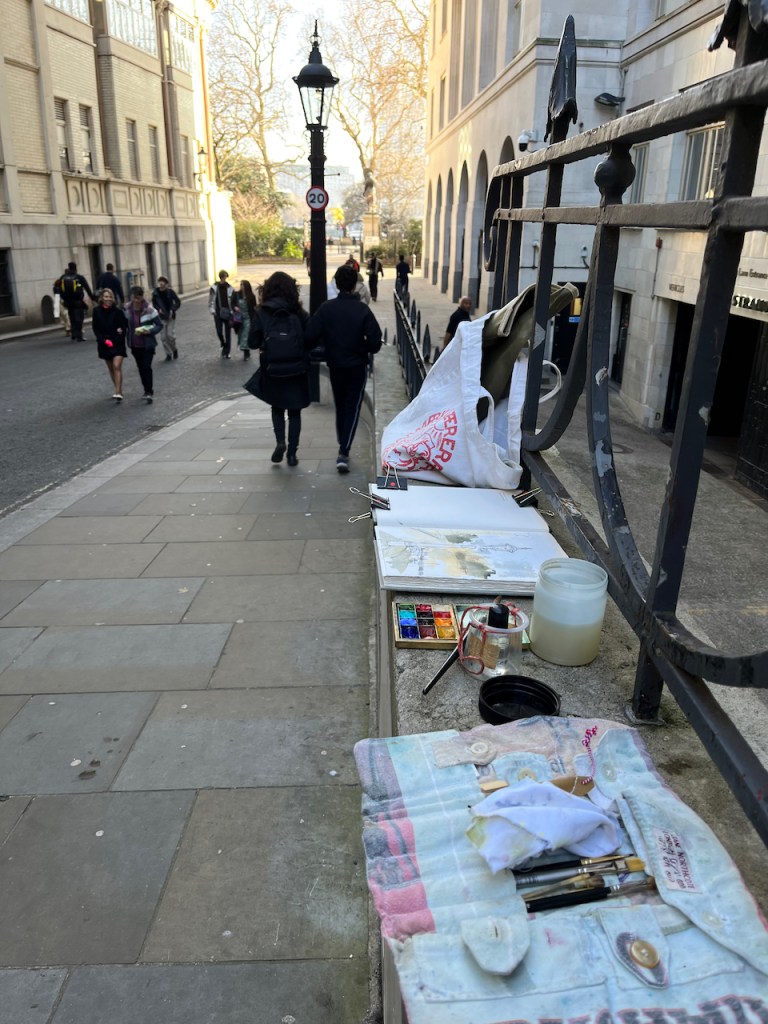
Here is work in progress:

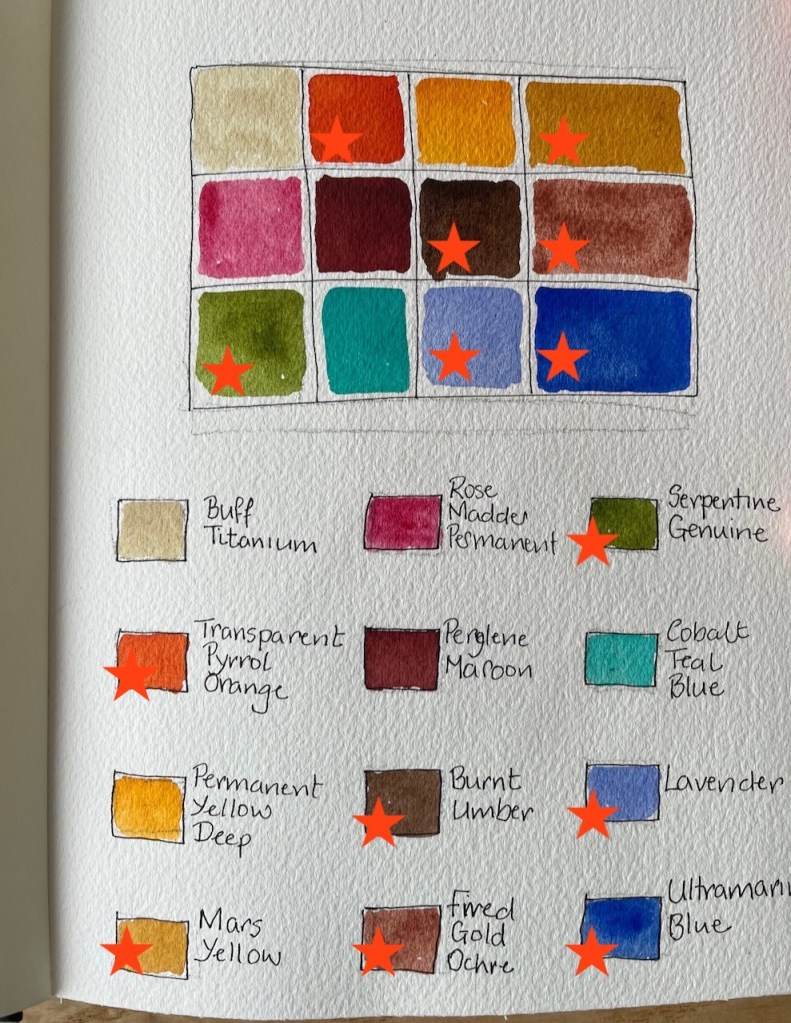
The colours in the picture are:

  • Ultramarine Blue and Lavender for the sky,
  • Serpentine Genuine/Burnt Umber/Fired Gold Ochre/ Mars Yellow for the mid-tones
  • Ultramarine Blue and Burnt Umber mix for the blacks and greys
  • Transparent Pyrrol Orange for the 20mph sign on the lamppost.
My current watercolour palette. The colours I used for this picture are starred. All Daniel Smith colours.

Mar i Terra, Gambia Street, SE1

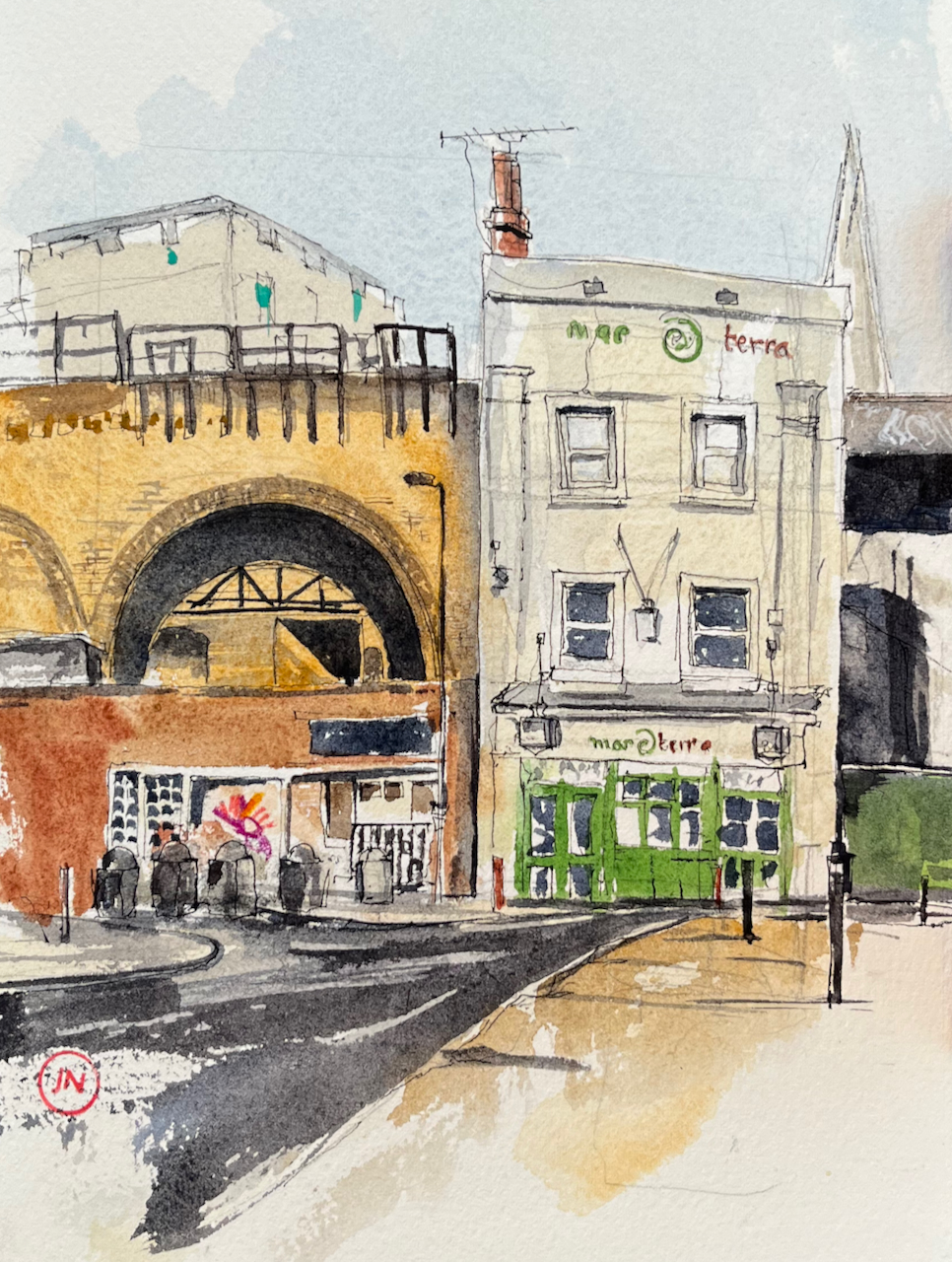
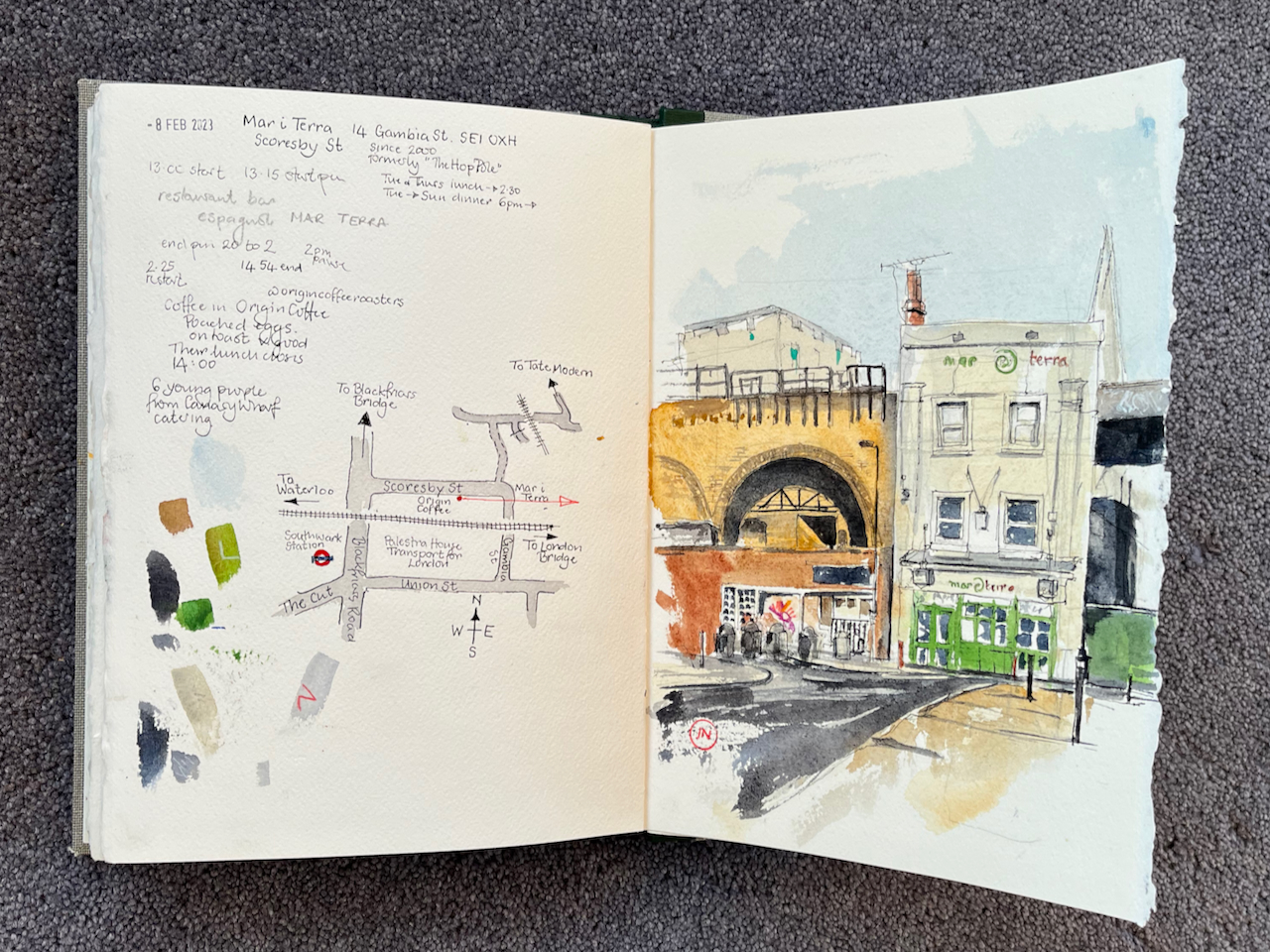
Here is the bar and tapas restaurant “Mar i Terra”, cosily tucked away in a back street near Southwark Station.

“Mar i Terra” Gambia Street SE1, sketched from Scoresby Street. 7″ x 9″ in Sketchbook 12.

There are magnificent Victorian railway arches looping all around, and 21st century buildings in the background, but this building stands defiantly, self-contained and functional.

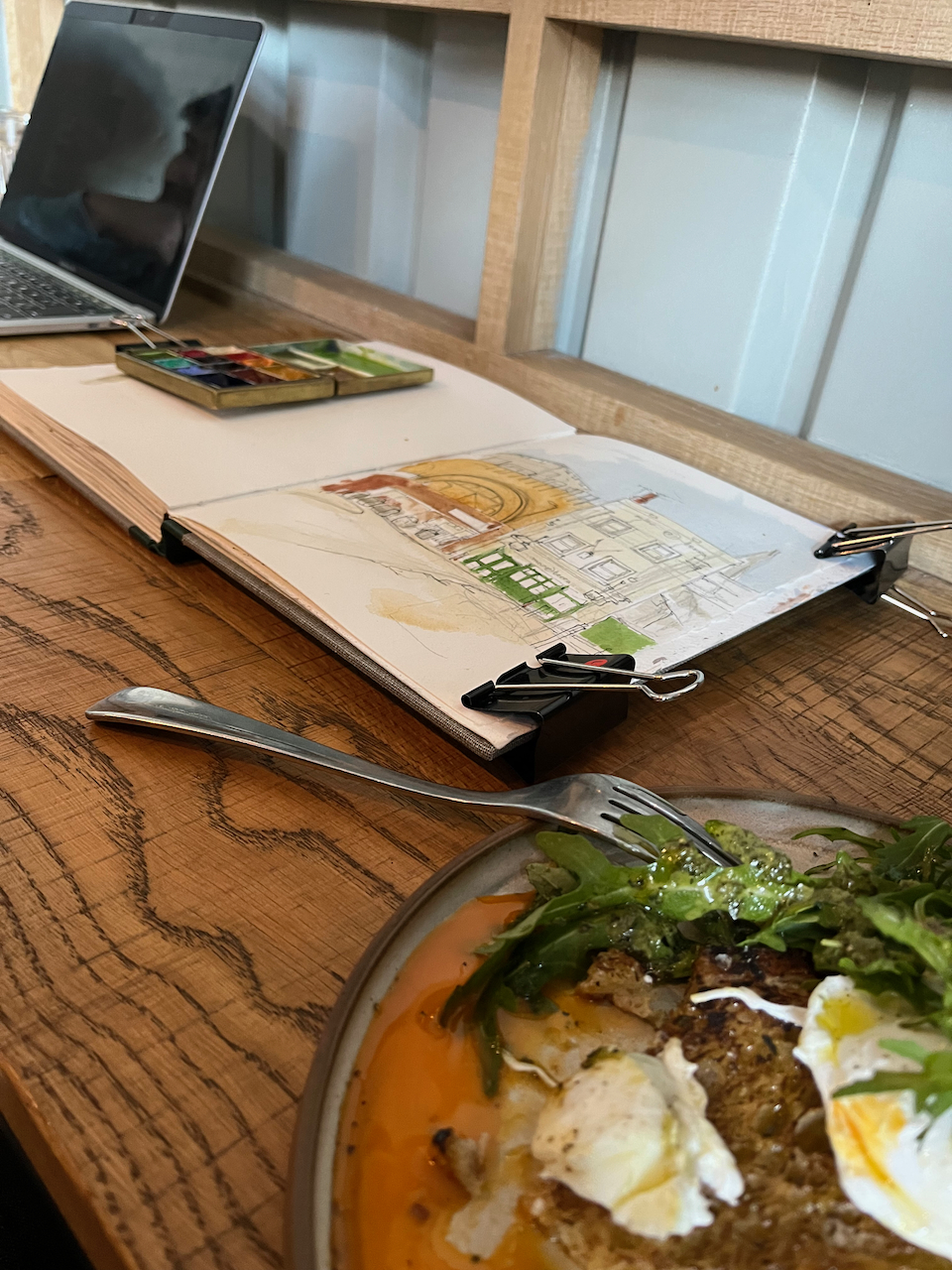
The restaurant is open Tuesday to Sunday for dinner. It also serves lunch on Tuesdays and Thursdays. I was sketching it on a Wednesday so I sought lunch elsewhere, and discovered the wonderful “Origin Coffee” in Scoresby Street.

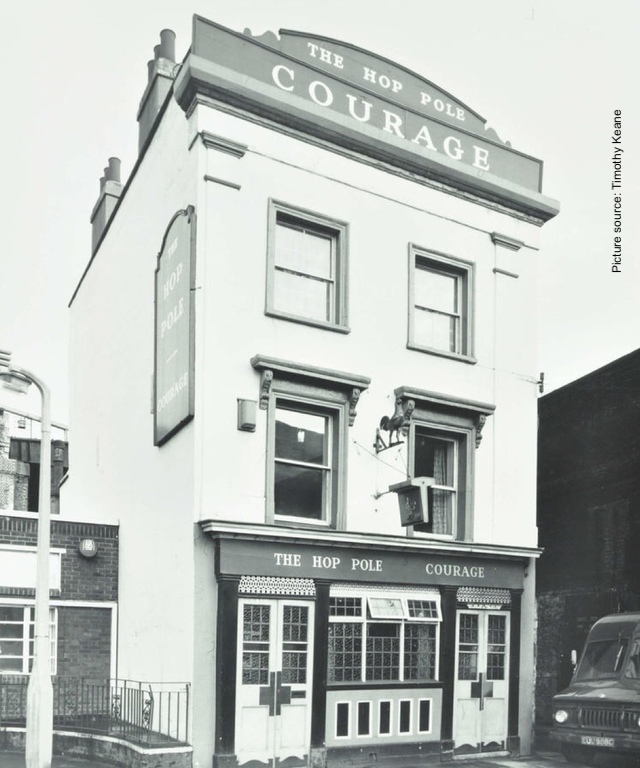
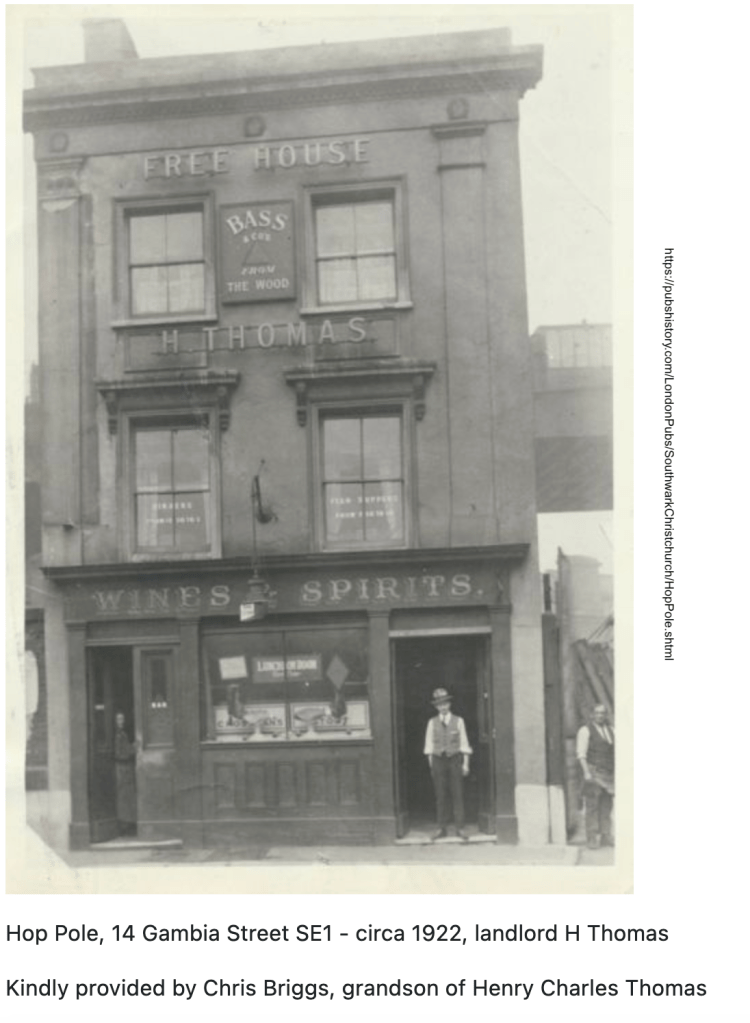
According to their website “Mar i Terra” has been serving the people of the neighbourhood since the year 2000. Up until 1999 this building was “The Hop Pole” pub.

The Hop Pole in about 1972. Image from “https://www.closedpubs.co.uk/london/se1_southwark_hoppole.html”

According to the “Pub History” site, victuallers were recorded at this site in 1791. So it was a pub for nearly 200 years.

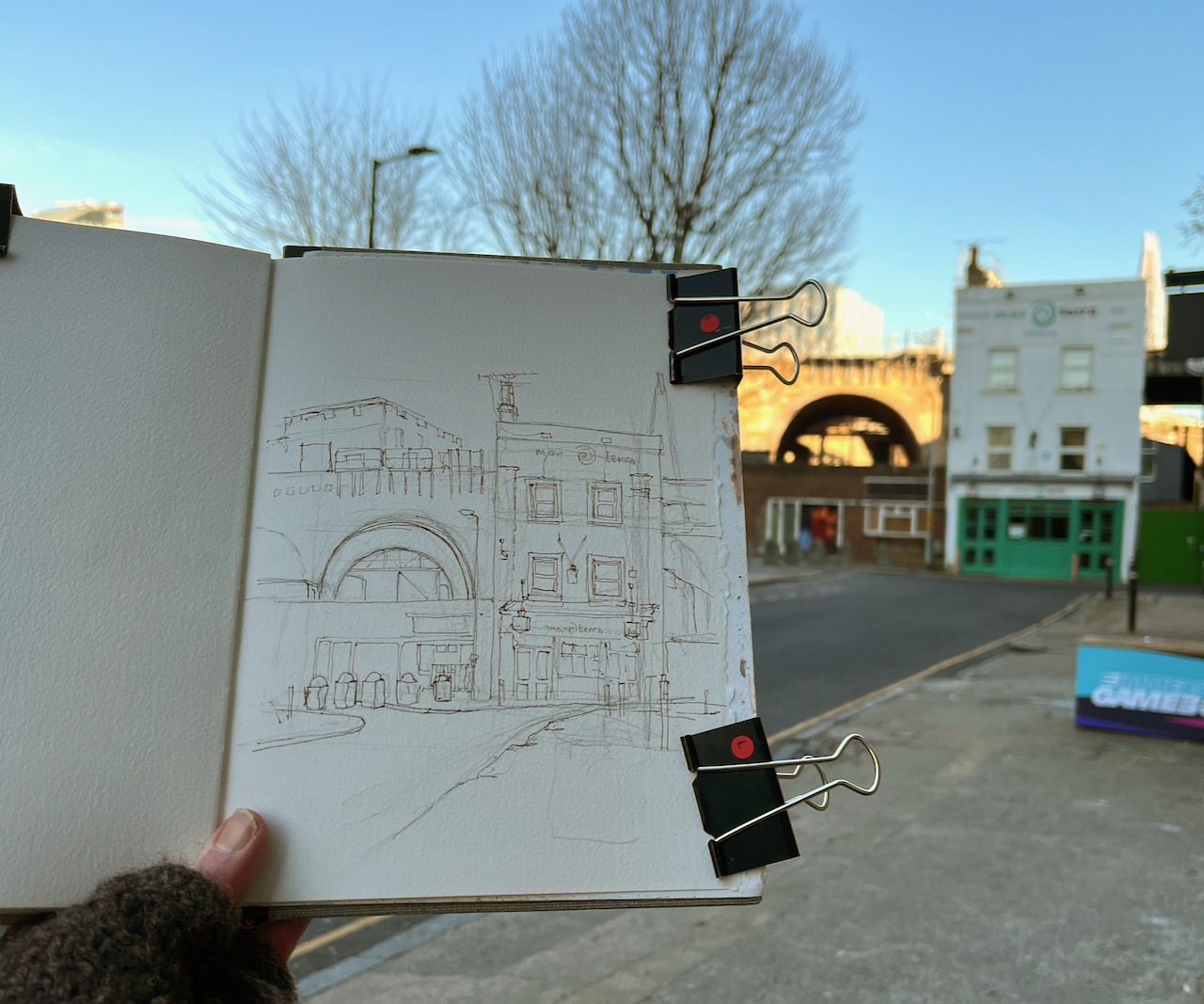
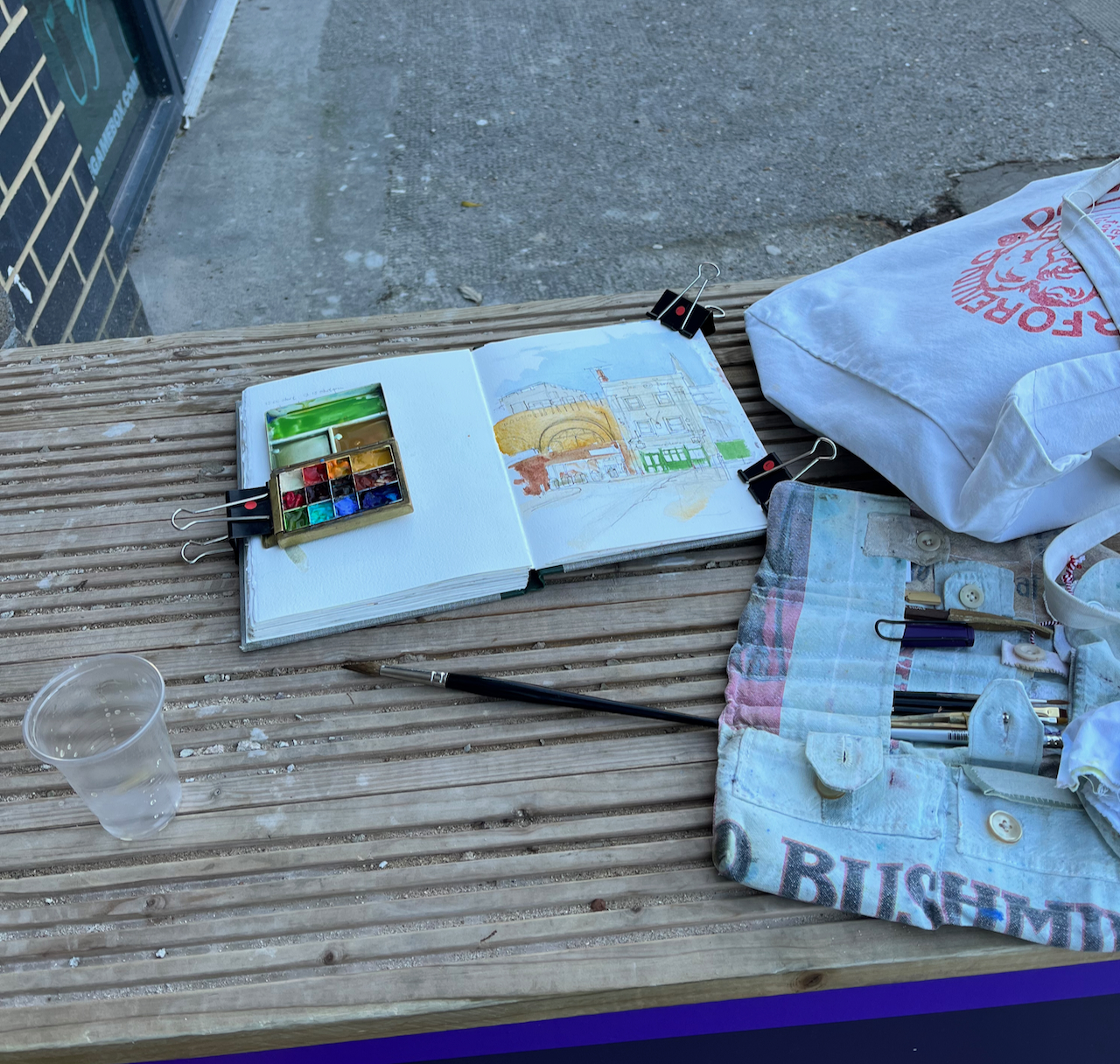
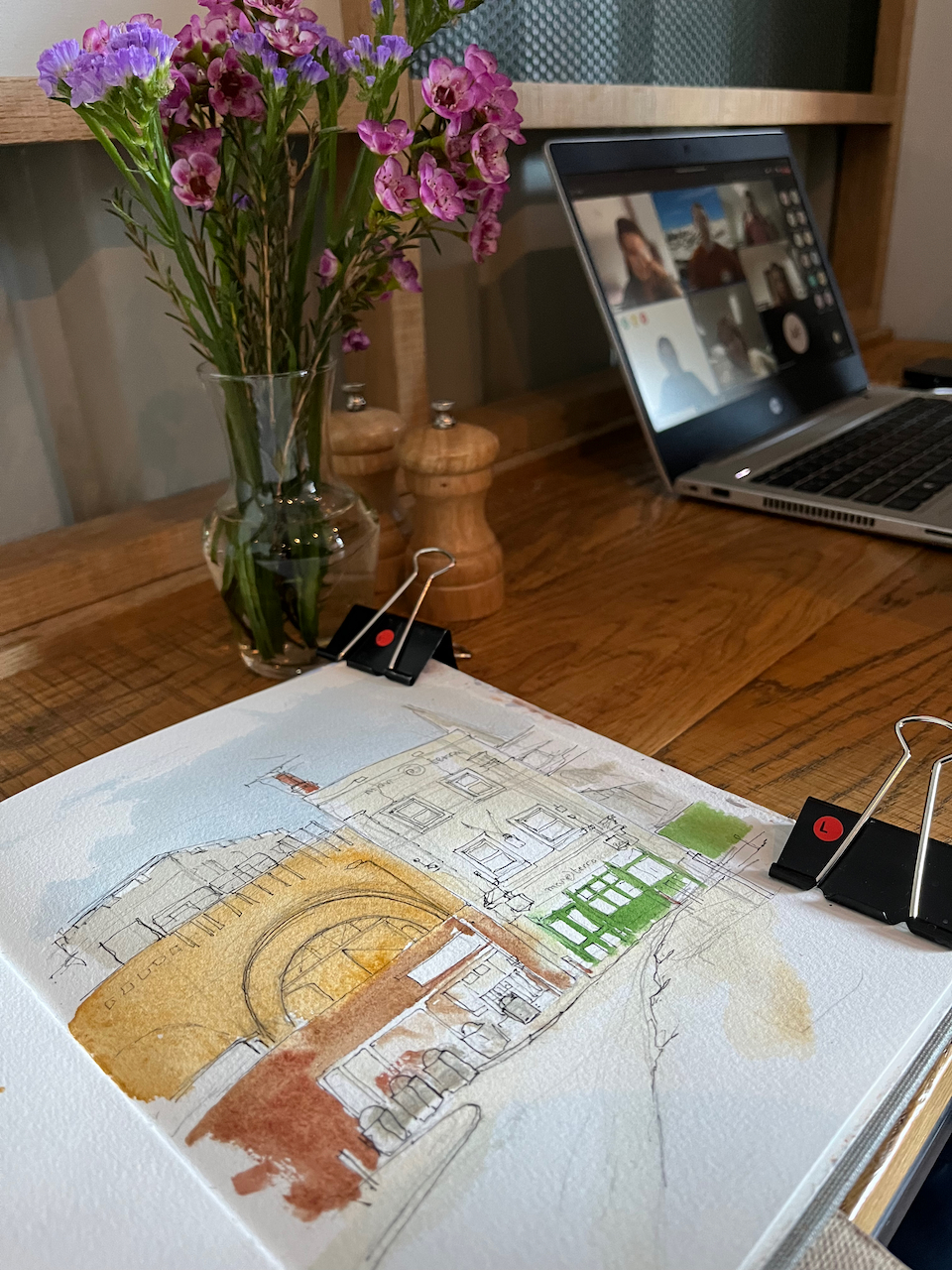
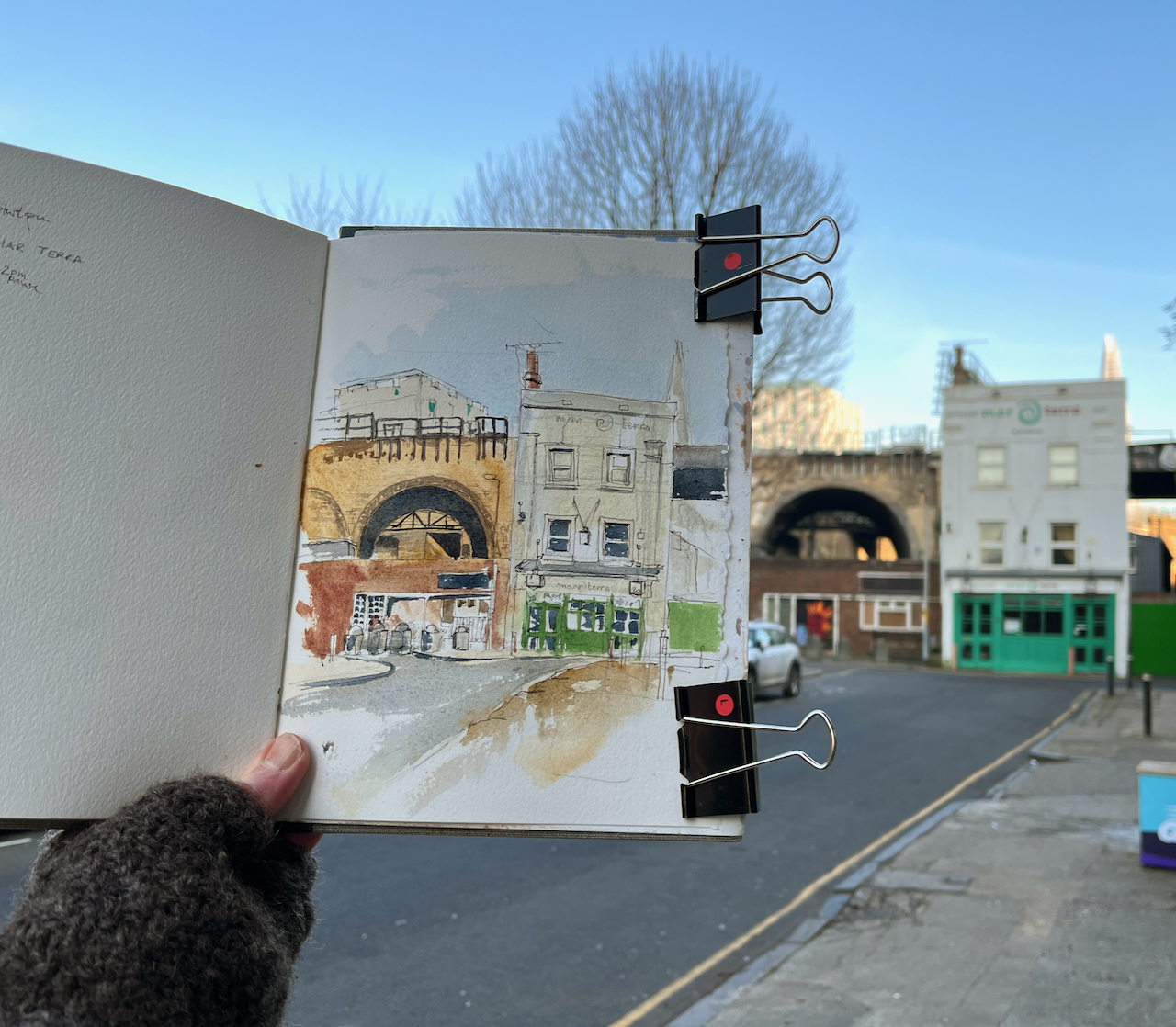
Here is work on progress on the drawing.

Colours:

  • Sky: Ultramarine Blue and Cobalt teal blue
  • Brickwork: Mars Yellow with some Fired Gold Ochre
  • Greys and blacks: Ultramarine Blue and Burnt Umber
  • Green paintwork: Serpentine Genuine moderated with Cobalt Teal Blue
  • Graffiti added with a red crayon

Here’s an image from the Pub History website. I can just read that the notice on the big window says “Luncheon Room”. So the Mar i Terra continues the tradition, on Tuesdays and Thursdays. The railway bridge behind, on the right of the photo, is still there, too, as well as many of the features of the front of the pub. Amazingly, the door layout seems to have endured. Is that Mrs H Thomas standing behind the door on the left?

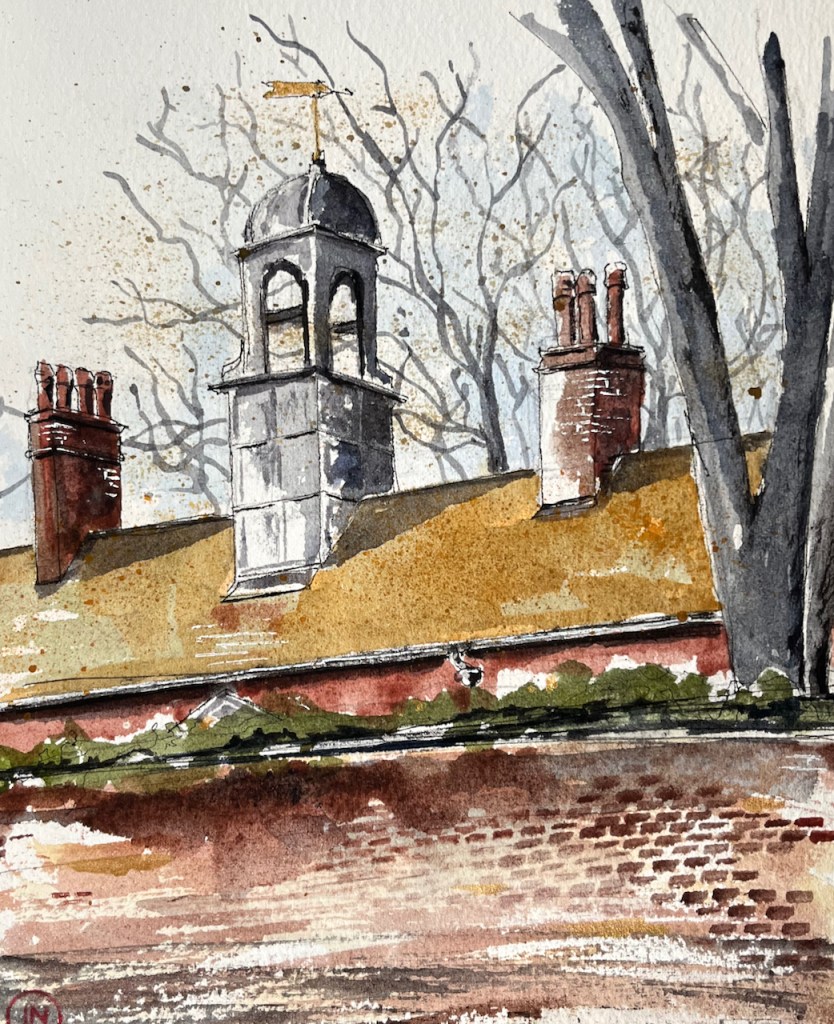
Roof of the “Museum of the Home”, Geffrye Street, E2

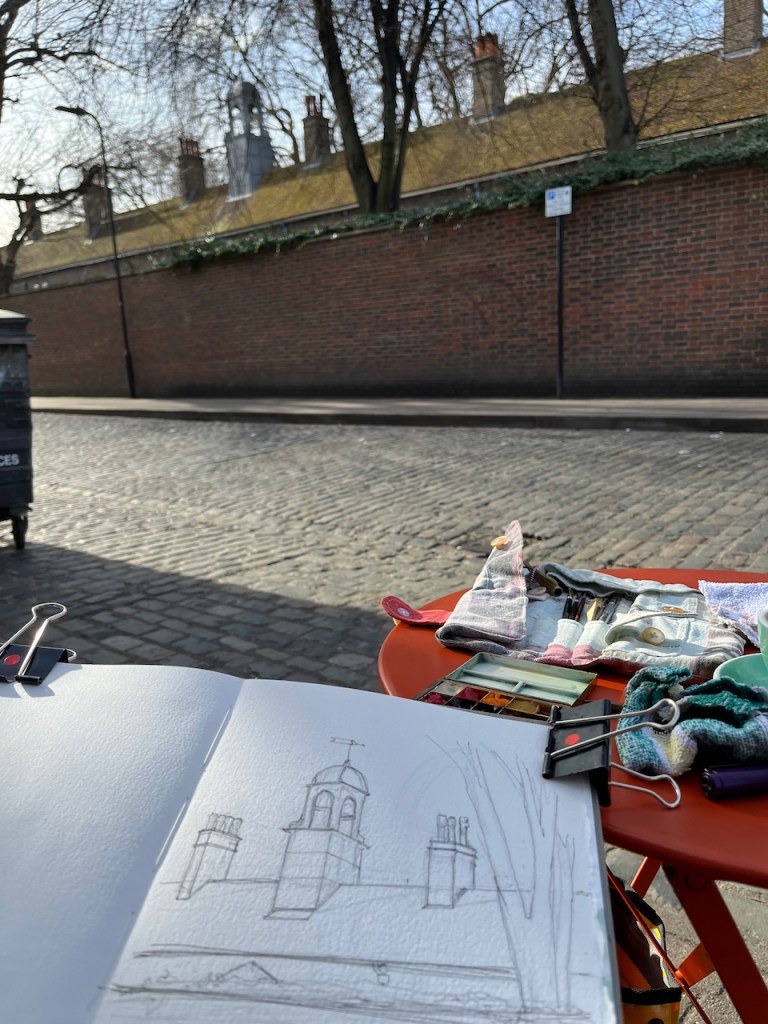
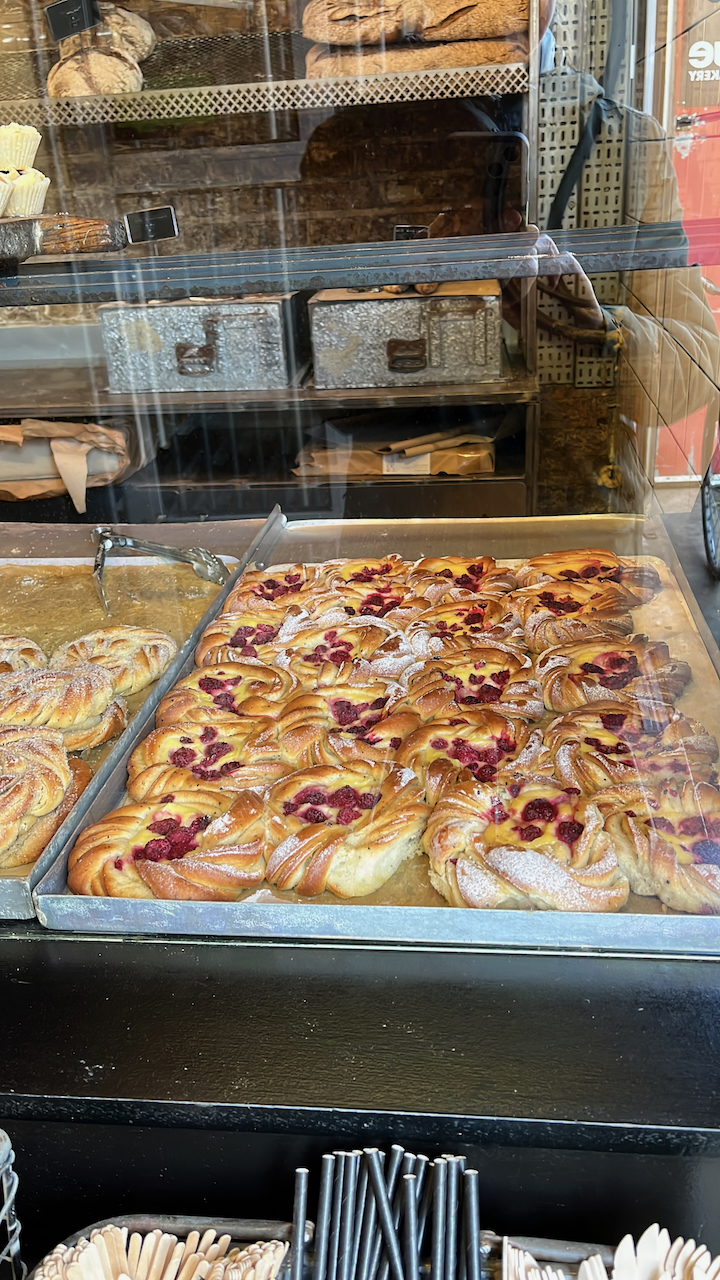
On Geffrye Street near Hoxton Overground station, is the marvellous bakery “Fabrique”. My feet somehow took me there on a sunny day, after I had done my errands in the nearby area. Well, perhaps my errands were not quite nearby. But those cinnamon buns exude an aroma detectable at a considerable distance, like pheromones. So there I was sitting at a table on a sunny pavement and looking for something to sketch. Here’s what I saw.

Roof of the “Museum of the Home” 136 Kingsland Road
London E2 8EA, 3rd February 2023, around noon, in Sketchbook 12

The “Museum of the Home” used to be called the “Geffrye Museum”.

Here is work in progress on the drawing:

Here are the raspberry buns at Fabrique, and a map so you can find them:

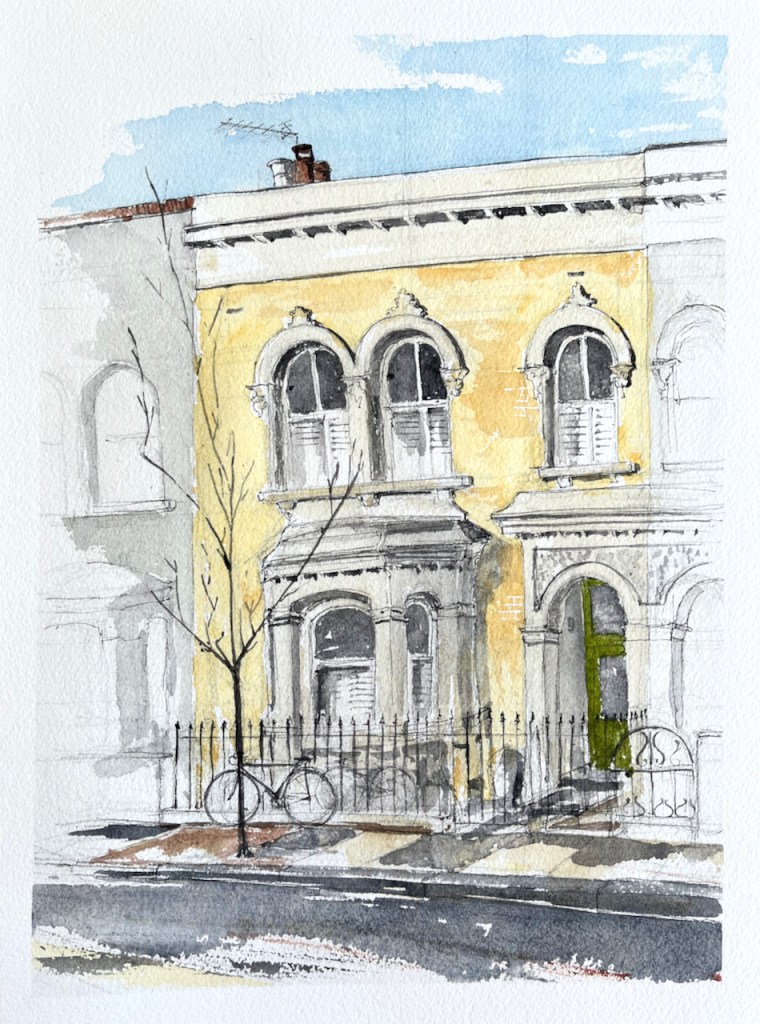
A House in East London

Here is a Victorian terraced house in East London.

A House in East London, 9″ x 12″ 21 January 2023. [commission]

This was a commissioned drawing. Thank you to my client for the commission and for their permission to post the picture here.

There were two interesting challenges in this drawing. One was the fact that the front of the house was obscured by parked cars. The other was the characteristic colour of the brickwork: a clean and lively yellow. I wanted to draw the fence without the cars, so as to show the whole house. And I wanted to get that yellow right.

I was stationed on the other side of the road. There were cars parked nose-to-tail on both sides of the road. To draw the part behind the parked cars, I crossed the road and had a look then come back and sketched and then wandered about sketching and trying to get it right, gradually becoming skilled at envisaging the fence behind the car. Fortunately it was a quiet road. The few passers-by took a friendly interest, bemused by an itinerant artist in their street.

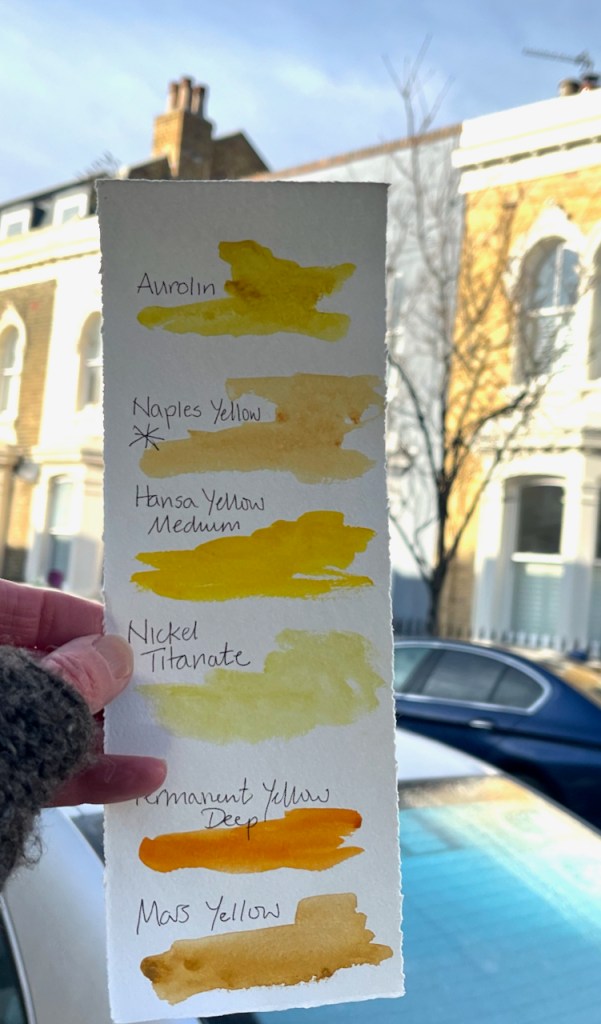
To match the colour of the brickwork, I equipped myself with a colour chart of all the yellows I possess. Usually, old London brickwork is Mars Yellow. But in this case I discovered that it was Naples Yellow, a cleaner, paler colour, less orange than Mars Yellow, more orange than Nickel Titanate Yellow. Naples Yellow also has a pleasant chalky texture, which made it perfect for this brickwork .

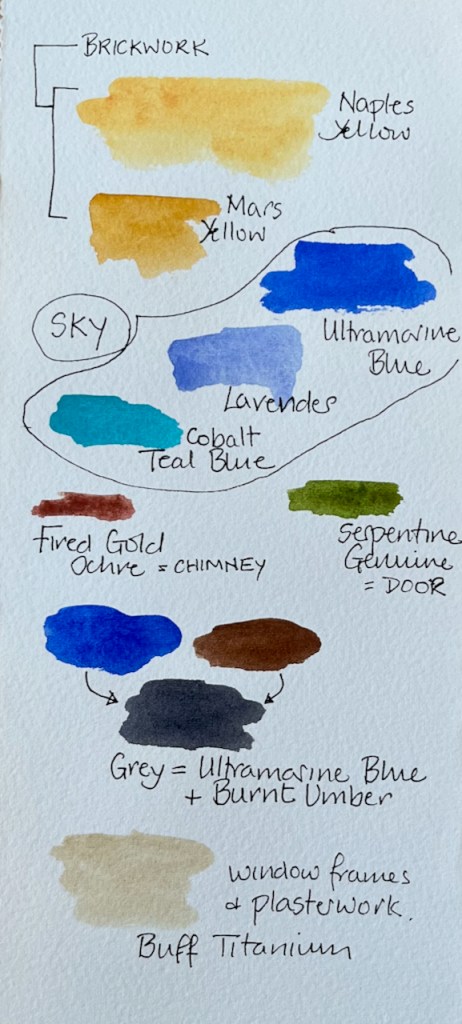
Most of this picture was painted in 3 basic colours: Ultramarine Blue, Naples Yellow and Burnt Umber. Here are the detailed colours, all Daniel Smith:

  • Sky: Mostly Ultramarine Blue, plus some Lavender and Cobalt Teal Blue
  • Brickwork: Mostly Naples Yellow plus a bit of Mars Yellow in the darker places
  • Window surrounds and plasterwork: Buff Titanium (very dilute)
  • Green door: Serpentine Genuine
  • Terracotta chimney pots: Fired Gold Ochre
  • All greys and shadows: a mix of Burnt Umber and Ultramarine Blue.

The paper is Arches Aquarelle 300gsm Cold Pressed in a block. The ink is De Atramentis Document Black, applied with a fountain pen.
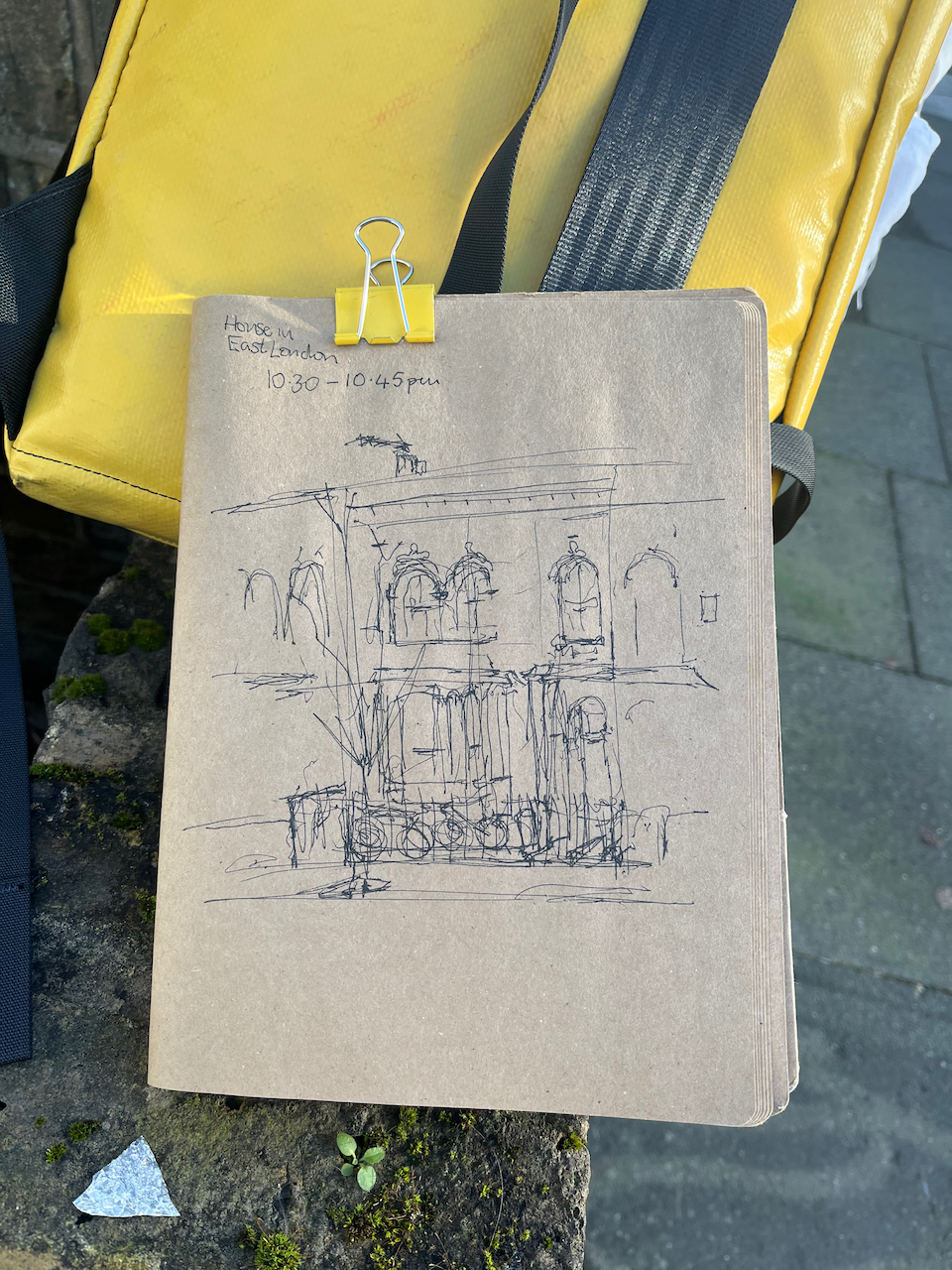
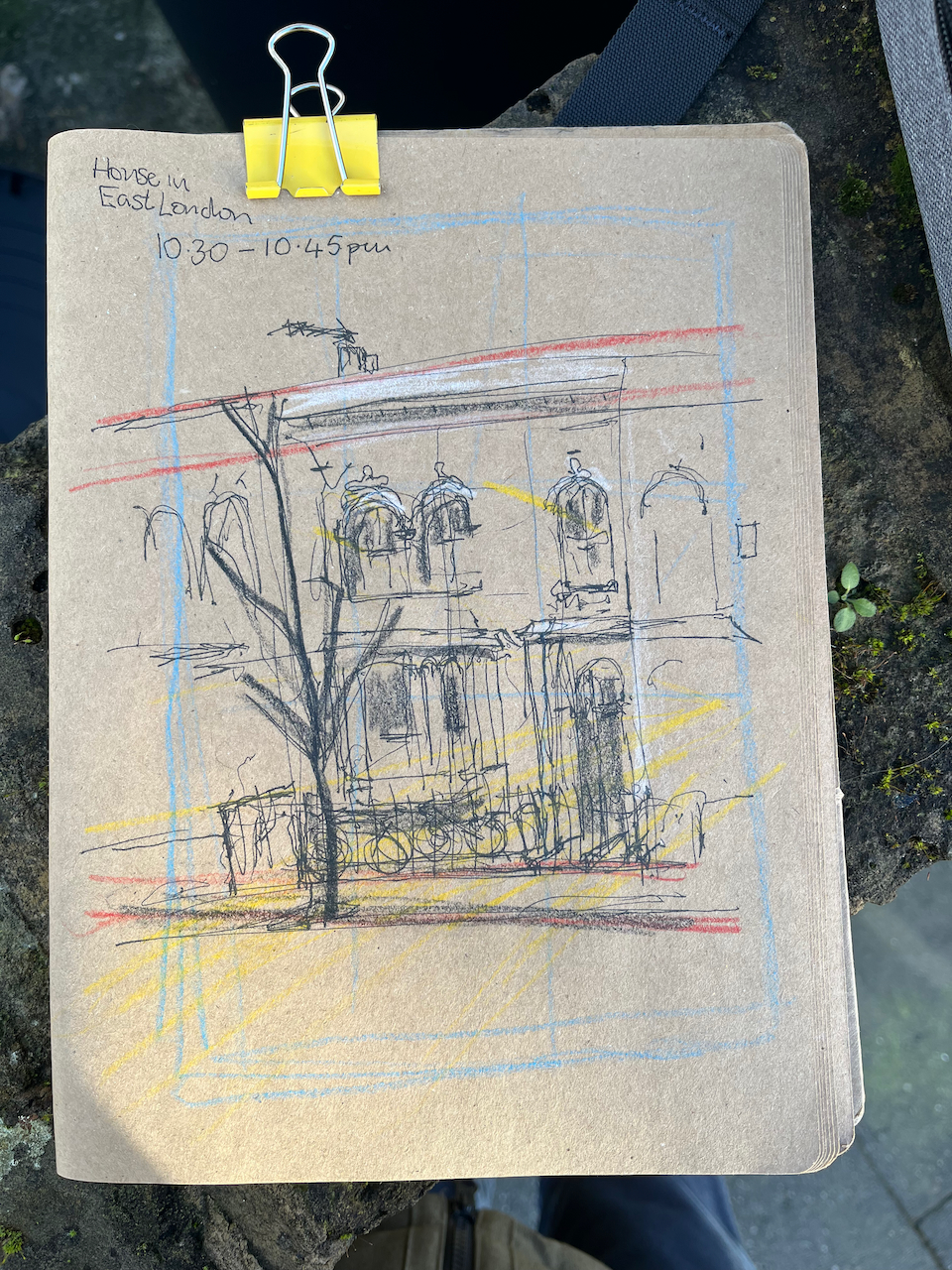
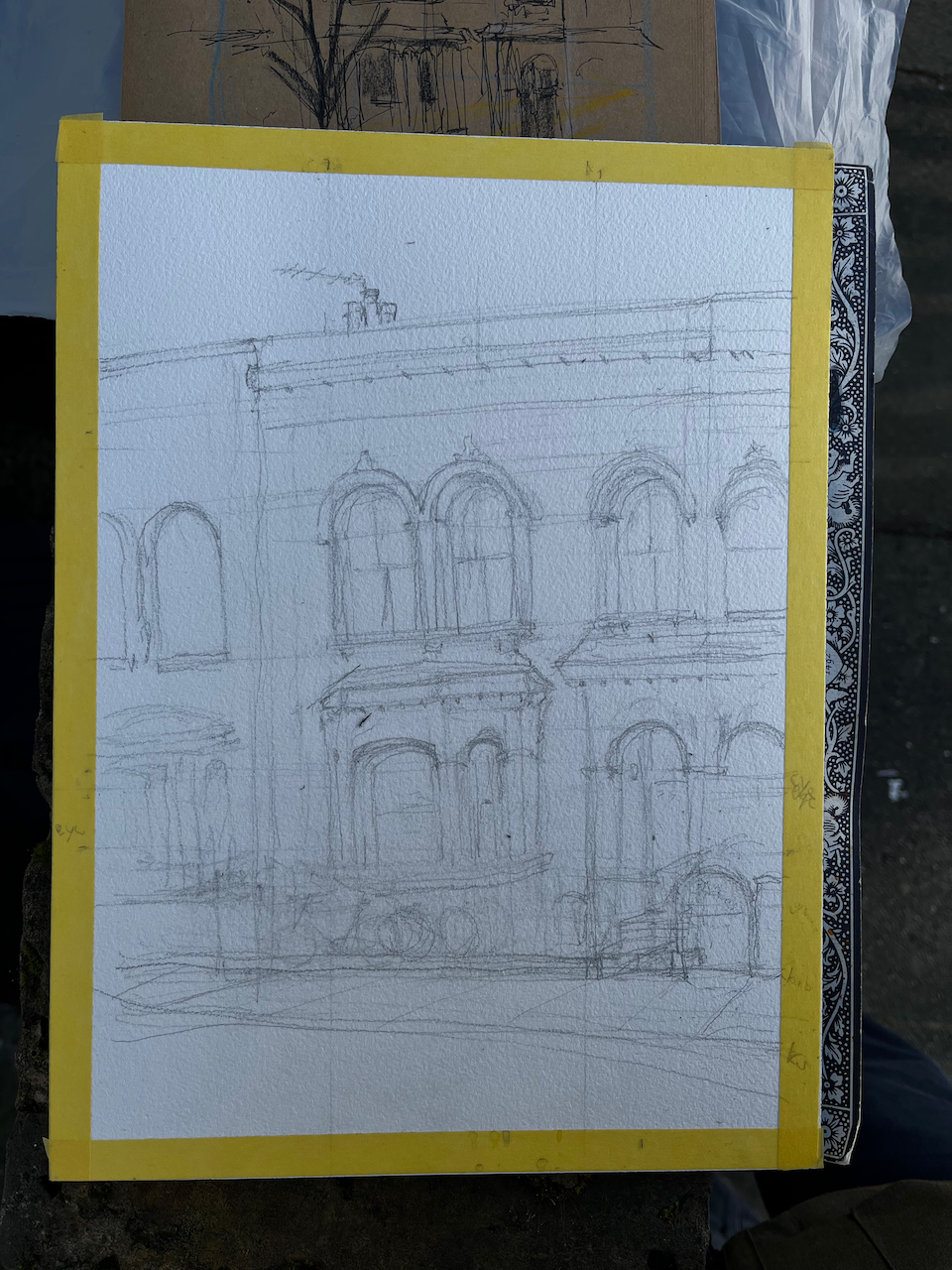
I did a preliminary sketch to understand the perspective and the proportions. Here are some images of work in progress. This was January and very cold. I managed to complete the pen and ink on location and then added the colour at my desk in the warm when I returned home.

Pen drawing, before the colour went on.