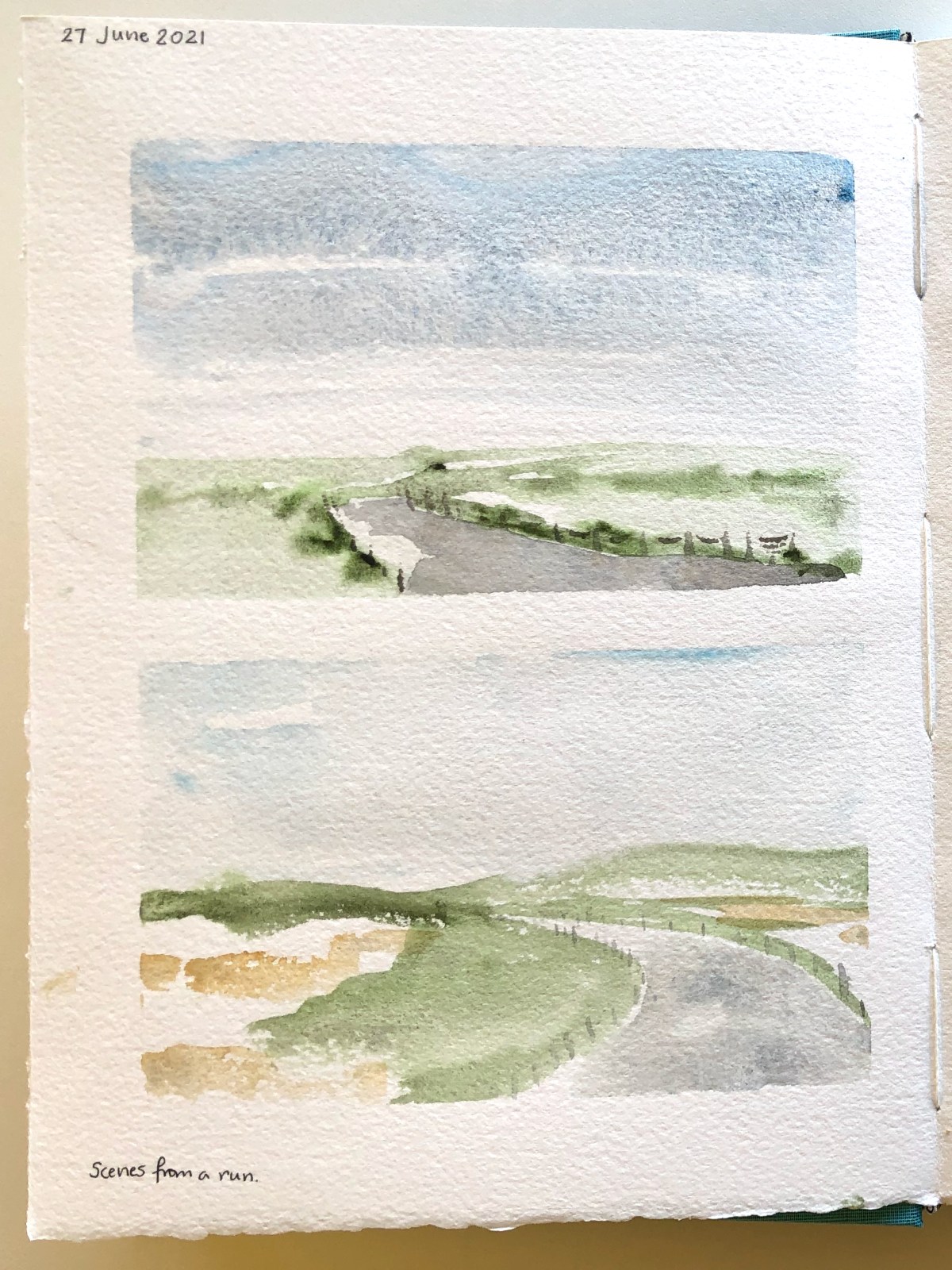
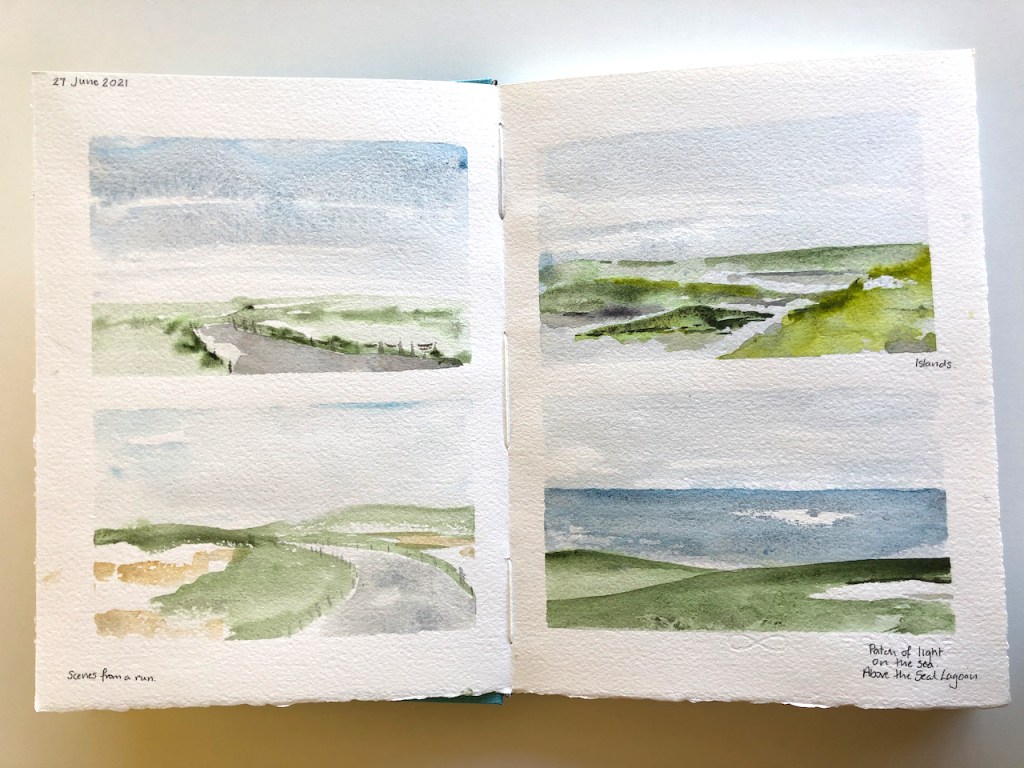
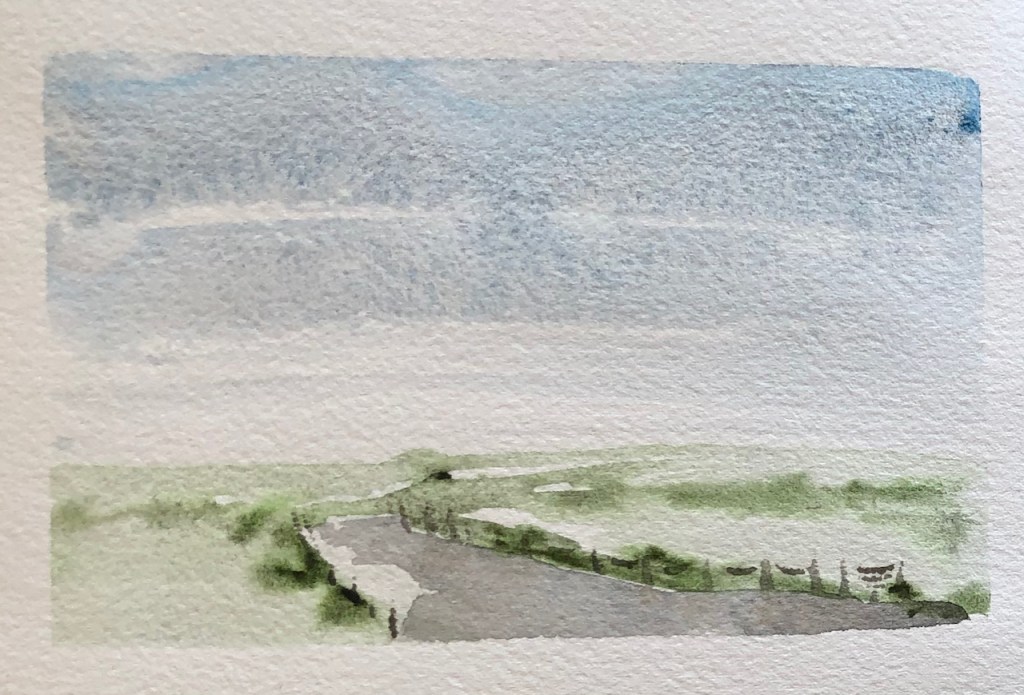
I enjoyed using a new colour: Lunar Blue from Daniel Smith. This is a highly granulating blue. You can see its effect here in the sky:
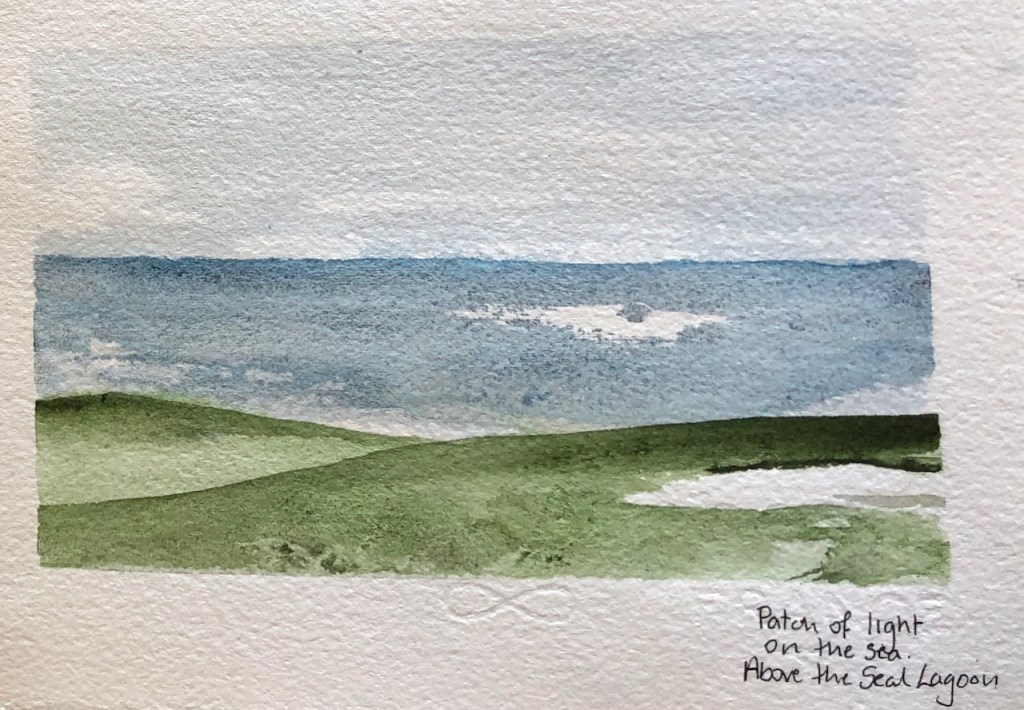
And here is Lunar Blue the sea:
Patch of light on the sea
A feature of the landscape round Littleure is the inland lakes, high up on the cliffs, as shown here on the right. On the sea, the sun shines through the clouds like a spotlight, which enchants me. In that picture you also see the granulating colour in the land: this is Green Apatite Genuine.
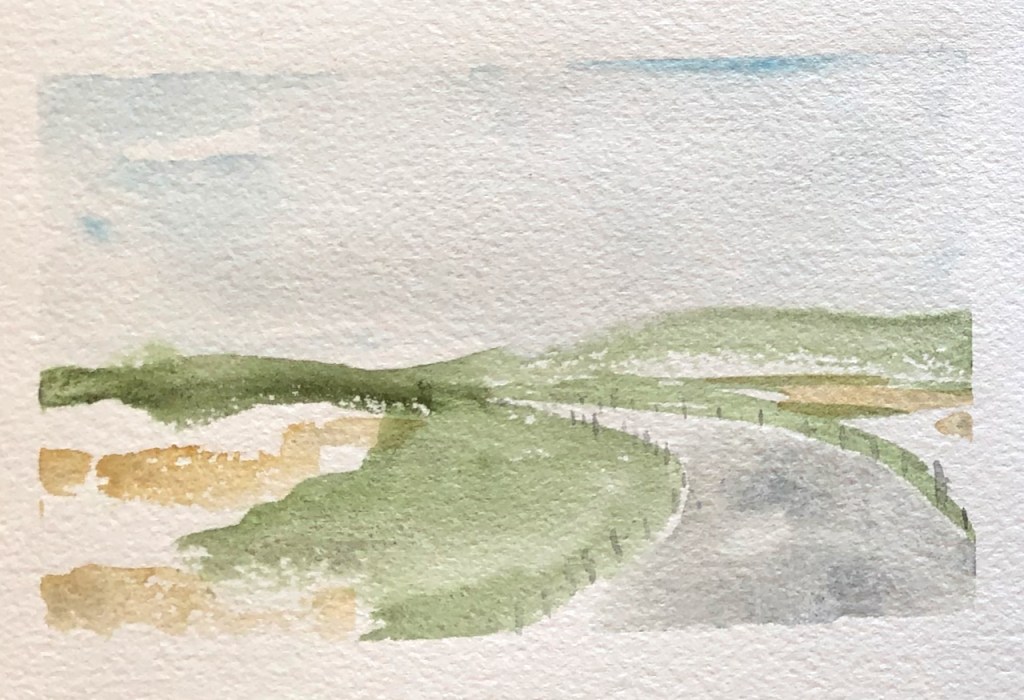
It was a misty day.
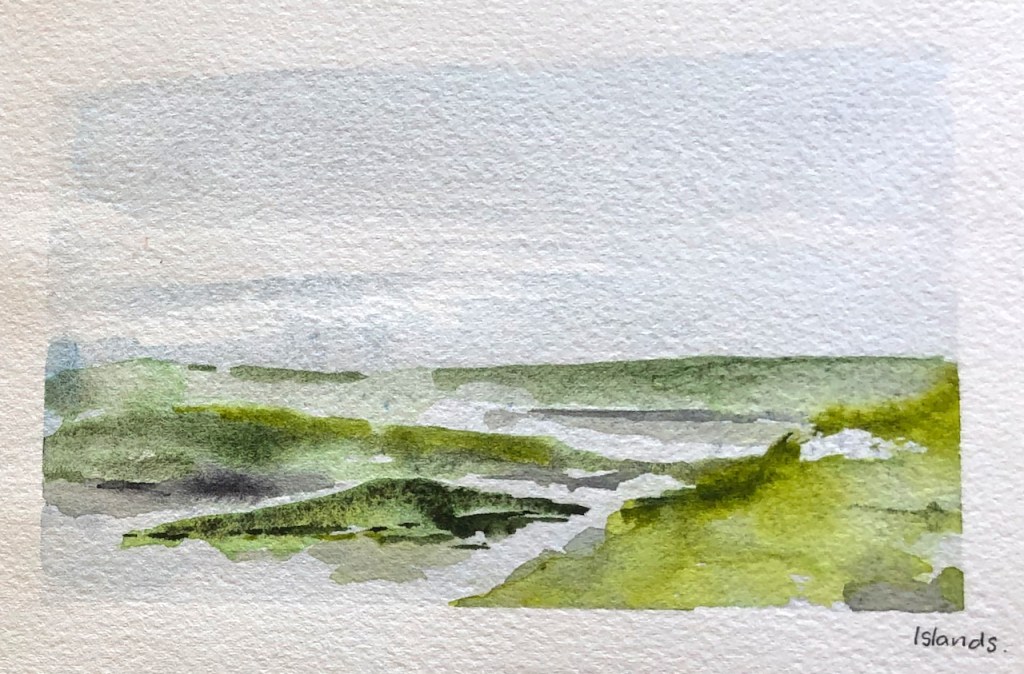
Over the brow of a hill, I see islands. It’s the end of the run. Time for a dip, and breakfast.
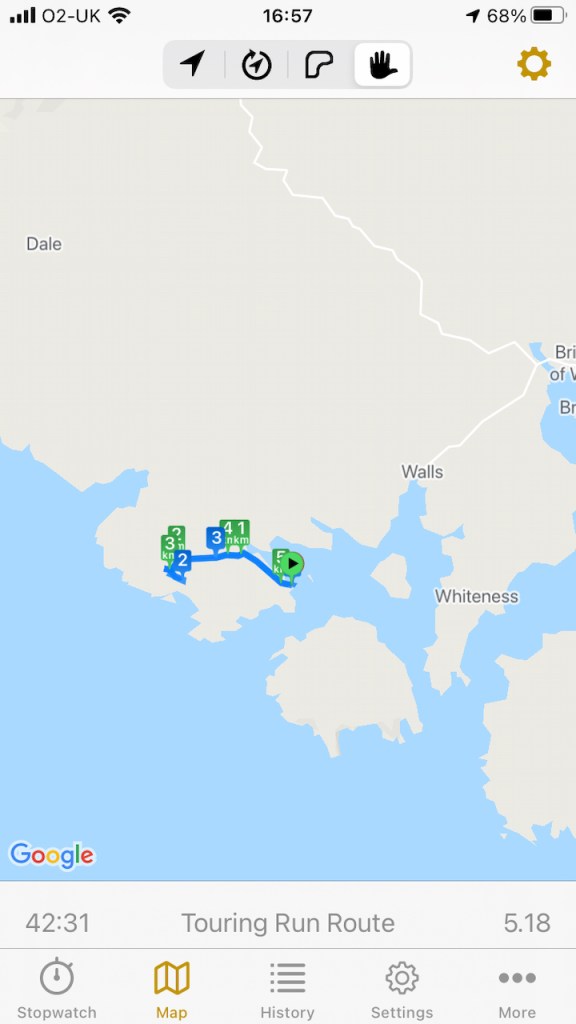
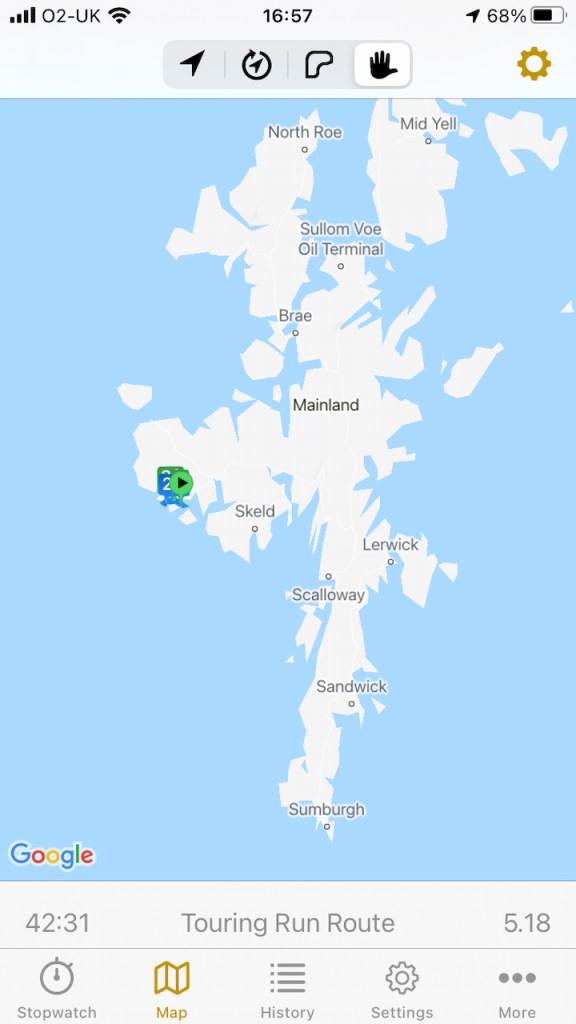
Running Route: maps from “cyclemeter” app
Click a button below to share this post online, email it, or print it:
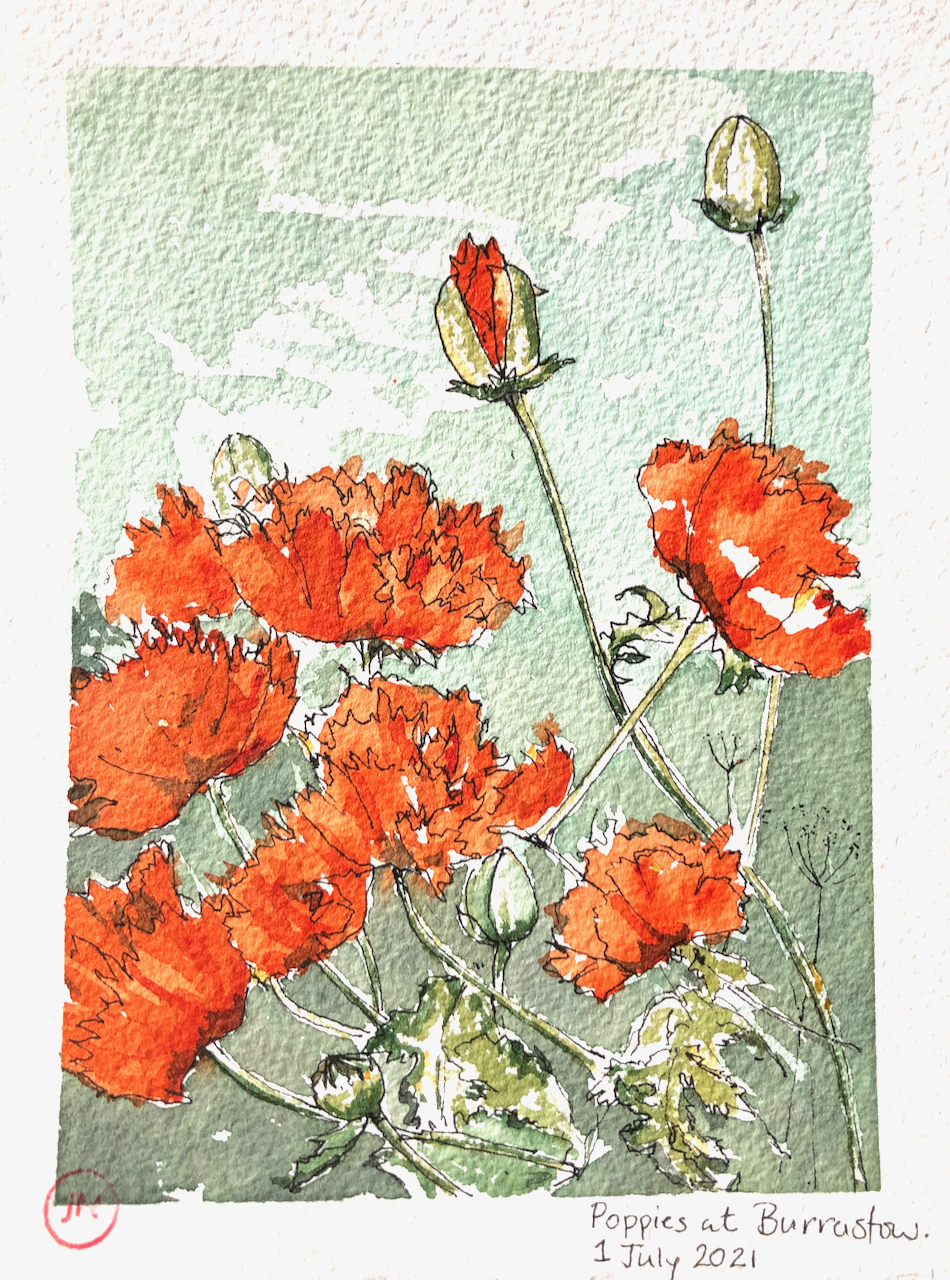
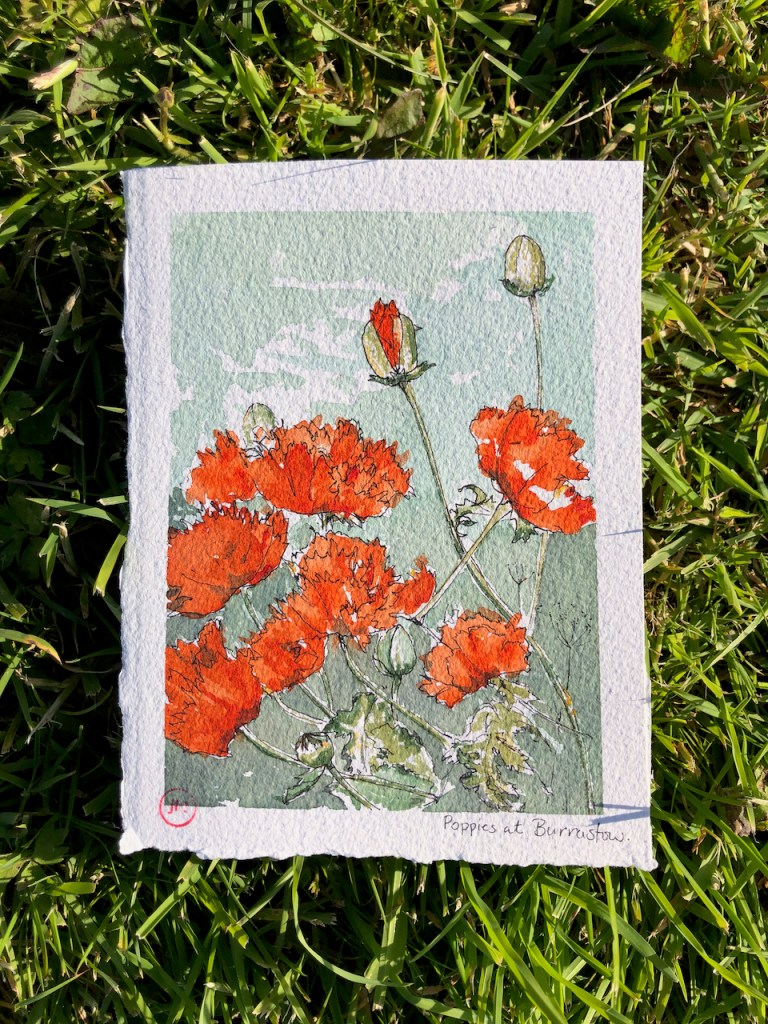
Poppies, Burrastow. 1 July 2021 on watercolour paper
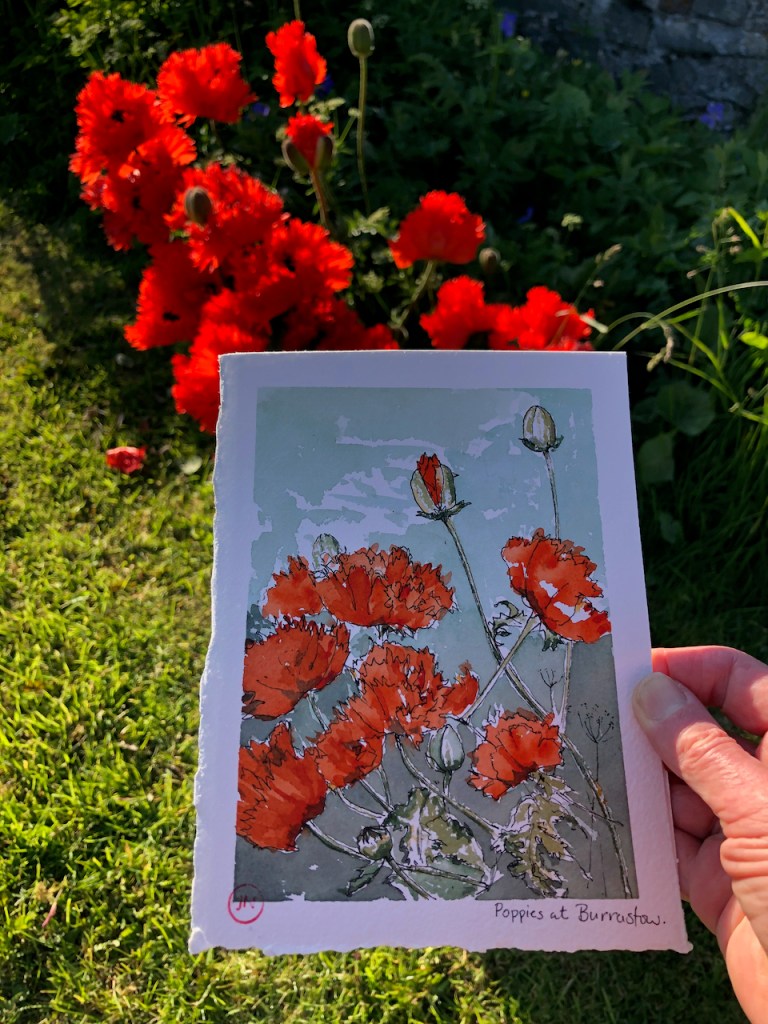
These poppies were so stunning that I had to try to draw them. There and then. They are also ephemeral.
In a few days the petals had dropped making splashes of scarlet on the grass.
I drew this on special paper: handmade watercolour paper from the Vintage Paper Company. It is very heavily sized and takes the colour well. It’s also stiff, and easy to use out-doors.
The red is Transparent Pyrrol Orange waercolour from Daniel Smith.
Click a button below to share this post online, email it, or print it:
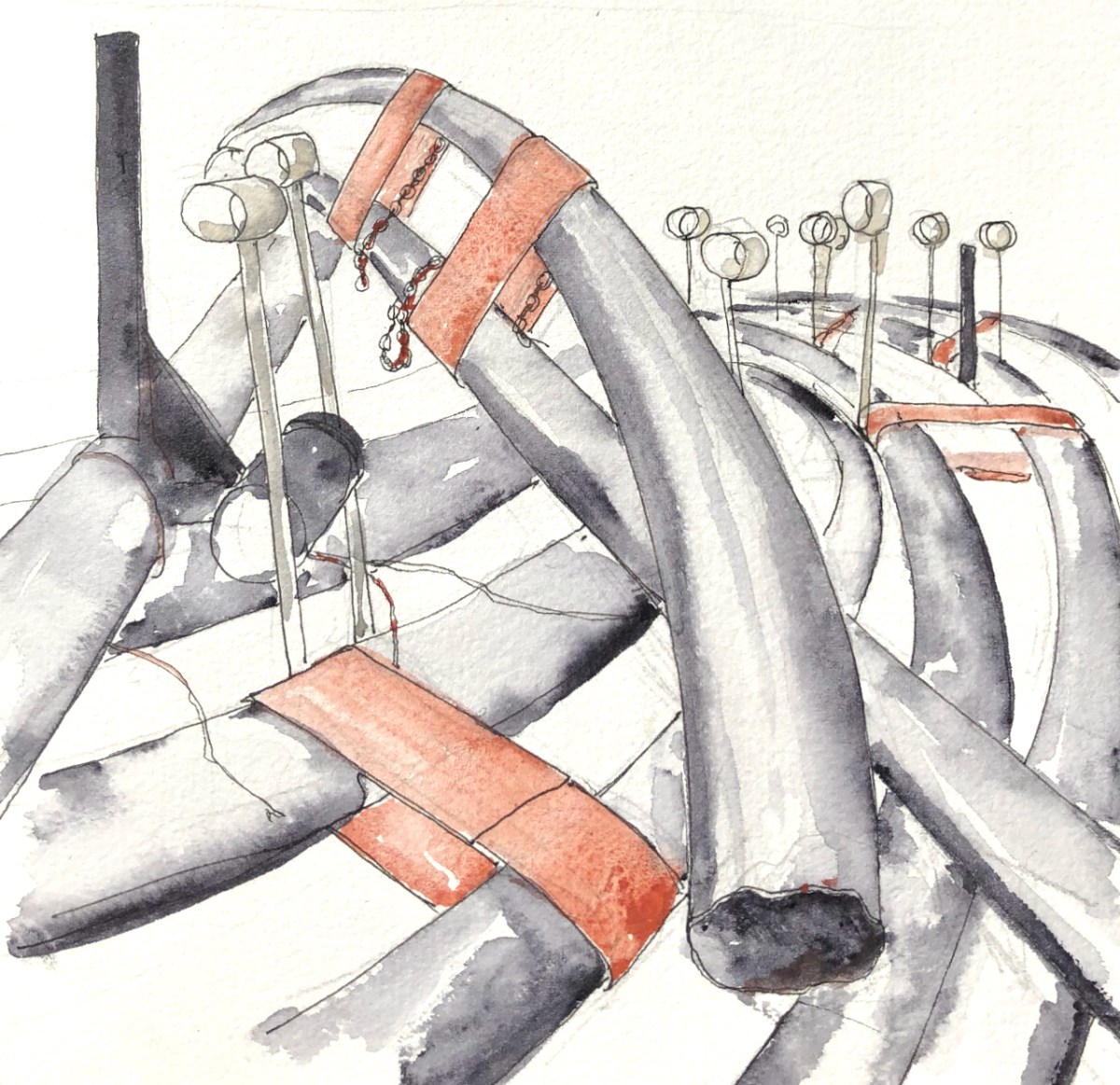
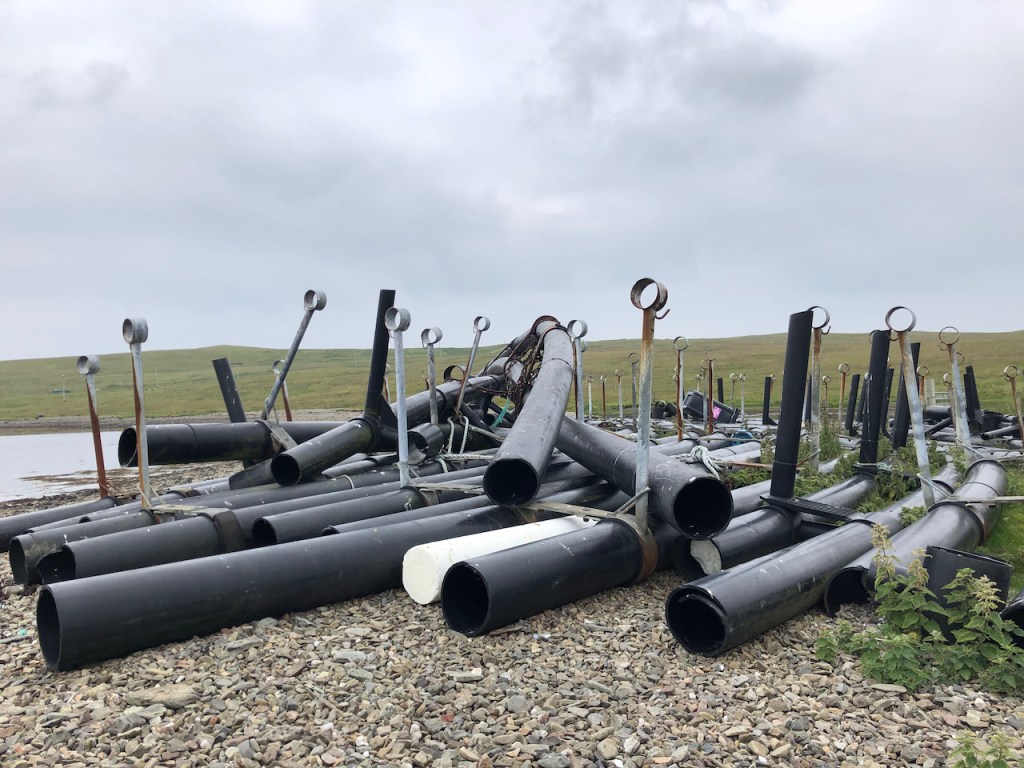
These black tubes seem to be indestructible. People find all sorts of uses for them: fence posts, cattle grids, boat slipways. I imagine they would make rather fine musical instruments. I have never heard of anyone using them for this.
But their primary use is to create the salmon cages that float out on the shallow seas in the area.
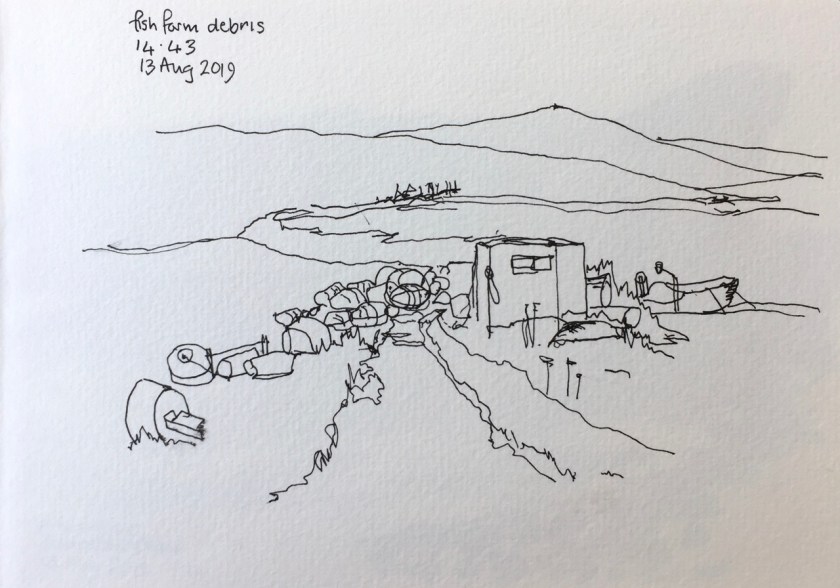
I saw these tubes on a walk from the Historic Site. I’ve drawn in this location before. In this sketch, you see the black tubes as the small scratchy lines in the centre distance.
Fish farm debris, 13th August 2019
Click a button below to share this post online, email it, or print it:
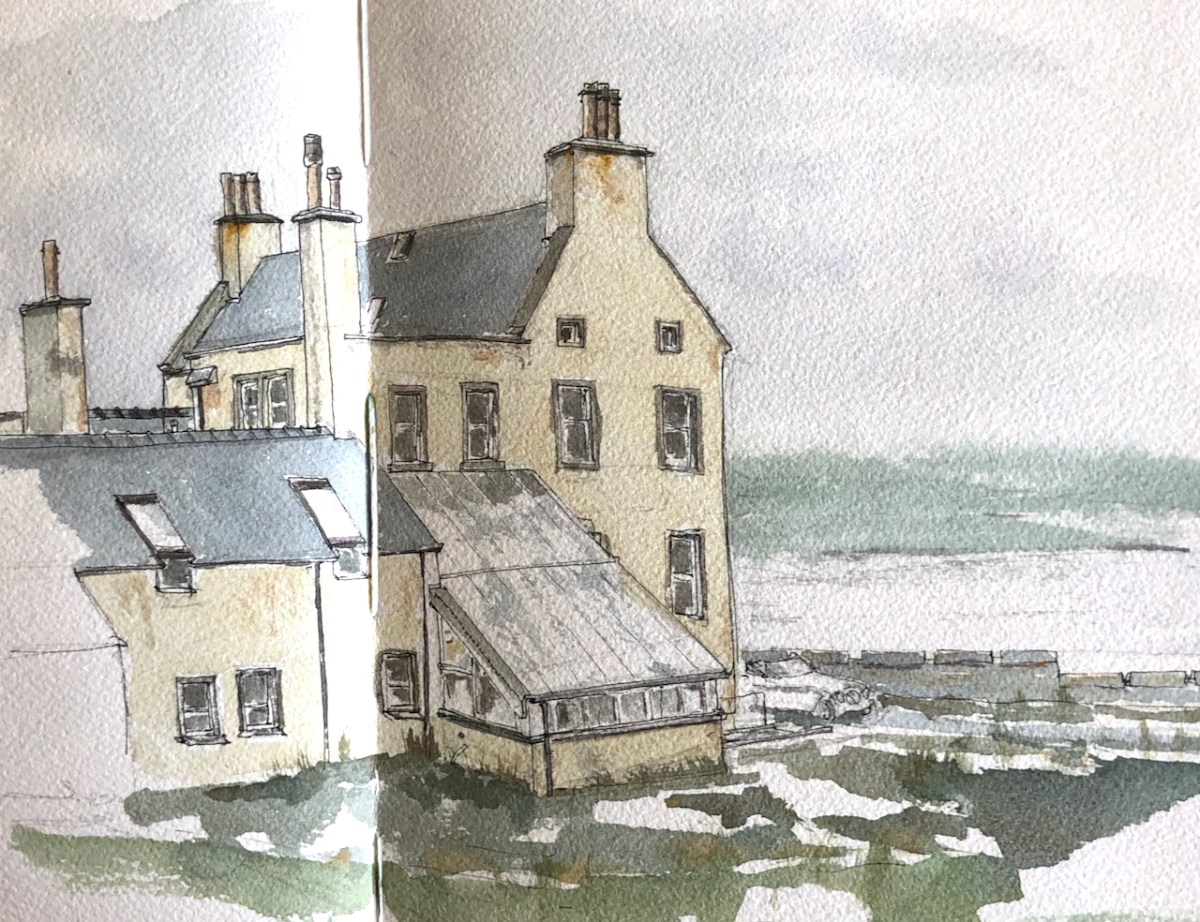
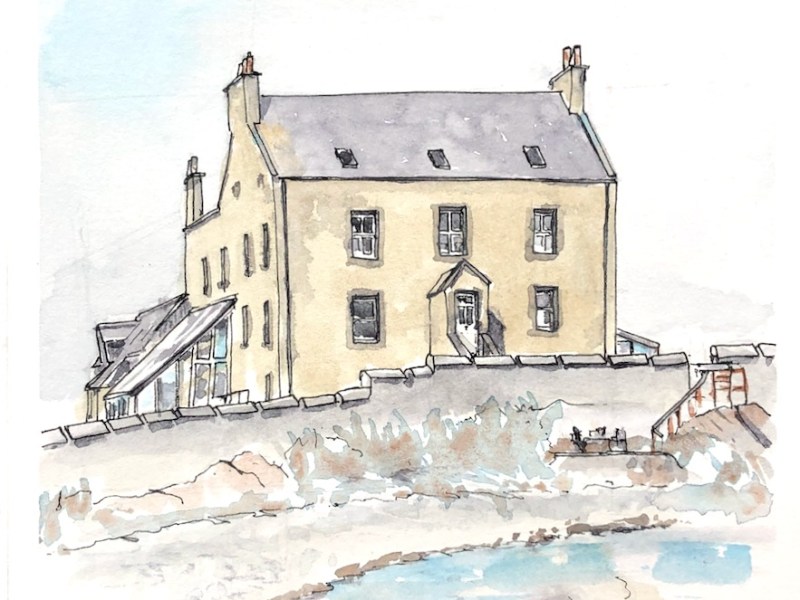
Here is Burrastow House near Walls on the West side of Shetland. It was built in 1759.
Burrastow House, from the garden. 20 July 2021. 10″ x 8 “
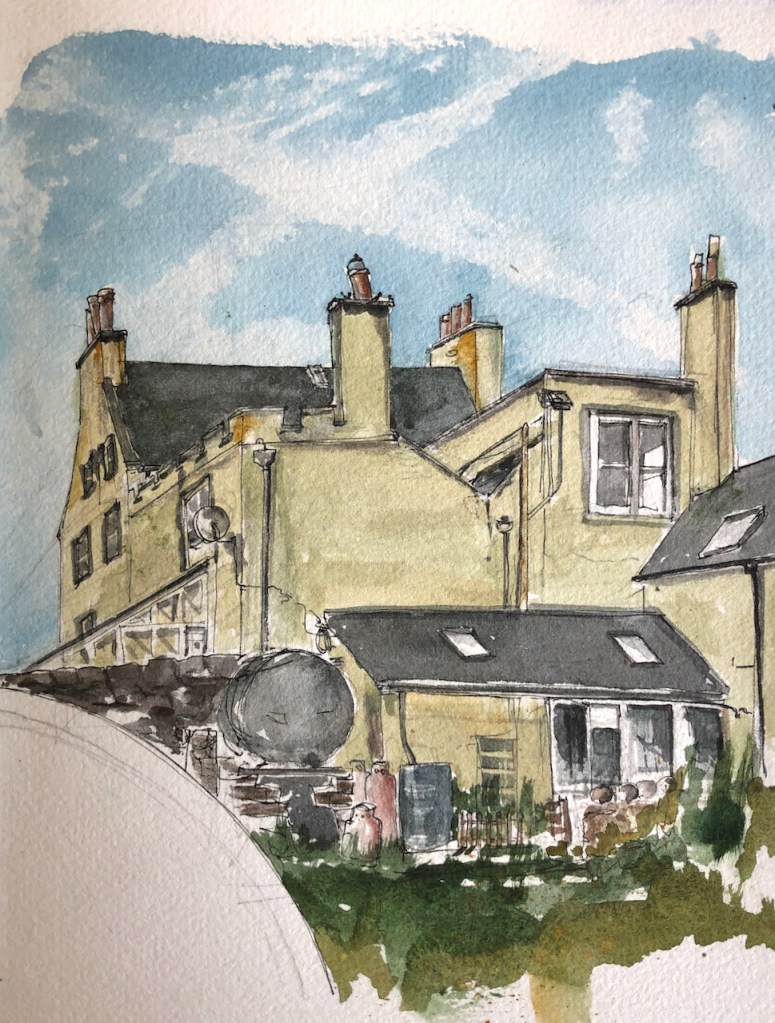
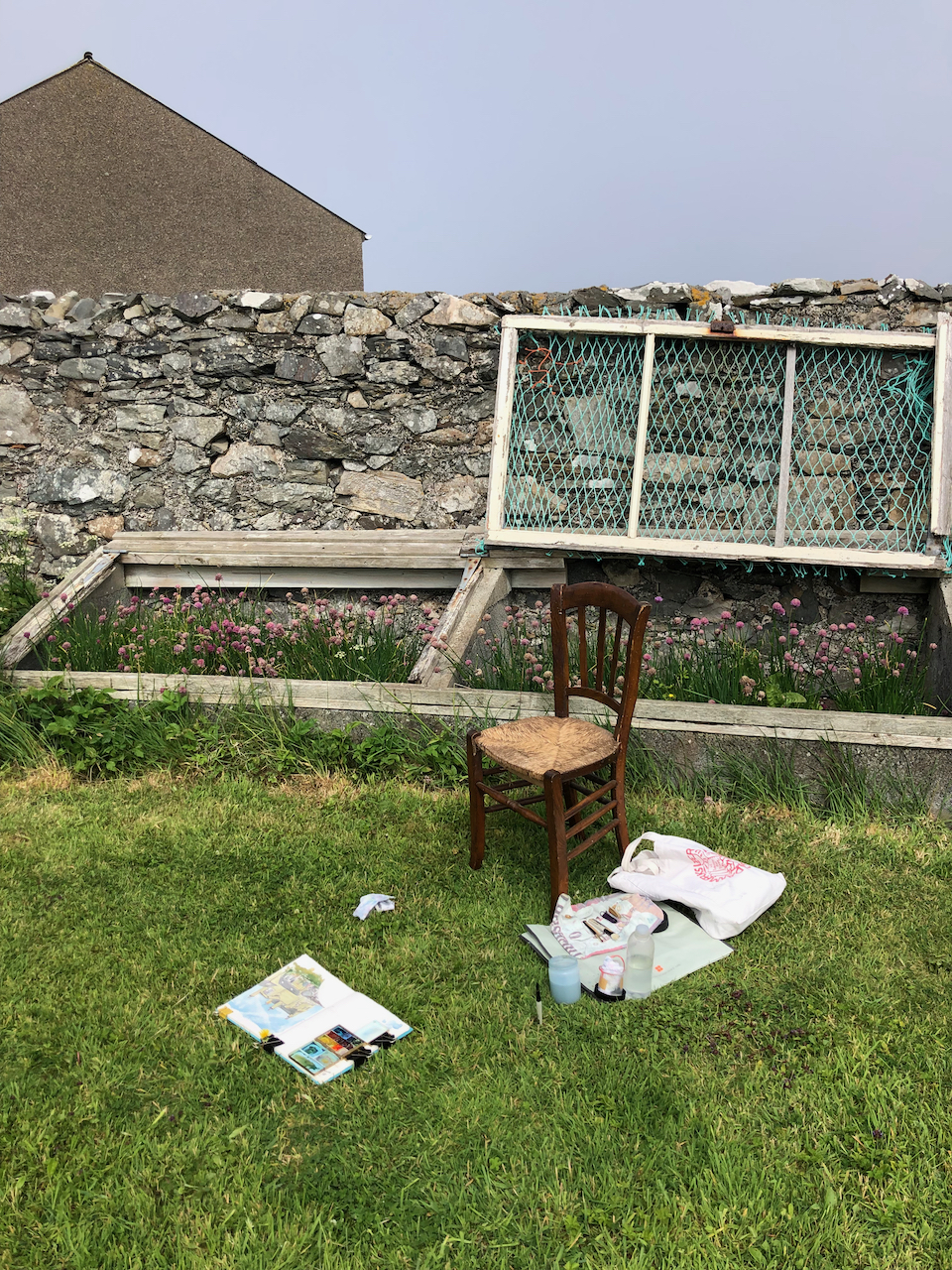
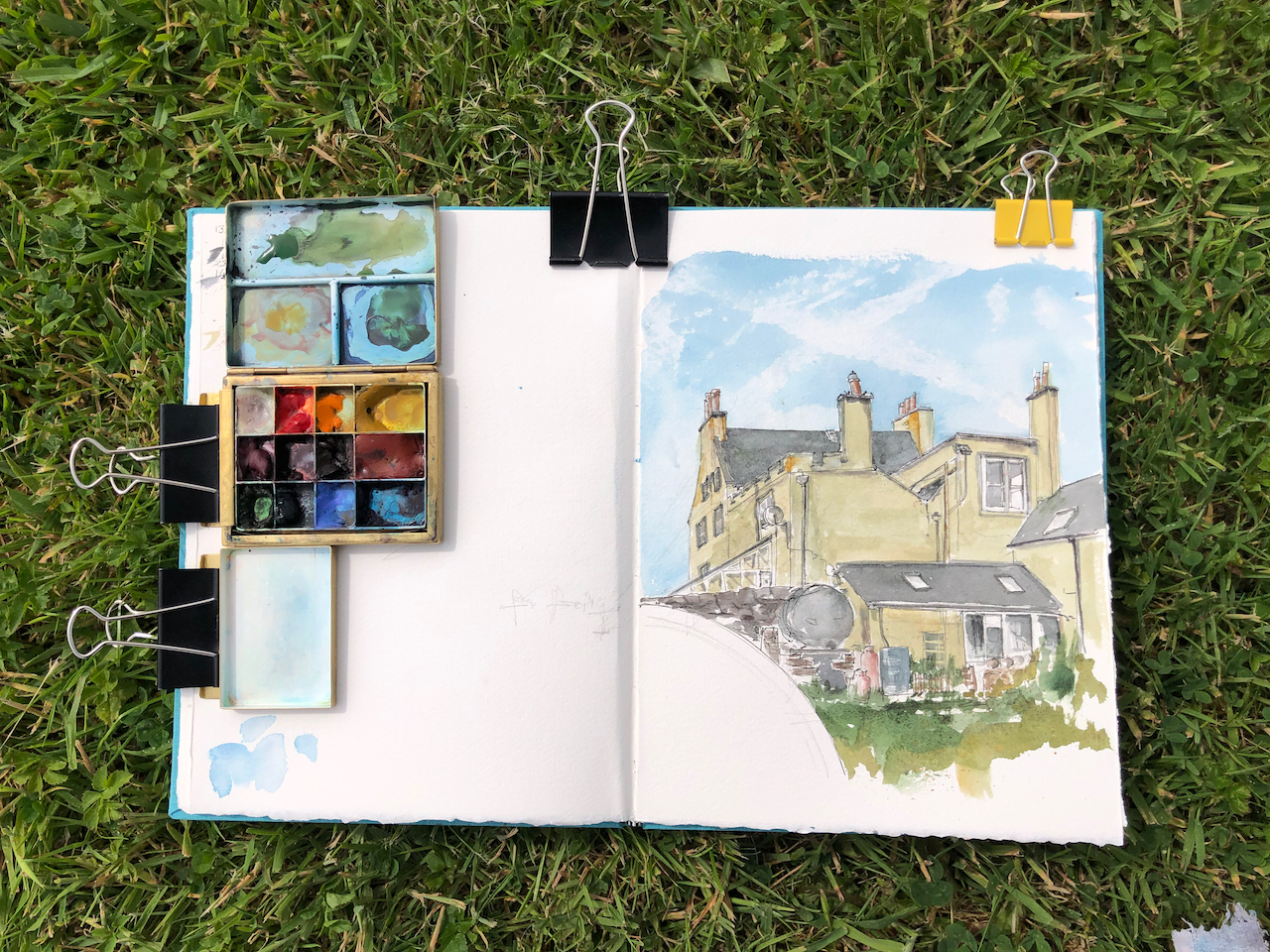
One of the delights of the house is that it has been adapted over the years. Here is a view from the vegetable garden. You see the different roof levels.
Burrastow House from the vegetable garden. 13th July 2021. 10″ x 8″
The white curved area on the left is a segment of the polytunnel. The grey circular item is the oil tank. Above that, the small circle is the satellite dish. I like the way you can see right through two windows, in the room on the top right of the picture.
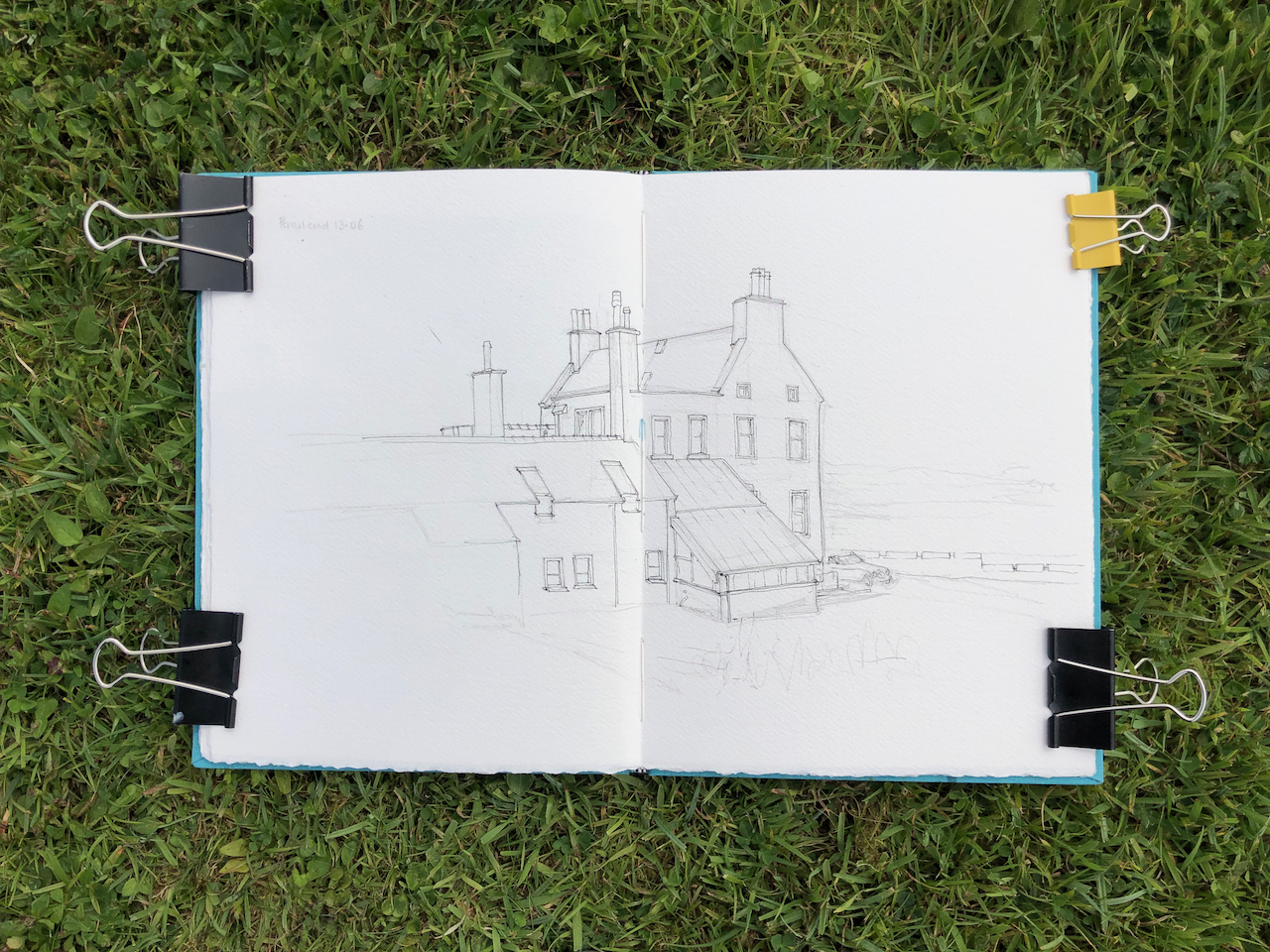
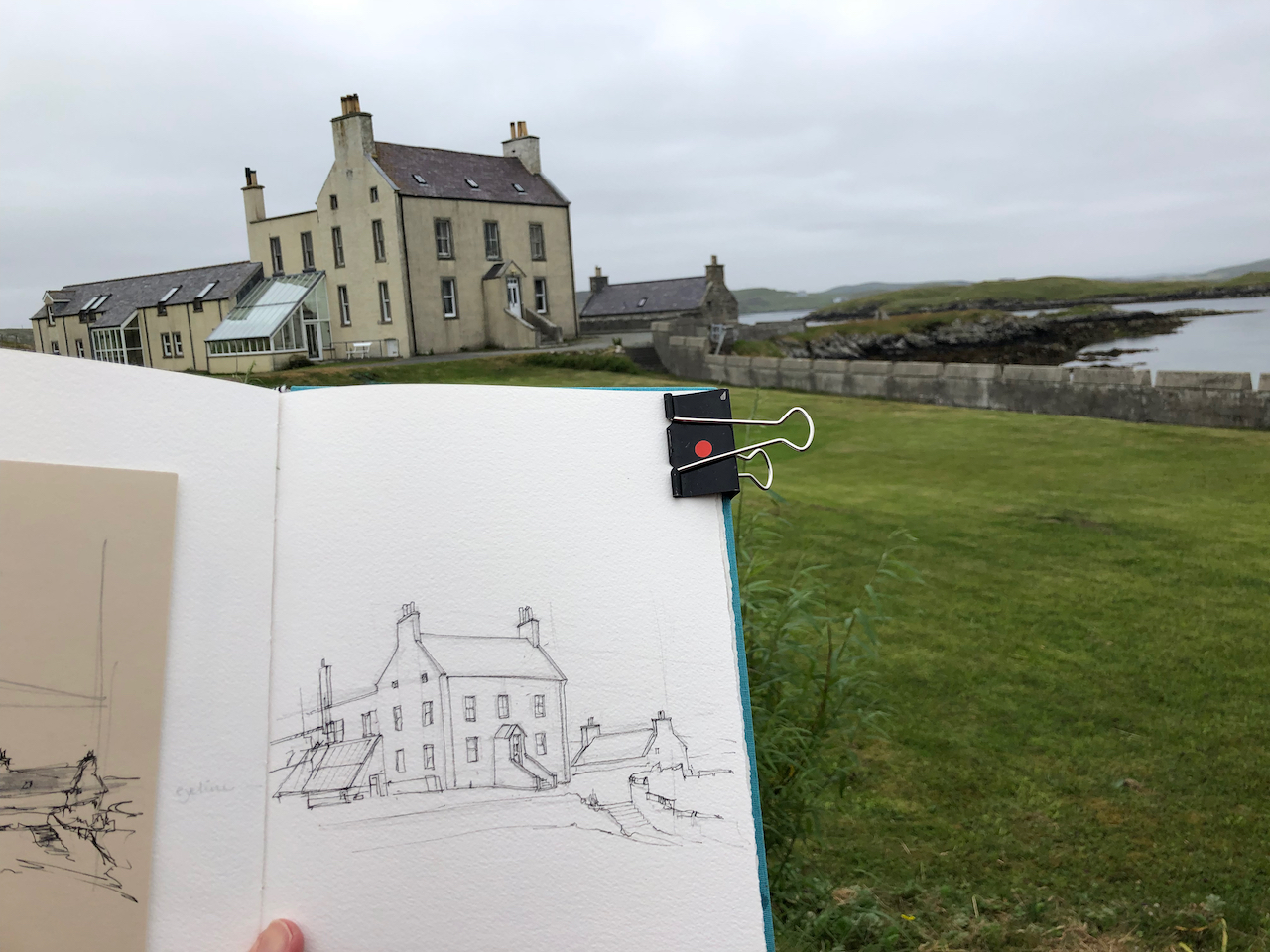
Here is a view from the garden near the driveway.
Burrastow House, from the garden near the entrance. July 14th 2021
While I was drawing this, a Jaguar E-type throbbed up the drive. I put it in the picture. This was a misty day. I had to pause the work on the picture as the mist turned to rain, and then I resumed as the rain turned to mist again.
You see the front conservatory in the centre and the extension to the left. The extension dates from 1995, according to a small notice in the conservatory.
“On the remote west side of Shetland you can find spectacular scenery, peace and the ideal refuge for the escapist. The guest house welcomes you with peat fires, a cosy library and all the marvellous food you could want after…
Click a button below to share this post online, email it, or print it:
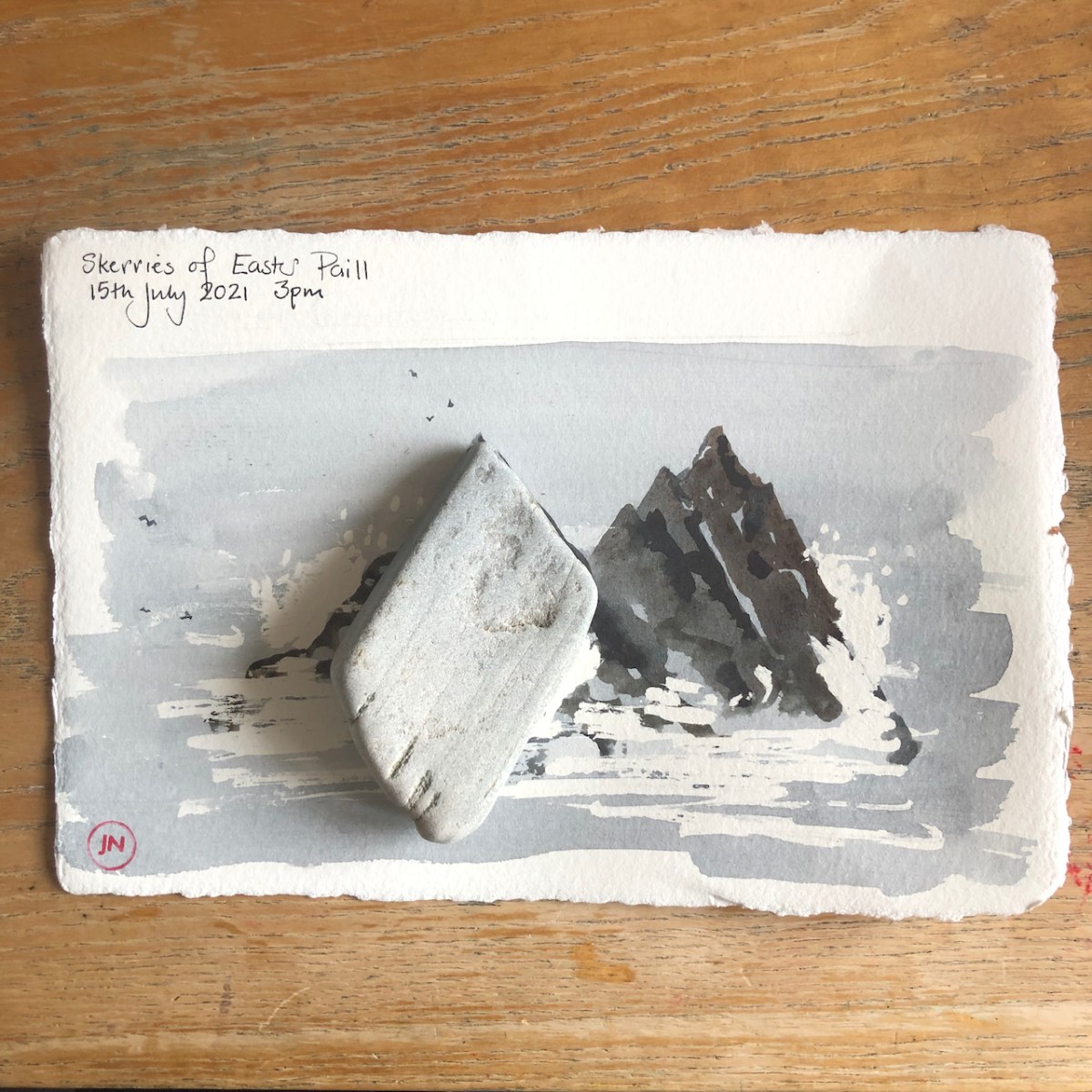
The rocks on the Shetland west side cleave at a very specific angle.
Skerries of Easter Paill, 15th July 2021 on Amatruda paper.
I picked up a pebble on the beach. Many of the pebbles show this pointed regular shape. It gave me great pleasure to find that the angle matched my drawing. It is approximately 70 degrees.
The rocks are at an angle of 70 degrees
The angle is visible even in the large cliffs.
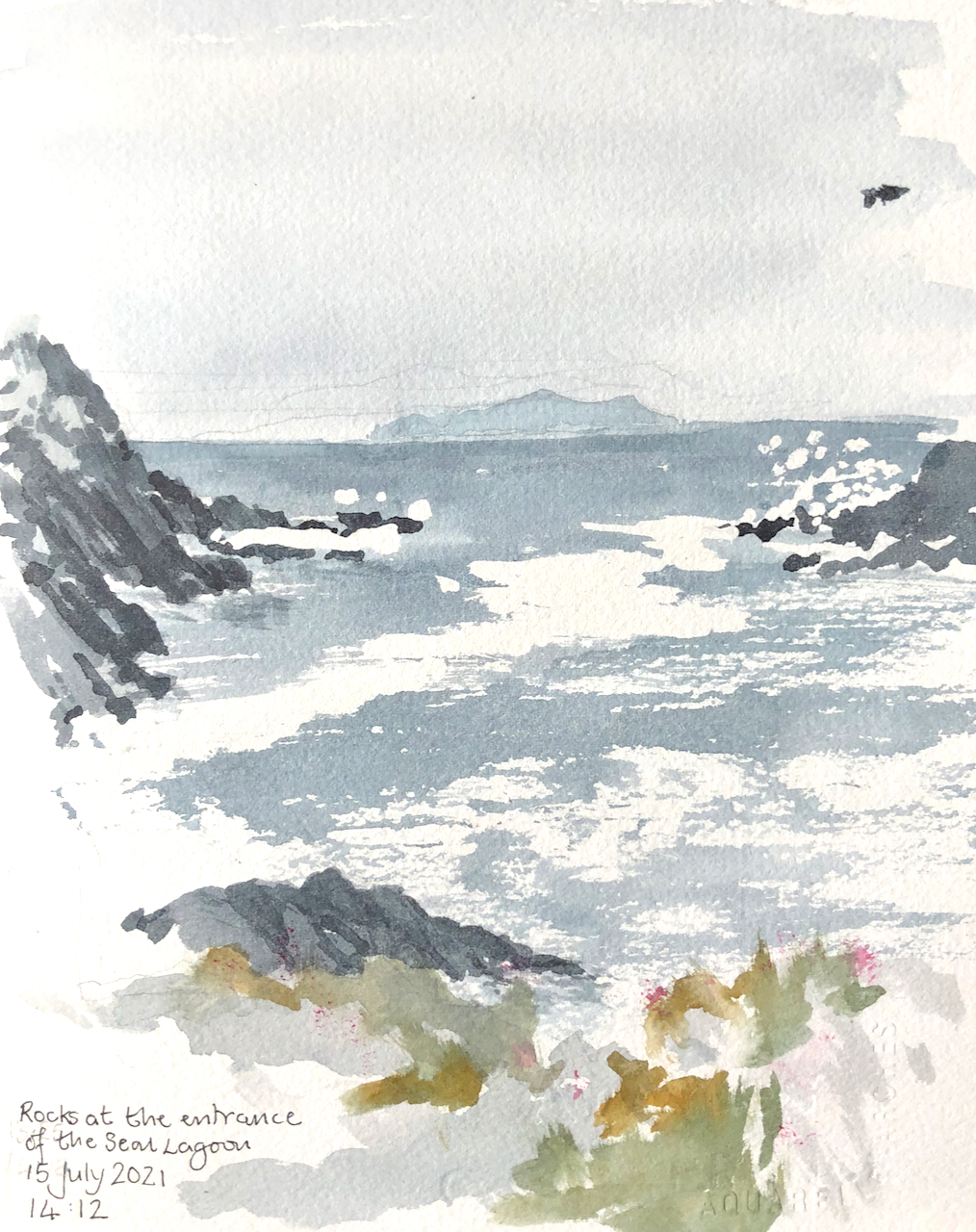
Rocks at the entrance to the Seal Lagoon, 15th July 2021
Here is this sketch in progress:
Sketching at the entrance to the Seal Lagoon, on Arches Aquarelle 300gsm CP, in PrintUrchin Sketchbook 1
The strange object in the top right of the drawing is not a drone, a cormorant, a flying fish or a small airship. It is a mistake. When I closed the sketchbook to continue my walk, some wet paint transferred itself from the left hand page to the right.
Click a button below to share this post online, email it, or print it:
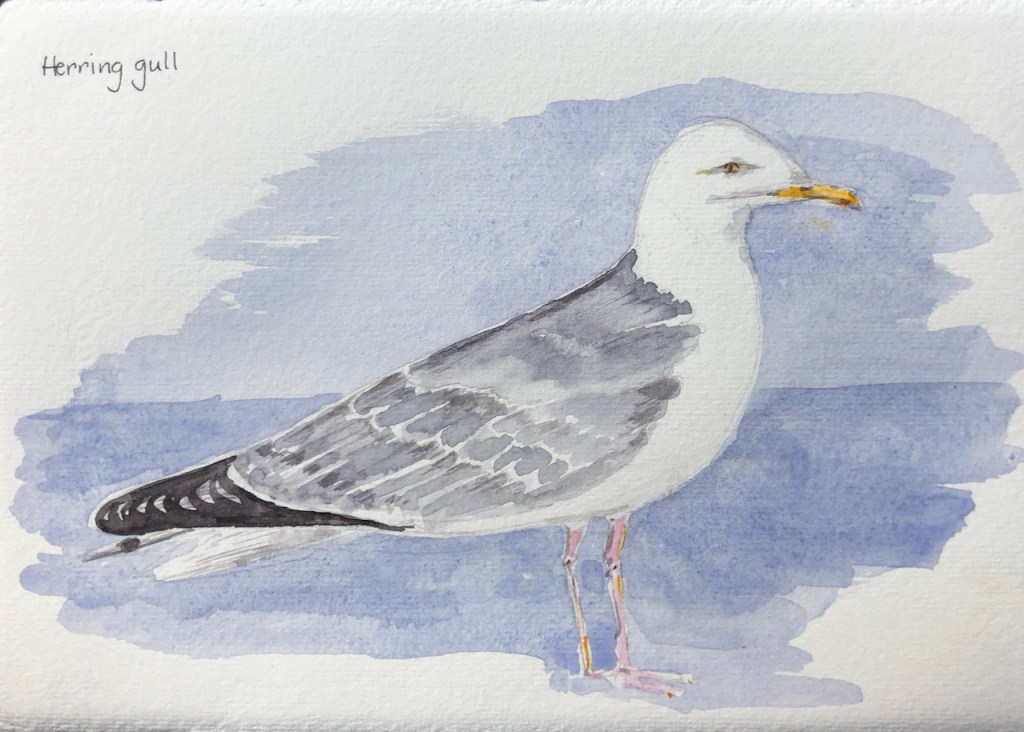
Here is a herring gull. These are numerous and float on the sea as well as fly in the air. They also stand on cars and on chimneys. This one stands on a wall, waiting for someone to come out of the kitchen, ideally with a slice of bread.
Herring gull
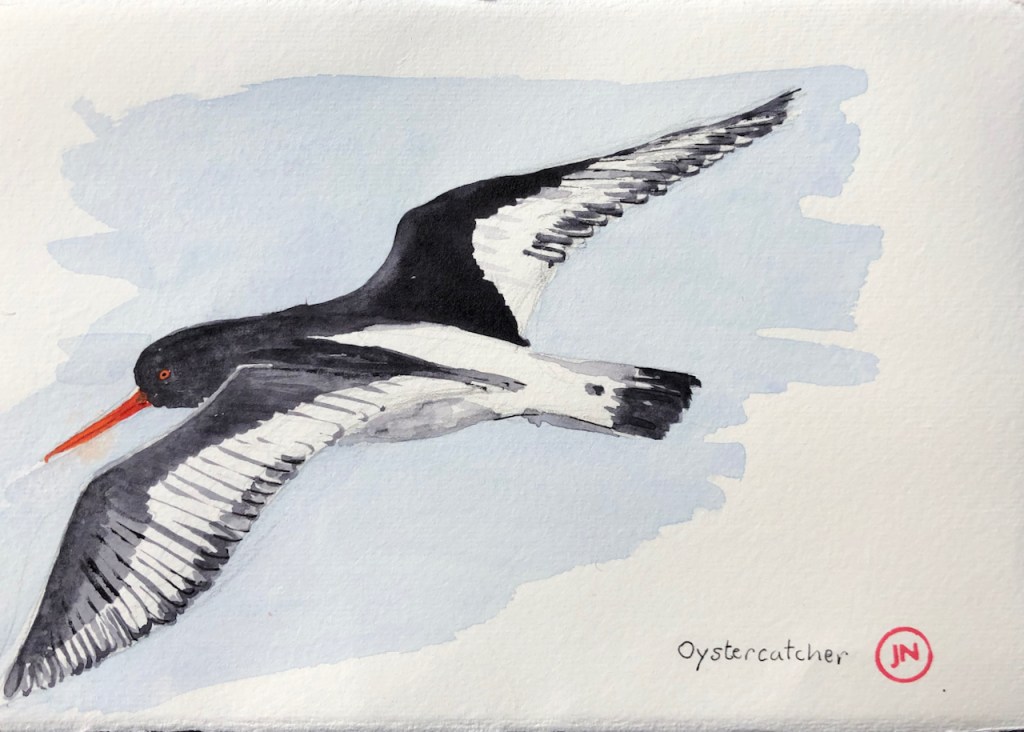
Then there are the oystercatchers. They fly but don’t swim. They poke around in the seaweed, and, amazingly, also use those long beaks on the lawn, to dig up worms.
Oystercatcher
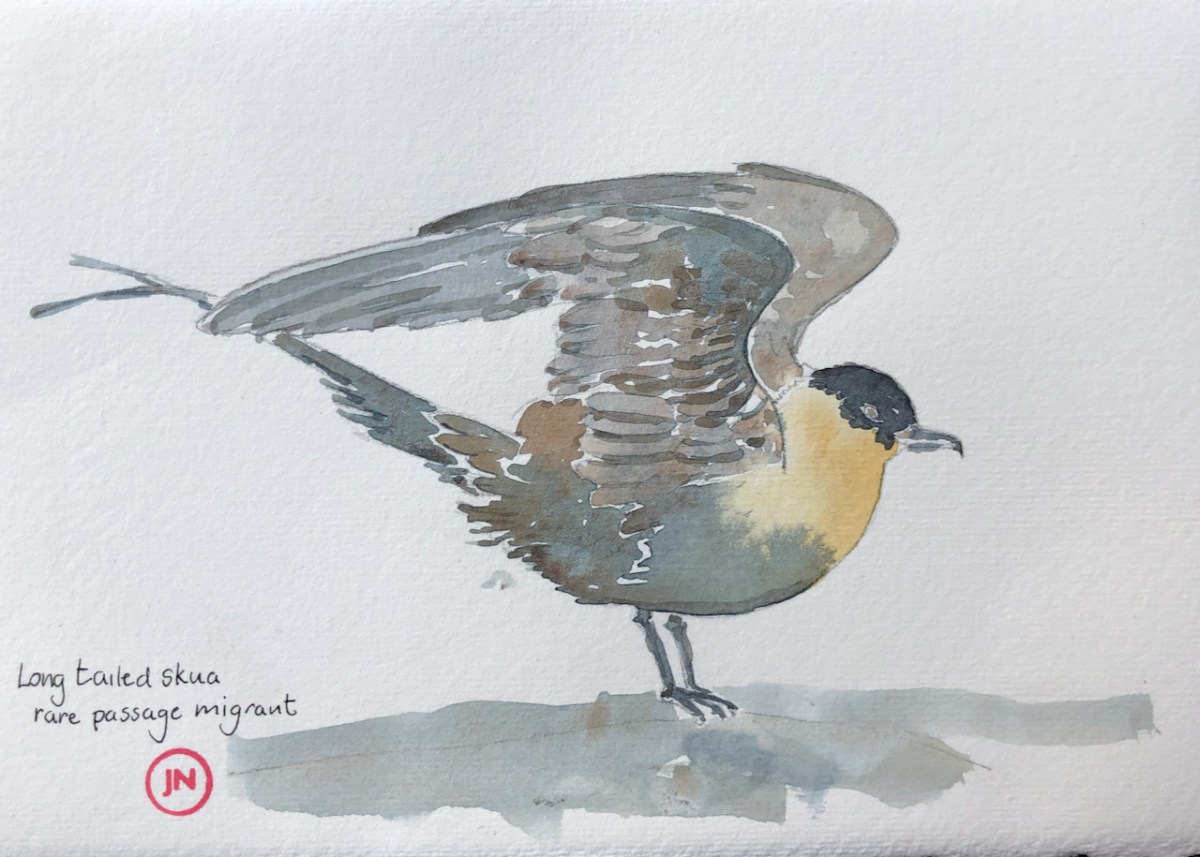
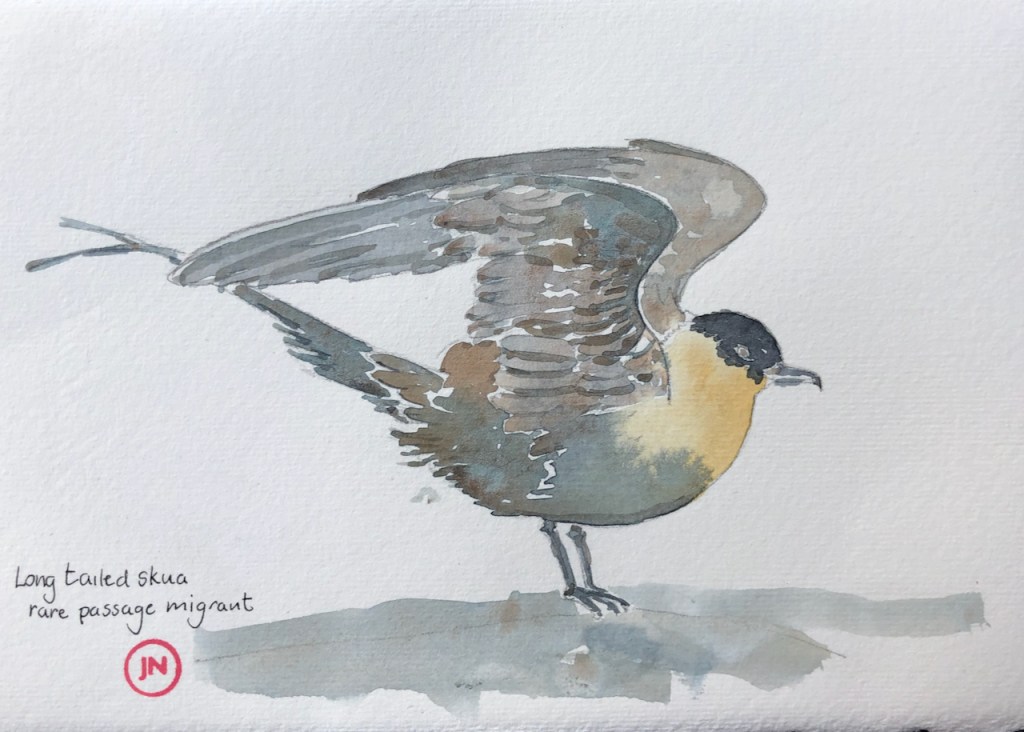
I started drawing the birds when I saw a wonderful picture in The Shetland Times. It showed a “Long tailed Skua”, described as a “rare passage migrant”. Here is my version, inspired by the photo in The Shetland Times by Jim Nicholson.
Long tailed Skua, rare passage migrant
All drawn in watercolour on Amatruda paper, size A5, using Daniel Smith watercolours.
Click a button below to share this post online, email it, or print it:
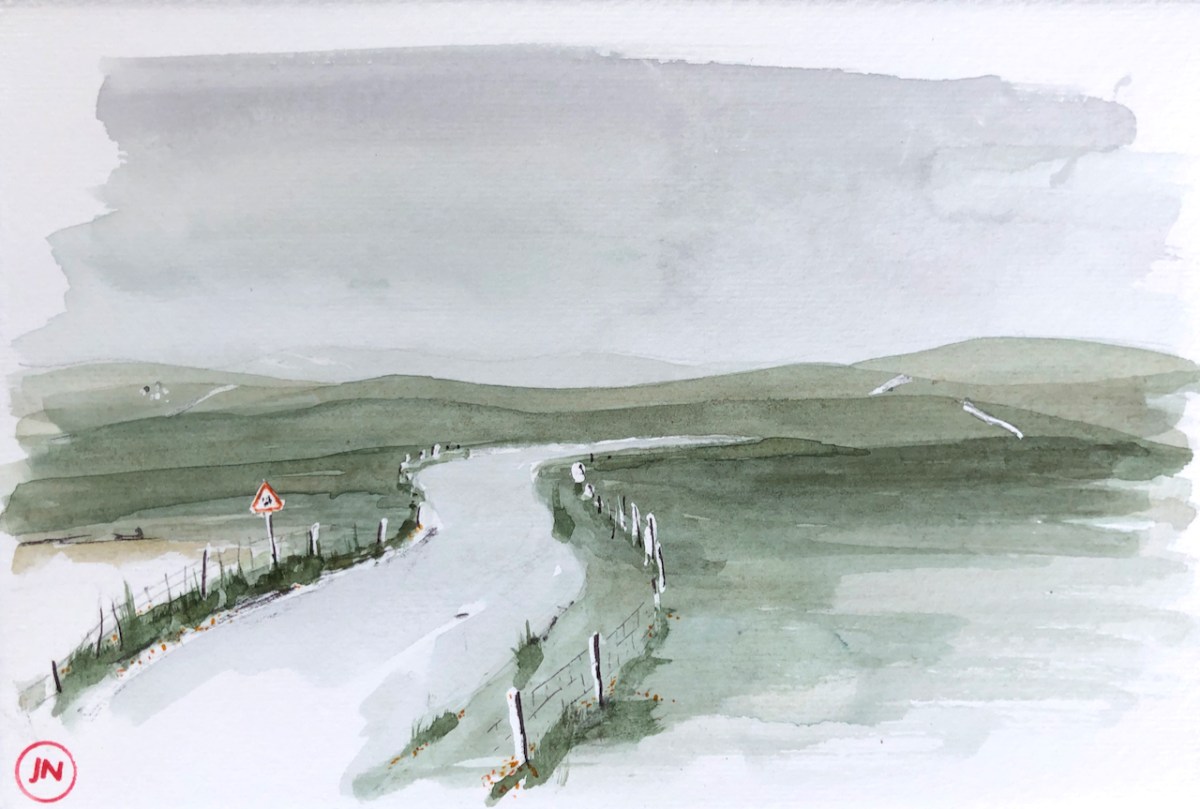
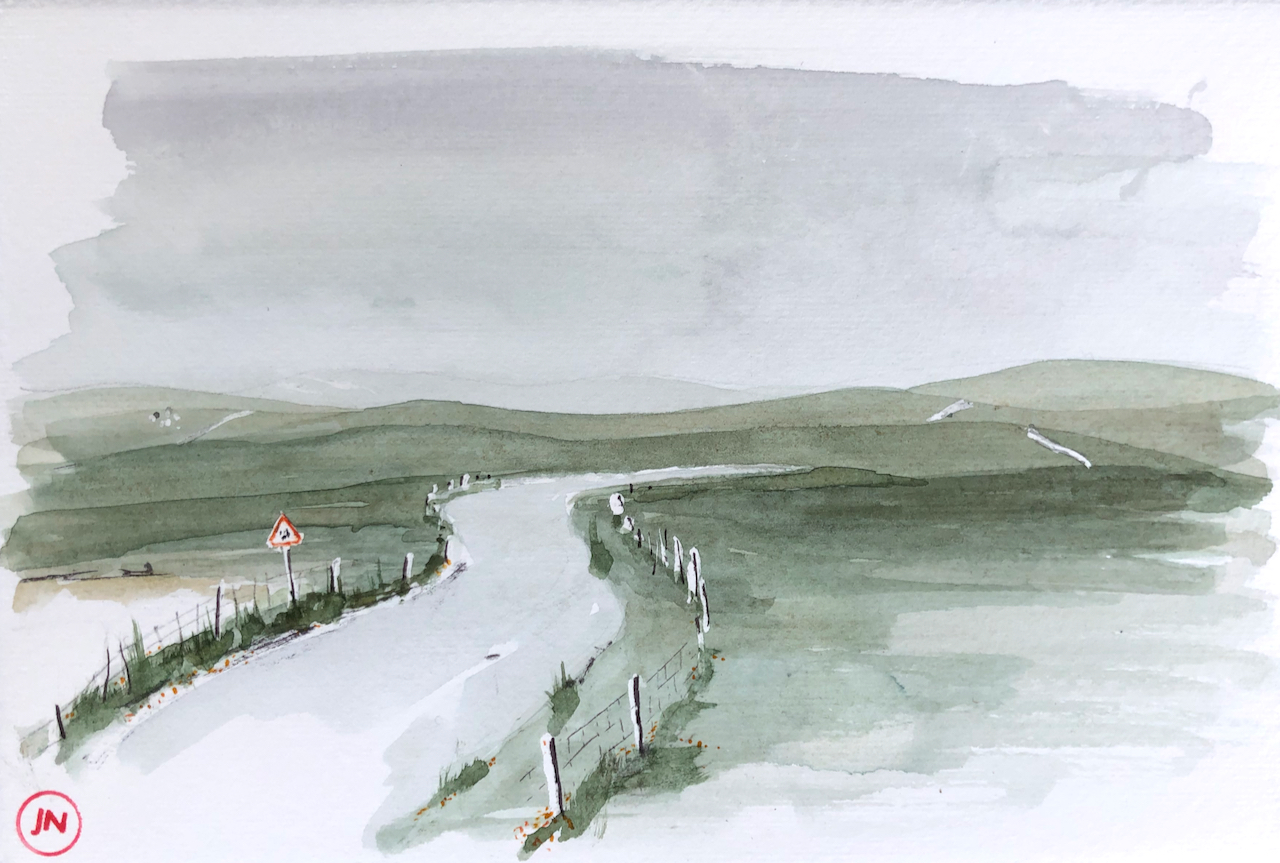
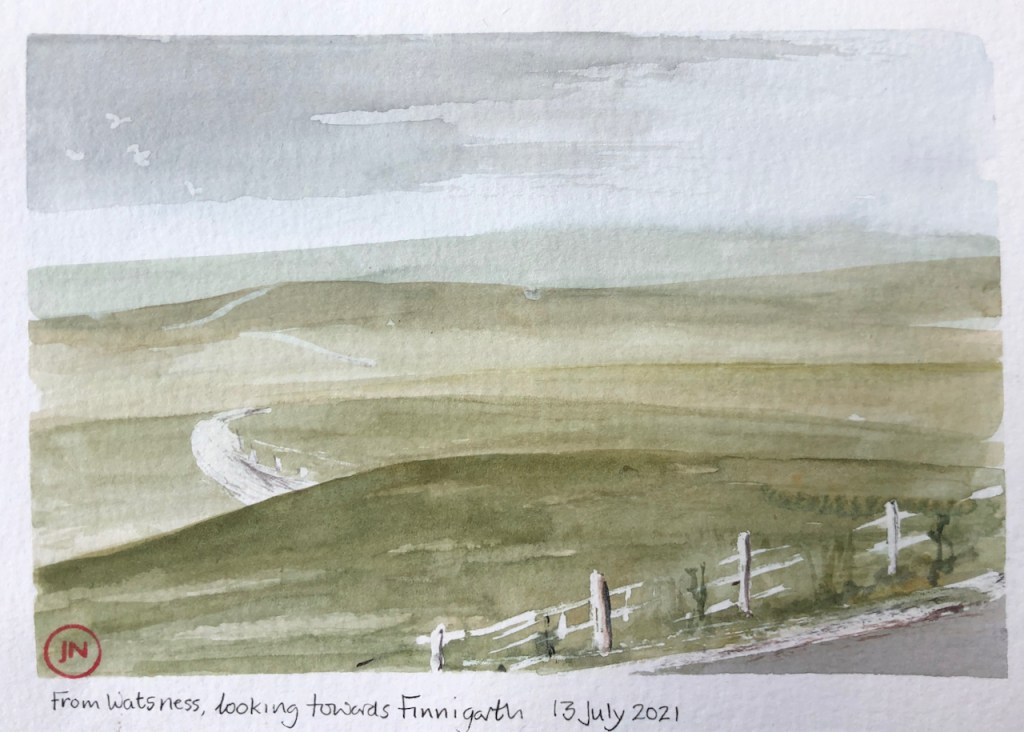
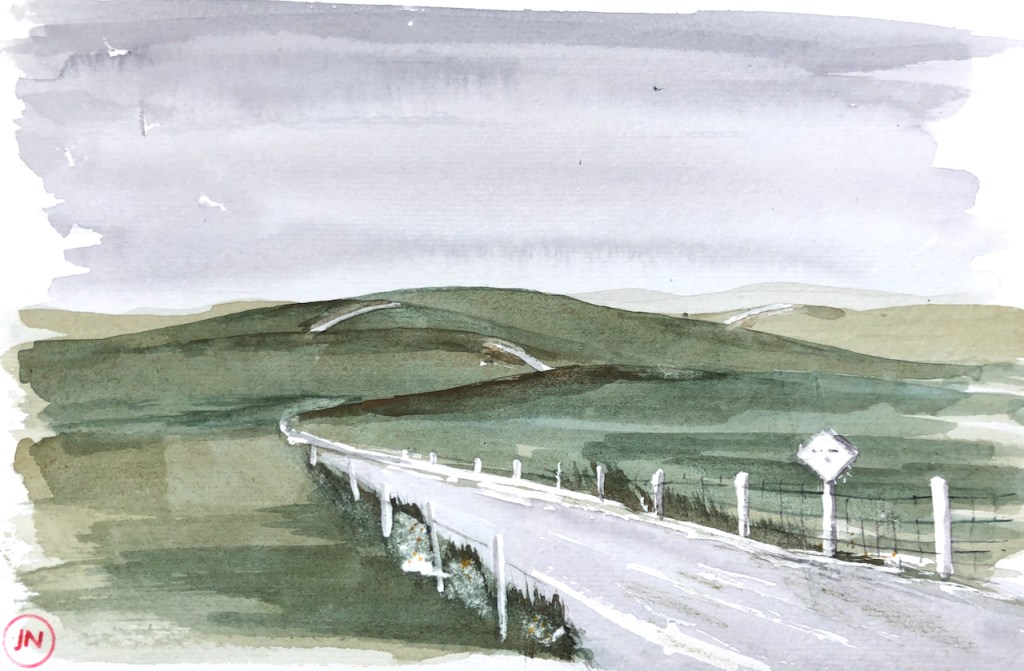
Shetland roads sweep across the landscape. I enjoy the calligraphic sweep of their curves and the simplicity of the lines they make.
“Cattle Grid” July 2021
“Passing place”
Shetland Roads, July 2021
These pictures are sketched on A5 sheets of F Amatruda Amalfi paper from The Vintage Paper Company in Orkney. These are lovely soft sheets with 4 deckle edge. They take the watercolour well.
Amatruda paper, 4 deckle edges
Watercolours are Daniel Smith. Some of the white lines are achieved using a rubber resist, called “frisket”, panted on before the watercolour, and rubbed off afterwards.
Click a button below to share this post online, email it, or print it:
Aboard a quite different vessel, the Northlink Ferry, I arrived in Aberdeen the next morning. Aberdeen was in lockdown, and I planned to spend as little time there as possible, just two hours, before my train left for the South. My idea was to sit in the sun outside the ferry terminal, eating my packed breakfast, before a gentle stroll to the railway station. Ha! I arrived in Aberdeen in the middle of a rainstorm. Roads had become rivers. On the periphery of my vision, a drain cover had lifted, and the water rose from it in a translucent pillar. I struggled towards the station through floods and wind.
…the floor was covered in a thin layer of water….
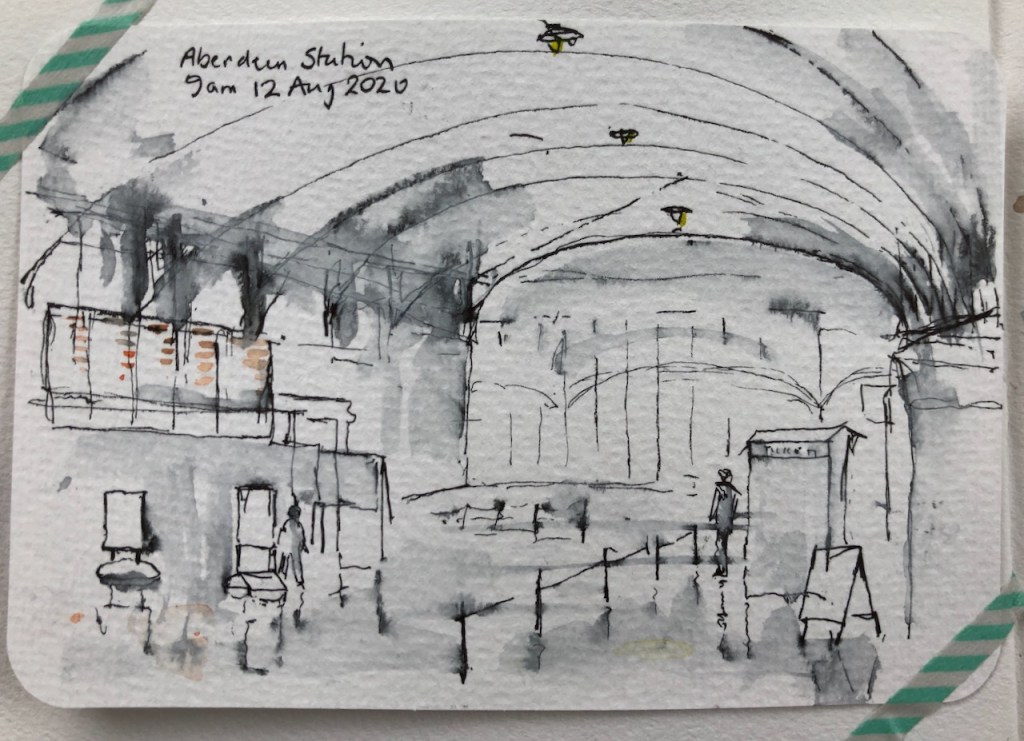
Aberdeen station was a huge glass tent, with the rain battering, and lightning visible, dimly, through the roof covering. It also resembled all the tents I have ever known in that the floor was covered in a thin layer of water. I sat down damply on a damp metal bench. All the trains were cancelled. Fortunately, I had some banana cake. I drew a picture. Then I found a helpful official and a bus.
The bus was going to Edinburgh. I drew a picture on the bus. After having been in Shetland for three weeks, I noticed that there were huge trees, everywhere. The sun came out.
On the bus: wind turbines, fields, barns, and TREES.
Click a button below to share this post online, email it, or print it:
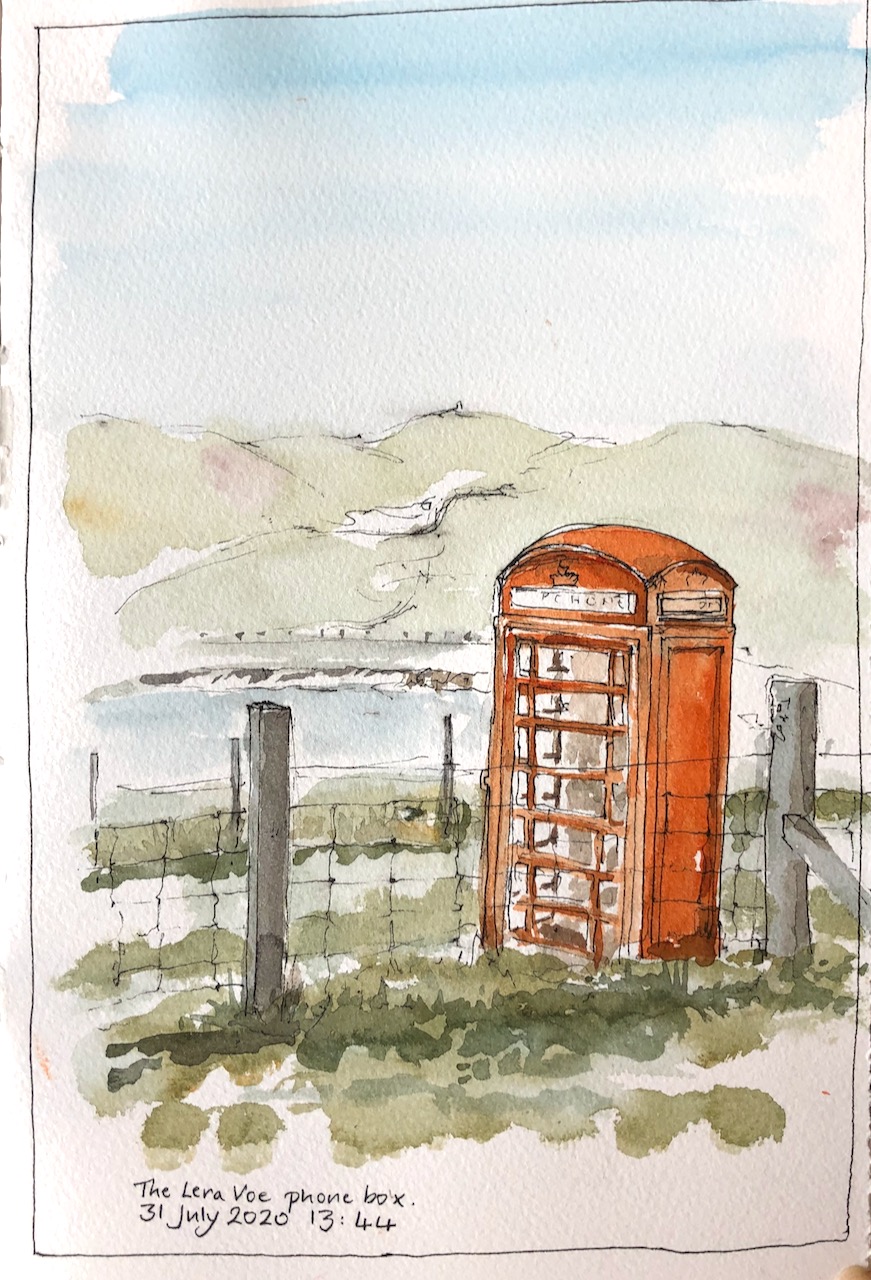
This is the Lera Voe phone box, which is on the road between Burrastow and Walls.
The Lera Voe phone box
The phone box is a landmark. This year it was renovated, and fitted out as a sanctuary and small room. There is no phone in there any more, unless you bring your mobile phone with you.
Henry Anderton did the renovation. His project was partly financed by a reward he obtained for having found a message in a bottle on one of his beach-cleaning outings. You can read about it in this article from the BBC, published in February 2020.
The article says of Mr Anderton: “He has bought the phonebox, near Walls, for £1 and been supplied with the regulation red paint from BT. He said: “We’ve now launched a crowd funding operation to help out the renovations – we’ve got to find a door first.”“
Evidently he found a door, because when I visited in July the phone box was complete, bright red and in great shape. There are shelves and a seat inside.
I wanted to draw the phone box with Lera Voe in the background. This is the view from the field behind the phone box. You can see the voe, and the hills beyond. The road is just behind the phone box in my drawing. “Voe” is a Shetland word meaning “sea inlet”.
Here is work in progress on the drawing.
Here is the article from the BBC mentioned above, as a PDF file.
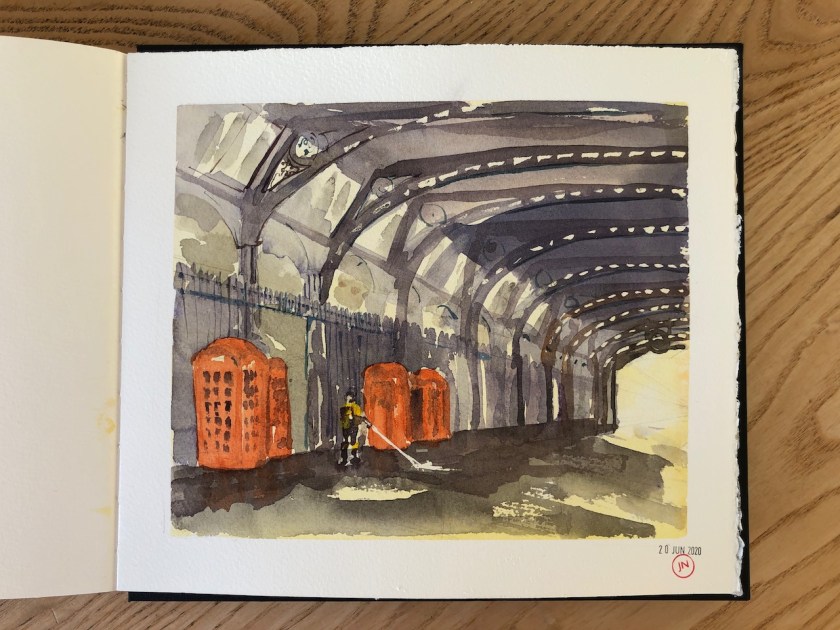
Here is a group of phone boxes in Smithfield, London:
Phone boxes in Smithfield, EC1, London. See this blog post.
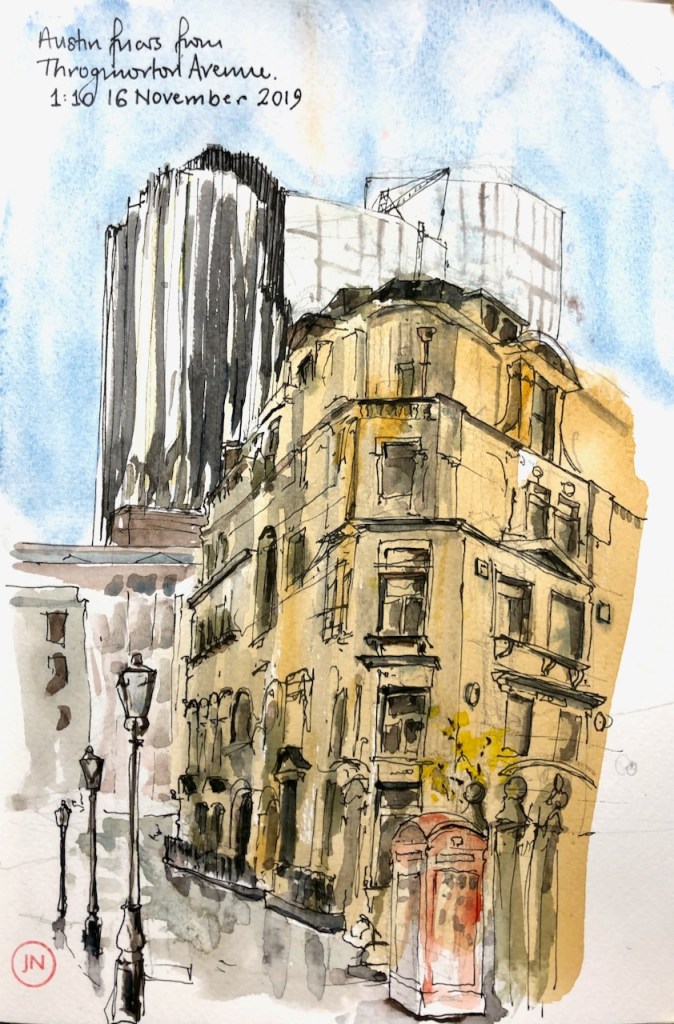
Here is one in Austin Friars, EC2, London: see this blog post.
These phone boxes , which were called Telephone Kiosks, were designed by Giles Gilbert-Scott in the 1920s and 30s. Giles Gilbert-Scott was a prolific architect, who also designed Cambridge University Library, the North Wing of the Guildhall in the City of London, and Bankside Power Station which is now Tate Modern.
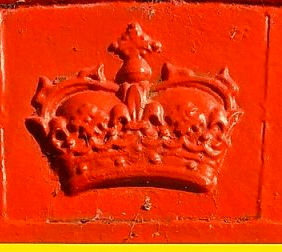
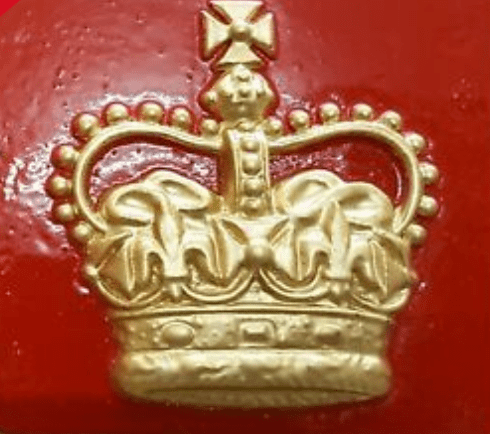
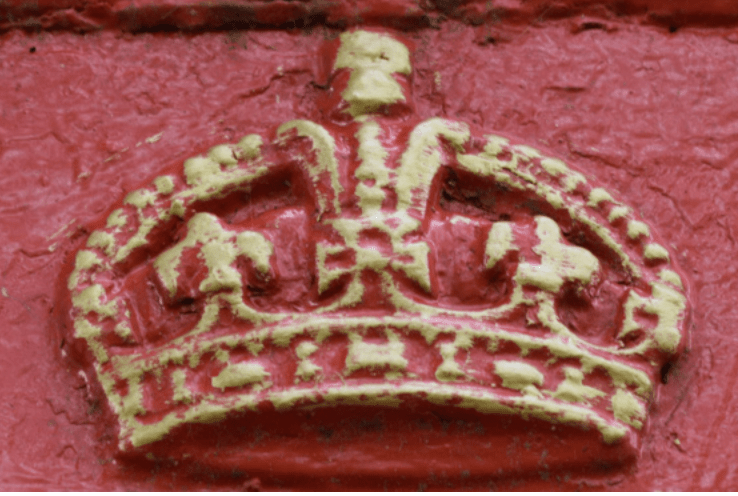
The phone box at Lera Voe is a “K6” phone box, designed by Gilbert-Scott for the jubilee of George V in 1935, following his successful design of the K2 phone box in 1924. The K6 is distinguished from the K2 by the embossed crown, and the fact that it has 8 rows of windows, rather than the 6 rows of the K2.
It would be possible to date the phone box had I been more careful in drawing the crown. The crown is painted red on the Lera Voe phone box, as it was on the original phones boxes. Only in the 1990s did BT start painting the crowns gold.
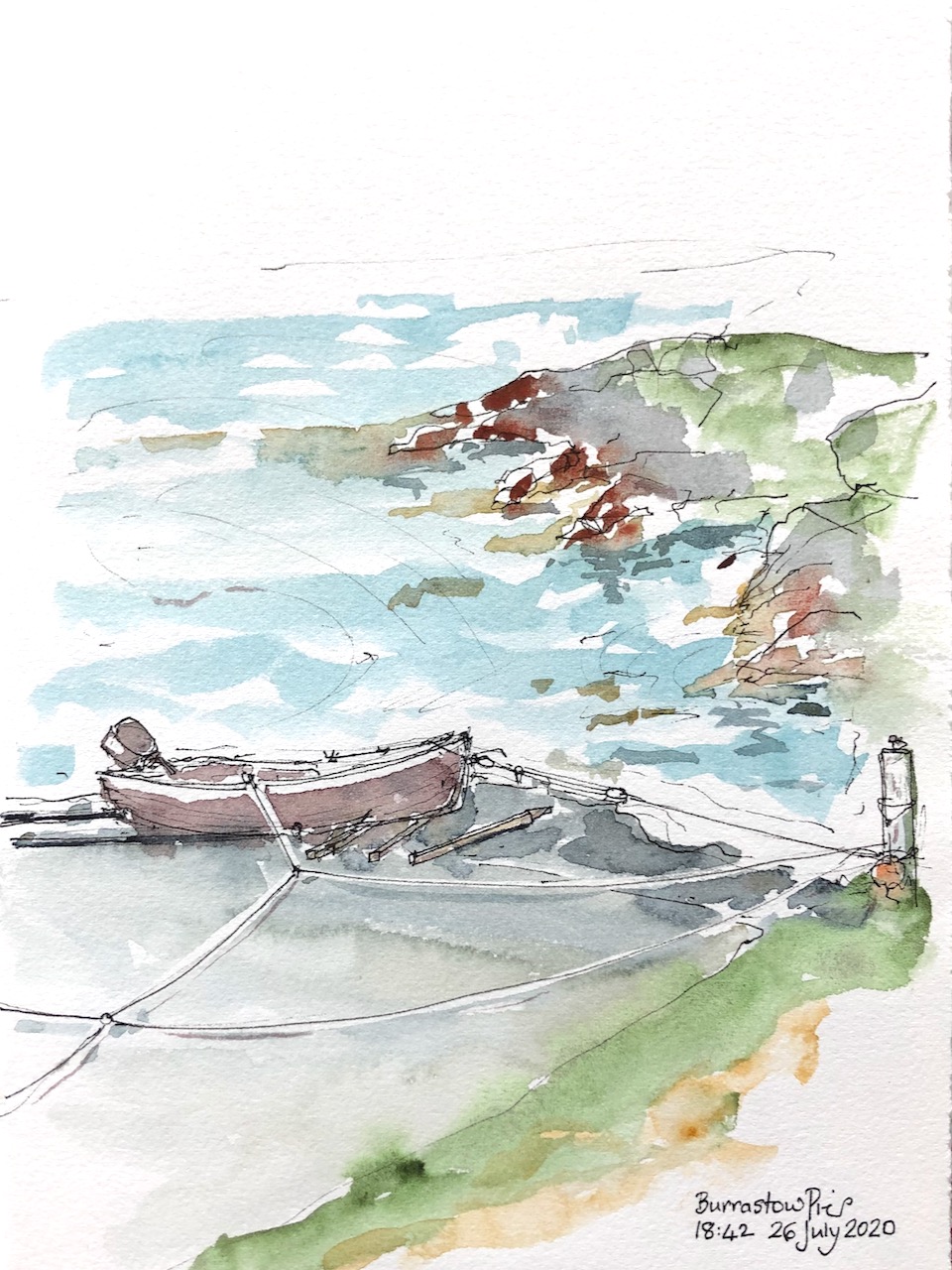
This is the North Atlantic, latitude 60 degrees N. The temperature of the water is 11 degrees C. Very refreshing! There is a lot of sun between the rain.
Here is another sketch of the pier, this time watercolour only, no pen. It is evening.
Burrastow Pier, evening.
Latitudes: Burrastow is 60 degrees North. The Arctic Circle is 66 degrees North. London is 51 degrees North. The Equator is zero degrees, and the North Pole is 90 degrees.
Click a button below to share this post online, email it, or print it:
























 Jane Sketching