Buildings in Yorkshire

Have you seen this amazing annex to the Theatre Royal in York?
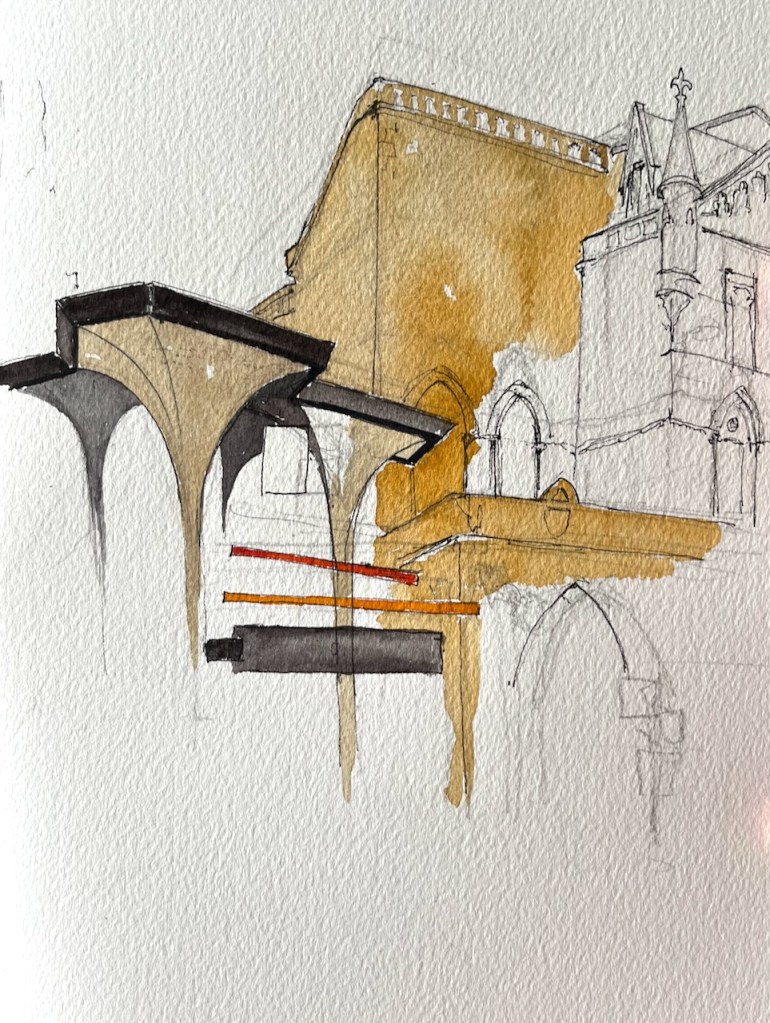
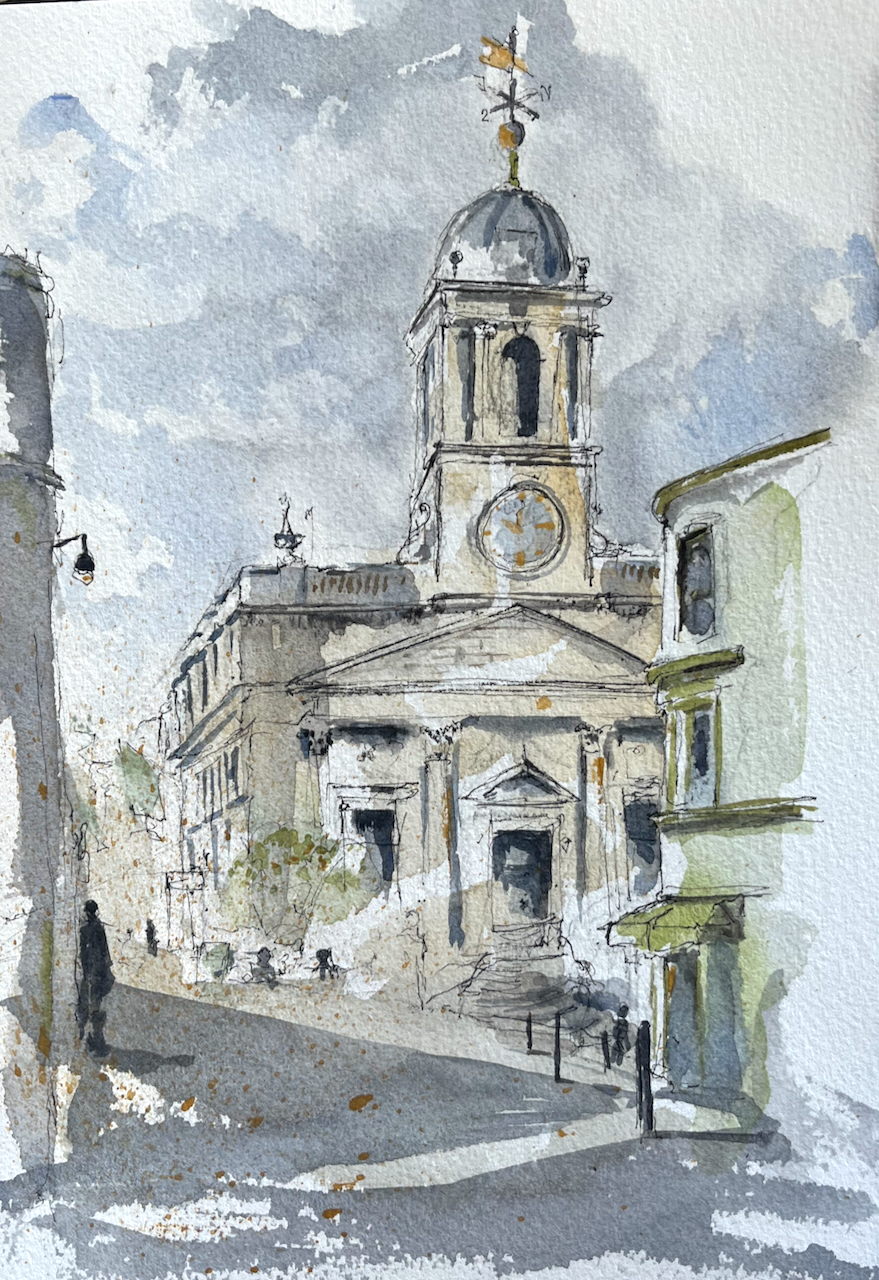
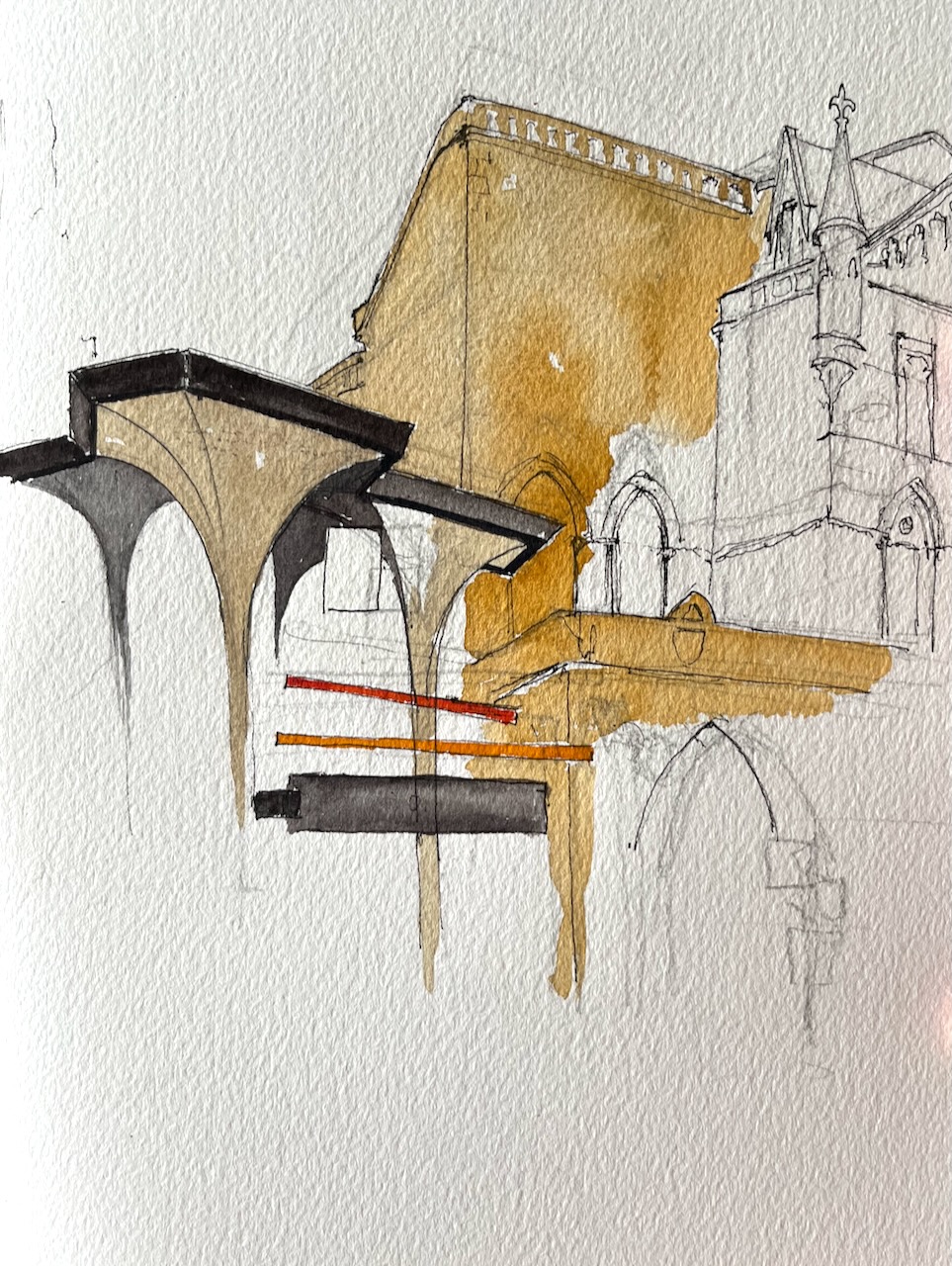
Theatre Royal Extension, York. 28 July 2022 in sketchbook 12. 10″ x 7″

It’s a stunning addition to the Victorian theatre next door. The older part of the theatre, on the right of my drawing, is in the Gothic revival style around 1879, designed by the then city engineer G Styan. The modernist extension, whose amazing soaring shapes are on the left of my drawing, was designed by Patrick Gwynne and RA Sefton, in 1967. The whole thing has been redeveloped in 2016, retaining the external shapes. I love the courage of this modernist extension. It’s not far from the station. I sketched it waiting for the train.
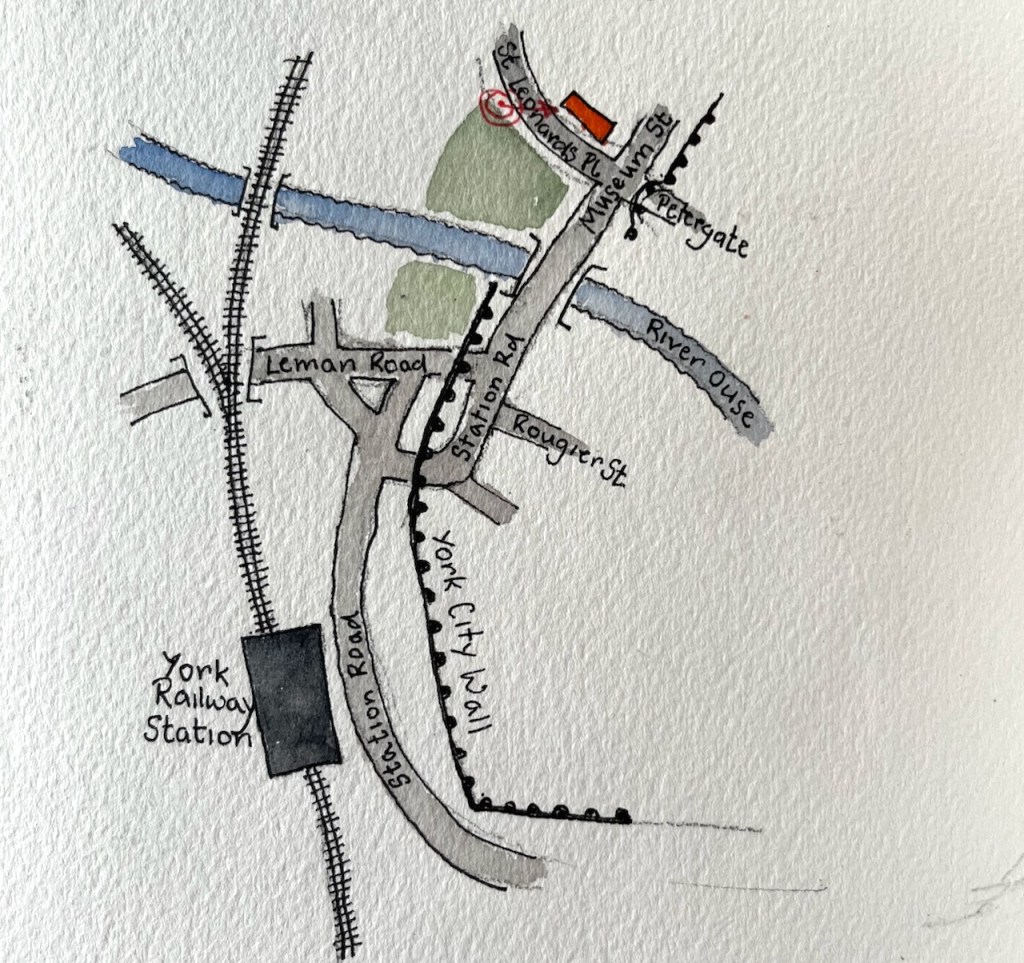
The Theatre Royal (in red) is just a few hundred yards from the station.

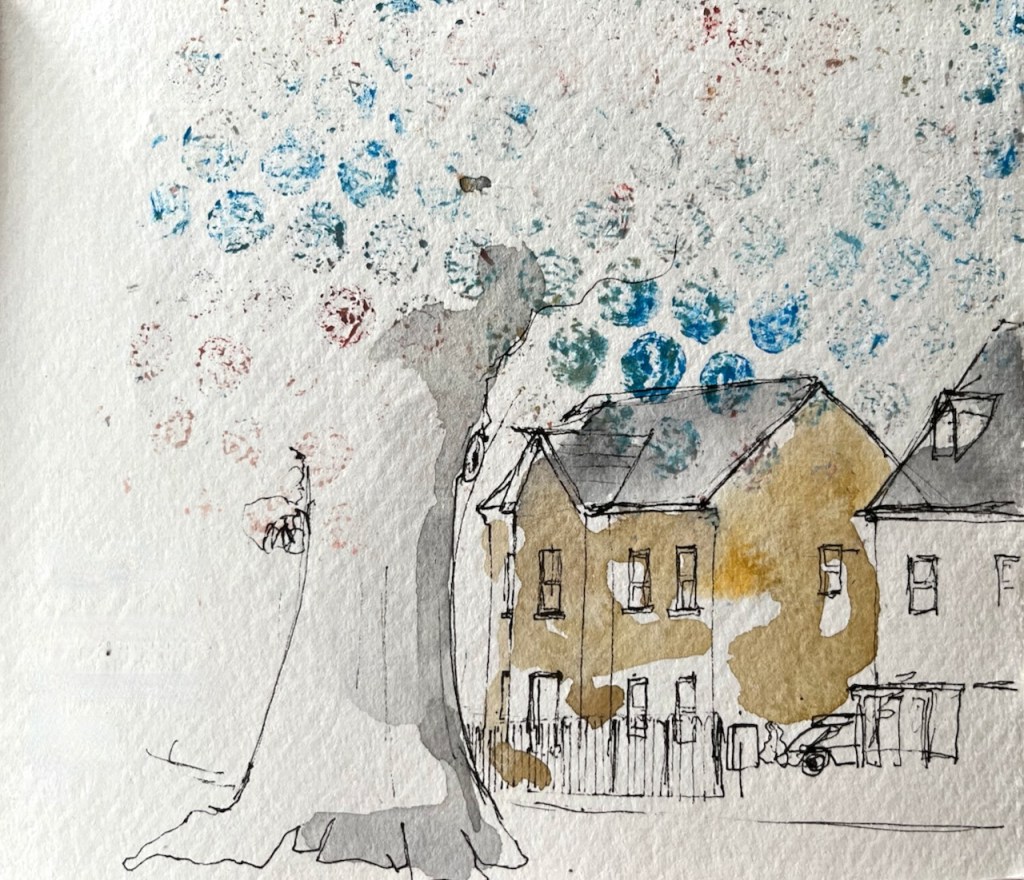
Here is a 21st century housing estate in the area. It’s an interesting contrast to the Theatre Royal extension. In this case the architects made new buildings which look traditional on the outside. They even have chimney pots. Inside they have 21st century standards of insulation, heating and plumbing. The chimney pots are simply decorative.

21st century housing in Yorkshire, in sketchbook 12, July 2022

Here are some smaller sketches I made touring around:
The Hepworth Wakefield was a revelation: well worth a diversion. It’s a beautiful building itself, which I shall be sure to sketch when I visit again.
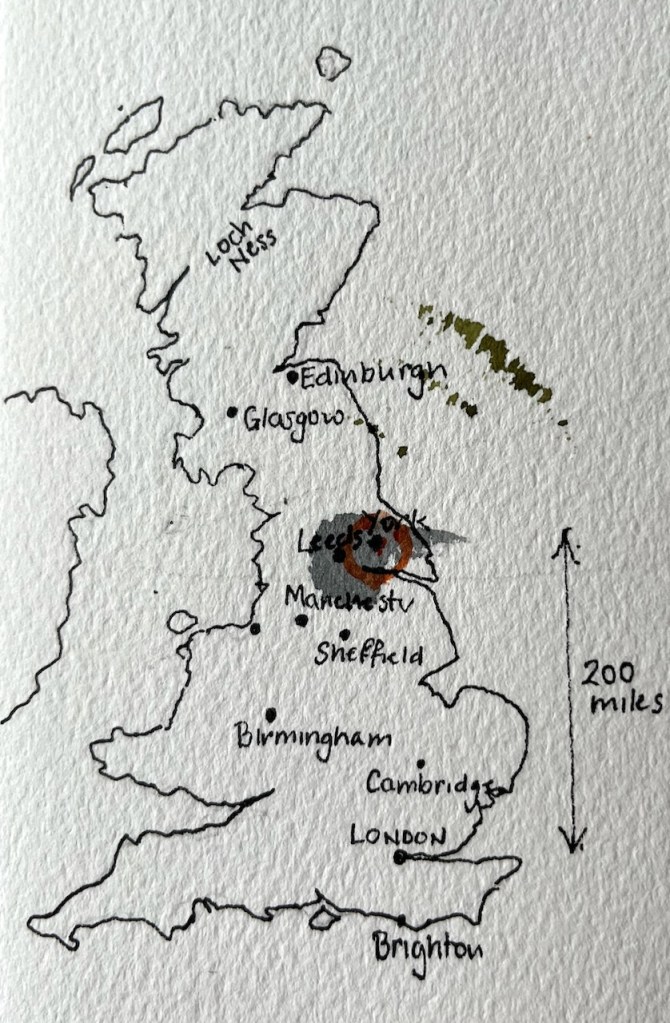
Yorkshire – halfway up the UK mainland.

I’ve sketched in York on a previous visit, see this post:
Sketching in York

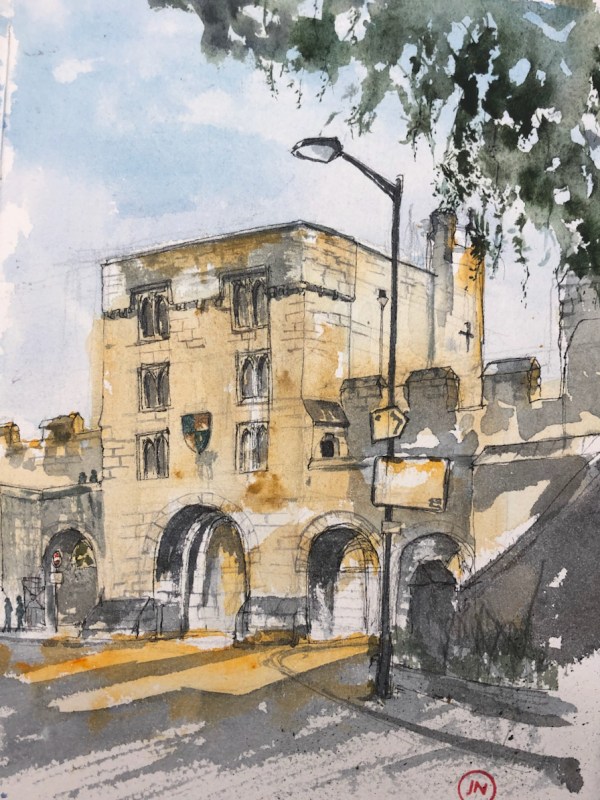
Here is the “Micklegate Bar”, which is one of the great gates through the old City wall into the centre of York. I sketched this outside a bar called “Micklegate Social”. The staff were inside, cleaning and setting up. They…

read more
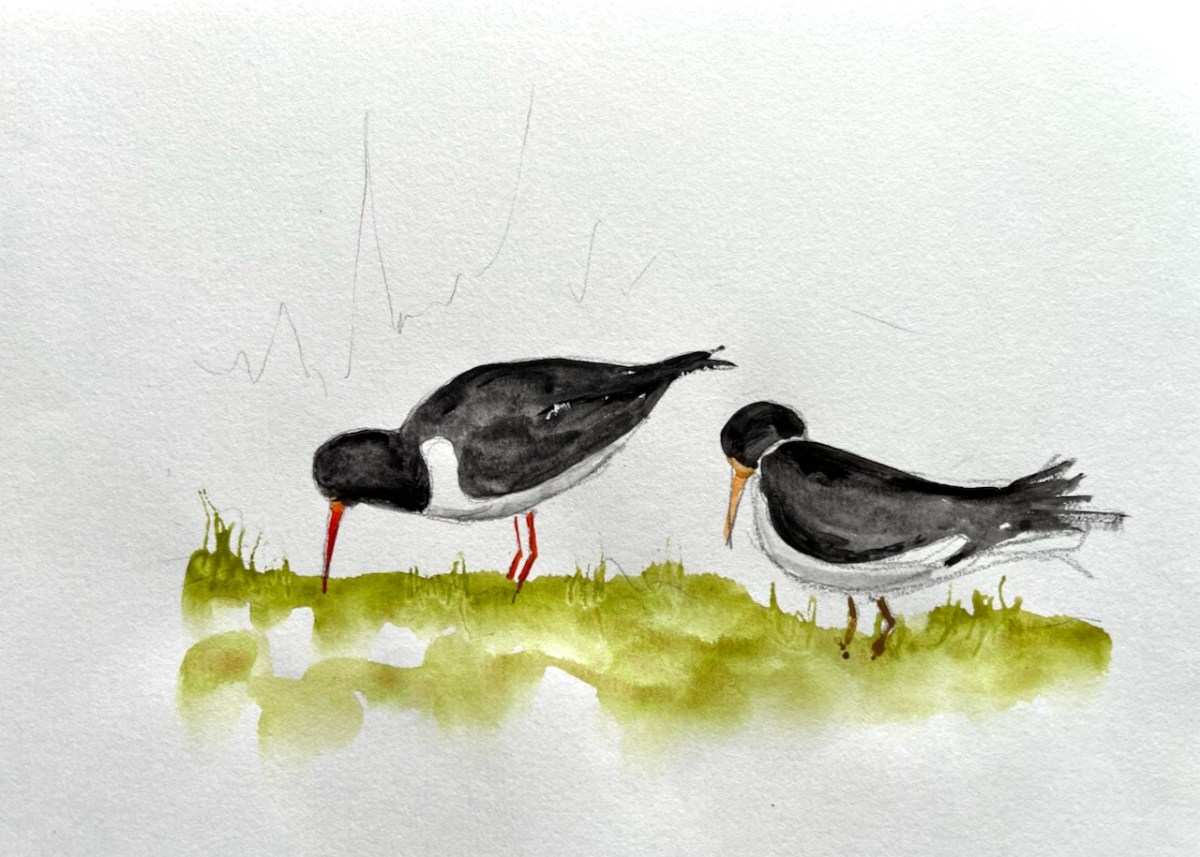
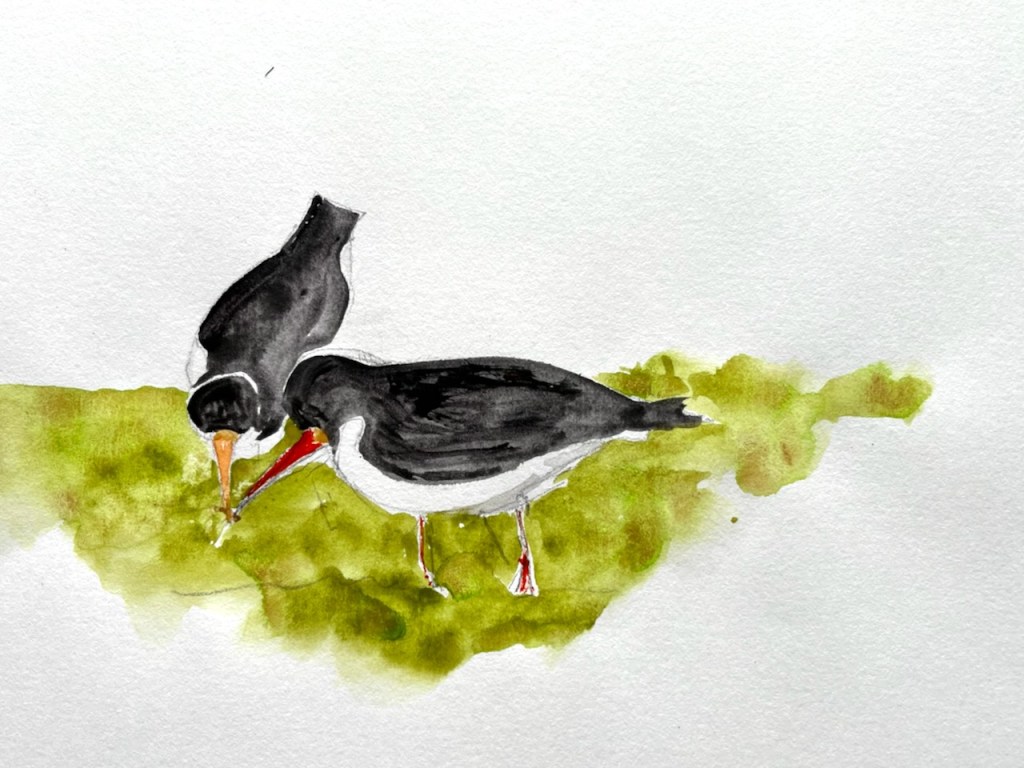
Shetland 2022 – Birds

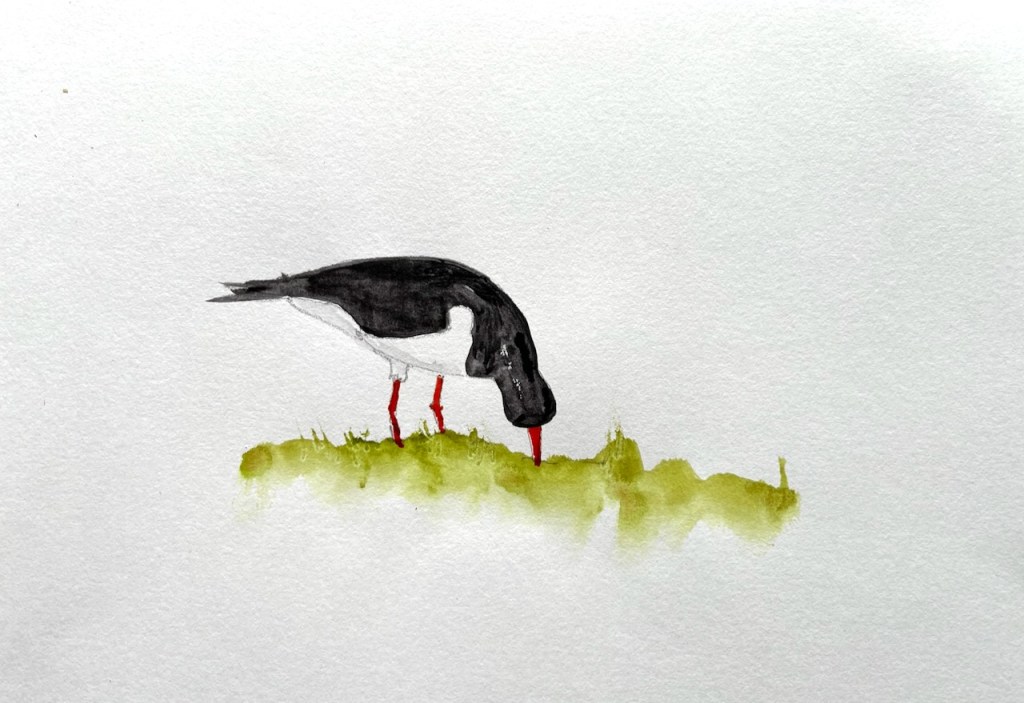
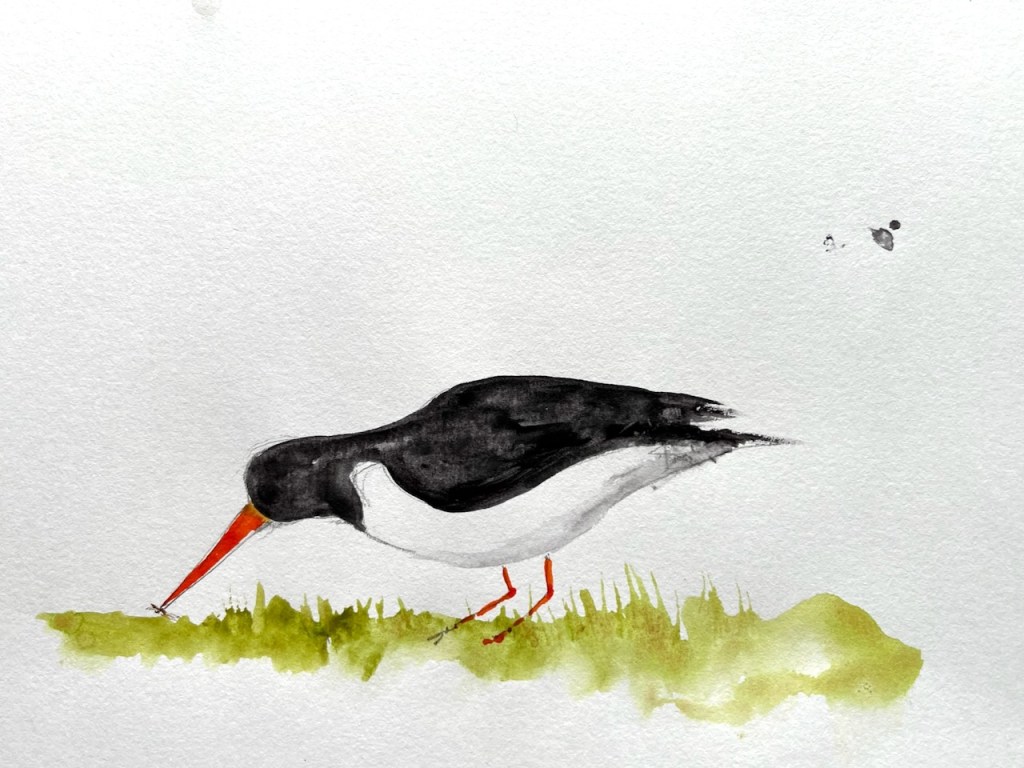
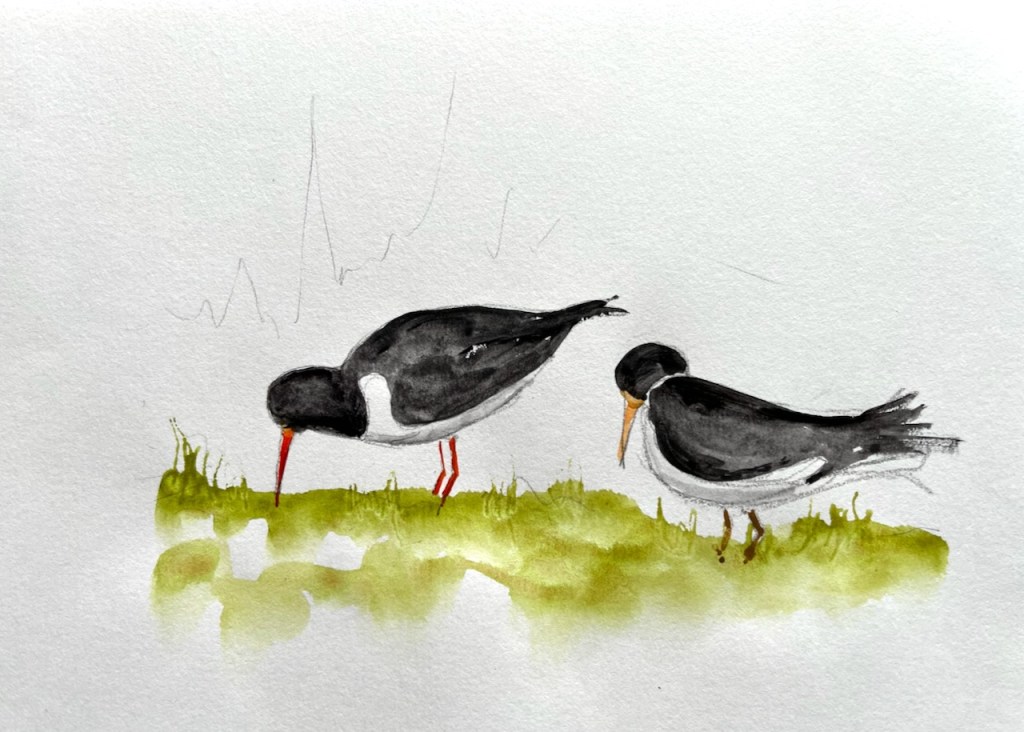
The oystercatchers dig up worms from the grass. I watched them from the window.

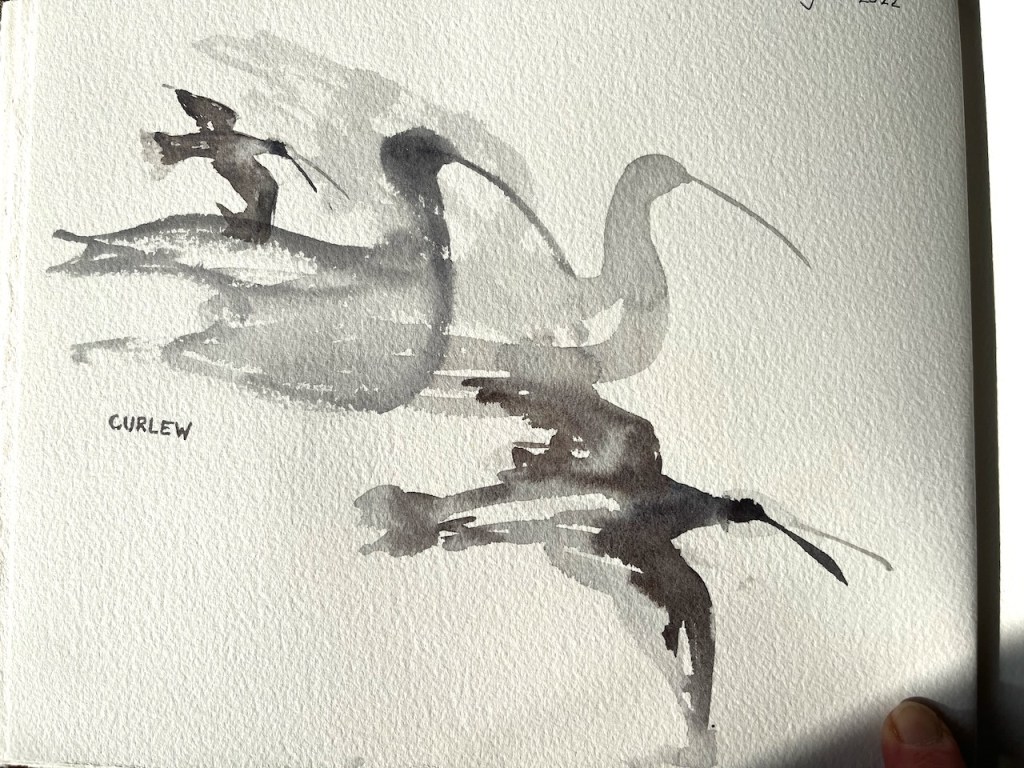
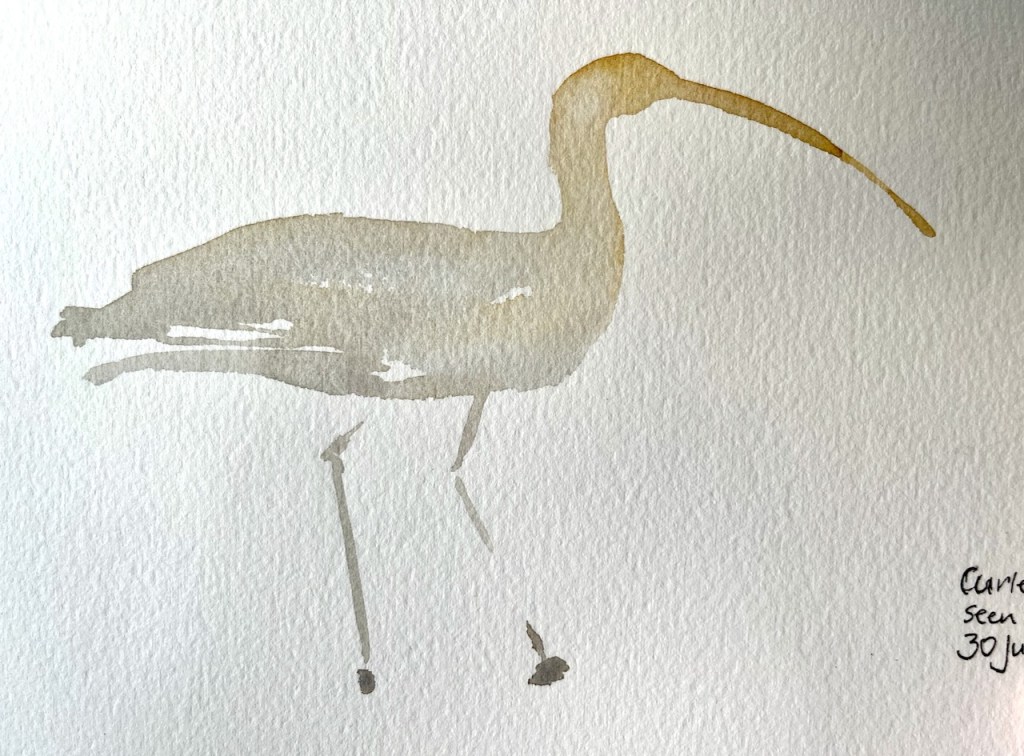
When I walk along the roads, I see curlew.

Shetland 2022 – Burrastow

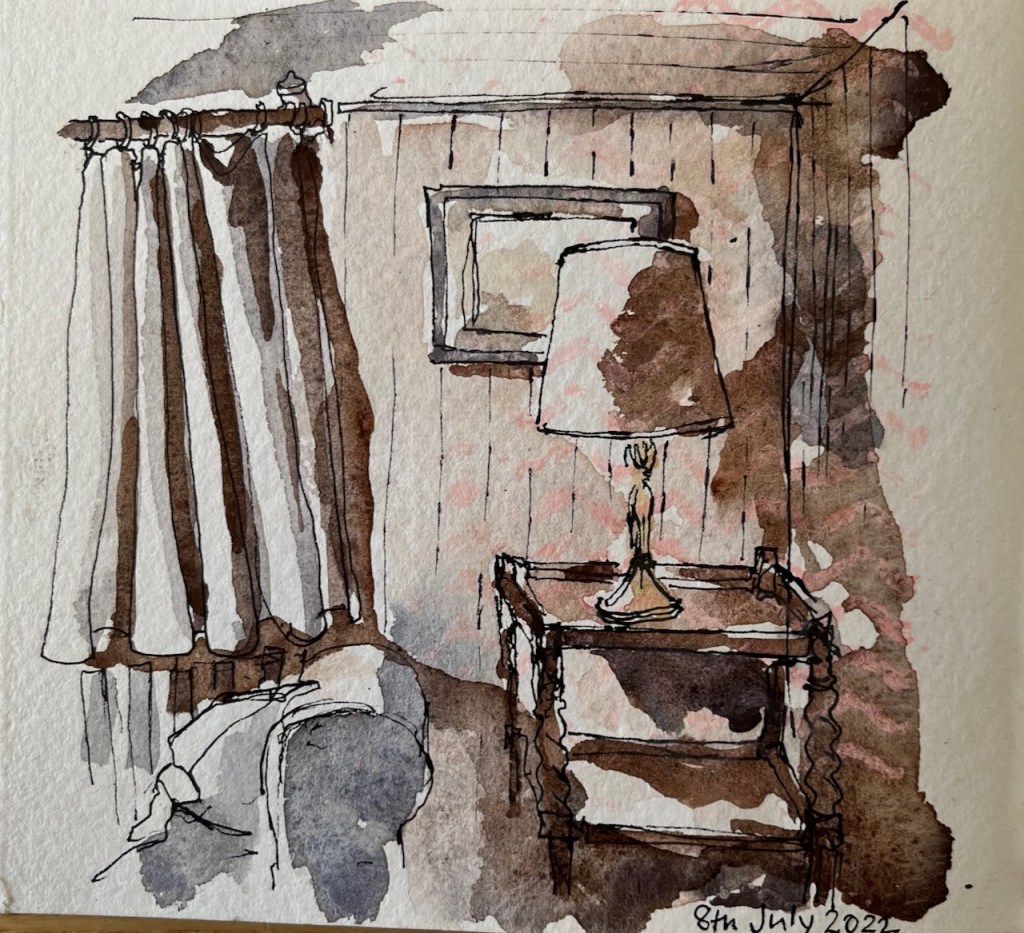
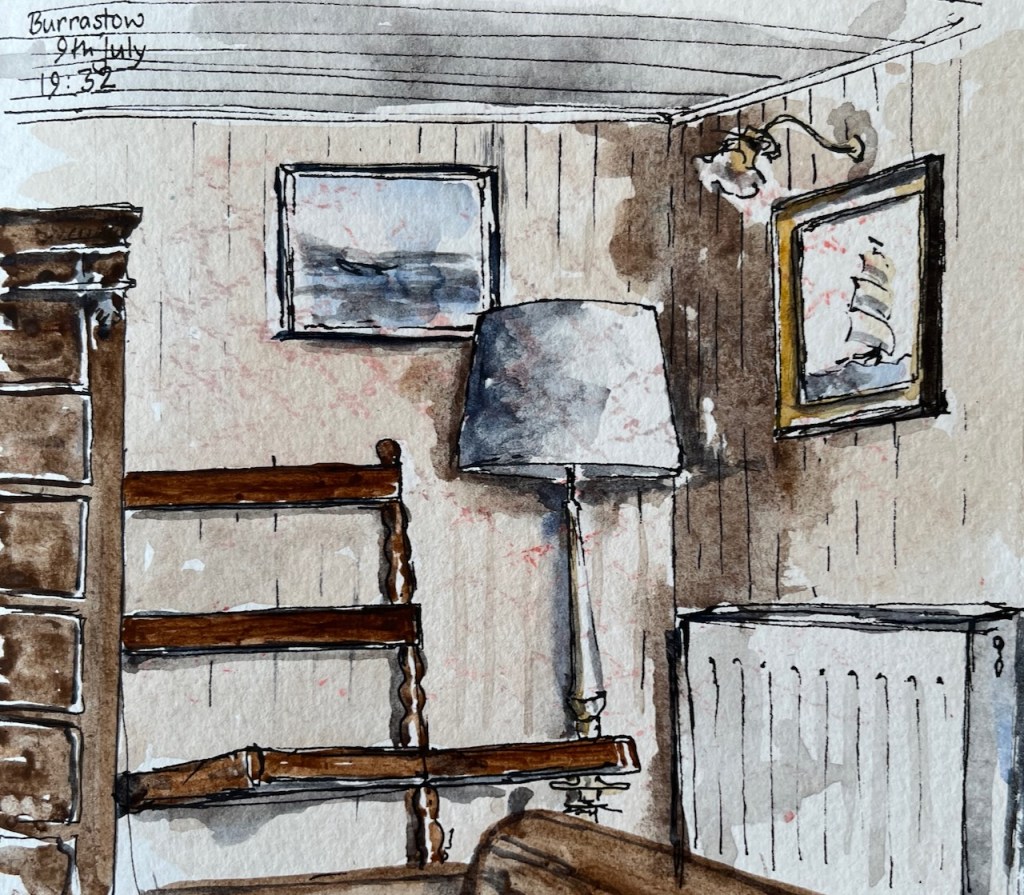
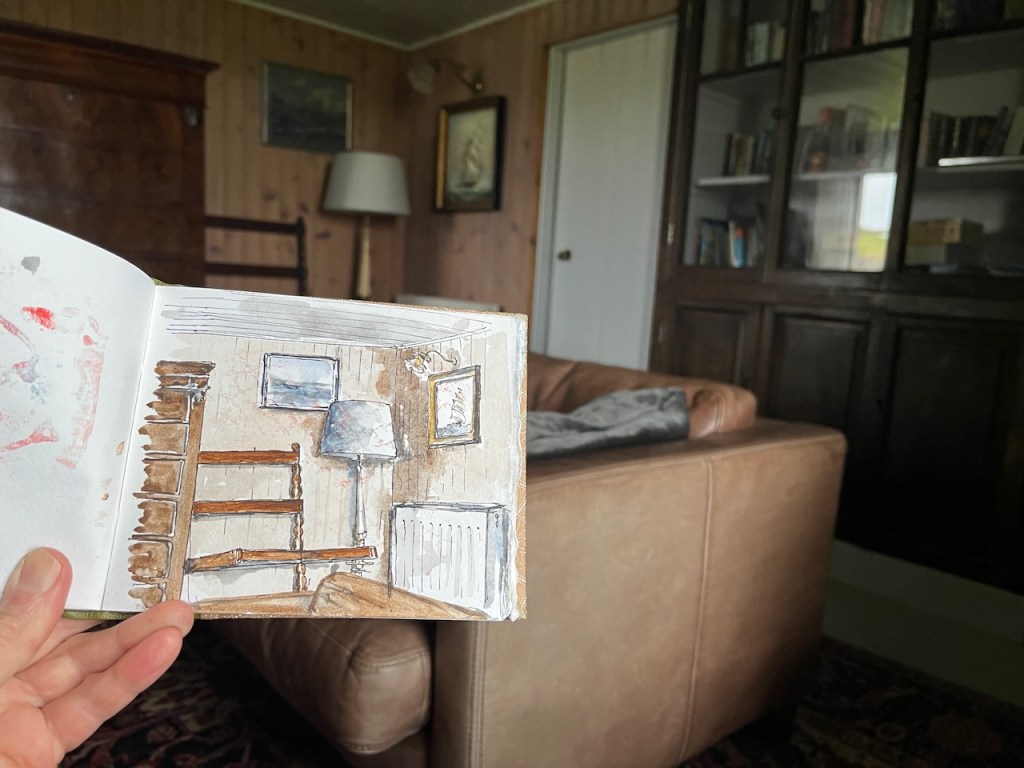
Here is a drawing I made after breakfast:

After Breakfast, Burrastow, 9th July 2022

I drew some pictures indoors:

A glass of wine:

A glass of wine – 12 July 2022

An evening on the terrace….

An evening on the terrace, Burrastow, July 2022

Shetland landscapes 2022

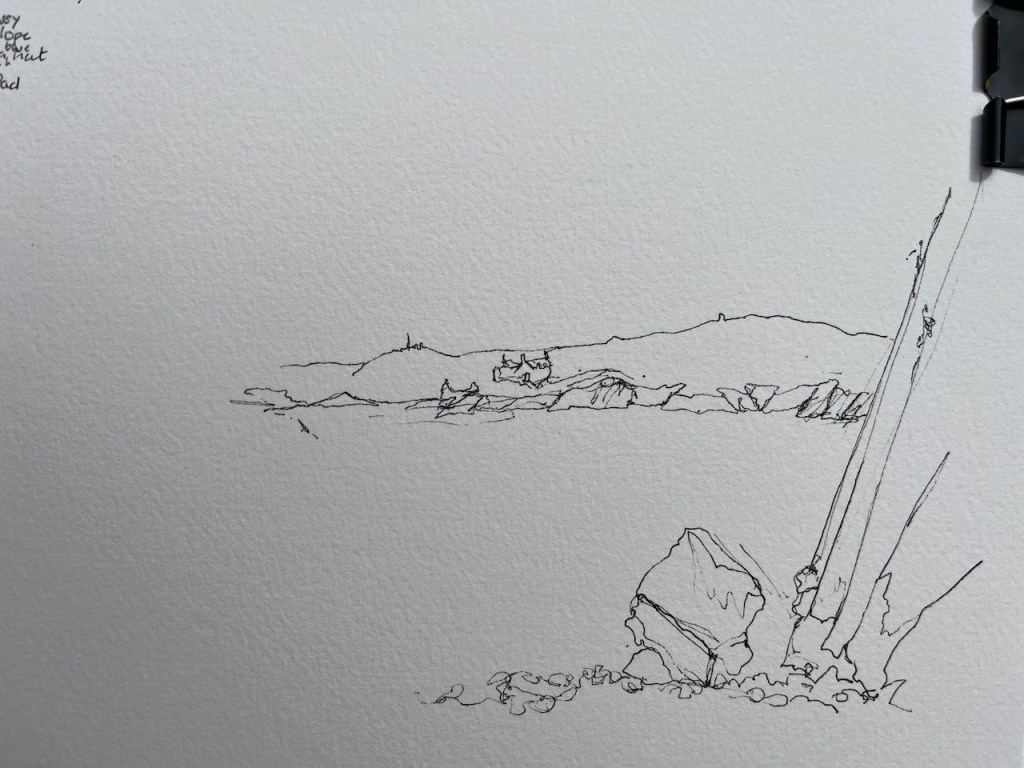
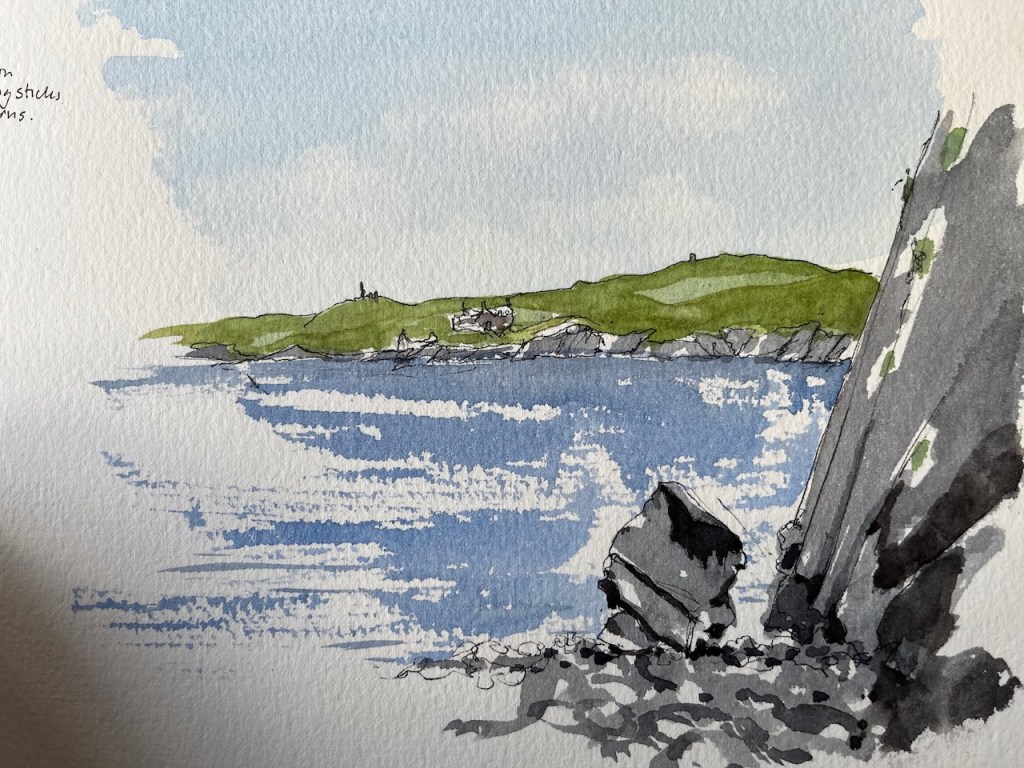
Sketching on the beach out of the wind, I am fascinated by the regular angles in which the rock cleaves.

Beach on the West Side, 27th June 2022, 1pm

The angle of the distant cliffs echoes the slope of the nearby rocks.

Sketching in the hills, islands and hills are of the same form.

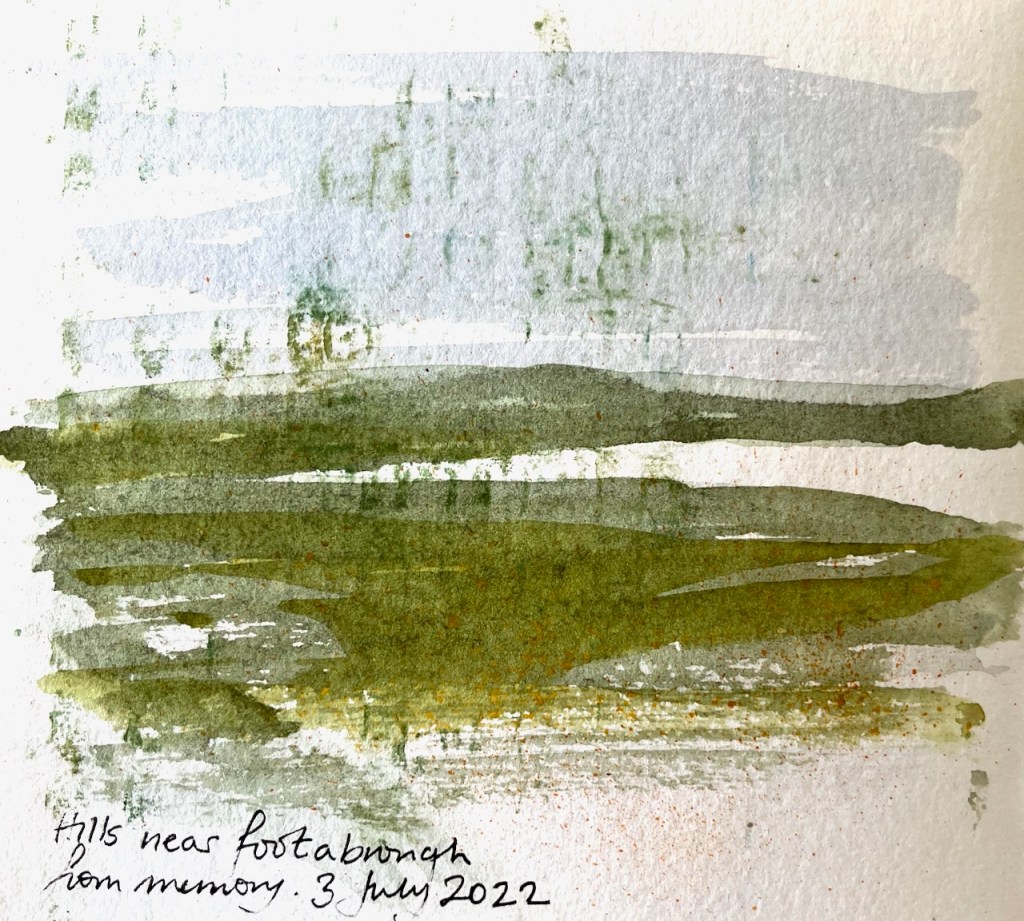
Here’s a sketch in my small sketchbook. The green overlaid pattern is a print, made in advance.

Hills near Footabrough, 3 July 2022

Sketching in Aberdeen, summer 2022

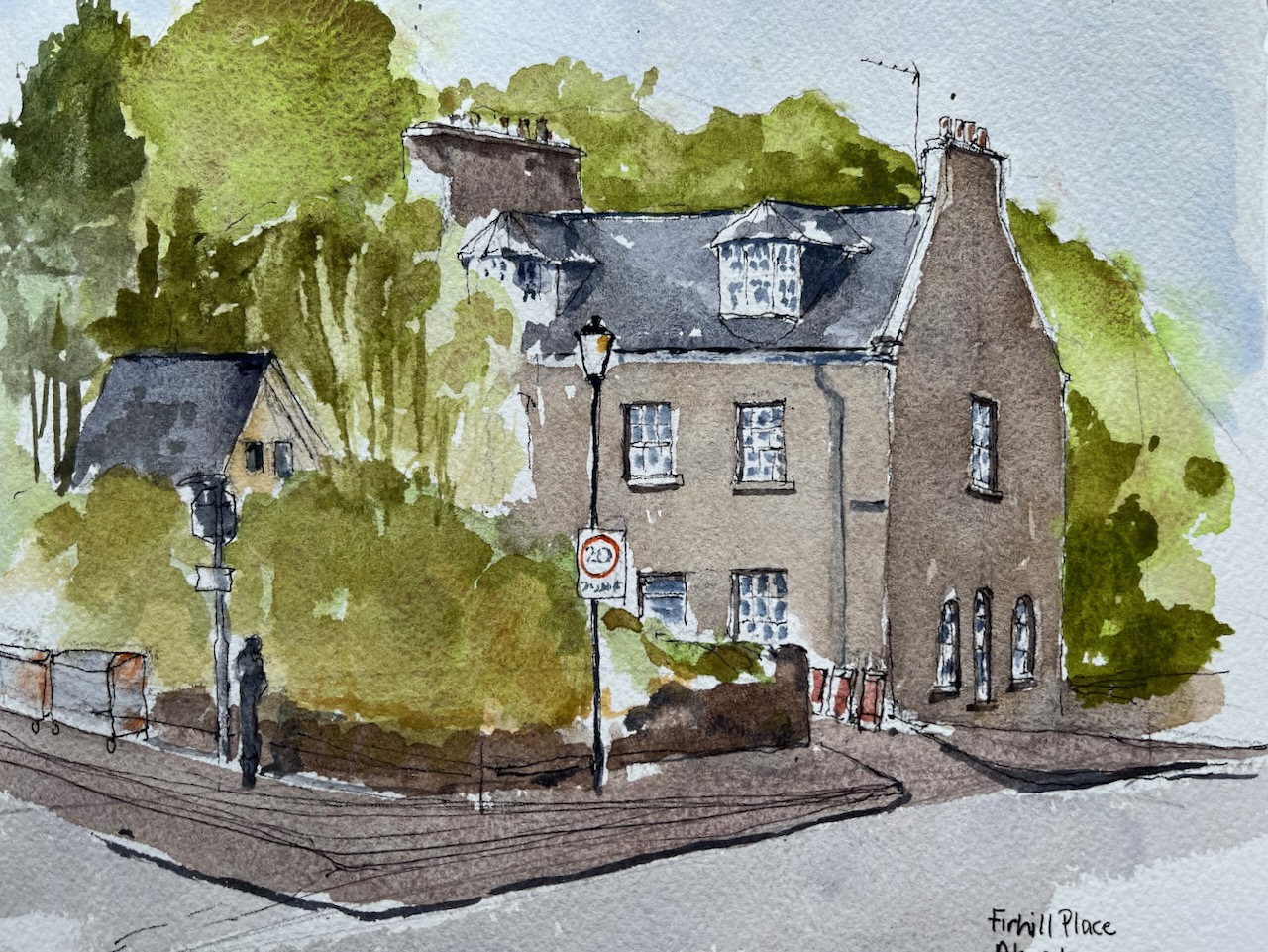
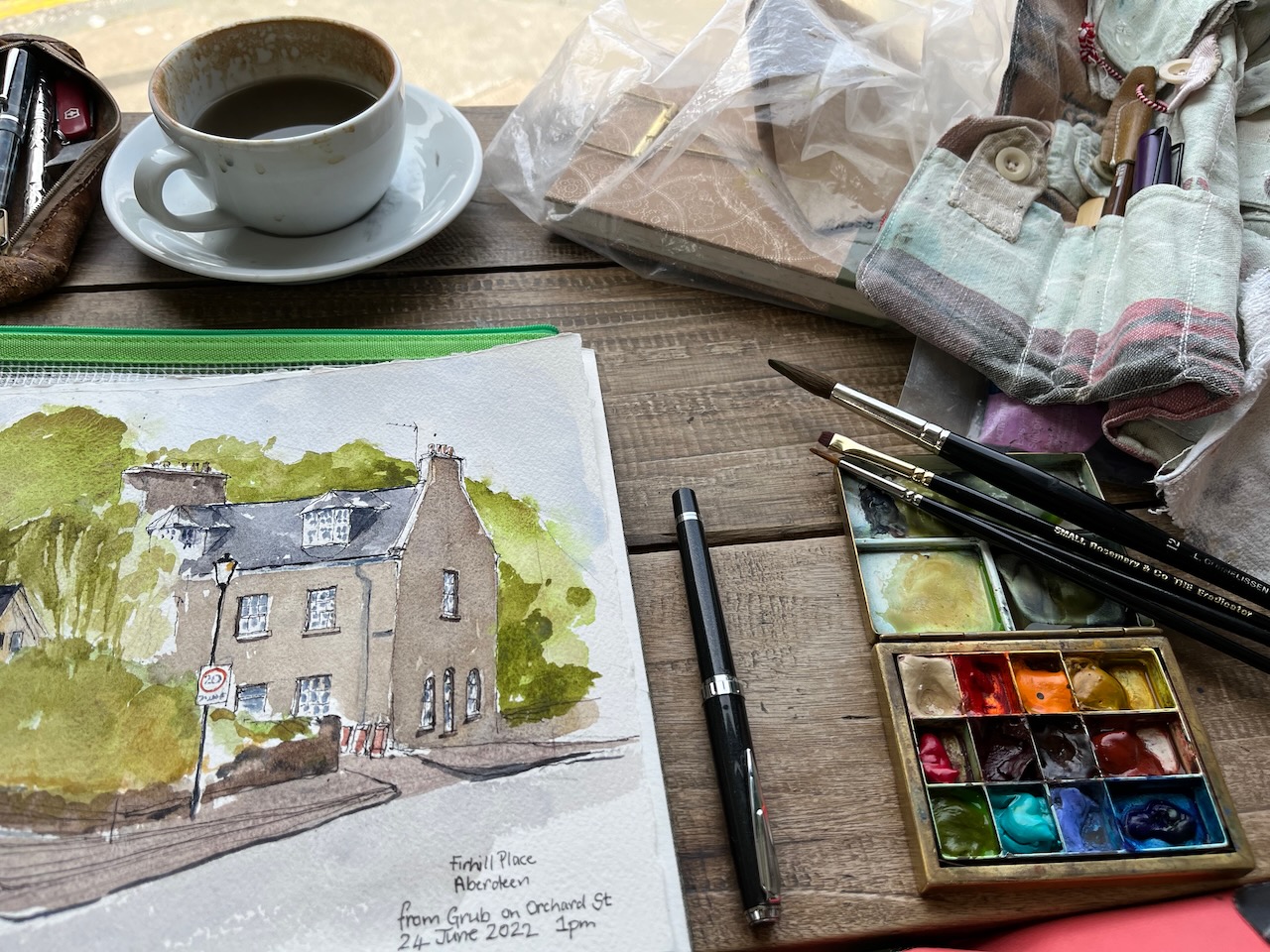
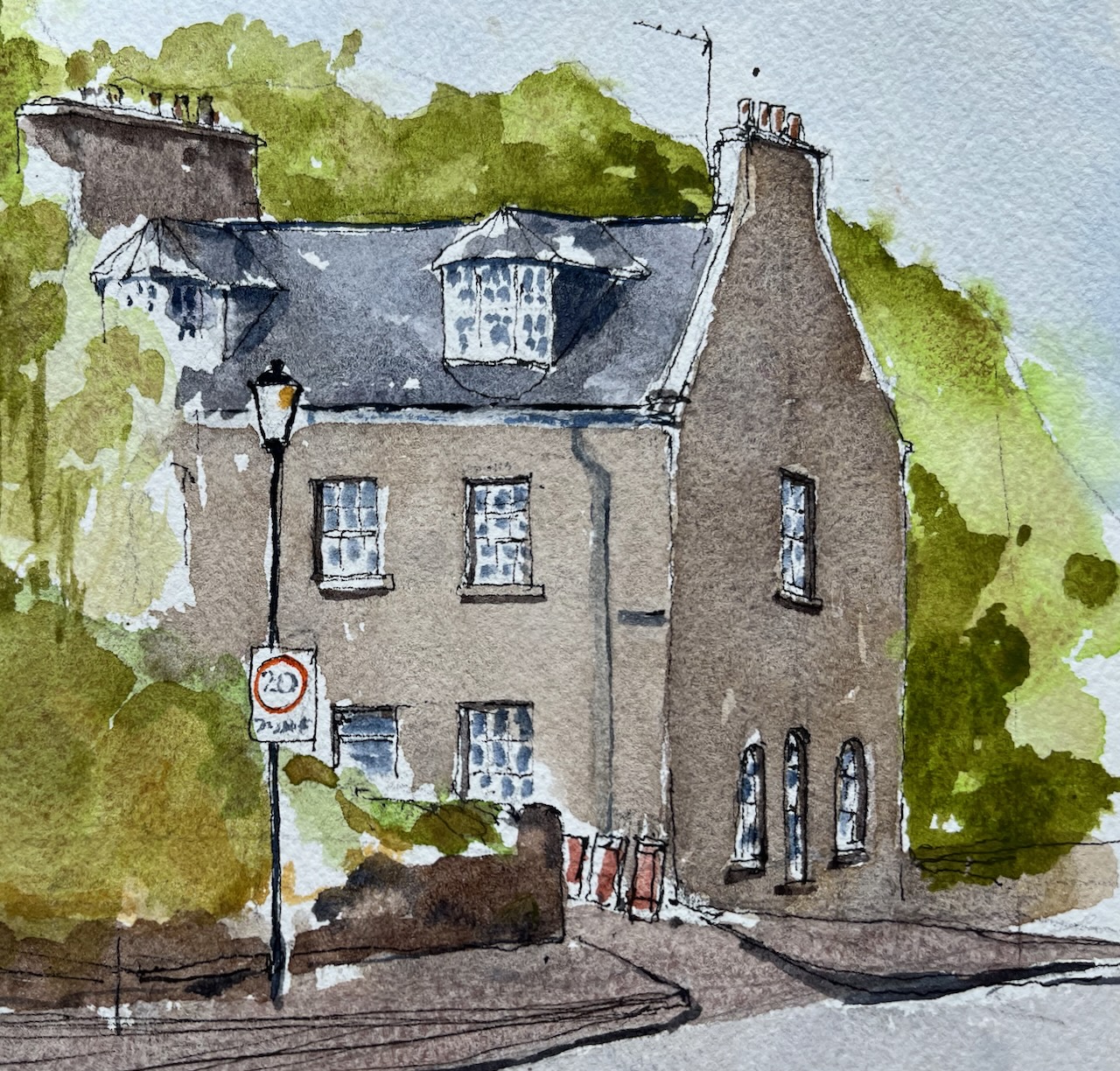
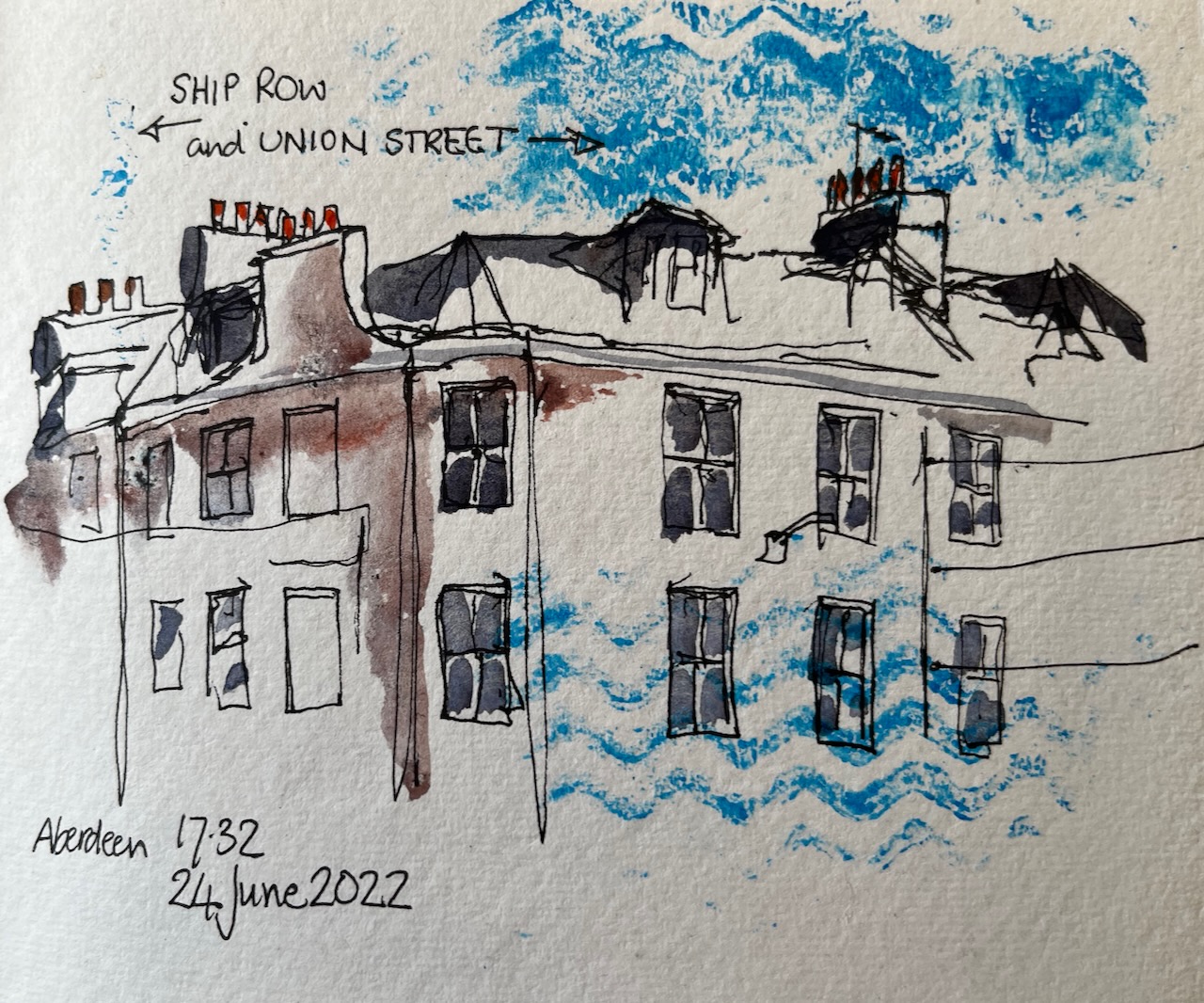
Here is a house in Firhill Place, Aberdeen, near the University.

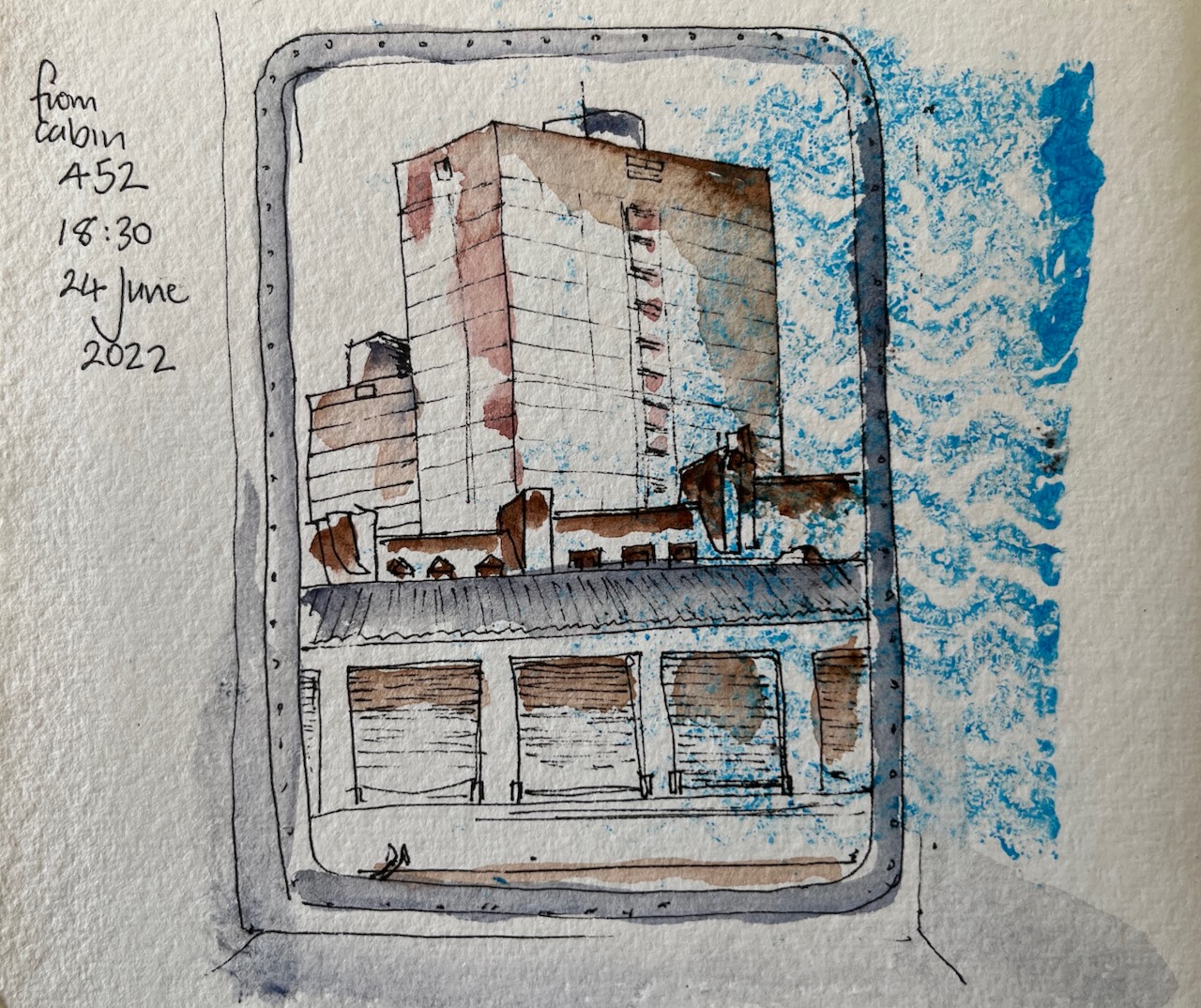
House in Firhill Place, Aberdeen, 24 June 2022

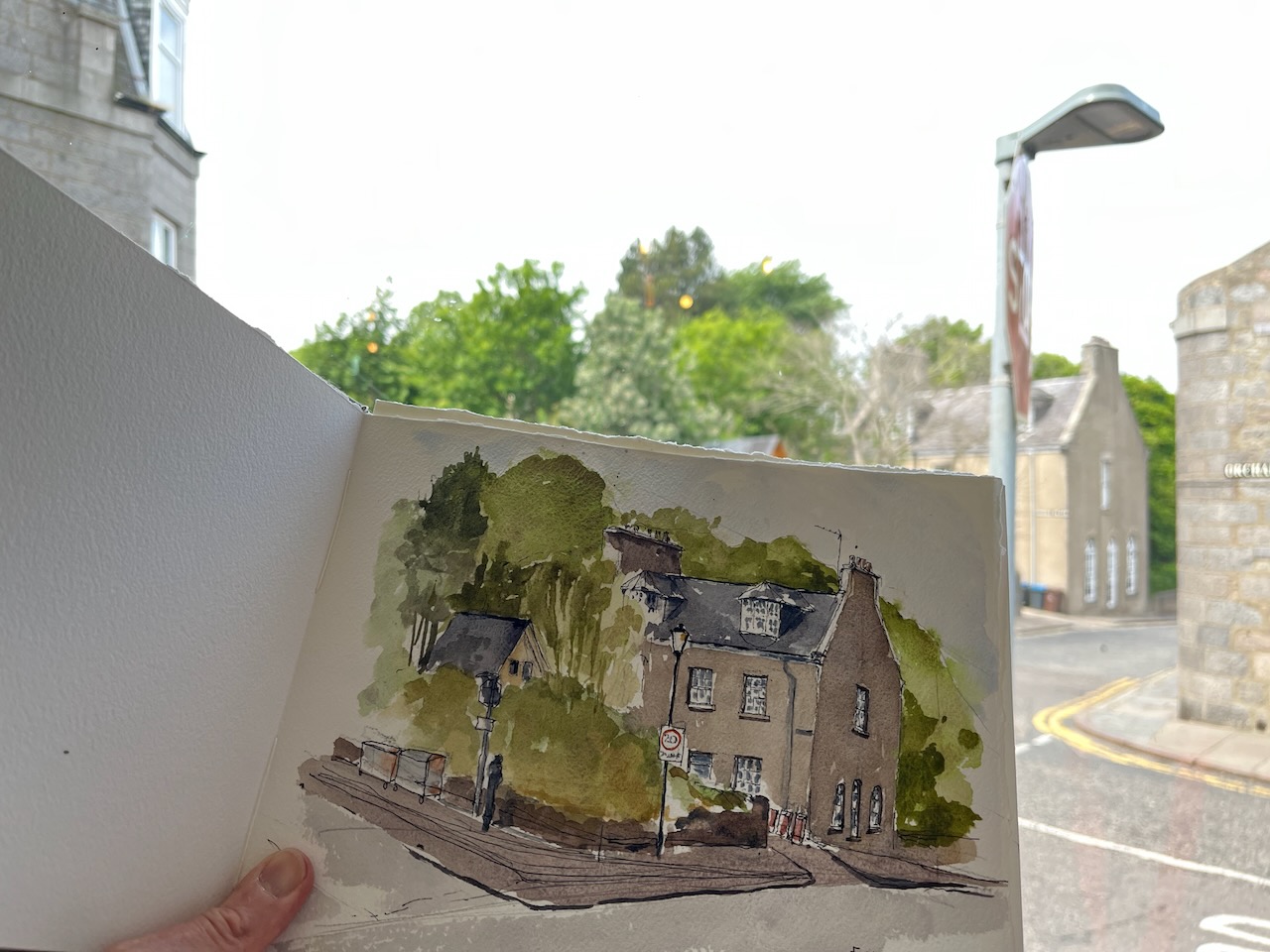
I sketched it from a coffee shop called “Grub”, on Orchard Street.

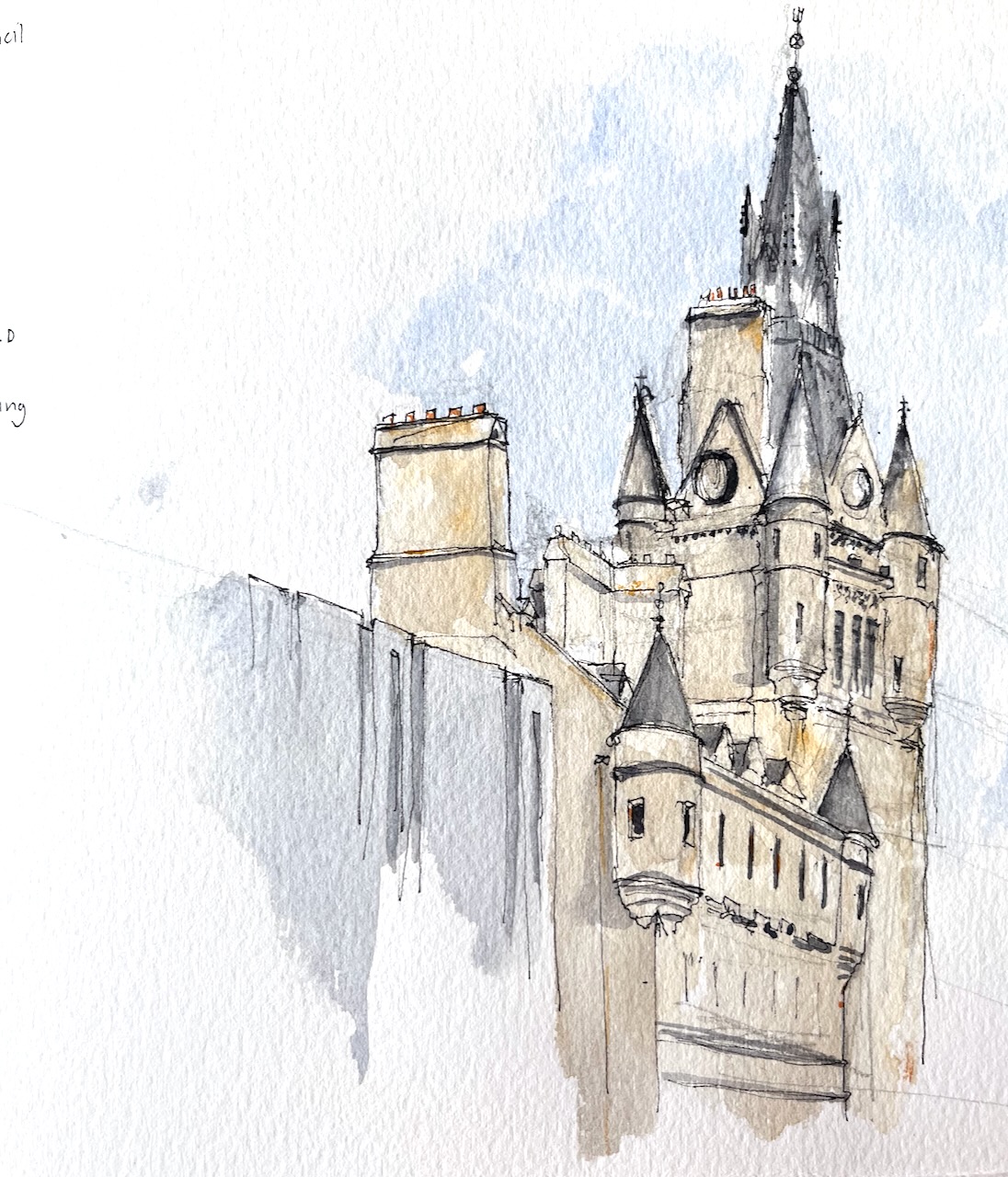
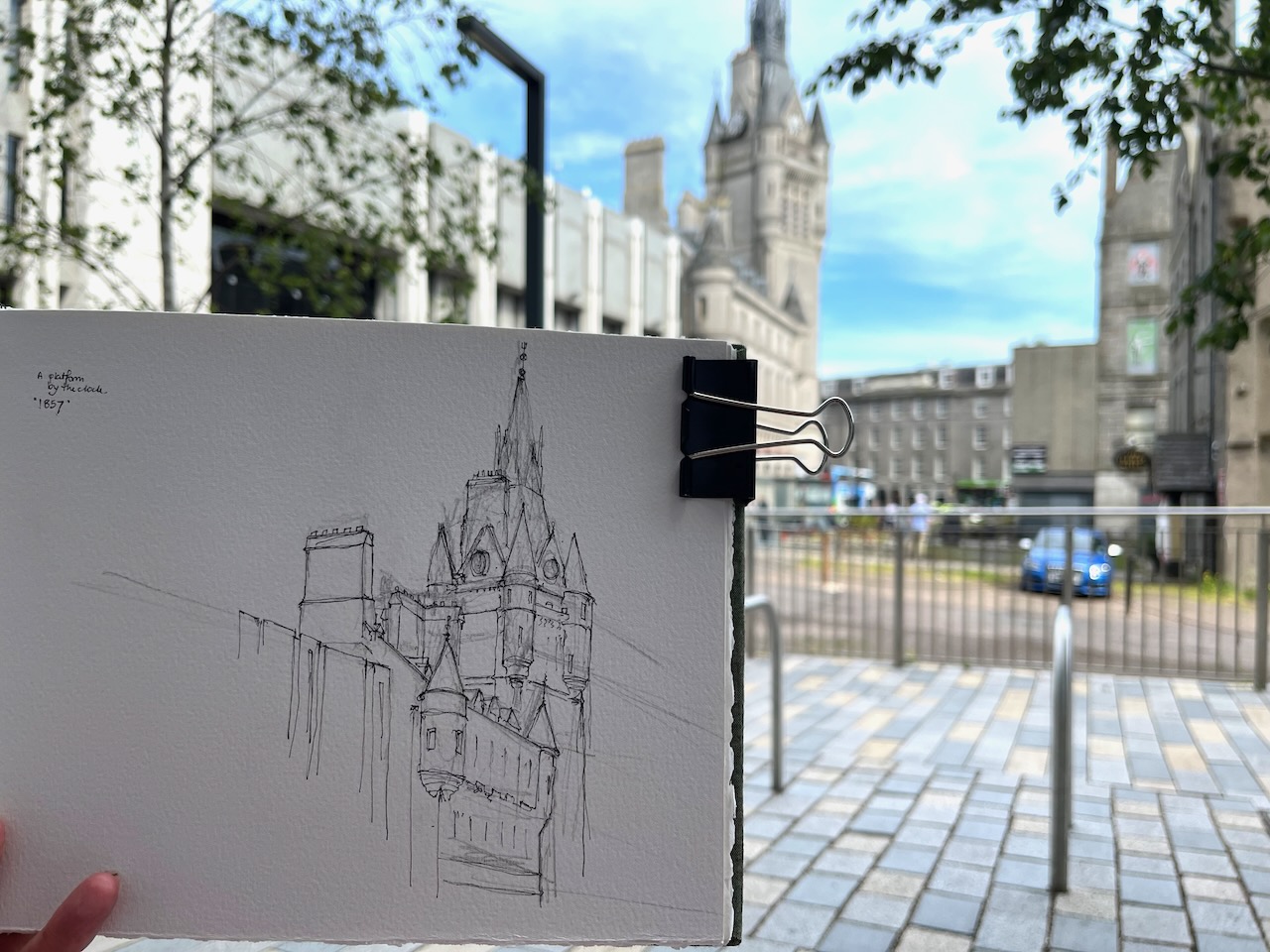
Here’s Aberdeen Town House, with its marvellous turrets.

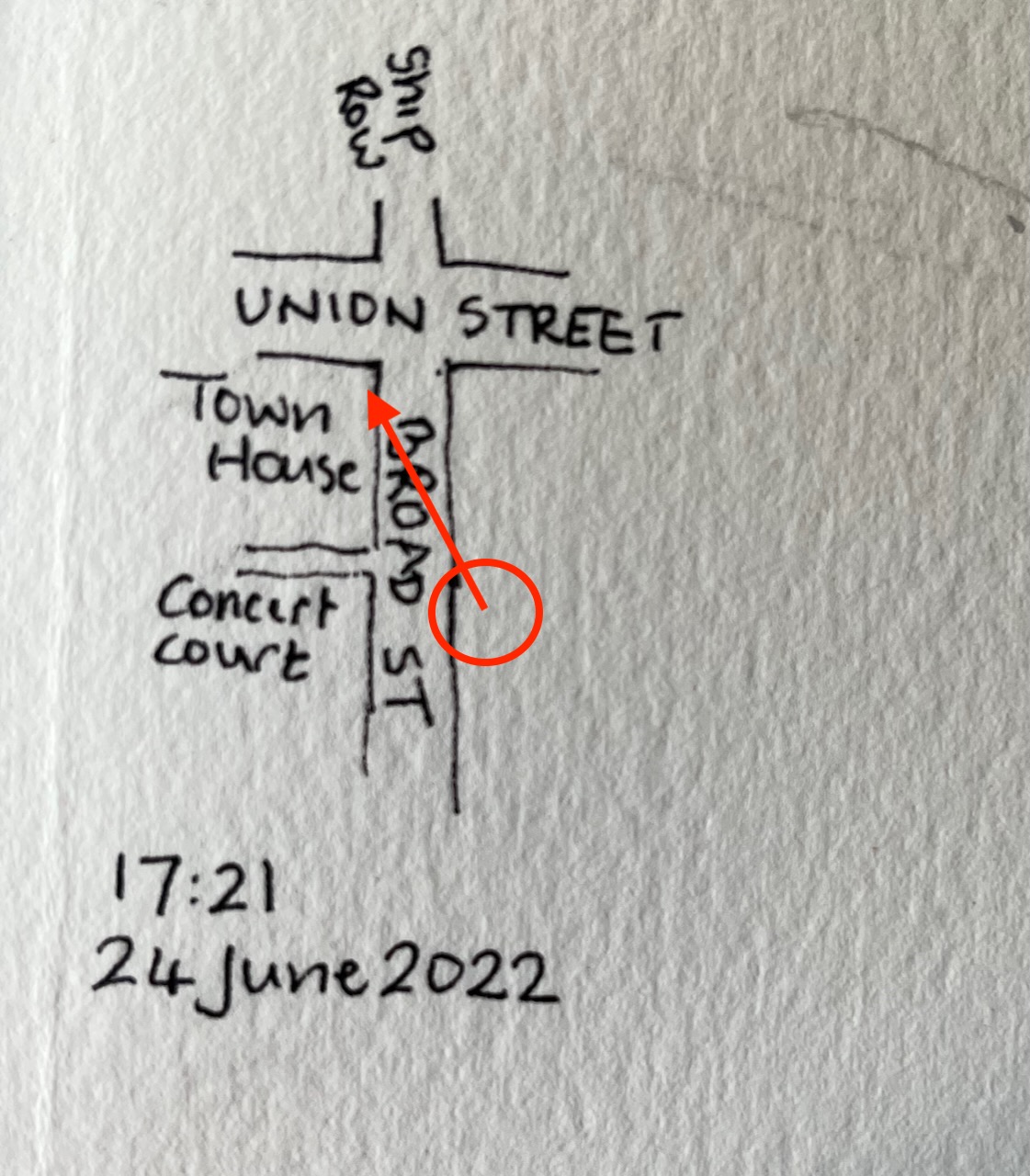
Aberdeen City Council Town House from Broad Street. 24th June 2022

Aberdeen Town House was built in 1868-74 by John Dick Peddie and Charles George Hood Kinnear. It incorporates the remaining part of the Tolbooth of 1615-29 by Thomas Watson of Old Rayne at the east, and includes the City Chambers to Broad Street, added in 1975 by the Aberdeen City Architect’s Department, with Ian Ferguson and Tom Campbell Watson as its chief architects.

https://britishlistedbuildings.co.uk/200406609-aberdeen-town-house-castle-street-aberdeen-aberdeen

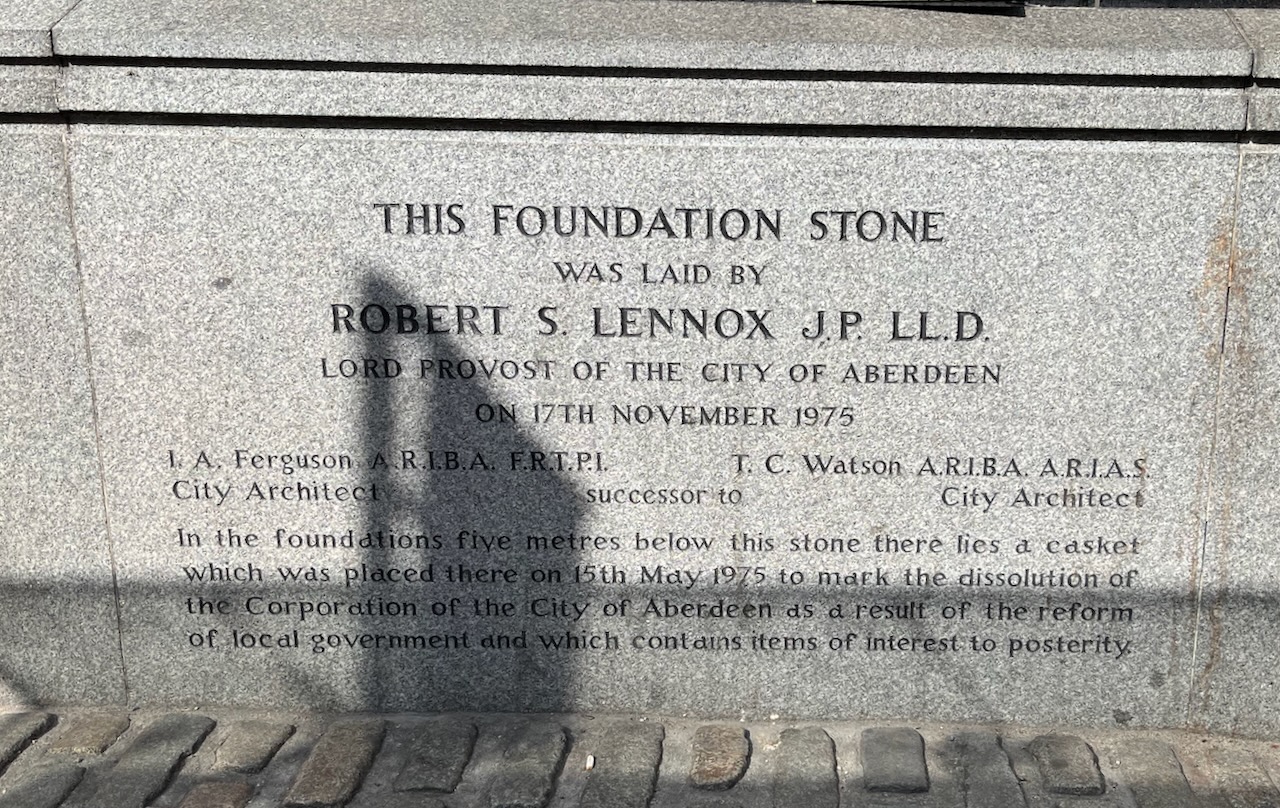
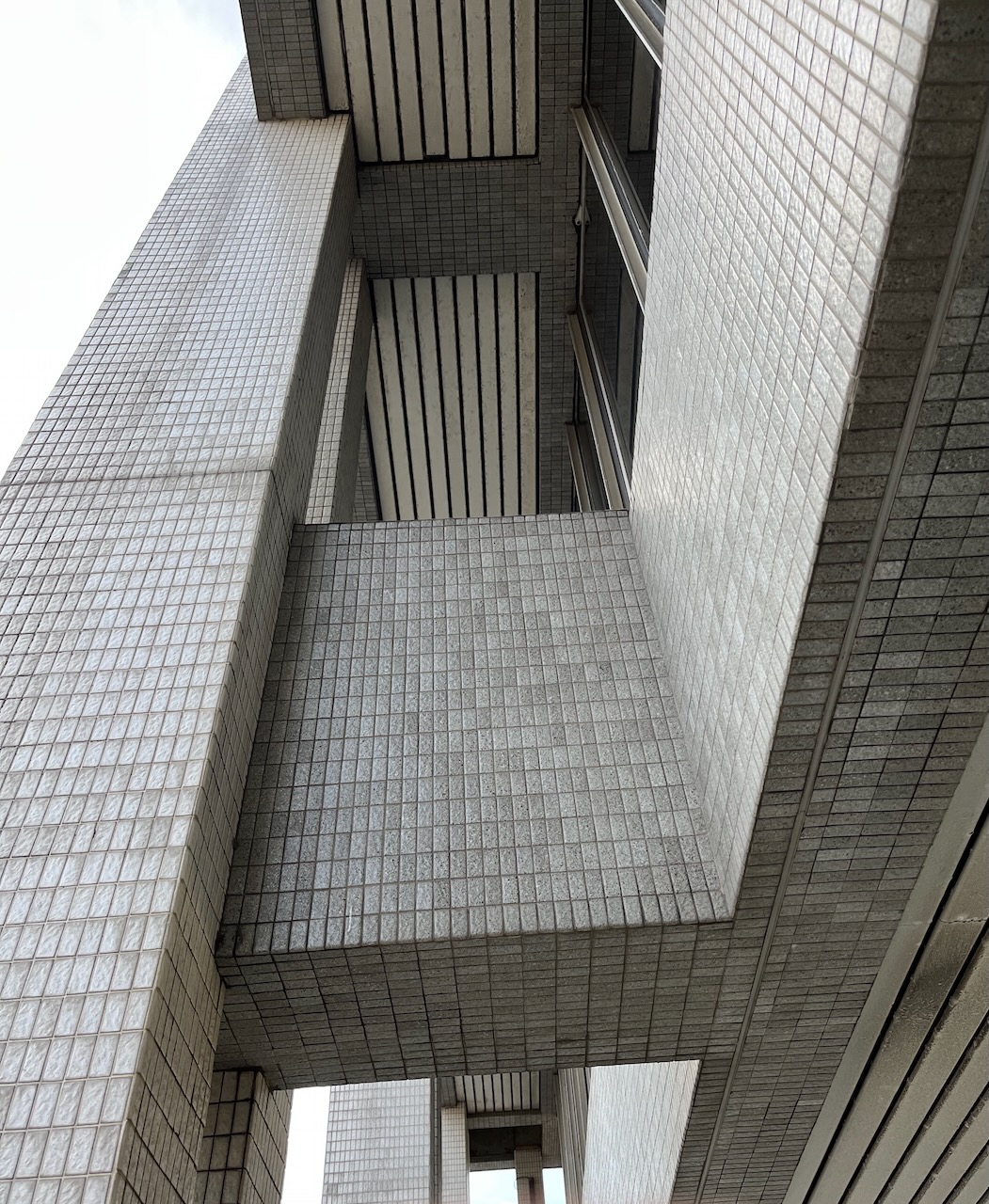
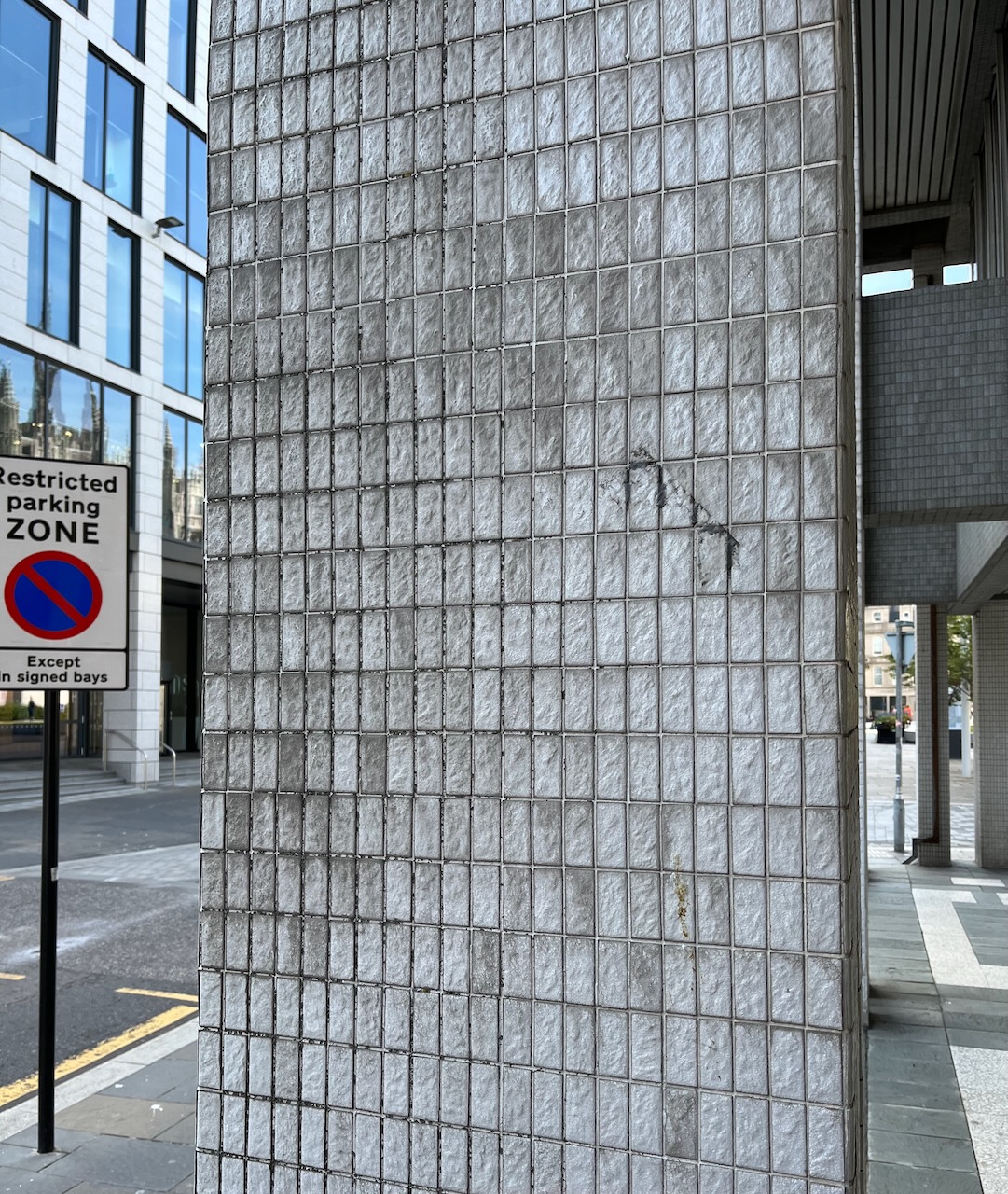
The building on the left of my sketch is the brutalist structure “City Chambers” covered in a tessellation of rectangles of grey marble. Its foundation stone was laid on 17th November 1975, according to the inscription on the foundation stone.

I was on my way to the ferry terminal.

Next stop, Shetland.

Great Suffolk Street, Railway arch

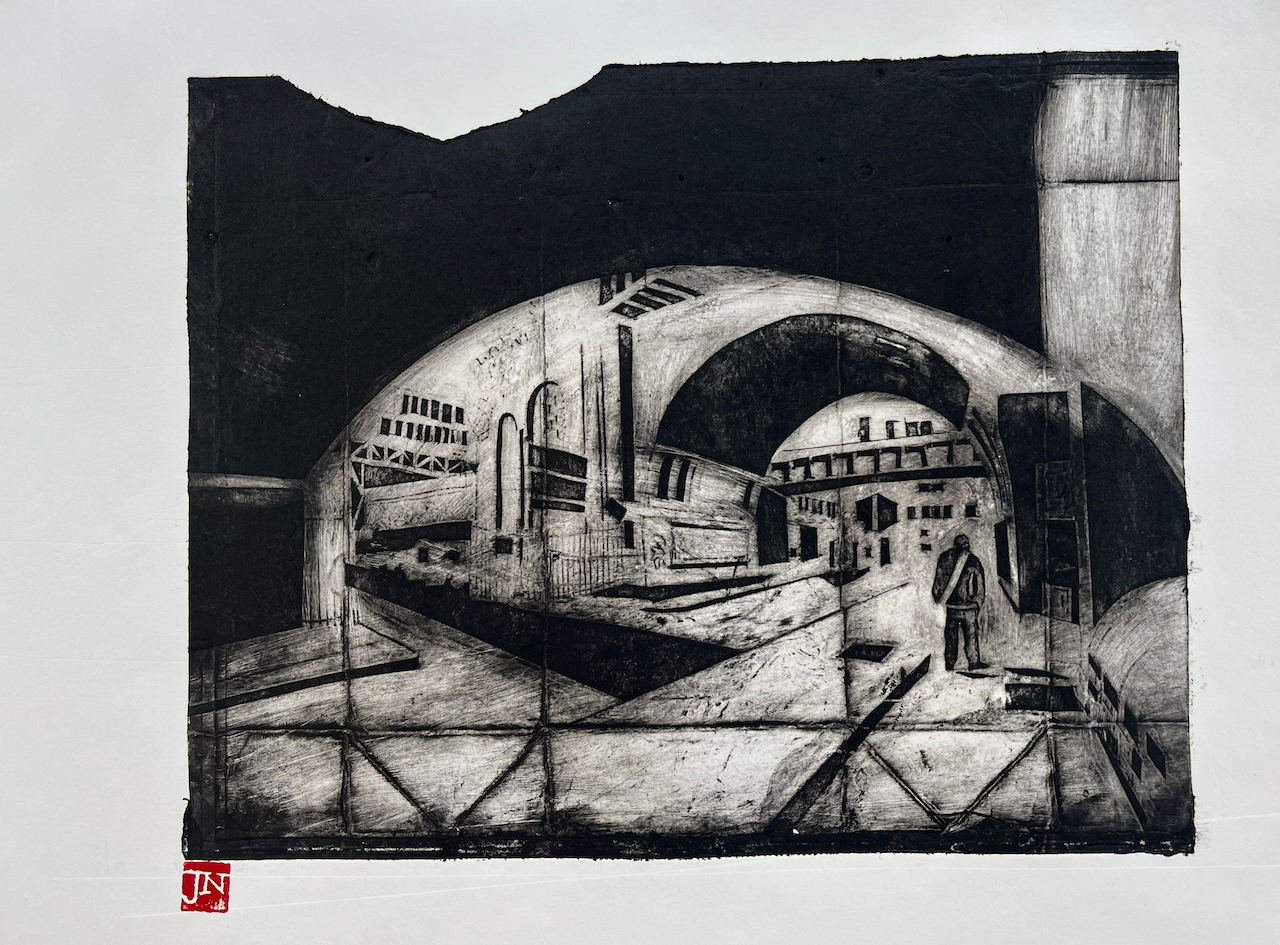
Huge brick arches carry the railway lines into Waterloo Station. Here is a view looking North up Great Suffolk Street.

Great Suffolk Street railway arch, monoprint #3 of 6. Printed image size 12″ x 9″. On Fabriano Unica paper, 20″ x14″

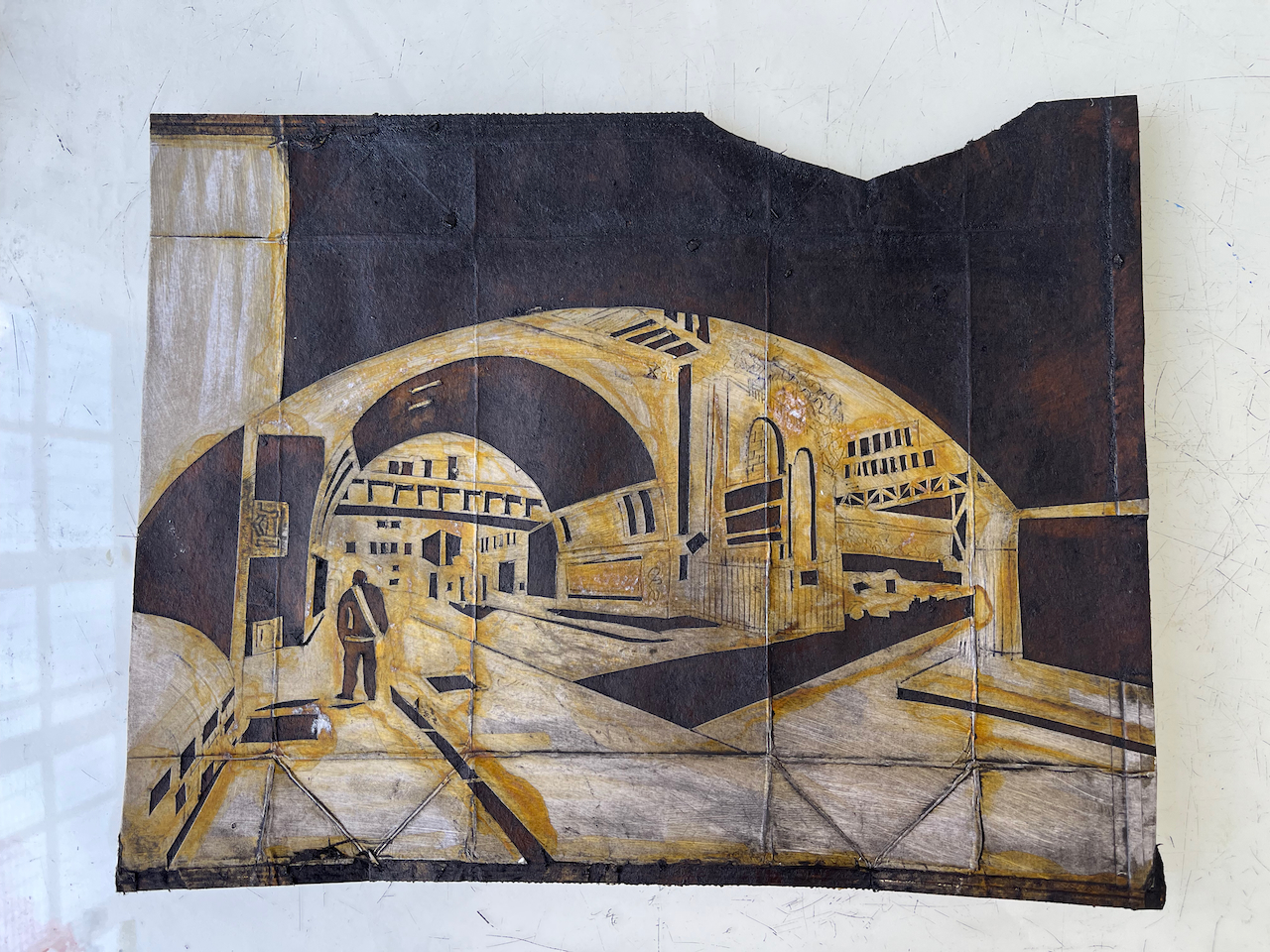
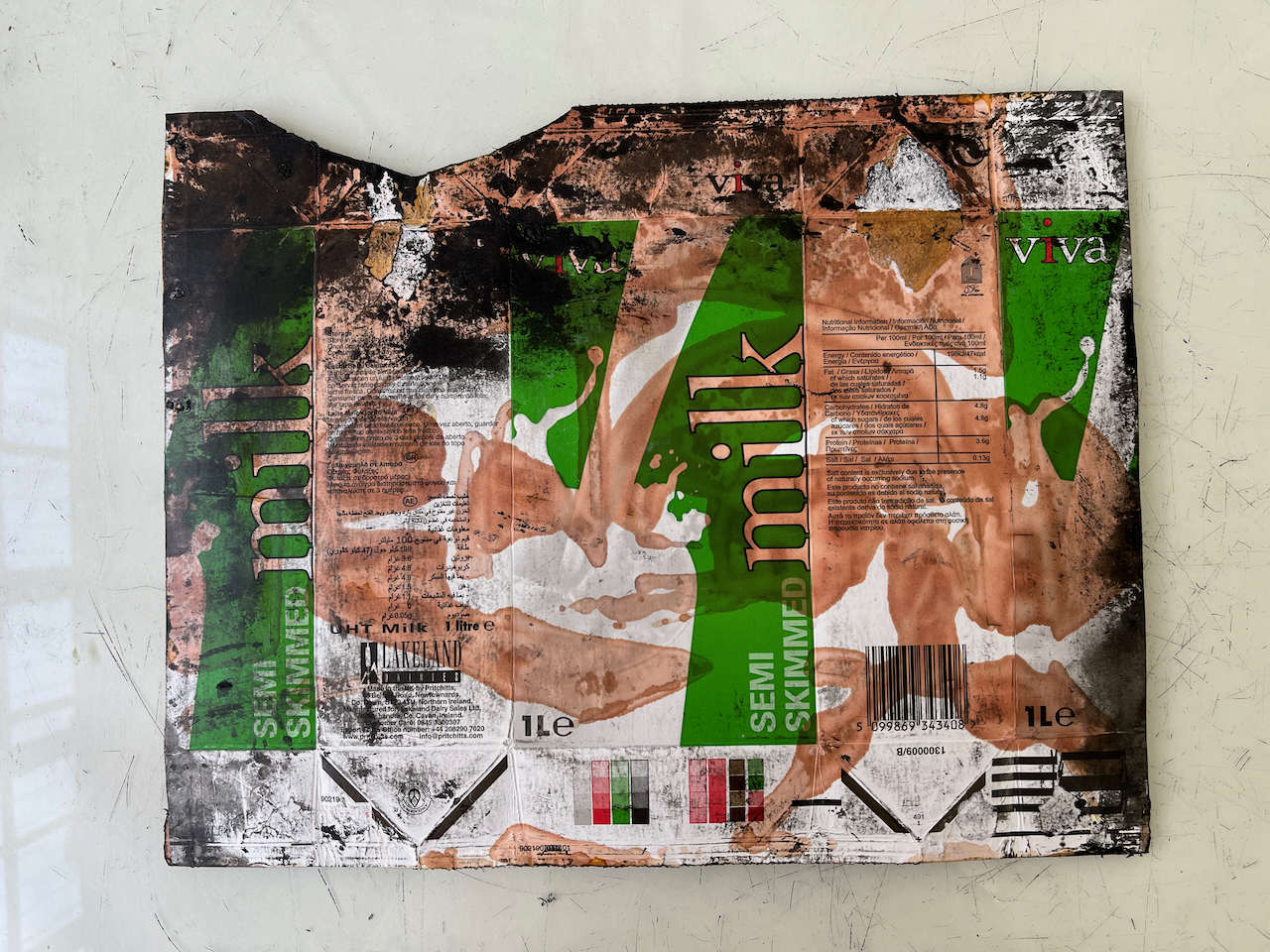
This is a packaging monoprint. It is an intaglio print from a “plate” made from a milk carton. Here is the plate:

I’ve described the process in this blog post: Print plates made of packaging. The basic method is to use the shiny metallic surface inside the carton. I cut out the shapes I want and peel back the shiny surface to reveal a rougher surface which takes the ink. The yellow colour you see on the plate is shellac, a varnish that I paint on to make the plate last a little longer.

The plates are quite fragile, and can only make a limited number of prints. Here is number 6:

Great Suffolk Street railway arch, monoprint #6 of 6. Printed image size 12″ x 9″. On Agawami Washi Kitakata Japanese paper, 20″ x1 4″

I made all the prints on the Henderson press at East London Printmakers, Stepney. I used Chabonnel F66 traditional oil-based etching ink.

Sketching in Norwich

Norwich describes itself as “A Fine City”. Indeed it is. The city centre streets are clean, car-free, and lined with a huge variety of shops, restaurants, and service providers such as key-cutters and barbers. All very interesting. And there’s a lovely river too.

The City of Norwich website tells me: “On 17 July 1967, London Street became the first shopping street in the UK to be pedestrianised. It started a revolution that saw people given priority over traffic in city centres.”

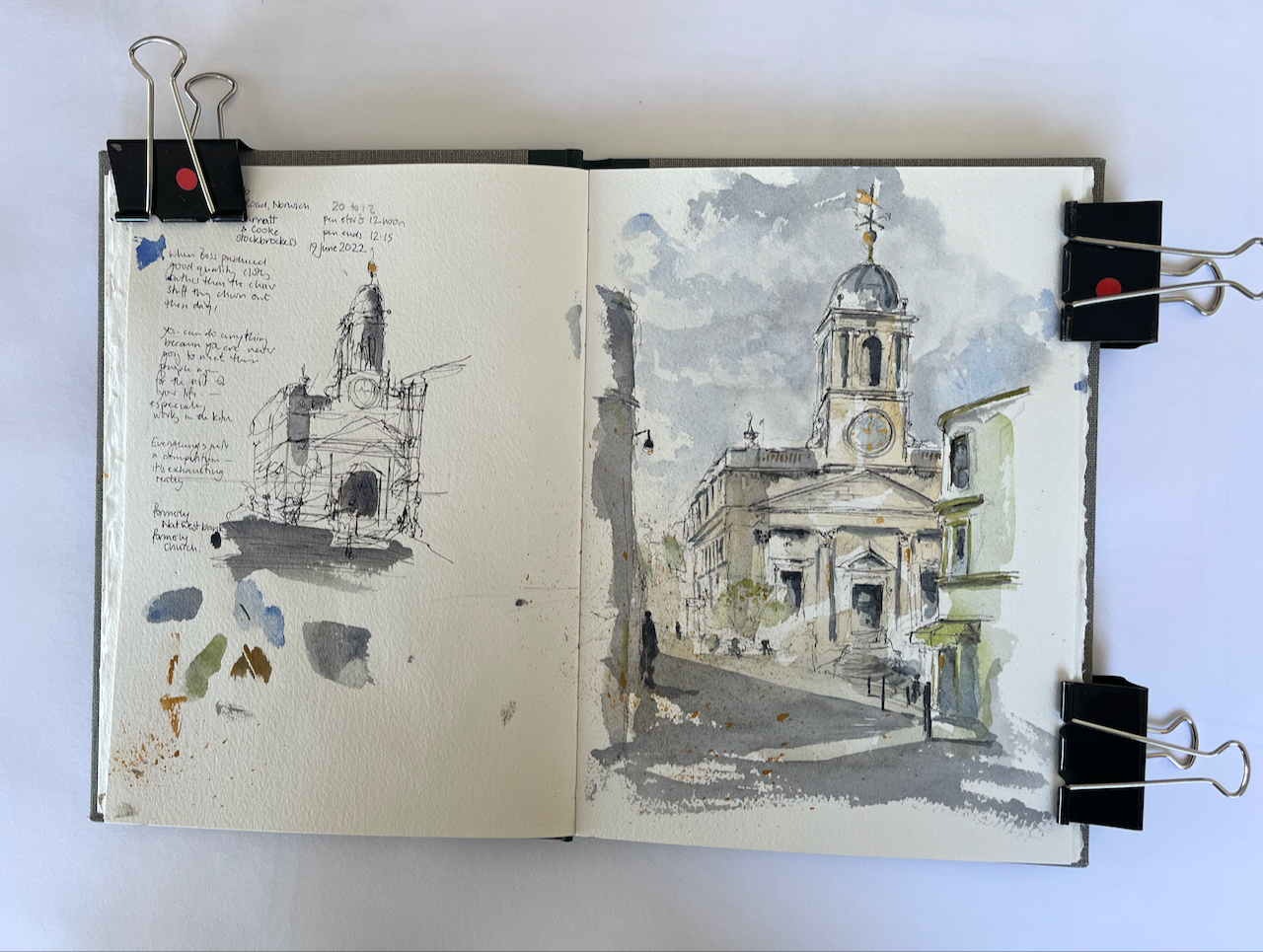
This building stands in London Street, at the junction with St Andrews Hill. It was designed by FCR Palmer for the National Provincial Bank, and was completed in 1925 [1]. The National Provincial became NatWest after a series of mergers and takeovers. NatWest moved out in 2017.

“Cosy Club” 45-51 London St, Norwich NR2 1AG, 19th June 2022 12:15, in Sketchbook 12

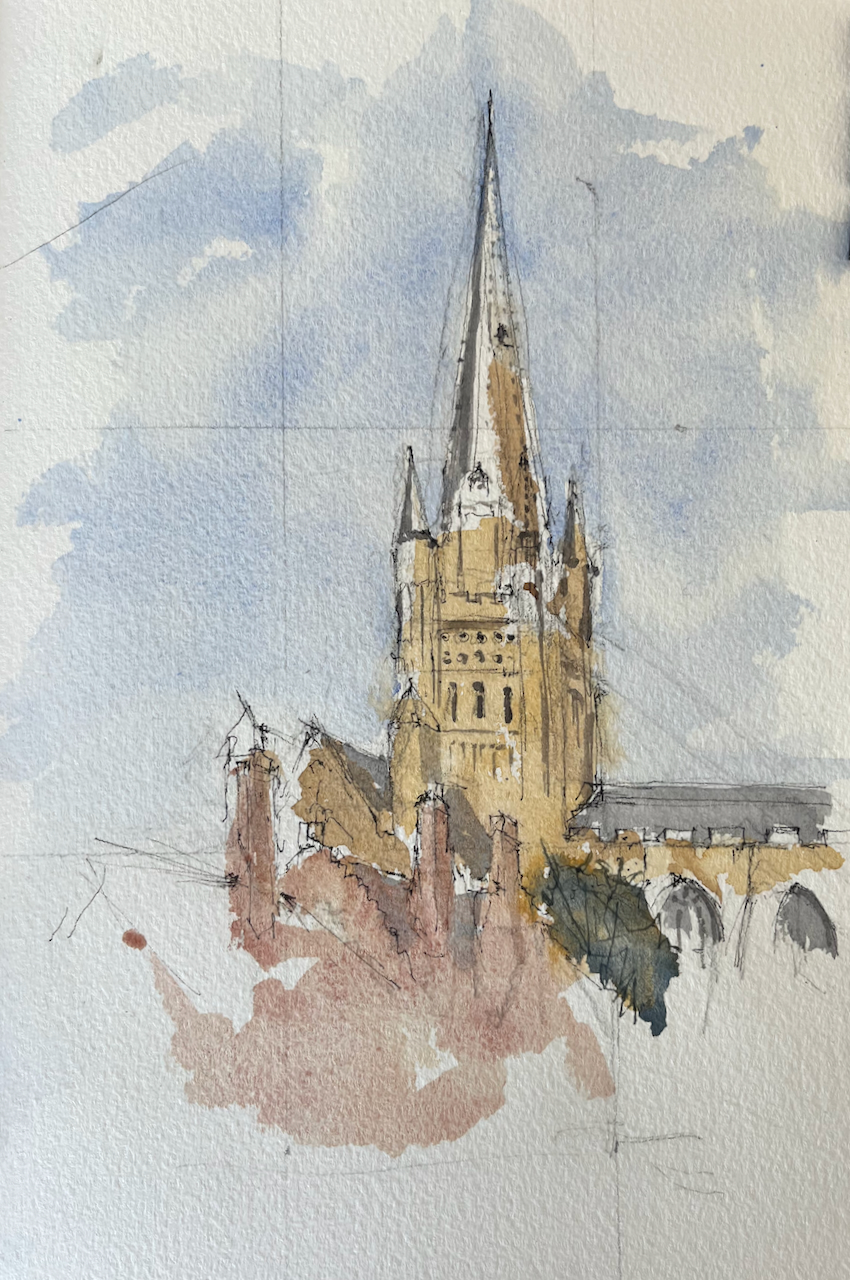
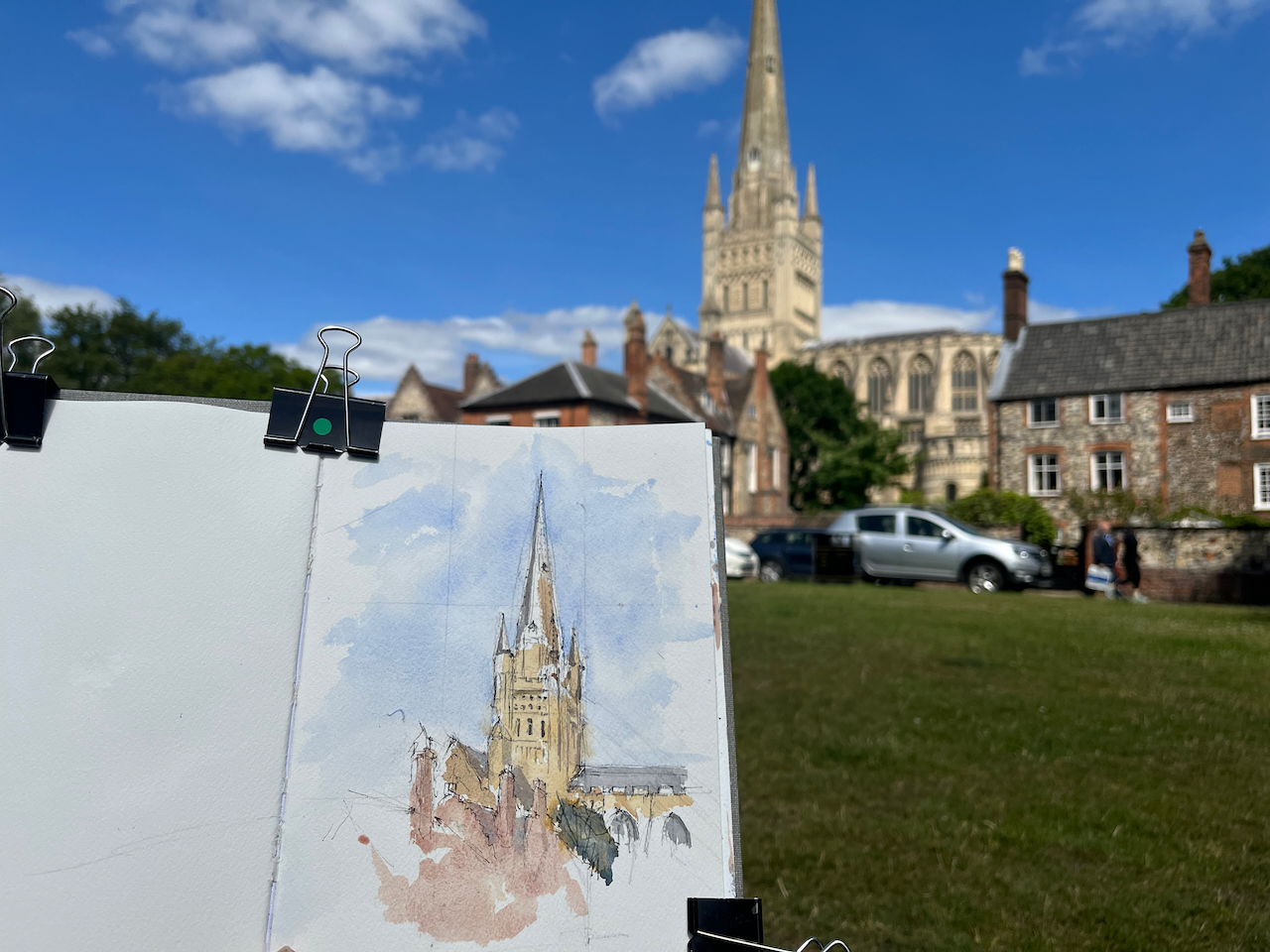
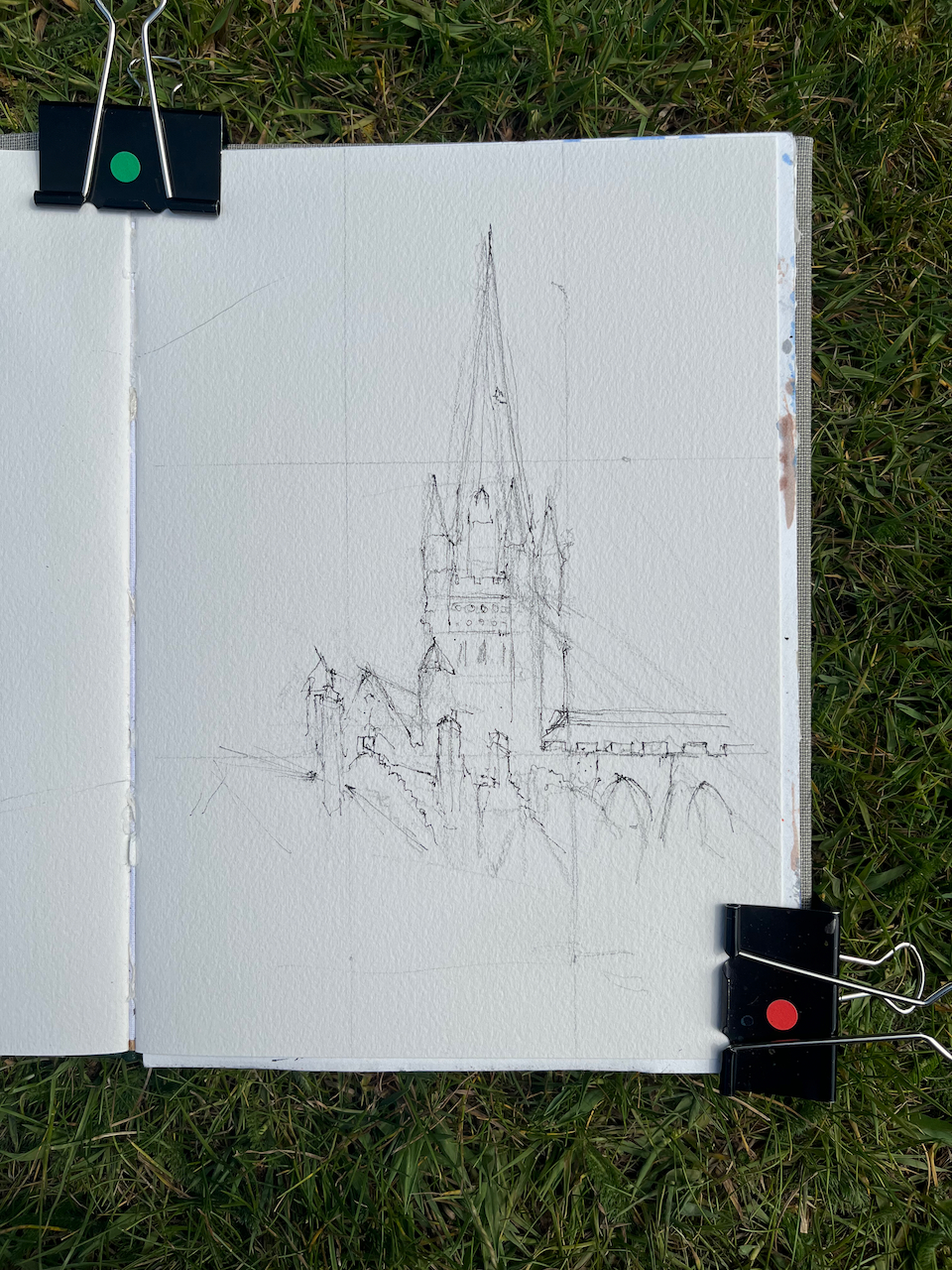
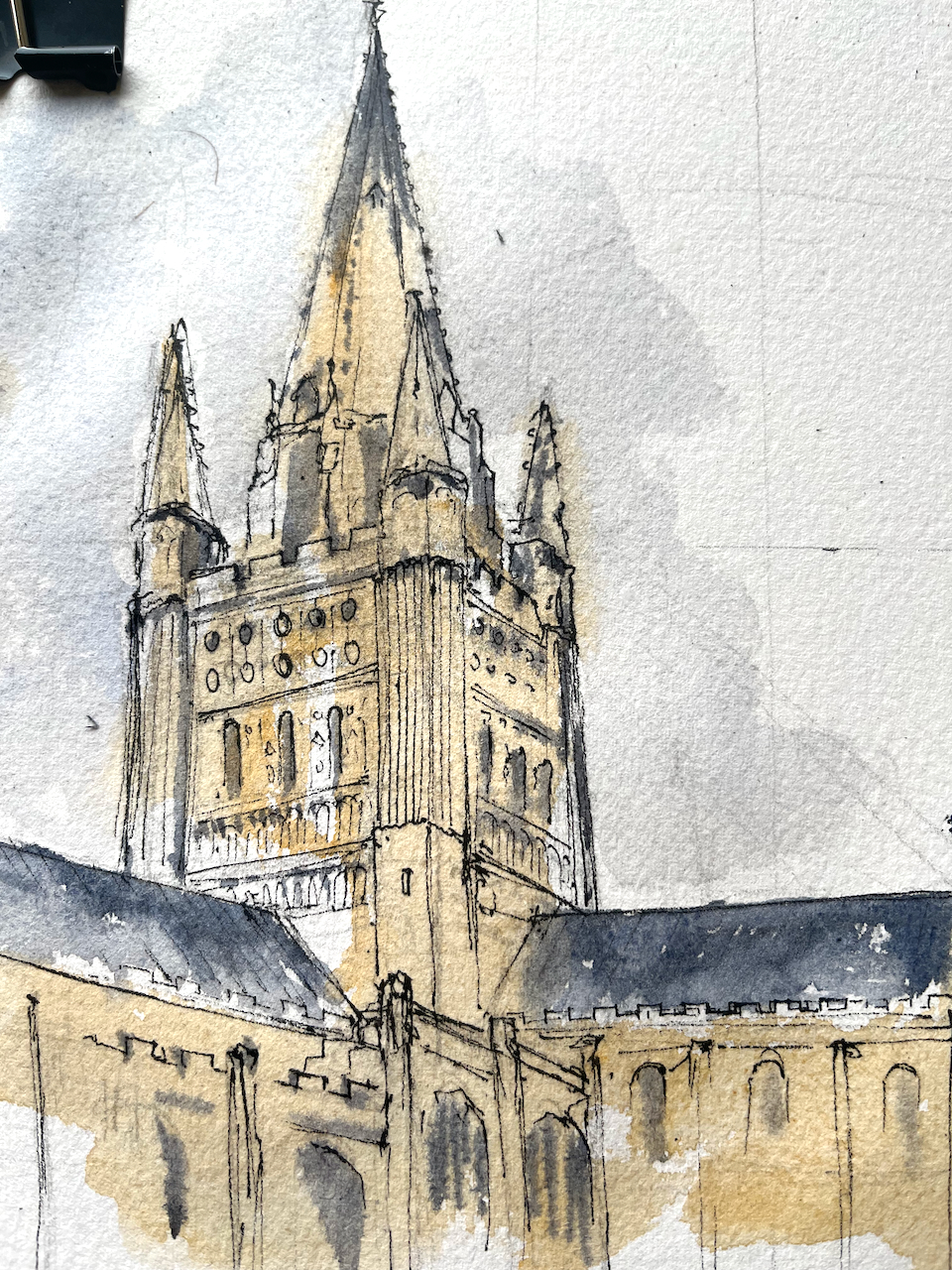
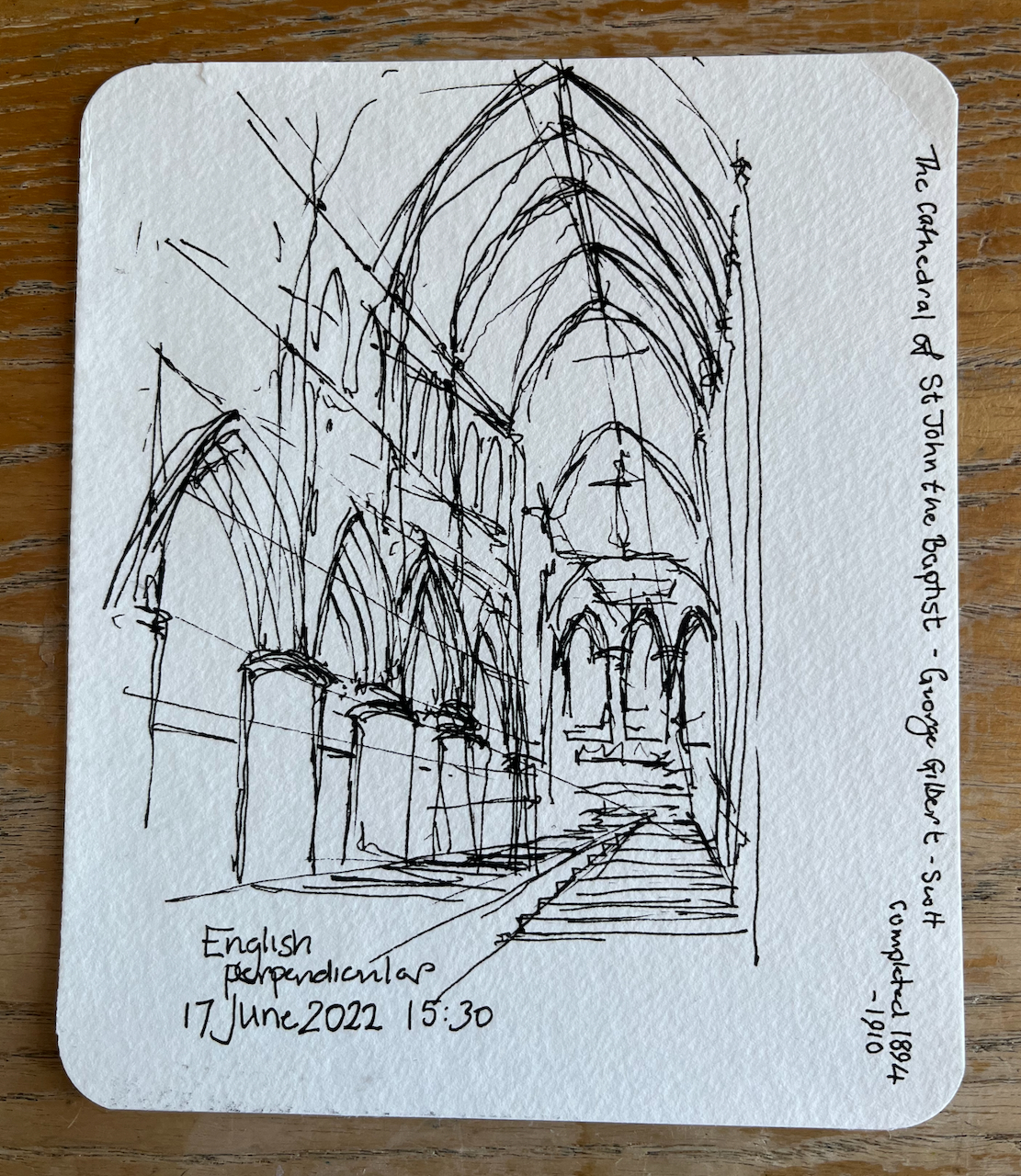
I also sketched Norwich Cathedral, from the Cathedral Close.

Certainly a fine city, and one to which I hope to return.

Note 1: History of the London Street bank building from the Norwich Society website: https://www.thenorwichsociety.org.uk/explore-norwich/natwest-building-on-london-street

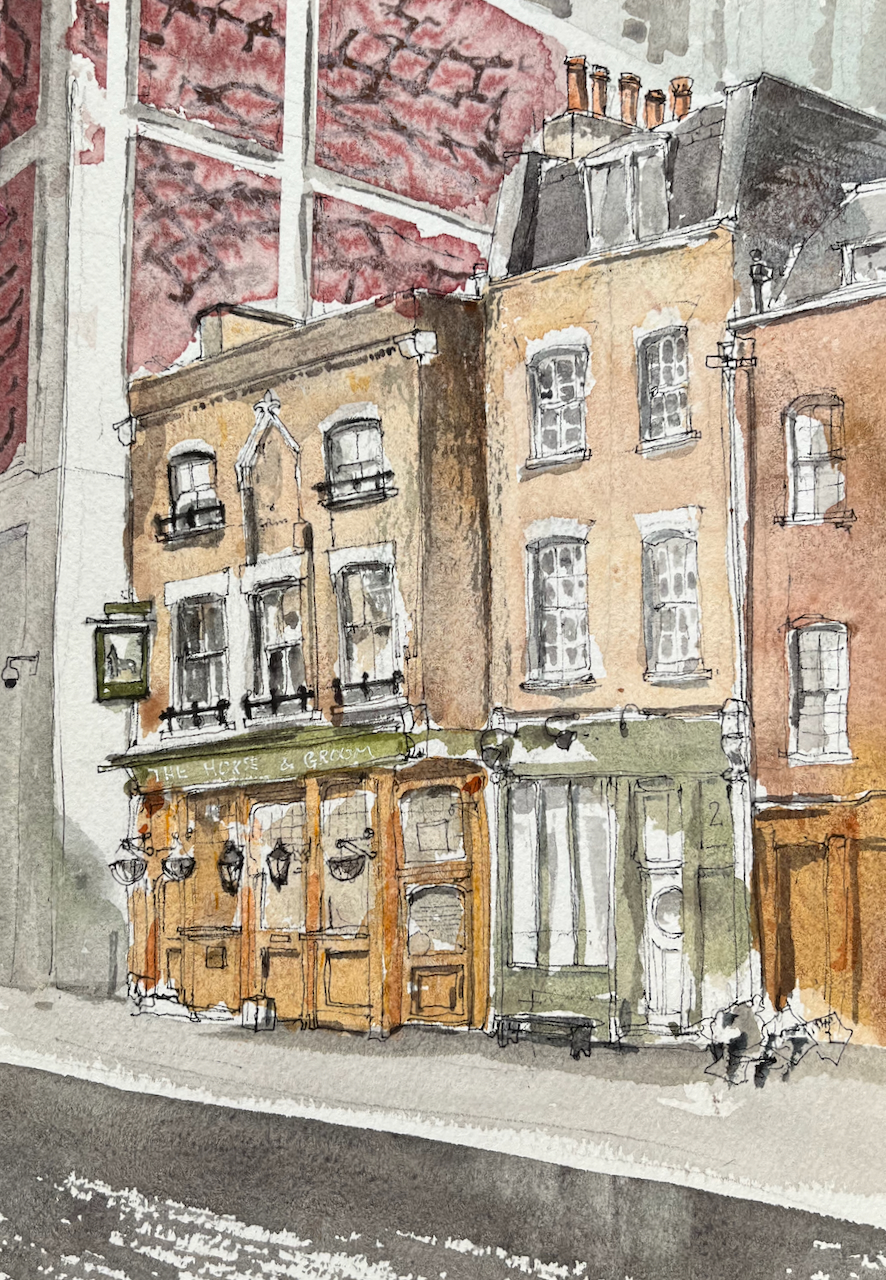
The Horse & Groom, EC2

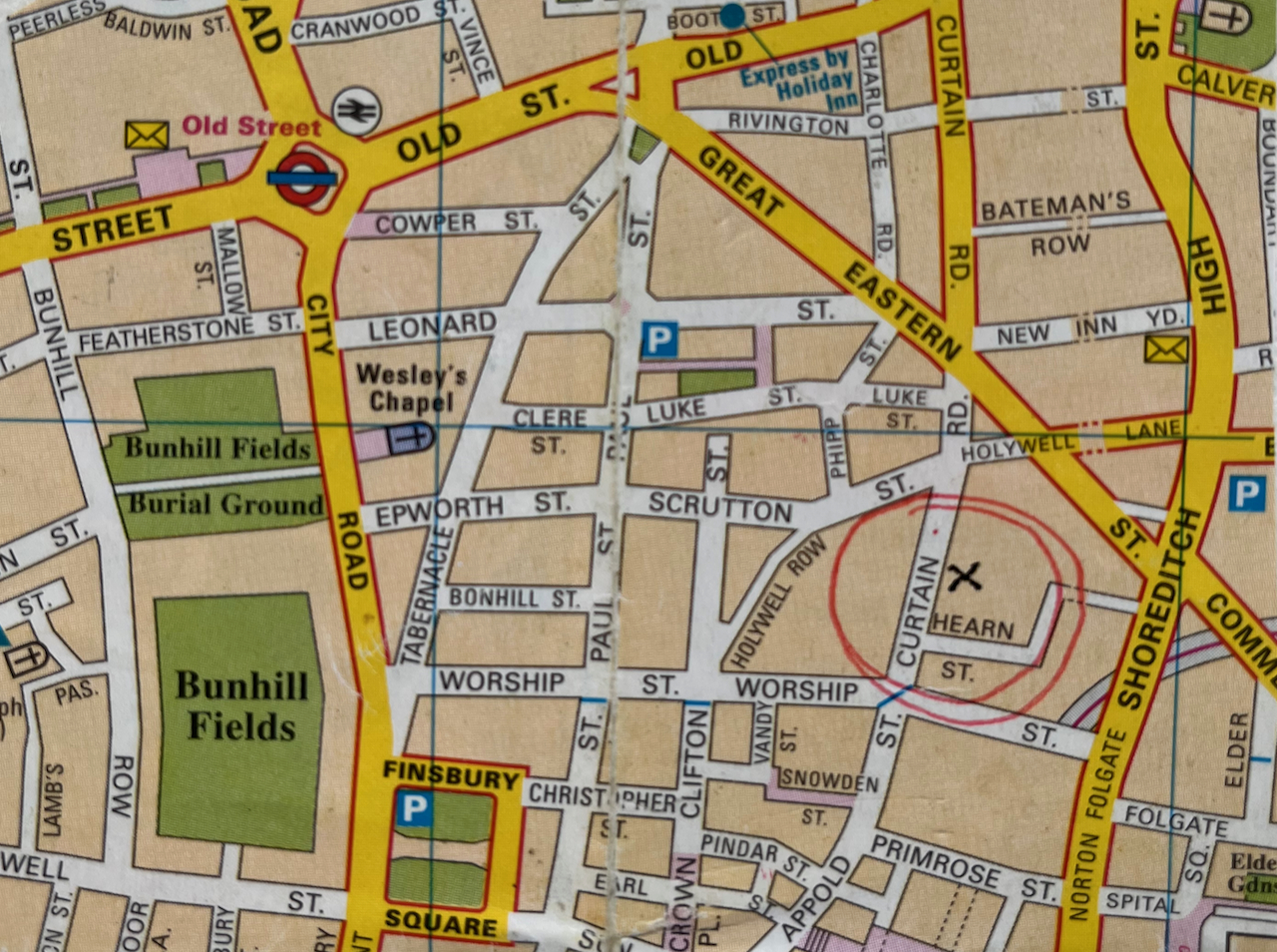
The Horse & Groom pub is on Curtain Road in Shoreditch.

The Horse & Groom, EC2. 10″ x 7″ in Sketchbook 12. Friday 10 June 2022 12:05

The Horse and Groom describes itself on its website :

Since opening our doors in 2007 the Horse and Groom has grown to be one of East London’s best loved pubs. Recognised as the original entrance for Shakespeare’s Curtain Theatre, in 2012 we were protected as a venue and we look to keep Shoreditch drinking and dancing for a long time yet

TheHorseandGroom.net

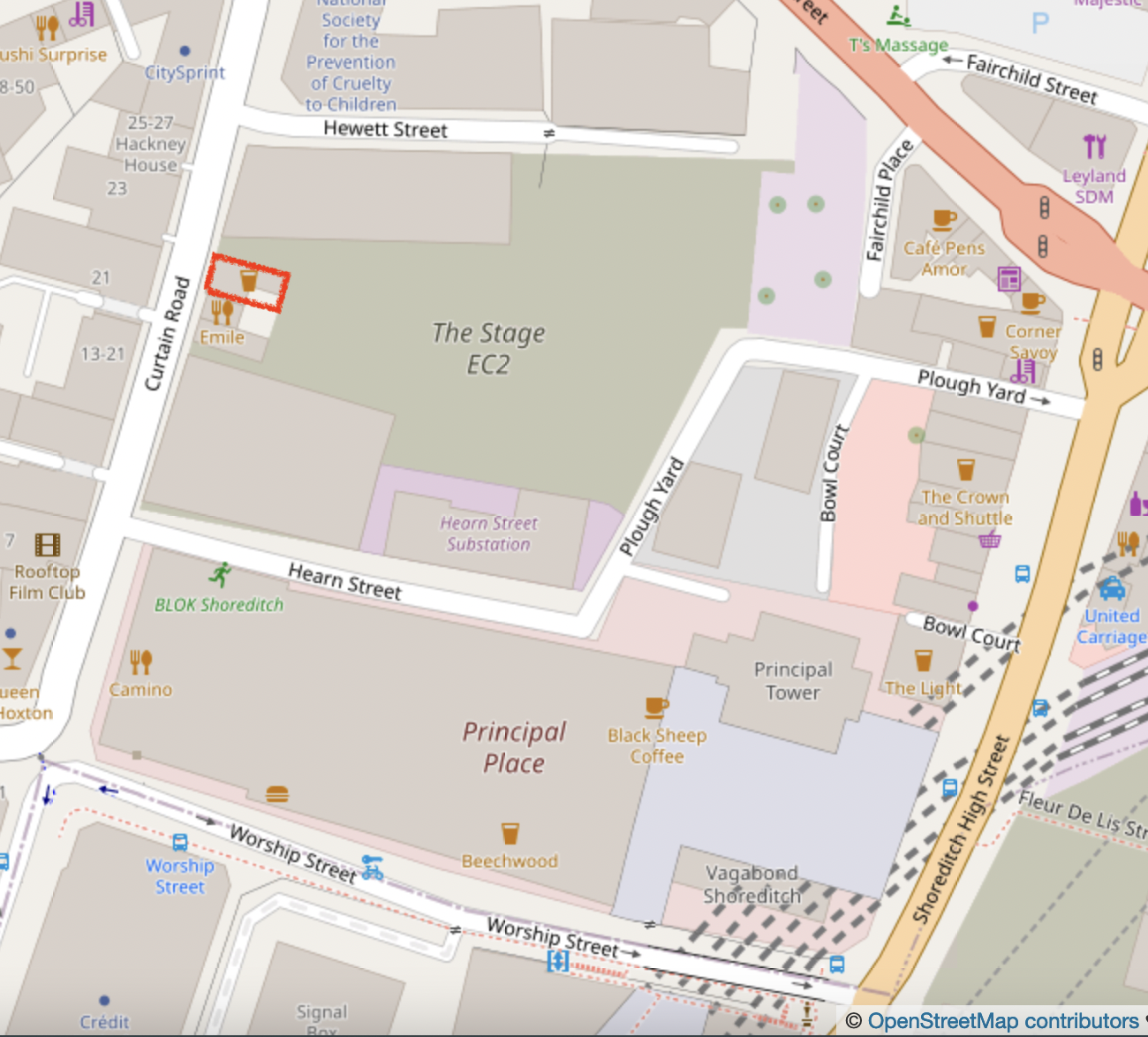
The reason why the pub’s future might need to be mentioned is clear from the modern map. As you see from the 2022 street map, the pub and its neighbours are surrounded on three sides by a huge office and residential development “The Stage”.

The Horse & Groom (left) and its neighbours are surrounded by new build.

The pub not only survives, it thrives. Squaremeal.co.uk, a review site, says “The rickety Georgian boozer’s twin dance floors get hectic and steamy at weekends, when house, funk, and rare garage rule….”

Sketching in Curtain Road

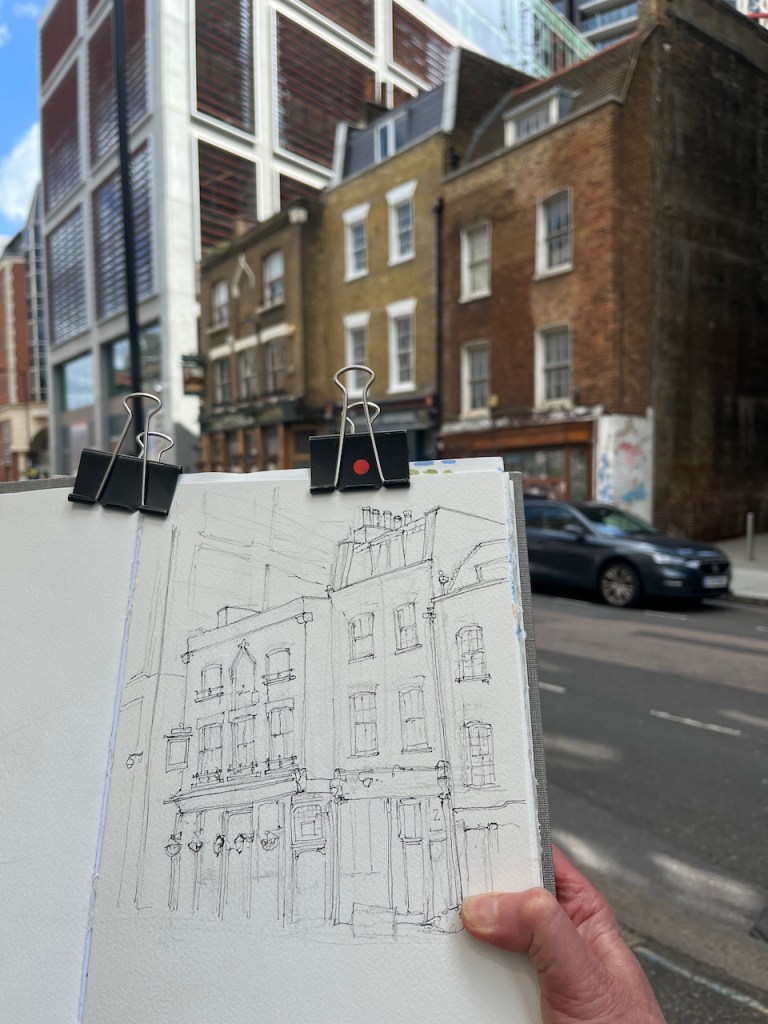
I sketched The Horse & Groom standing in Curtain Road. At first I had a clear view, but cars gradually arrived, and vans, and delivery vehicles. I finished the drawing at my desk.

The pub is number 28. The building next door, number 26, is, or was, “Cincinnati Chilibomb”. One of the vans that arrived discharged a consignment of building materials. Construction workers started shifting tools and materials into number 26. So maybe there will be a change of use.

The building next to that, on the right of my drawing, must be number 24. Numbers 24 and 26 are listed, Grade II, Listing NGR: TQ3326982177. I cannot find any listing for the pub.

No 24: early C18, 3 storeys and attic, 2 windows. Rounded gambrel roof, tiled, with dormer. Painted brick with parapet front. Gauged segmental arches to later sash windows. Early-mid C18 shop front, with slightly altered glazing, on ground floor. No 26: house of early C19 appearance, possibly with older core, 3 storeys and attic, 2 windows. Stock brick with parapet, slated mansard with dormer, Gauged near-flat brick arches to modern plate glass windows. Ground floor mid-late C19 shop front.

Historic England listing

Number 24 is a fascinating building. What will happen to it? Currently it is gradually falling derelict:

Click and enlarge the pictures to appreciate the amazing carved woodwork on the door.

The huge buildings behind are described on the website for “The Stage”. The development has “over an acre of public space and landscape gardens surrounded by luxury apartments, cutting edge office space and prime retail…”

London is certainly a city of contrasts.

Here you can see the pen-and-ink drawing and the colour side-by-side:

pages in Sketchbook 12

Bank of England – Tivoli Corner

I took advantage of the road closures for the Queen’s Platinum Jubilee to sketch this corner of the Bank of England.

Bank of England – Tivoli Corner, 2nd June 2022, in Sketchbook 12
Temple of Vesta, Tivoli, modern photo from Wikipedia Commons on this link

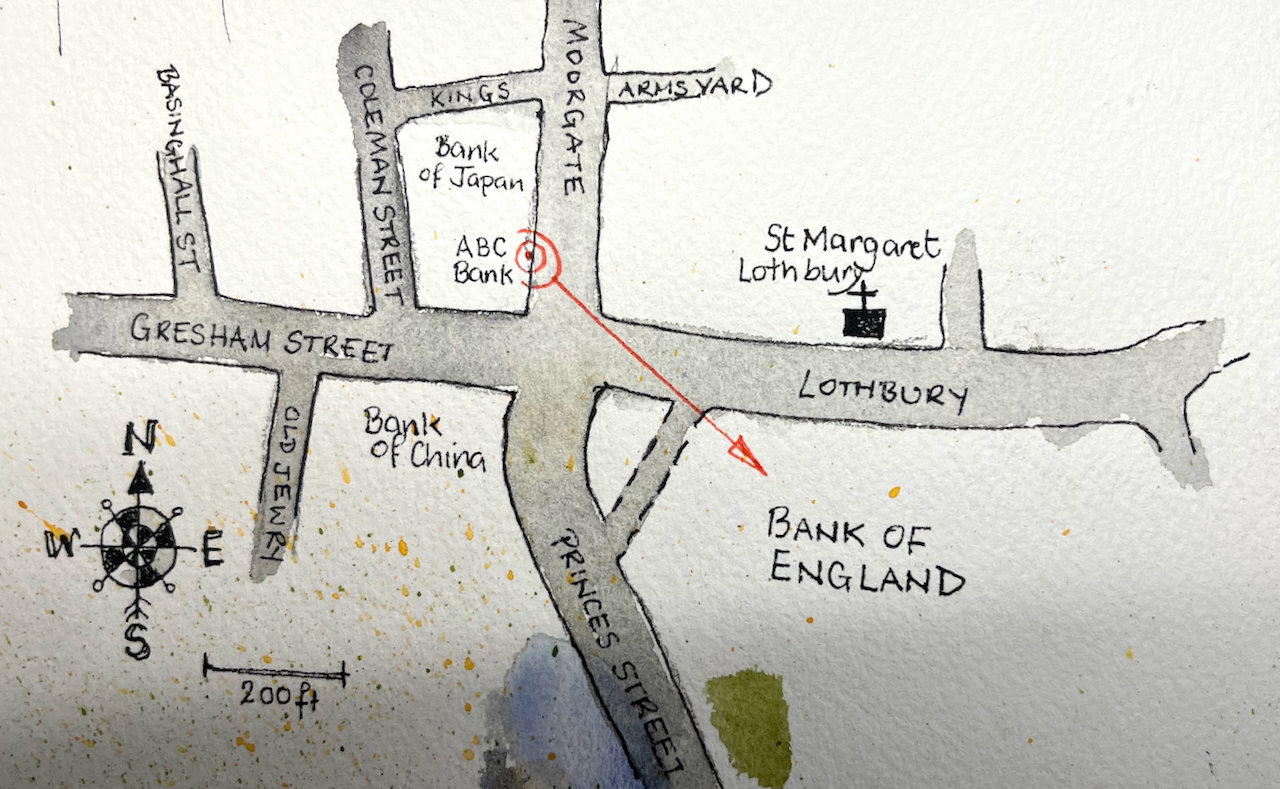
This is the North-West corner of the Bank of England. The perimeter wall was designed by John Soane in 1805. The design of the corner was inspired by the Temple of Vesta at Tivoli.

The John Soane museum has a marvellous digital archive with detailed notes on his work on the Bank of England. John Soane was surveyor to the Bank of England for 45 years, from 1788 to 1833. During that time the role of the Bank of England changed from a small bank helping out the government with the national debt, to a significant national institution, printing money and managing Income Tax. The Soane museum archive notes:

Since its foundation in 1694, the Bank of England had financed Britain’s wars and managed the national debt. War, therefore, resulted in more business for the Bank, demanding extensive alterations and additions. Soane’s vast building work was largely the result of the French Revolutionary and Napoleonic Wars that lasted from 1793 to 1815. More space was required as the staff doubled during this time and the bank note printing process was carried out on site. In addition, new offices were required as the Bank’s responsibilities and roles changed, such as a place for managing the newly instituted Income Tax of 1799.
Madeleine Helmer, 2010-2011, on this link © Sir John Soane’s Museum, London

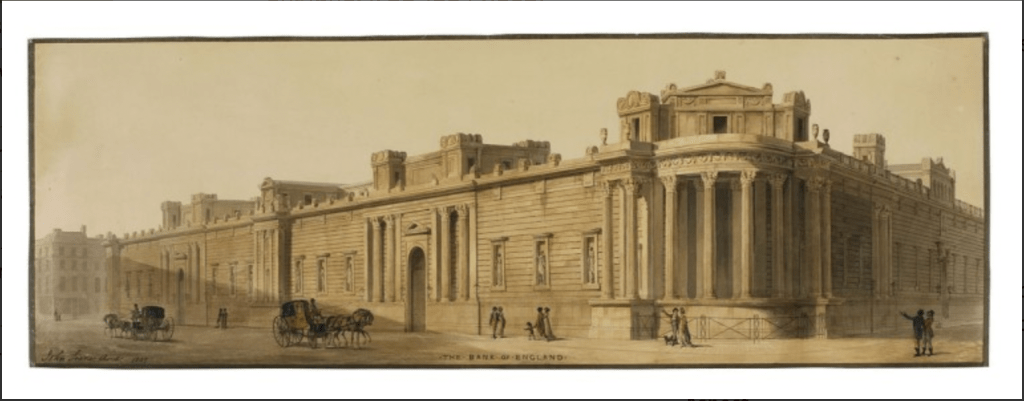
Here is a view from the North-West in 1807, showing the John Soane Bank of England as constructed. You see the Tivoli Corner, which is there today.

North face of the Bank of England, exhibited in the Royal Academy 1809, by “John Soane Archt 1807” Photo: © Sir John Soane’s Museum, London, http://collections.soane.org/OBJECT3718

John Soane’s 3-storey building was demolished to make way for a new 7-storey building constructed 1925-39 by Herbert Baker. Soane’s perimeter wall was retained, but everything else was replaced. It is Herbert Baker who is responsible for that dome in my drawing, and also for the marvellous walk-through passage at this corner. You can see the North side of the passage in my drawing. For more photos of this passage and a description, I recommend the wonderful “IanVisits” site. Ian visits Tivoli Corner on this link. Or go there! And look up.
I took advantage of the road closure to sketch standing in Moorgate.

As I sketched, people walked past either side of me, in extraordinary hats. Everyone was cheerful and the sun shone. I enjoyed chatting to the various people who stopped to examine my drawing or comment on the view.

Pen, before the colour went on
You see the traffic bollards in the drawing. Those were patiently removed by a security guard every time a police vehicle approached, and equally patiently replaced. This must have happened about six times in the hour and half I was there.
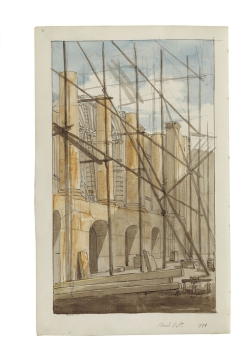
Site progress drawings 1798. Joseph Michael Gandy (1771-1843) Photo: © Sir John Soane’s Museum, London SM (58) volume 69/14

The John Soane archive notes on Tivoli corner are on this link. This site has some lively “work-in-progress” drawings of the construction of the Bank of England. Here is one. See how modern it looks! It was drawn in 1798, the same year that Nelson fought Napoleon in the Battle of the Nile.

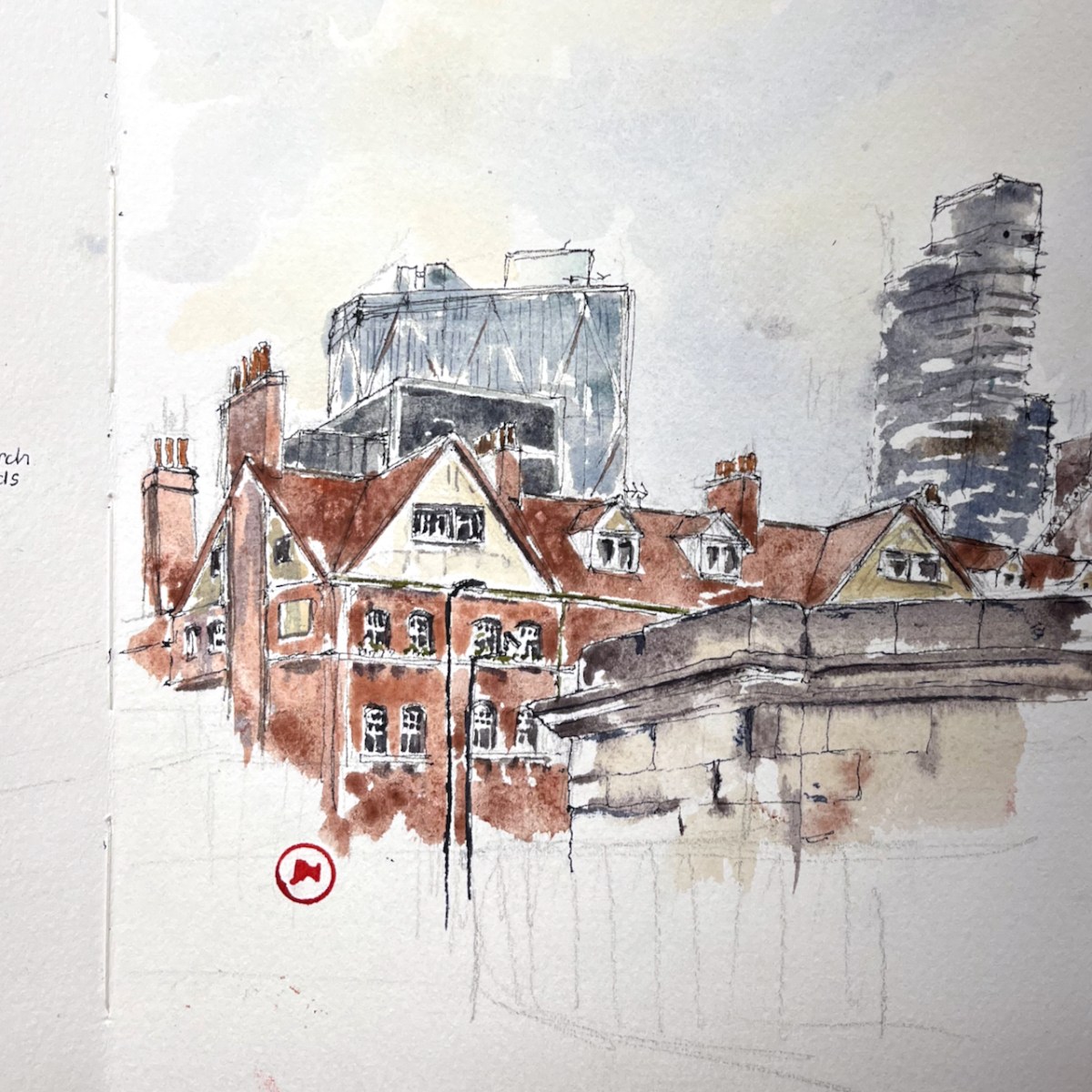
Spitalfields E1 from ChristChurch

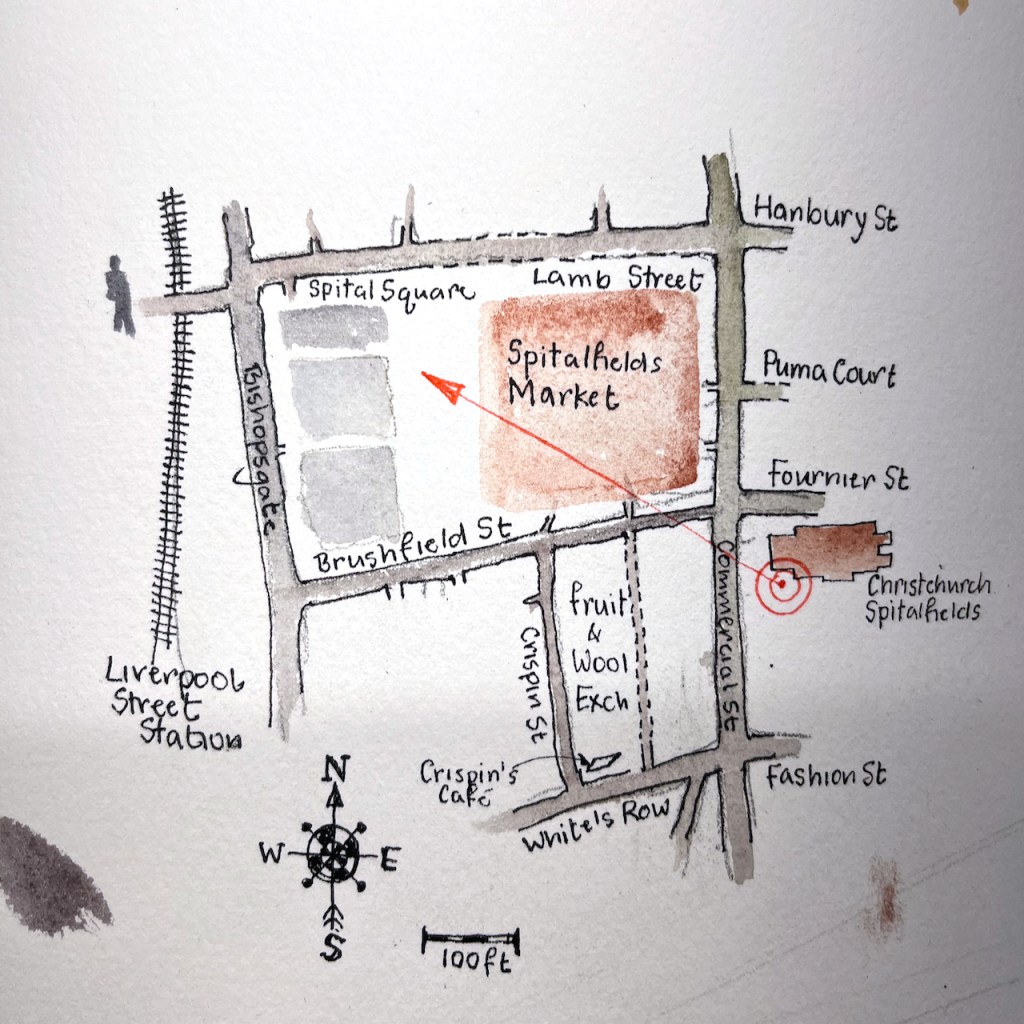
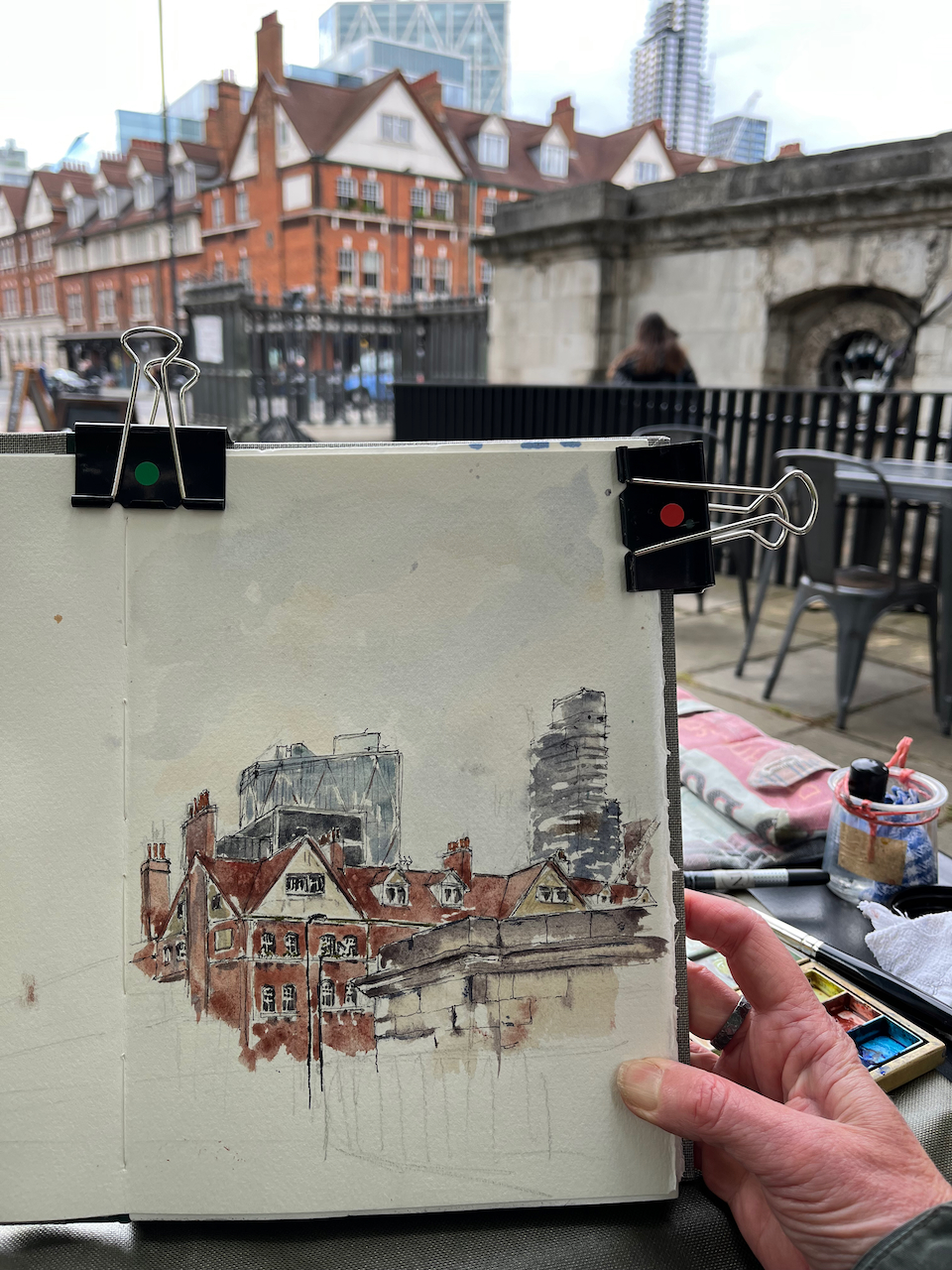
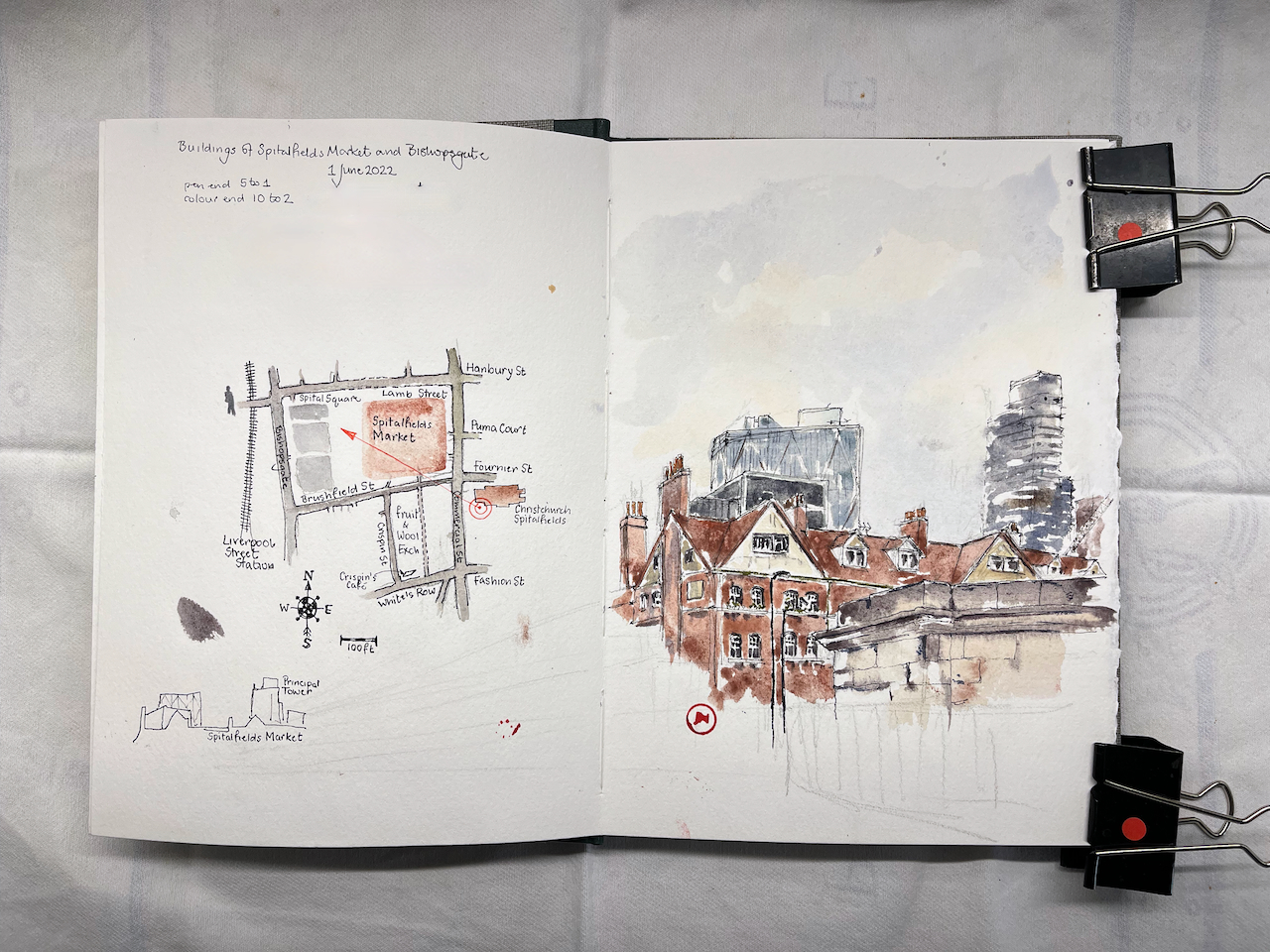
I joined a sketching friend for a stroll around Spitalfields. We had coffee at the Cafe in the Crypt of Christchurch Spitalfields, and then sat at the tables outside and sketched the view.

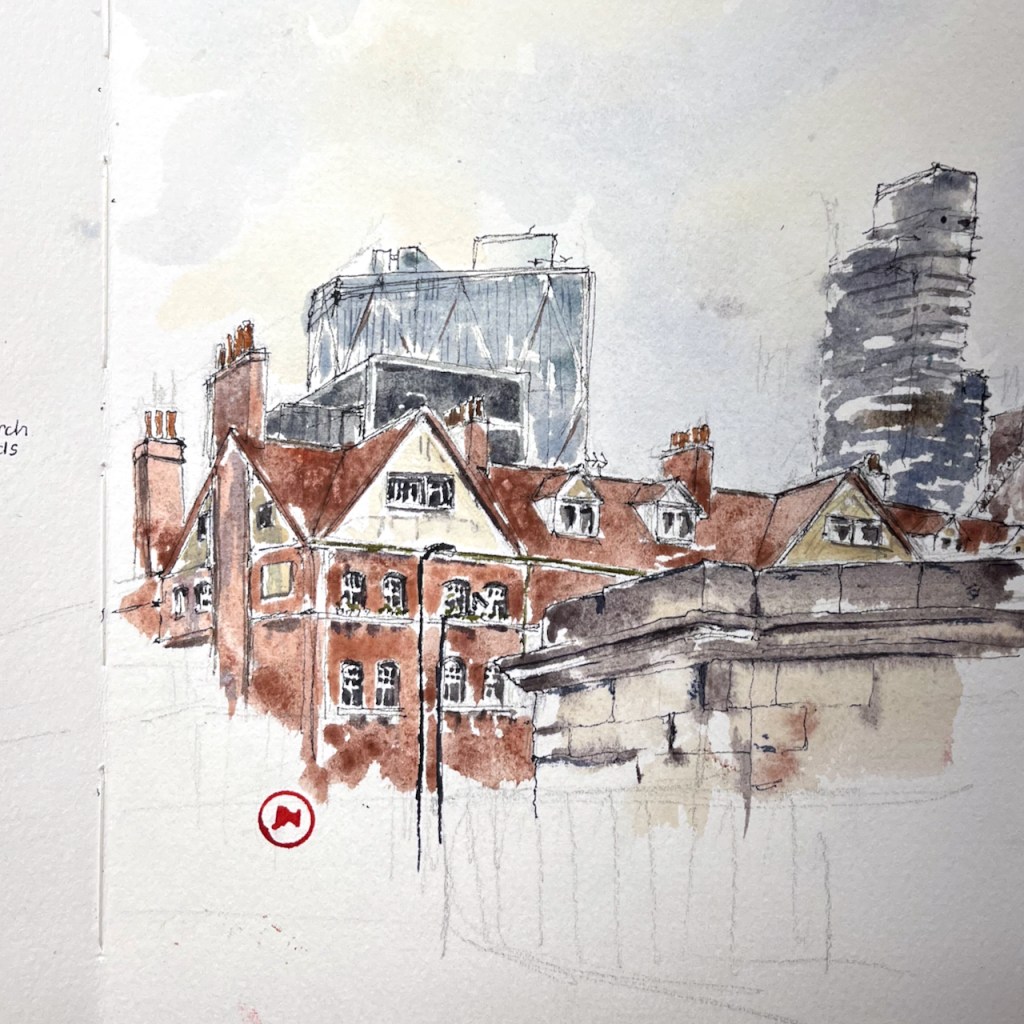
Here is my sketch:

Spitalfields Market E1 from ChristChurch, 7″ square in Sketchbook 12. 1st June 2022

Behind the red-bricked buildings of the Market, you can see the office and residential tower blocks along Bishopsgate. “Principal Tower” in the one to the right.

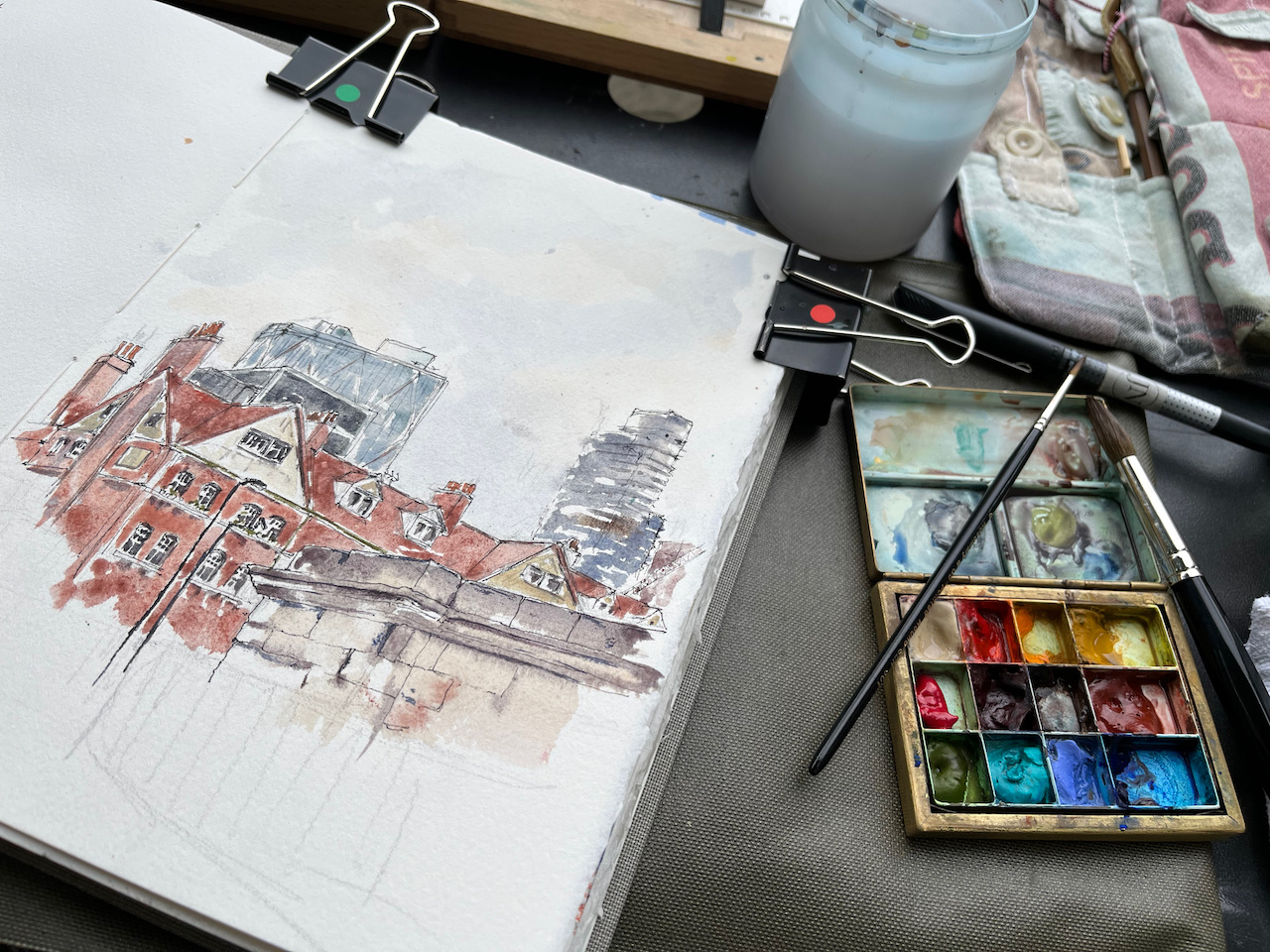
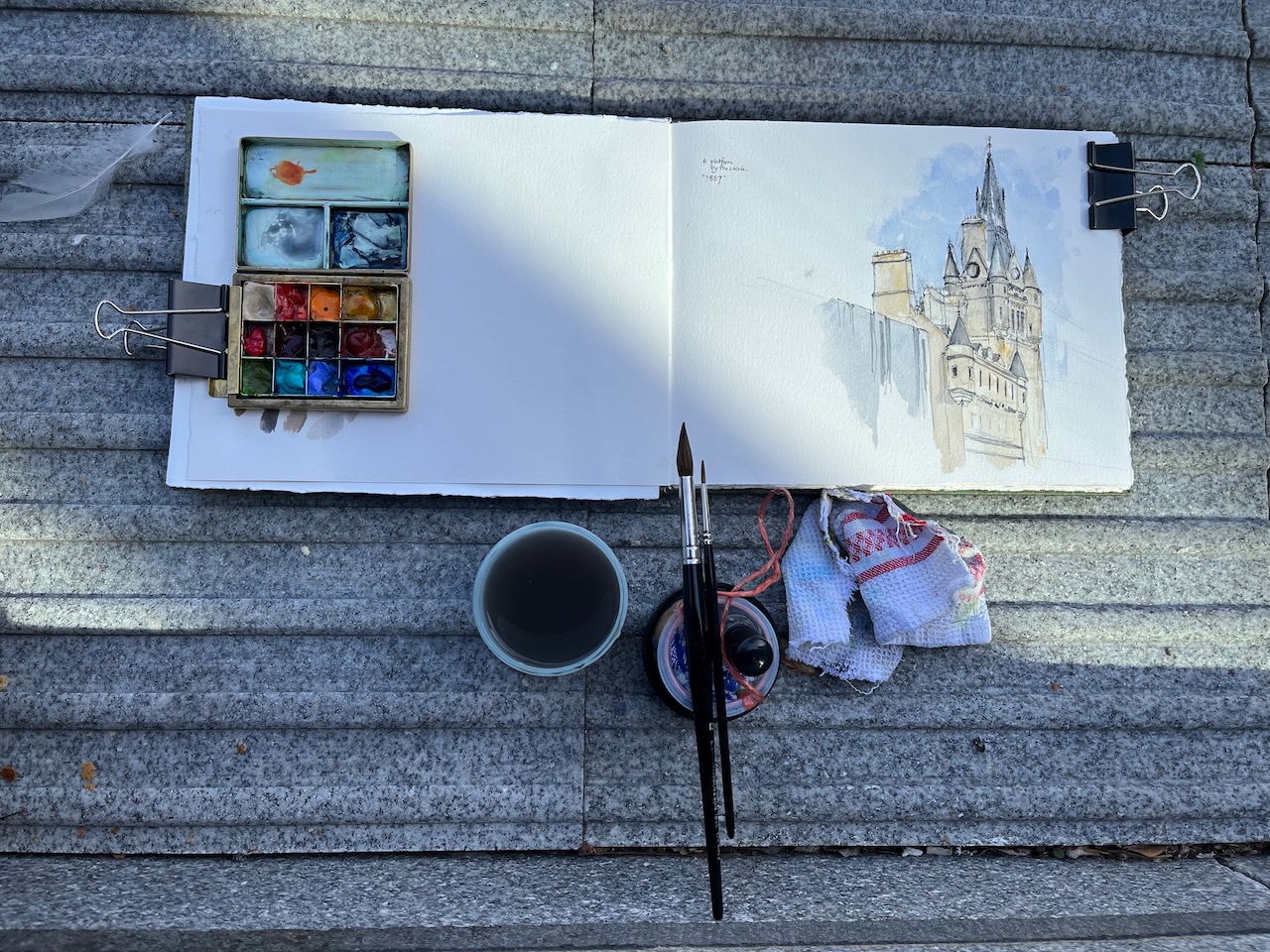
Here are some on-location photos and a picture of the sketchbook.

Thankyou to the talented artist LA for your company and inspiration on this expedition. It’s fun to sketch together!