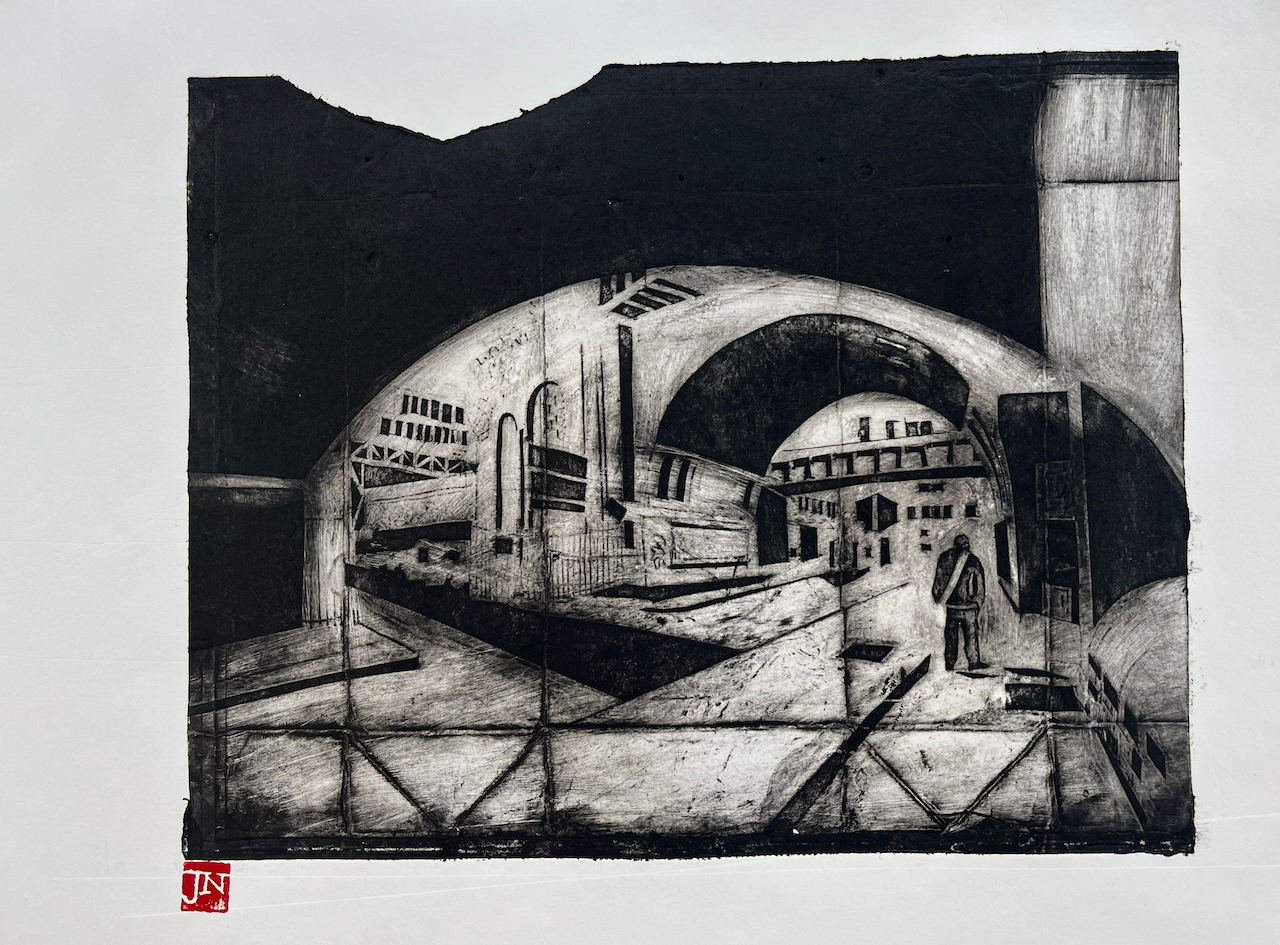
Huge brick arches carry the railway lines into Waterloo Station. Here is a view looking North up Great Suffolk Street.
Great Suffolk Street railway arch, monoprint #3 of 6. Printed image size 12″ x 9″. On Fabriano Unica paper, 20″ x14″
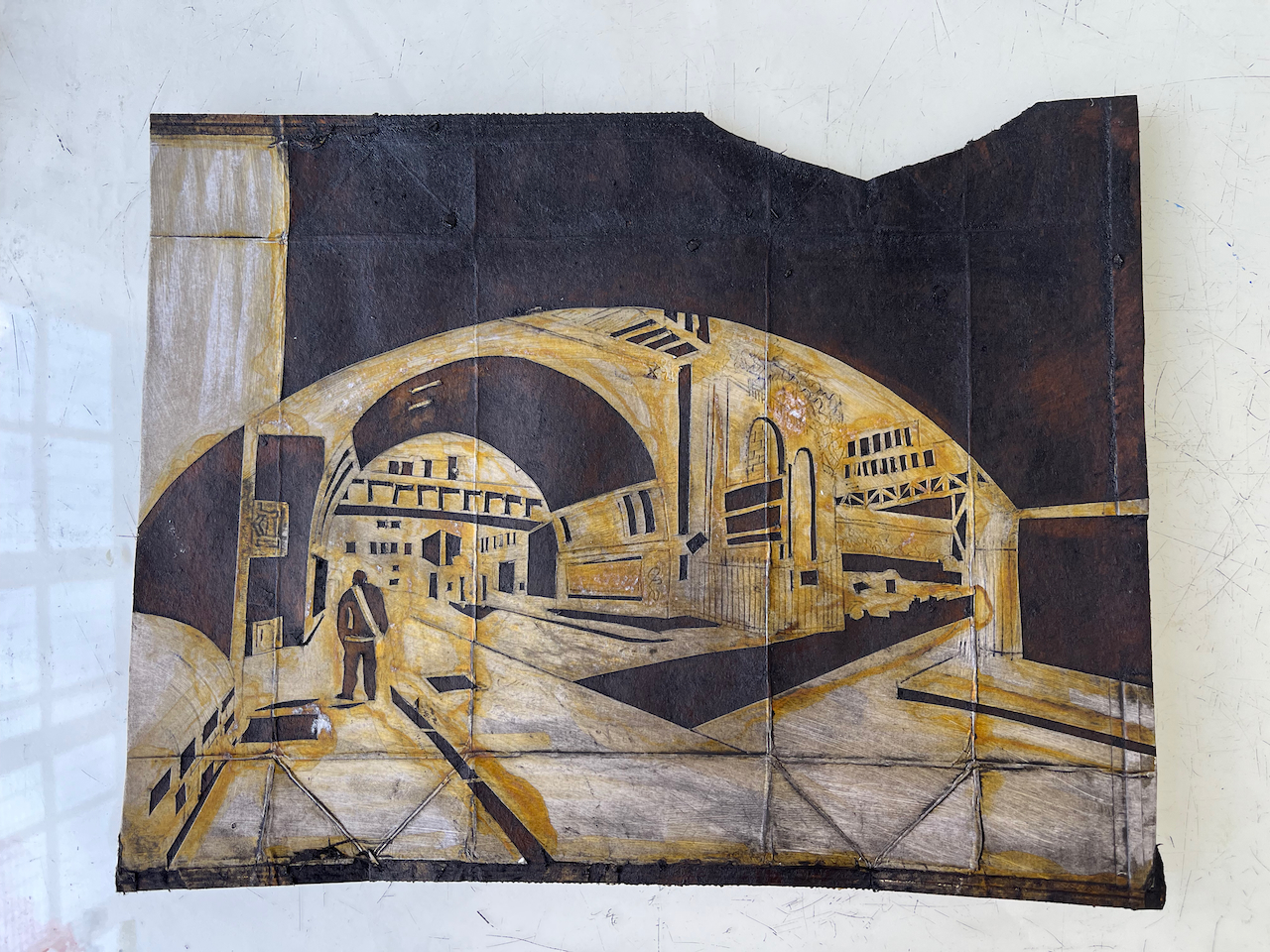
This is a packaging monoprint. It is an intaglio print from a “plate” made from a milk carton. Here is the plate:
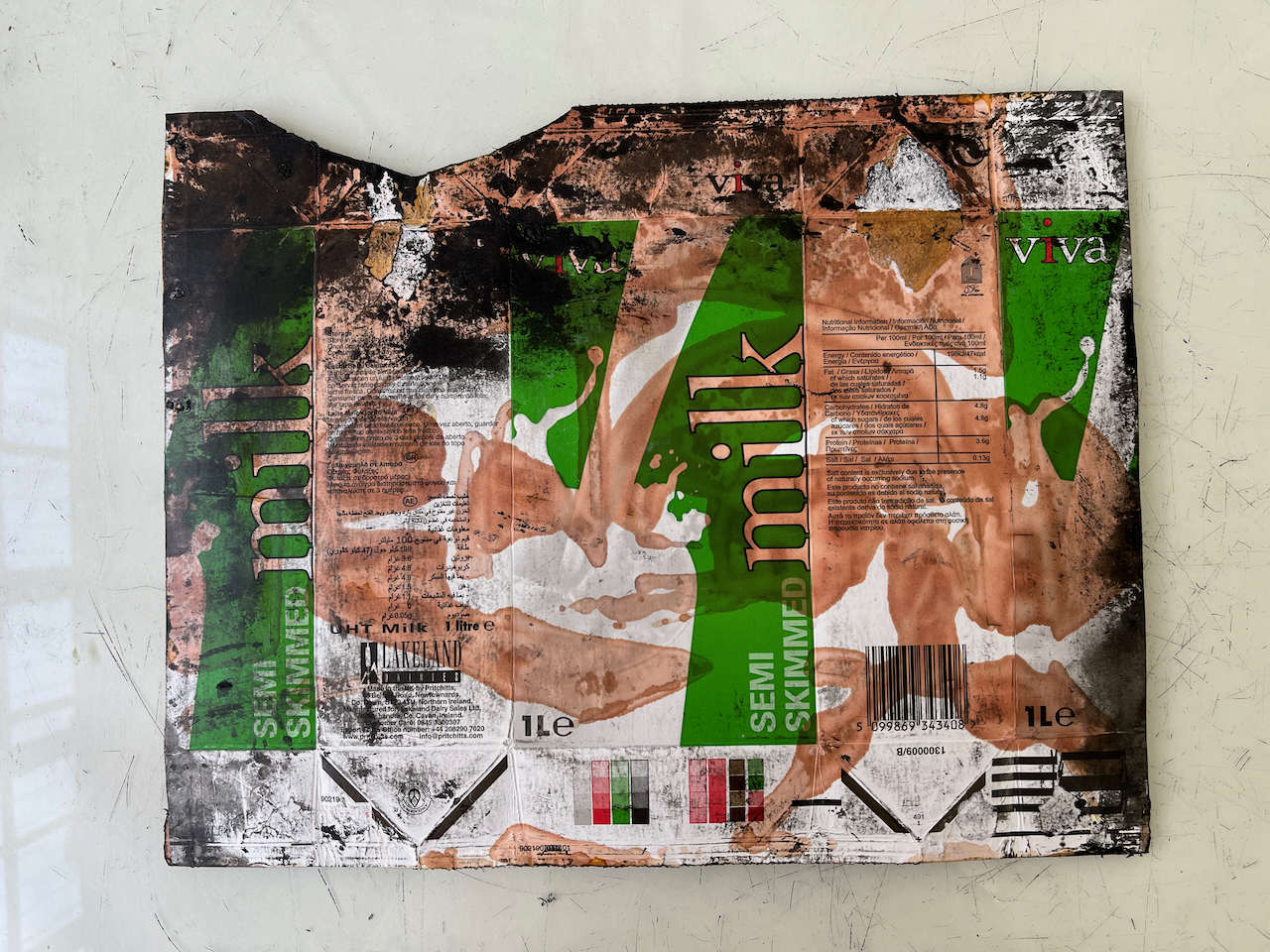
Inked plate (front)Inked plate (back)
I’ve described the process in this blog post: Print plates made of packaging. The basic method is to use the shiny metallic surface inside the carton. I cut out the shapes I want and peel back the shiny surface to reveal a rougher surface which takes the ink. The yellow colour you see on the plate is shellac, a varnish that I paint on to make the plate last a little longer.
The plates are quite fragile, and can only make a limited number of prints. Here is number 6:
Great Suffolk Street railway arch, monoprint #6 of 6. Printed image size 12″ x 9″. On Agawami Washi Kitakata Japanese paper, 20″ x1 4″
I made all the prints on the Henderson press at East London Printmakers, Stepney. I used Chabonnel F66 traditional oil-based etching ink.
Click a button below to share this post online, email it, or print it:
Norwich describes itself as “A Fine City”. Indeed it is. The city centre streets are clean, car-free, and lined with a huge variety of shops, restaurants, and service providers such as key-cutters and barbers. All very interesting. And there’s a lovely river too.
The City of Norwich website tells me: “On 17 July 1967, London Street became the first shopping street in the UK to be pedestrianised. It started a revolution that saw people given priority over traffic in city centres.”
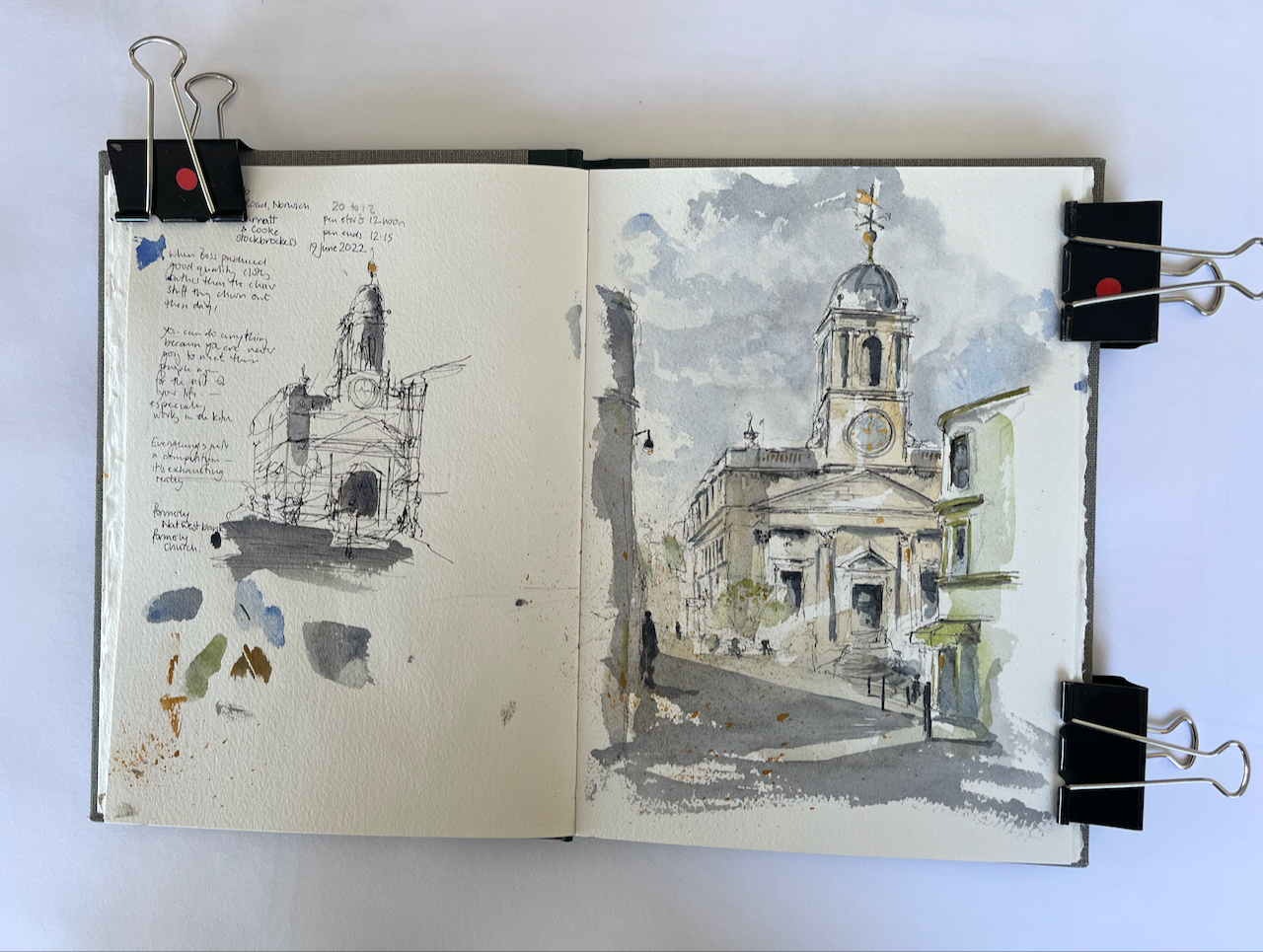
This building stands in London Street, at the junction with St Andrews Hill. It was designed by FCR Palmer for the National Provincial Bank, and was completed in 1925 [1]. The National Provincial became NatWest after a series of mergers and takeovers. NatWest moved out in 2017.
“Cosy Club” 45-51 London St, Norwich NR2 1AG, 19th June 2022 12:15, in Sketchbook 12
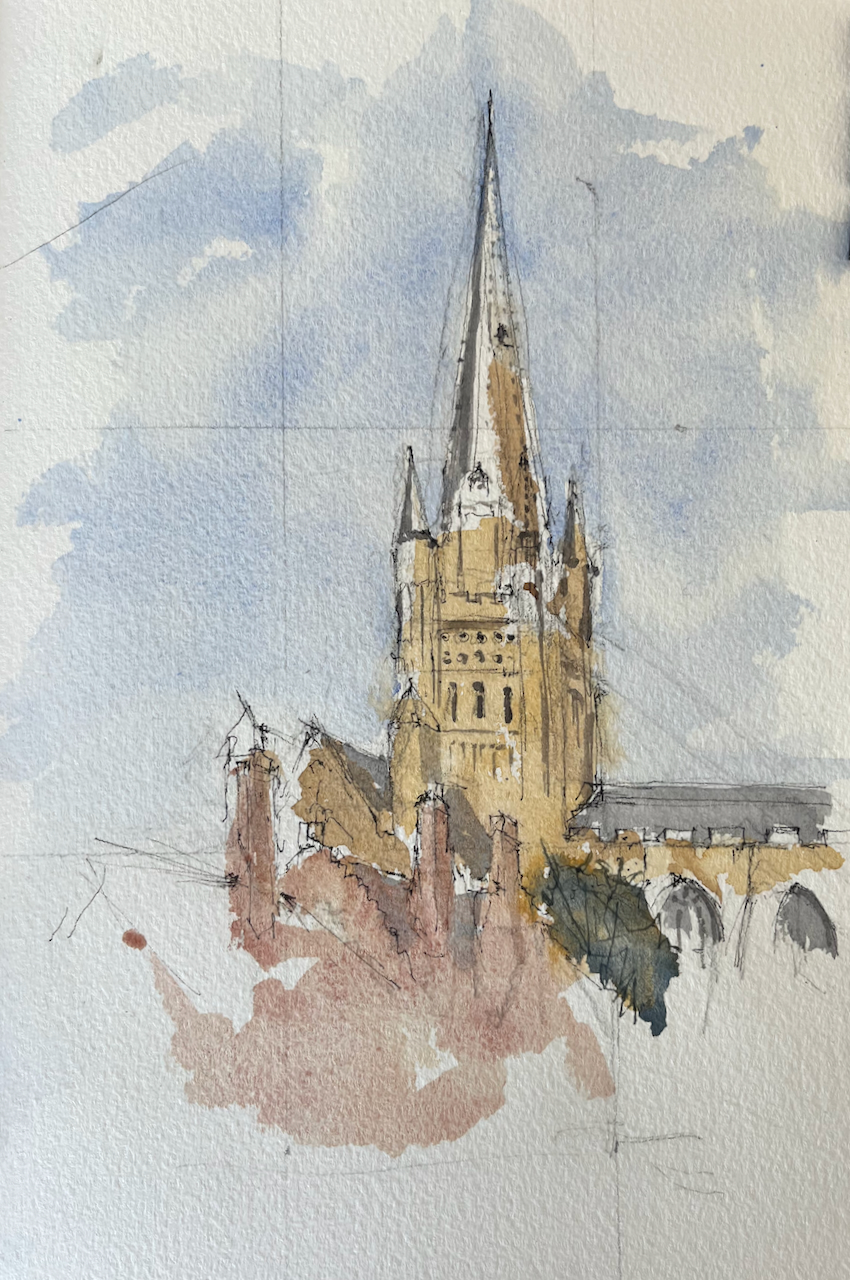
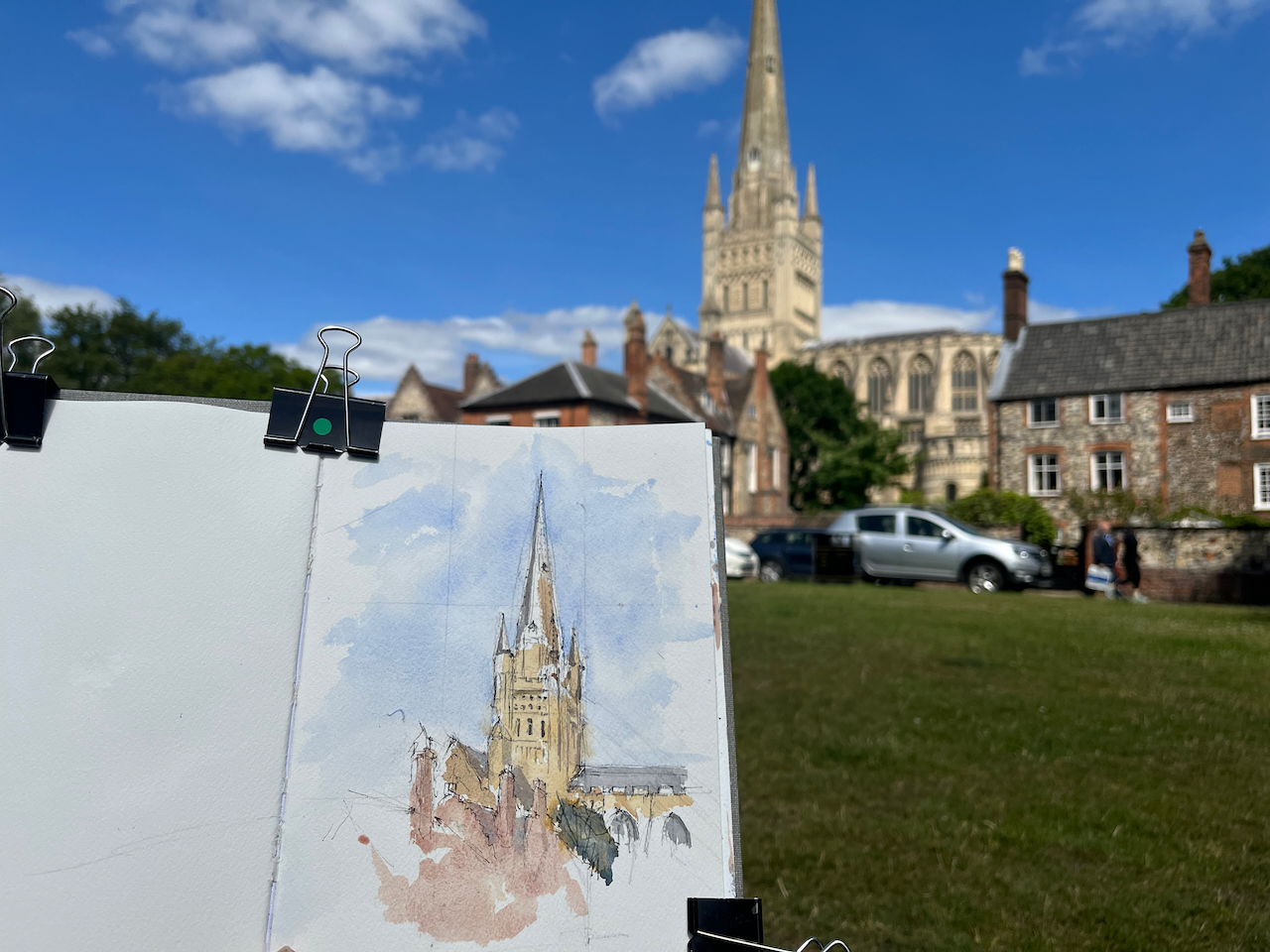
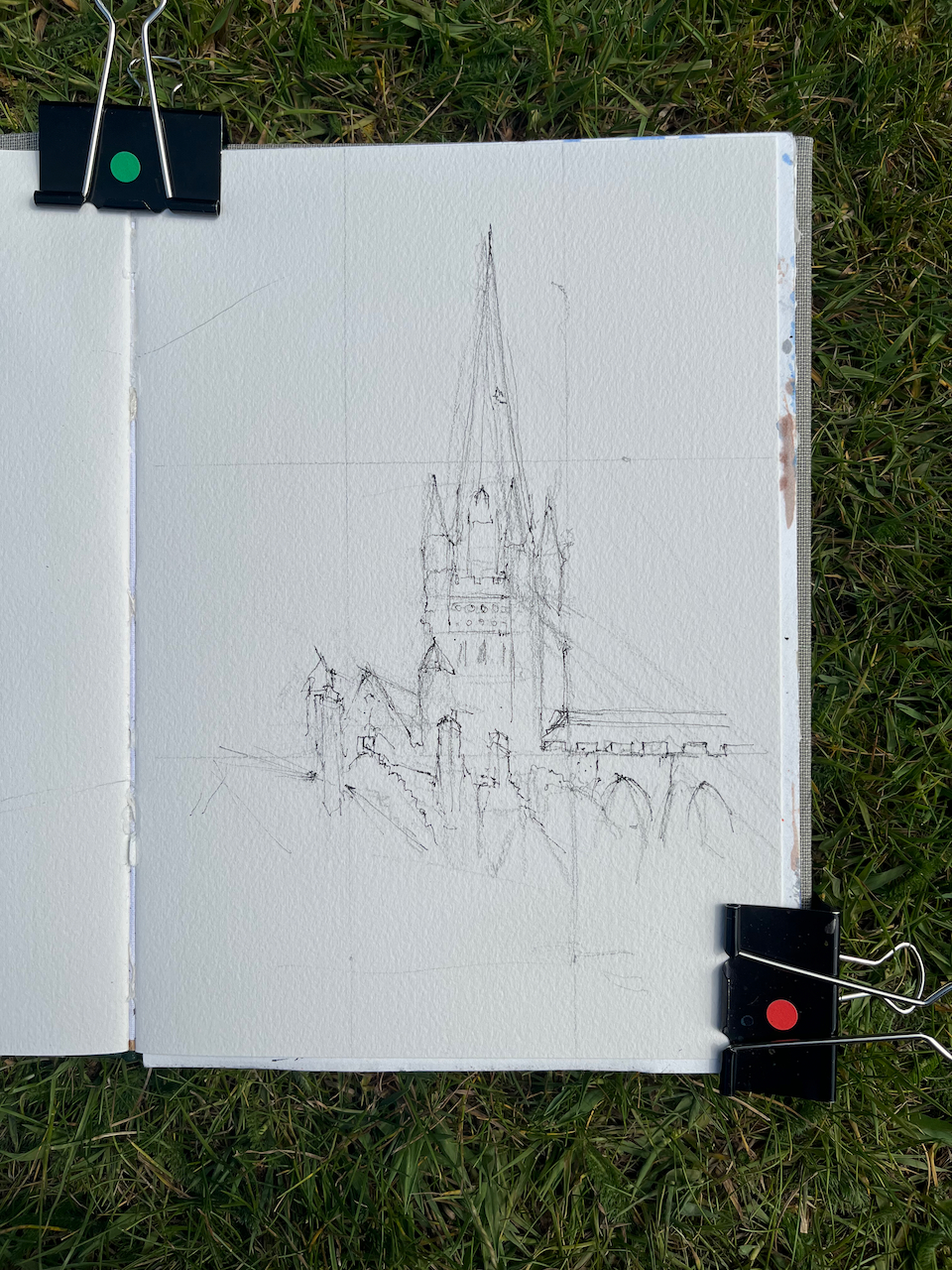
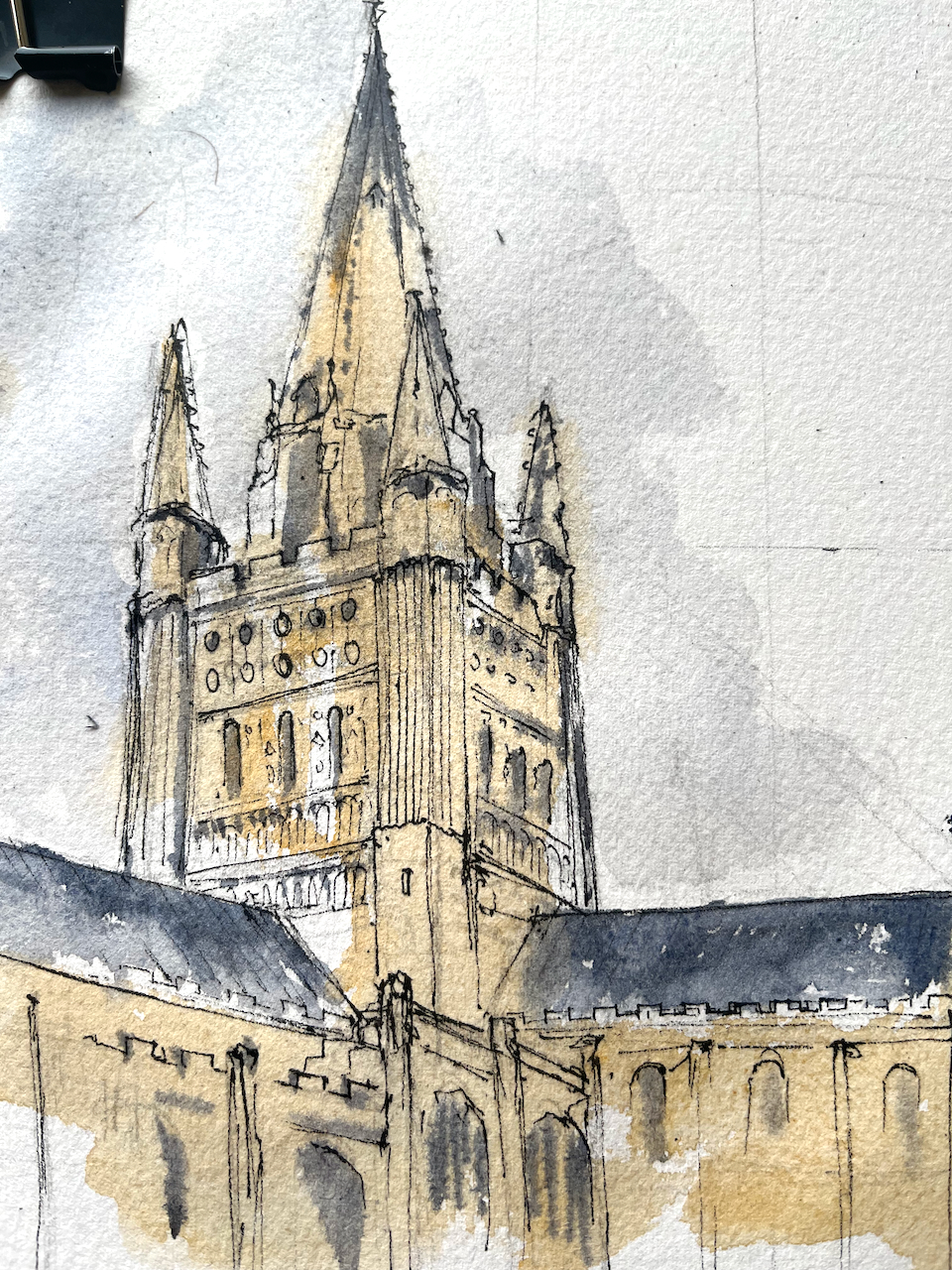
I also sketched Norwich Cathedral, from the Cathedral Close.
Norwich Cathedral from the Cathedral Close 40min sketch, 11:15 19th June 2022, Sketchbook 12
Certainly a fine city, and one to which I hope to return.
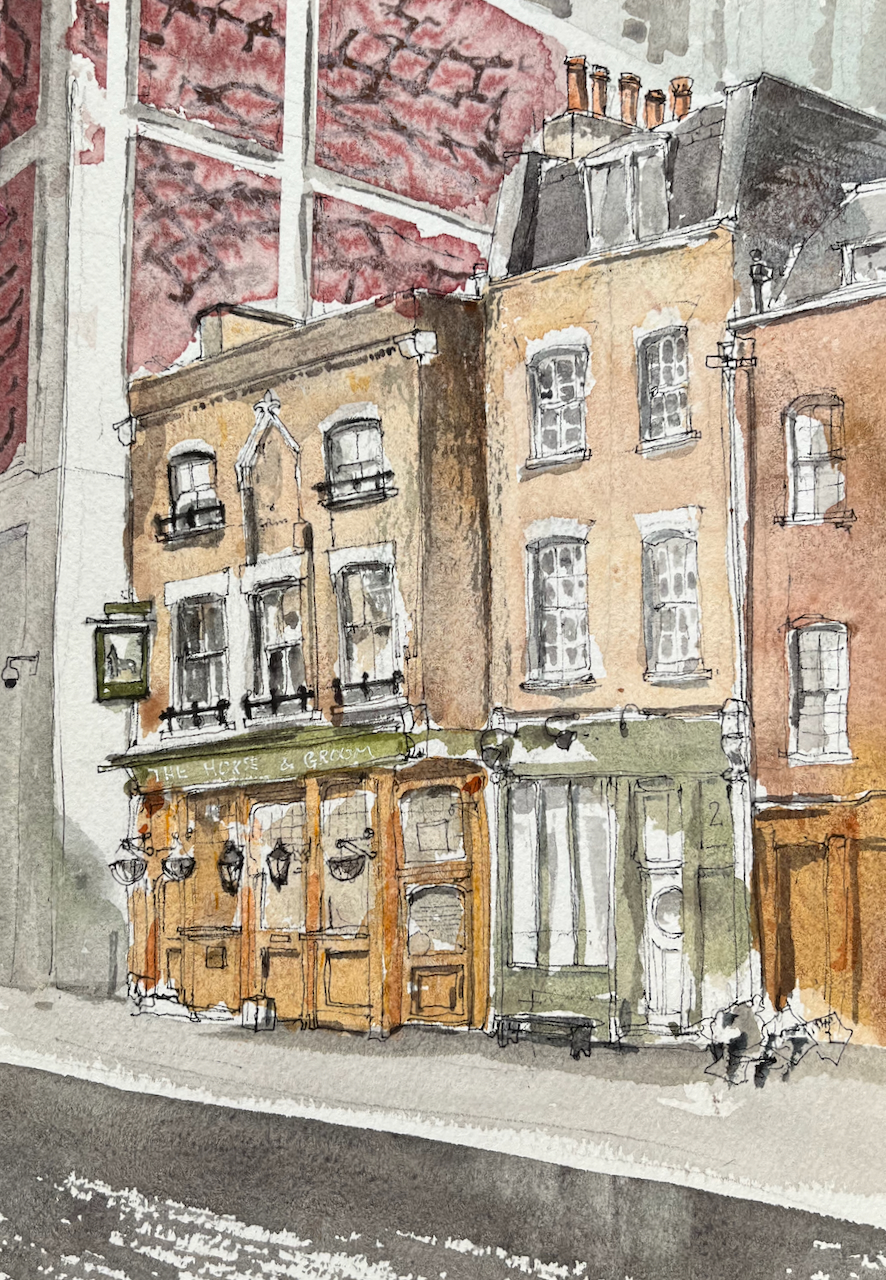
The Horse & Groom pub is on Curtain Road in Shoreditch.
The Horse & Groom, EC2. 10″ x 7″ in Sketchbook 12. Friday 10 June 2022 12:05
The Horse and Groom describes itself on its website :
Since opening our doors in 2007 the Horse and Groom has grown to be one of East London’s best loved pubs. Recognised as the original entrance for Shakespeare’s Curtain Theatre, in 2012 we were protected as a venue and we look to keep Shoreditch drinking and dancing for a long time yet
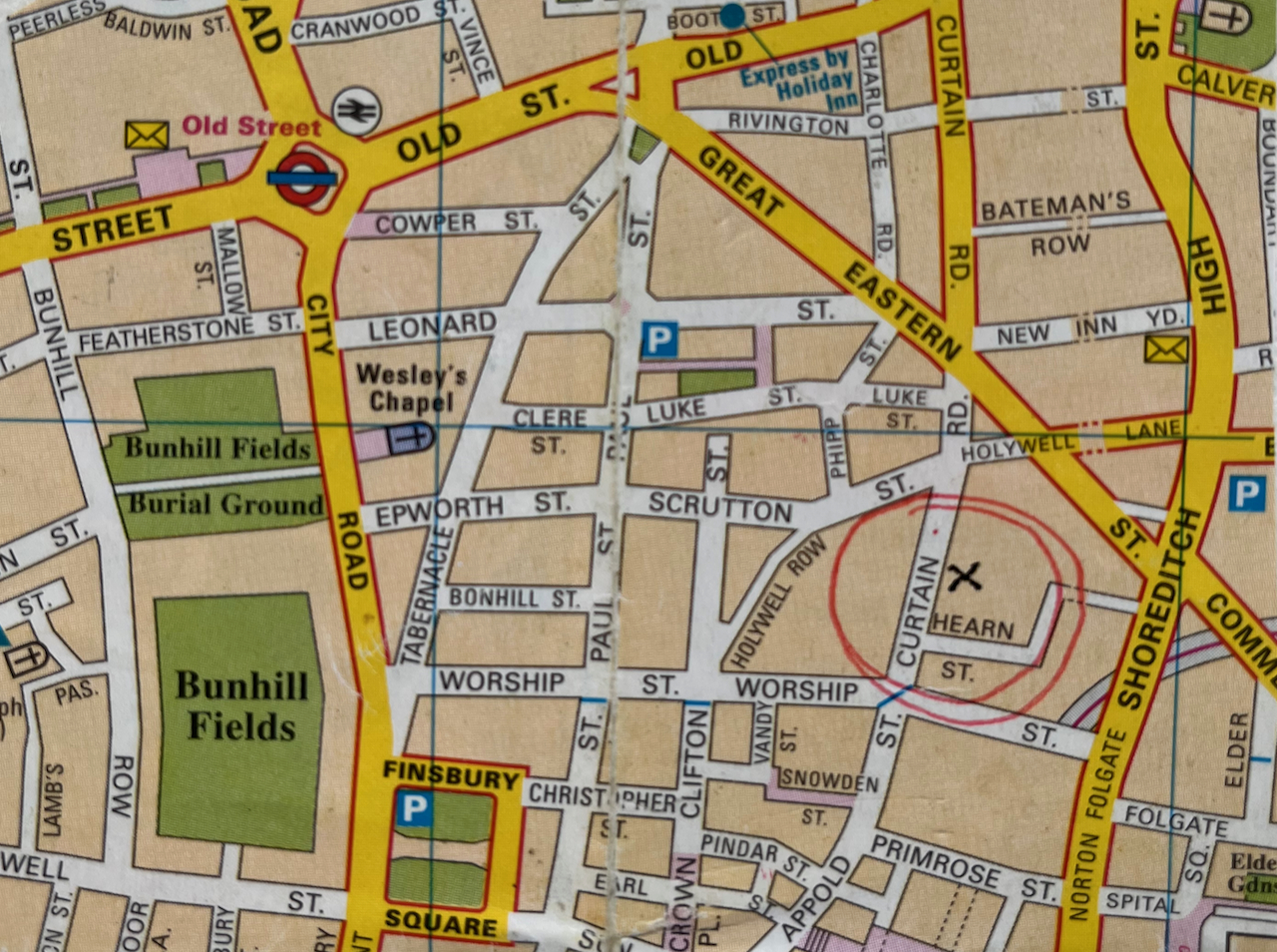
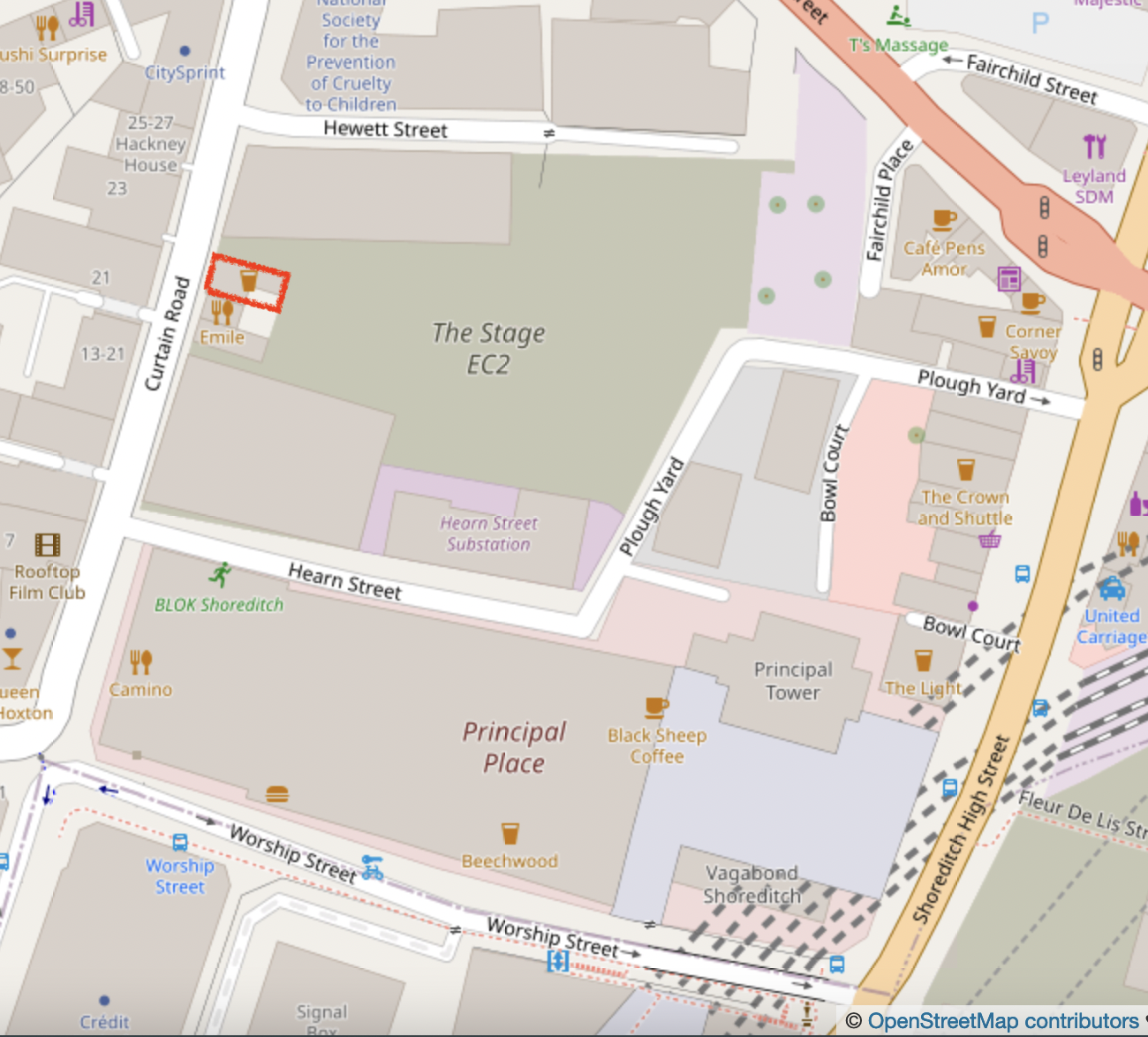
The reason why the pub’s future might need to be mentioned is clear from the modern map. As you see from the 2022 street map, the pub and its neighbours are surrounded on three sides by a huge office and residential development “The Stage”.
Paper street map (Collins) around 1999(c) Open Street Map Contributors map 2022The Horse & Groom (left) and its neighbours are surrounded by new build.
The pub not only survives, it thrives. Squaremeal.co.uk, a review site, says “The rickety Georgian boozer’s twin dance floors get hectic and steamy at weekends, when house, funk, and rare garage rule….”
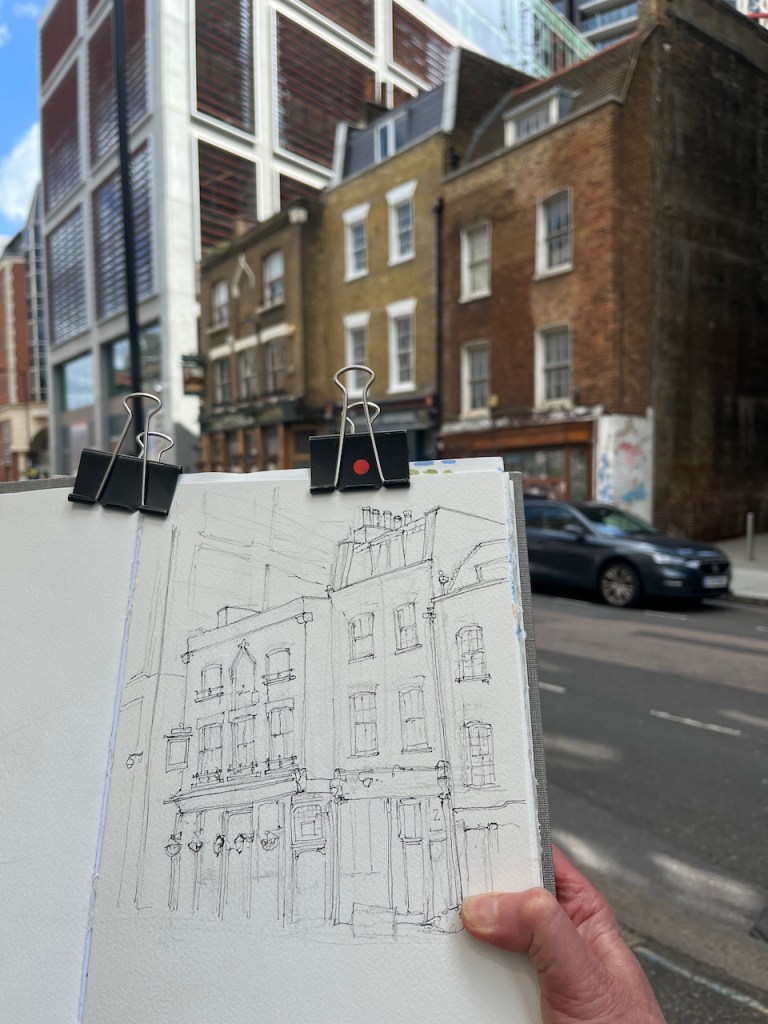
Sketching in Curtain Road
I sketched The Horse & Groom standing in Curtain Road. At first I had a clear view, but cars gradually arrived, and vans, and delivery vehicles. I finished the drawing at my desk.
The pub is number 28. The building next door, number 26, is, or was, “Cincinnati Chilibomb”. One of the vans that arrived discharged a consignment of building materials. Construction workers started shifting tools and materials into number 26. So maybe there will be a change of use.
The building next to that, on the right of my drawing, must be number 24. Numbers 24 and 26 are listed, Grade II, Listing NGR: TQ3326982177. I cannot find any listing for the pub.
No 24: early C18, 3 storeys and attic, 2 windows. Rounded gambrel roof, tiled, with dormer. Painted brick with parapet front. Gauged segmental arches to later sash windows. Early-mid C18 shop front, with slightly altered glazing, on ground floor. No 26: house of early C19 appearance, possibly with older core, 3 storeys and attic, 2 windows. Stock brick with parapet, slated mansard with dormer, Gauged near-flat brick arches to modern plate glass windows. Ground floor mid-late C19 shop front.
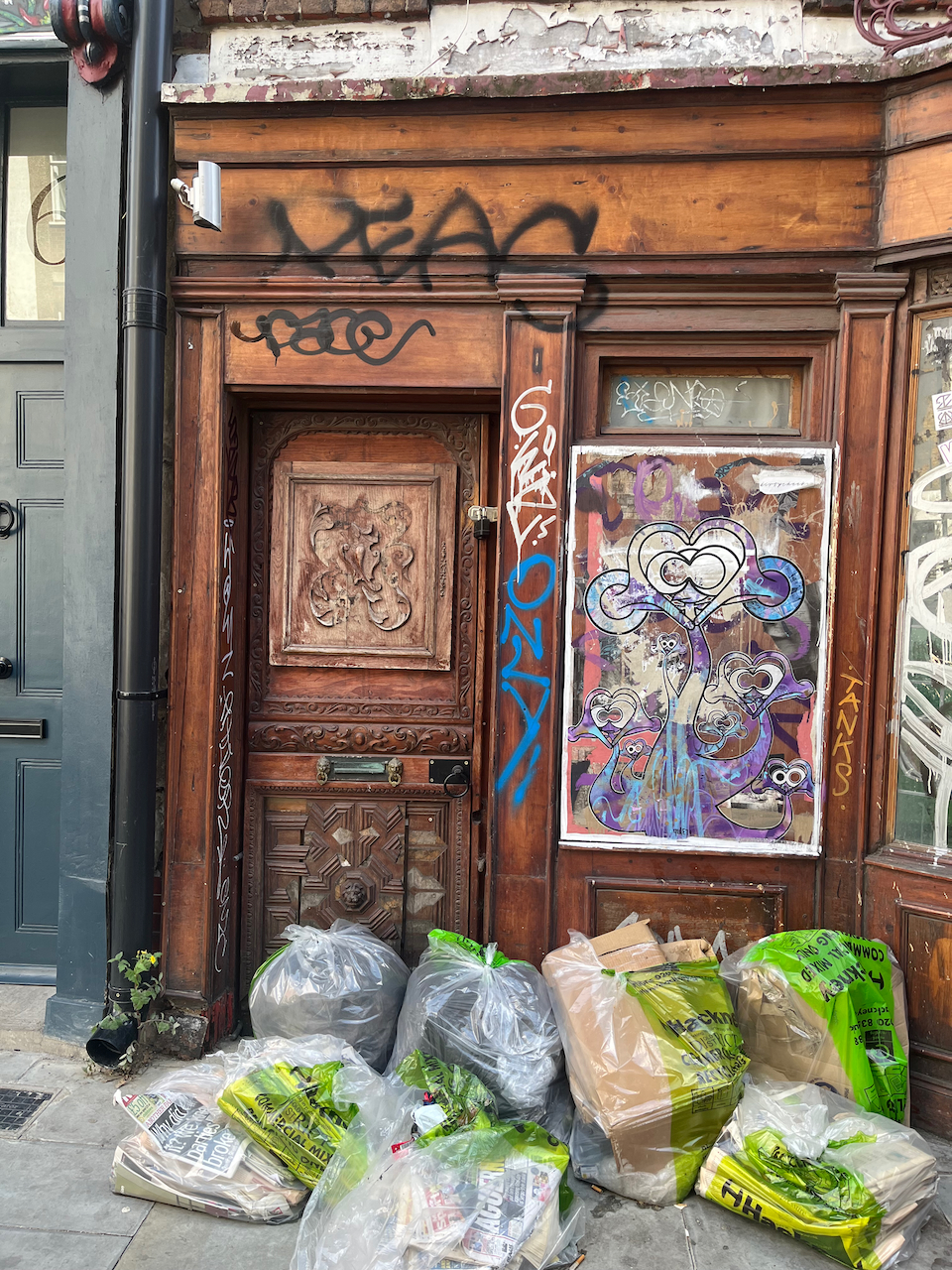
Number 24 is a fascinating building. What will happen to it? Currently it is gradually falling derelict:
Click and enlarge the pictures to appreciate the amazing carved woodwork on the door.
The huge buildings behind are described on the website for “The Stage”. The development has “over an acre of public space and landscape gardens surrounded by luxury apartments, cutting edge office space and prime retail…”
London is certainly a city of contrasts.
Here you can see the pen-and-ink drawing and the colour side-by-side:
pages in Sketchbook 12
Click a button below to share this post online, email it, or print it:
I took advantage of the road closures for the Queen’s Platinum Jubilee to sketch this corner of the Bank of England.
Bank of England – Tivoli Corner, 2nd June 2022, in Sketchbook 12
Temple of Vesta, Tivoli, modern photo from Wikipedia Commons on this link
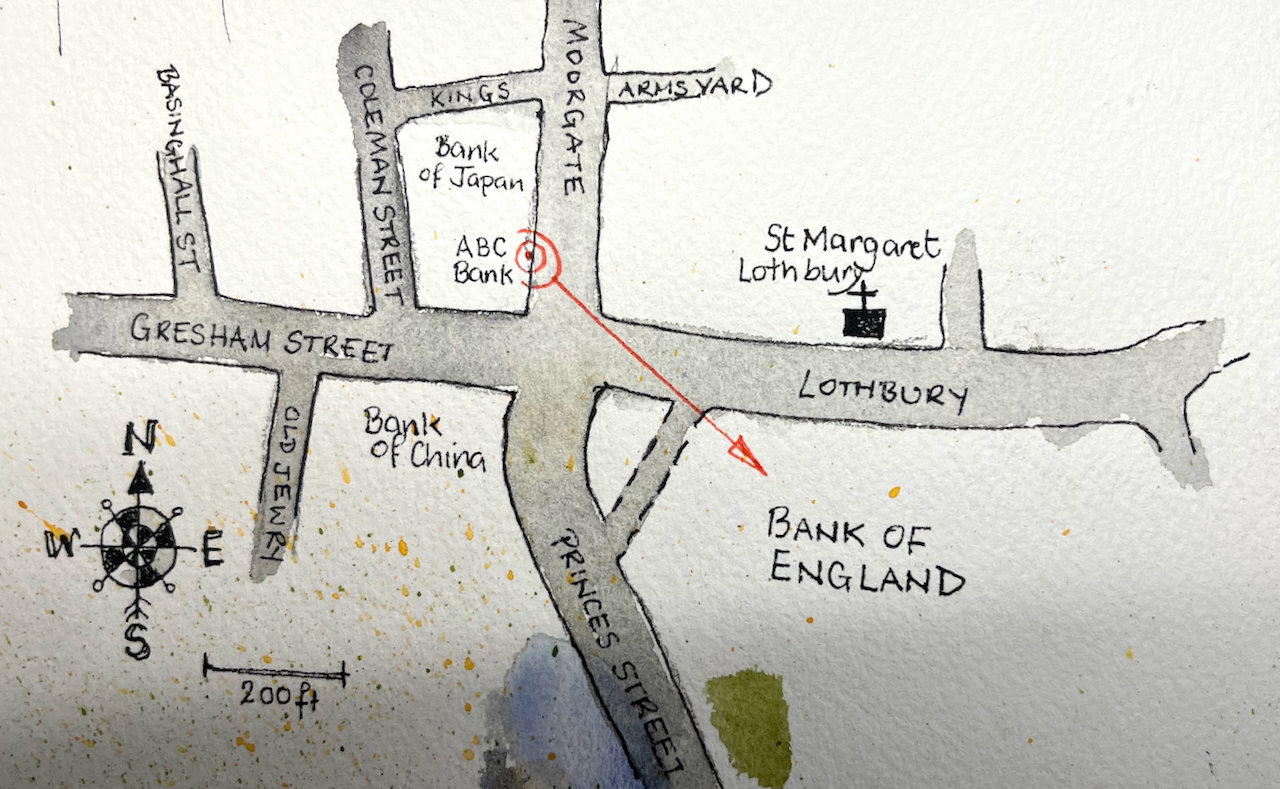
This is the North-West corner of the Bank of England. The perimeter wall was designed by John Soane in 1805. The design of the corner was inspired by the Temple of Vesta at Tivoli.
The John Soane museum has a marvellous digital archive with detailed notes on his work on the Bank of England. John Soane was surveyor to the Bank of England for 45 years, from 1788 to 1833. During that time the role of the Bank of England changed from a small bank helping out the government with the national debt, to a significant national institution, printing money and managing Income Tax. The Soane museum archive notes:
Since its foundation in 1694, the Bank of England had financed Britain’s wars and managed the national debt. War, therefore, resulted in more business for the Bank, demanding extensive alterations and additions. Soane’s vast building work was largely the result of the French Revolutionary and Napoleonic Wars that lasted from 1793 to 1815. More space was required as the staff doubled during this time and the bank note printing process was carried out on site. In addition, new offices were required as the Bank’s responsibilities and roles changed, such as a place for managing the newly instituted Income Tax of 1799.
John Soane’s 3-storey building was demolished to make way for a new 7-storey building constructed 1925-39 by Herbert Baker. Soane’s perimeter wall was retained, but everything else was replaced. It is Herbert Baker who is responsible for that dome in my drawing, and also for the marvellous walk-through passage at this corner. You can see the North side of the passage in my drawing. For more photos of this passage and a description, I recommend the wonderful “IanVisits” site. Ian visits Tivoli Corner on this link. Or go there! And look up.
I took advantage of the road closure to sketch standing in Moorgate.
As I sketched, people walked past either side of me, in extraordinary hats. Everyone was cheerful and the sun shone. I enjoyed chatting to the various people who stopped to examine my drawing or comment on the view.
Pen, before the colour went on
You see the traffic bollards in the drawing. Those were patiently removed by a security guard every time a police vehicle approached, and equally patiently replaced. This must have happened about six times in the hour and half I was there.
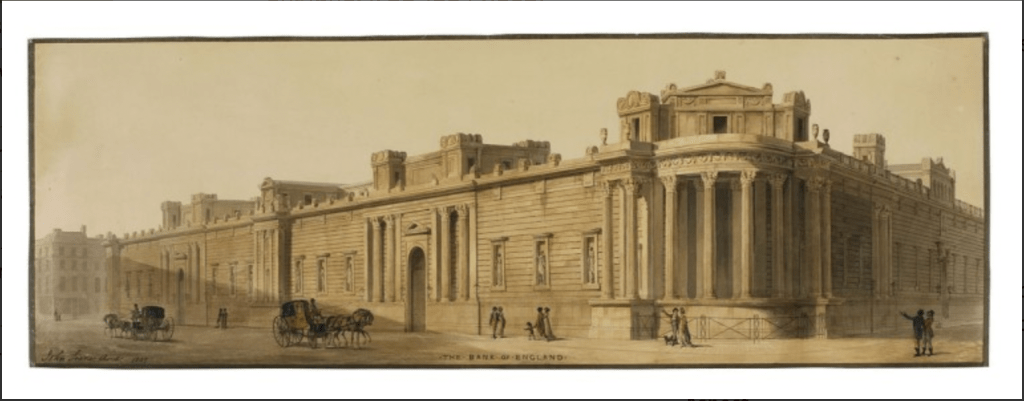
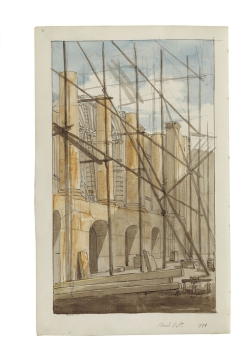
The John Soane archive notes on Tivoli corner are on this link. This site has some lively “work-in-progress” drawings of the construction of the Bank of England. Here is one. See how modern it looks! It was drawn in 1798, the same year that Nelson fought Napoleon in the Battle of the Nile.
Click a button below to share this post online, email it, or print it:
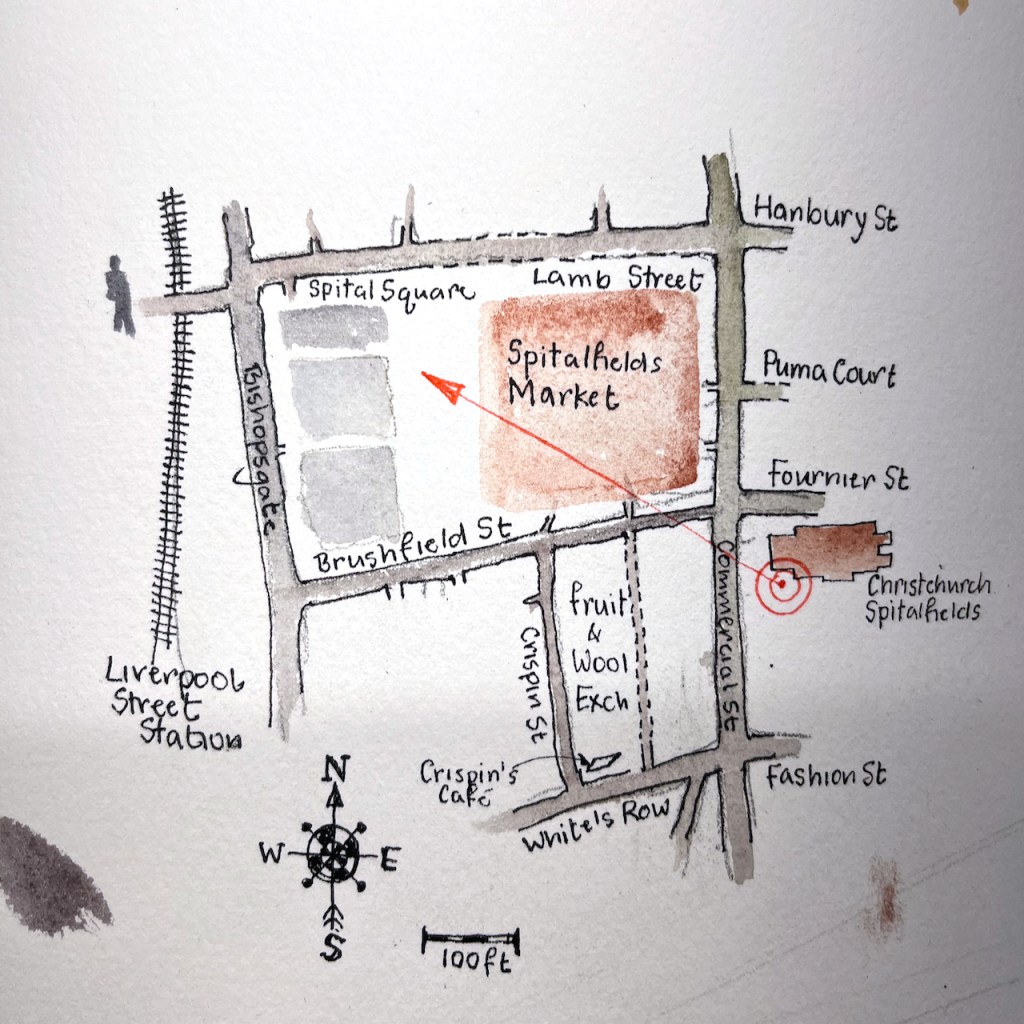
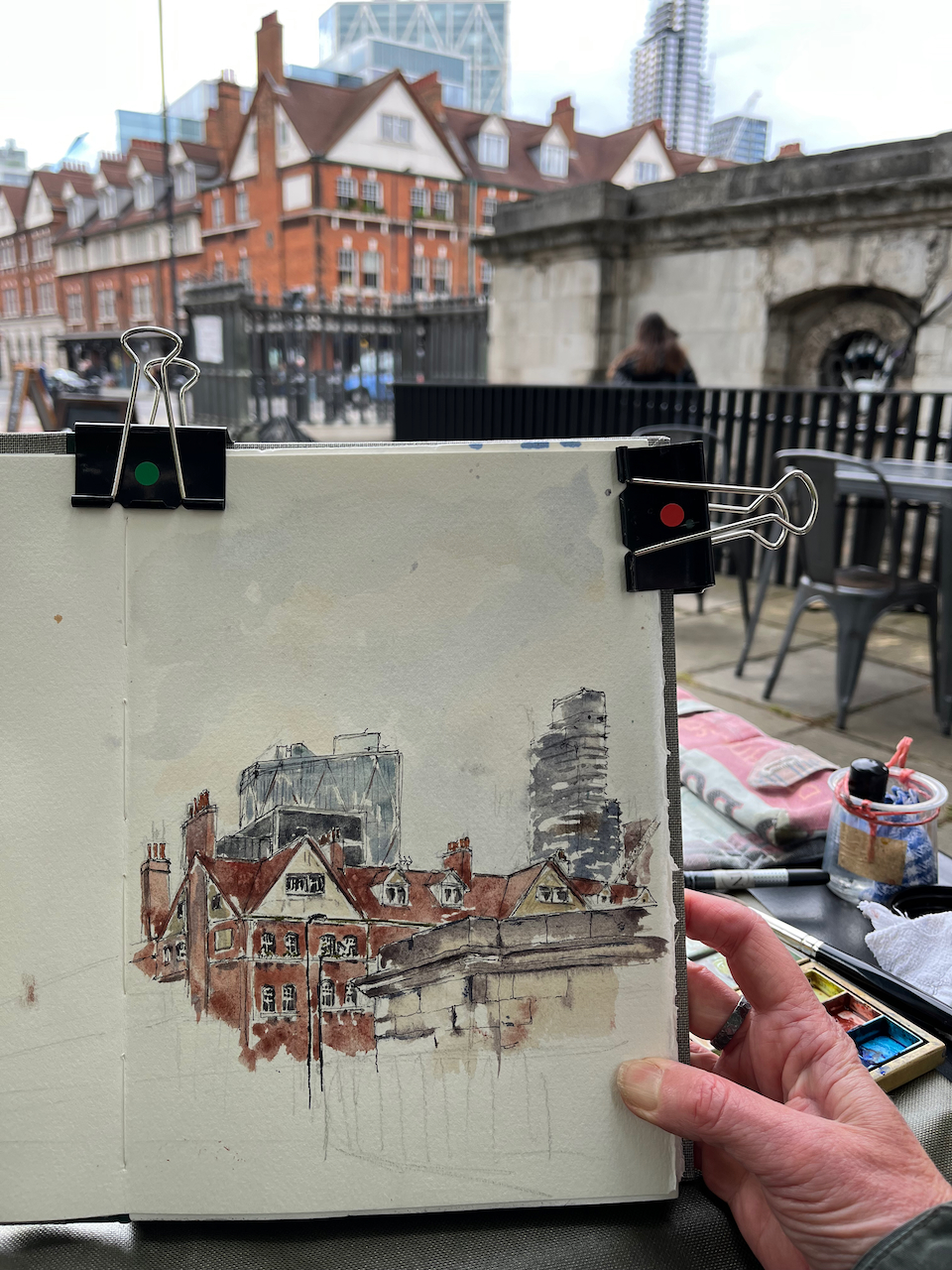
I joined a sketching friend for a stroll around Spitalfields. We had coffee at the Cafe in the Crypt of Christchurch Spitalfields, and then sat at the tables outside and sketched the view.
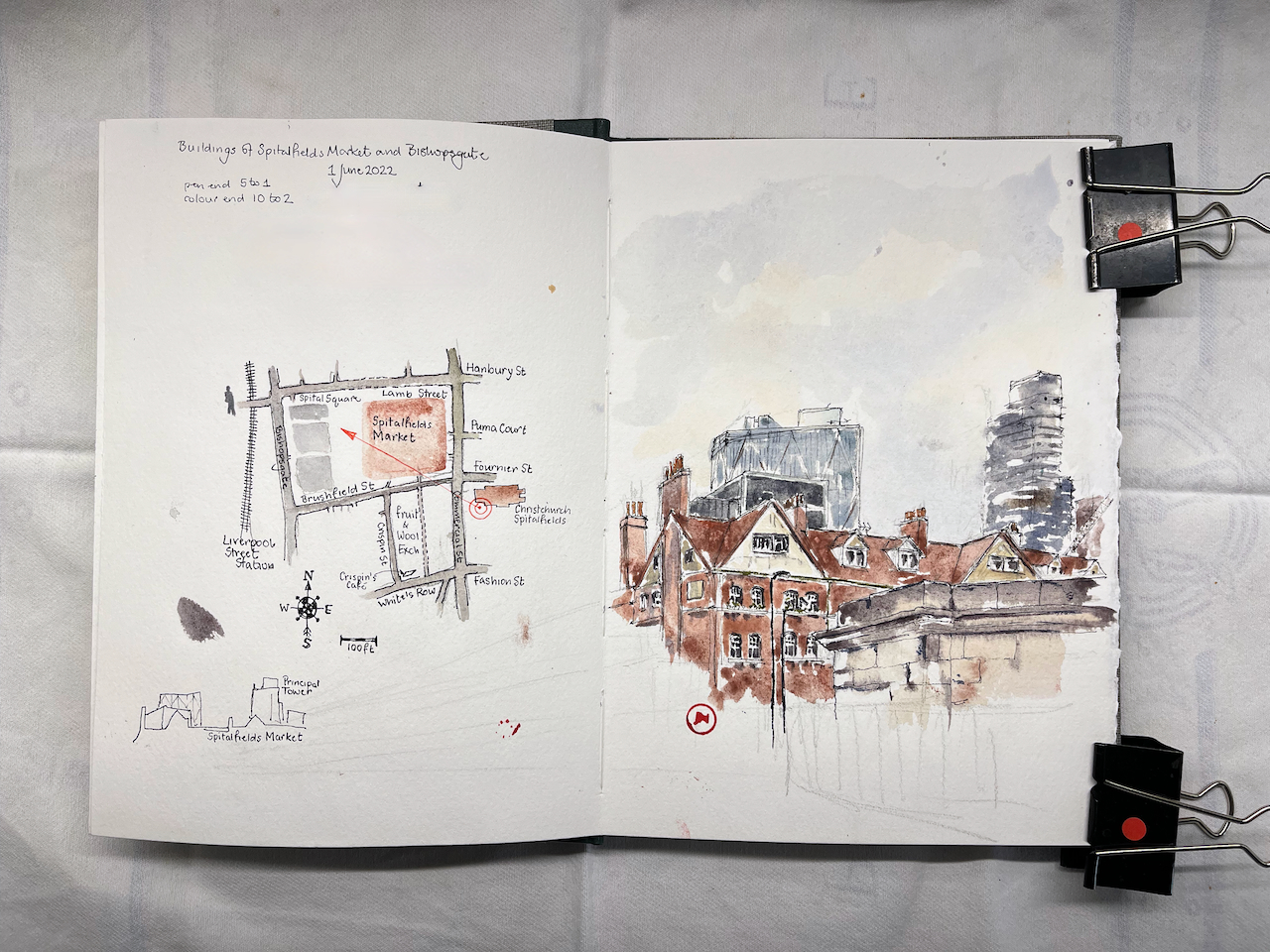
Here is my sketch:
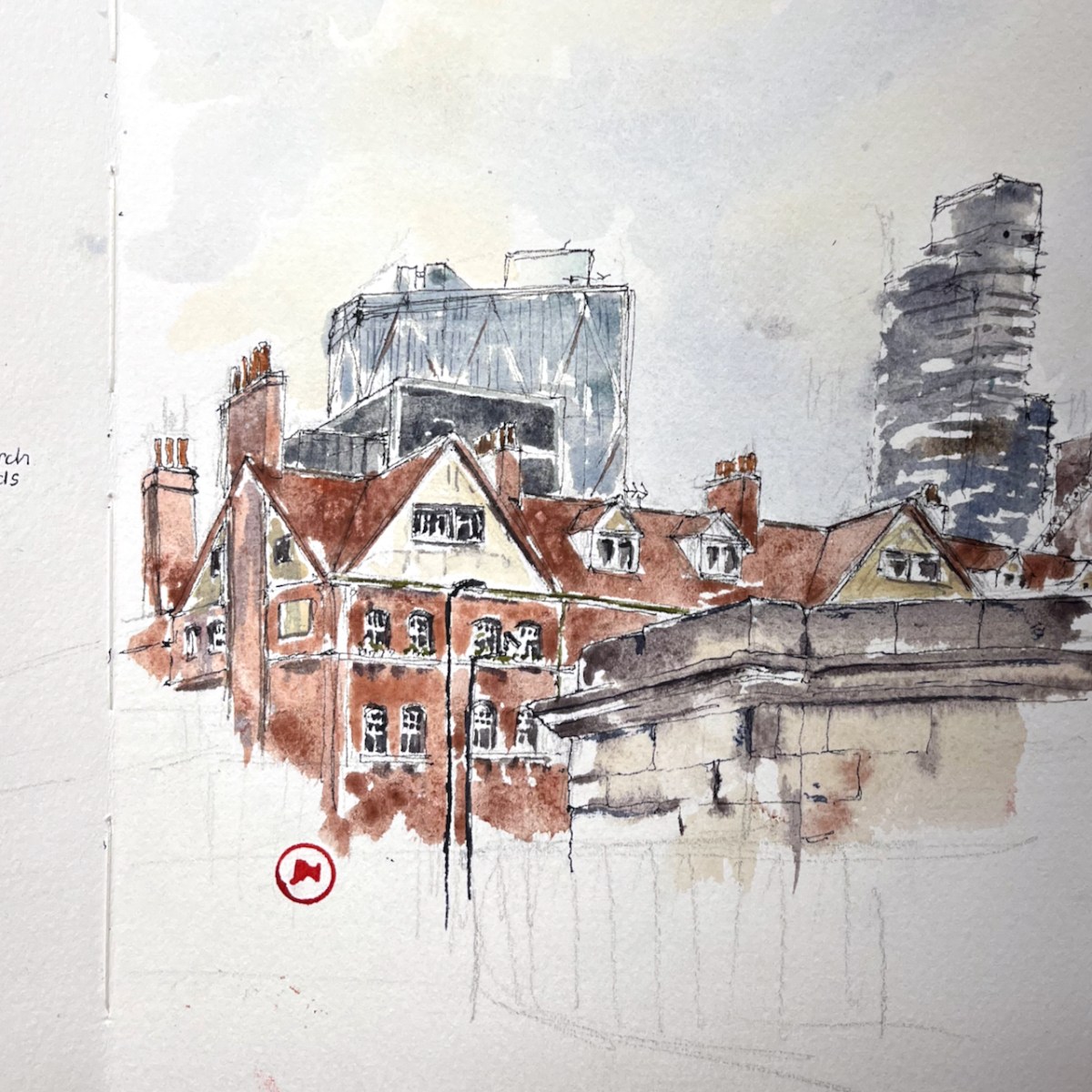
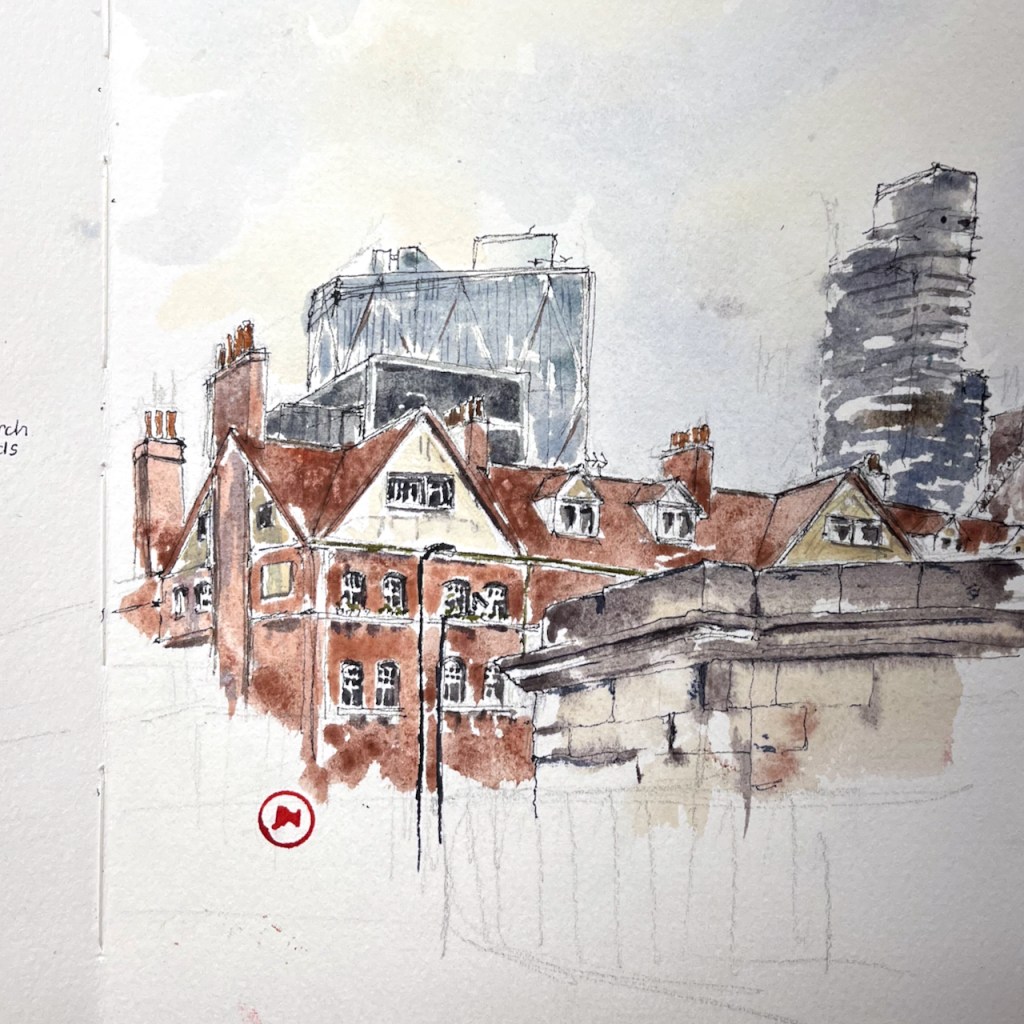
Spitalfields Market E1 from ChristChurch, 7″ square in Sketchbook 12. 1st June 2022
Behind the red-bricked buildings of the Market, you can see the office and residential tower blocks along Bishopsgate. “Principal Tower” in the one to the right.
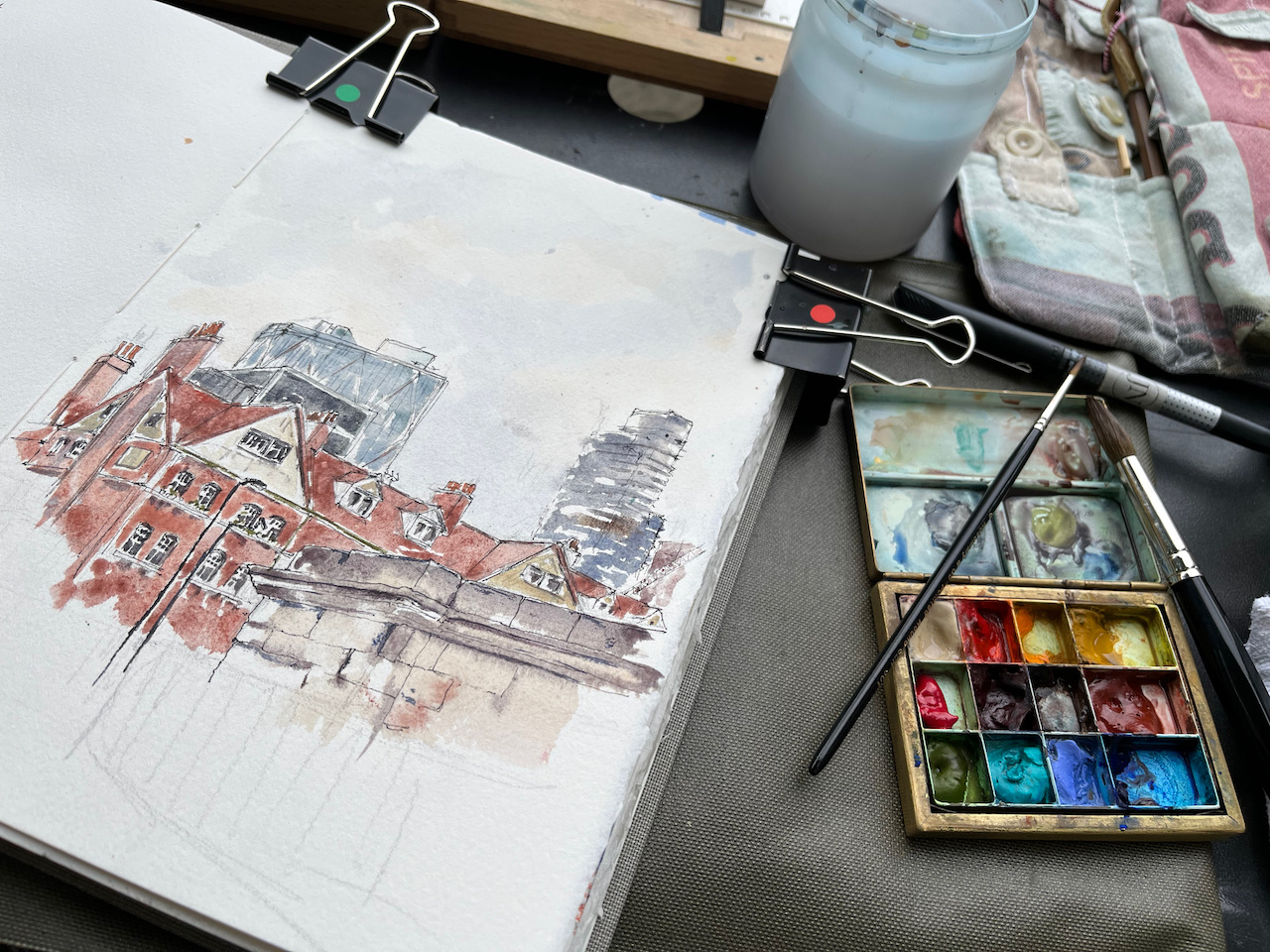
Here are some on-location photos and a picture of the sketchbook.
Thankyou to the talented artist LA for your company and inspiration on this expedition. It’s fun to sketch together!
Click a button below to share this post online, email it, or print it:
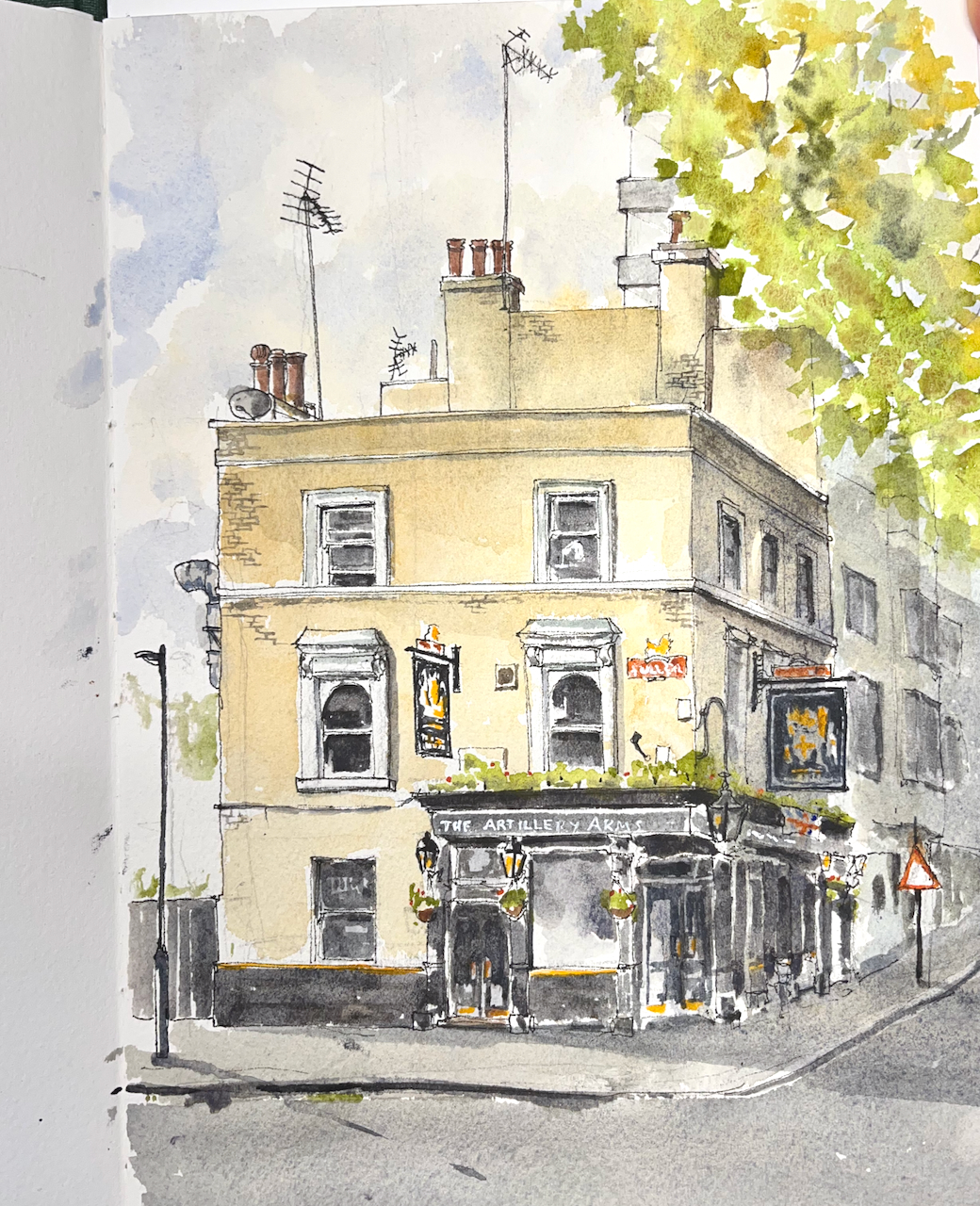
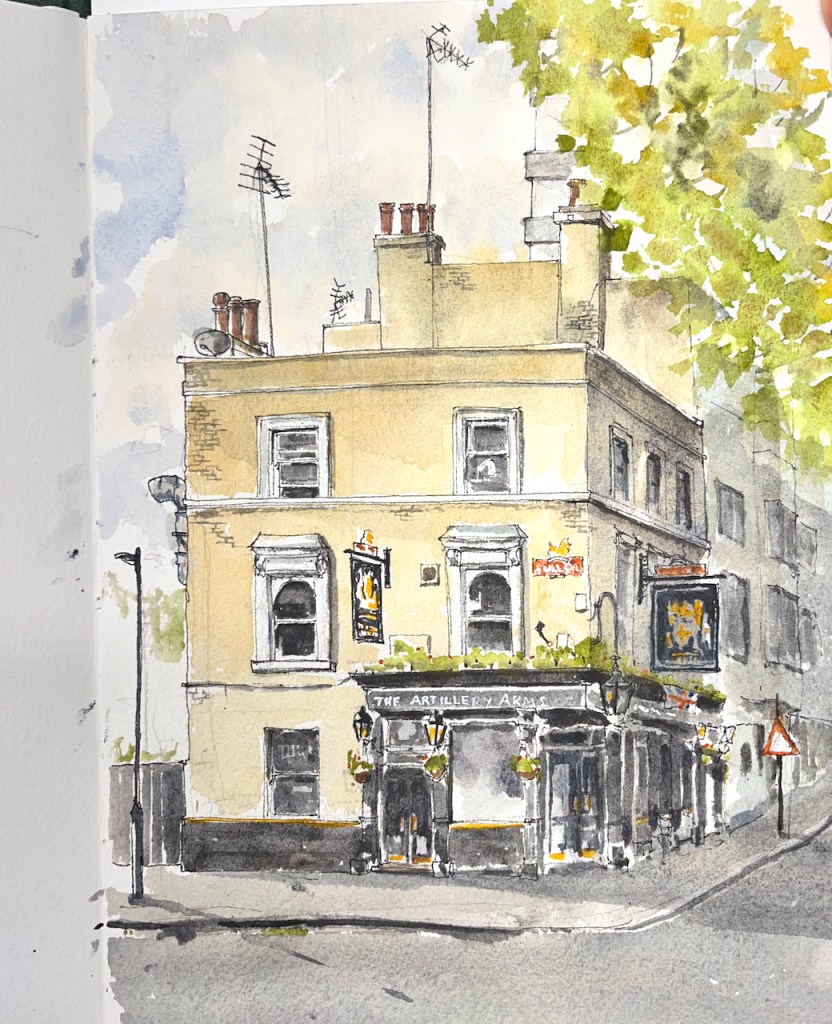
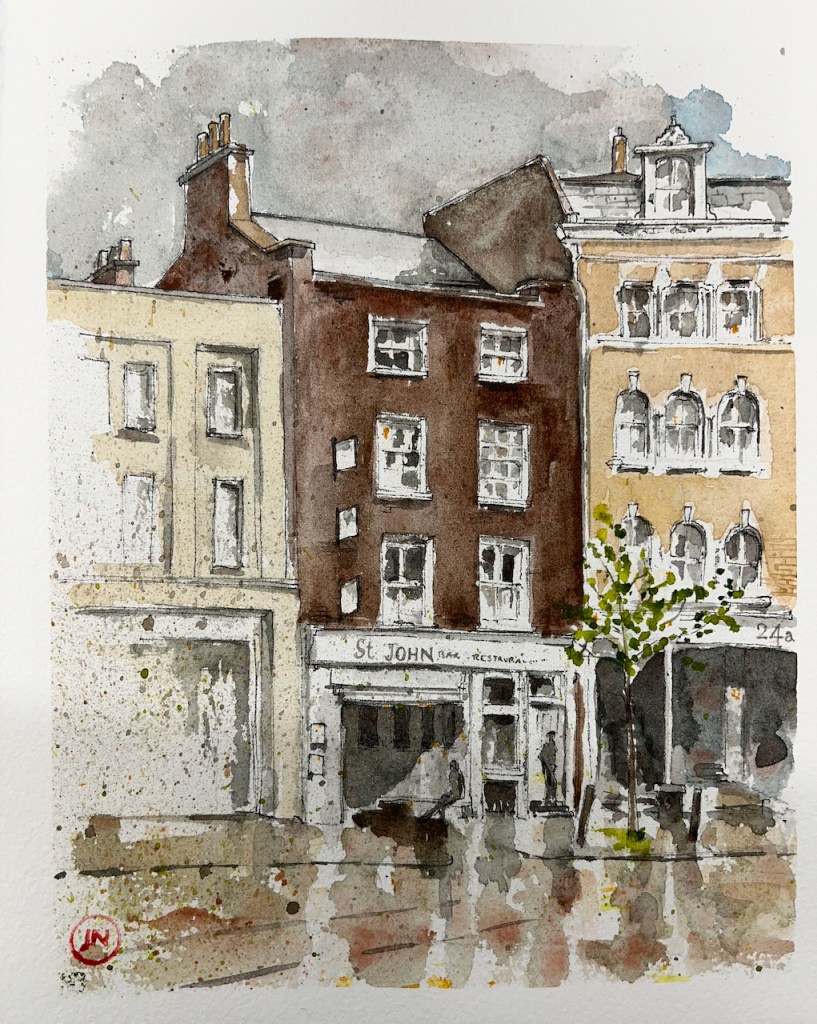
Here is The Artillery Arms, a local pub, on Bunhill Row, London EC1
The Artillery Arms EC1, 10″ x 7″ in Sketchbook 12, 30th May 2022
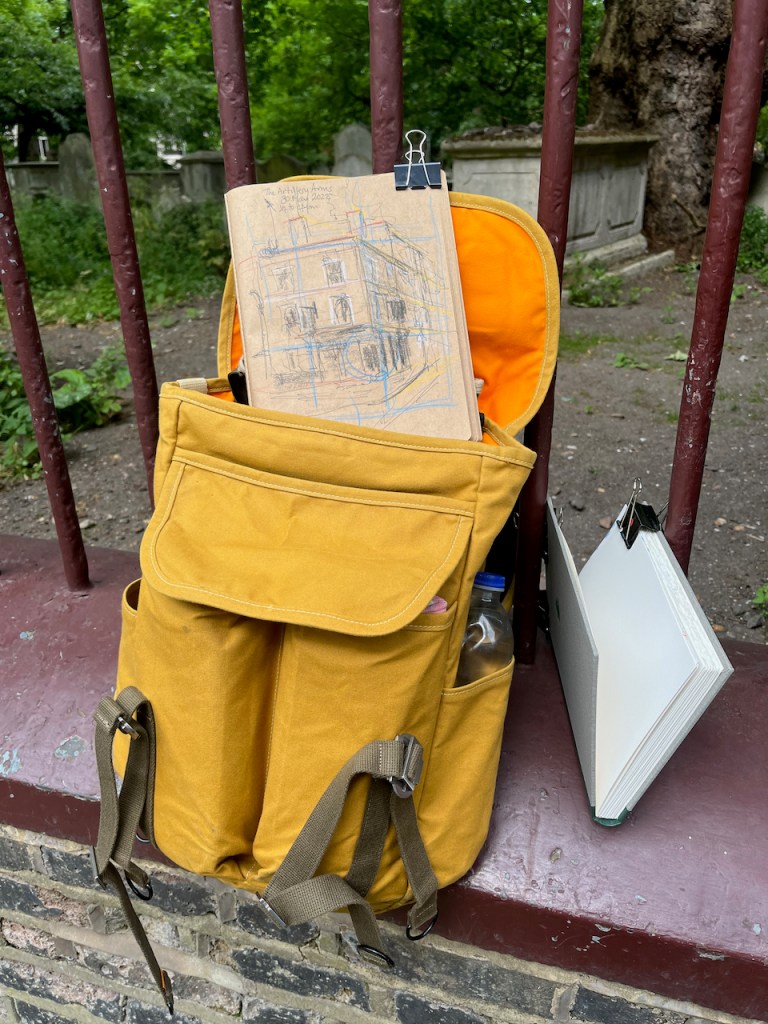
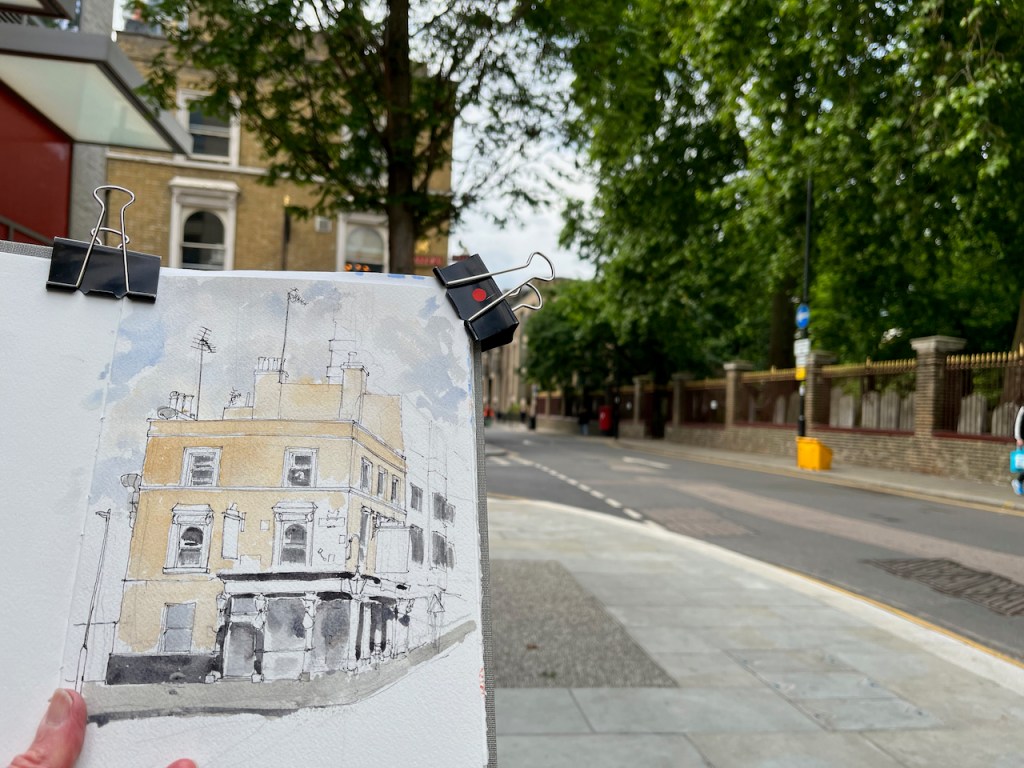
I sketched this standing outside the fence which surrounds Bunhill fields.
The Artillery Arms is near the Honourable Artillery Company. The Honourable Artillery Company is a regiment of the Army Reserve, and has occupied its current location since 1641, according to their website. It is very active: helicopters land there. Every so often there is a firework display which we can hear from our flat. At least I hope it is a firework display, and not the firing of actual artillery.
The pub is more recent. Up to at least 1852 it was known as the “Blue Anchor”, and became “The Artillery Arms” sometime before 1856 [1].
Here are some photos showing work in progress on the drawing:
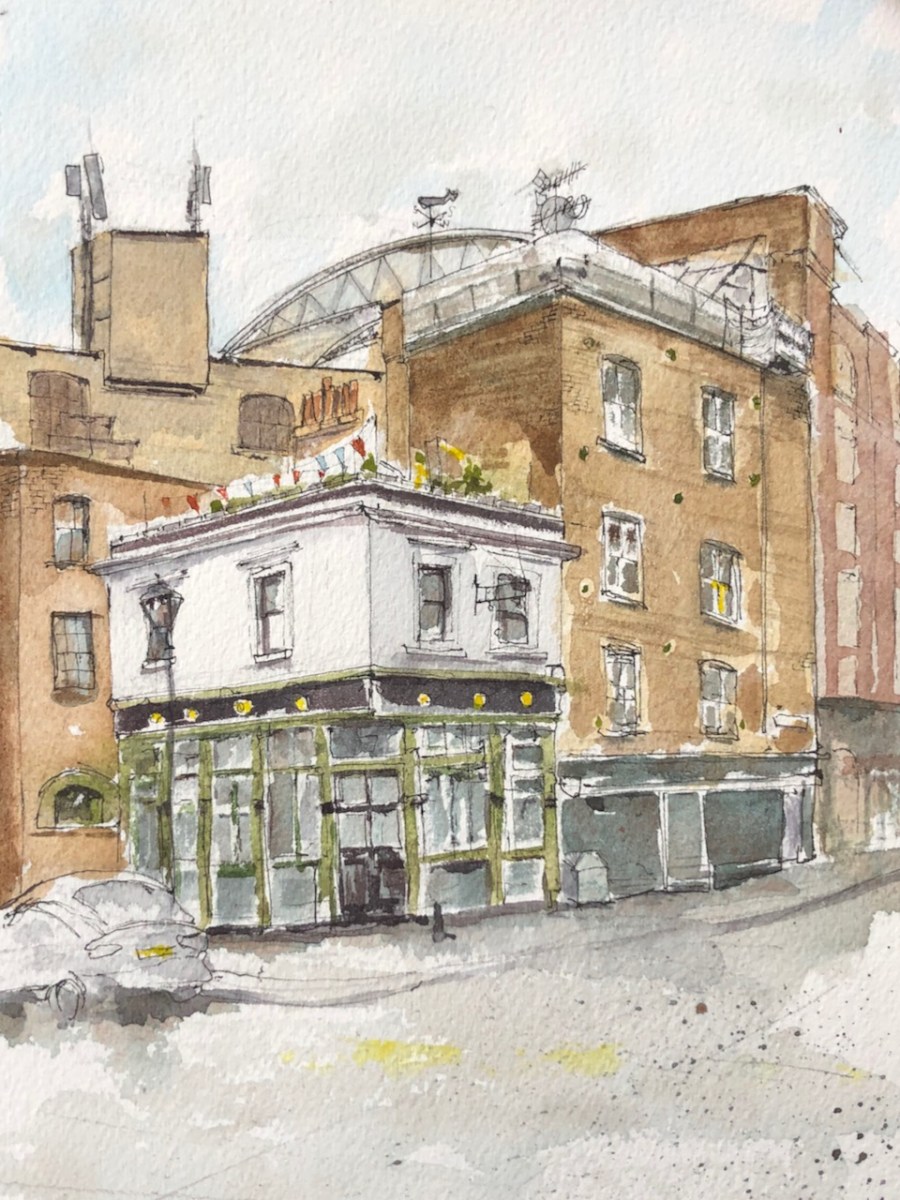
I have sketched several other pubs in the area and further afield. Here is a collection:
Here is The Crown Tavern in Clerkenwell Green. The pub frontage dates from 1900, according to the historic buildings listing1. The building is Grade II listed. There has been a pub here for…
I set off on a warm afternoon intending to sketch a pub in Clerkenwell Green. On the way there, I walked along the north side of Smithfield. Down a side street I spotted…
Here is The Horseshoe, in Clerkenwell Close. I enjoyed the way the pub is slotted into that corner space, amongst the taller buildings. The building behind it looks as though it might be…
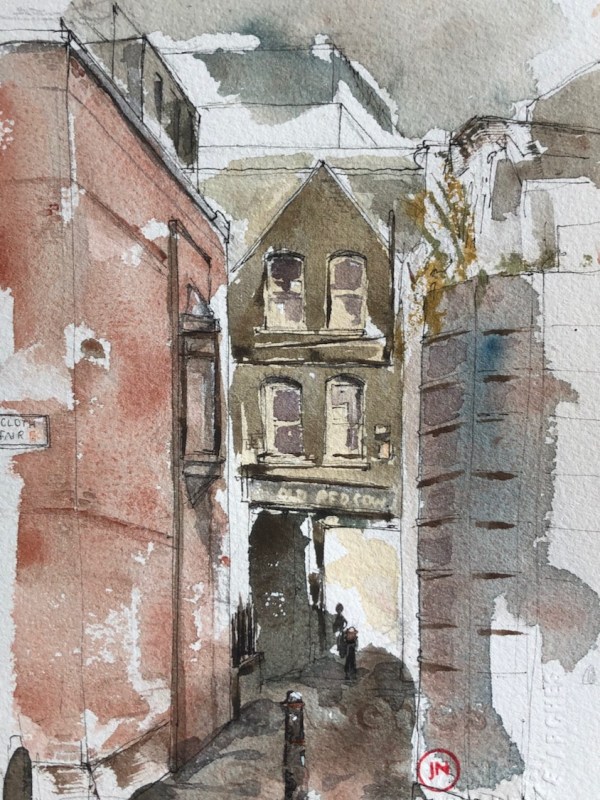
Here is a view of the pub “The Old Red Cow”, seen from Cloth Fair. The front of the pub is on Long Lane. When CrossRail opens, it will be very well placed…
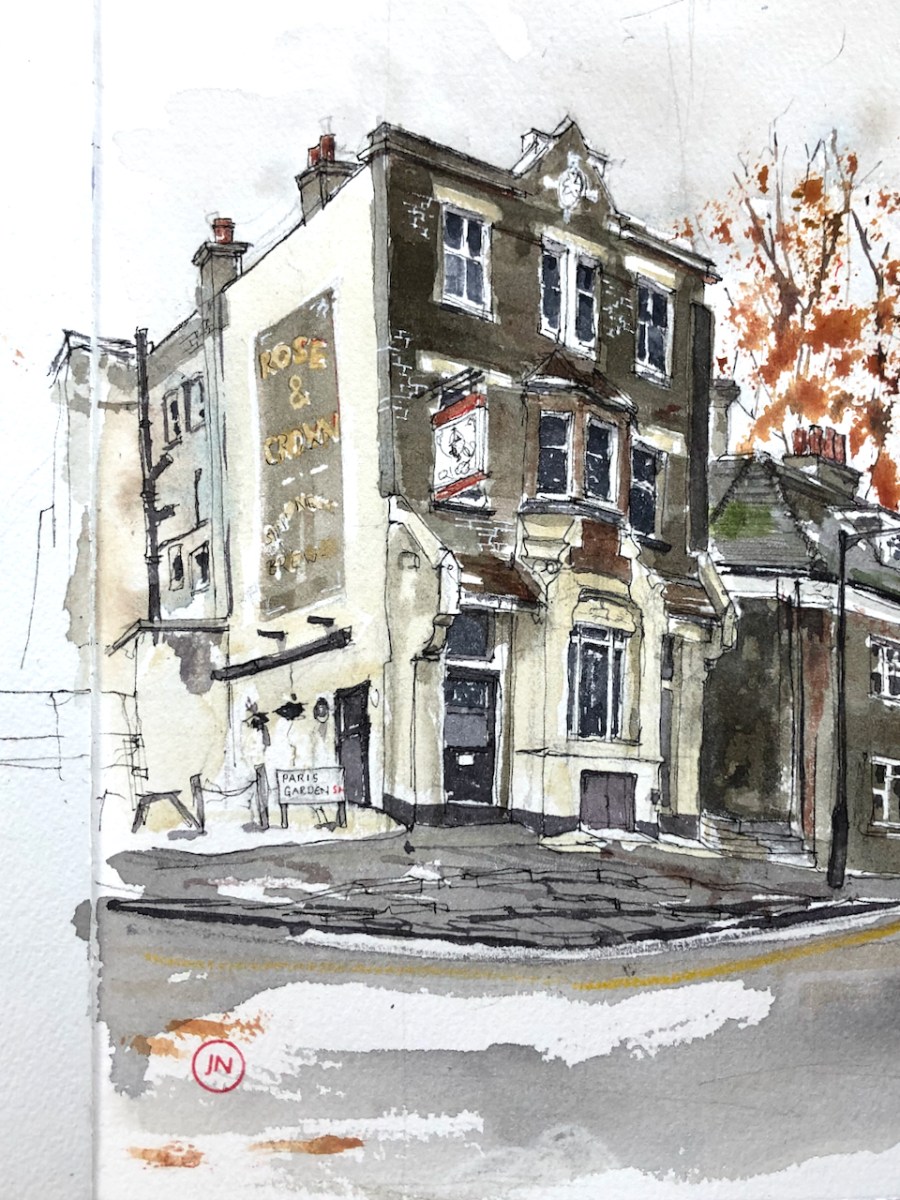
Here is the Rose and Crown, just south of Blackfriars Bridge. This pub stands amongst modern blocks: linking past, present and future in a swirling area of change. Behind the pub, unexpectedly, is…
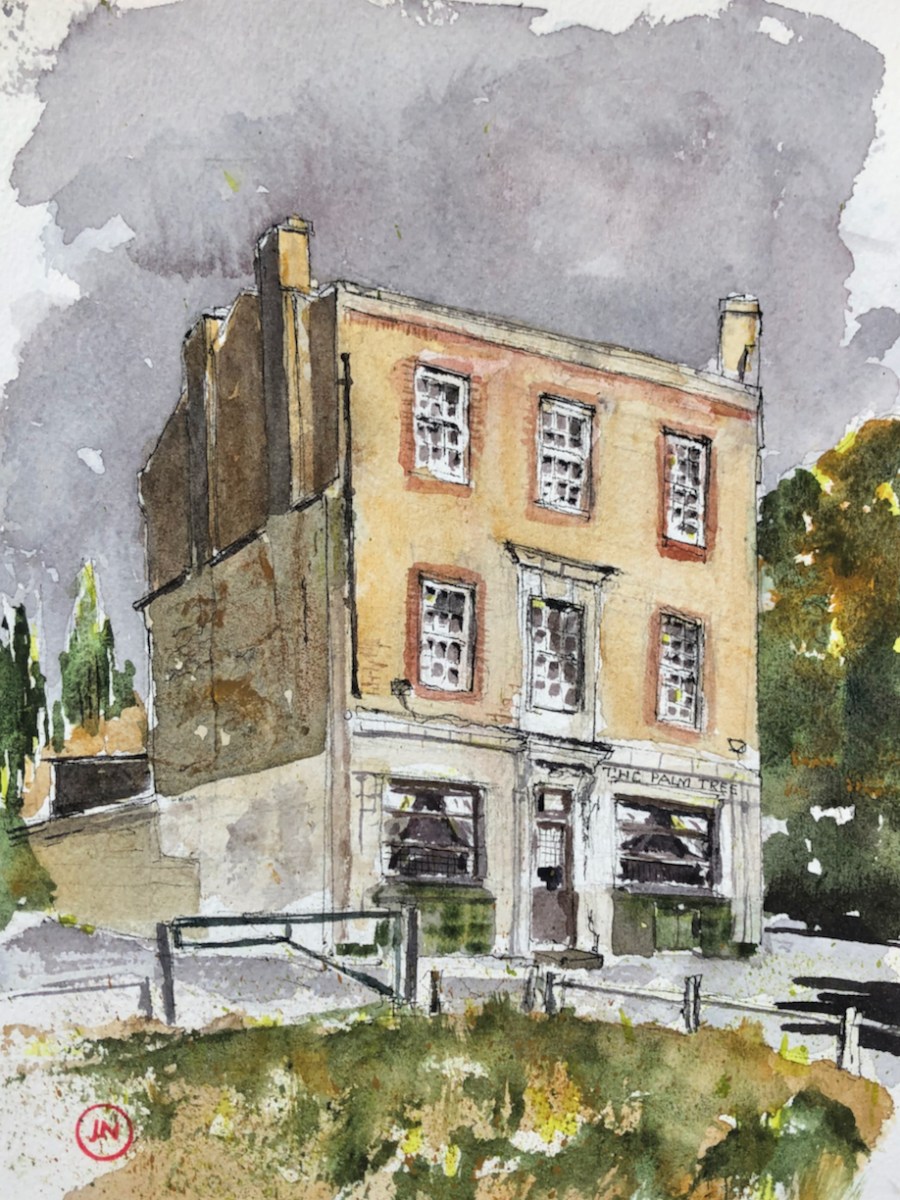
Here is “The Palm Tree” pub, seen from the south. I have often puzzled about this pub. I pass it as I’m cycling or running on the Regent’s Canal towpath. It stands alone,…
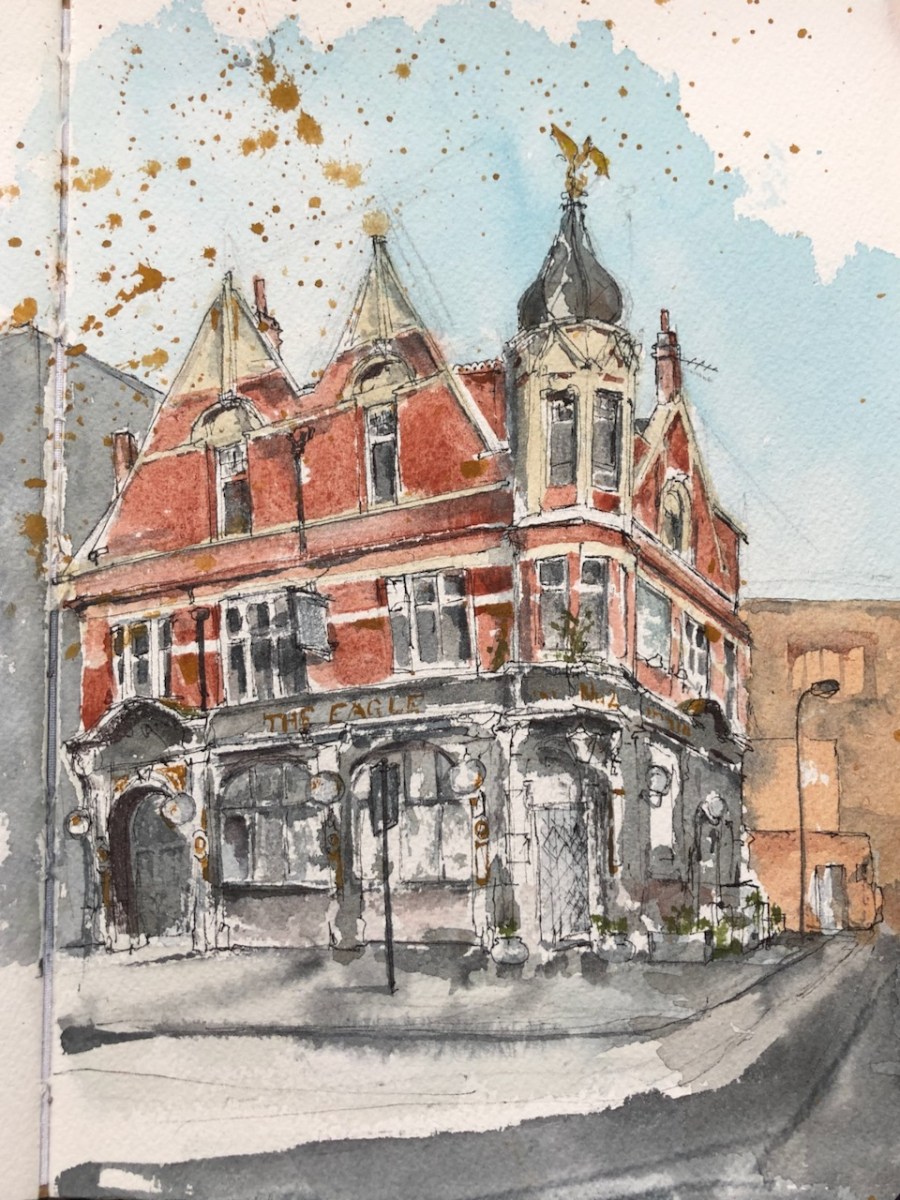
Here is The Eagle. This is a very old pub, located at a significant junction on City Road. In the picture above, the alley on the right of the pub is called “Shepherdess…
Usually, I use the “pen-and-wash” technique. I draw an urban scene in waterproof pen and then add the wash. This method is fast, and useful for outdoor work on location. Most of my urban sketching work uses this technique. Here’s are example:
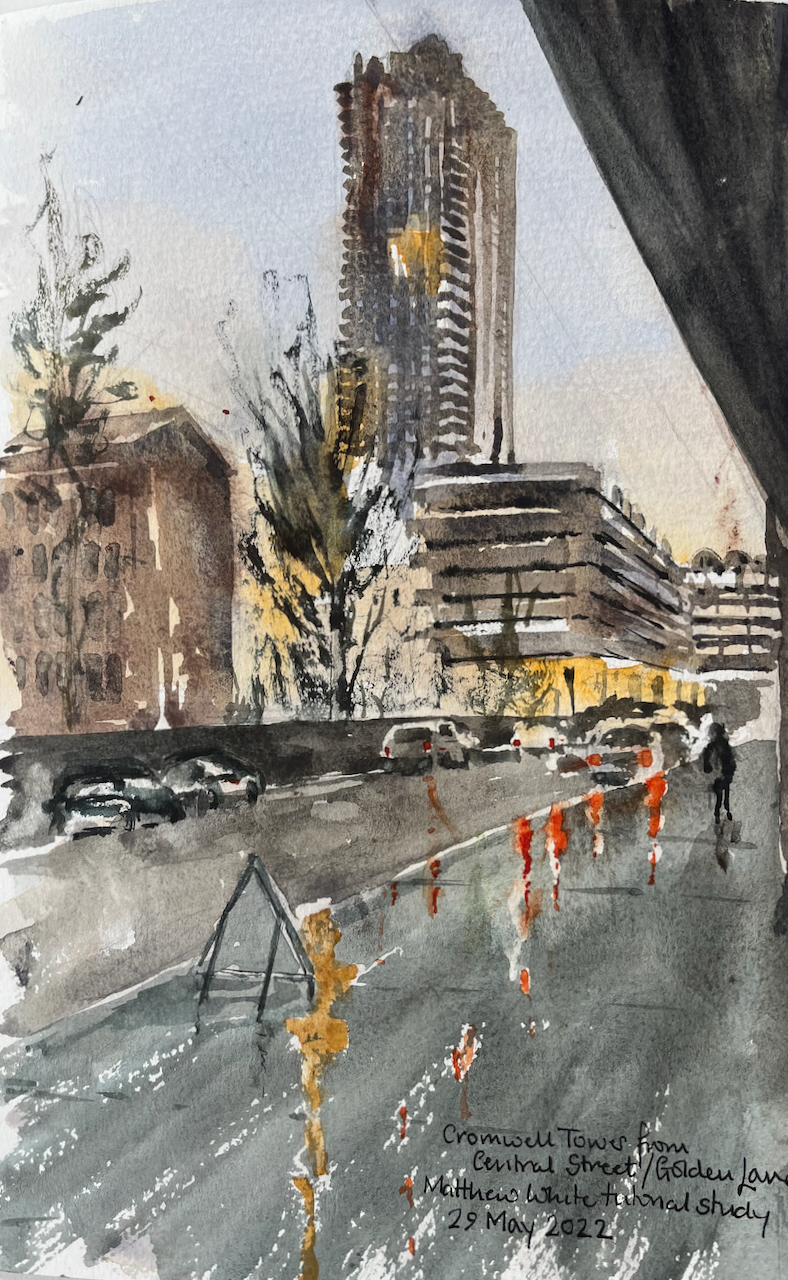
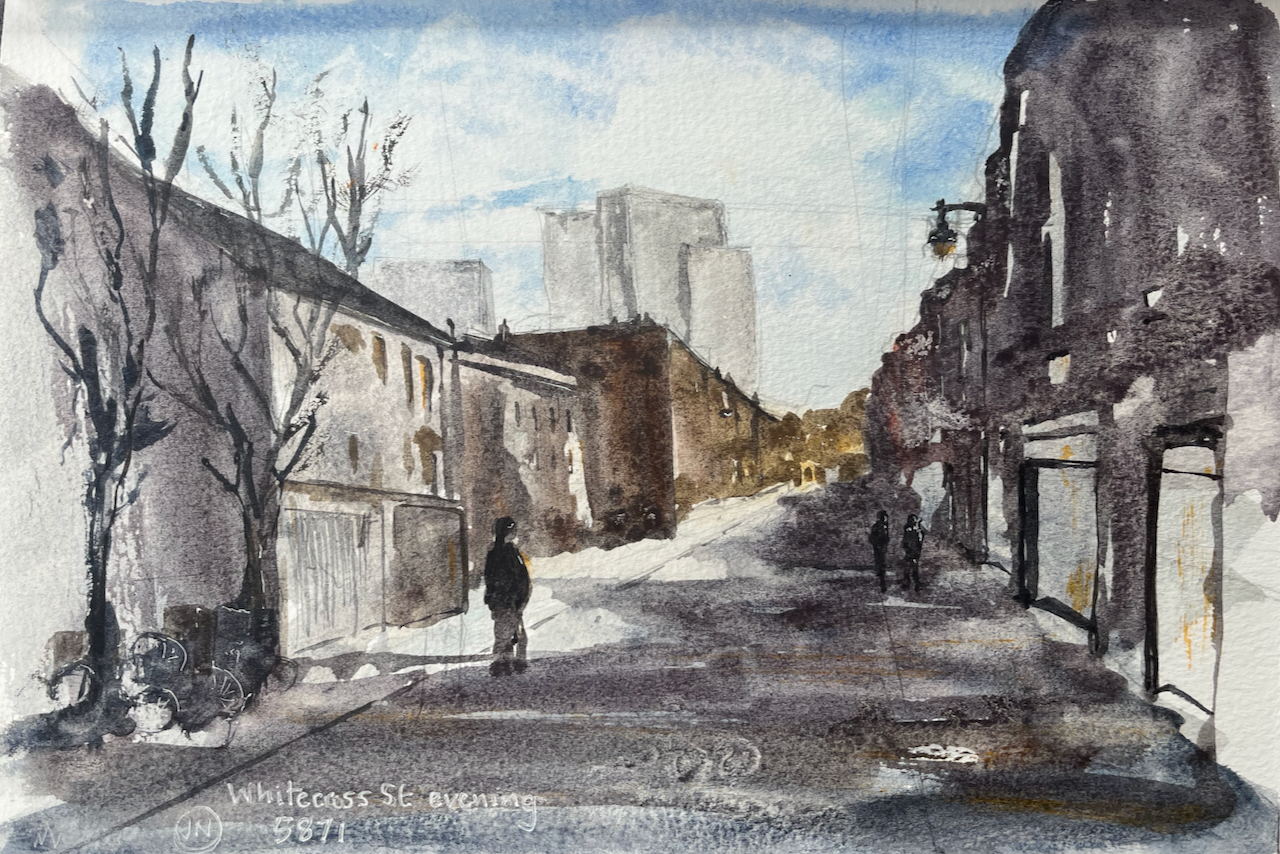
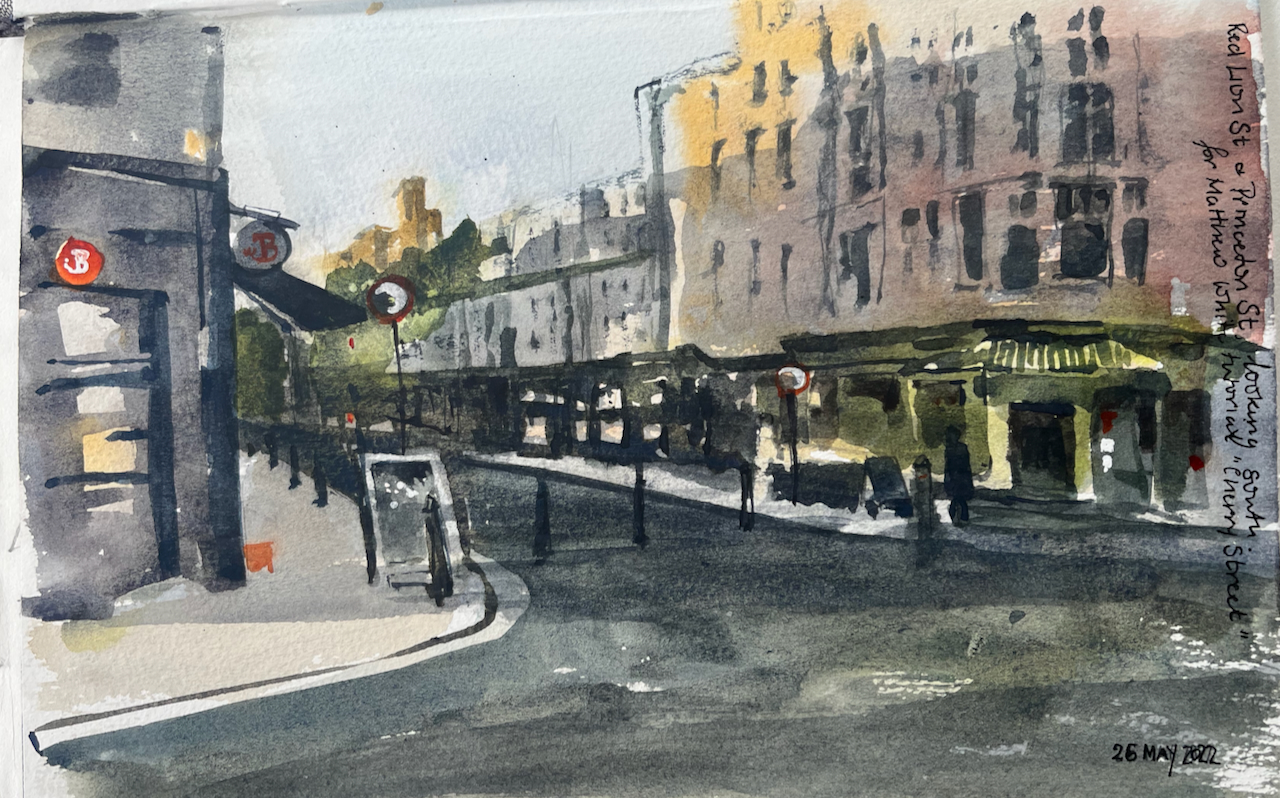
I wanted to try a “straight-to-watercolour” method. This involves looking at the scene differently. To go straight to watercolour I need to learn to see “shapes” rather than “lines”. I practised this with these three watercolours:
Whitecross StreetCromwell Tower from Golden LaneRed Lion Street
I worked learning from demonstrations by Matthew White . I hope to incorporate elements of this practice into my own work.
Click a button below to share this post online, email it, or print it:
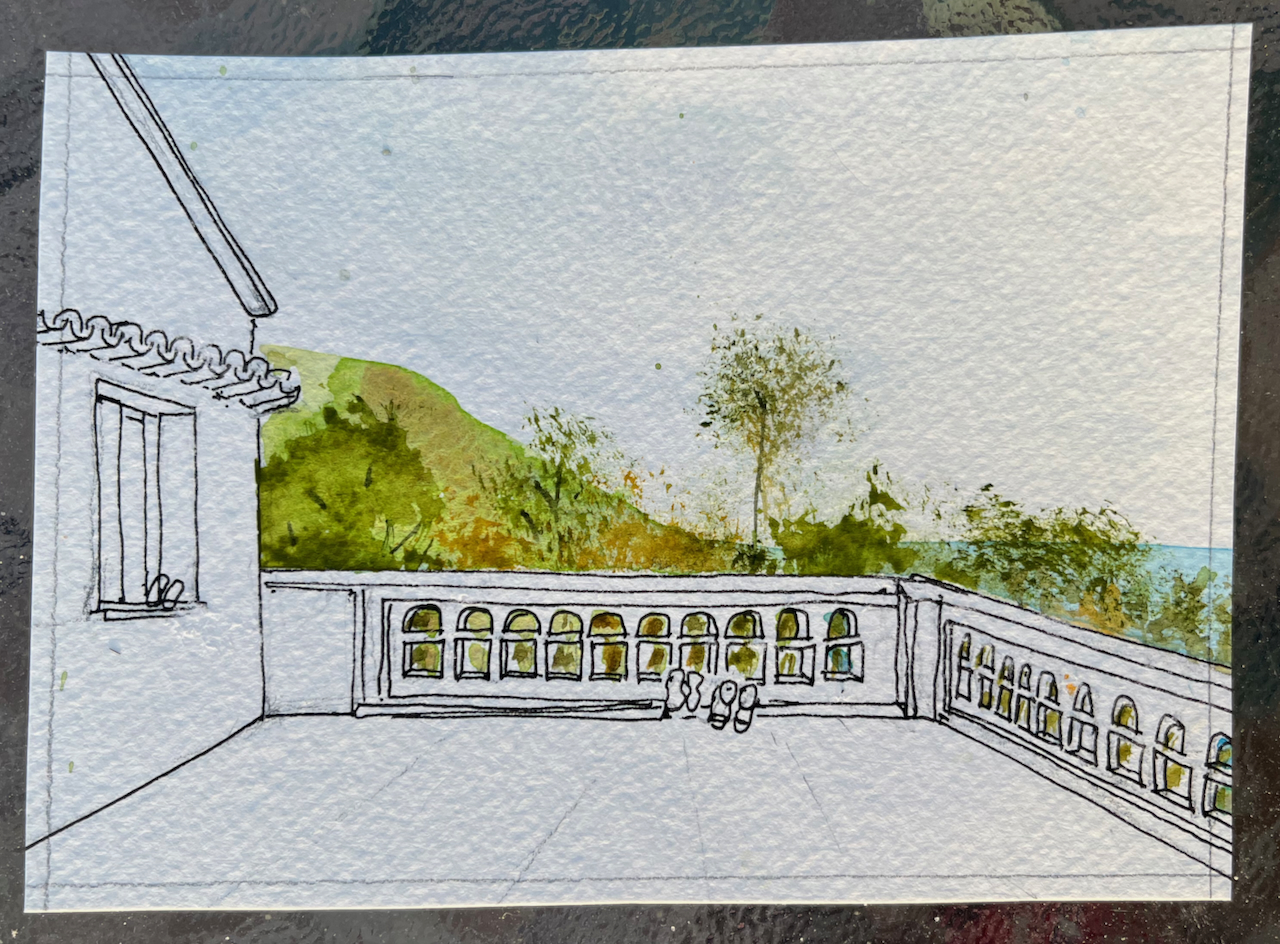
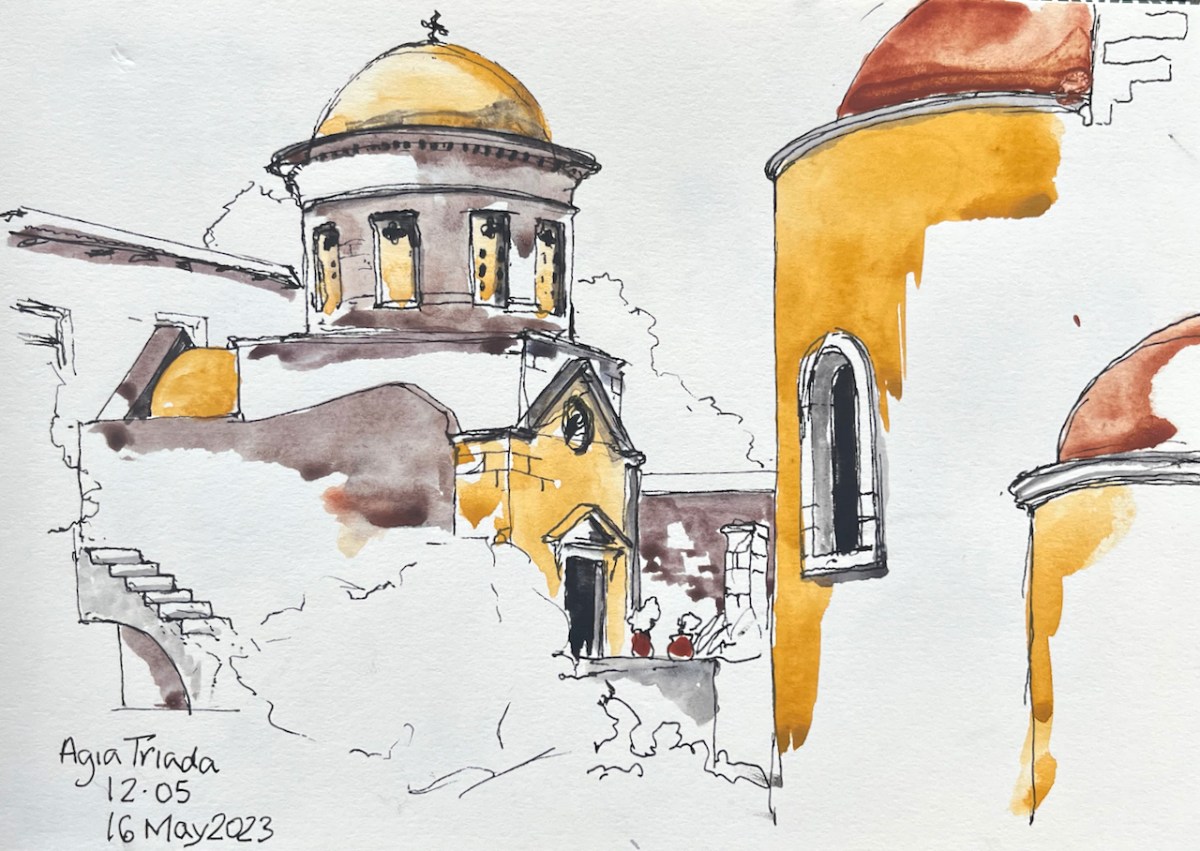
Here are a selection of sketches made in Crete. The sketchbook is Jackson’s Art Supplies’ own brand, 160gsm watercolour paper, cotton blend, about 8″ x 9″. I used some of the local earth as pigment, to make a watercolour, using Schmincke watercolour binder. I ground the earth using a stone, breaking it up to make…
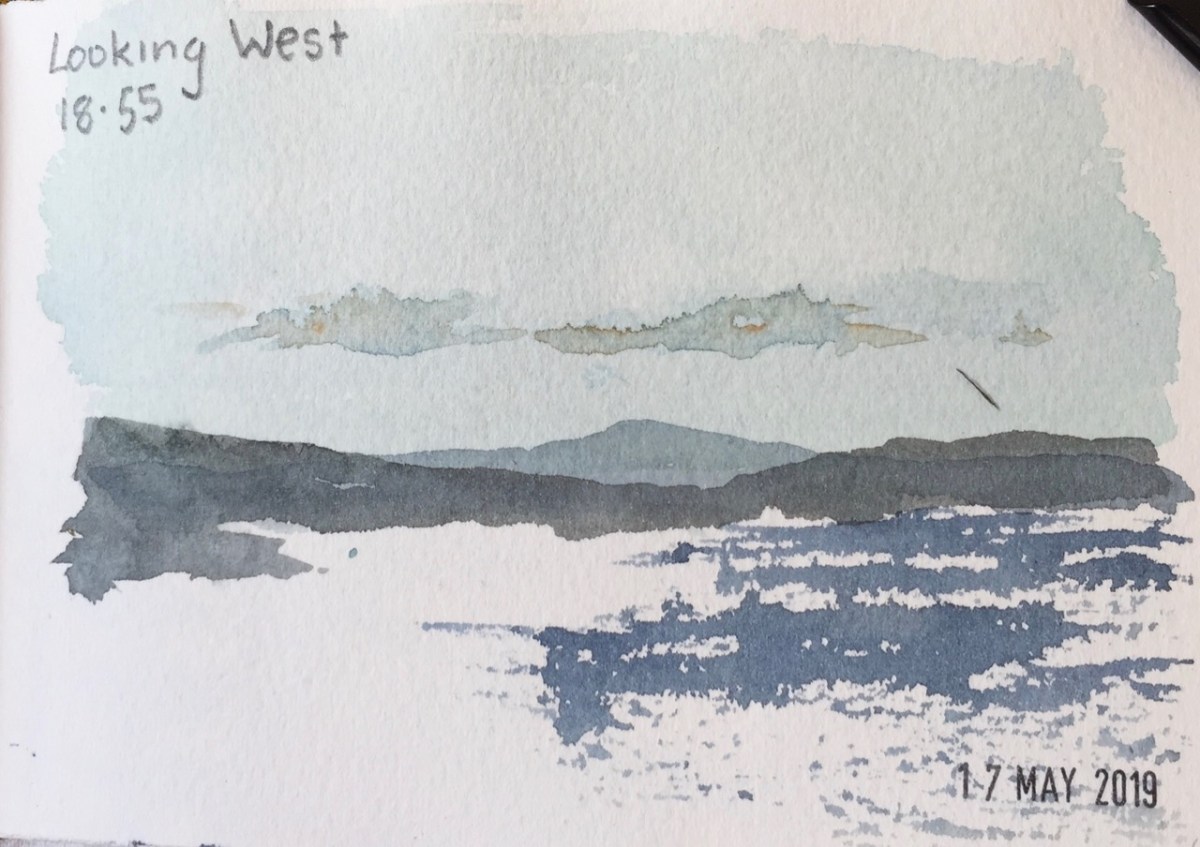
There was a bit of a delay at Gatwick. When we arrived in Crete, there were thunderstorms. As the storm clouds cleared, we saw the red streaks where soft earth had been washed into the sea. I sketched the headlands. Eventually the sun came out. Up the hill is the Roman city of Ancient Aptera.…
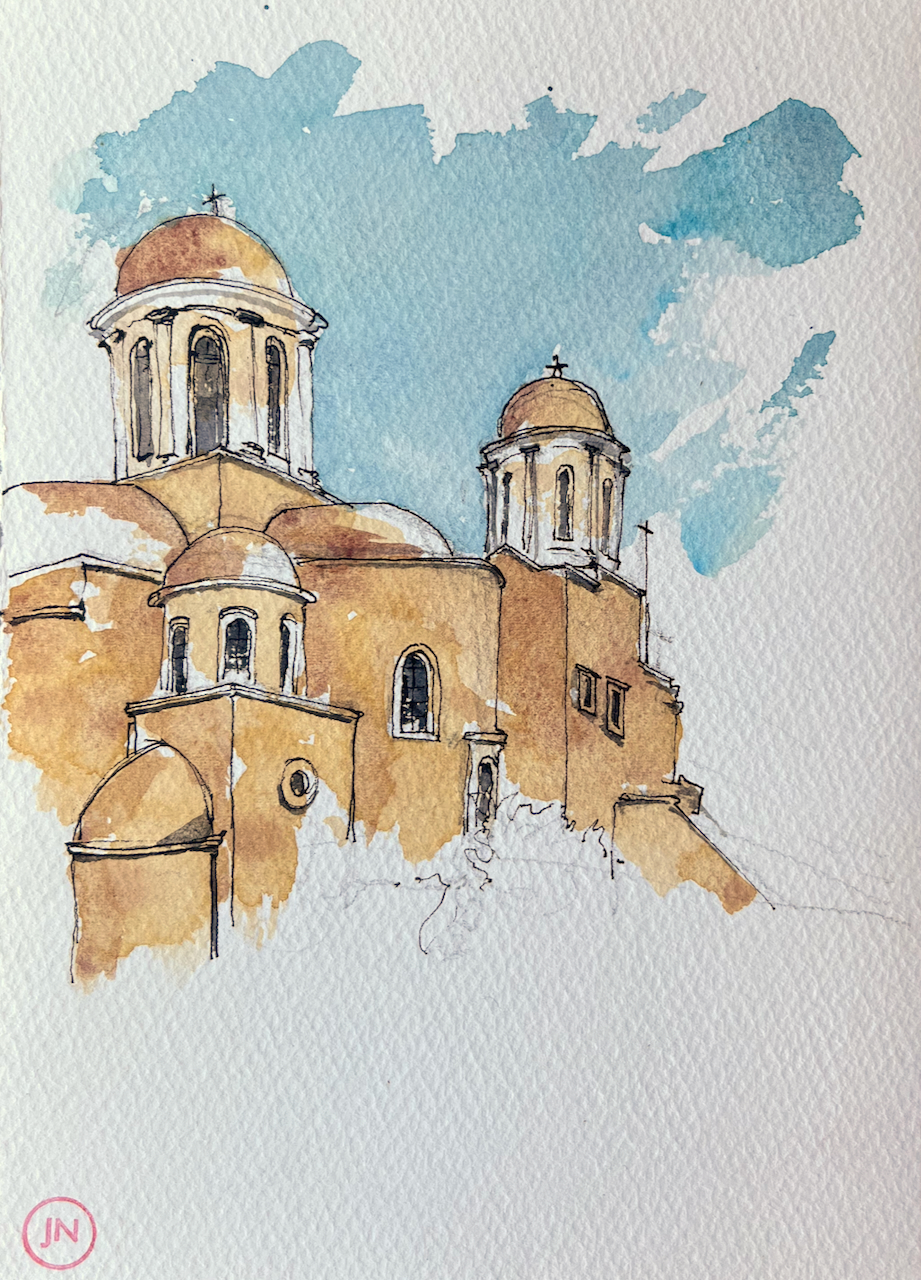
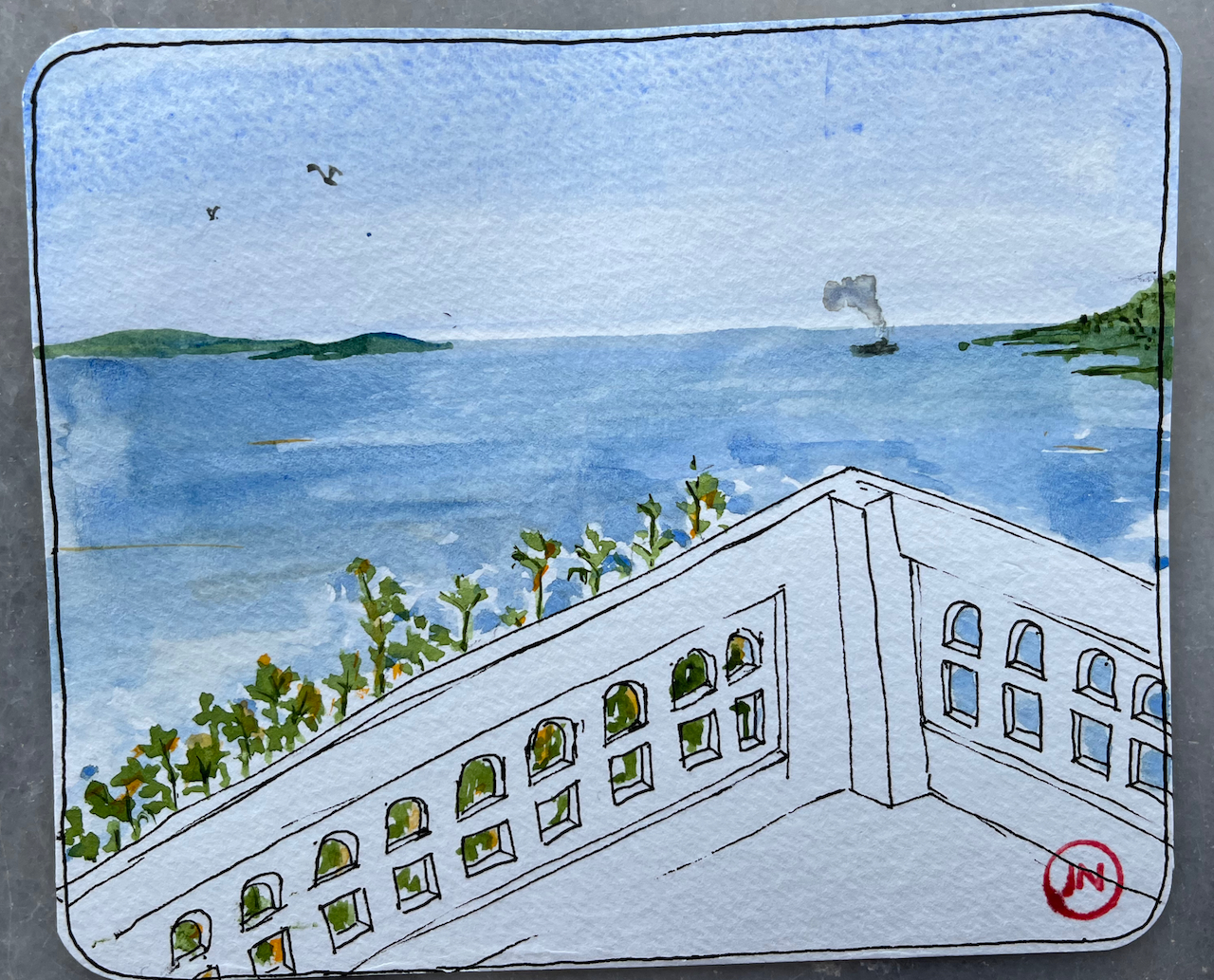
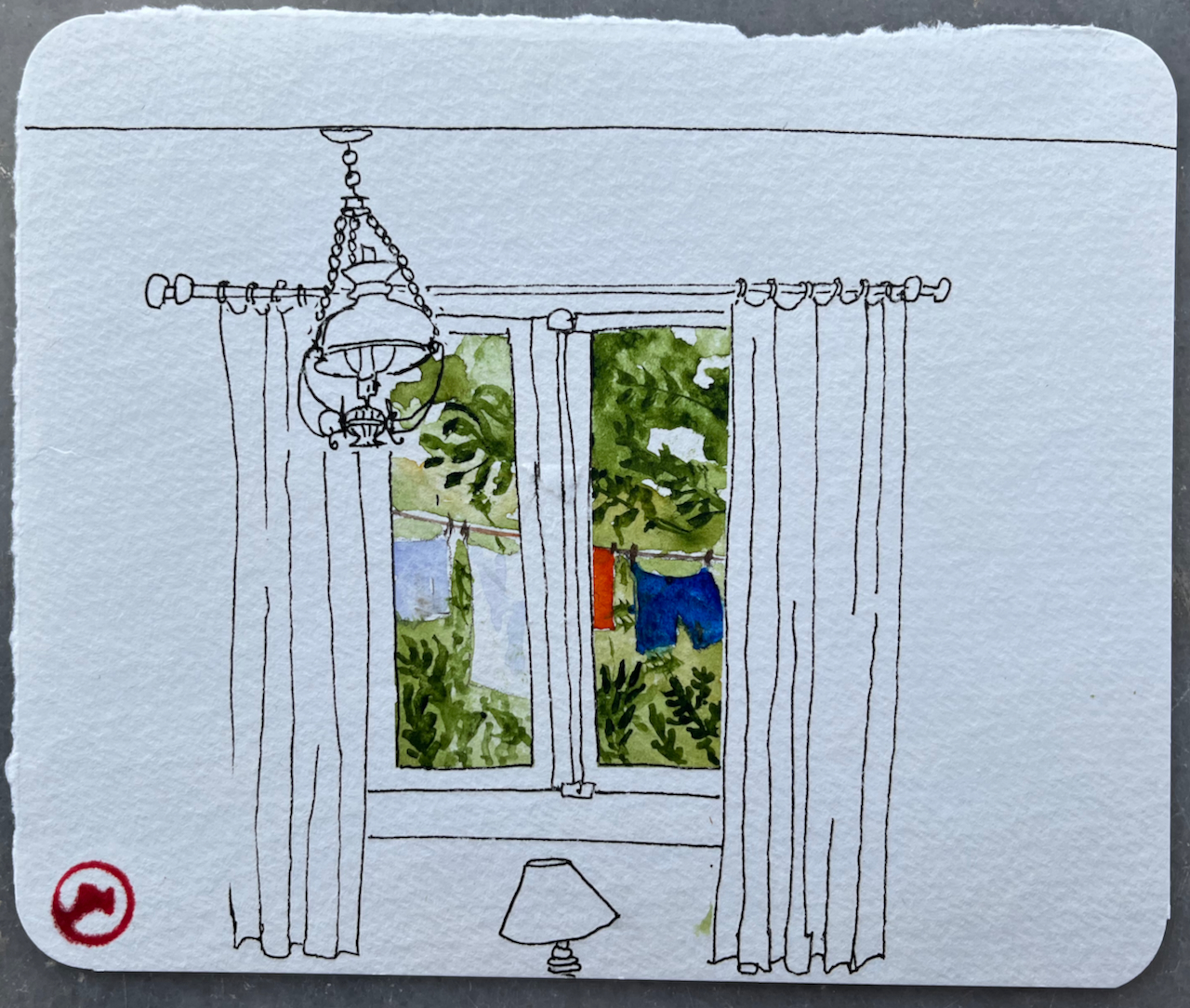
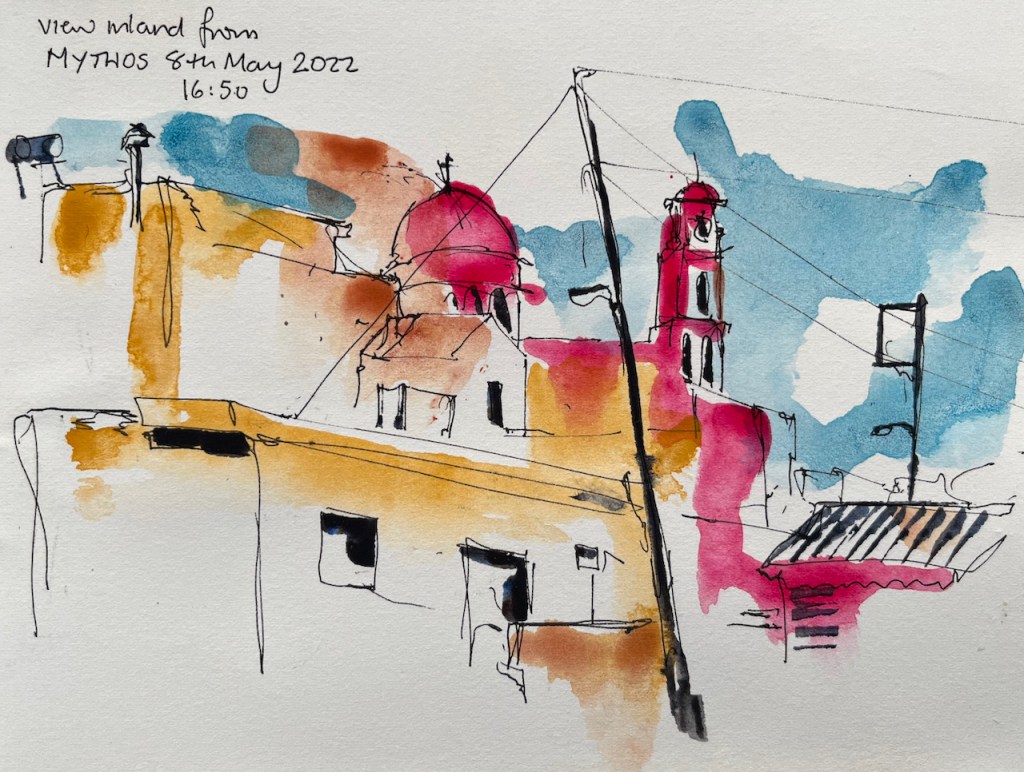
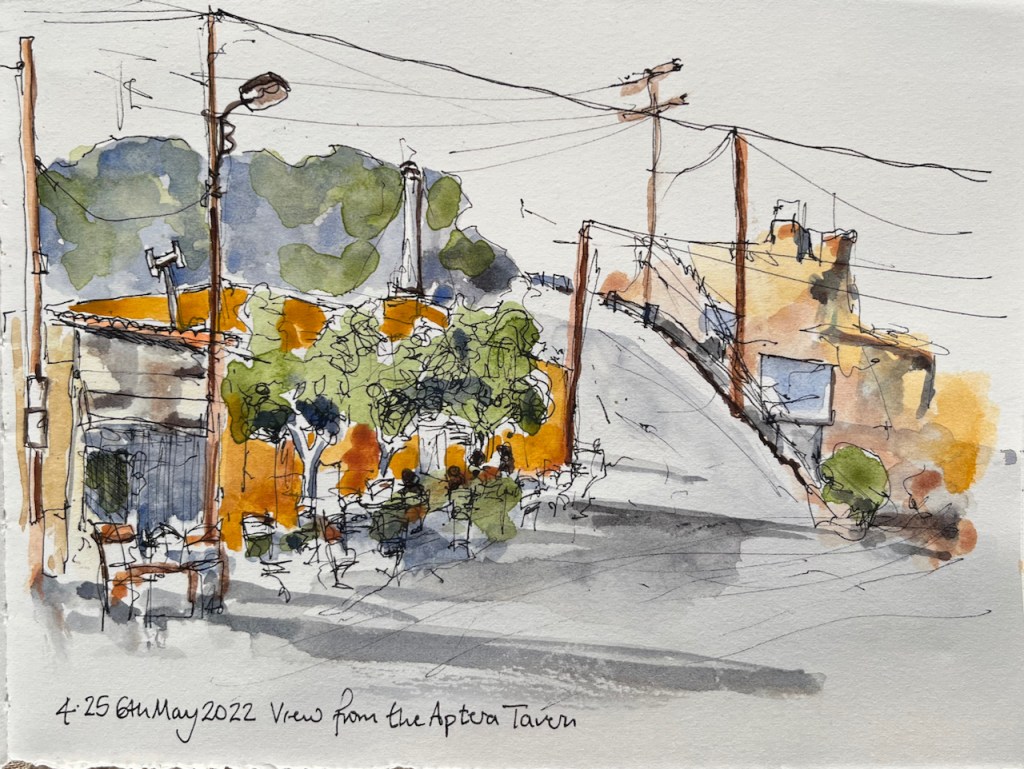
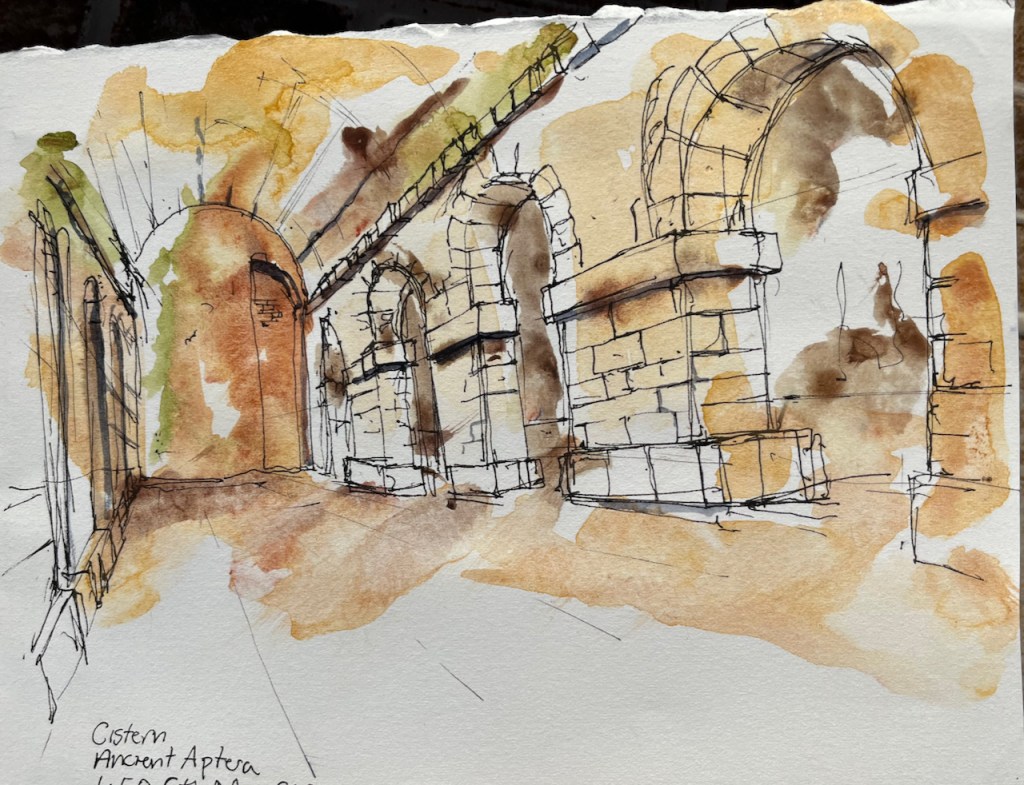
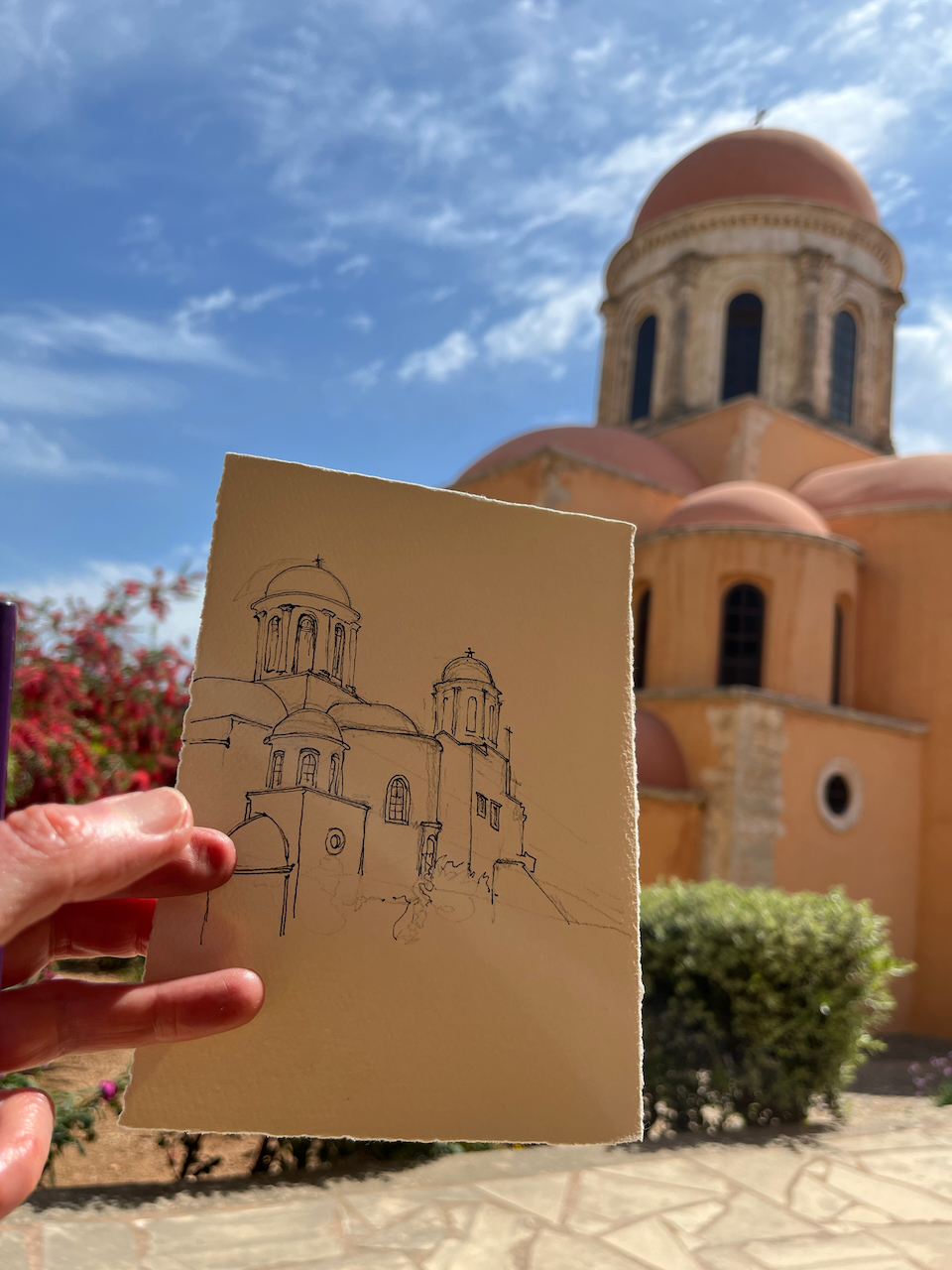
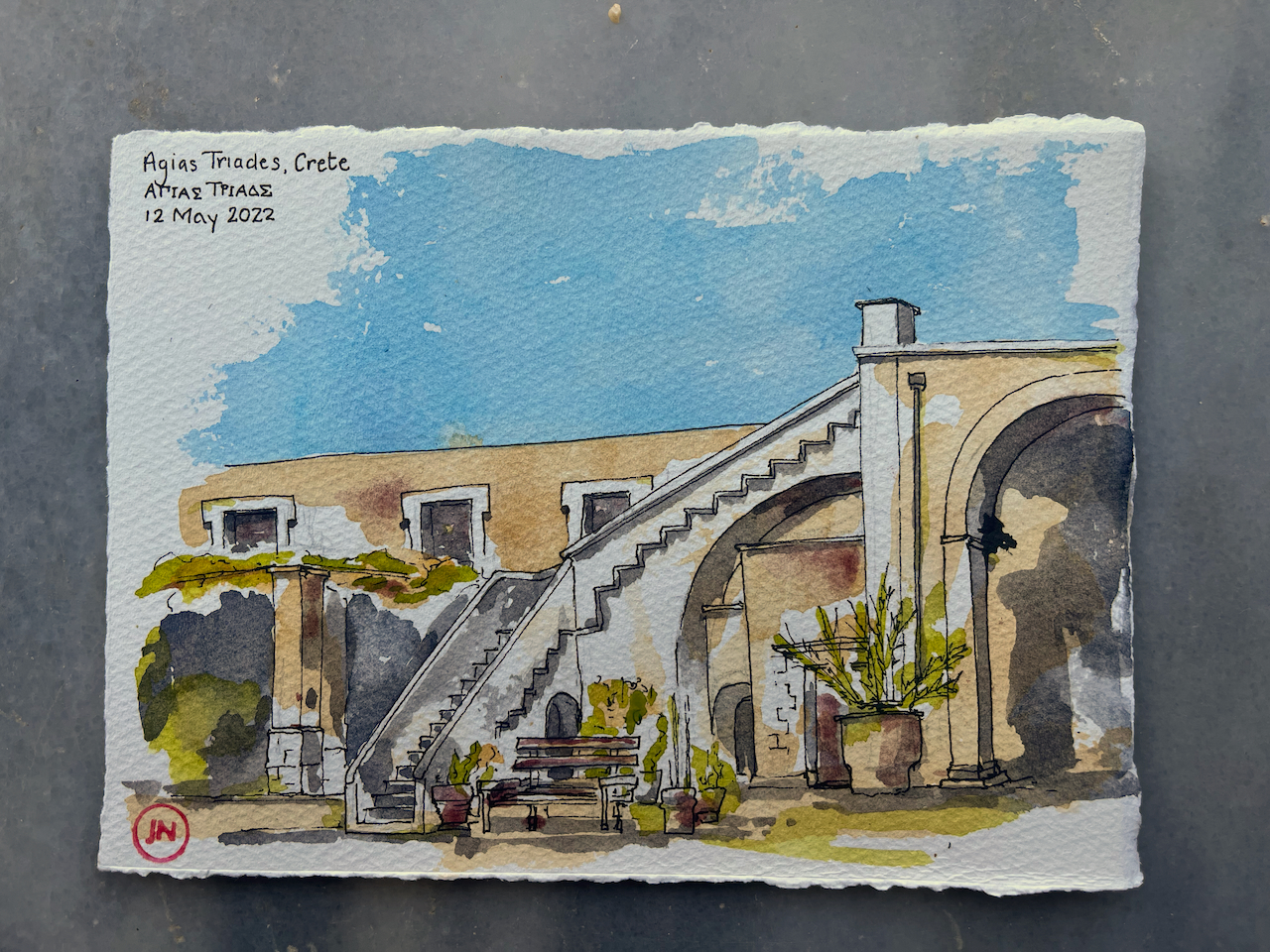
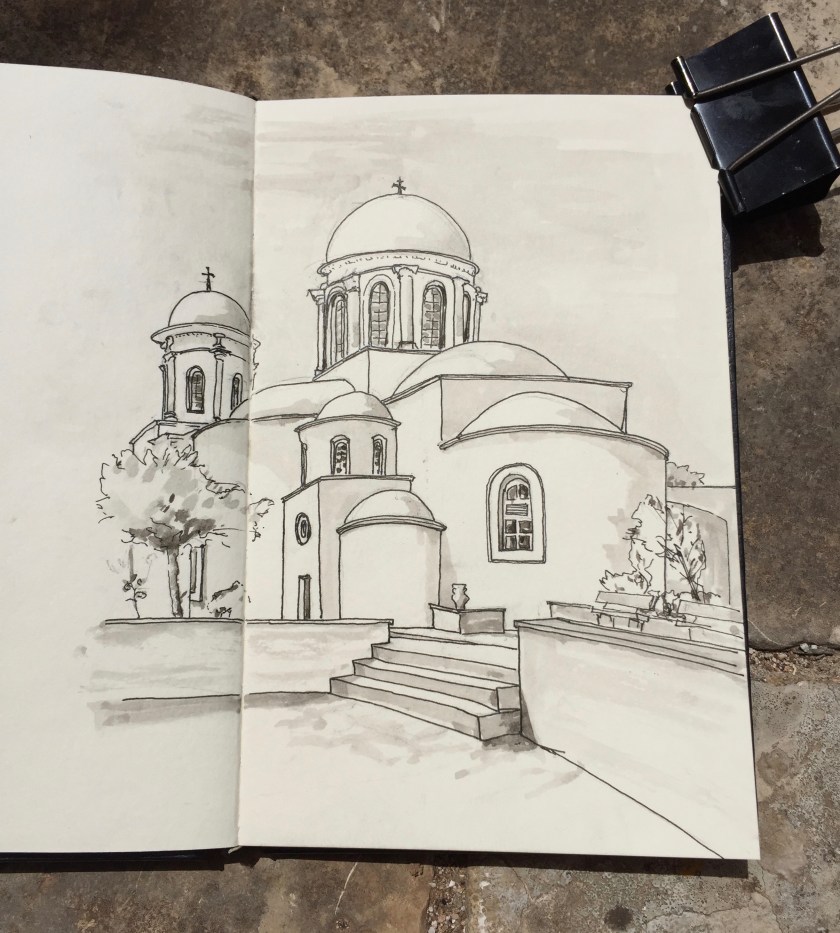
I sent some hand-drawn postcards from Crete. An experimental view from a restaurant: Another view from a restaurant: The Roman water cisterns at Aptera: The beautiful monastery of Agias Triados I’ve sketched here in previous years, here is a 2017 sketch: Paint dries really quickly here! Crete blog posts:
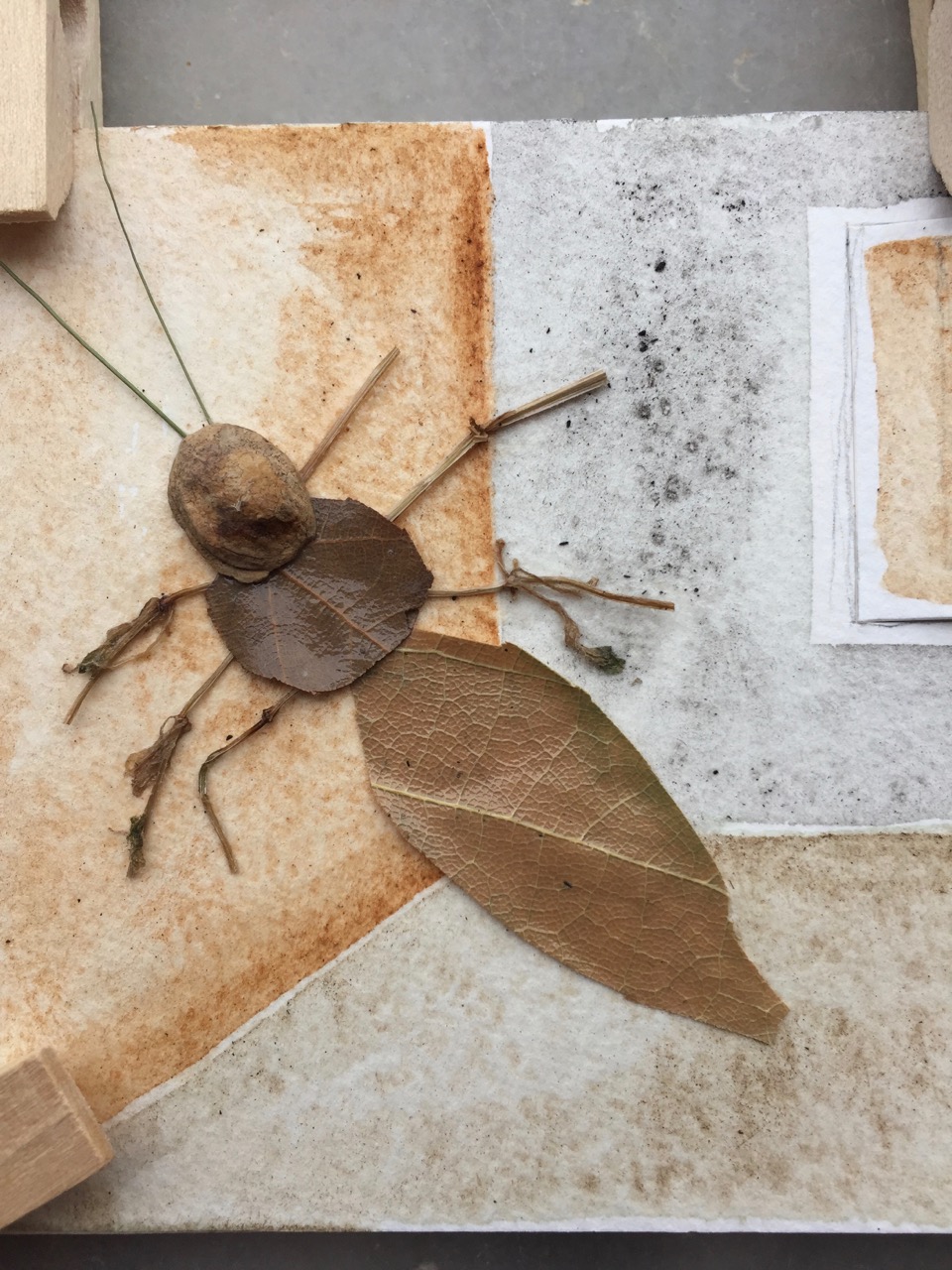
I made a postcard for friends in Basel. It shows the insect life in Crete. Here are some details, and the work under construction. The idea was that the flies would jump out of the window when it was opened. The postcard is painted using pigments made from the earth. Update 28th May:…
The air in Crete was warm and damp. This affected the paper. See how the ink has spread in this pen and ink sketch at the airport: This is De Atramentis Black document ink on high quality watercolour paper, Saunders Waterford, in a small book 6″ by 4″ from the Vintage Paper Company. After that,…
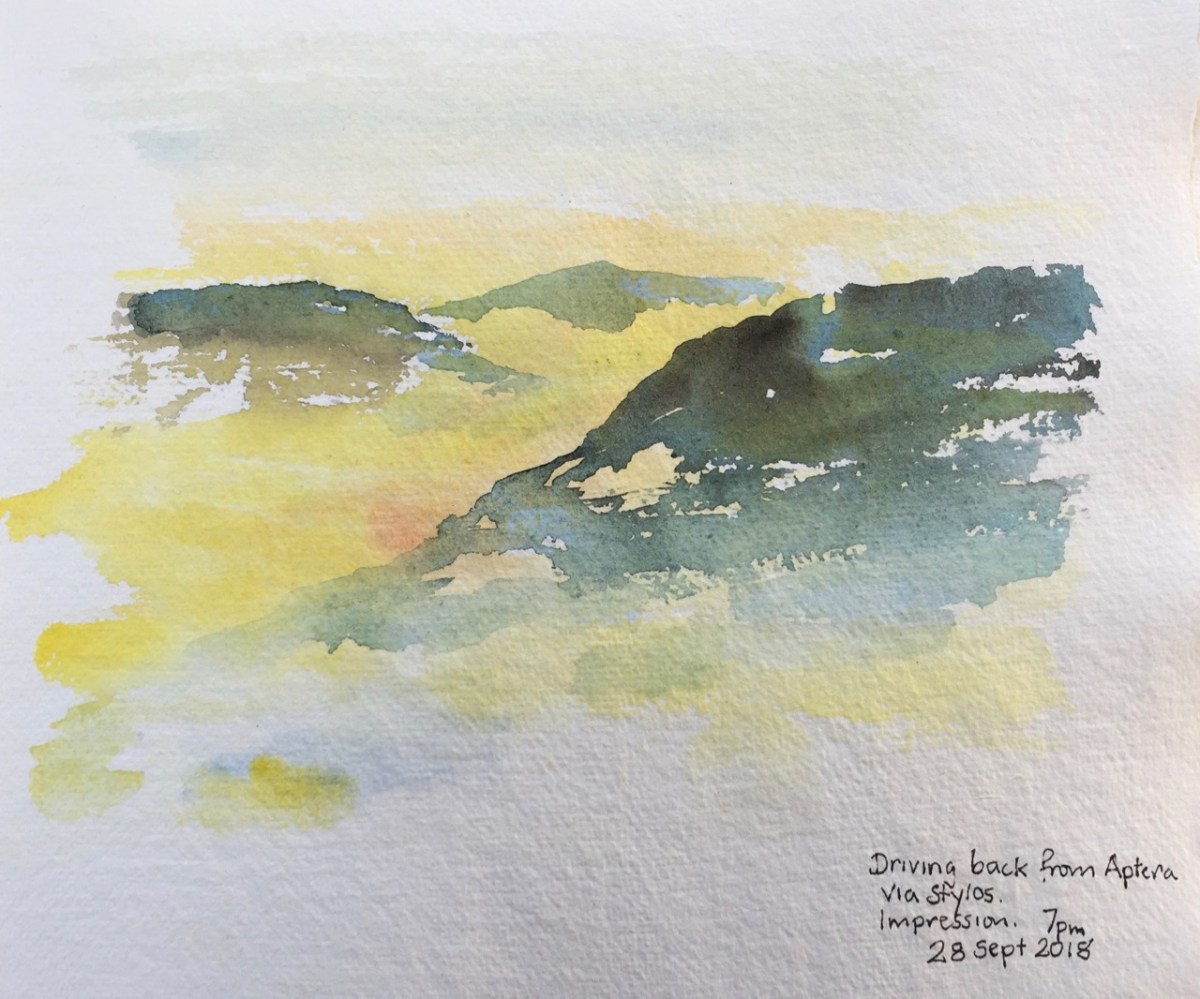
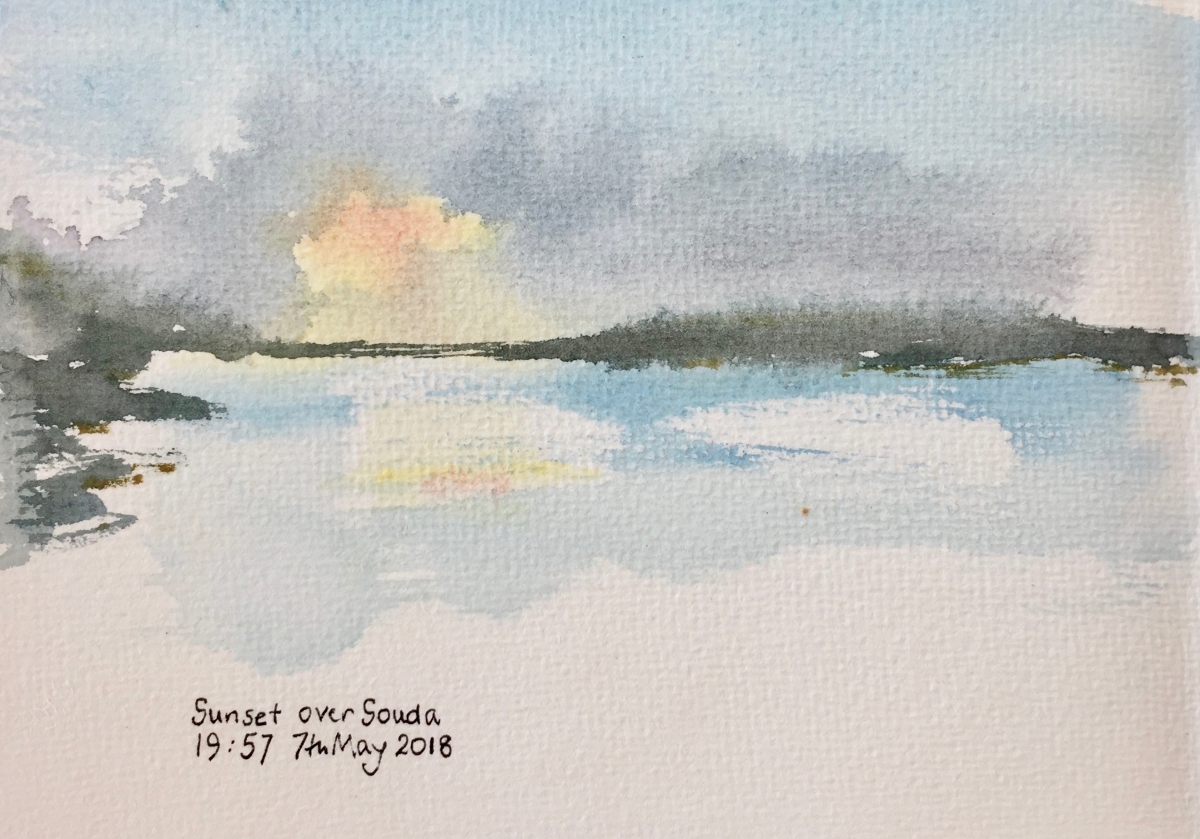
I was experimental. I had a large sketchbook with rough pages, given to me for my birthday. I turned over the pages and tried things. As we drove back from Aptera one evening, the sun was setting and fired up the mist between the hills. Back at the kitchen table, I had a go: It…
Aptera was a city in Greek and Roman times. The people went to the Theatre. From the small slab in the centre, the acoustics are perfect. John gave a rendition of the speech of Richard III “Now is the winter of our discontent….”. I heard it perfectly, at this distance. The place where we stayed…
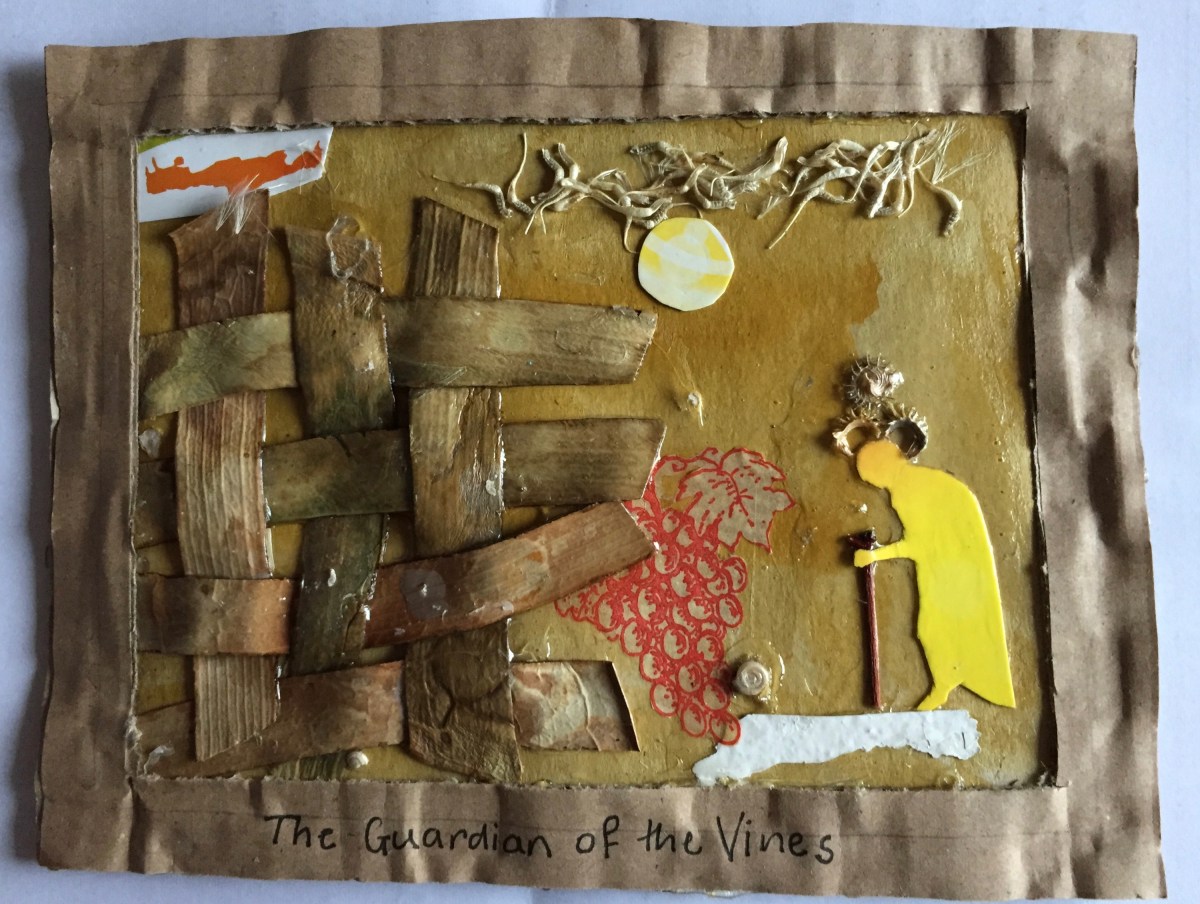
Another collage postcard. I posted this one in London 18th May. It looks a bit crinkled because the cardboard was damp with PVA glue, and then dried. The white shape on the bottom right is a flake of white paint I found on the ground. It must have been polyurethane paint, because it was flexible…
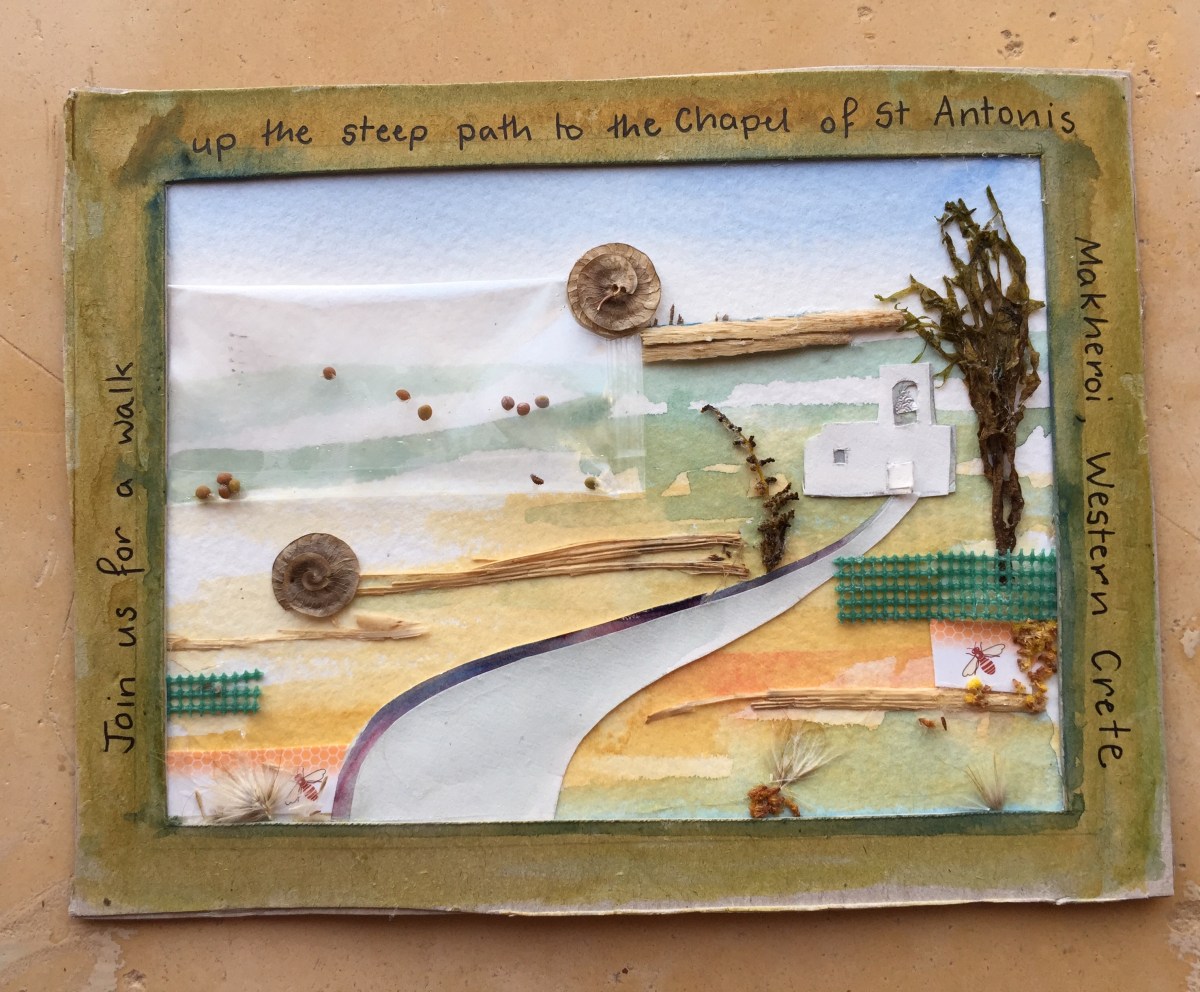
Here is a collage made for friends in Switzerland. I posted it at the Post Office in Kalami on 8th May. The official there did not seem to be concentrating very hard. He looked dubiously at the word “Switzerland” on the address. I think I need to find out what “Switzerland” is in Greek. The…
Click a button below to share this post online, email it, or print it:
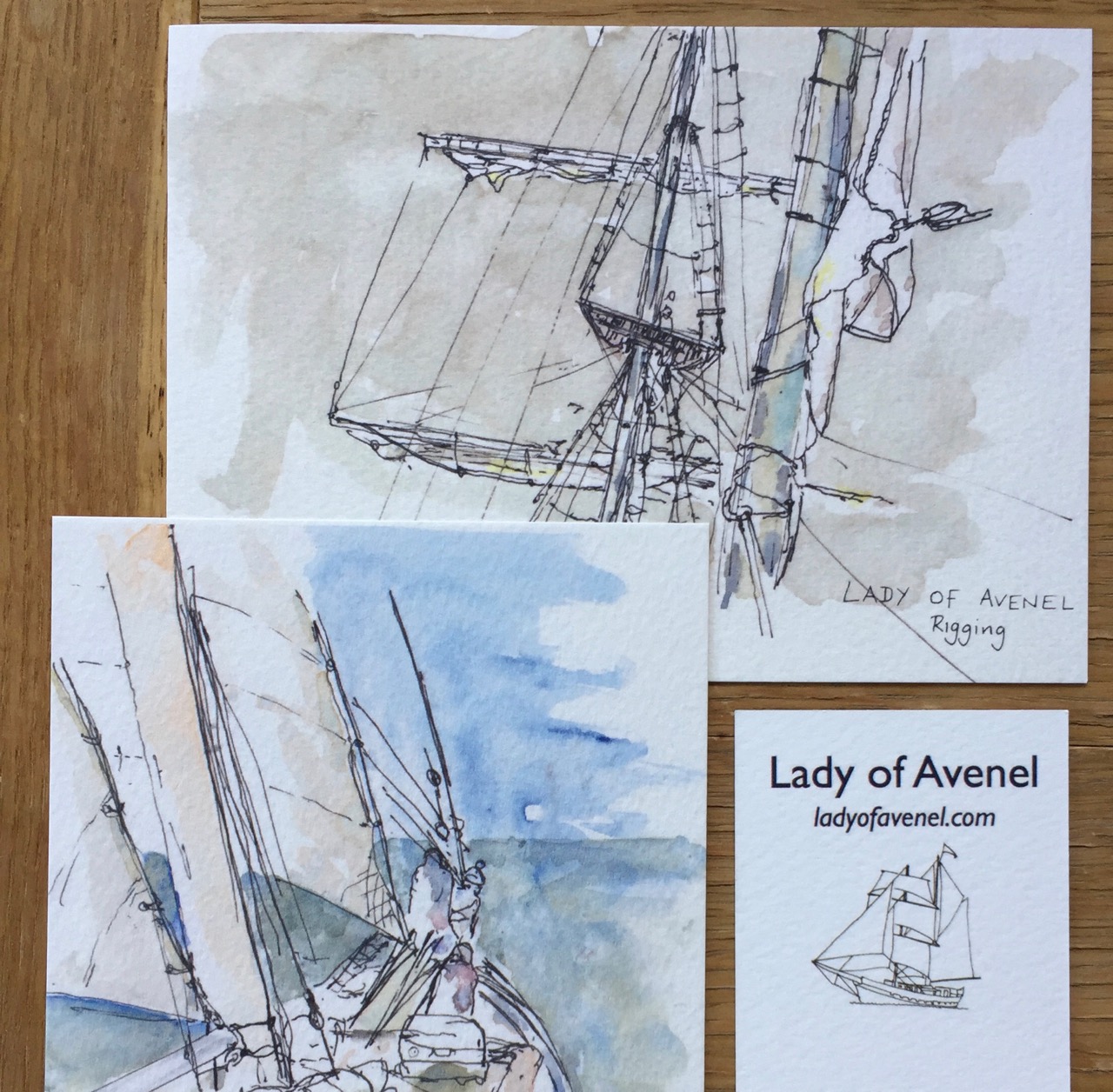
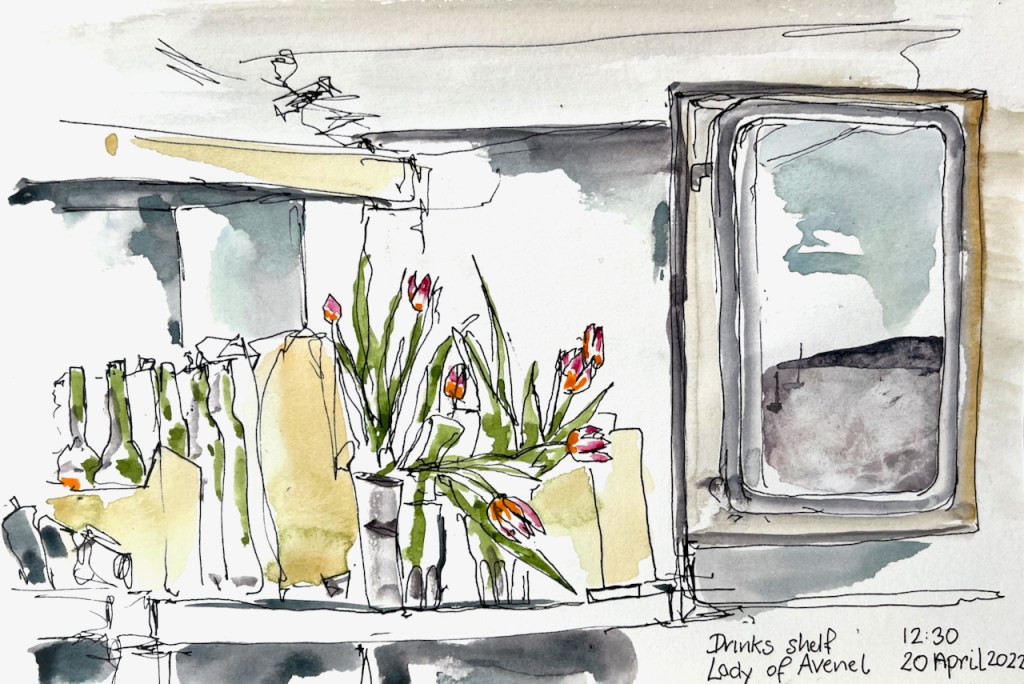
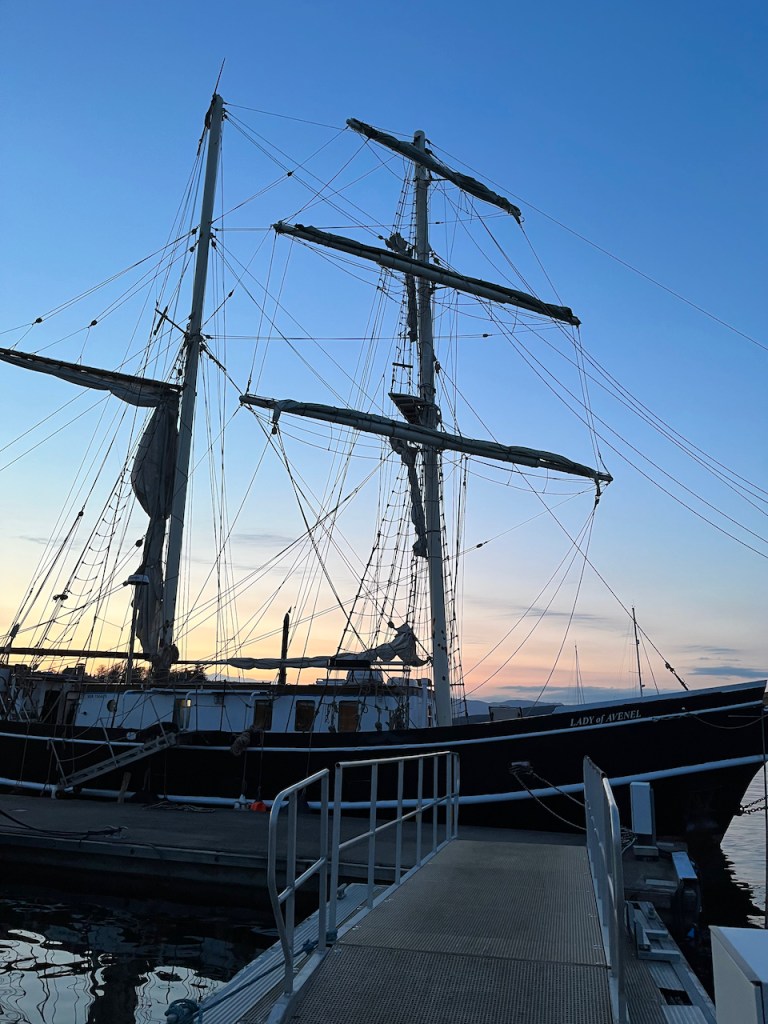
The Lady of Avenel is an 102ft square rigged brigantine, currently based near Oban, on the west coast of Scotland.
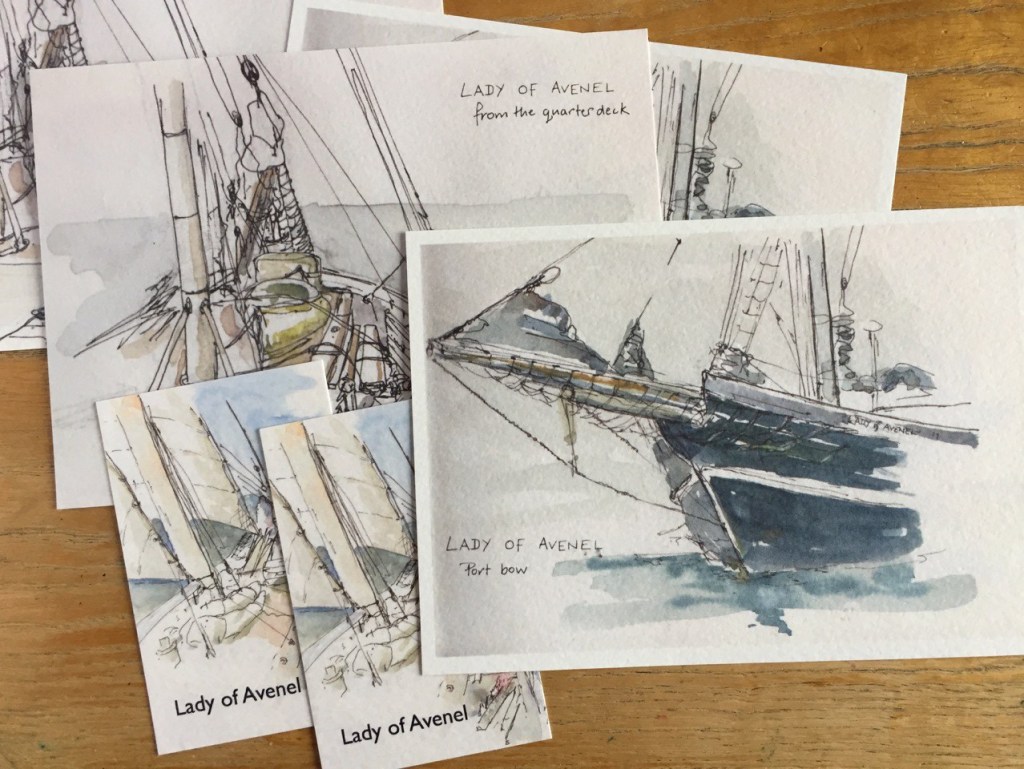
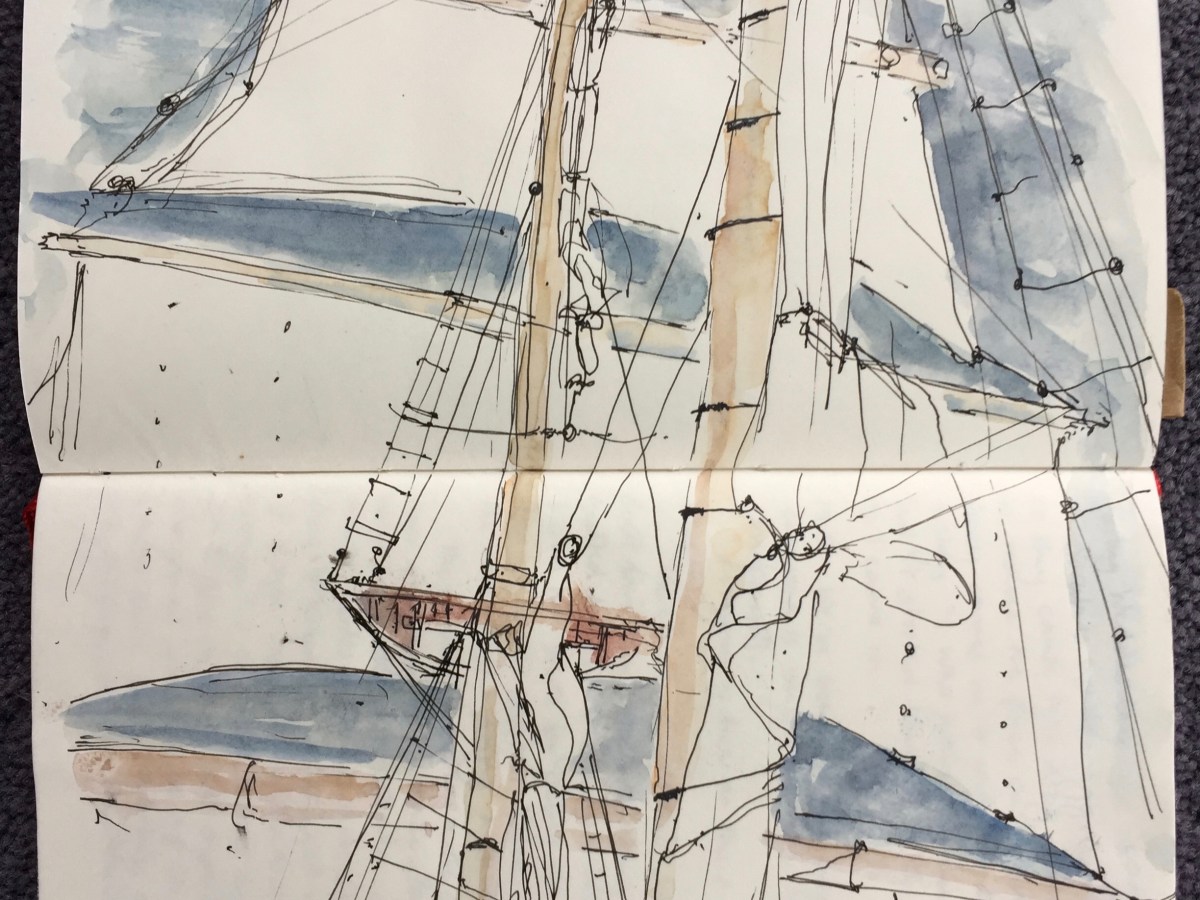
Postcards and Business Card for “Lady of Avenel”Postcards for “Lady of Avenel”Sketches of the “Lady of Avenel” made into postcards and business cards
Every year the Lady of Avenel needs a refit to prepare her for her working season. This year I went up there to join the working party for the refit.
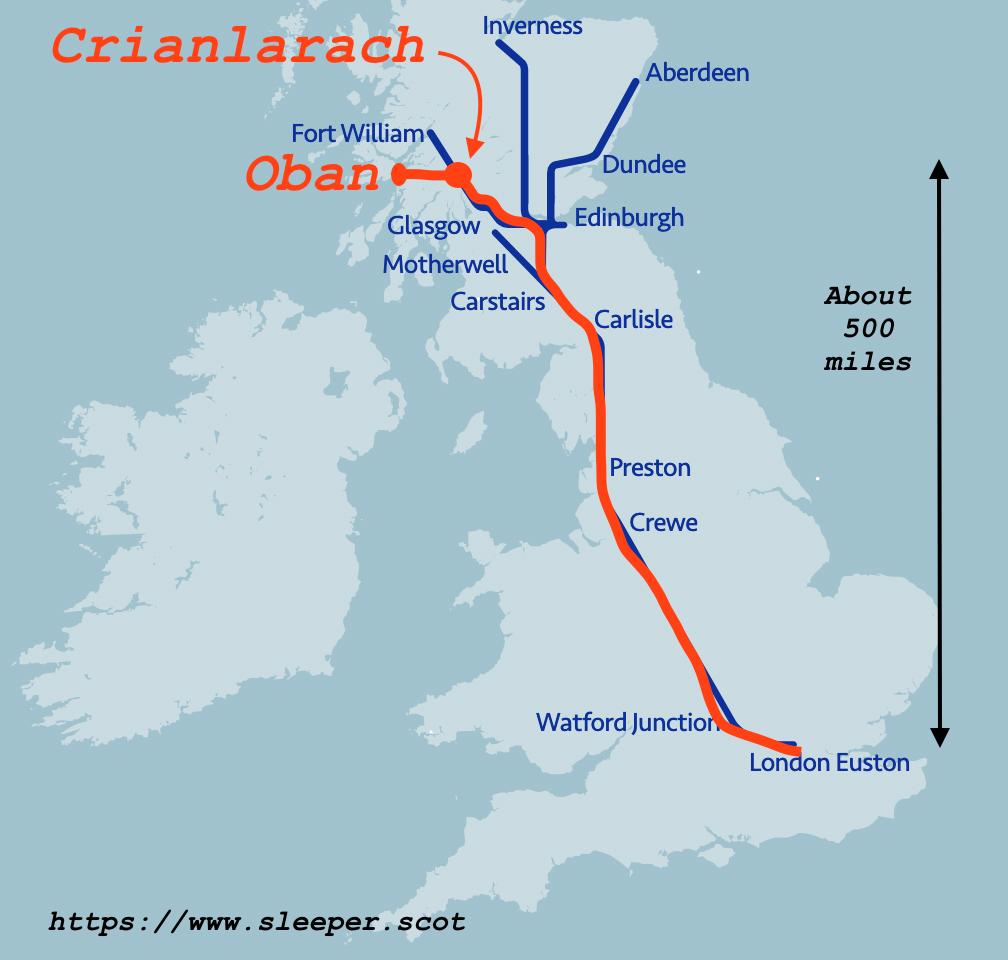
I travelled by overnight train from Euston to Crianlarach.
Journey via the Caledonian Sleeper from London to Oban. Map from the Caledonian Sleeper webpage. The overnight journey takes about 10 hours Euston-Crianlarach. Then I caught a local train Crianlarach to Oban.
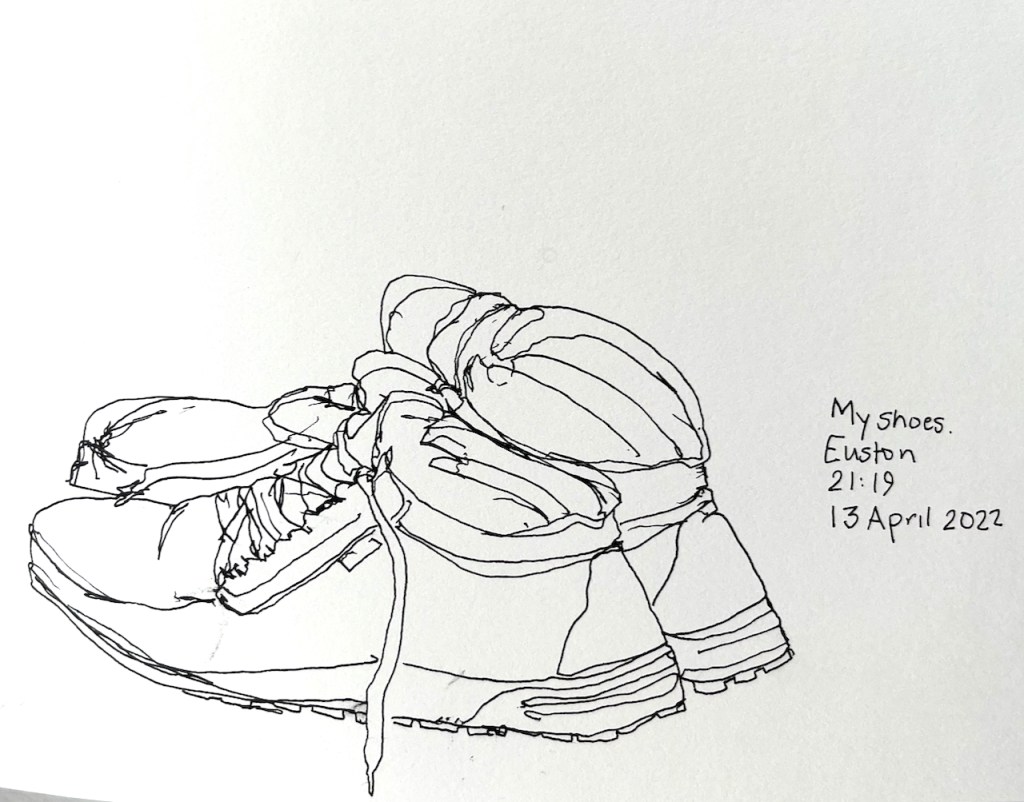
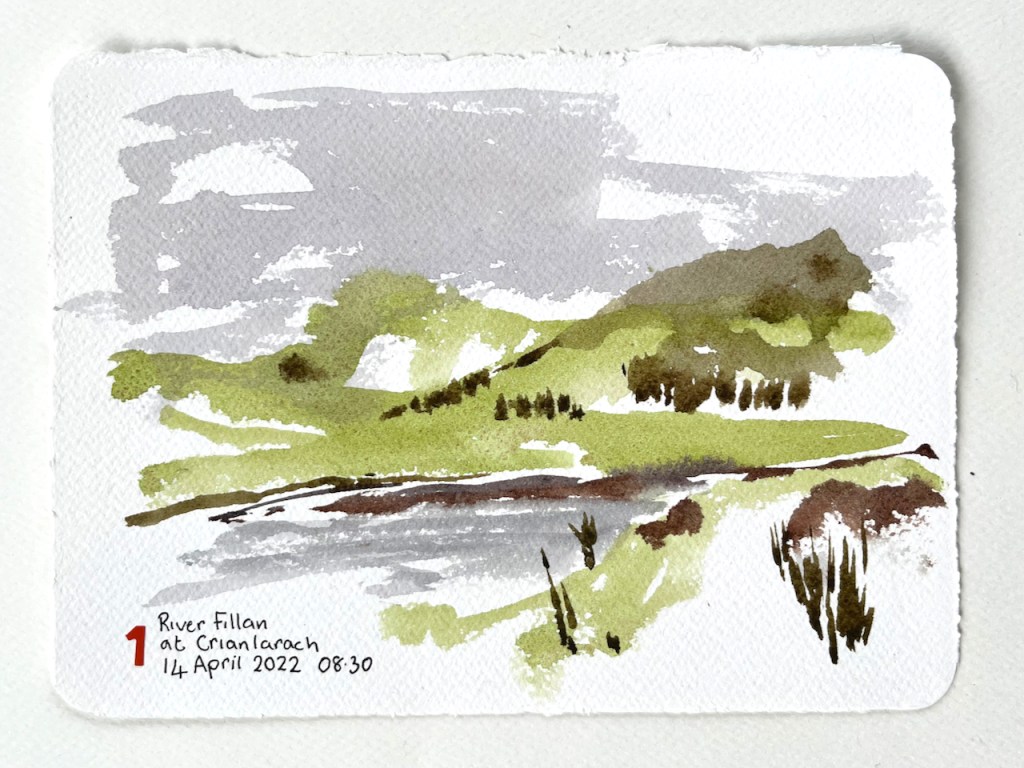
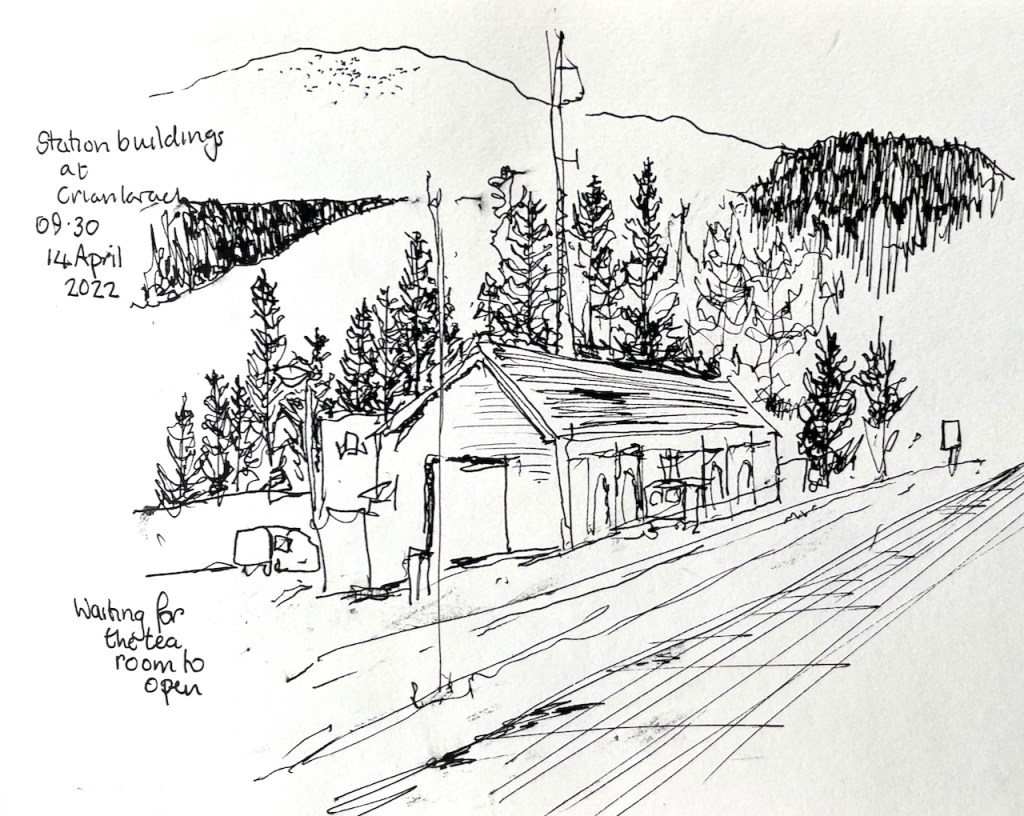
I drew some sketches on the journey.
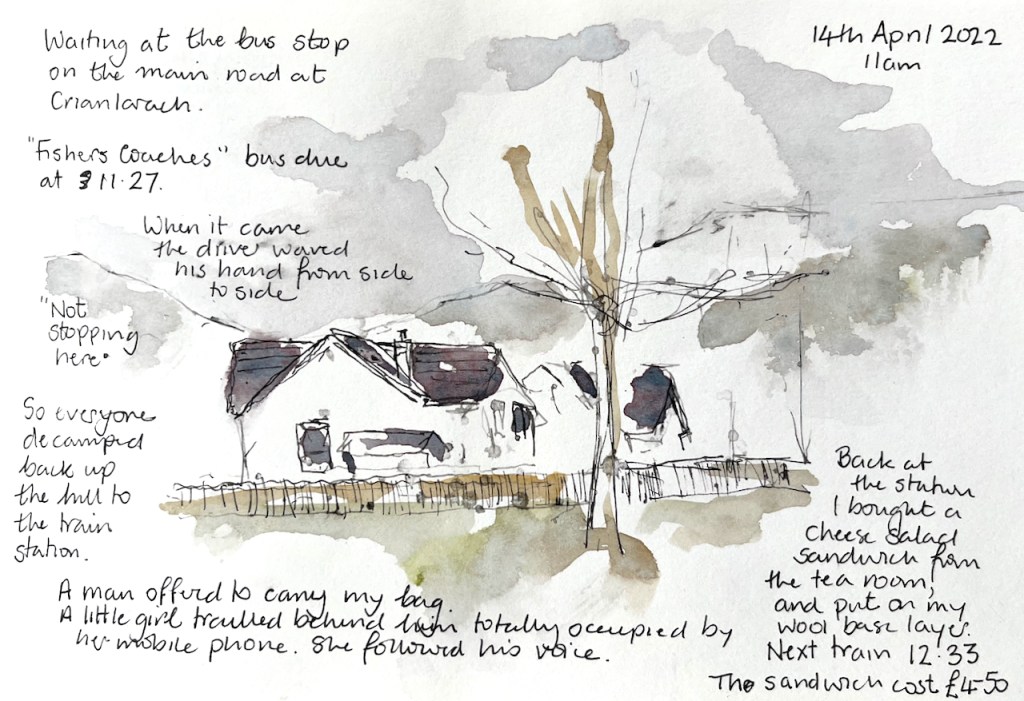
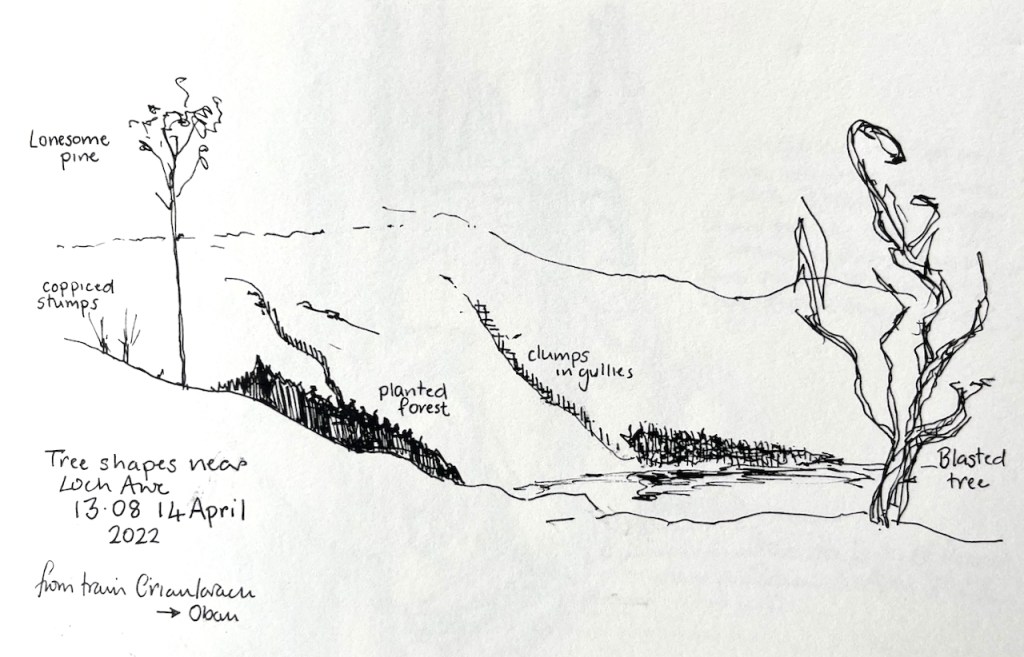
I sketch my shoes before going to sleep on the train.Arrival at Crianlarach: a walk to the nearby River FillanWaiting for the train to ObanThe train is cancelled. Waiting for a bus on the main road. The bus doesn’t stop. Probably it is full. Back at the station, waiting for the later train. On the later train, on the way to Oban.Sketching on the journey north.
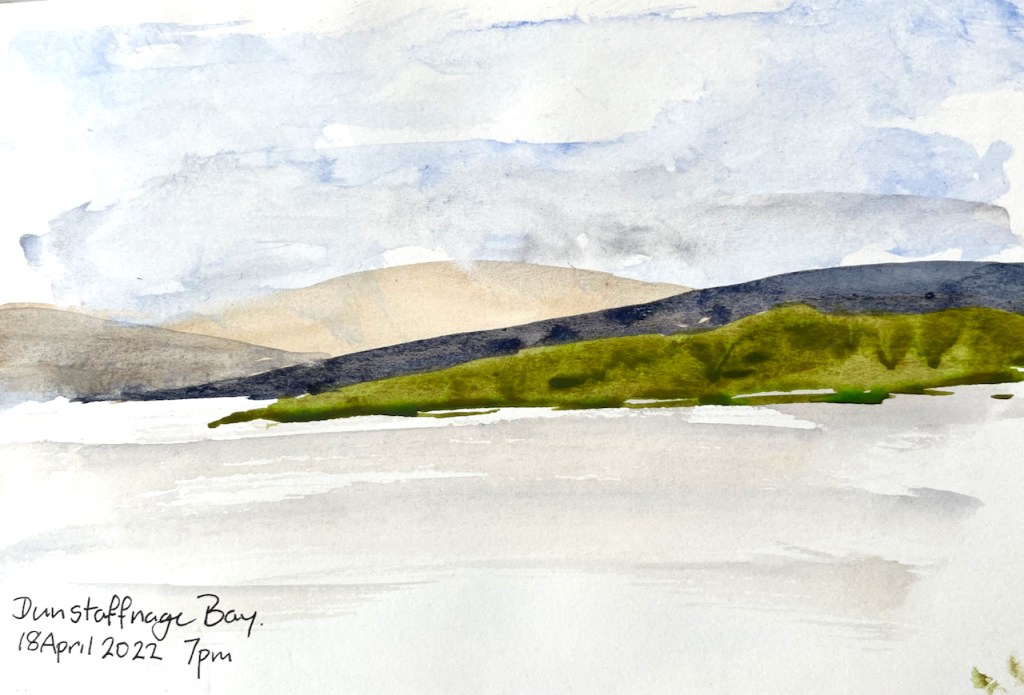
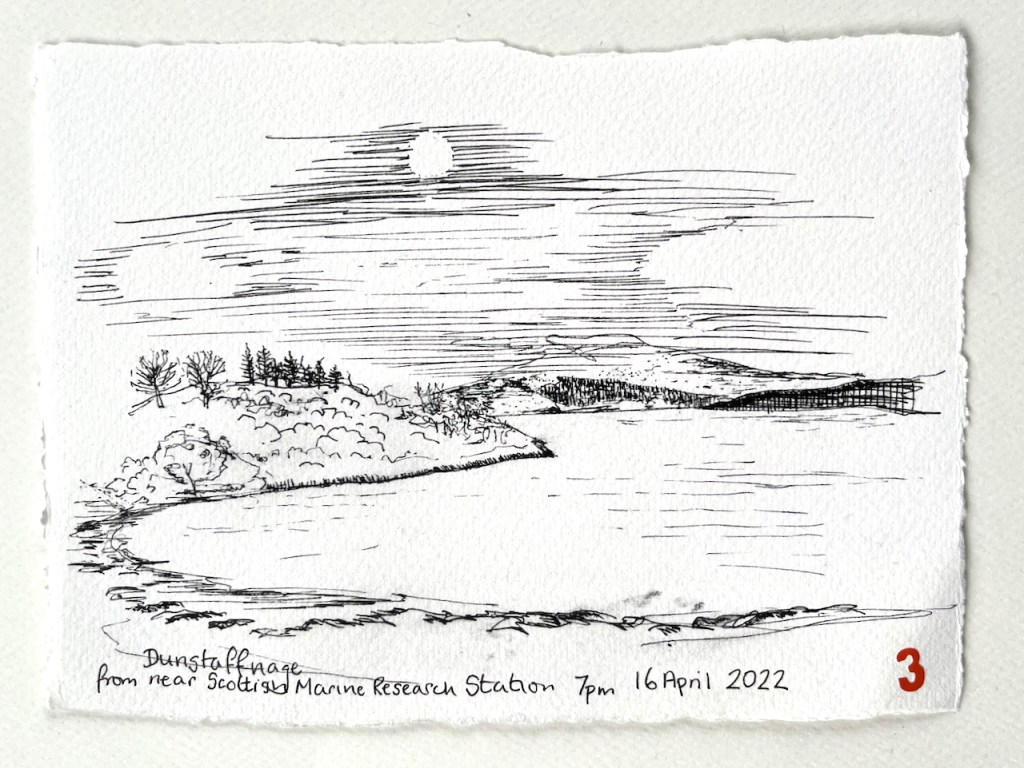
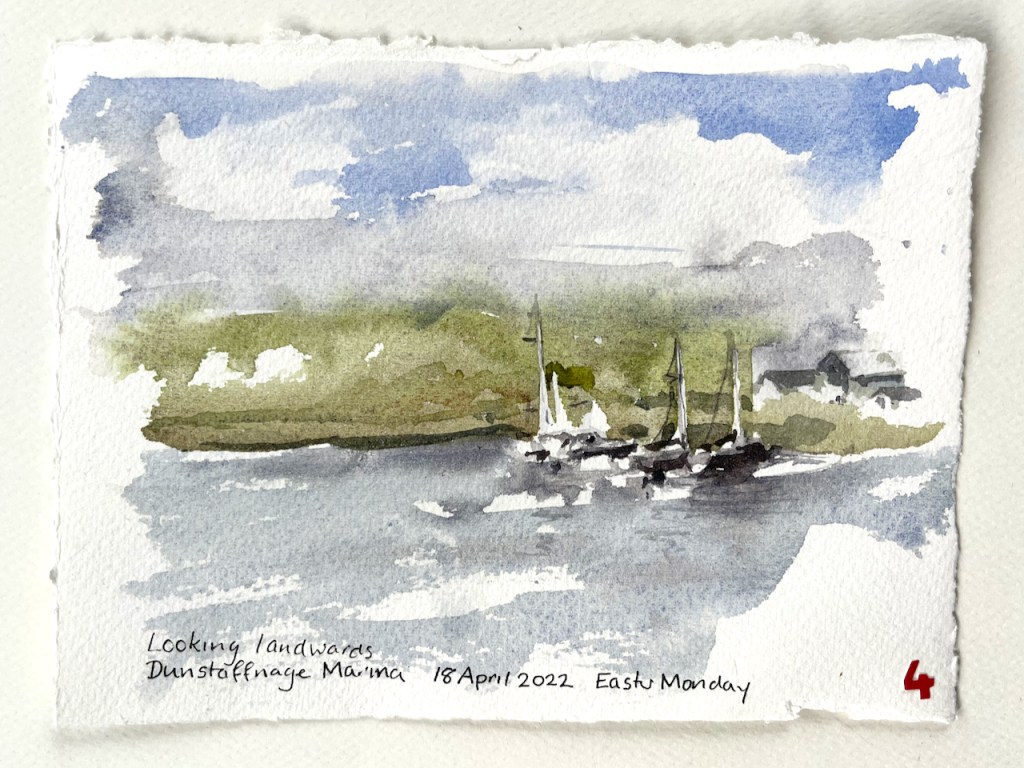
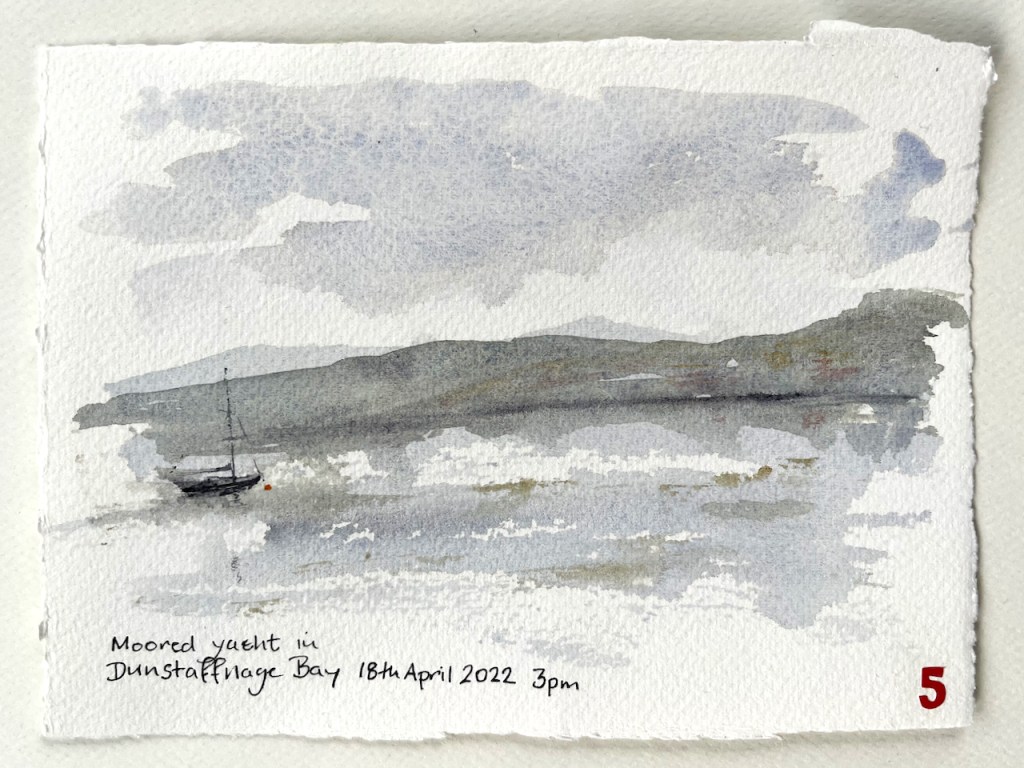
The boat was at Dunstaffnage Marina. In between work sessions I drew some pictures.
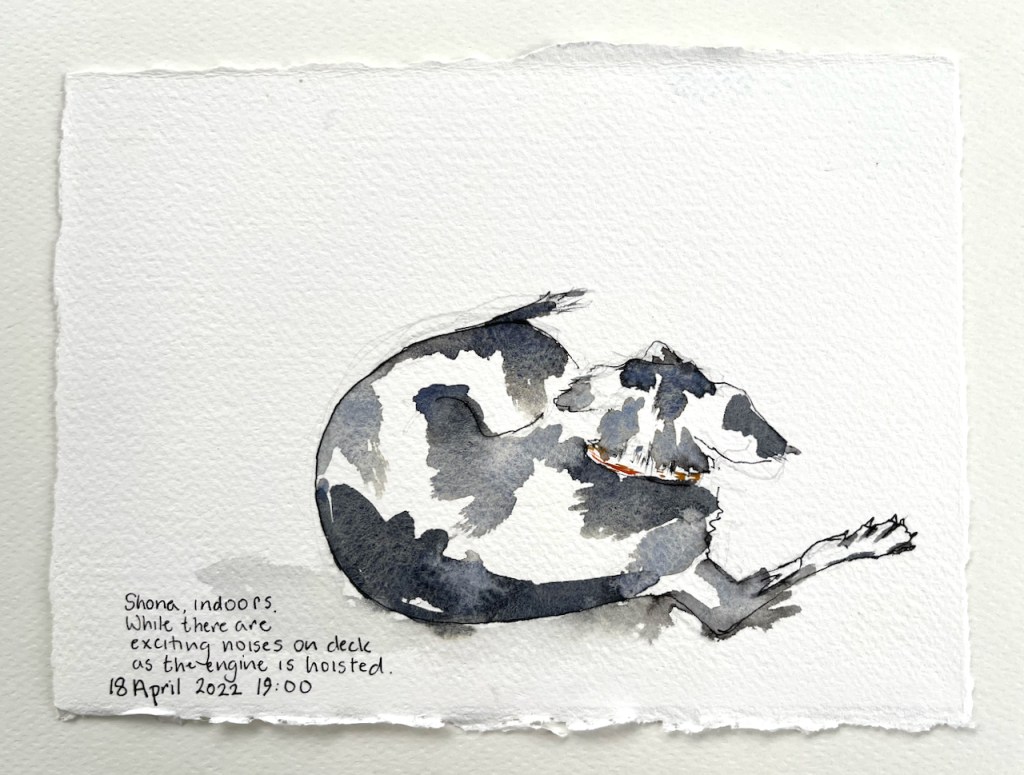
On the boat was a sea dog, Shona. She had to be locked indoors while crew members were hoisting the engine out. I was not part of the engine-hoisting gang. So I kept the dog company and drew her picture.
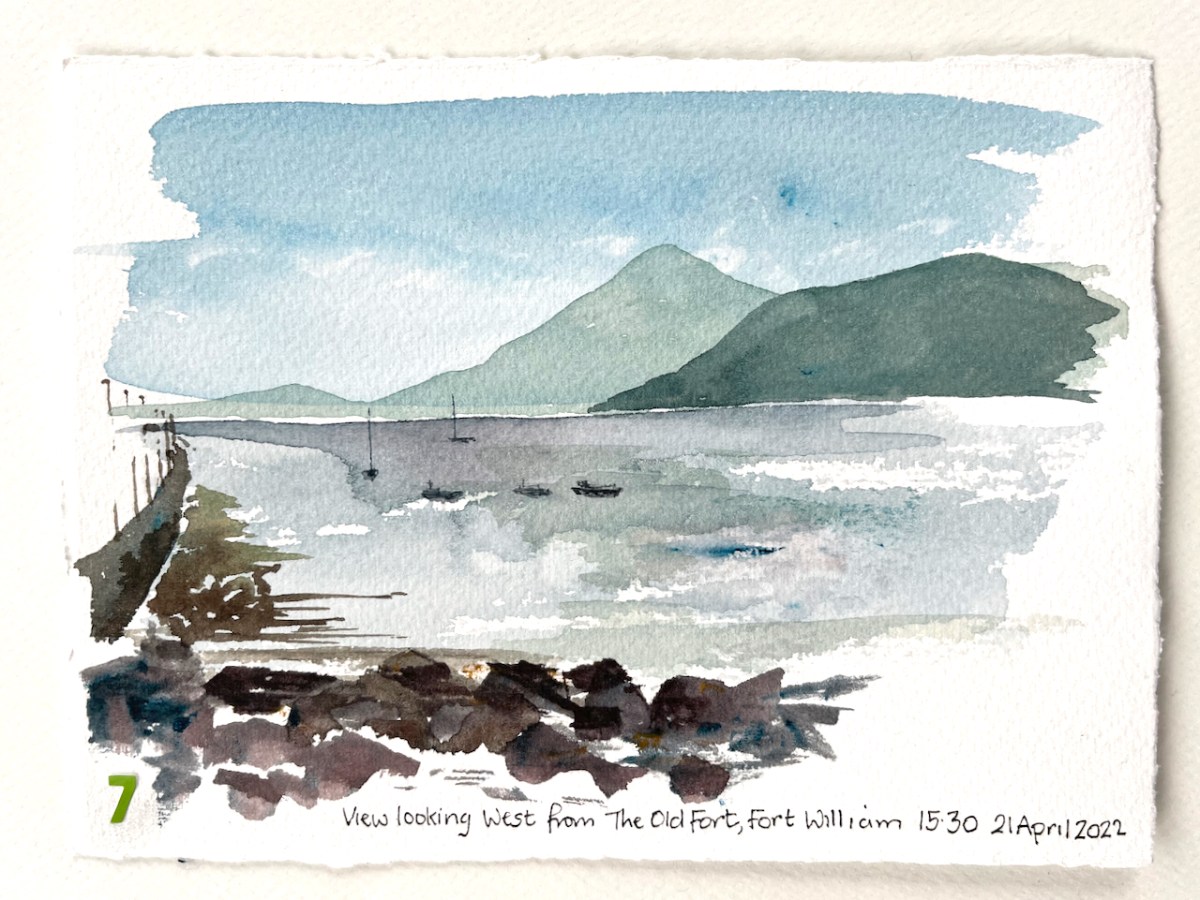
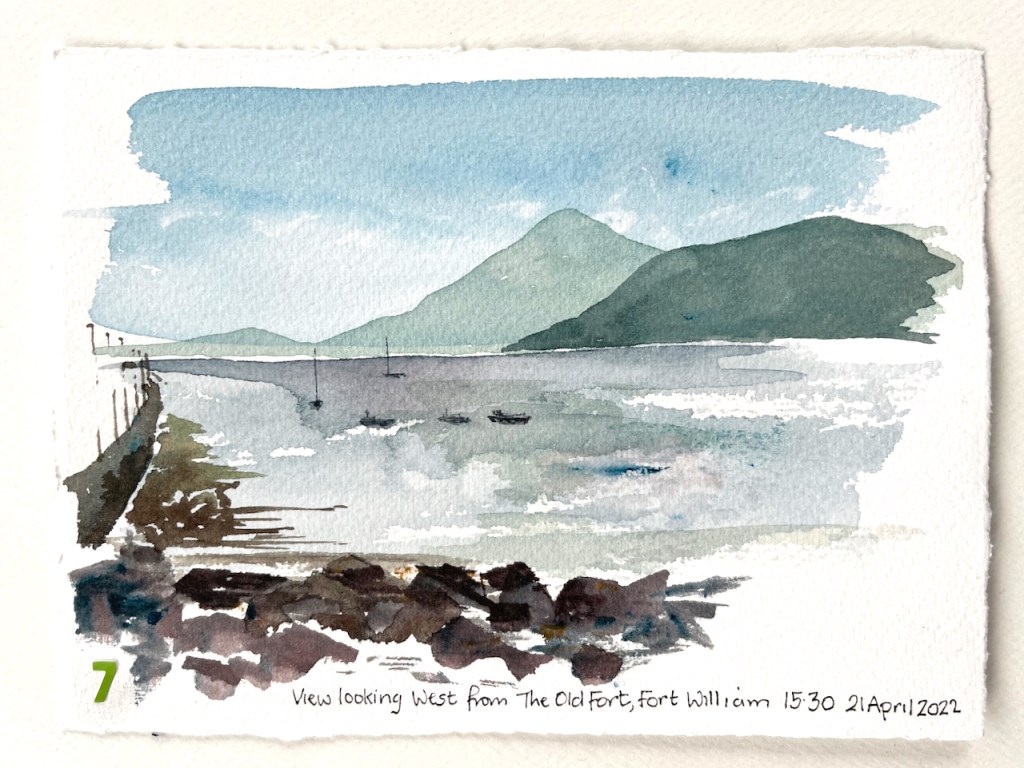
I travelled back via Fort William. The High Street caters for climbers and walkers and has a large number of shops stocking all brands of outdoor gear. I examined some of them, then rested by the Old Fort.
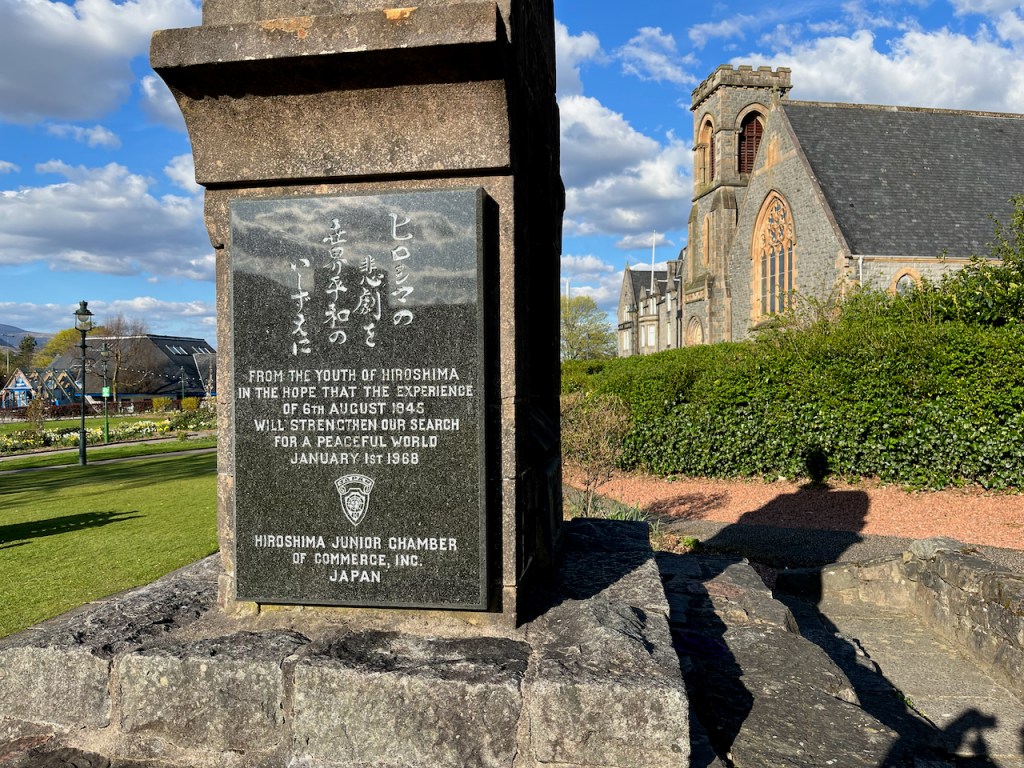
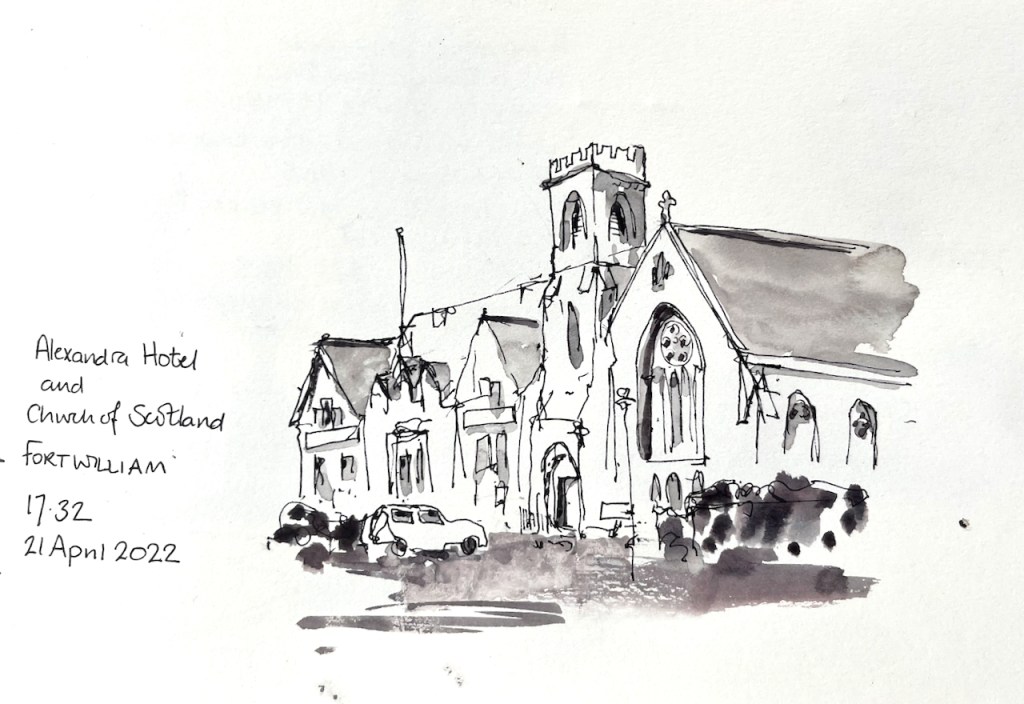
Near the train station there is a park with several war memorials, and a poignant plaque from the young people of Hiroshima:
“From the youth of Hiroshima in the hope that the experience of 6th August 1945 will strengthen our search for a peaceful world. January 1st 1968. Hiroshima Junior Chamber of Commerce.”Parade Gardens, Fort William
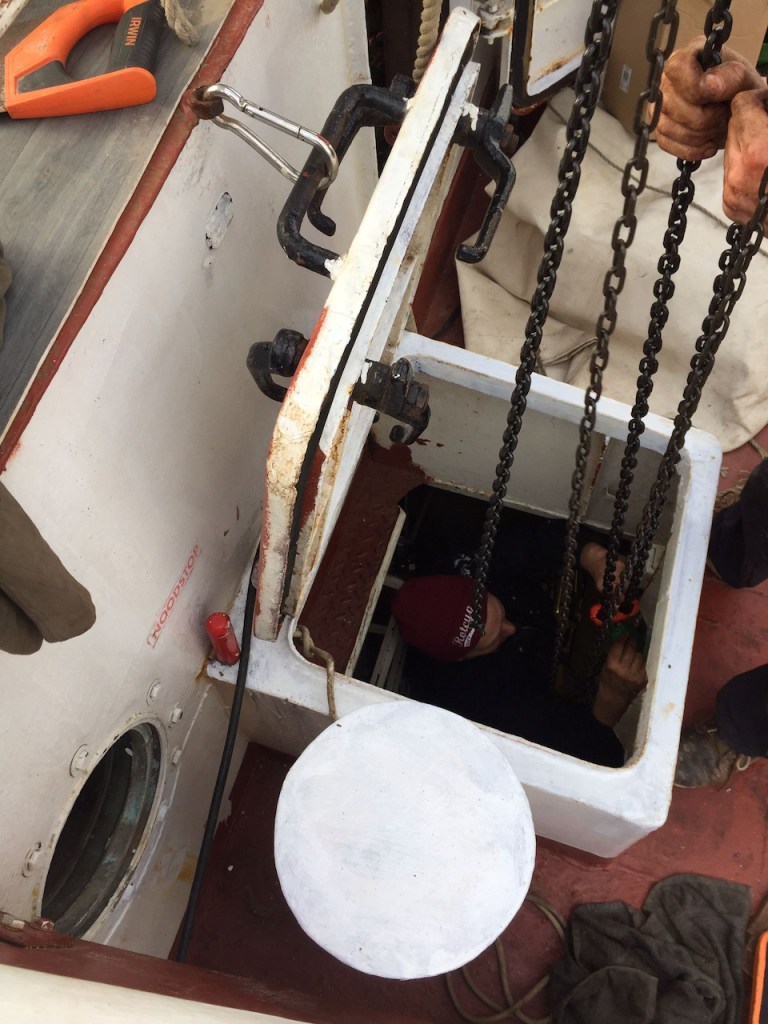
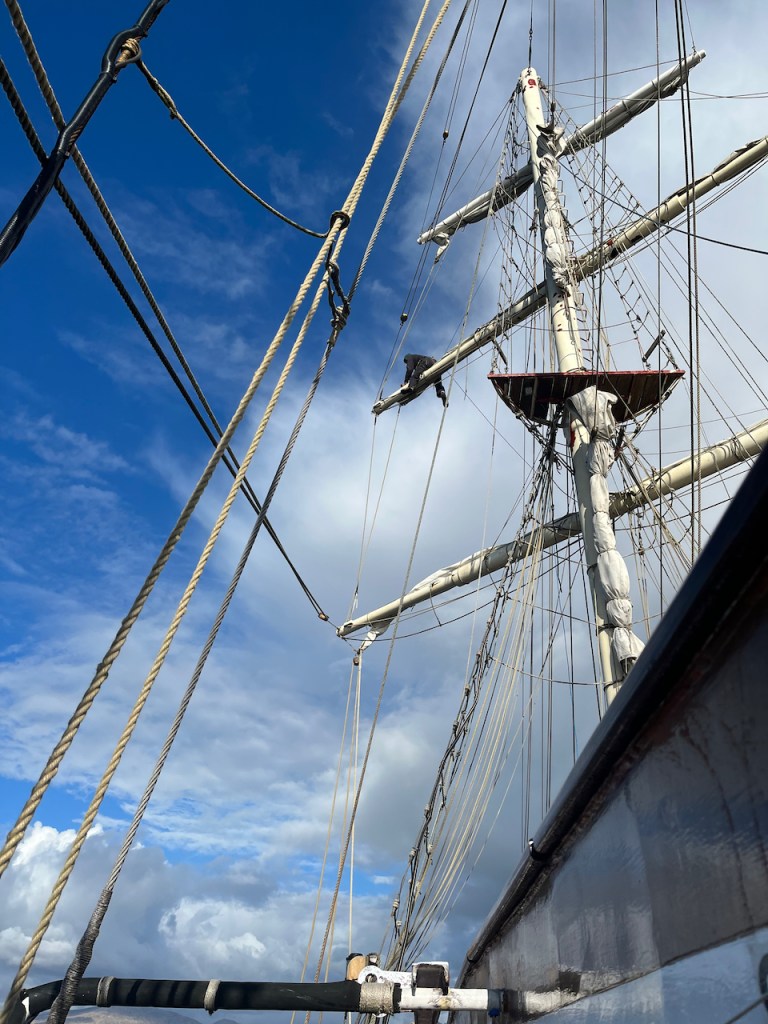
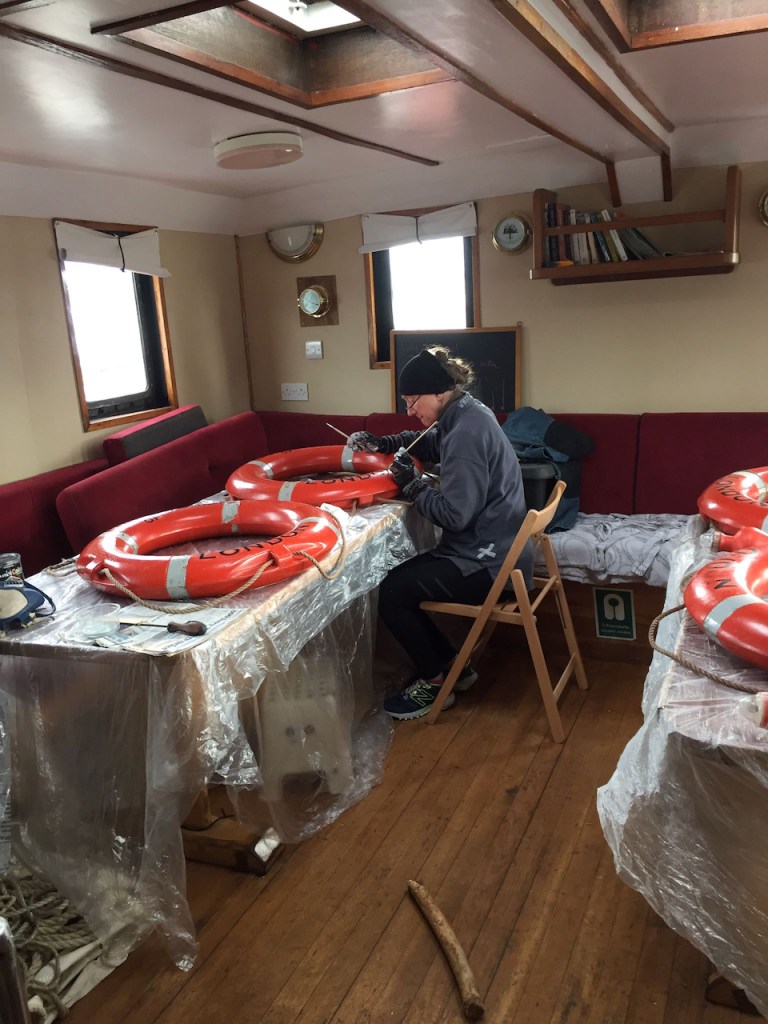
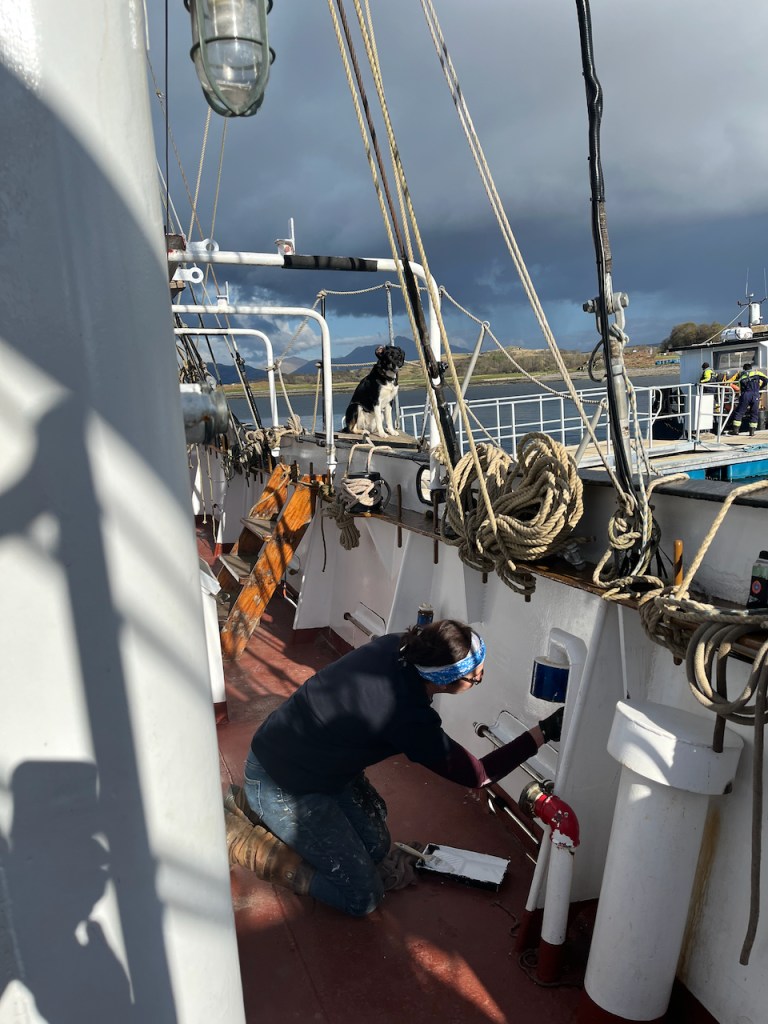
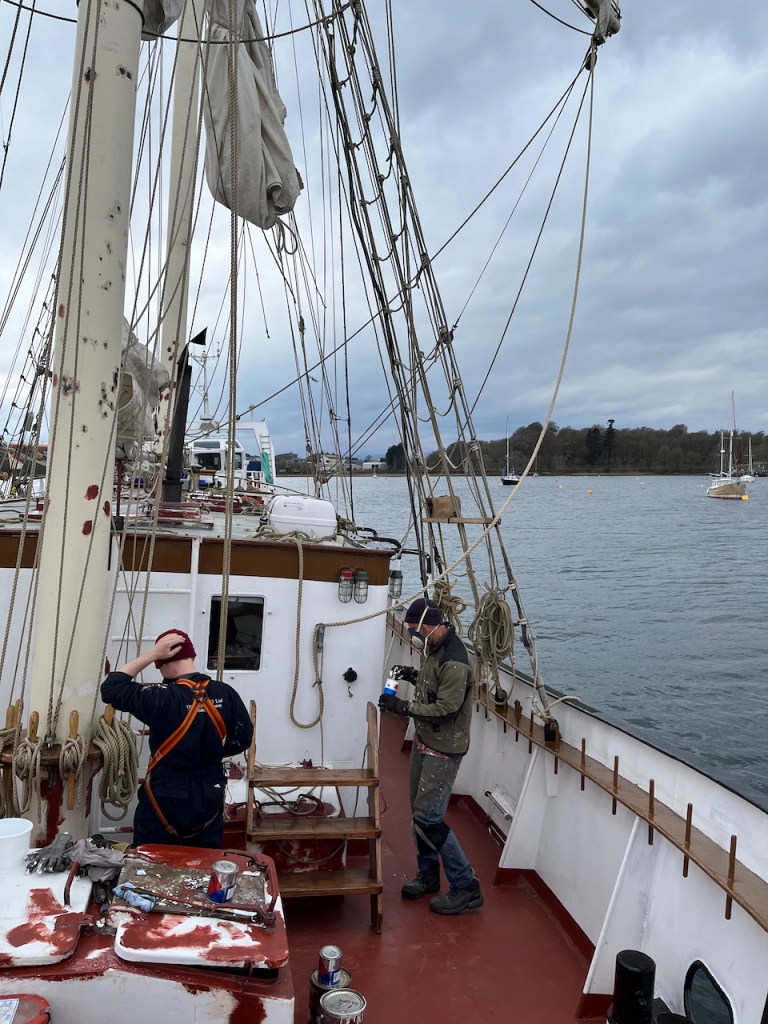
Here are a few photos of the Lady of Avenel during the refit.
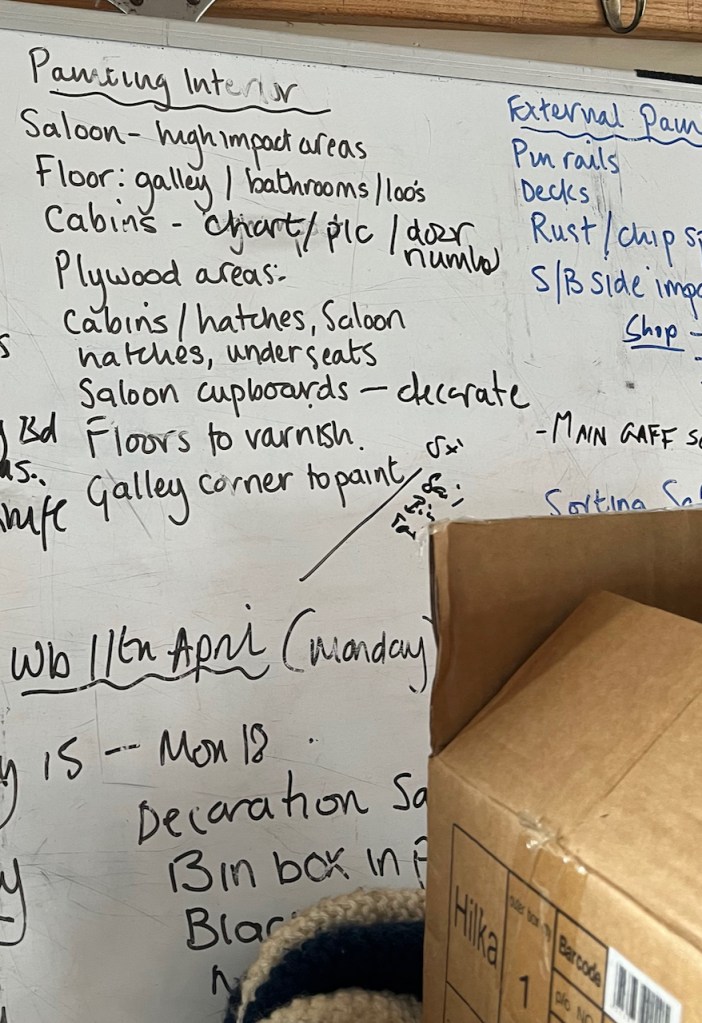
The Lady in the marinaShadows in the morningHoisting up the engineWorking in the riggingPainting the name on the lifebuoysWhite paint on the bulwarksThe ListWorking out what’s nextWork in progress on the “Lady of Avenel” refit 2022
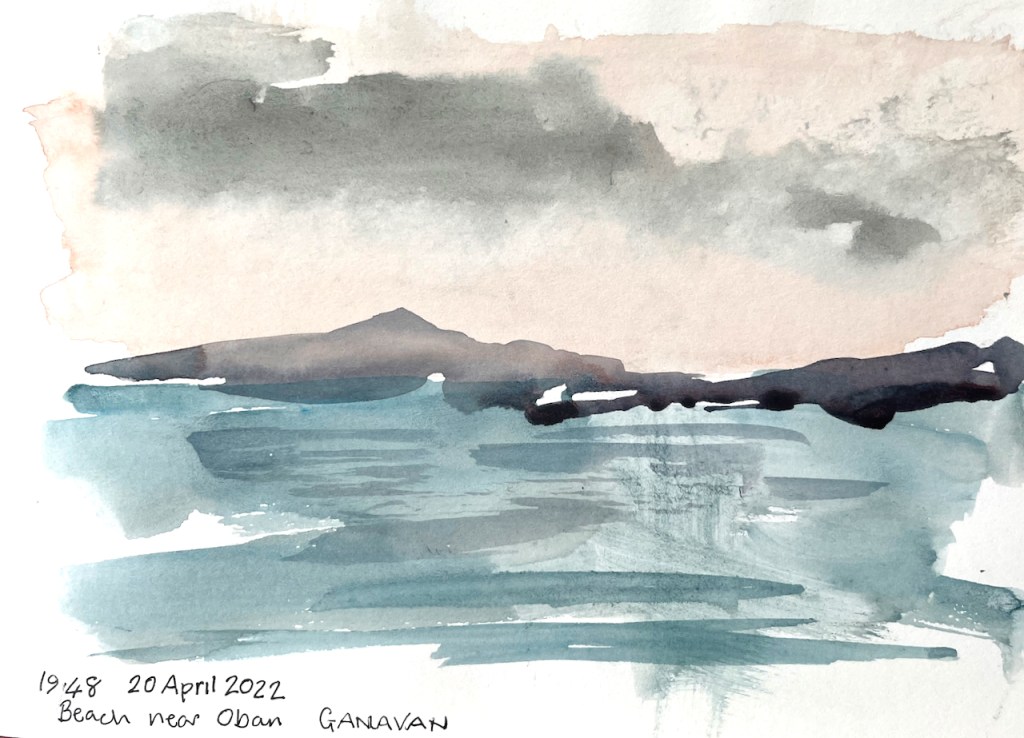
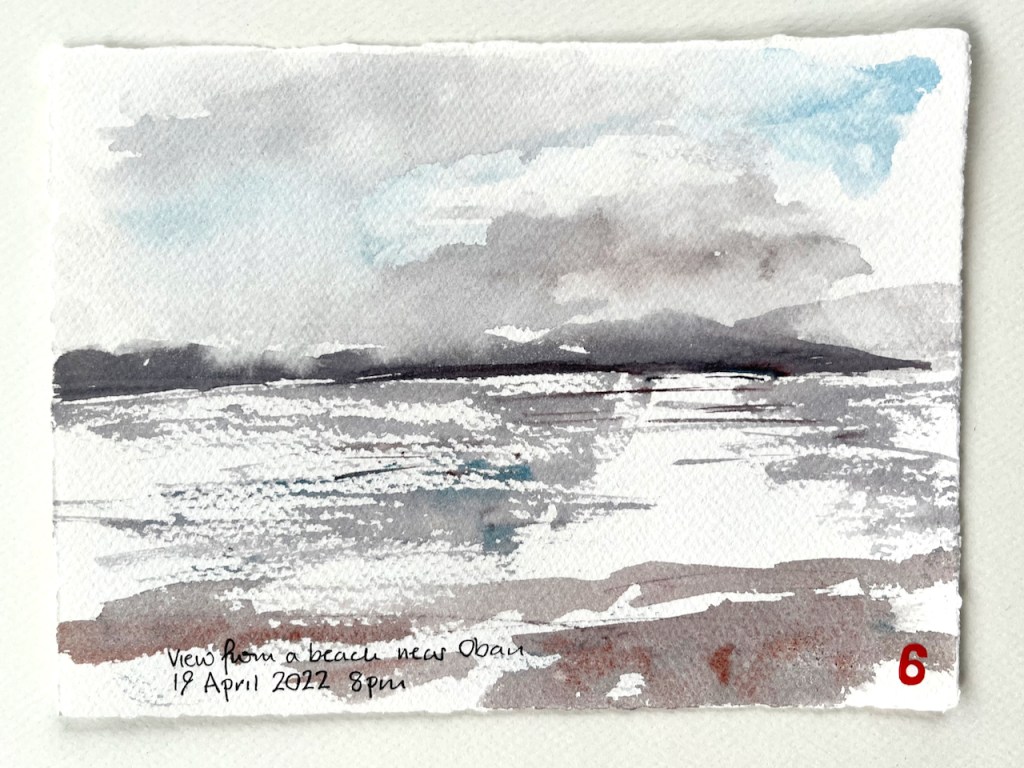
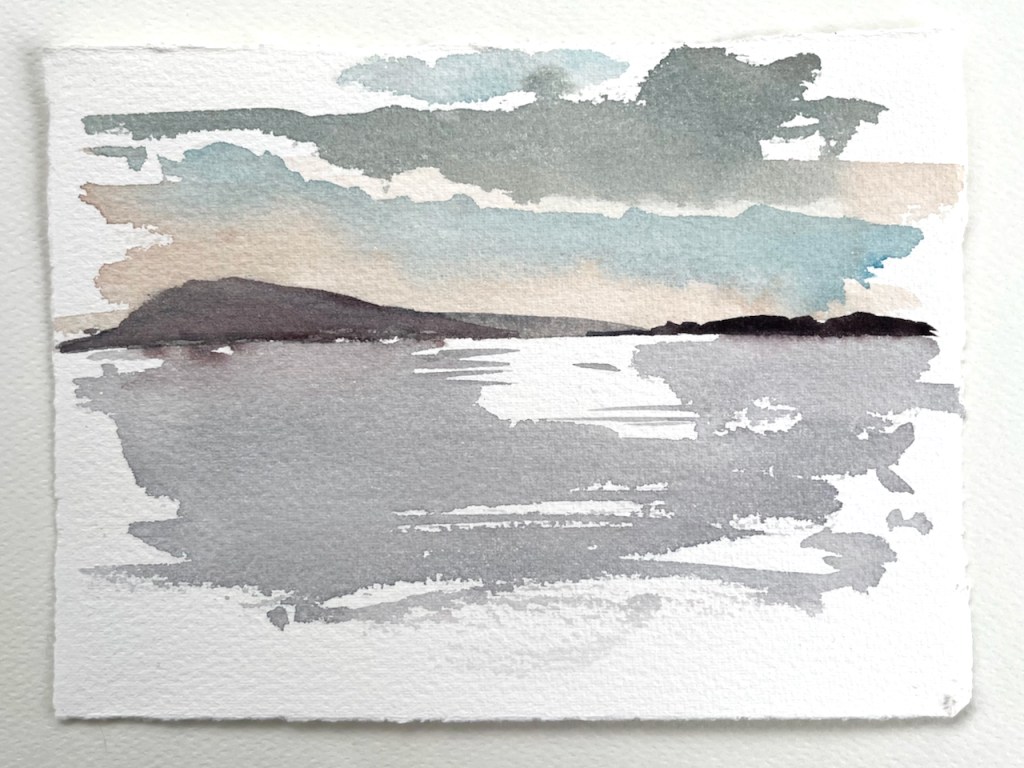
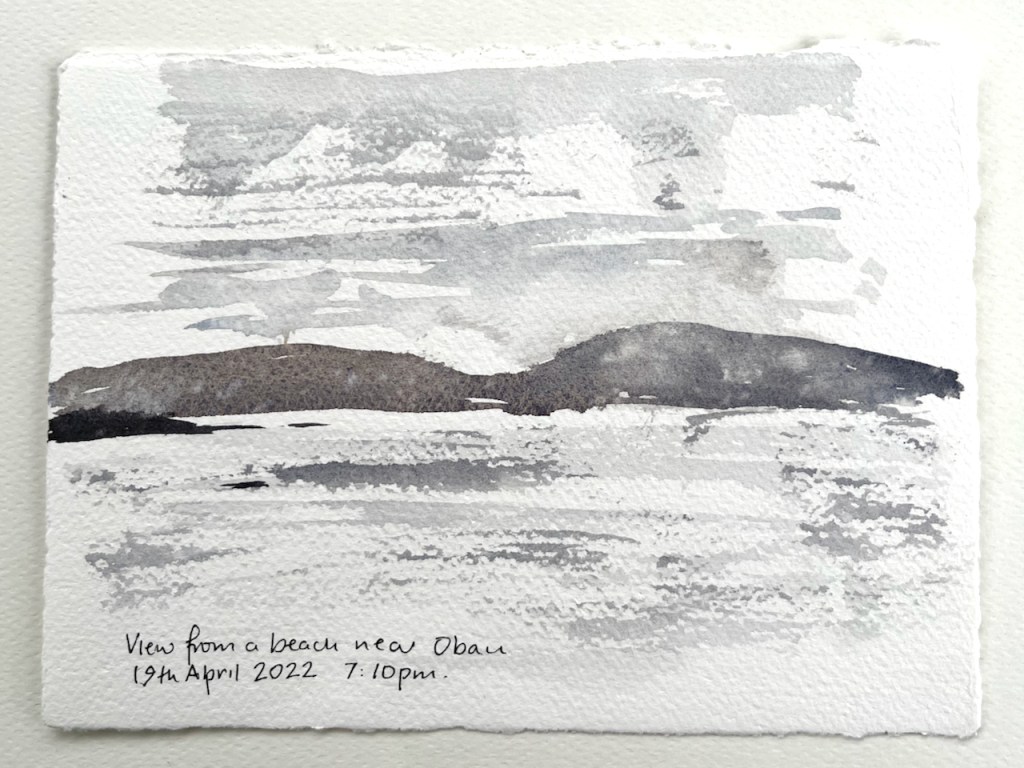
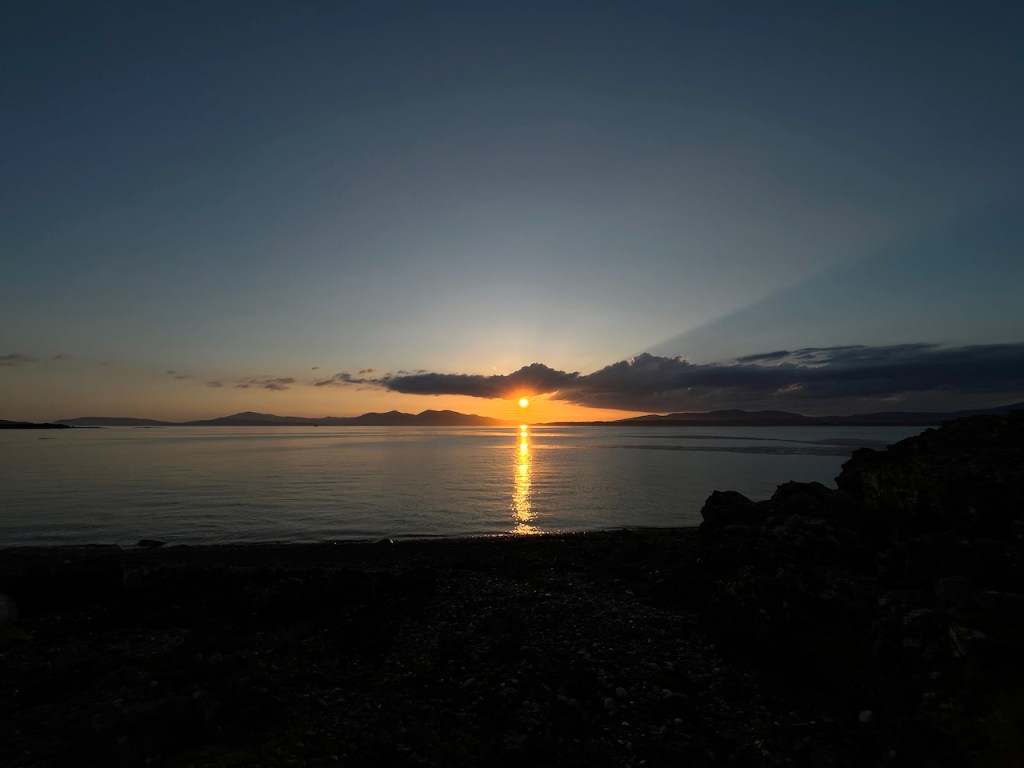
Scotland is beautiful.
Sunset after a swim. Beach called “Ganavan” near Oban.
I have sailed on the Lady of Avenel in previous years:
I took my sketching things on a swimming expedition to the Outer Hebrides with Swimtrek. We were on the wonderful Lady of Avenel 102ft square rigged brigantine. We started in Oban. It was raining when I…
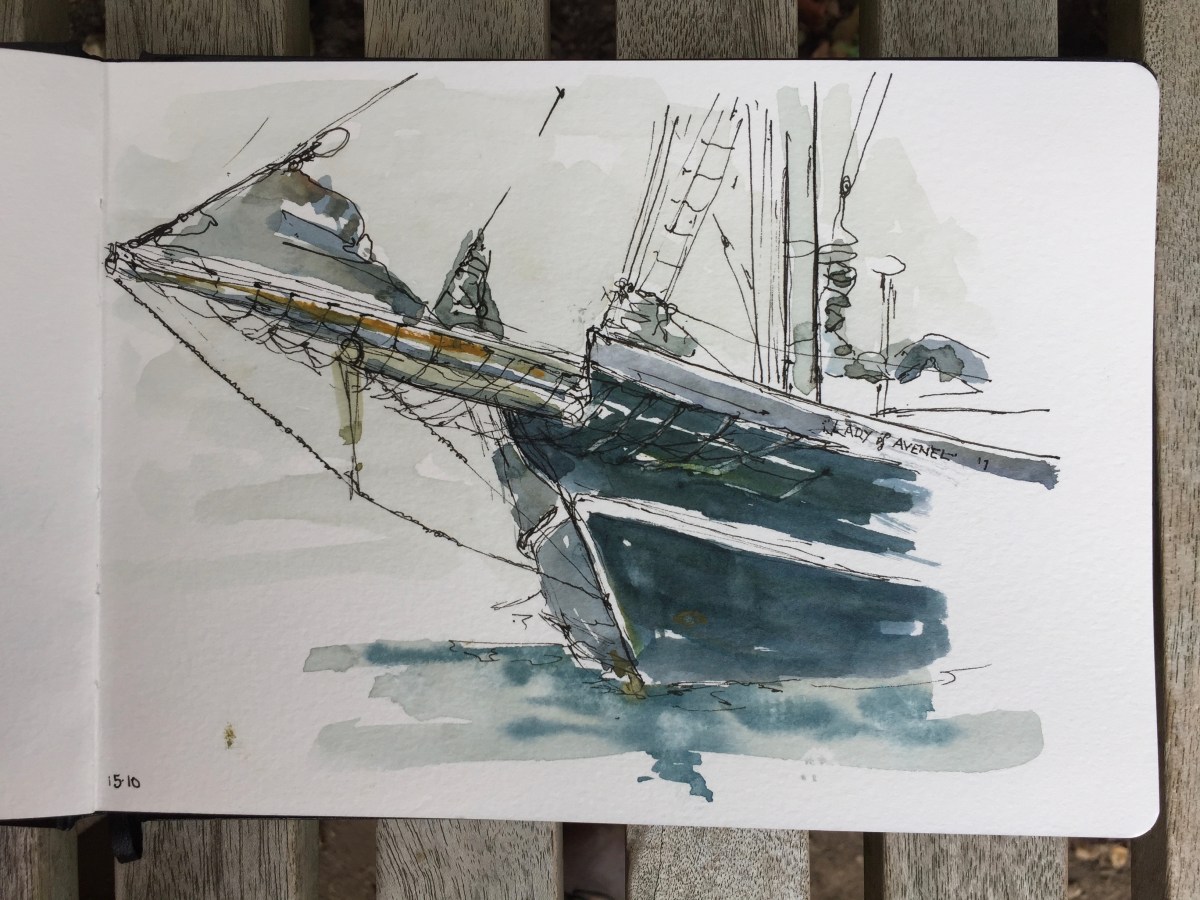
Here is Lady of Avenel, 102ft Brigantine. This was the third of three sketches. Here are the first two. I have drawn Lady of Avenel previously: Outer Hebrides 2017 See also these pages for pictures of and…
This is Noordermarkt, as seen from Café Hegeraad, in the Jordaan district of Amsterdam. It was a lovely autumn day, warm with a light breeze. I had the apple cake and a coffee. I had arrived from…























 Jane Sketching