“London Drawing” run Life Drawing sessions in libraries and various other locations in London. Right now, they can’t. So in an imaginative and entrepreneurial move, they are running life drawing session online. Yesterday I mastered the technology and had a go.
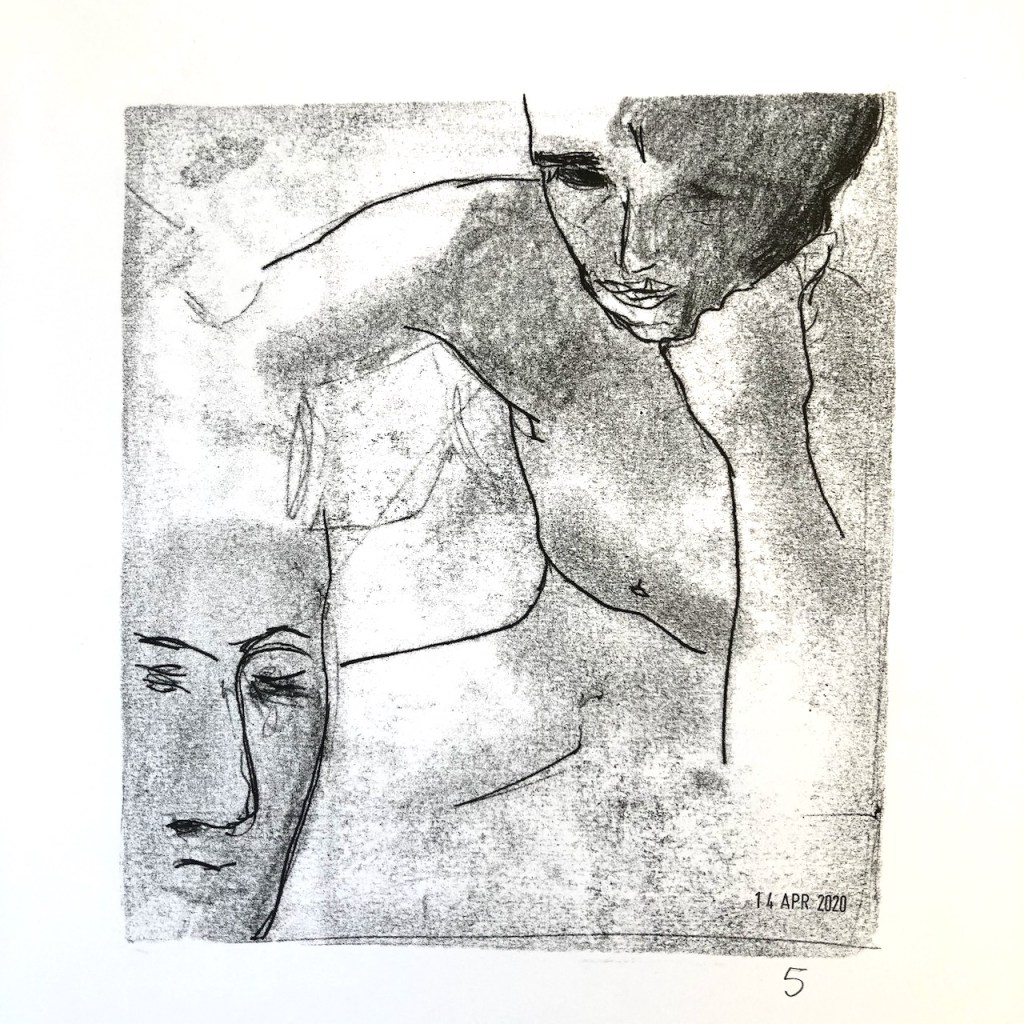
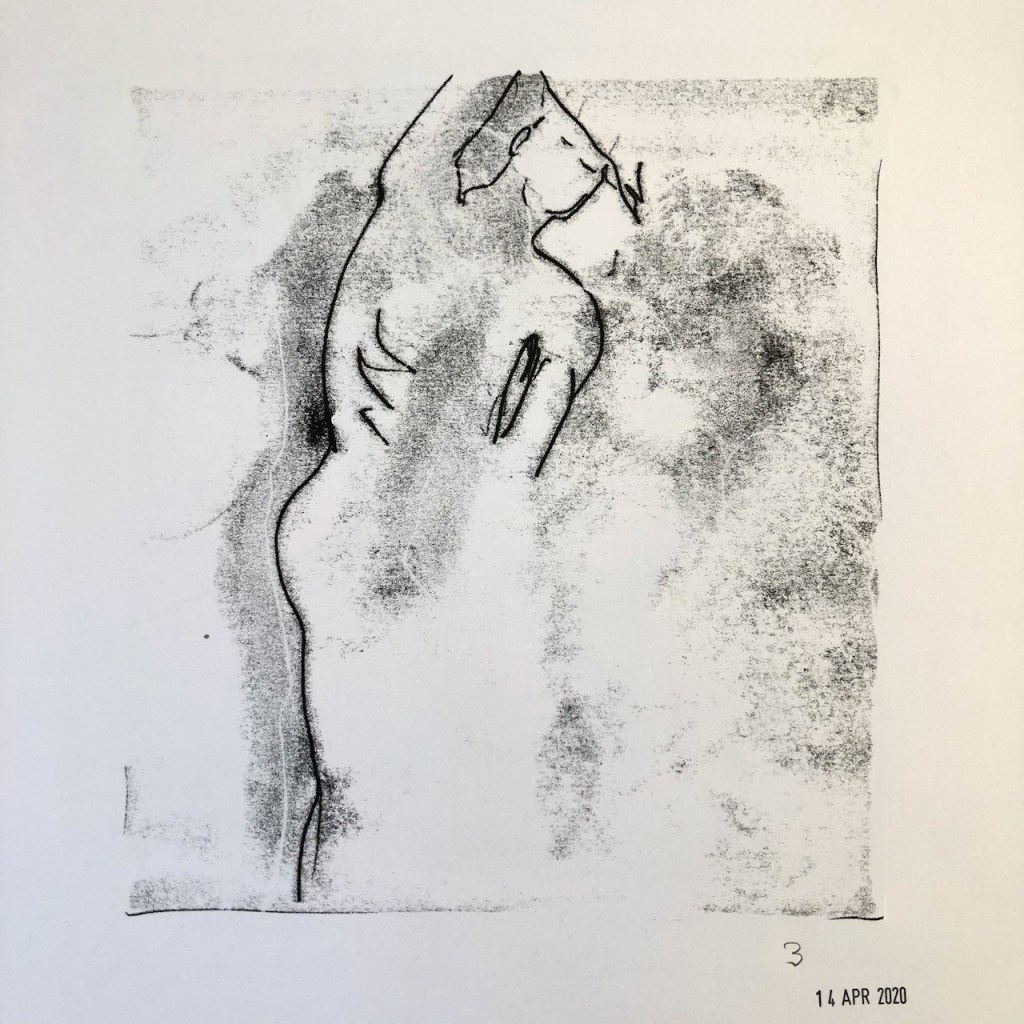
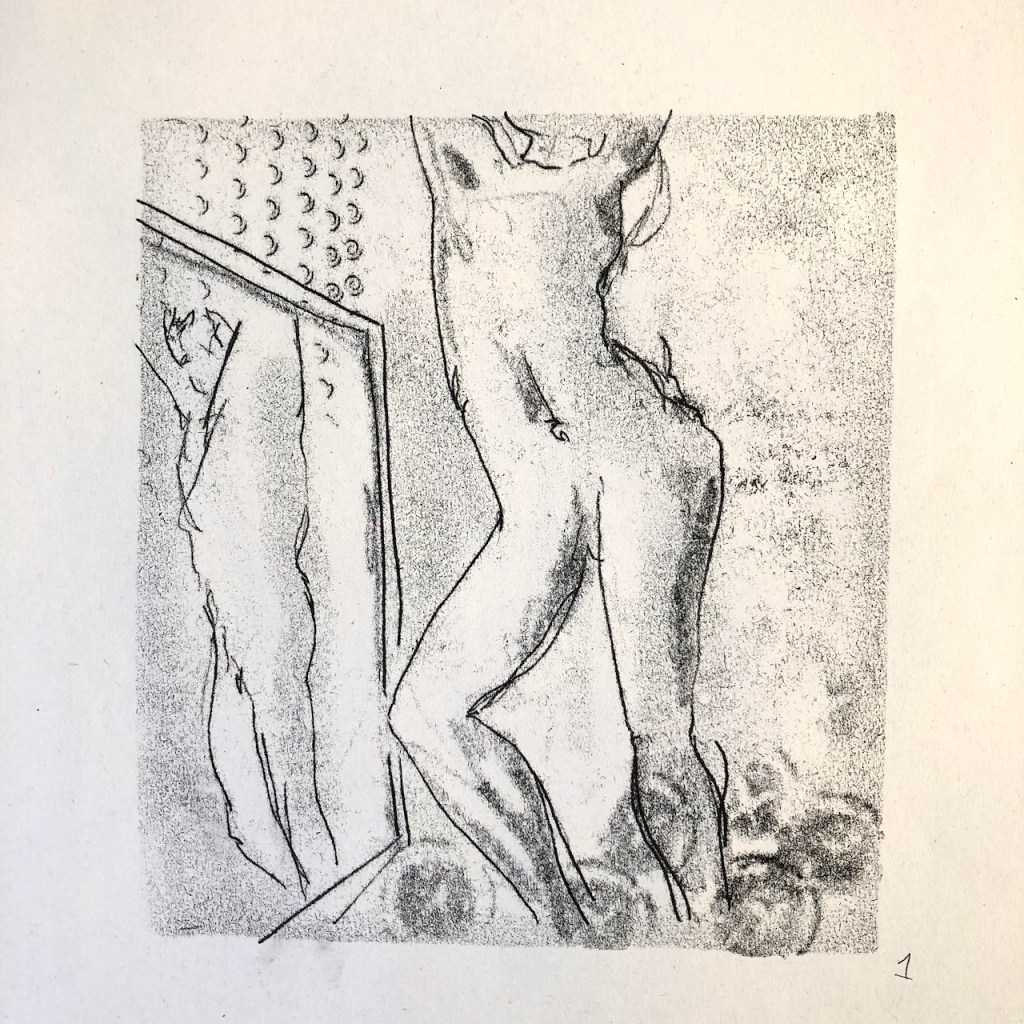
Here’s the result. The model is Adrian (@modbodadrian).
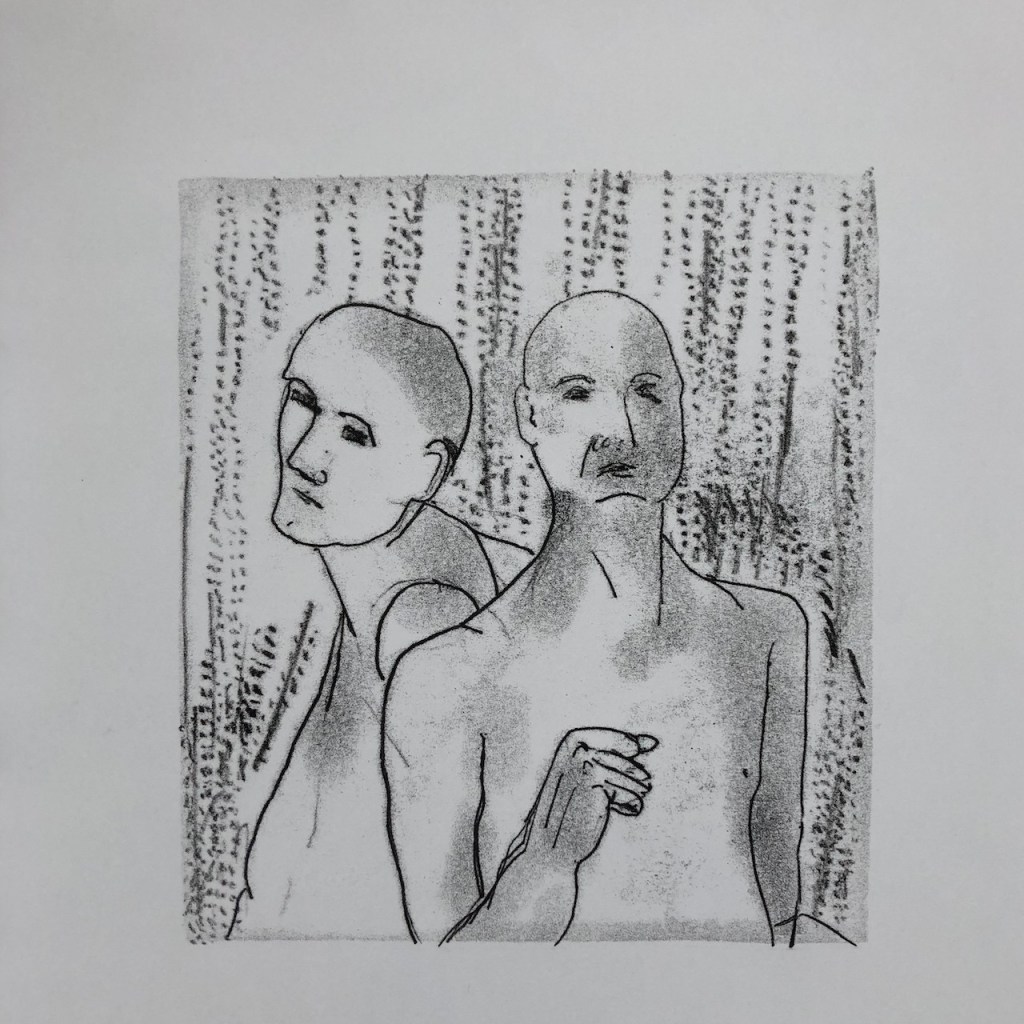
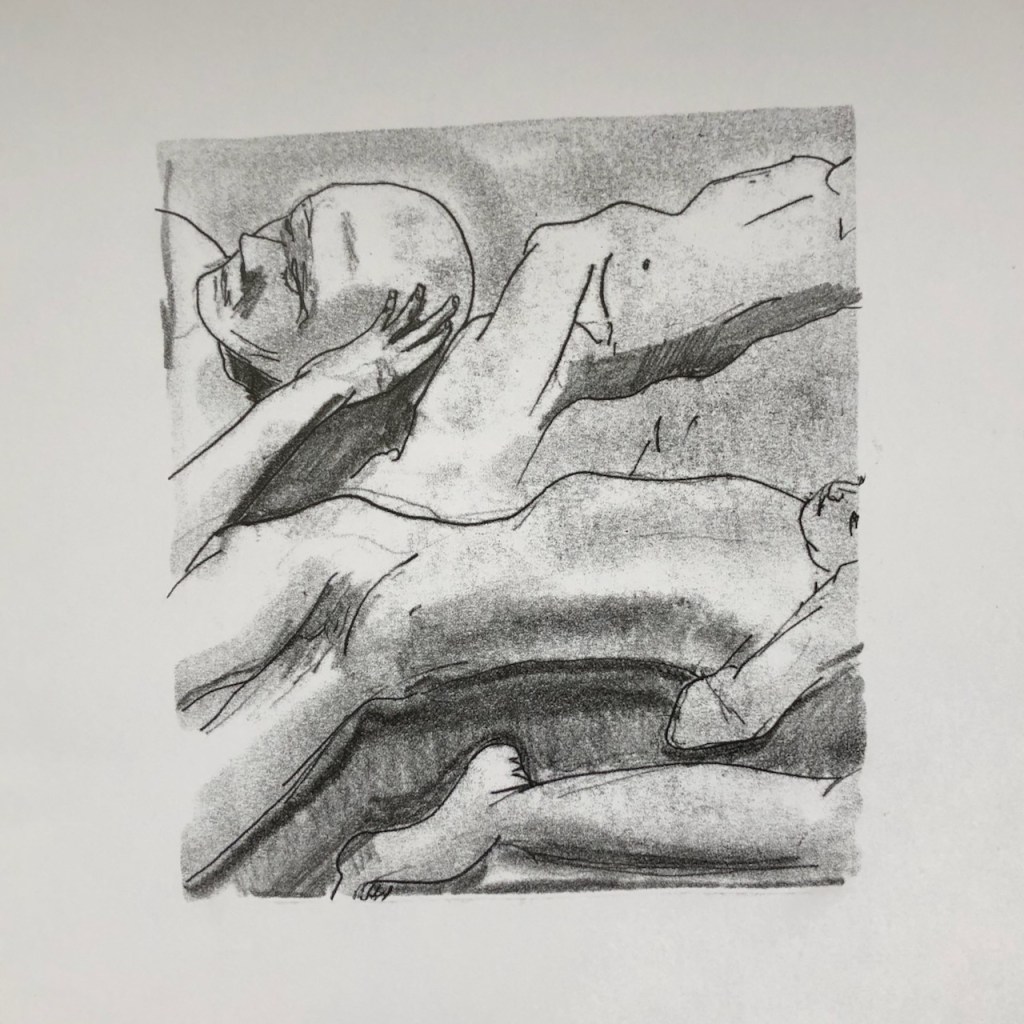
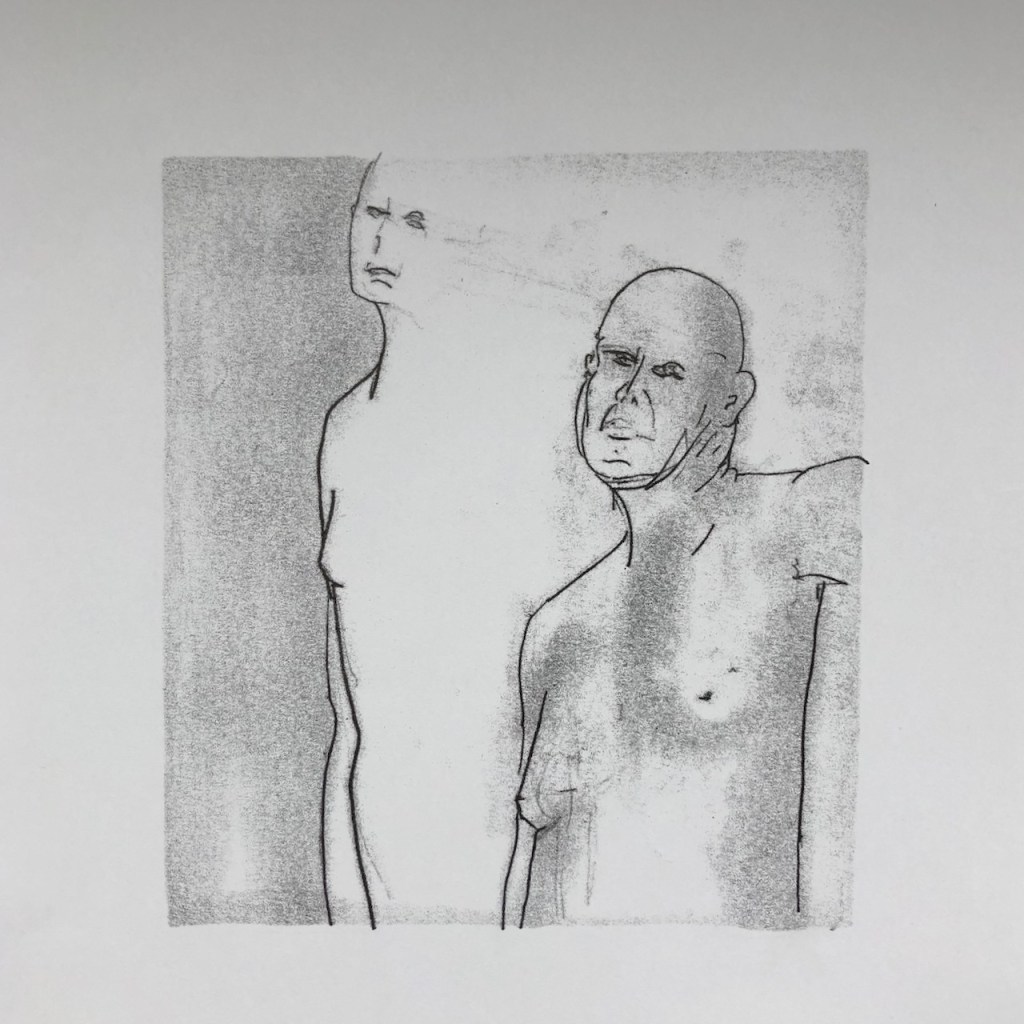
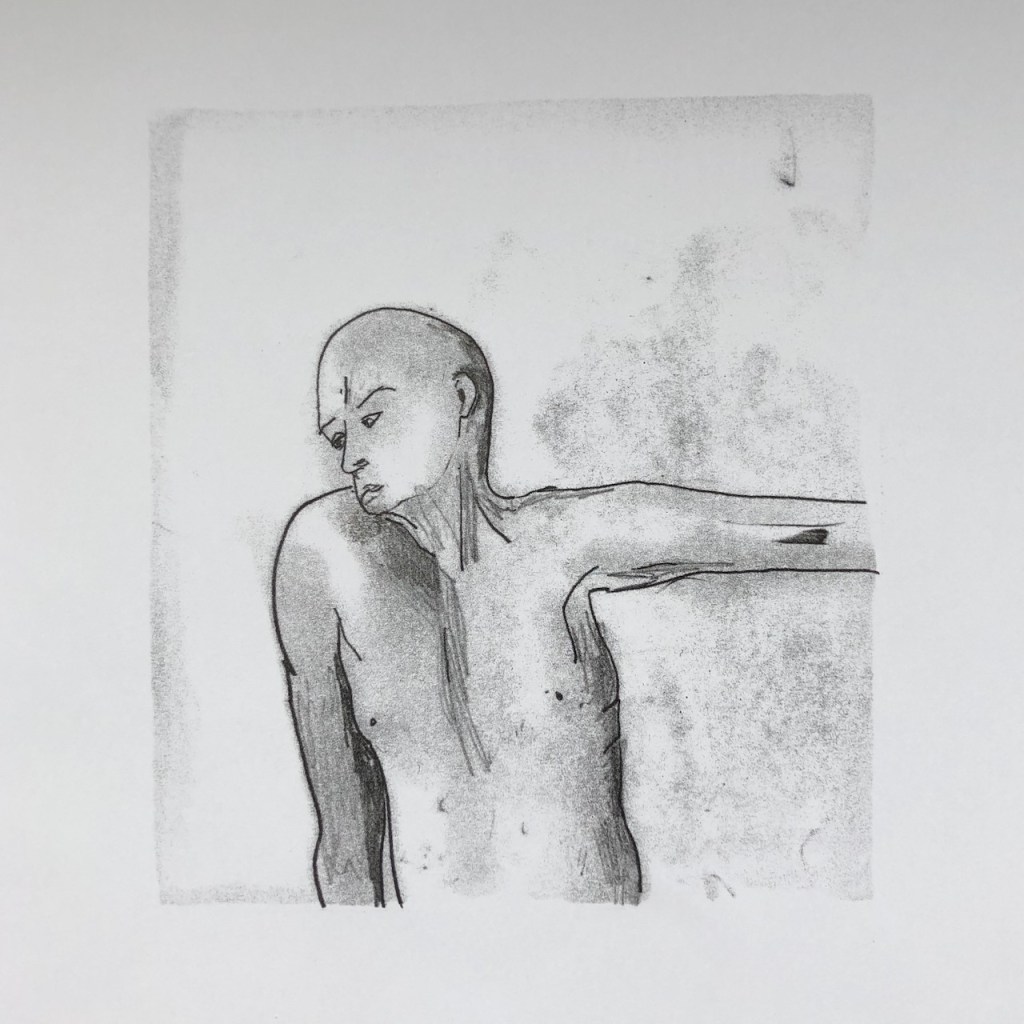
Monoprints: Life Model Adrian @modbodadrian, London Drawing live online session 14 April 2020
How is drawing a life model online different from just copying a photo?
Well, there’s the time factor. The model can only hold the pose for a limited time, and so I have to draw quickly. The shortest pose was 2 minutes and the longest about 20 mins.
Then there’s the fact that the model is making an effort: he’s there and he’s doing his best to create a striking pose and keep still. So I want to honour his effort and do my best also. That creates a useful dynamic to concentrate.
And there’s the fact that each of these pictures records a moment in time: the person was there, in their space, and the rest of us were dispersed about the country (and some in the USA!) all drawing the same model at the same time. So this is my record of the event.
It was a good experience and I am grateful to London Drawing for organising this and to the model for his good humour, experience and professionalism.
The session was conducted over “Zoom”, with about 20 people drawing, and two online organisers and the model.
Click a button below to share this post online, email it, or print it:
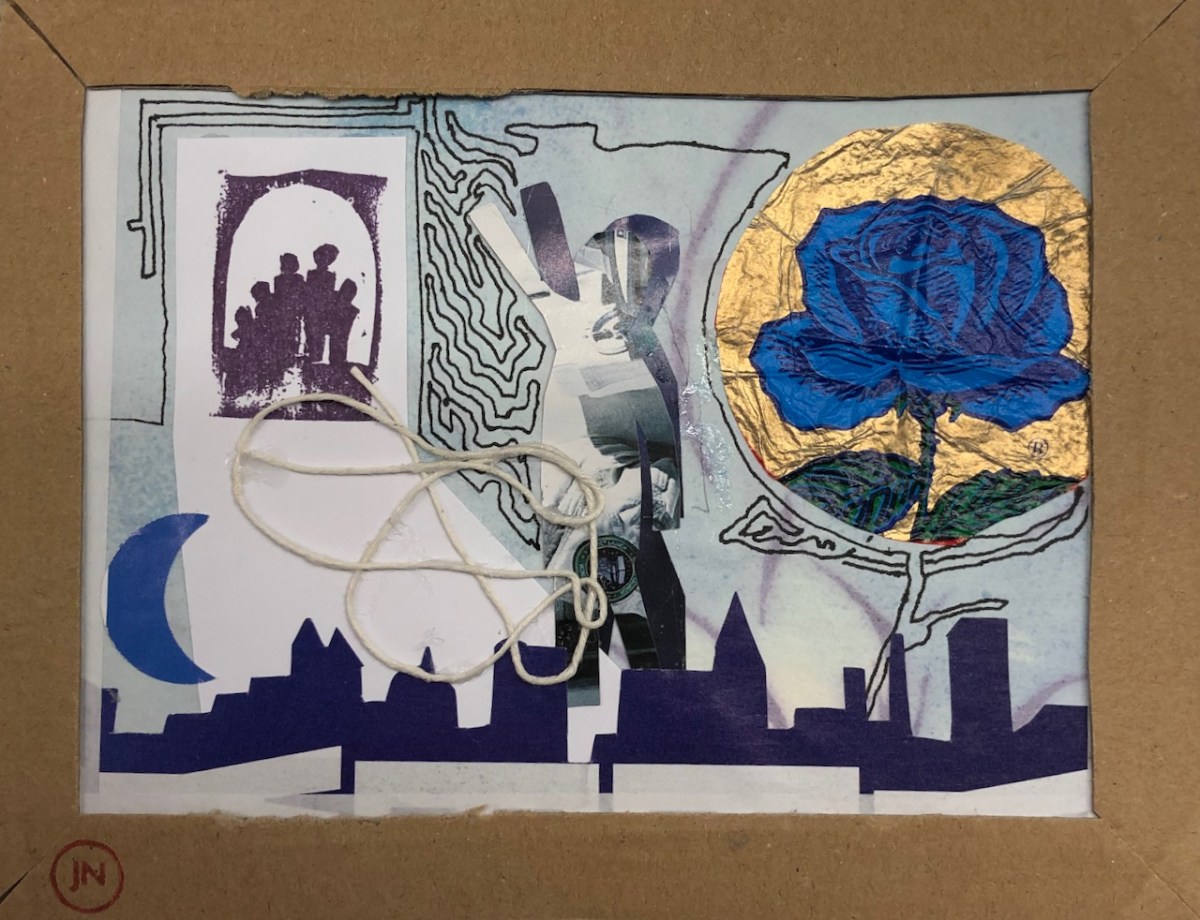
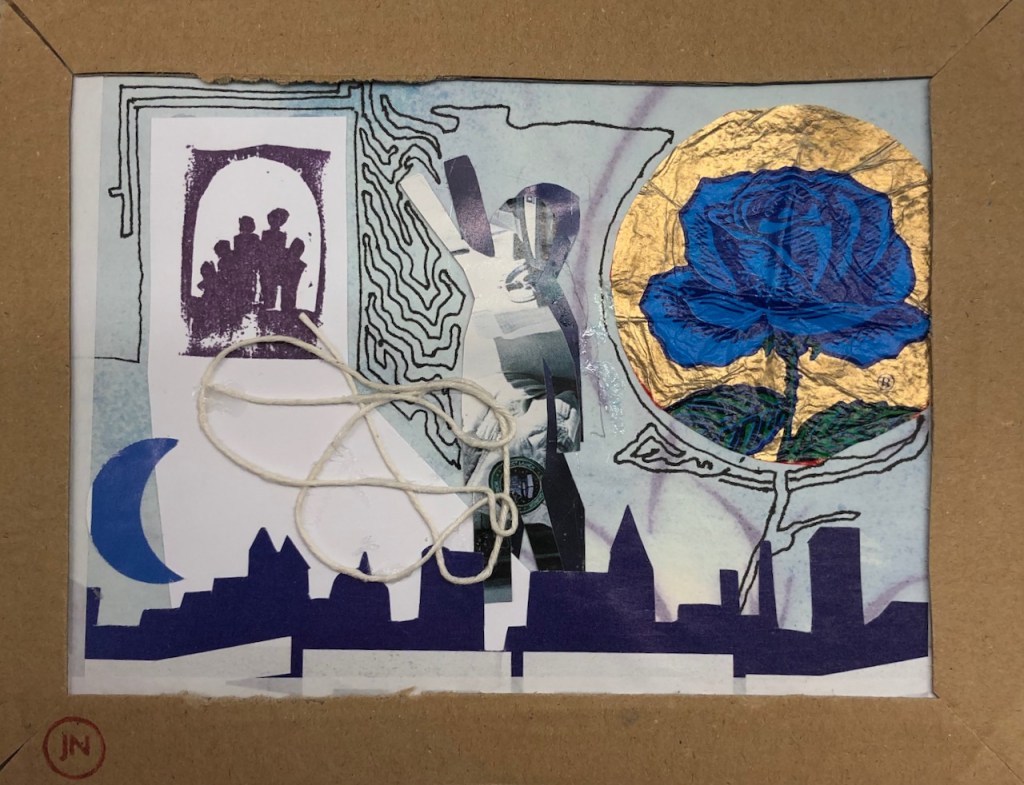
Here is a postcard collage I sent to my friends in another city.
It is inspired by the website: sendmeapostcart.com, and shows the connections we make, the lines which bind us, the distances which separate us, and the pleasure I found in meeting this family again after many years.
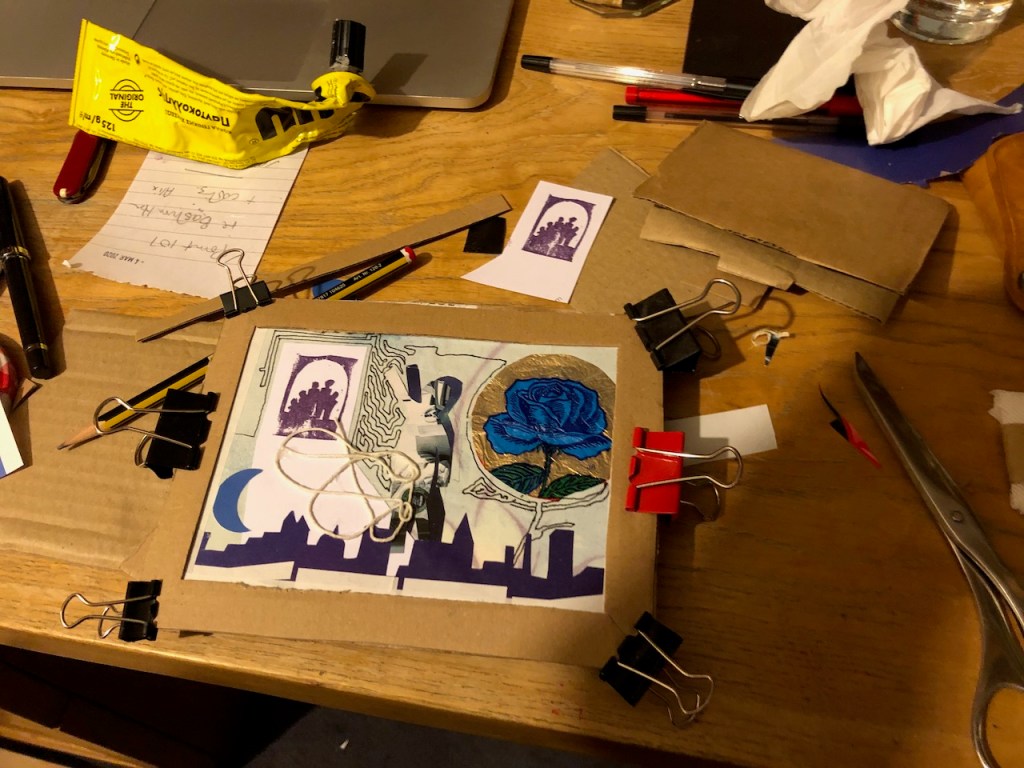
Work in progress.
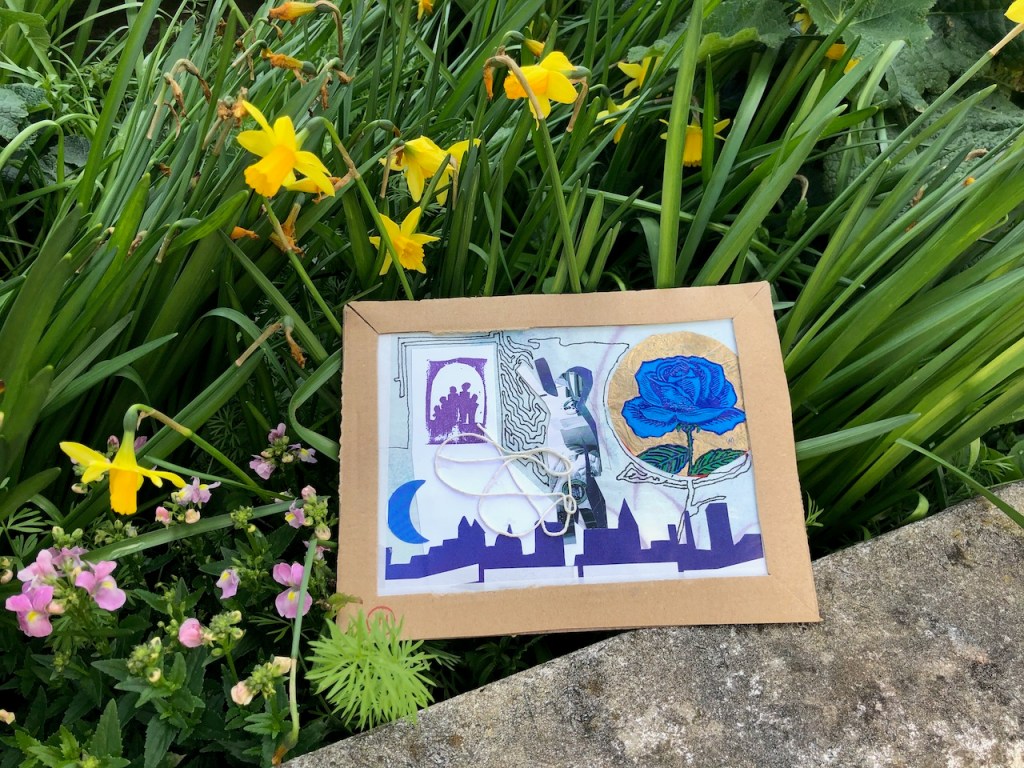
On the way to the post office
Click a button below to share this post online, email it, or print it:
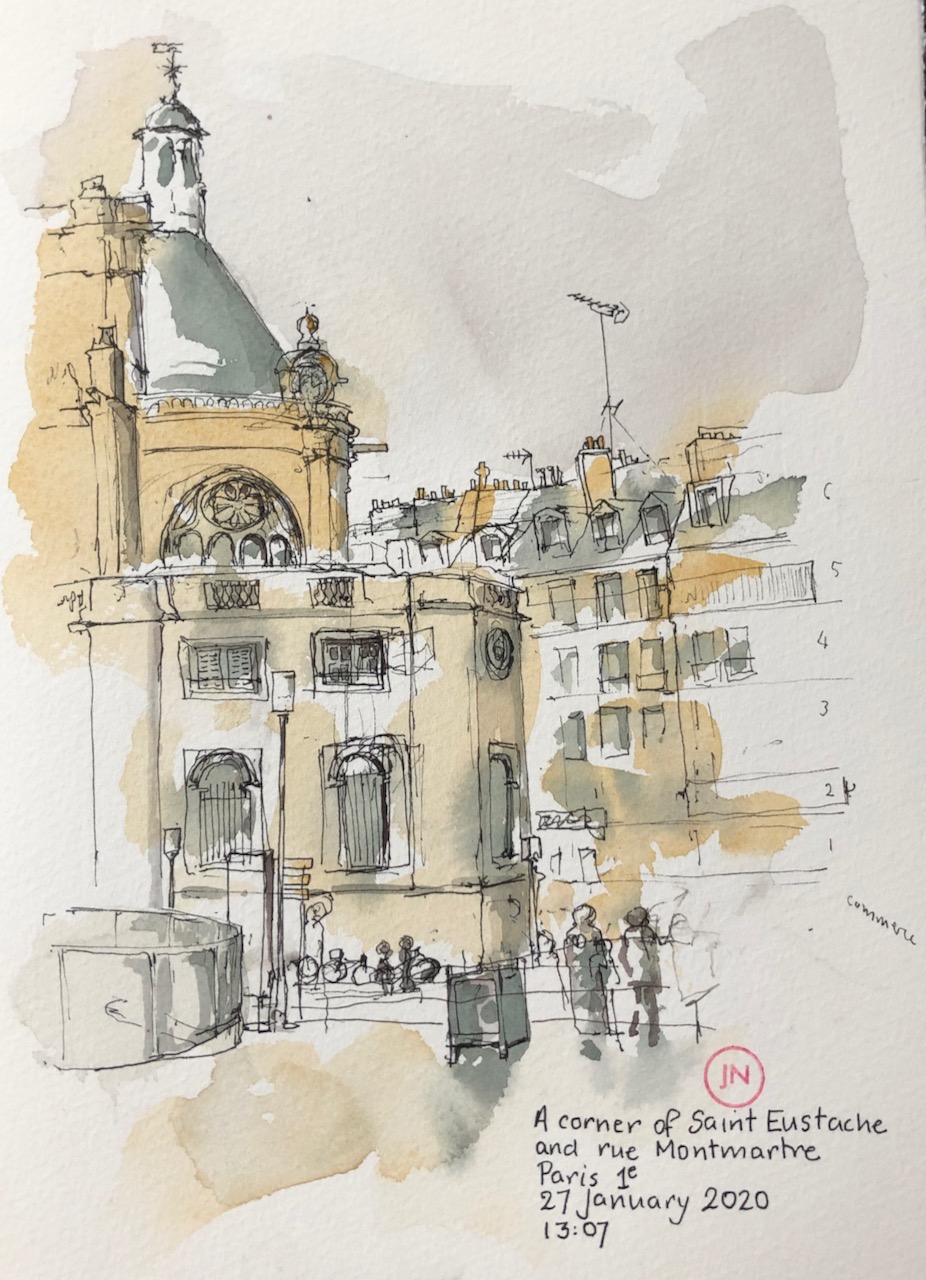
Here is a corner of St Eustache, near Les Halles in central Paris.
St Eustache was built between 1532 and 1632. I drew it standing in the pedestrian area near Les Halles, as people flowed by. I enjoyed the fact that there were huge chimneys on the church, shown high up on the left edge of the picture.
Drawing St Eustache on location
The sky was overcast. It was a Monday. A group of lively young people were hanging about, calling to each other.
Meeting point for Public Calm
This pedestrian area was one of those liminal zones: between public and private, not quite a pavement, not quite a plaza, partly a thoroughfare, partly a resting zone. As a result, the social rules were ambiguous. People were hanging around, people were passing through. Evidently there have been incidents. A large poster said: “City of Paris, Meeting Point, Public Calm. The operatives of the City of Paris in charge of Public Calm welcome your feedback and comments between 6pm and 6:30pm, Monday to Friday. To report an incident (“incivilité”) call 3975 or go to Paris.fr/incivilité”.
I was intrigued by the idea of City operatives charged with “public calm” (“tranquillité publique”), and wonder how and whether it works.
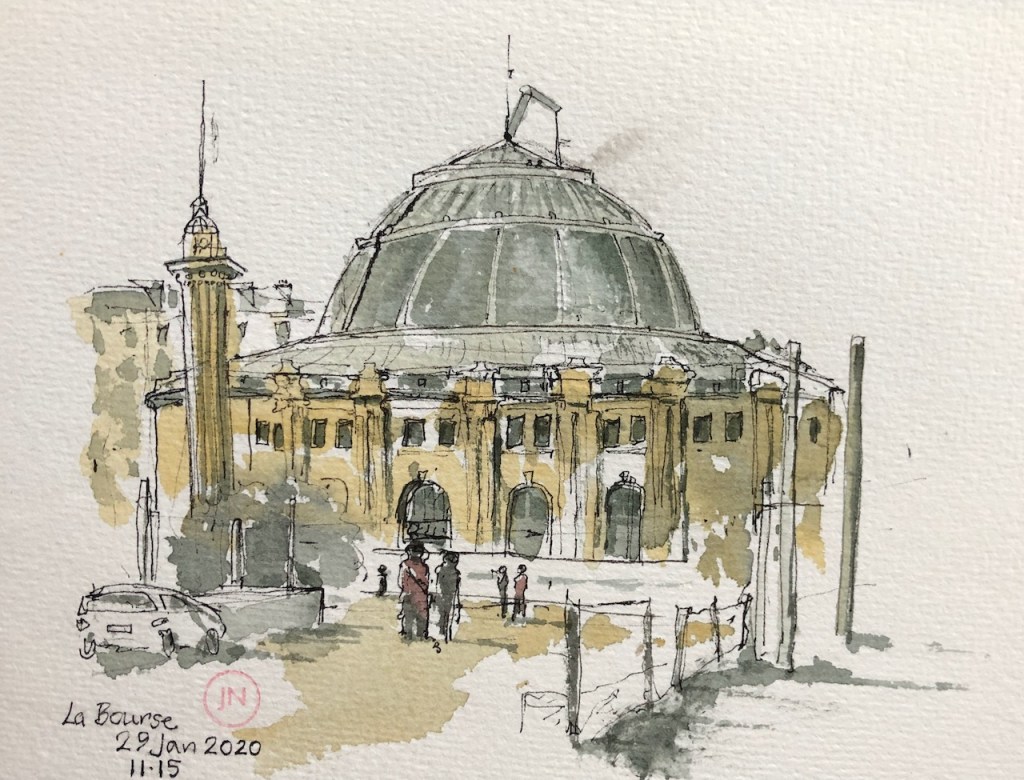
Here’s another sketch in the same area. This the “Bourse de Commerce”, the Commodities Exchange. It’s now the former Commodities Exchange, with massive building work going on to convert it into a contemporary art space. The architect for the conversion is Tadao Ando.
Bourse de Commerce, with crane and hoardings.
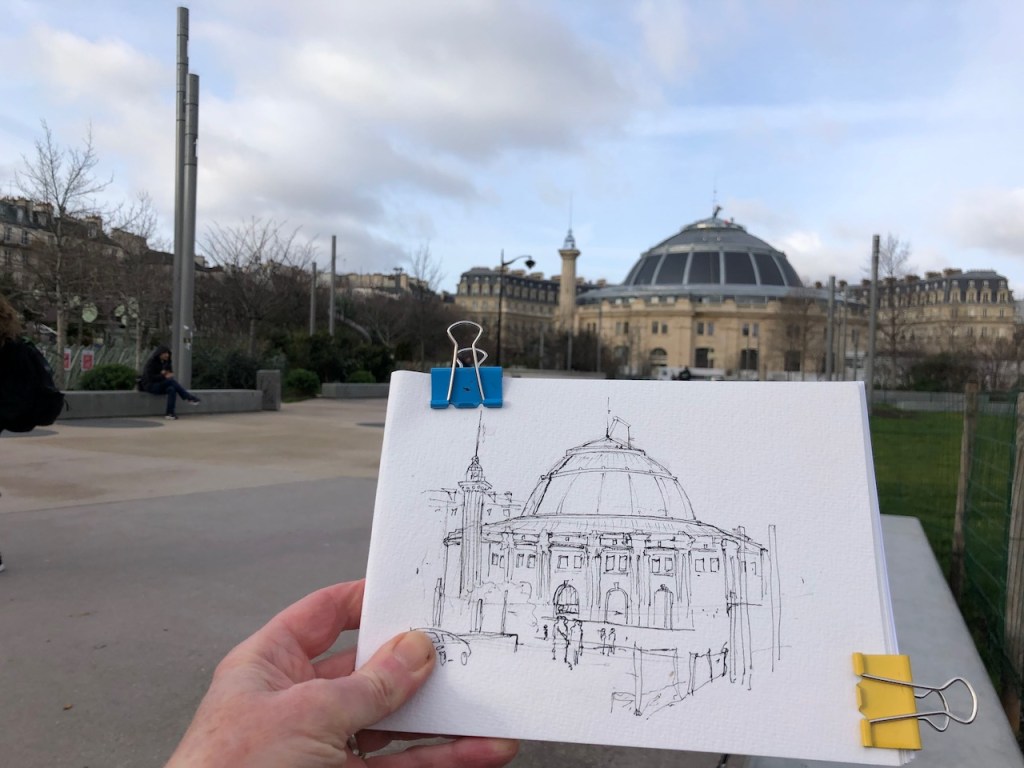
This was a sketch as I was waiting for the swimming pool to open.
Drawing on location
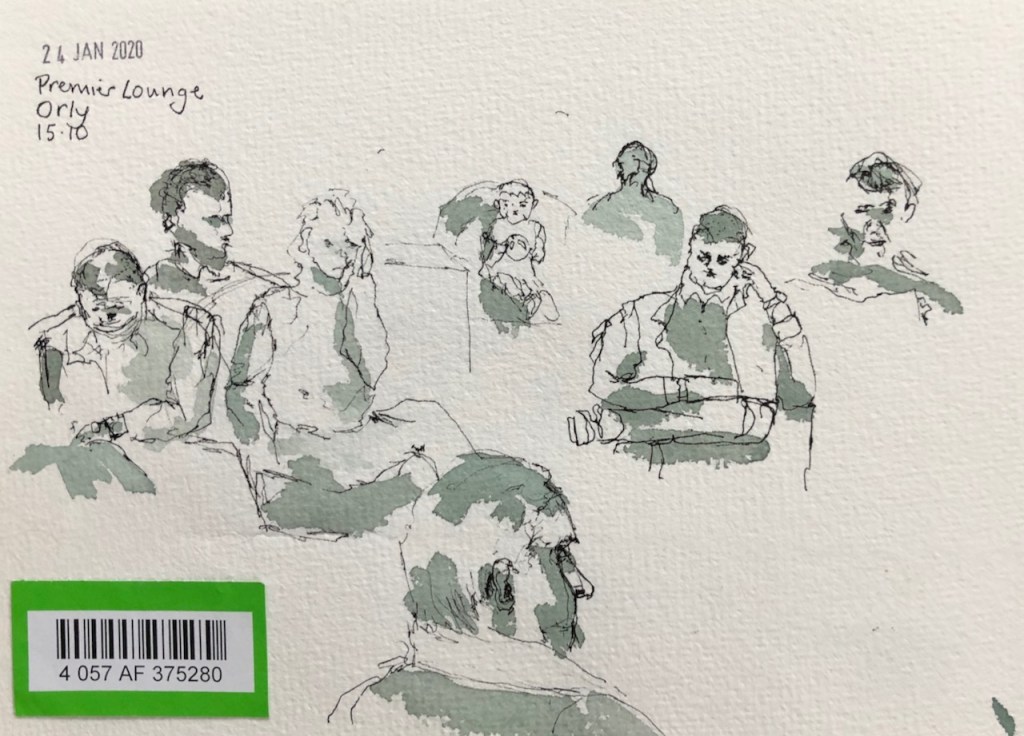
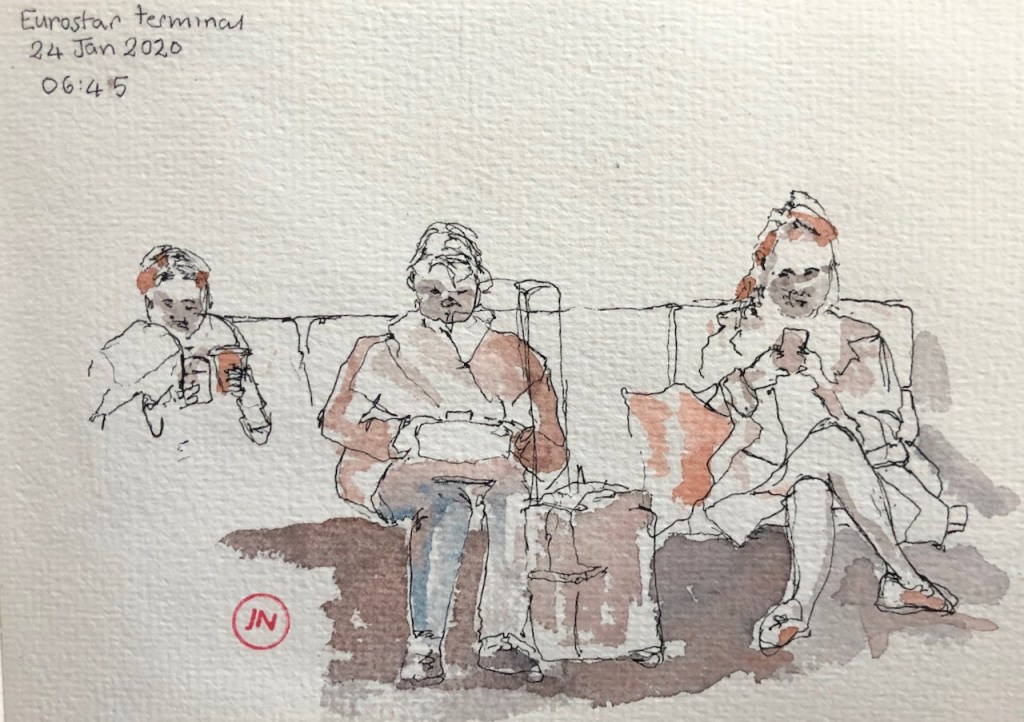
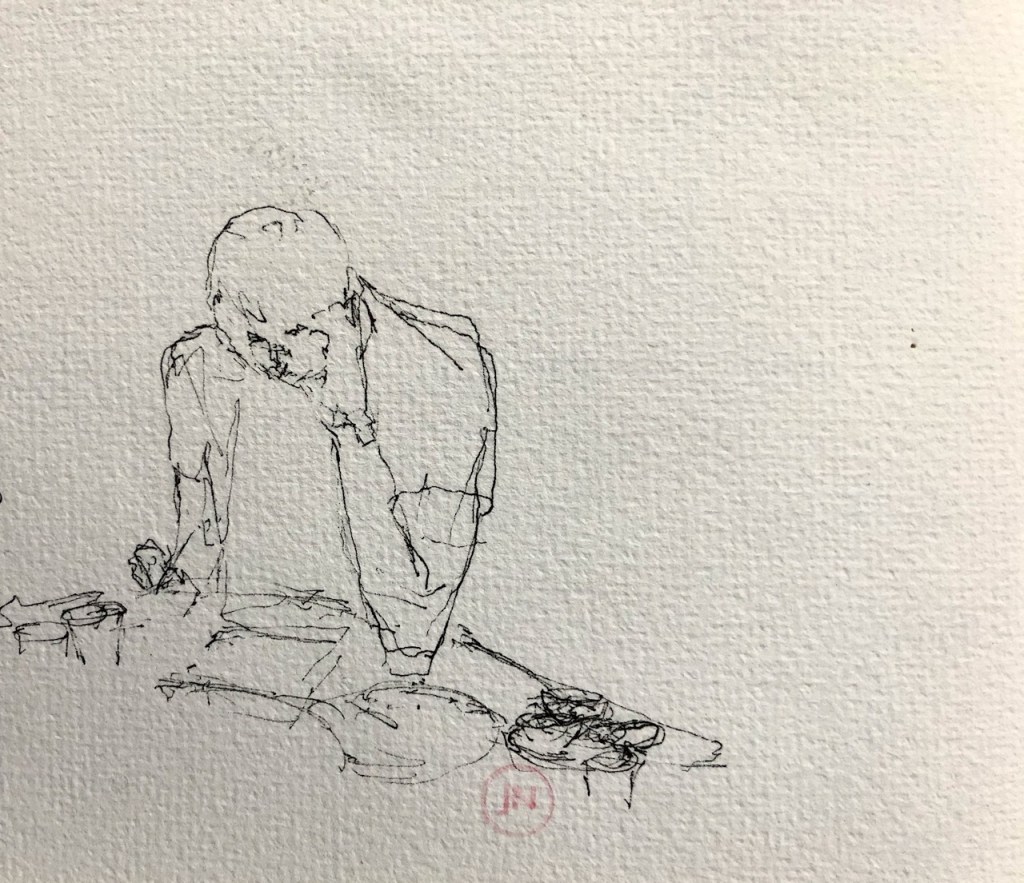
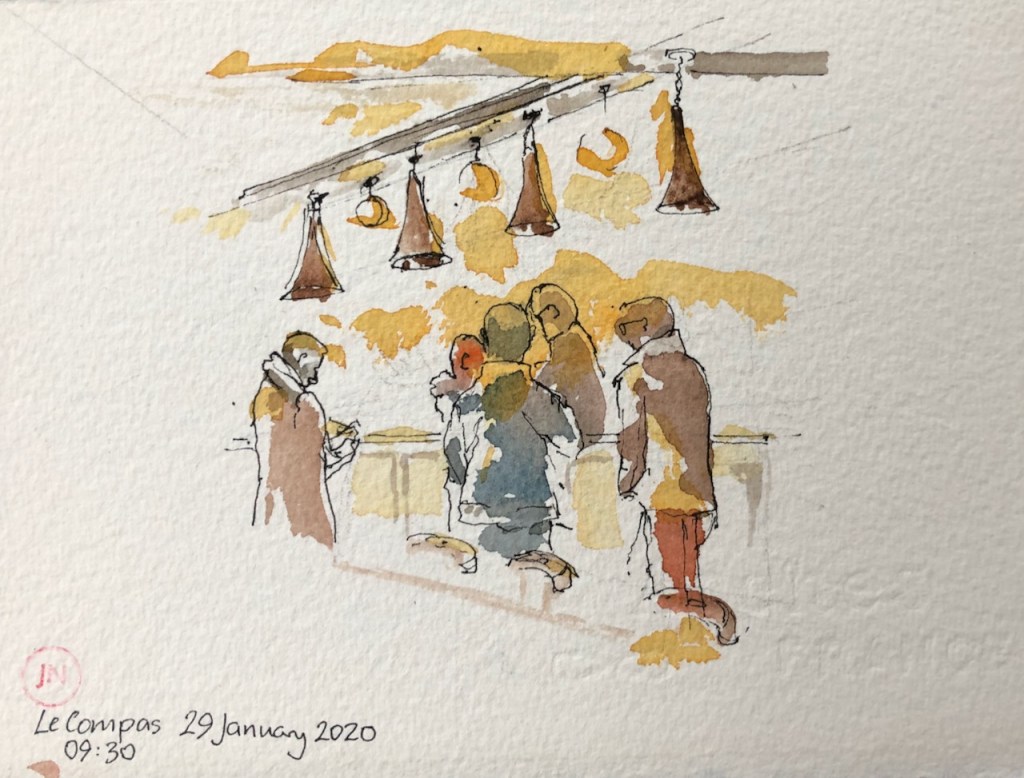
I did some people-sketching in a café and in waiting areas on the trip. I am on a mission to get more people into my drawings, so I practice.
Airport lounge
Eurostar lounge
Doing the crossword
Men in the café
People watching
I walked across to the Left Bank, searching for “Maison Charbonnel”, the home of the maker of the etching ink that I favour. The place was there, on the Quai Montebello, just across the river from Notre Dame. However, because of the Métro strikes, or because of the weather or for some other reason or no reason atall, the shop was closed “until the 3rd of February”.
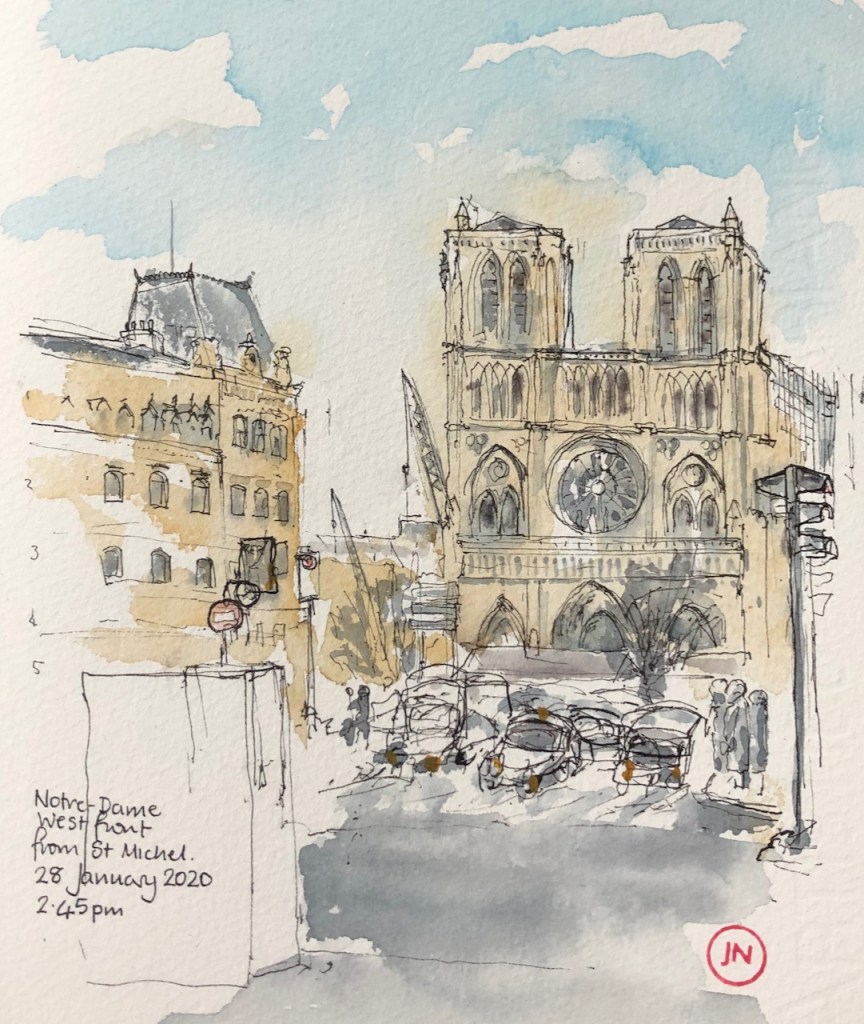
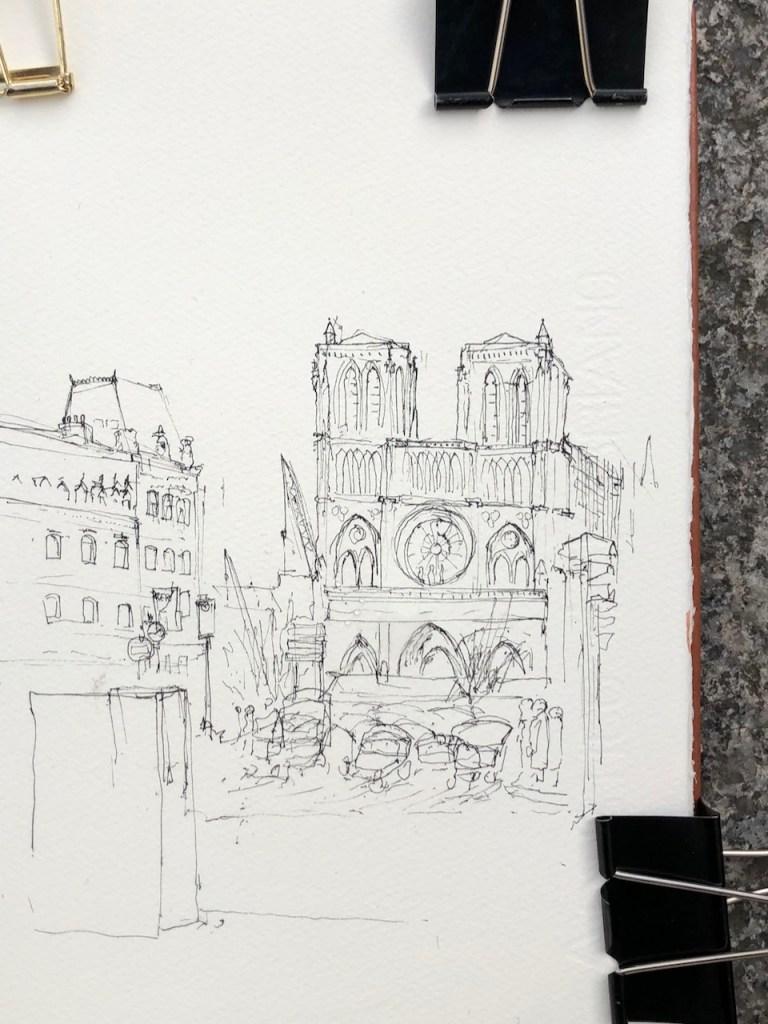
I drew a picture of Notre Dame.
Notre Dame, West front, from St Michel.
This took about one hour 35 minutes. The temperature was 7 degrees C.
Straight to pen
On the pavement
Putting the colour on
Red arrow shows the line of sight of the drawing
Drawing on location, Notre Dame from St Michel
Then I took sanctuary in a marvellous art shop I found: “Magasin Sennelier”, 3 Quai Voltaire. I was served by a gentleman who might have been there since the 1950s. He was pleased to tell me he knew L. Cornelissen & Son of London, and Green and Stone, and he knew Mr Rowney, of Daler Rowney paints, personally. Or had done. Sennelier paints were superior, I was authoritatively, if not entirely objectively, informed.
Magasin Sennelier
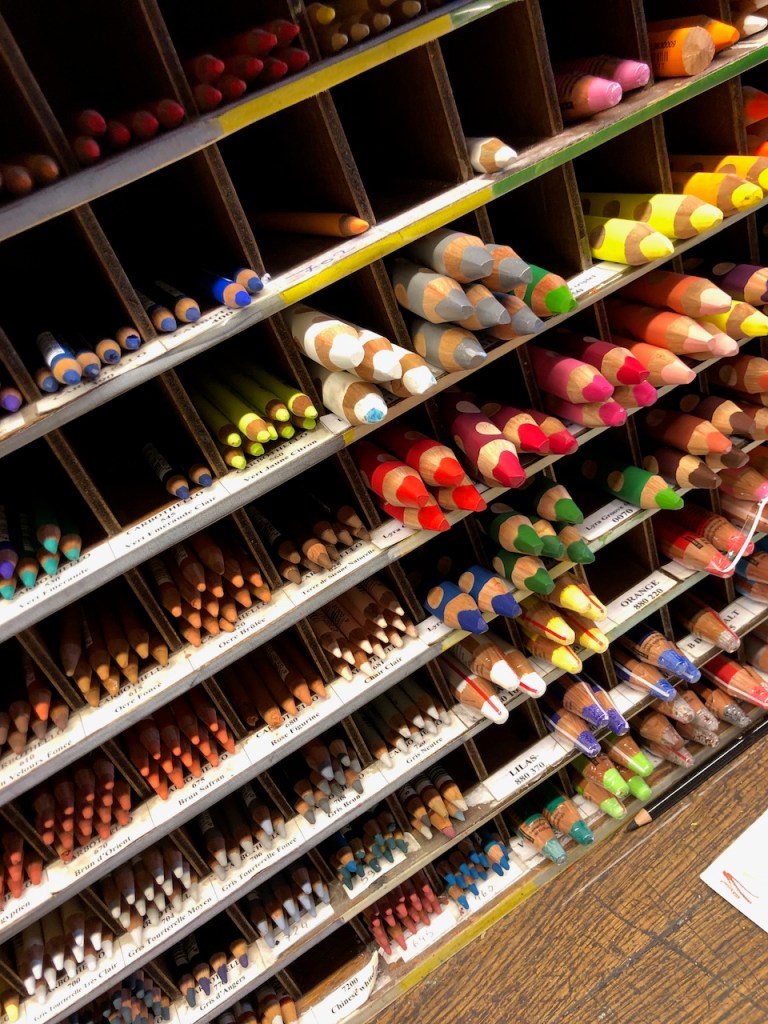
Crayons
“Don’t use the crayons.”
Paints on the top floor
Japanese paints
A little brush I bought
Inside Magasin Sennelier, Quai Voltaire
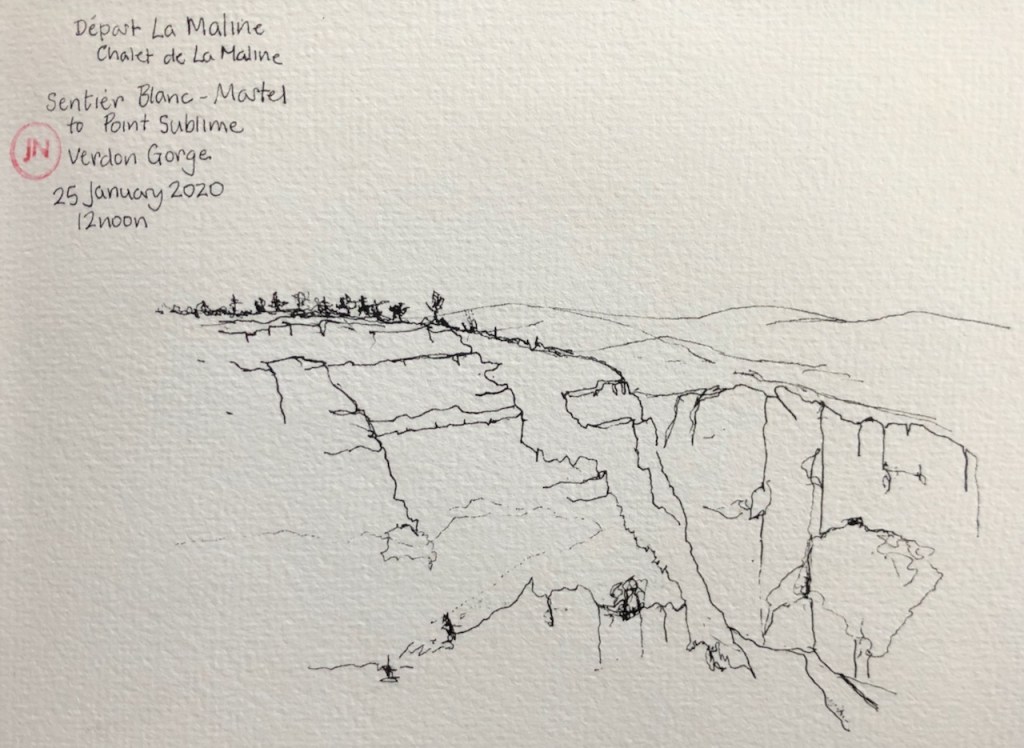
In the South I made a pen sketch of a vast canyon:
Blanc-Martel hiking trail, start point.
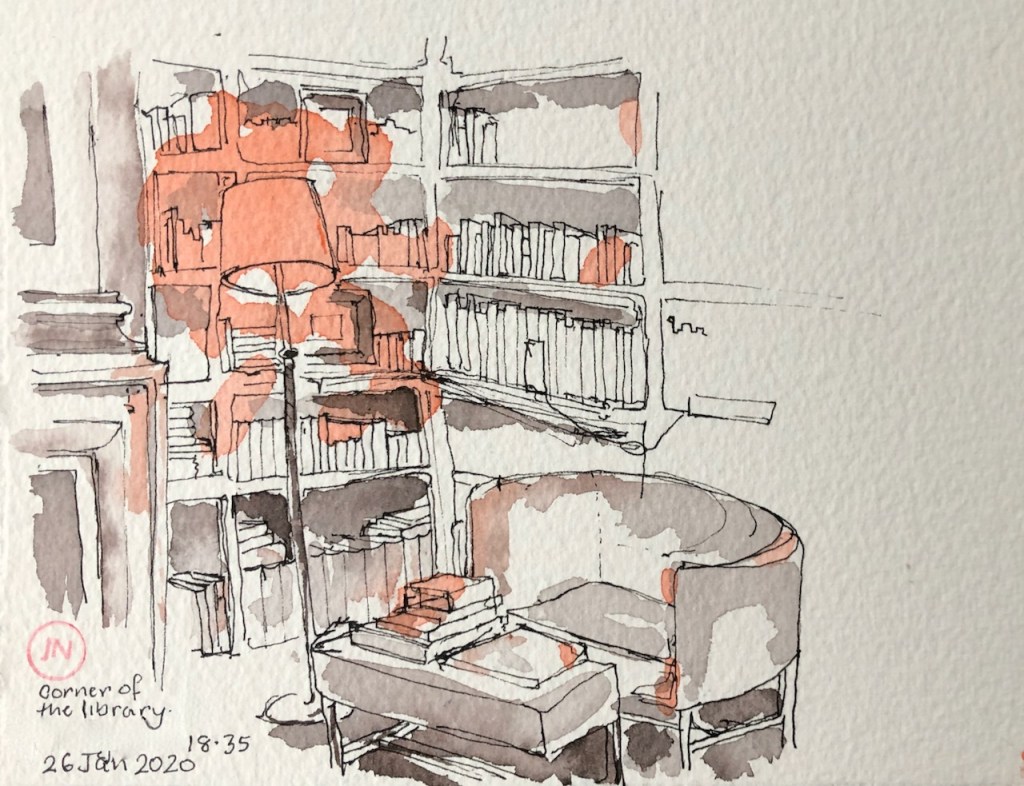
And here’s a quick sketch in the library, before dinner:
Corner of the library
Click a button below to share this post online, email it, or print it:
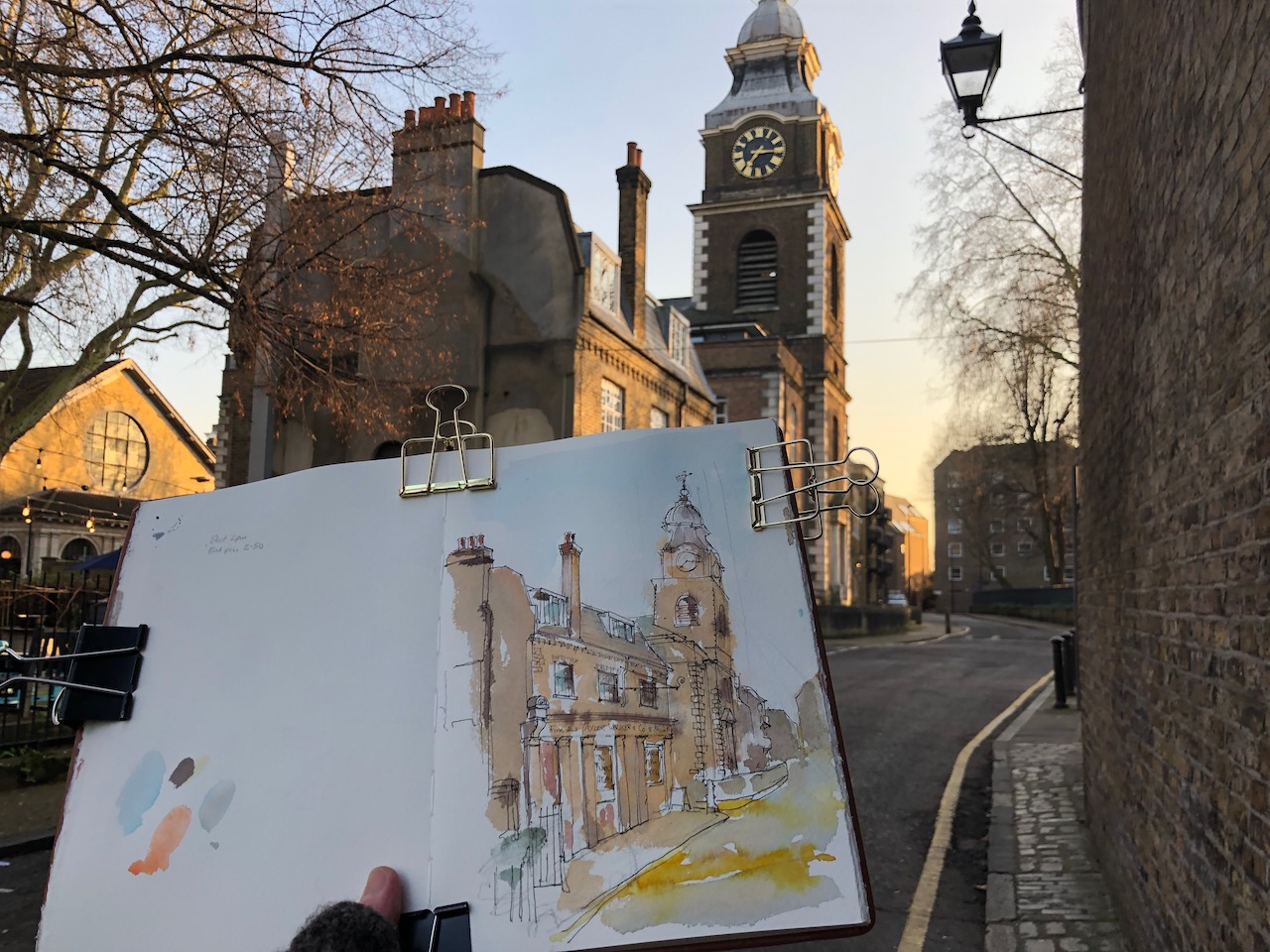
Here is the marvellous Turks Head Café, Wapping, rescued from demolition by local residents in the 1980s.
The Turks Head Cafe, in front of St John’s Tower
Inside, I found warmth, quiet tables, and the gentle murmur of conversations: people actually talking to each other. I felt welcome here. The food was marvellous. Next time I’m going to have the Blueberry Tart. I only noticed it after I’d already had the substantial Chicken and Avocado Sandwich.
Inside the Turks Head Café
I went to pay my bill. When I returned to my table, there was a little group of people admiring the sketch (above). I chatted to a man called Mark, who, it turns out, runs the website “lovewapping.org“. We exchanged anecdotes about the representation or otherwise of residents’ views on local councils. His group grapples with Tower Hamlets Council.
Then I went outside to draw the café.
The tower in the background is St Johns Tower. The tower is “all that remains of the parish church of St Johns circa 1756 … the surrounding ground was rebuilt as flats in the 1990s to an attractive design reflecting the previous building on the site” says the Knight Frank website (an estate agent).
This drawing took 1hour 15 mins, done from the pavement by a huge brick wall. The colours are Perinone Orange, Phthalo Turquoise, Mars Yellow and Hansa Yellow Mid. As you see, the front of the cafe faces West, and caught the setting sun.
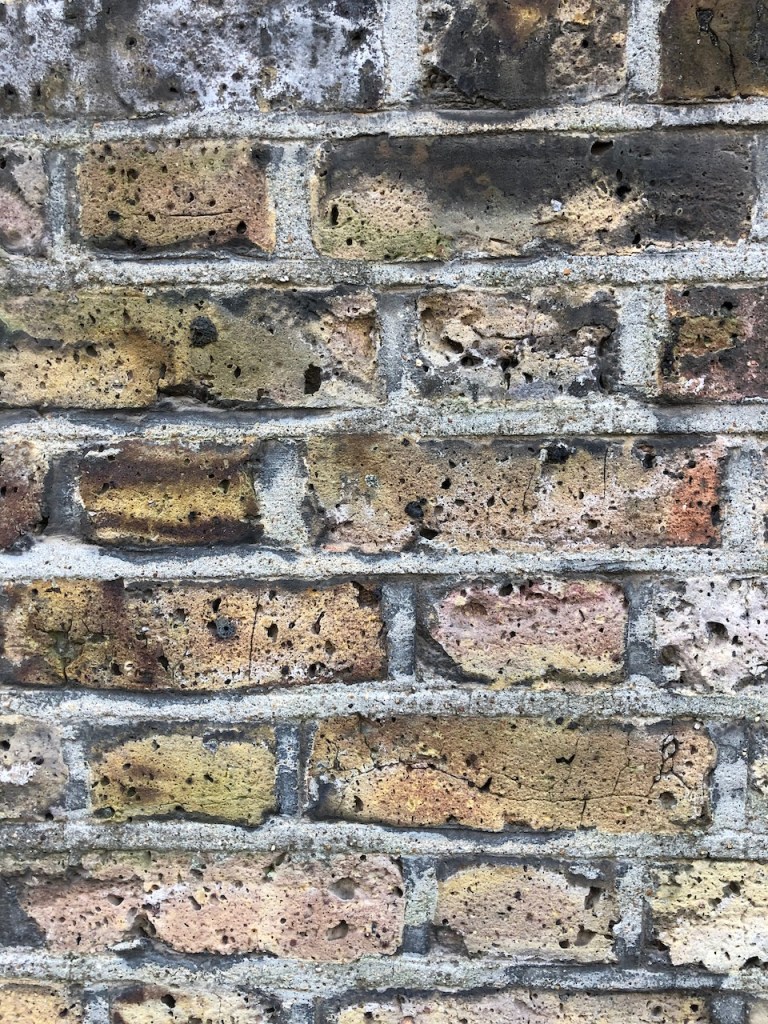
Here is the wall next to where I was standing.
London Bricks in Wapping.Notice outside the caféA man with a tiny cup of espresso coffee
Click a button below to share this post online, email it, or print it:
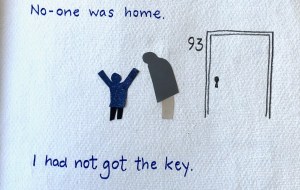
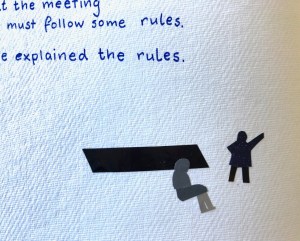
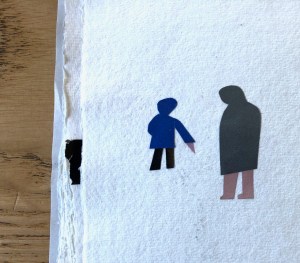
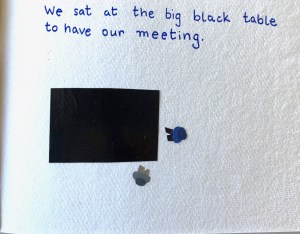
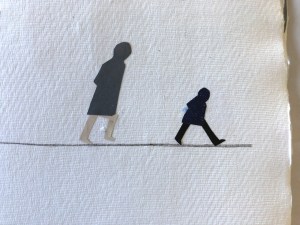
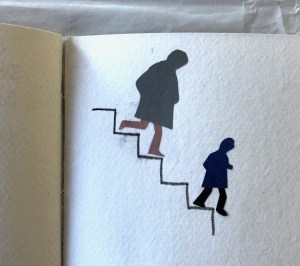
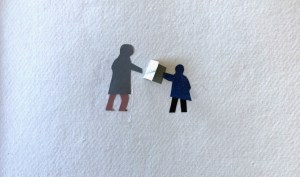
I made a story book for a young friend. It describes an evening we spent together back in December. Here are some of the illustrations:
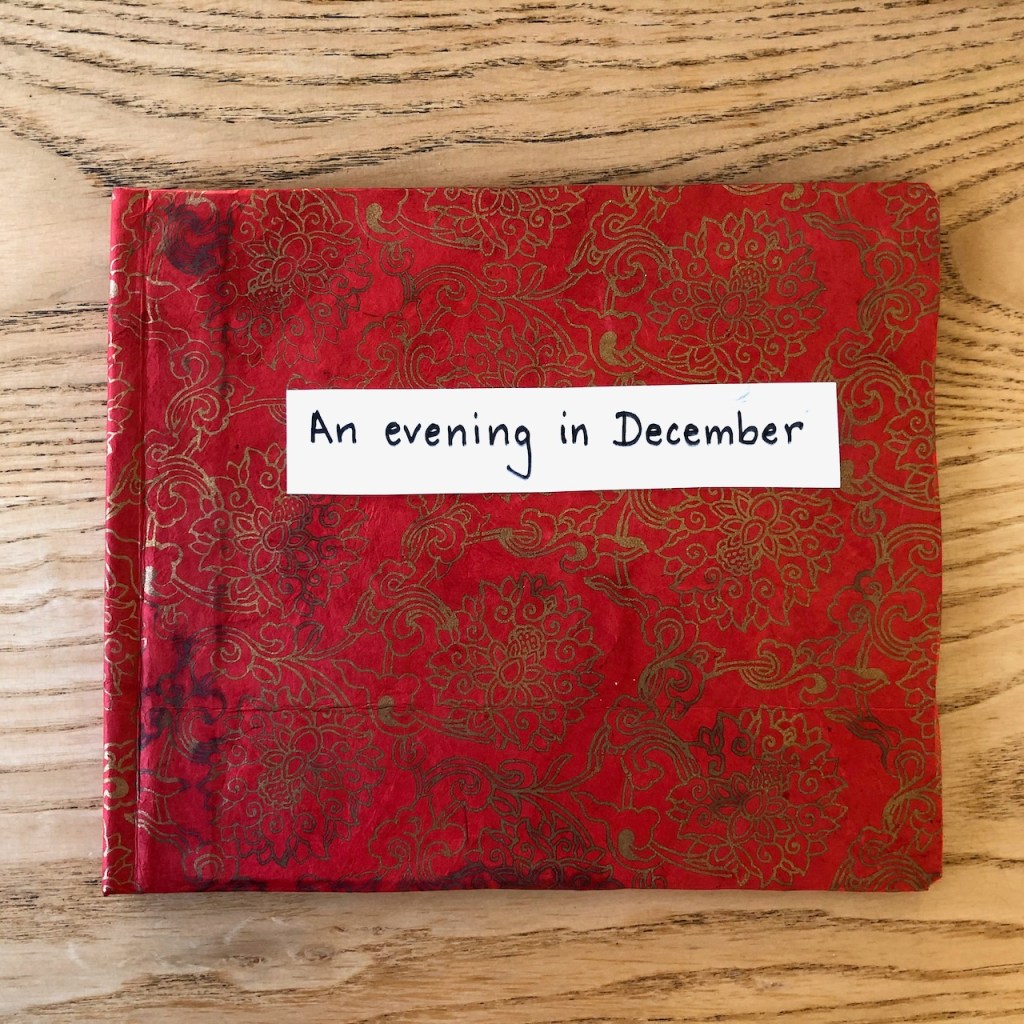
Title page.
The long route home.
I have forgotten the key. How stupid is that?
The rules are explained.
I am told off. I didn’t follow the rules.
Here’s the view of the table: from above!
We rush.
On the way home.
I present the book.
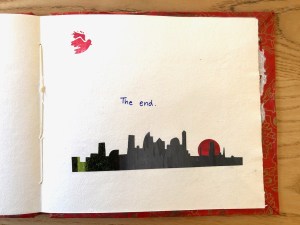
End page.
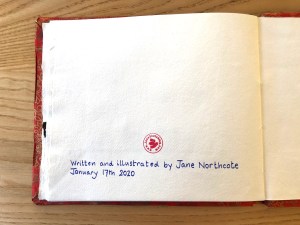
Attribution.
A few of the illustrations from the book.
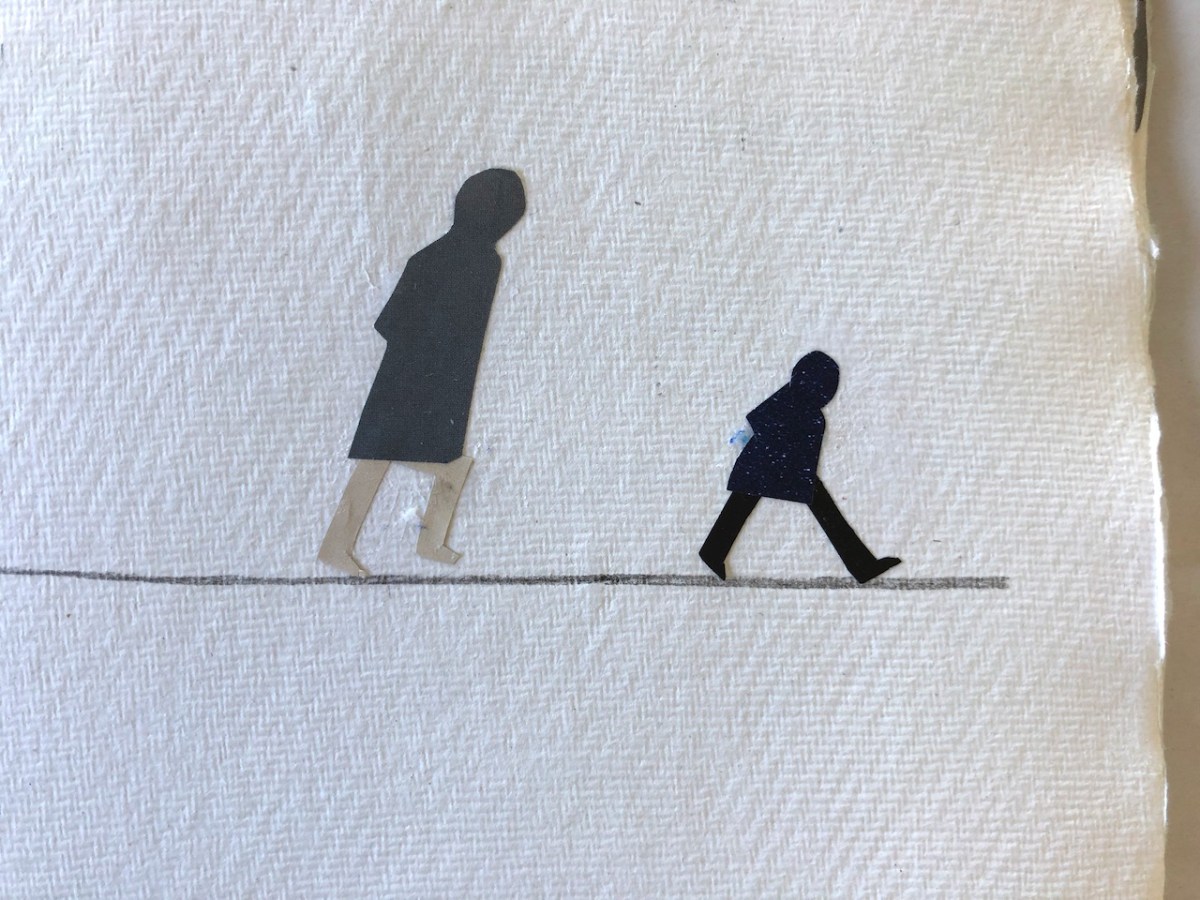
I made the illustrations by cutting shapes out of the coloured parts of magazines. Magazine pages are suitably strong and luxuriously glossy. Sometimes the pictures have textures which are helpful to the theme. The figures are about an inch high or less. It was very fiddly.
I decided to give the book a hard cover. Out there in the wild, it would need some protection. I’d not done a hard cover binding before. I examined several hardback books and had a go. Here are some pictures of the construction process:
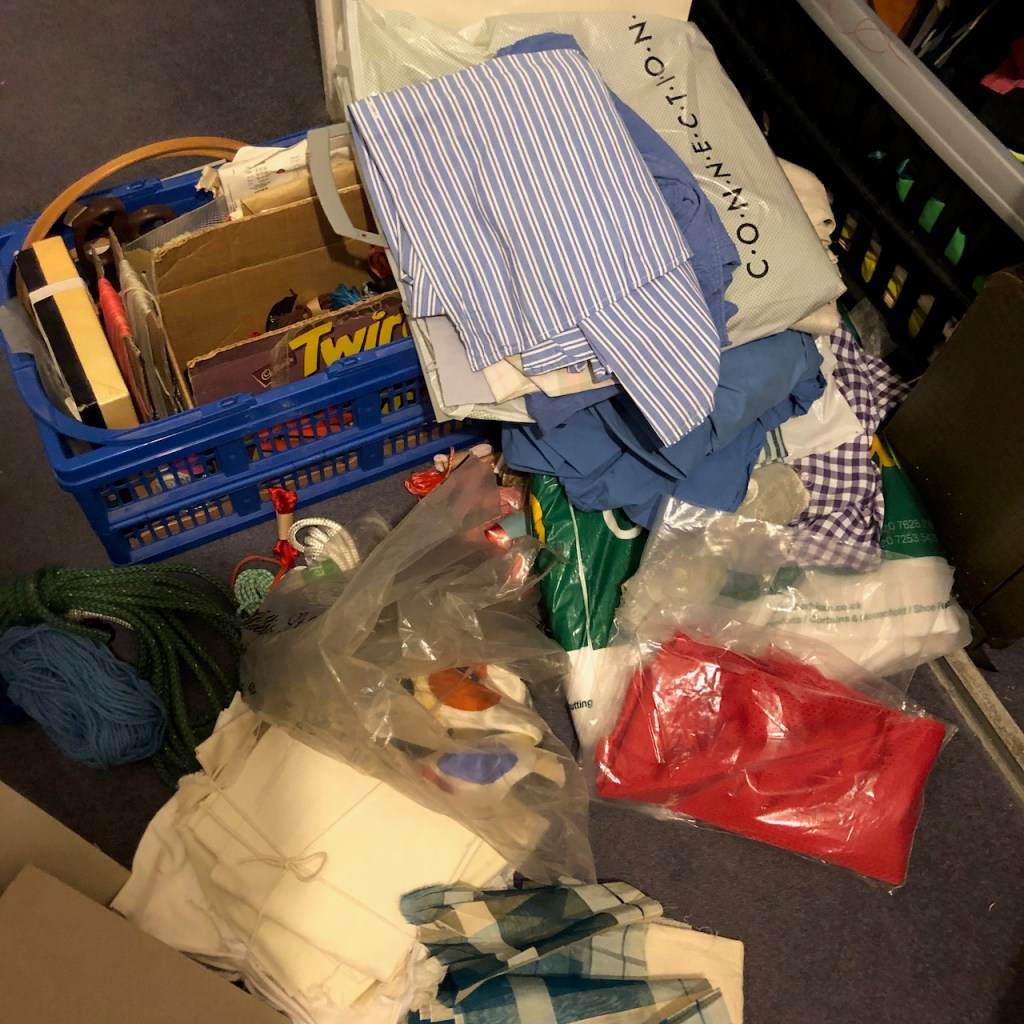
The total mess of my materials box. Trying to find something suitable for binding a book.
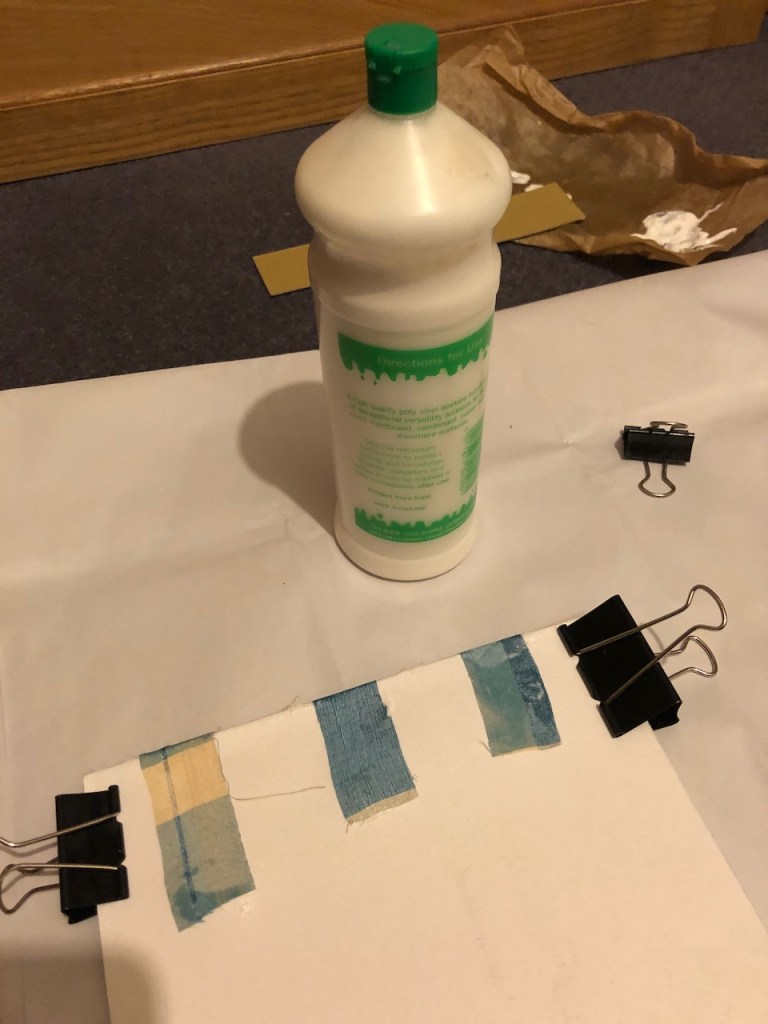
Ruggedising the binding.
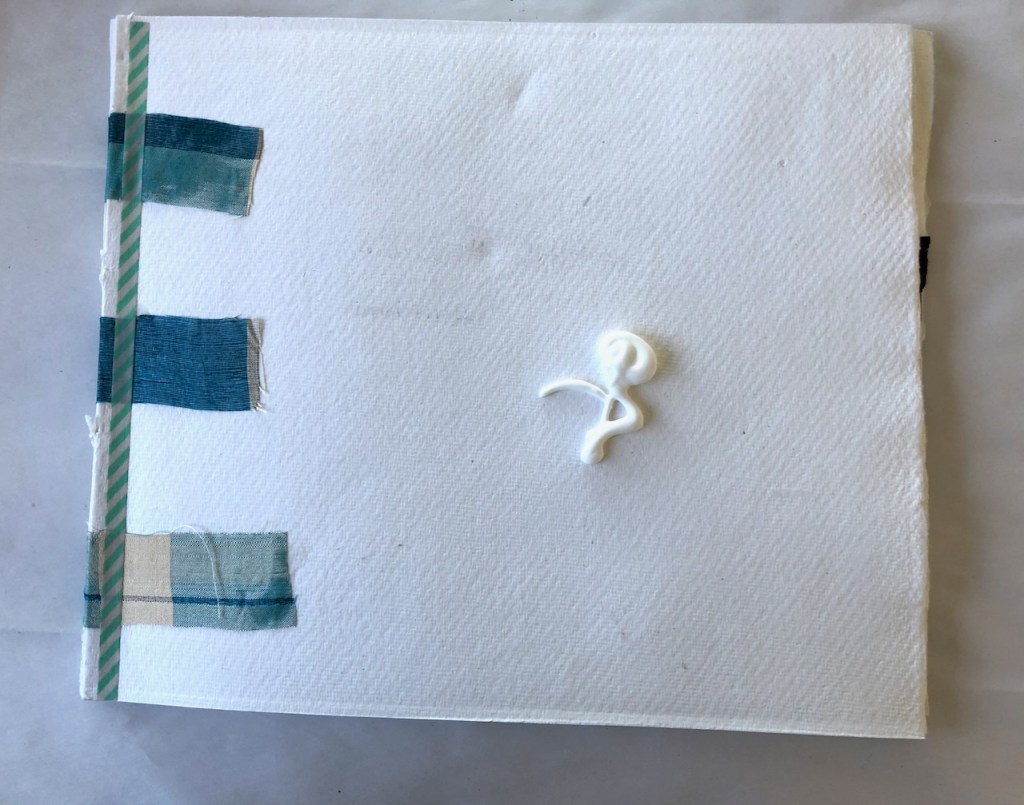
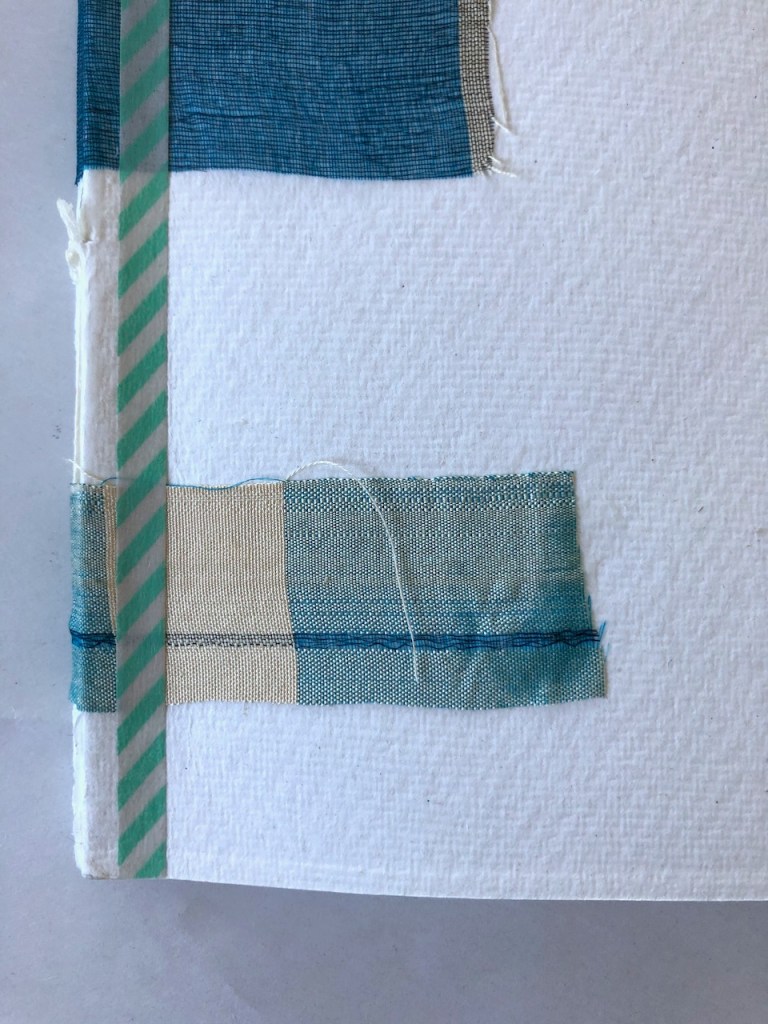
The binding is made stronger by adding pieces of silk and PVA glue.
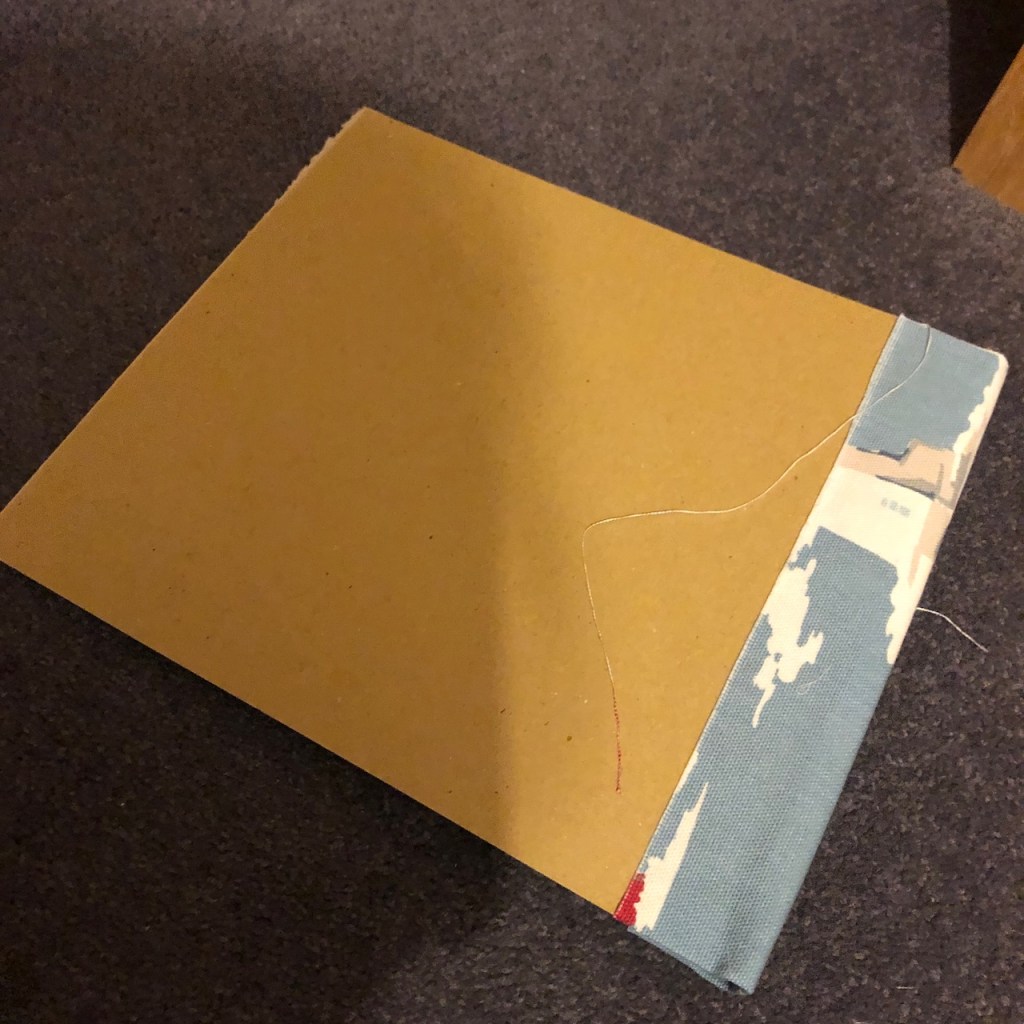
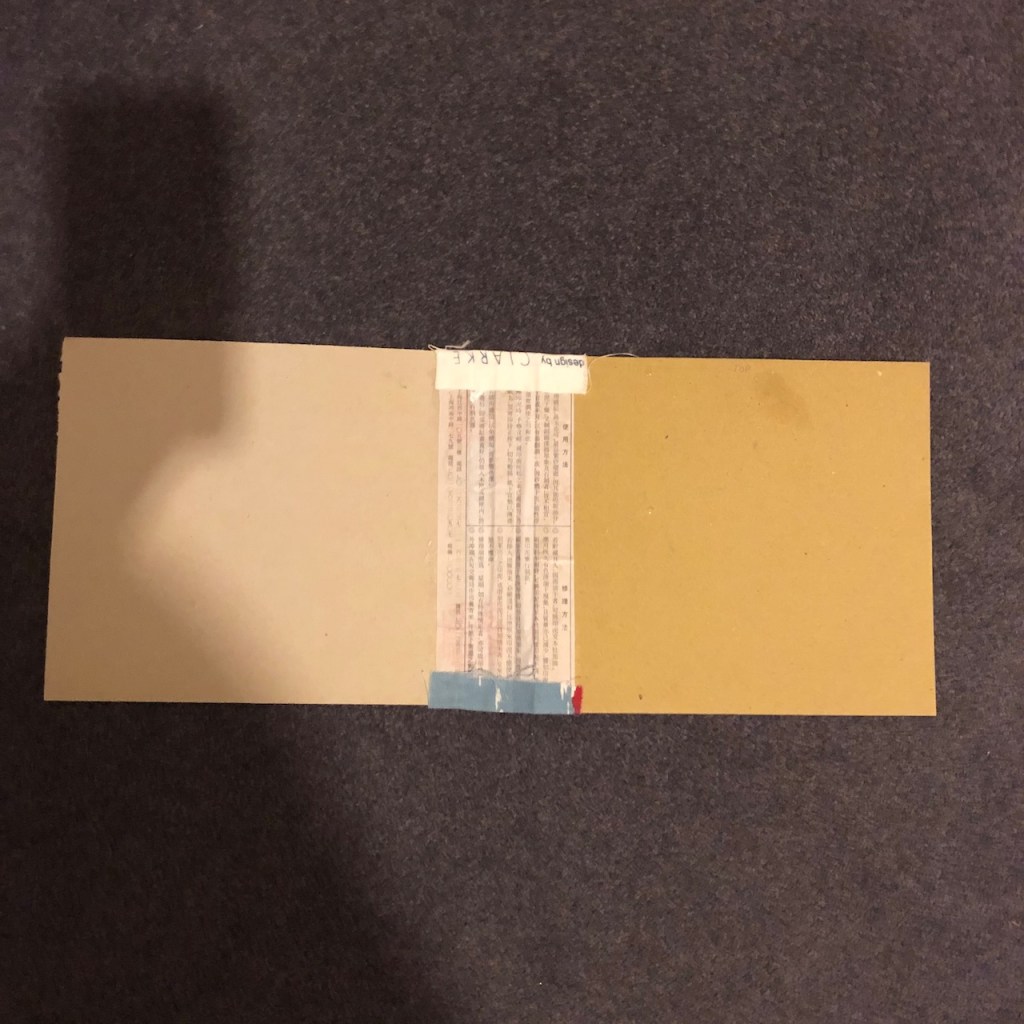
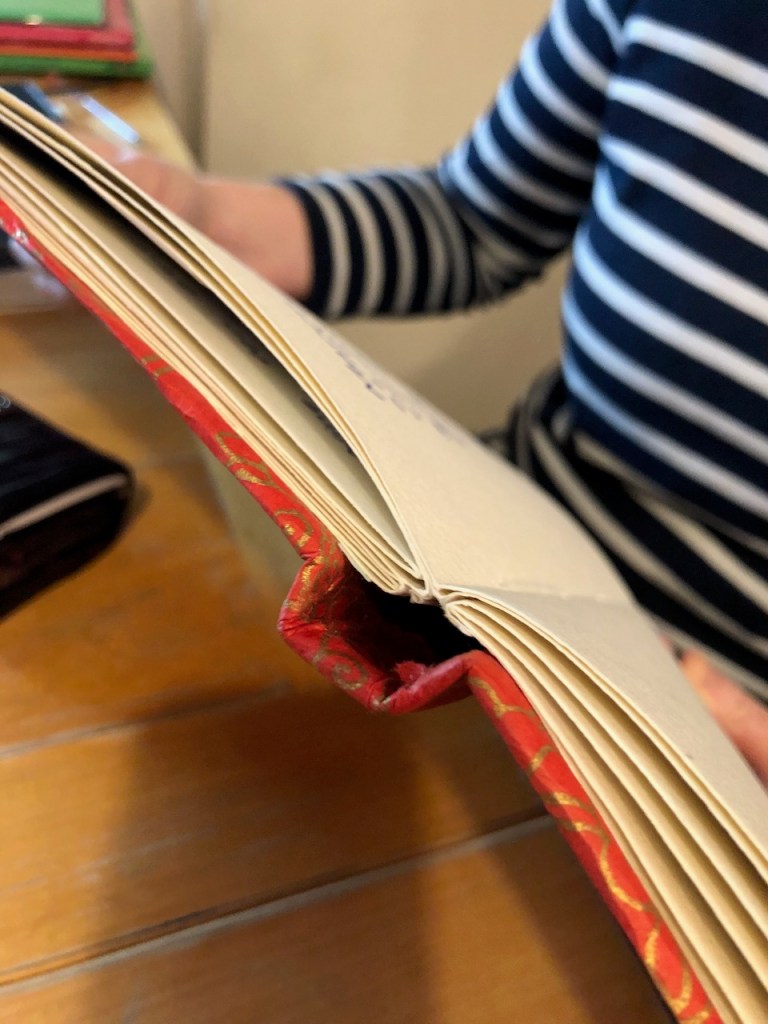
The cover: the spine is a piece of linen curtaining.
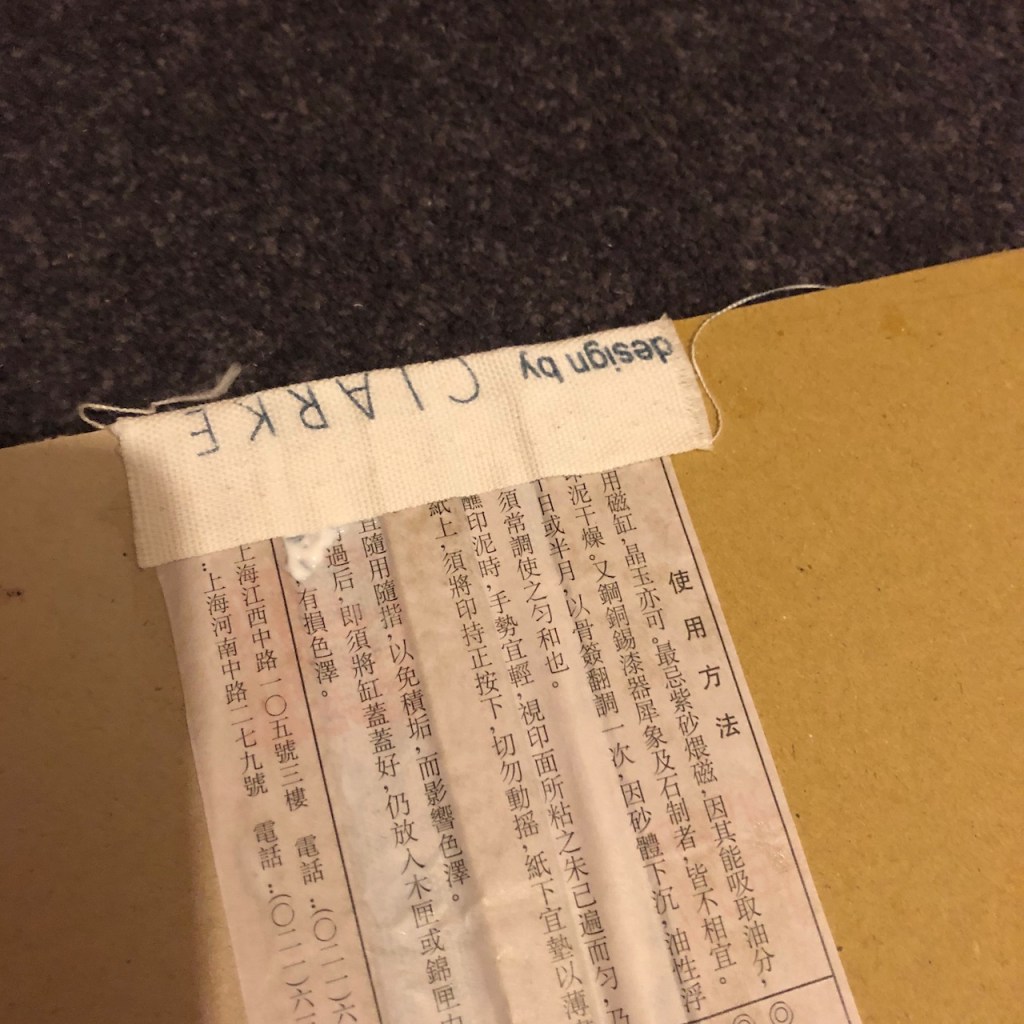
Inside view of the cover: the cardboard spine is kept in place by some Japanese paper, which is strong and flexible.
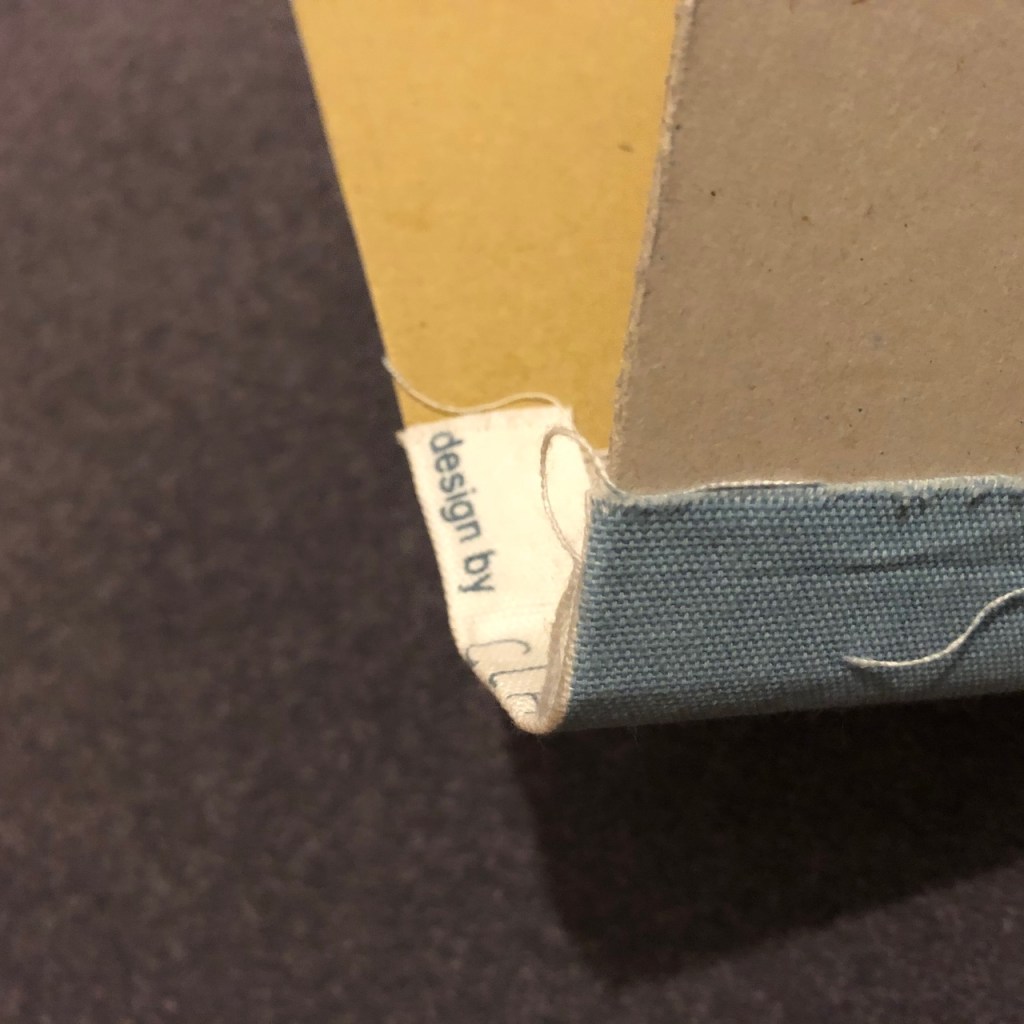
Close up of the top of the spine: linen and Japanese paper.
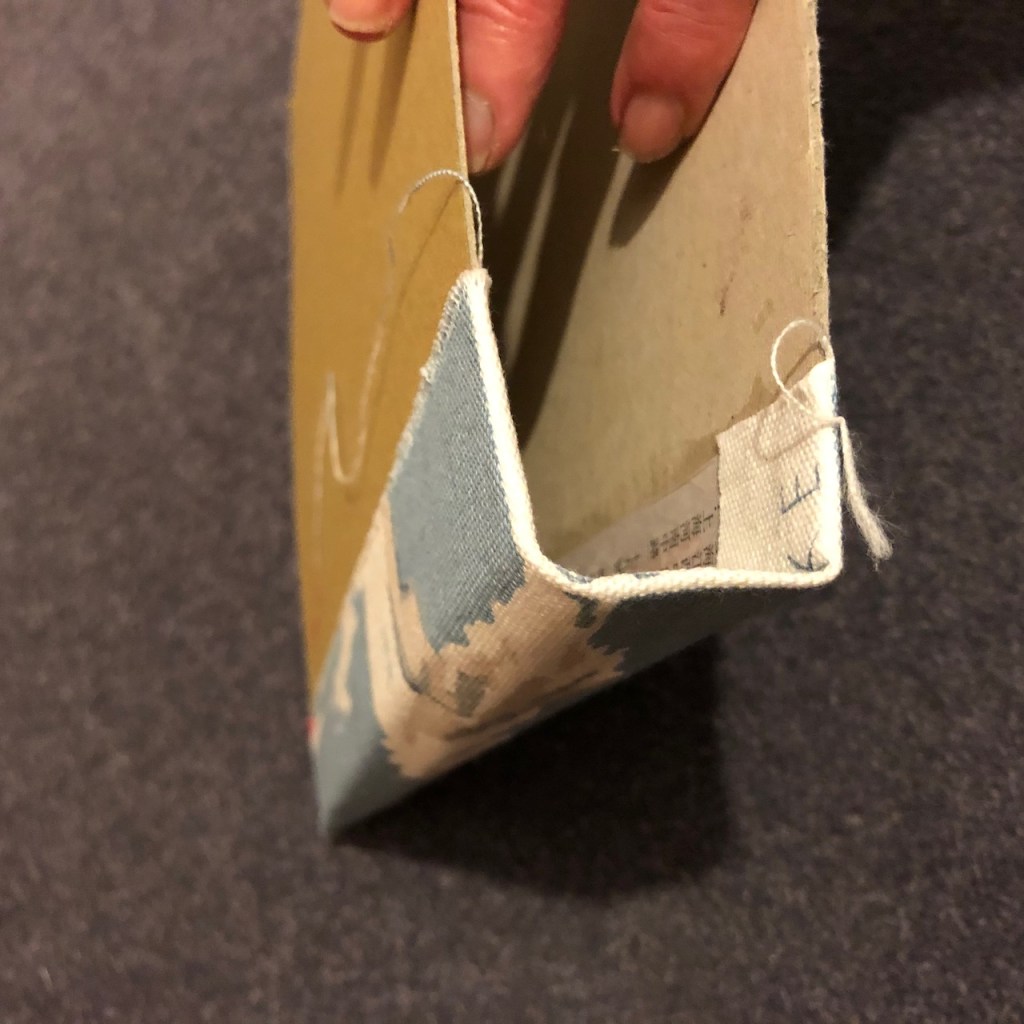
Testing that the spine bent OK. It did.
The spine bends fine. It already looks quite authentic.
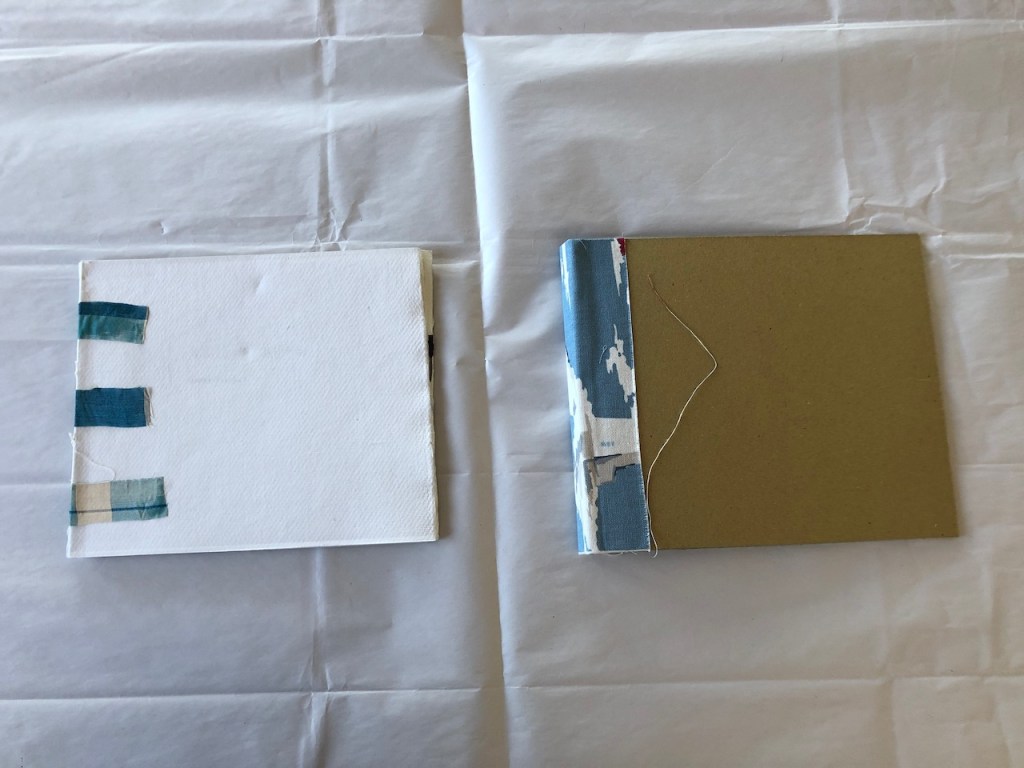
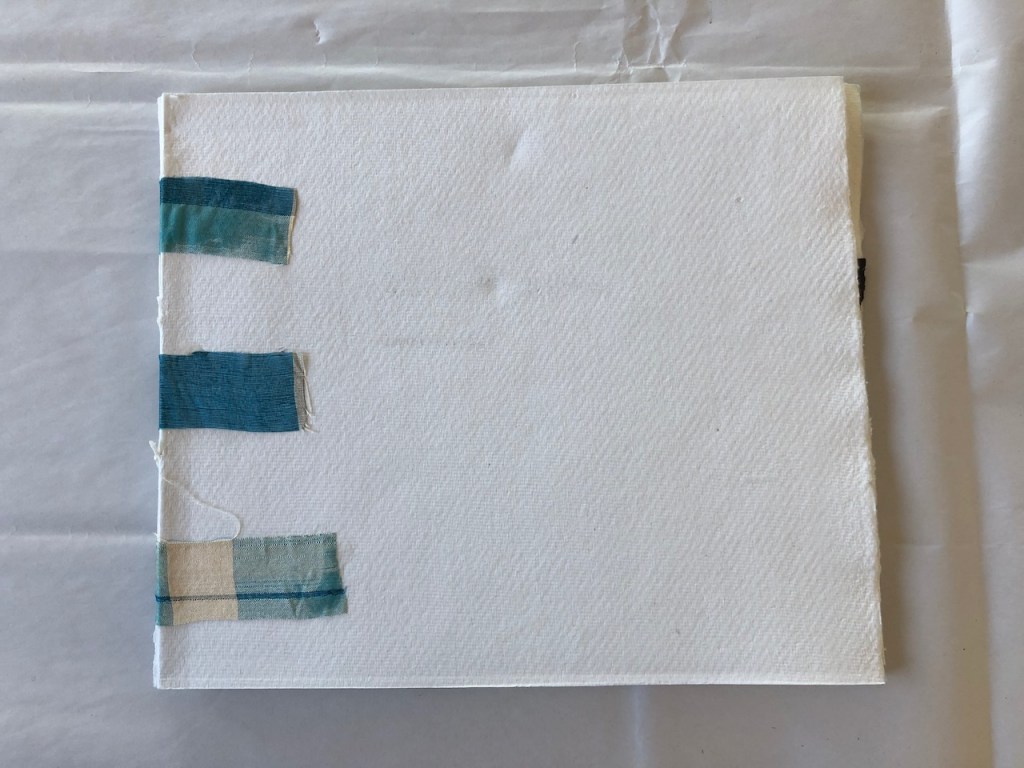
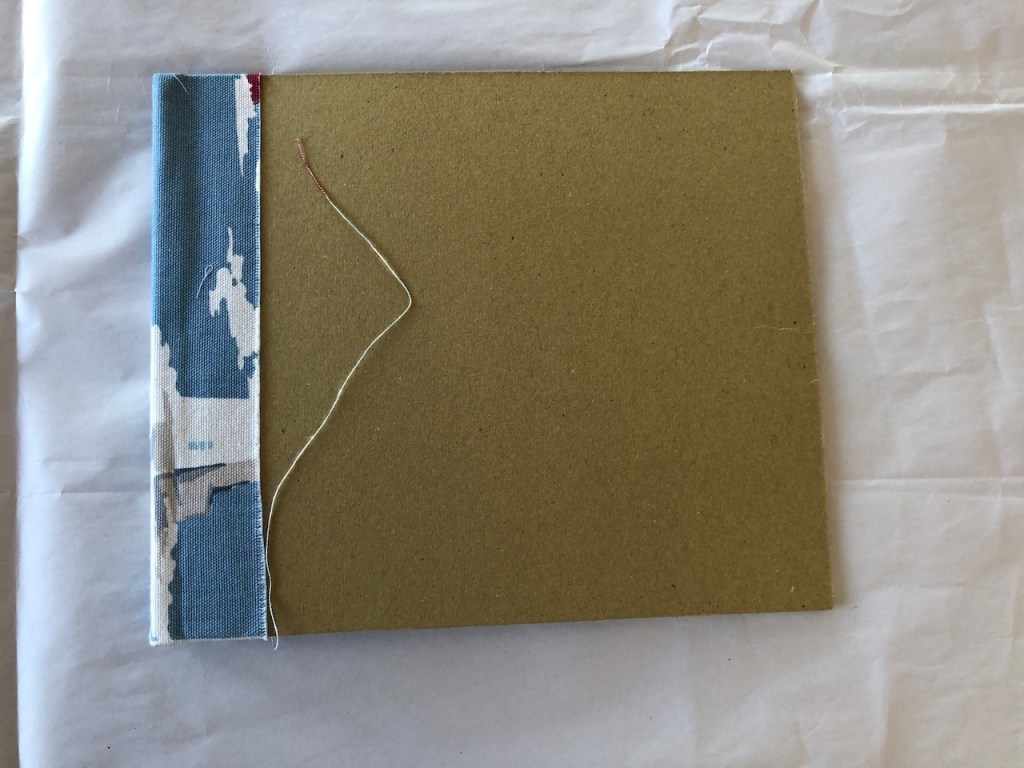
The inside of the book and the cover, ready to go together.
The inside of the book.
The cover.
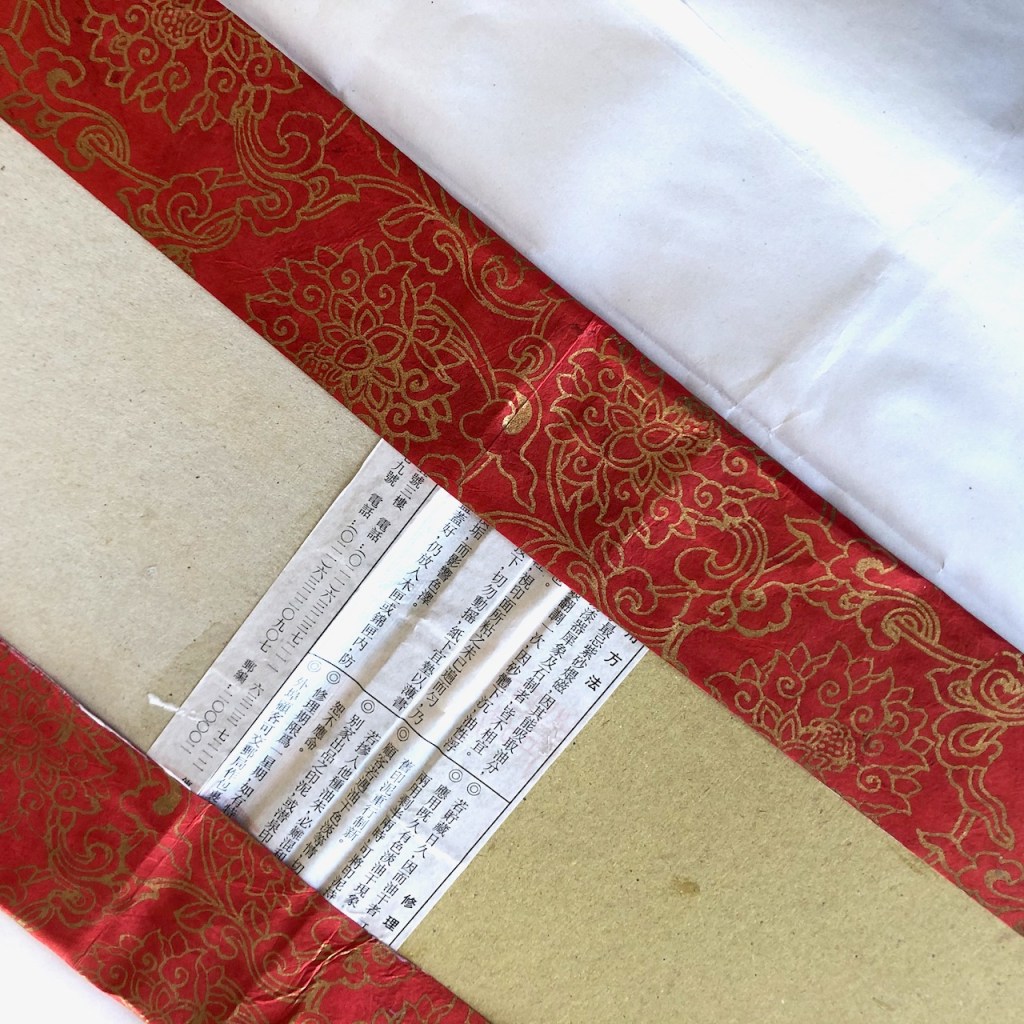
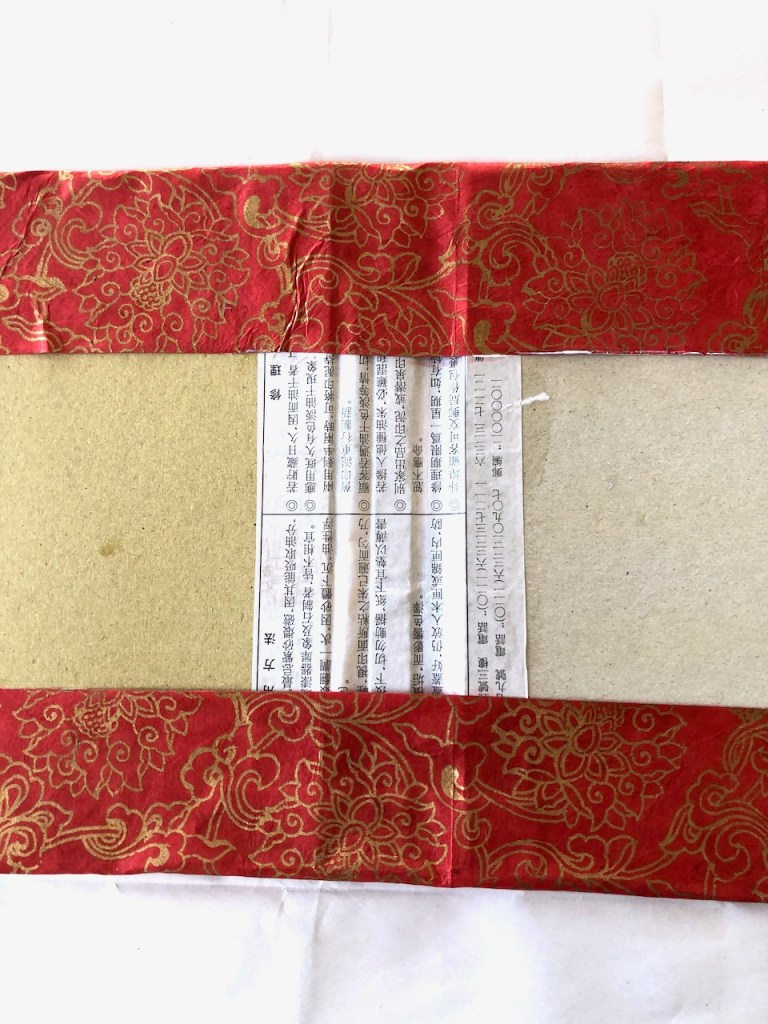
I covered the cover in some amazing paper I found.
Covering the cover.
The cover centre.
Cover, centre, close up.
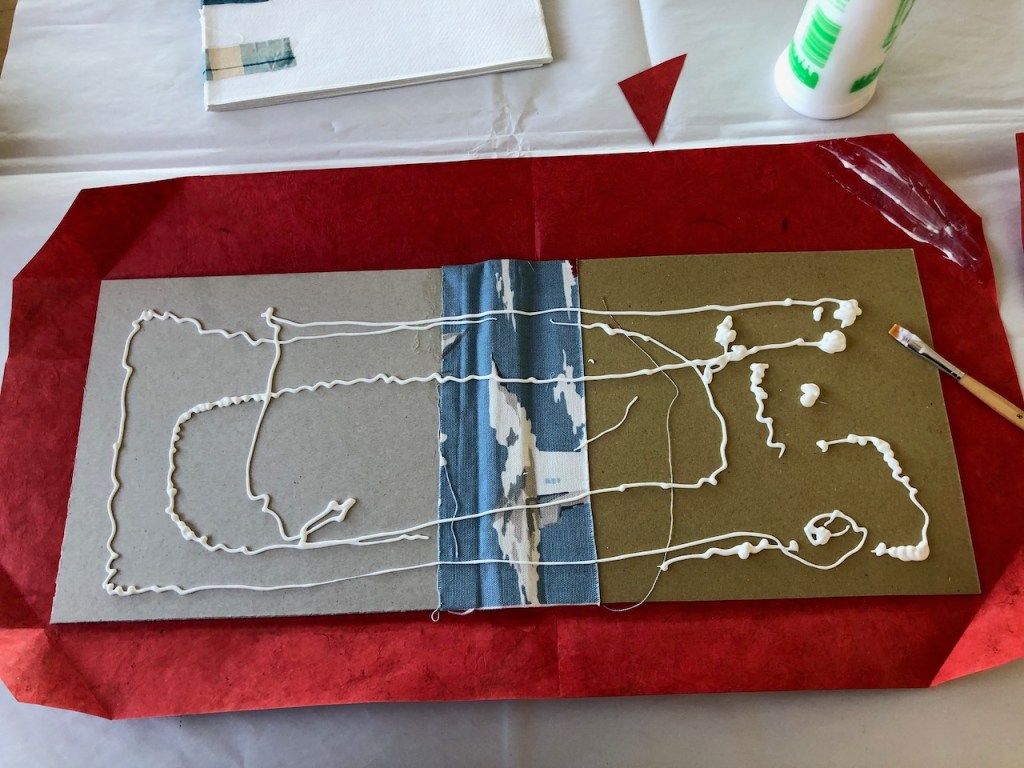
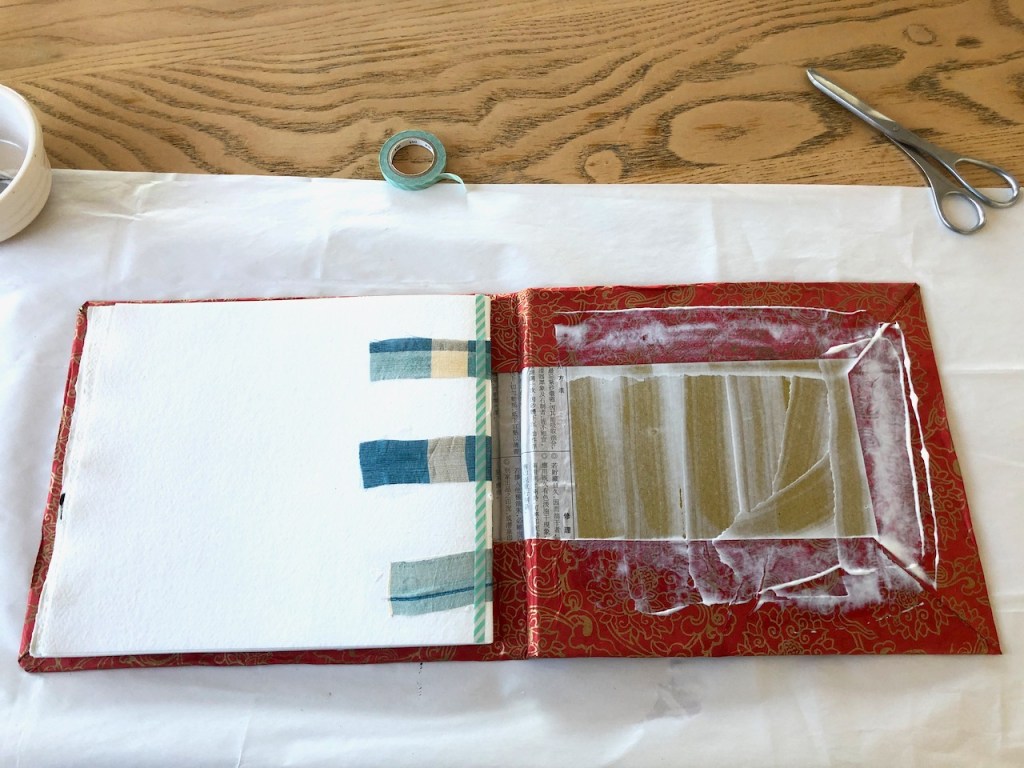
Now I glue in the pages.
I realised that the cover glue must not go to the edges. So I put a length of washi tape (green and white striped) to remind me not to go crazy with the glue.
The back end-page ready to glue in place.
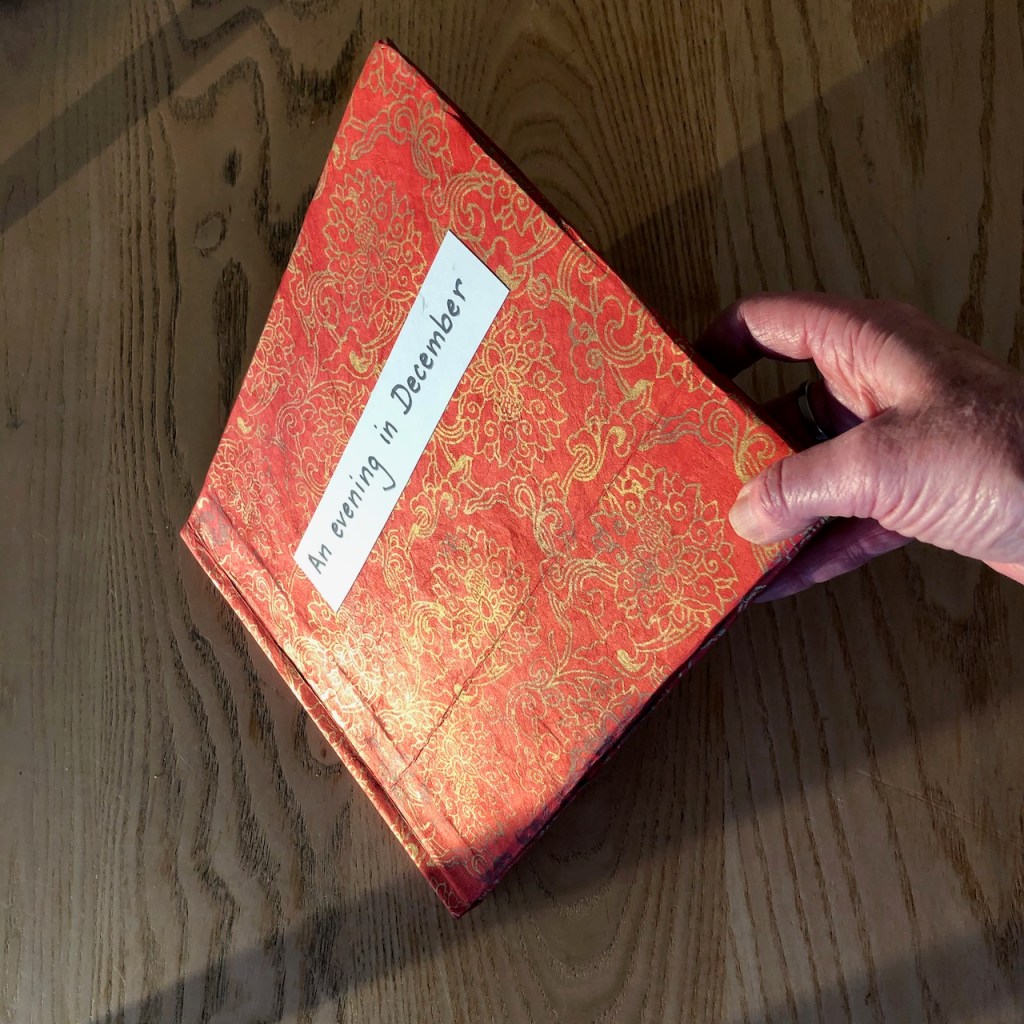
The front of the finished book.
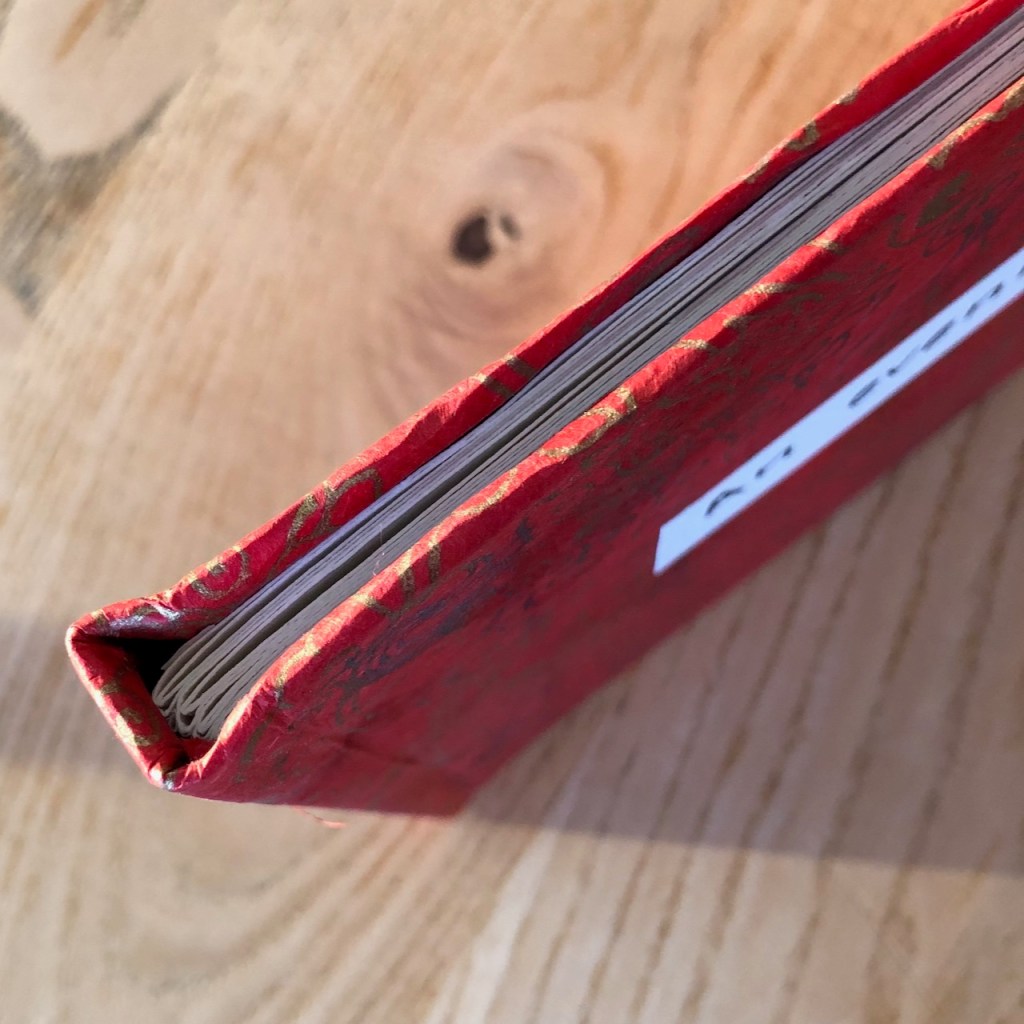
Here’s the spine.
The spine: not perfect, but good for a first attempt.
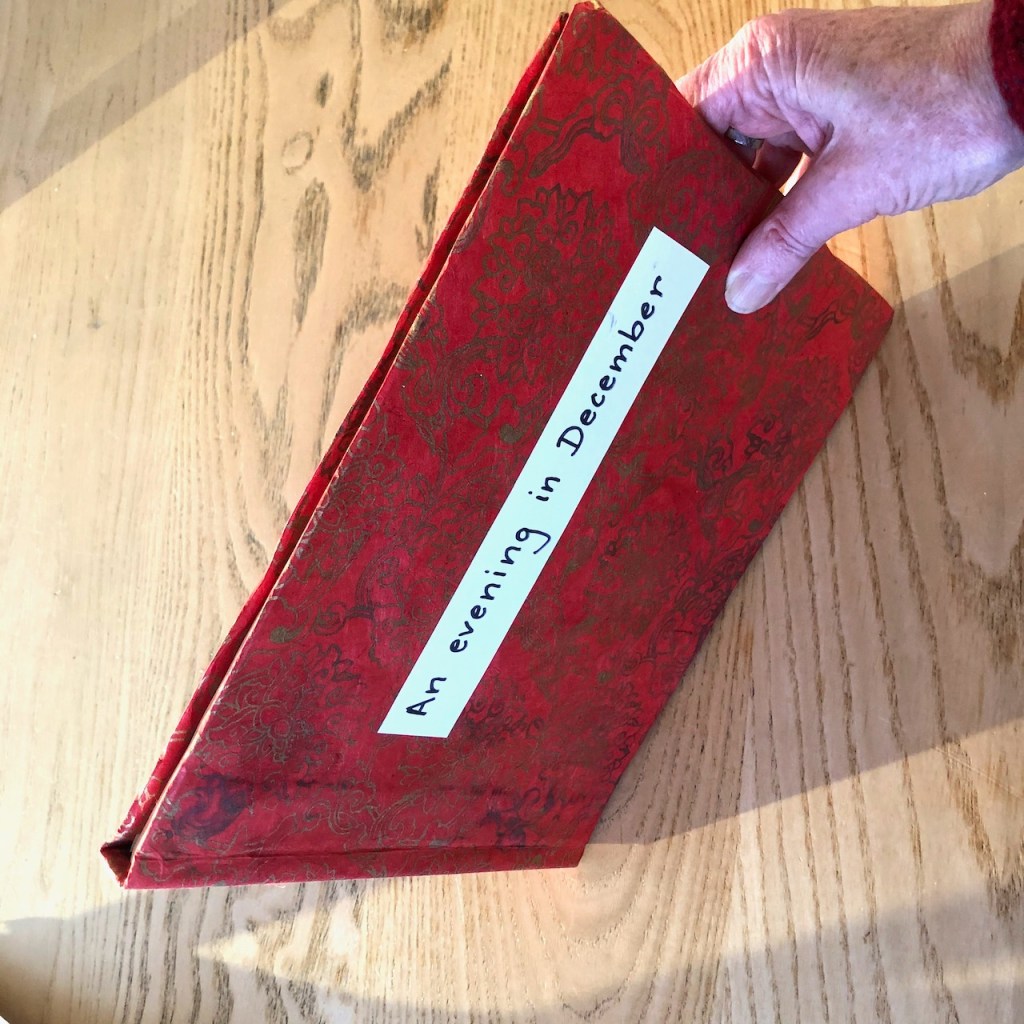
Spine successfully opens out flat.
See the wonderful paper of the cover. It shines.
Making the book.
It worked well! It remains to be seen how it fares. It’s out there now, being read and enjoyed by one of the characters in the story.
Click a button below to share this post online, email it, or print it:
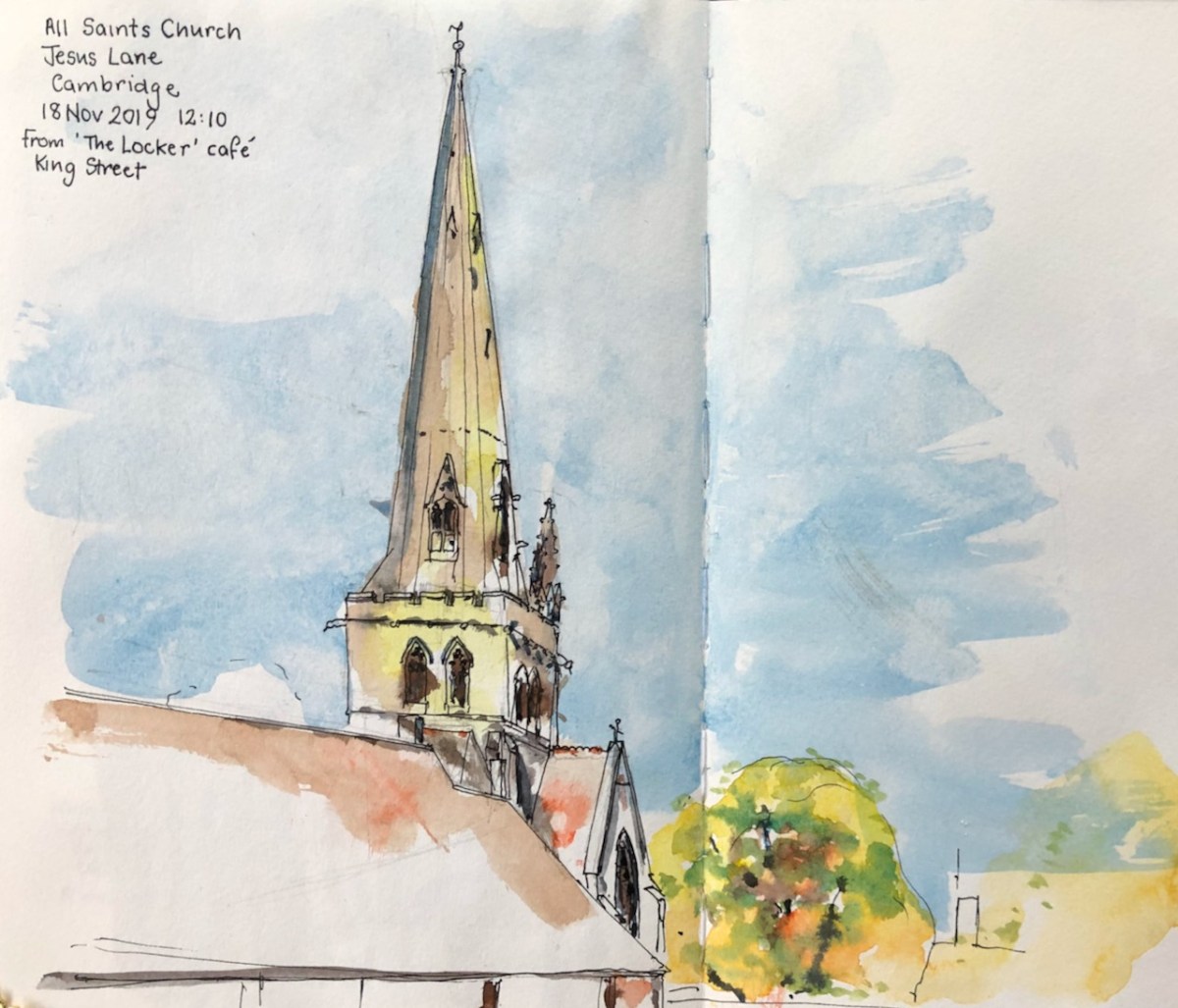
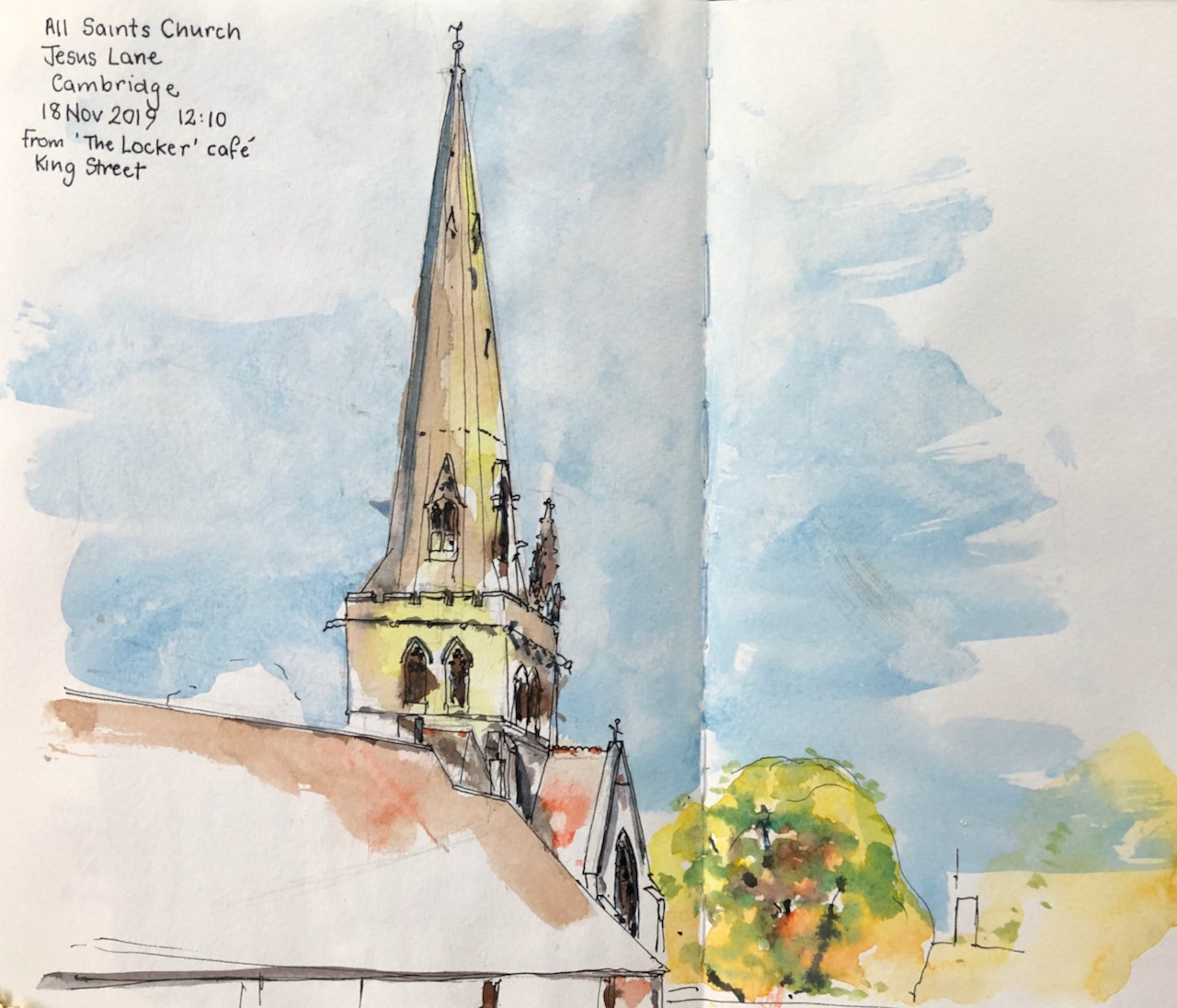
Here’s the view from a café in King Street, Cambridge.
All Saints Church Jesus Lane. Drawn in Jackson’s Watercolour Sketchbook.
This café used to be called “Clowns”. There were two Italian sisters downstairs. Now it is called “The Locker”, and the staff are different. Much to my relief, they have not messed it up. It is still a tranquil place. The coffee is excellent. There is no intrusive background music. People read books upstairs. I drew this picture looking out of the upstairs window. Behind me, on a low sofa, a man was reading two books alternately and monitoring his laptop screen. Both books were by Jorge Luis Borges.
At an adjacent table three women were making design decisions for the website of a charitable organisation. This sub-page, that on the main menu, shall we include video? They discussed titles, and the placing of punctuation marks. I was concentrating on my drawing and only heard the odd word. Then one of the women described a conversation she’d had on a previous job, for a college. A fragment drifted over to me. She had quite a loud voice. “I told them it was “Porters’ Lodge”, and not “Porter’s” apostrophe “s”, because there was more than one porter. But they told me I was American and didn’t know anything. “
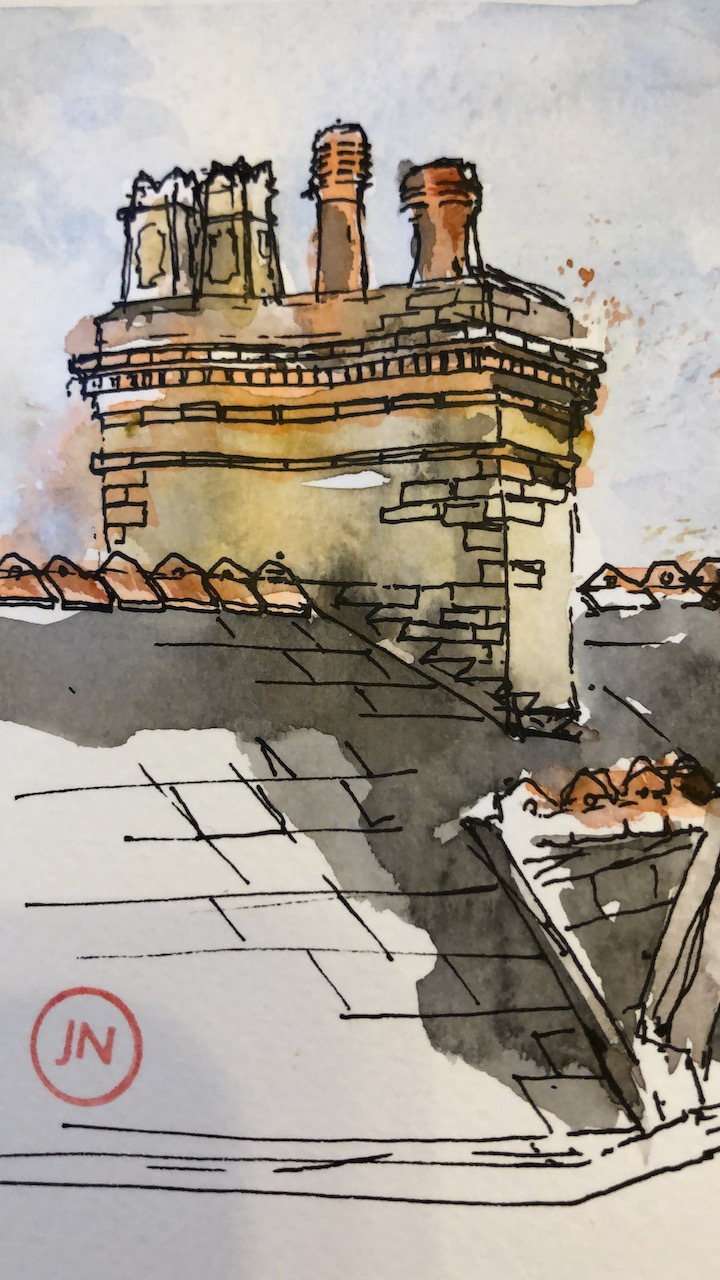
Here is a drawing of a chimney on the houses on Mill Road, drawn from a café called “Tom’s Cakes”
Chimney in Mill Road. Drawn in Jackson’s Watercolour Sketchbook.
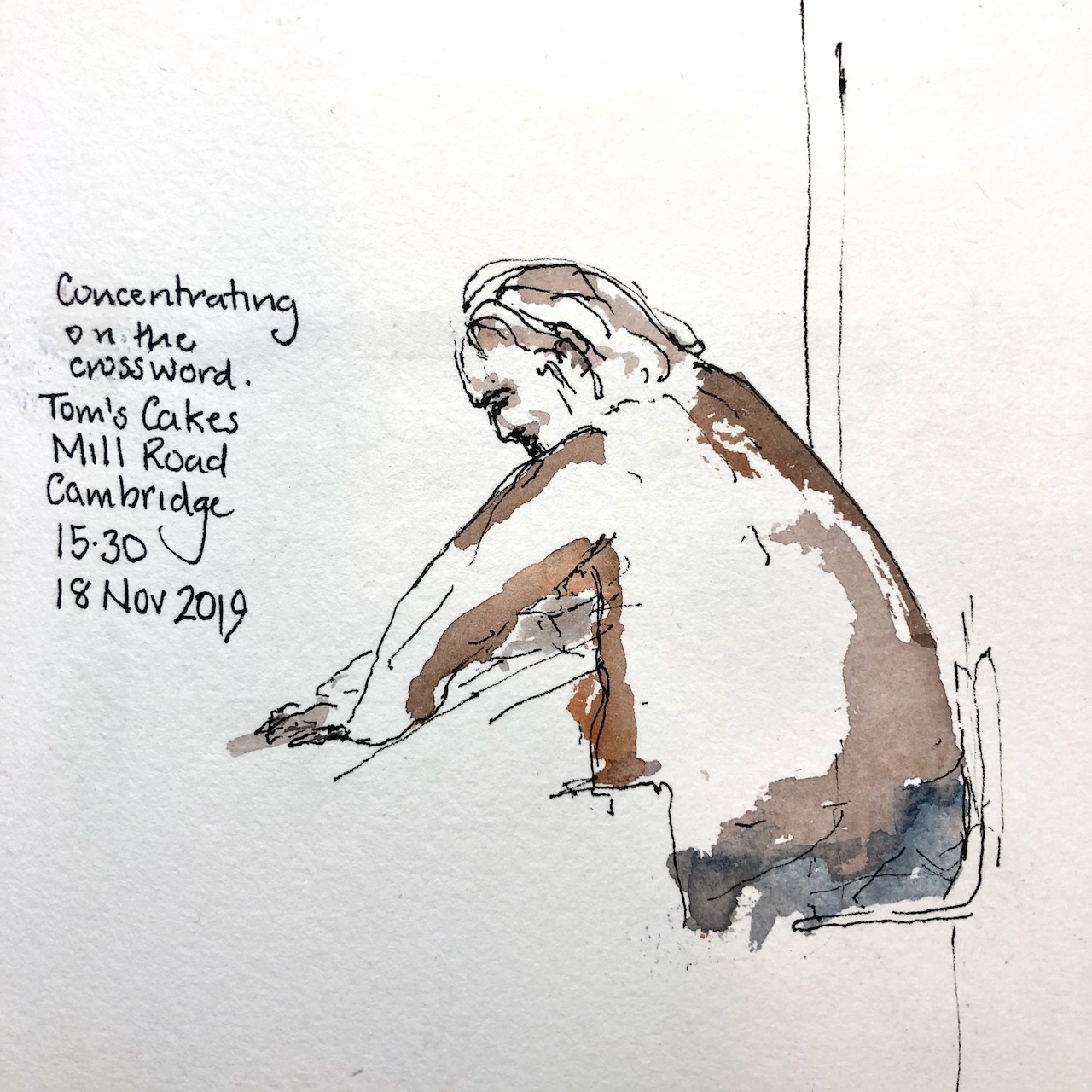
On the bench by the window, a man was completing the cross word, or engaged in some other puzzle that required his total concentration. This made him a good subject for a quick sketch.
Quick sketch in Vintage Paper Company Katazome Sketchbook, on vintage watercolour paper.
Click a button below to share this post online, email it, or print it:
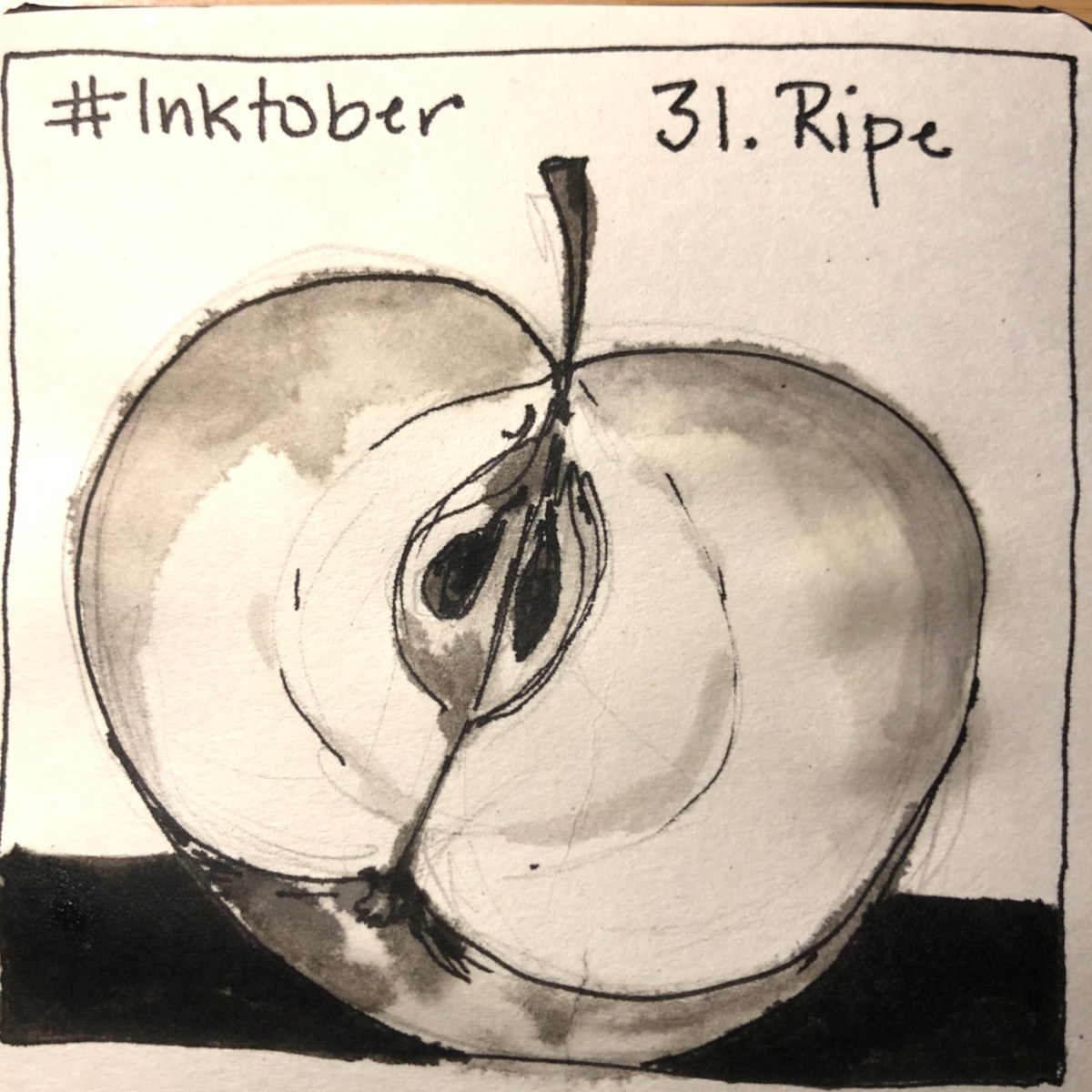
I did Inktober for the first time this year. This is a drawing challenge, described on the Inktober web page. The idea is to draw a picture, in ink, each day of October.
“Inktober is about the constraint of medium. You must draw with ink. When you sit down to do the challenge you don’t have to decide what colors you’re going to use, whether you’ll be rendering in pencil or watercolor. The challenge has stripped away all of these variables that can get you sidetracked or frustrated, allowing your creative energy to be focused straight into your drawing.” Jake Parker
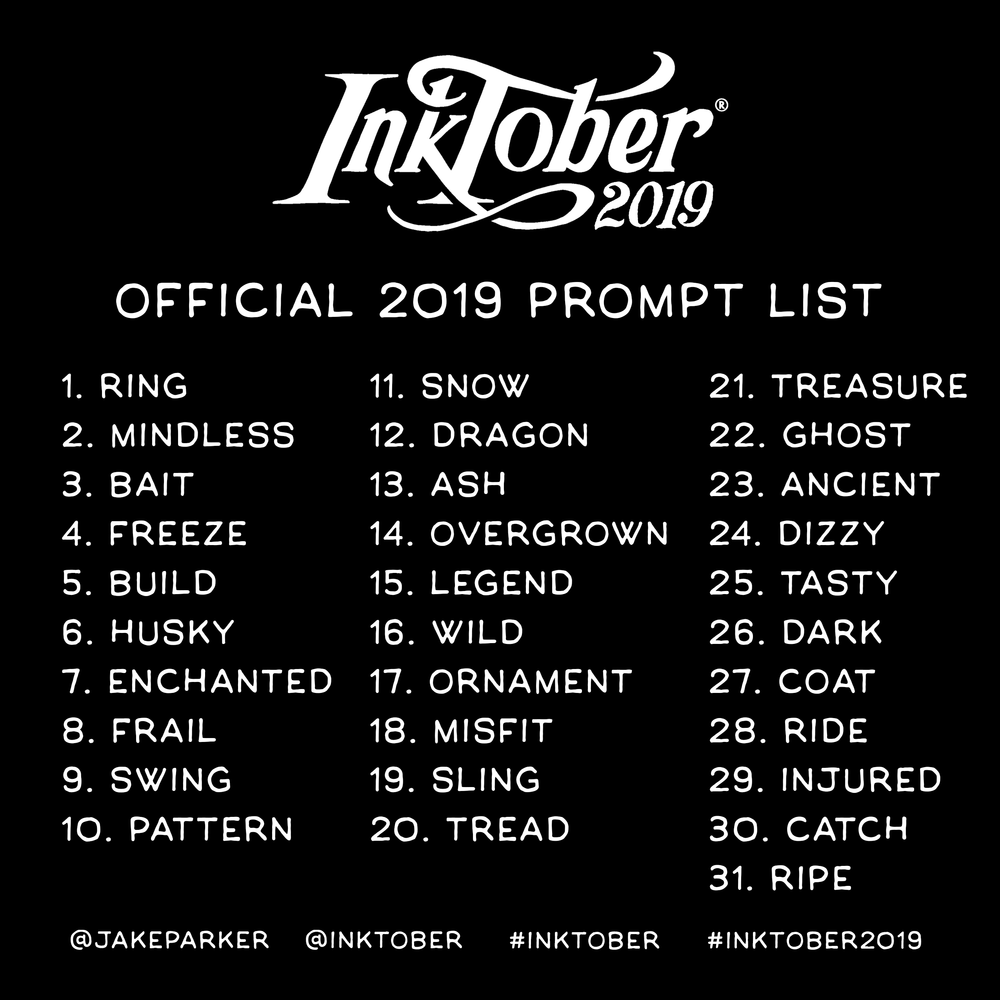
I followed the official prompts:
Here are my pictures. They are all done in black ink on white paper. The reason they appear in different tints and tones is that they were photographed in different light, depending on where I was at the time.
“Ring”. This is a ring from Fred Rich.
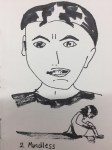
“Mindless”. I’m not quite sure what this picture means. Sadness, lack of thought.
“Bait”. Here are people digging for bait on the Isle of Grain.
“Freeze”. This is a scene from an action movie.
This is inspired by a young person I know.
A voice made in smoke and hardship.
In this strange forest, you need a dog companion.
He contemplates his condition.
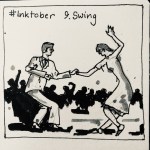
Dancing at the 100 Club.
All the people are left handed, I noticed, after I drew it.
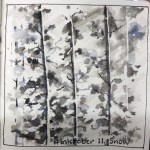
Snow in the forest.
In the October rain, I wish for a dragon to warm my hands.
This is the shape of the ash tree.
Growing up is a puzzle.
The orator.
The open sea.
A former bank building on the Goswell Road.
It’s hard to fit in.
Bloodied but not bowed.
Tough on the knees.
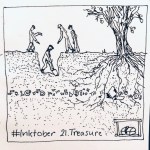
One person digging and three people issuing instructions.
Who is the real person and who is the ghost?
Iron Age fort, Britain.
London office block.
“Tasty” means “skilled” in the context of martial arts such as boxing.
Am I sufficiently hidden?
A tribute to my sister.
Fun to ride in a cart.
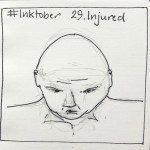
Injuries are not always physical.
The crab
Ready to eat.
I used De Atramentis document ink (waterproof) and a Sailor Fountain pen with EF nib. For the tones, I diluted the ink with water.
Here’s what I learned from Inktober:
I could do it. It was fun to do, and an achievement.
The drawings are mostly small, 2½” square. “15” and “16” are 8″ square. If I do it again, I’ll use a bigger sketchbook.
I used a sketchbook with quite soft, low quality paper. Next time: use smooth watercolour-quality paper, which will take the ink better and not buckle.
I started doing drawings of any size. These get cut to a square when posted on Instagram. If I do it again, I’ll do all square drawings.
It was a good idea to write “#inktober” and the day on the drawing.
Click a button below to share this post online, email it, or print it:
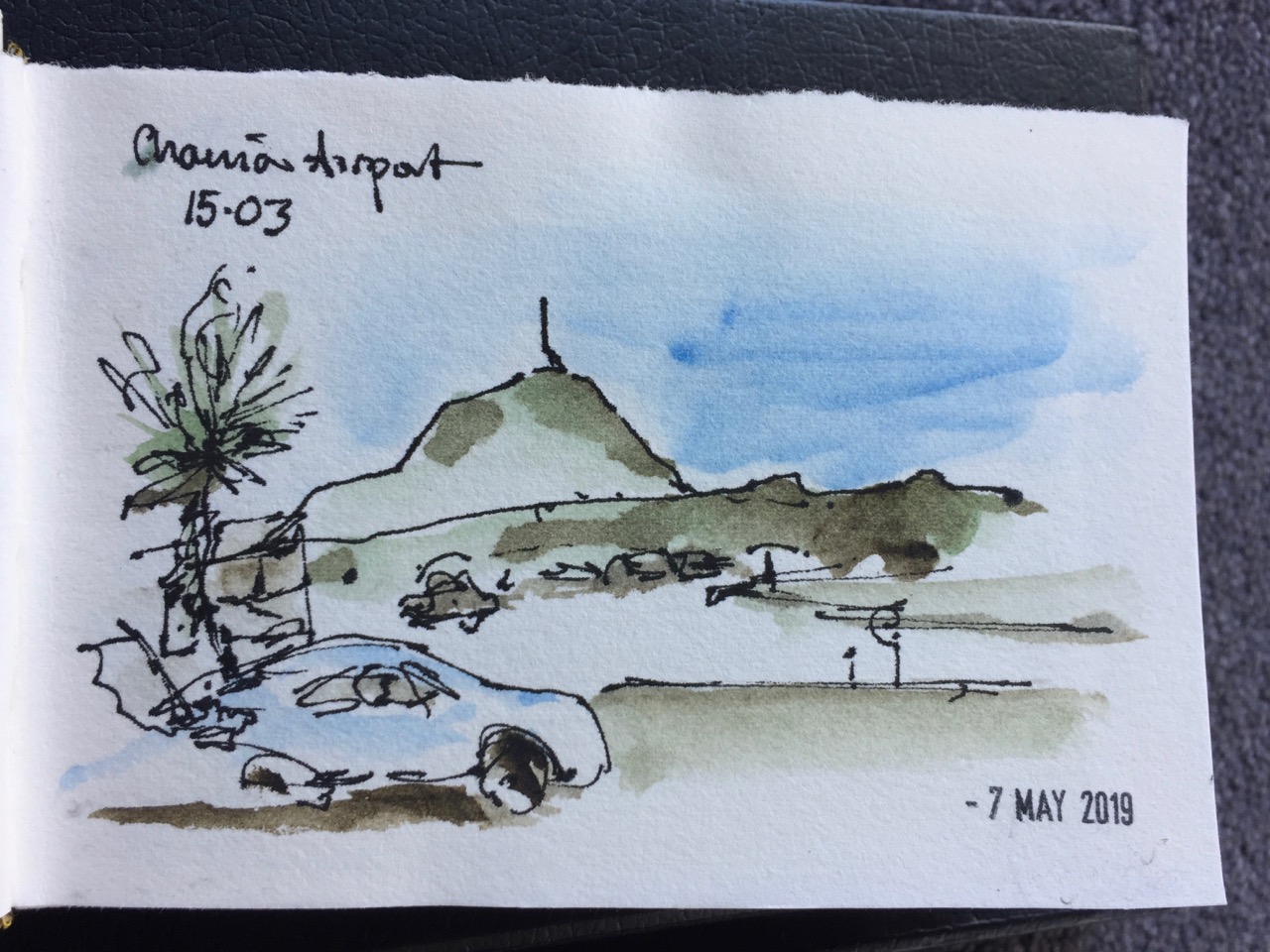
The air in Crete was warm and damp. This affected the paper. See how the ink has spread in this pen and ink sketch at the airport:
This is De Atramentis Black document ink on high quality watercolour paper, Saunders Waterford, in a small book 6″ by 4″ from the Vintage Paper Company.
After that, I used pencil and watercolour only. Here is a view of the Akrotori peninsula. The warship is lurking in the NATO base.
US Navy ship in the NATO base
We lived with insects. At a hand movement, other movements occurred, in the air, on the kitchen surfaces, on the floor. Ants made their way across the breadboard, collecting crumbs or notifying HQ of the location of the honey drip. Beetles arrived suddenly, folded their wings and inspected the floor. I tried drawing them.
Beetle
Flying insects
Two geckos made their miraculous appearance some evenings and early mornings. They emitted small squeaks.
These are images made on “sun print” paper, using plants, and cut-out paper shapes. The geckos are a species of nocturnal reptile: Hemidactylus turcicus or Mediterranean House Gecko. They are insectivorous, eating, amongst other things, moths. I wondered if they would like to live in the Barbican ducts. It must be quite warm in there, and they would be entirely welcome to devour the moths.
They stick to the walls not with suckers but with hairs on their feet. The feet of geckos are subject of intense scientific interest, I read, since these hairs are so configured that they get close to the wall on an atomic scale (10 nanometers or so). At this distance the molecules of the feet attract, rather than repel, the molecules of the wall. There is a whole compendium of physics effects which make this possible: quantum mechanical, electrostatic, surface tension. There could be an entire undergraduate course on the feet of the Gecko.
Outdoors there is landscape…
…and a garden.
I am learning to draw clouds. There were a lot of them.
I am learning to draw quickly. Here are some very quick sketches from cafés.
The grass was cut around the lower buildings in ancient Aptera, revealing arches.
Arches make poetry in the Agia Triada monastery: a pre-departure pause….
…before the airport.
Technical details
Pictures done in sketchbooks:
Small watercolour sketchbook from the Vintage Paper Company.
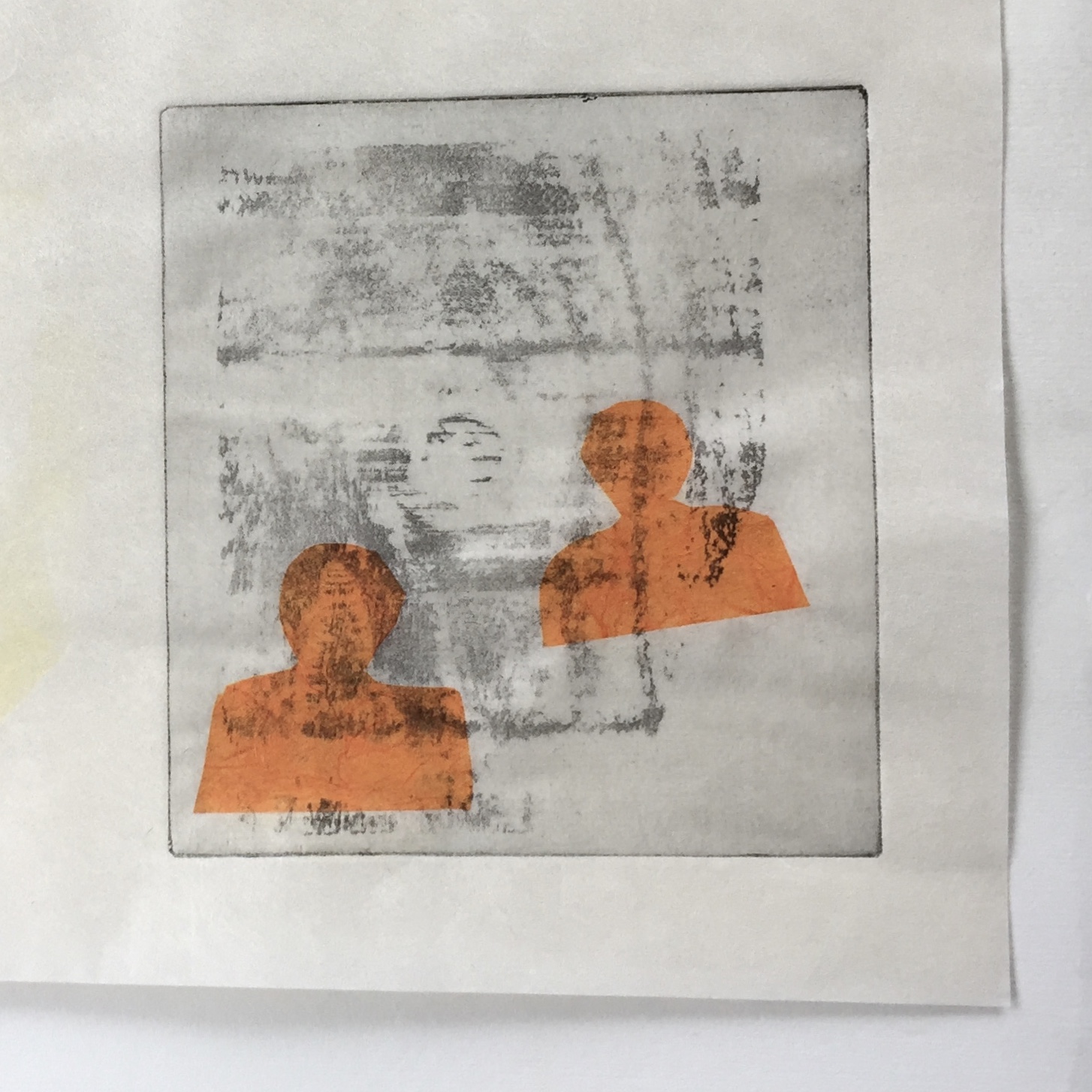
This print shows a dialogue, or perhaps an exploration. Are they perhaps looking down a tunnel? Or watching a sunset?
This is a chine collé print from a copper etched plate. The paper is thin Japanese paper brought to me by kind friends directly from “Paper Nao” in Tokyo. You can see how the plate was made on this link: Strange landscapes from wood
The plain print, with no chine collé, looks like this:
The coloured bits are placed on top of the plate, glue side up. I’ve described the process on this link: The chine collé process
Here is work in progress:
Ink: Gutenberg black from Intaglio Printmaker.
Glue the little bits of paper on the *top*. Note the tweezers.
The coloured paper is “fibre silk” paper from “GreatArt.com”
I lift it with tweezers and put it to dry on another piece of newsprint. When dry, I move it carefully to the plate: glue side UP.
Click a button below to share this post online, email it, or print it:












































 Jane Sketching