The Cottage, 3 Hayne Street EC1

Hayne Street is a North-South lane just to the East of the new Crossrail station at Smithfield. It has been closed for some time, while the station was built and the office block on top of the station was constructed.

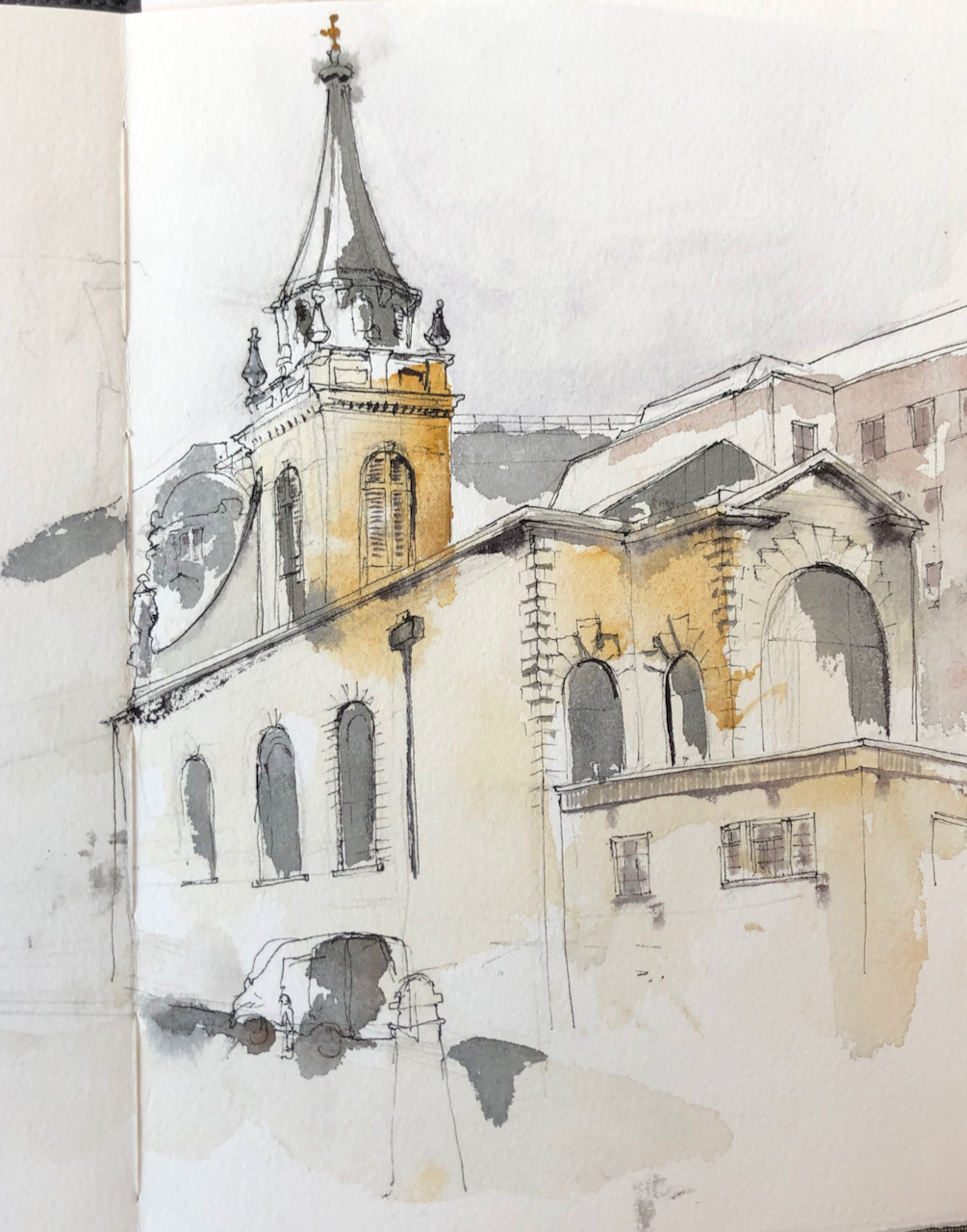
On the west side of Hayne street is this house:

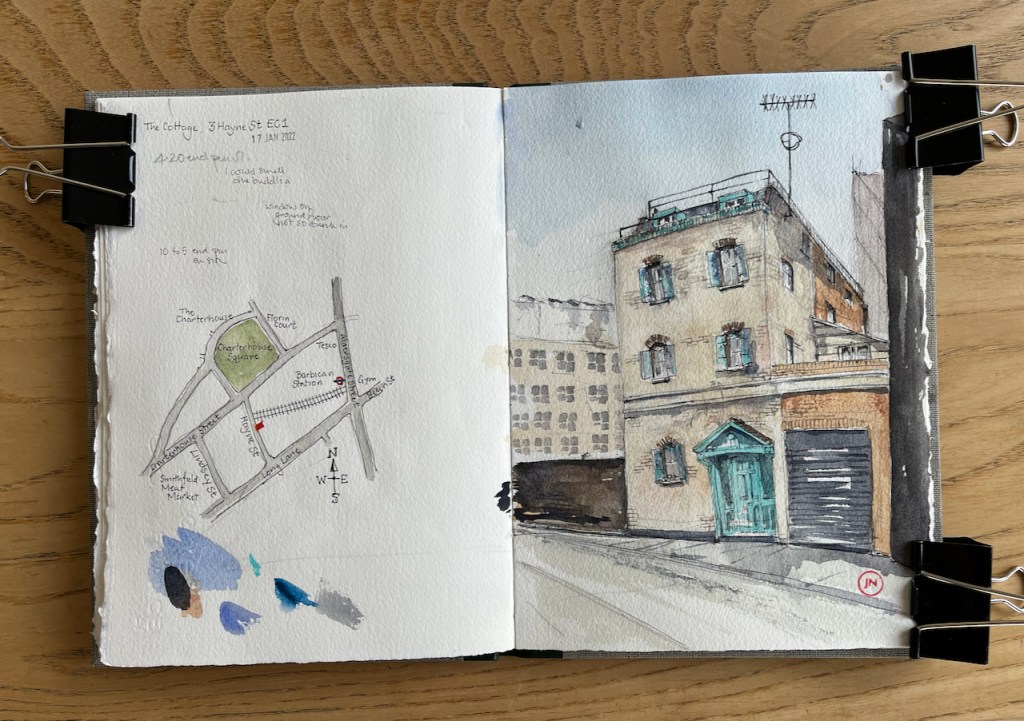
The Cottage, Hayne Street EC1, 17th January 2022, 5pm. 10″ x 7″ in Sketchbook 11

As I sketched, around 4:30 to 5pm, construction workers were coming off shift from the CrossRail site. They walked past me, lighting cigarettes, jostling, and talking in various languages. One person stopped to talk to me: “It’s a funny old building!” he observed. I agreed that it was, and wondered if anyone lived there. “I’ve not seen anyone go in or out,” he told me, “And I’ve been here four weeks.” Another person joined the conversation.

“I’ve seen a car,” said the newcomer. He indicated the black roller door, and made a sweeping gesture, showing how the car went in and out.

We all looked to see if there were lights in the windows at the side of the house. There were none. “It’s railway property,” declared the first person.

“It’s big, isn’t it?” said the second person, “It goes way back!”.

It does go way back. I’ve tried to show this in my drawing.

It’s a bit of a miracle that it has survived. This house is about 150 years old. There are jagged modern offices all around it. The Pevsner guide has a small paragraph on Hayne Street, in the section labelled “Long Lane and Hayne Street”. He says this:


Long Lane and Hayne Street
Long Lane first recorded in 1440[……]
The N side, shorter because of the market buildings at the W, is mostly undistinguished medium-sized post-war offices. Not 18-19 are by Morrison, Rose & Partners, 1972-4, brick with smoked gland window bands. The upper storeys step back down Hayne Street, named after its developer in the early 1870s. Of this date the unpretentious brick warehouse at Nos. 8-10 W side and No. 3 opposite, a little house perched on the brink of the railway cutting.”

The Buildings of England London 1: The City of London by Simon Bradley and Nicolaus Pevsner (first published 1997, republished with corrections 1999) page 546

The “unpretentious brick warehouse” which was on the west side of Hayne Street in 1999 has now been replaced by the building above CrossRail. The “little house” remains.

It was there in 1873. At that time it had neighbours! See this map, from the marvellous British History online resource.

‘Charterhouse Square area: Introduction; Charterhouse Square’, in Survey of London: Volume 46, South and East Clerkenwell, ed. Philip Temple (London, 2008), pp. 242-265. British History Online http://www.british-history.ac.uk/survey-london/vol46/pp242-265 [accessed 17 January 2022].

Aldersgate Street Station is now Barbican Station. See the huge number of railway lines in 1873. Today there is just one line on the surface. The new CrossRail line is 40metres below.

Here is a modern map of the area:
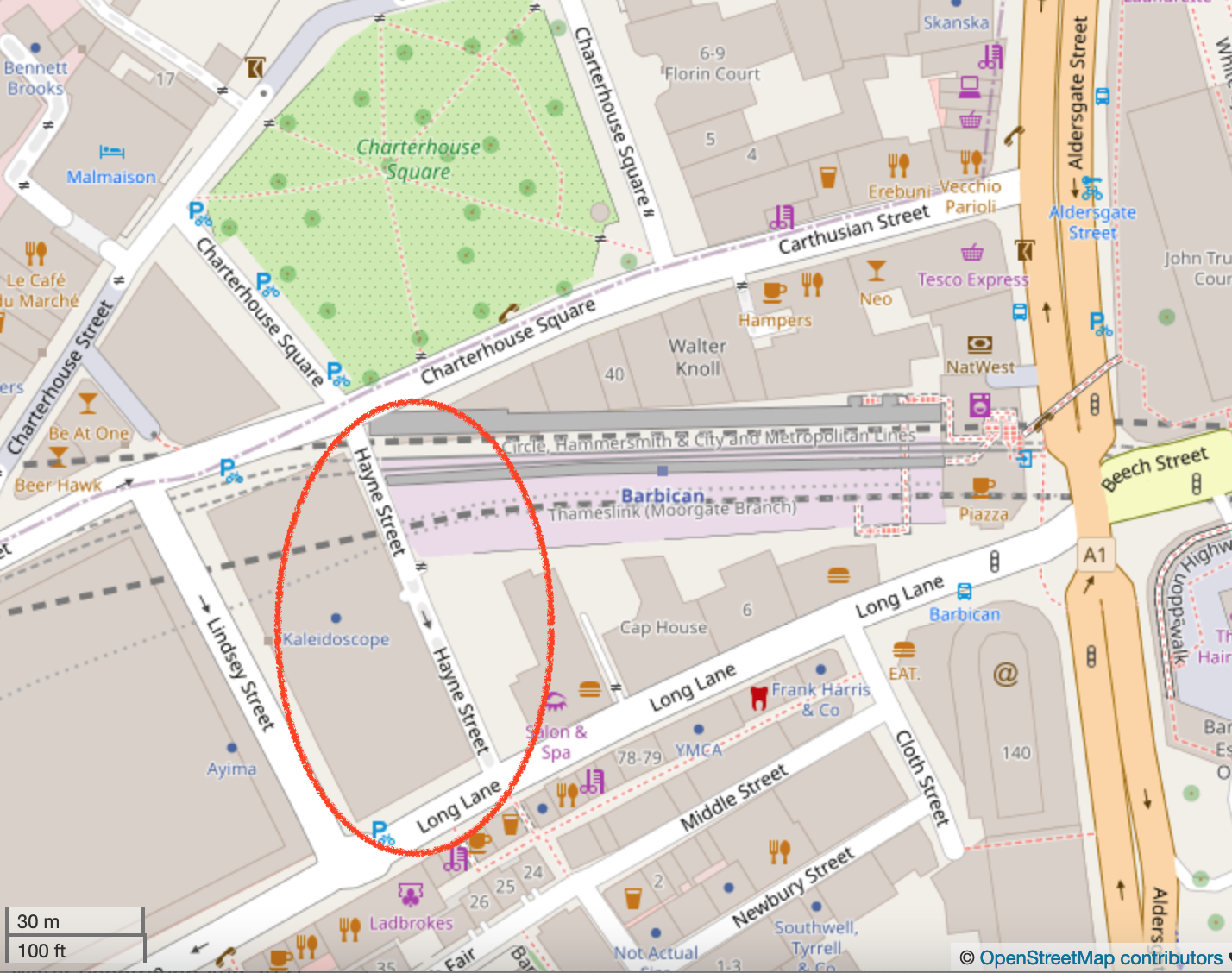
Hayne Street Area 2022, from Open Street Map, (c)OpenStreetMap contributors

Here are some views looking up and down Hayne Street, and my sketch map and sketching location. Click to enlarge.

3 Hayne Street has intrigued people. Mr Tim Dunn on Twitter found an “environmental statement” from Crossrail saying they were going to demolish the building. But it doesn’t seem to have happened, so far…..Mr Dunn’s research also contradicts the construction worker’s assertion that the building is “railway property”. From what he’s found, it’s privately owned. Here is his Tweet thread:

@MrTimDunn on Twitter, August 8th 2021

“LookUpLondon”, aka Katie Wignall, a tour guide, published an article about it on November 22nd 2021, here: https://lookup.london/cottage-3-hayne-street/

“The City Gent” published photos of The Cottage in his “Symbols and Secrets” blog on the 6th of January.

I’m glad so many people appreciate this strange building in a back street.
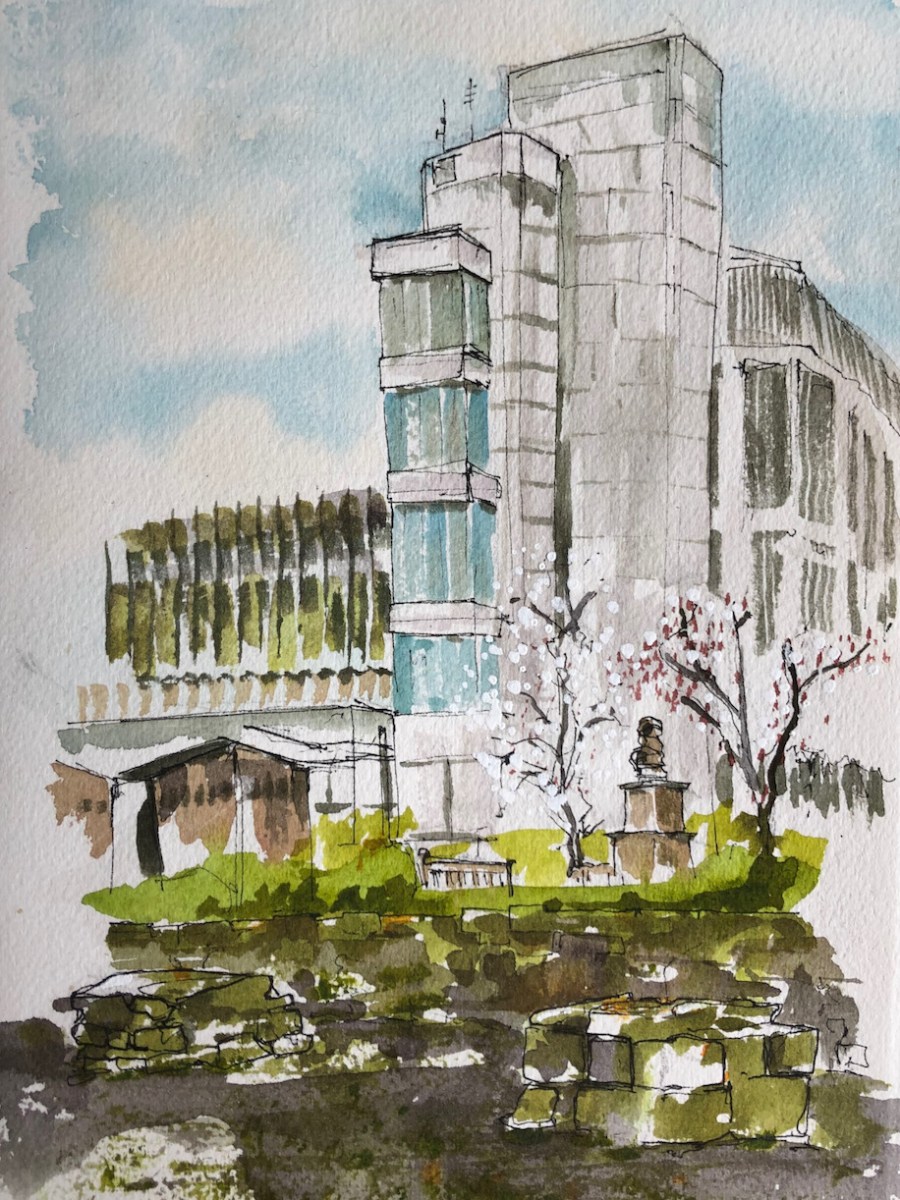
I have sketched in this area before. The building in the back left of my picture is on the other side of the railway line. It is now swathed in plastic and being restored or redeveloped. I sketched the West edge of this building in April last year.
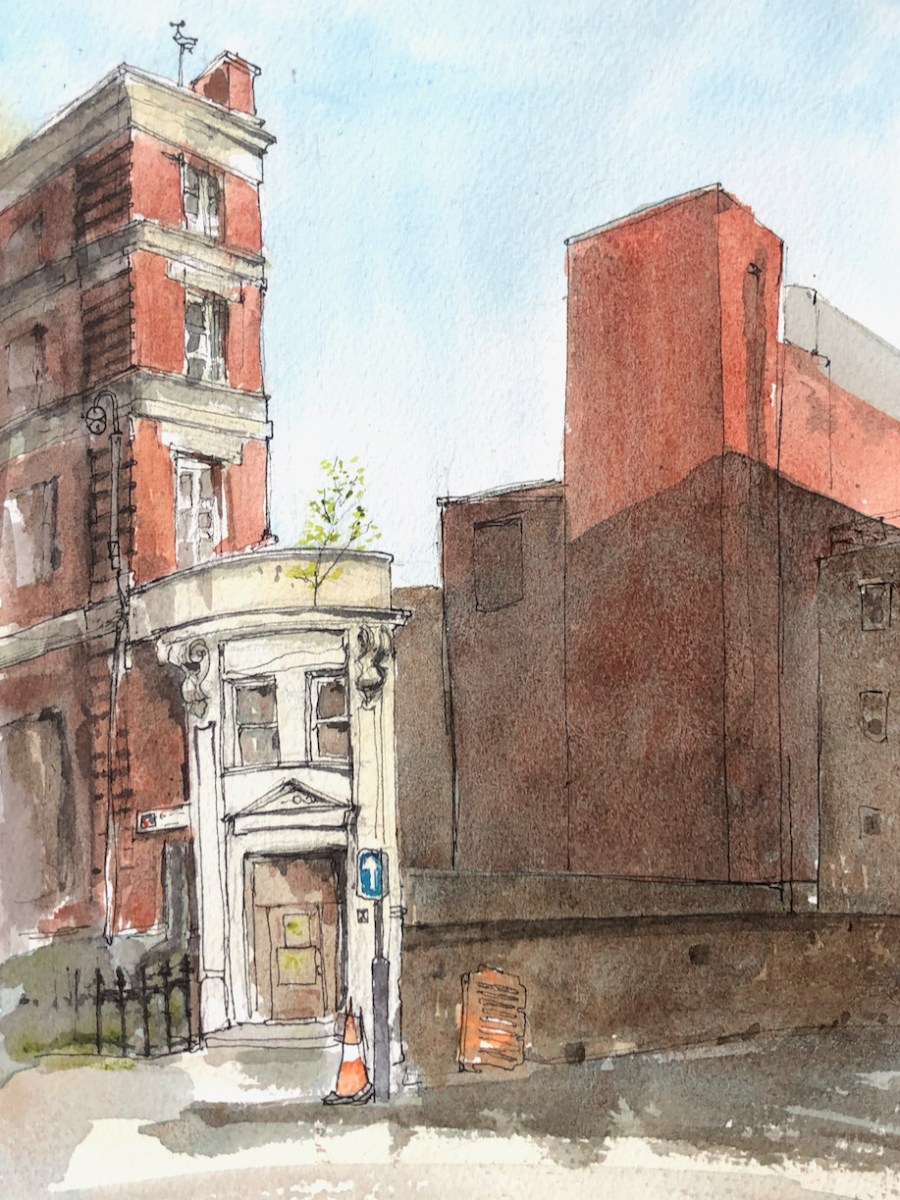
No. 33 Charterhouse Square EC1

This is a little white building I always enjoy walking past. It is the westernmost end of a thin terrace of warehouses and showrooms, lodged in a triangle between the road and the railway. As I passed it the other day I saw that the tree which has taken root above the door was putting…

Read more about this sketch

Update (17 September 2023): see this marvellous 3D model:

https://sketchfab.com/3d-models/hayne-street-house-c2668c5414f24959a04fa1eb513e149d

https://sketchfab.com/3d-models/hayne-street-house-c2668c5414f24959a04fa1eb513e149d

Thanks to Nicolas Thompson @nick.thompson.suffolk on Instagram for drawing my attention to the 3D model.
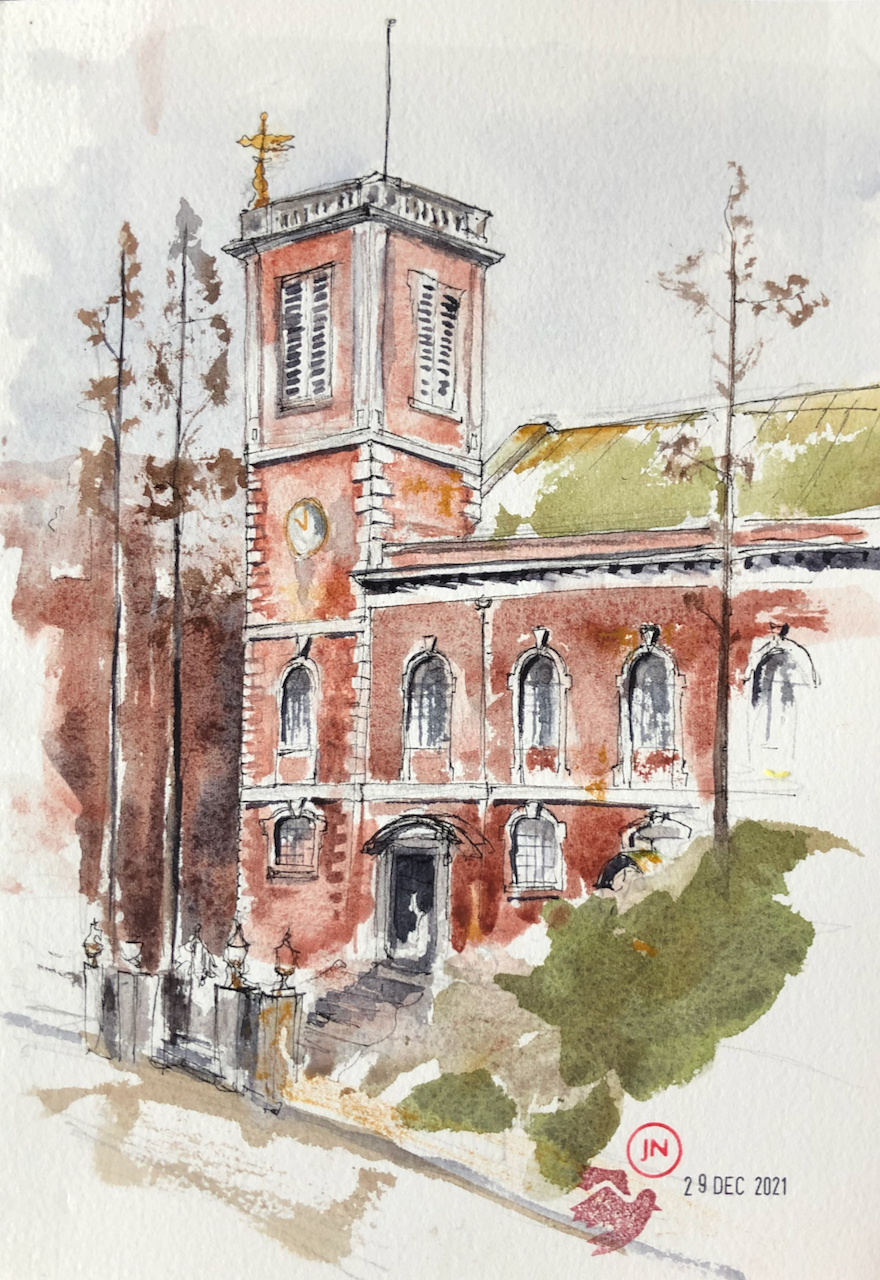
St Andrew-by-the-Wardrobe EC4

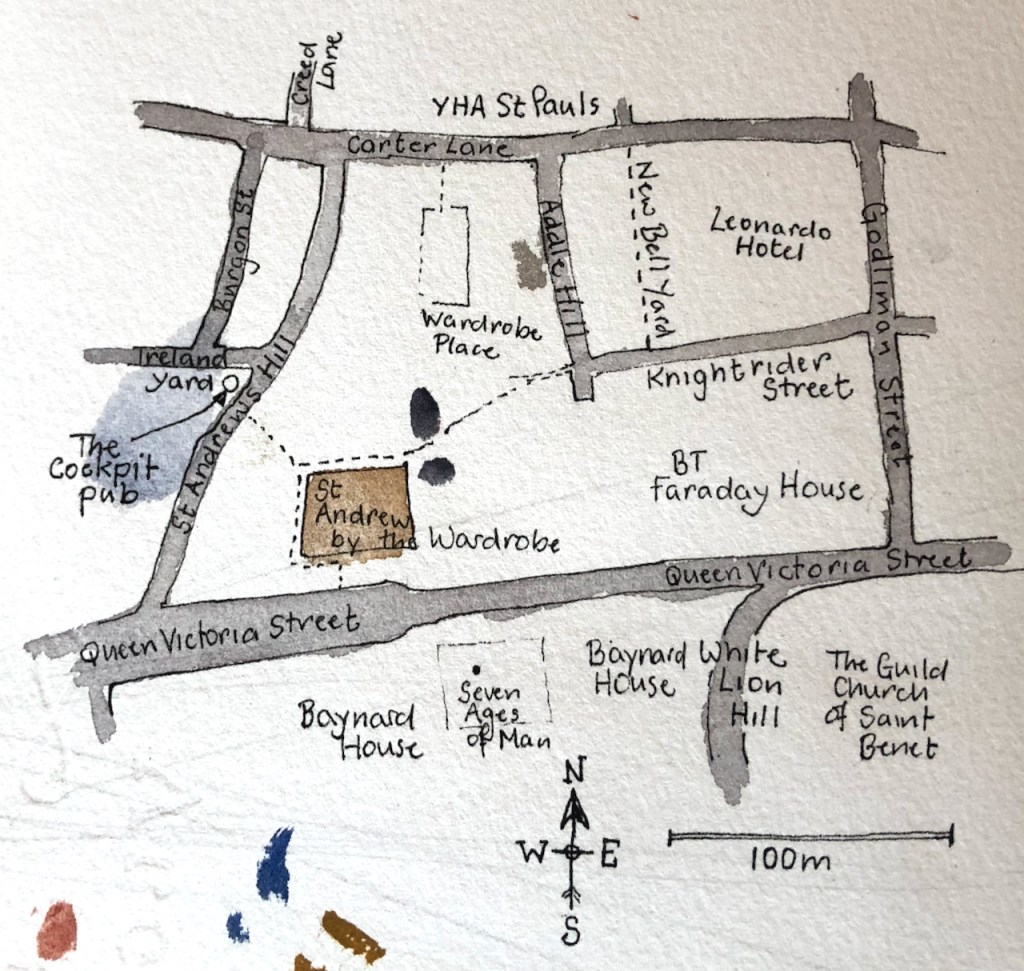
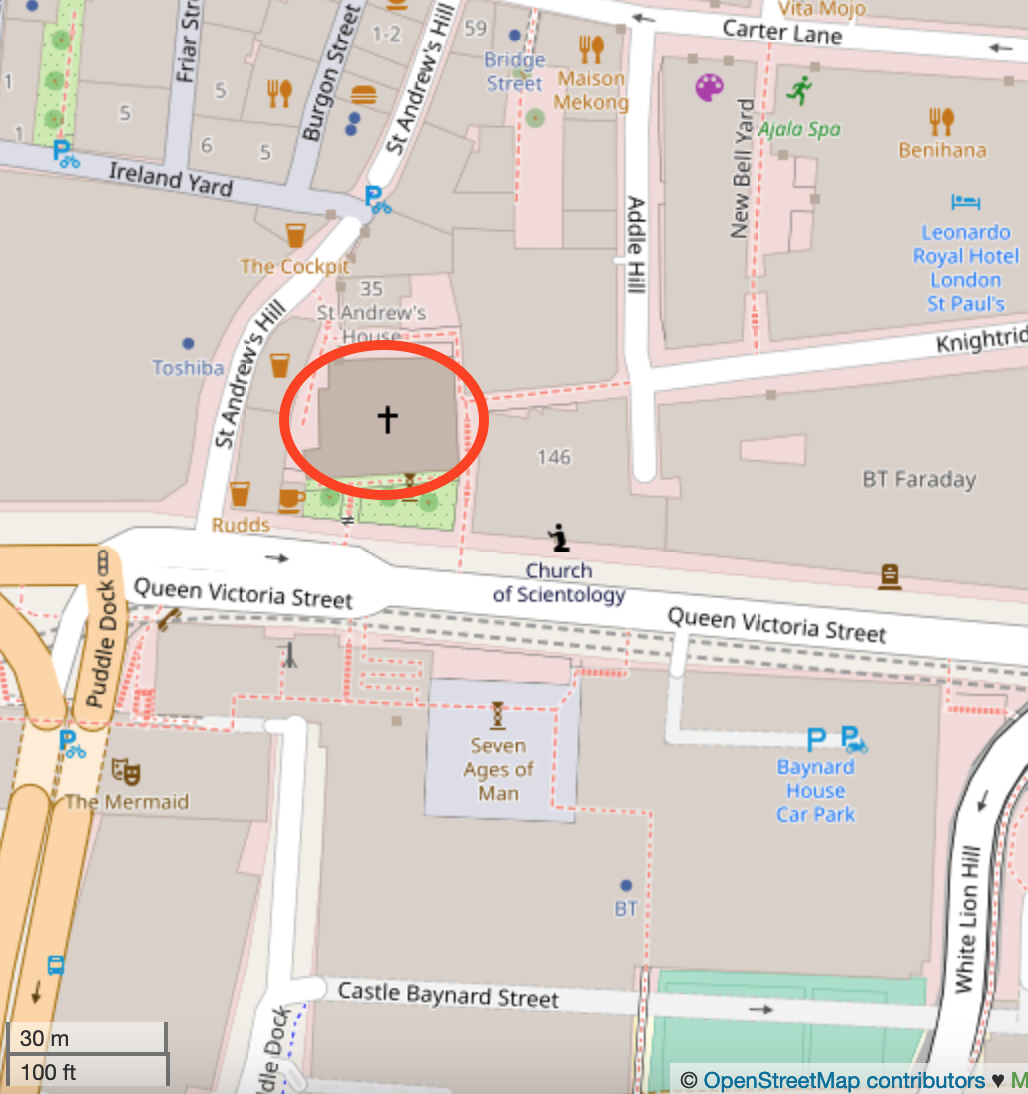
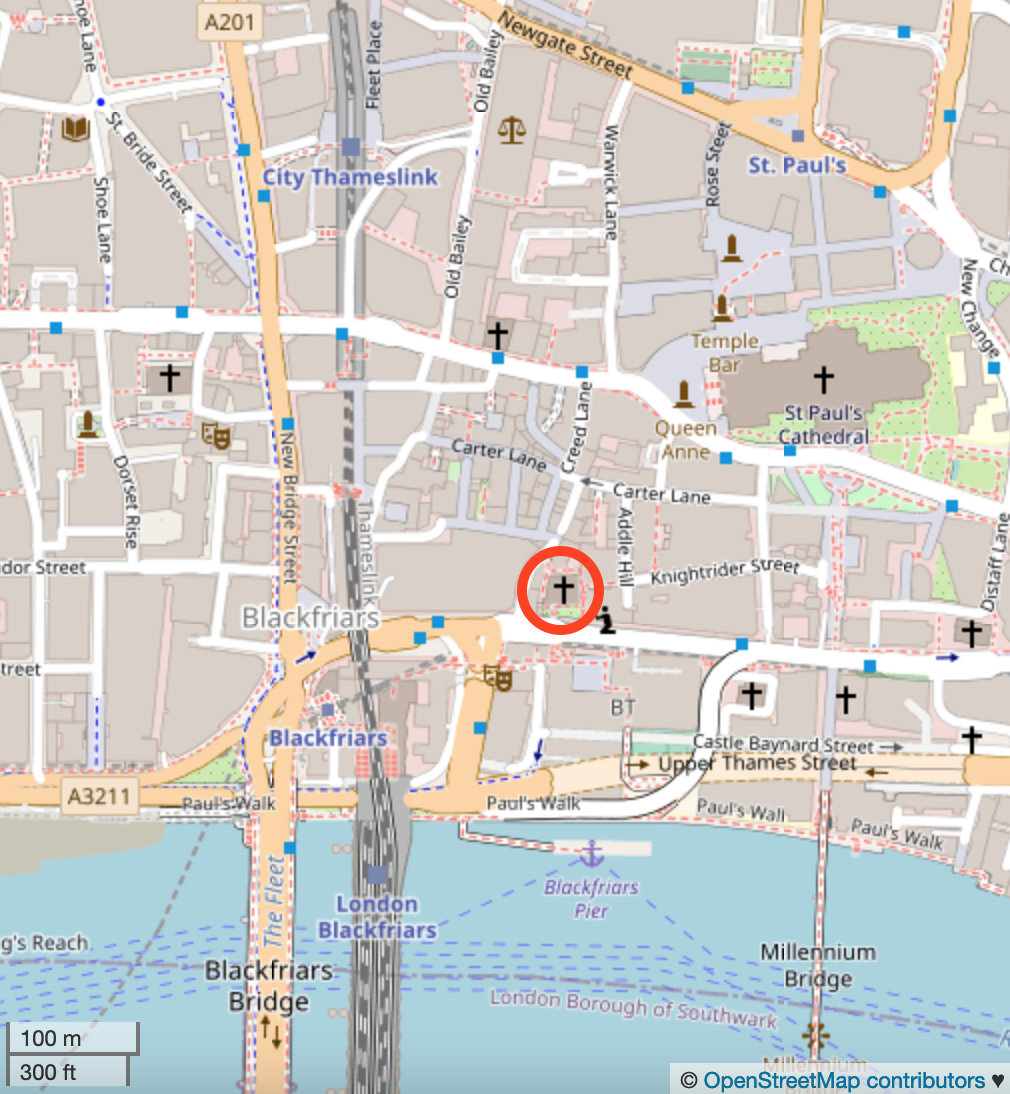
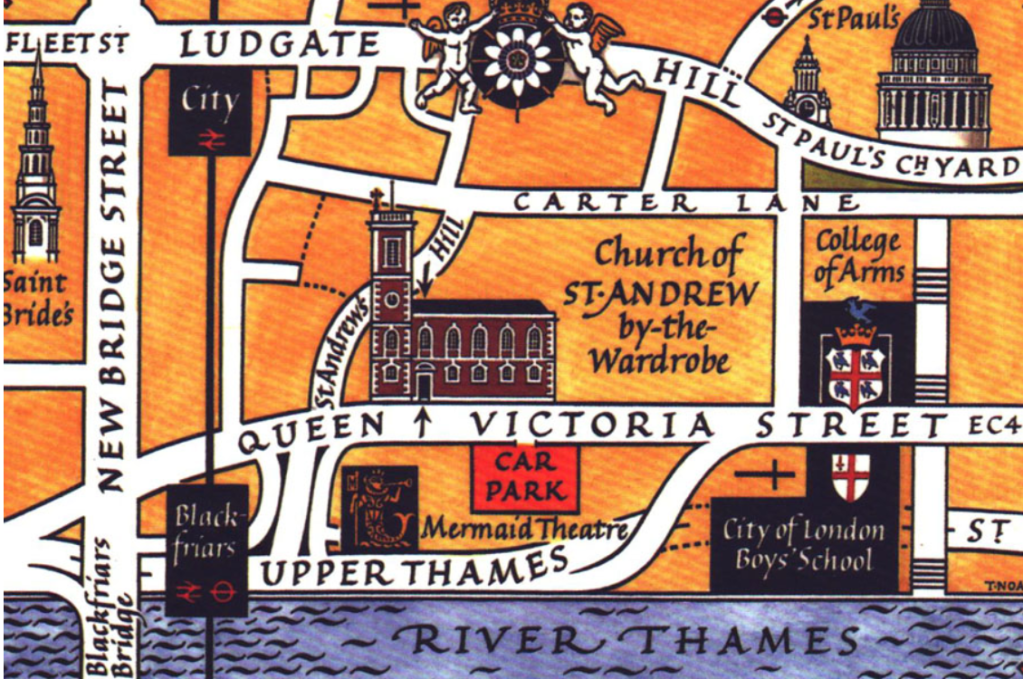
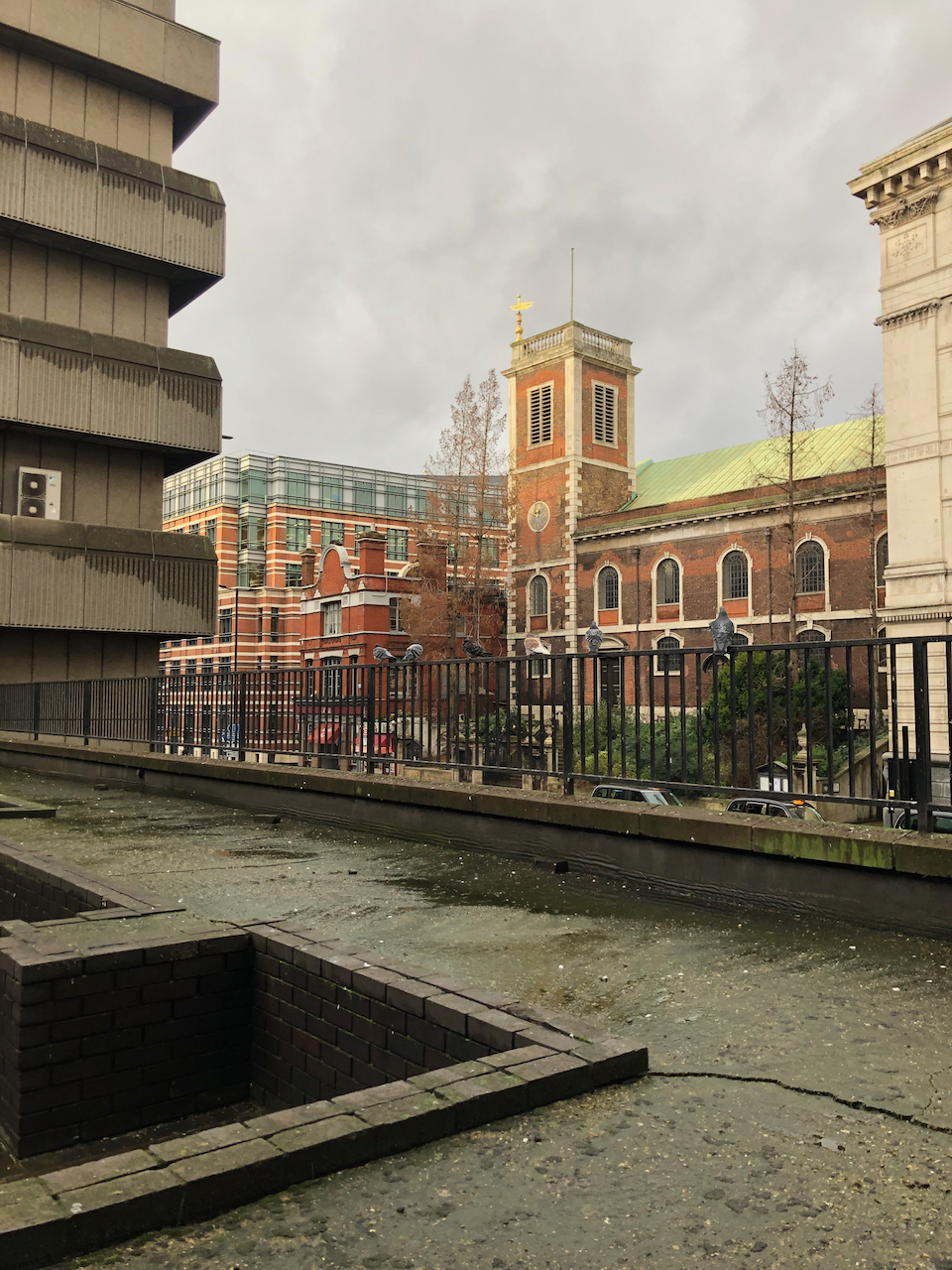
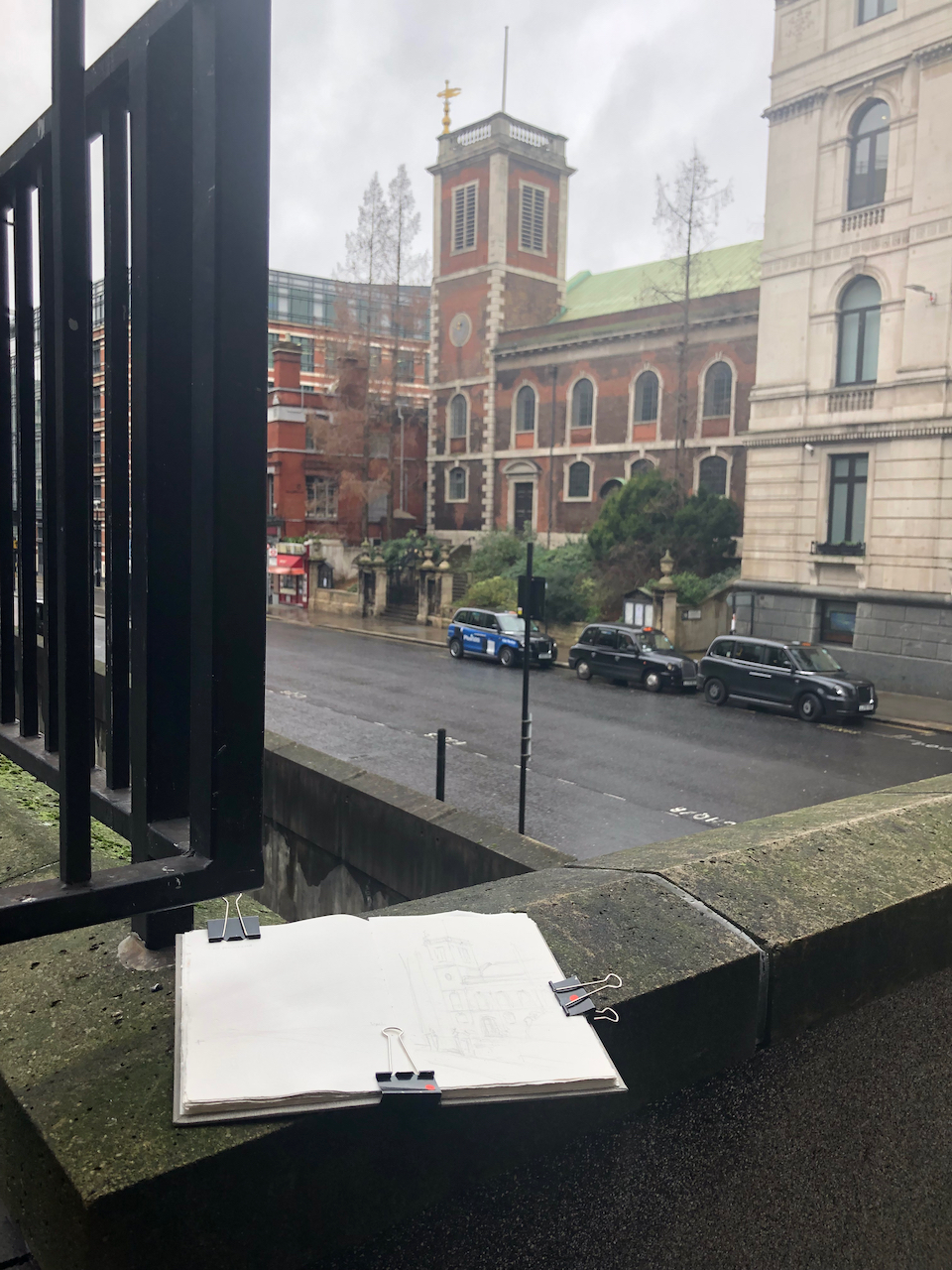
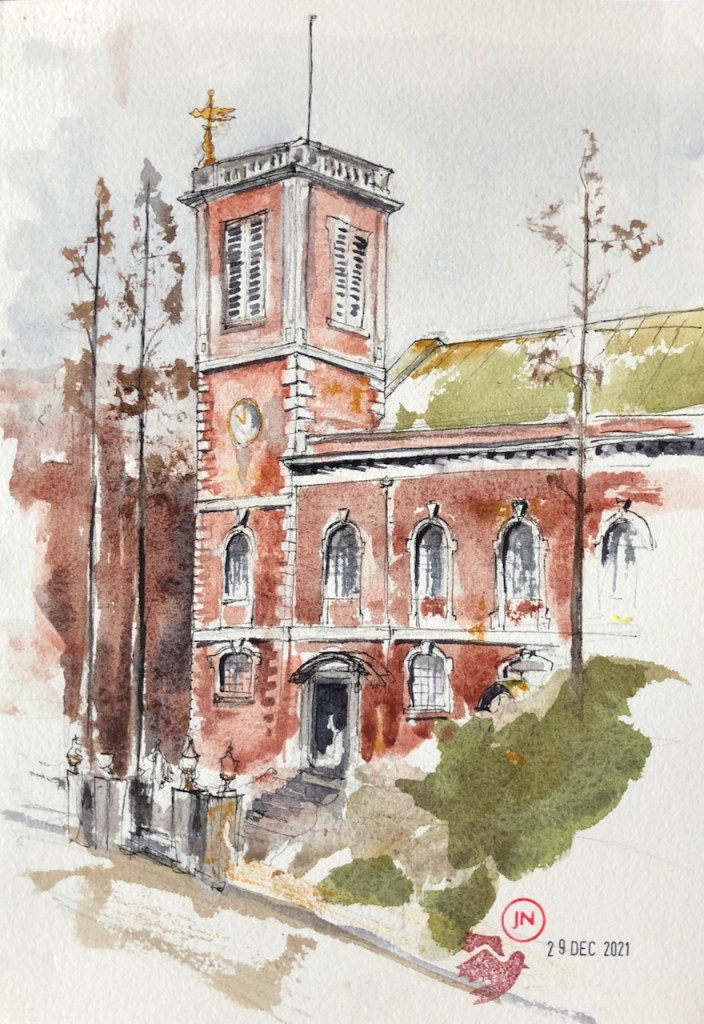
This lovely church is on Queen Victoria Street, a busy thoroughfare in the City of London.

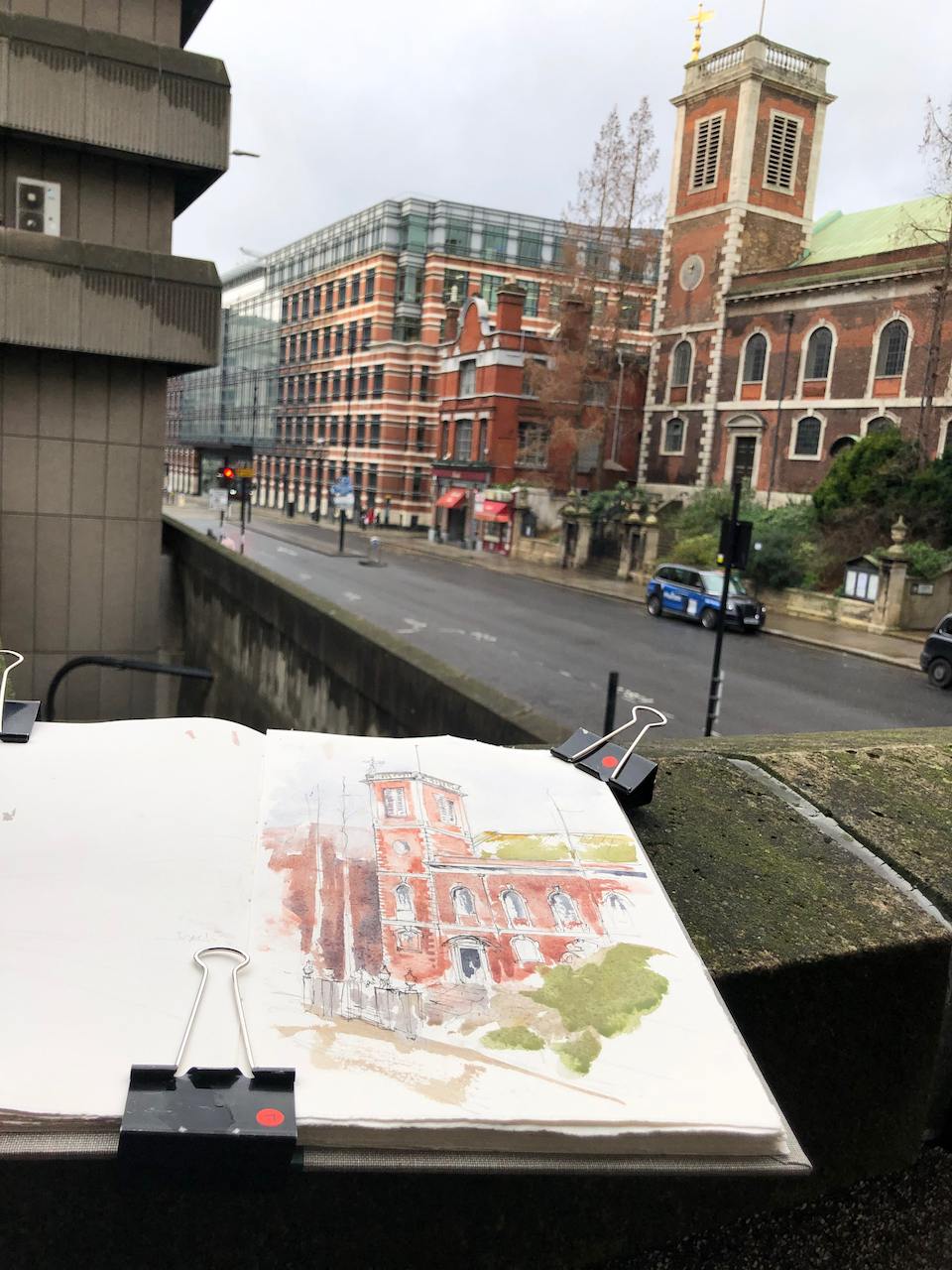
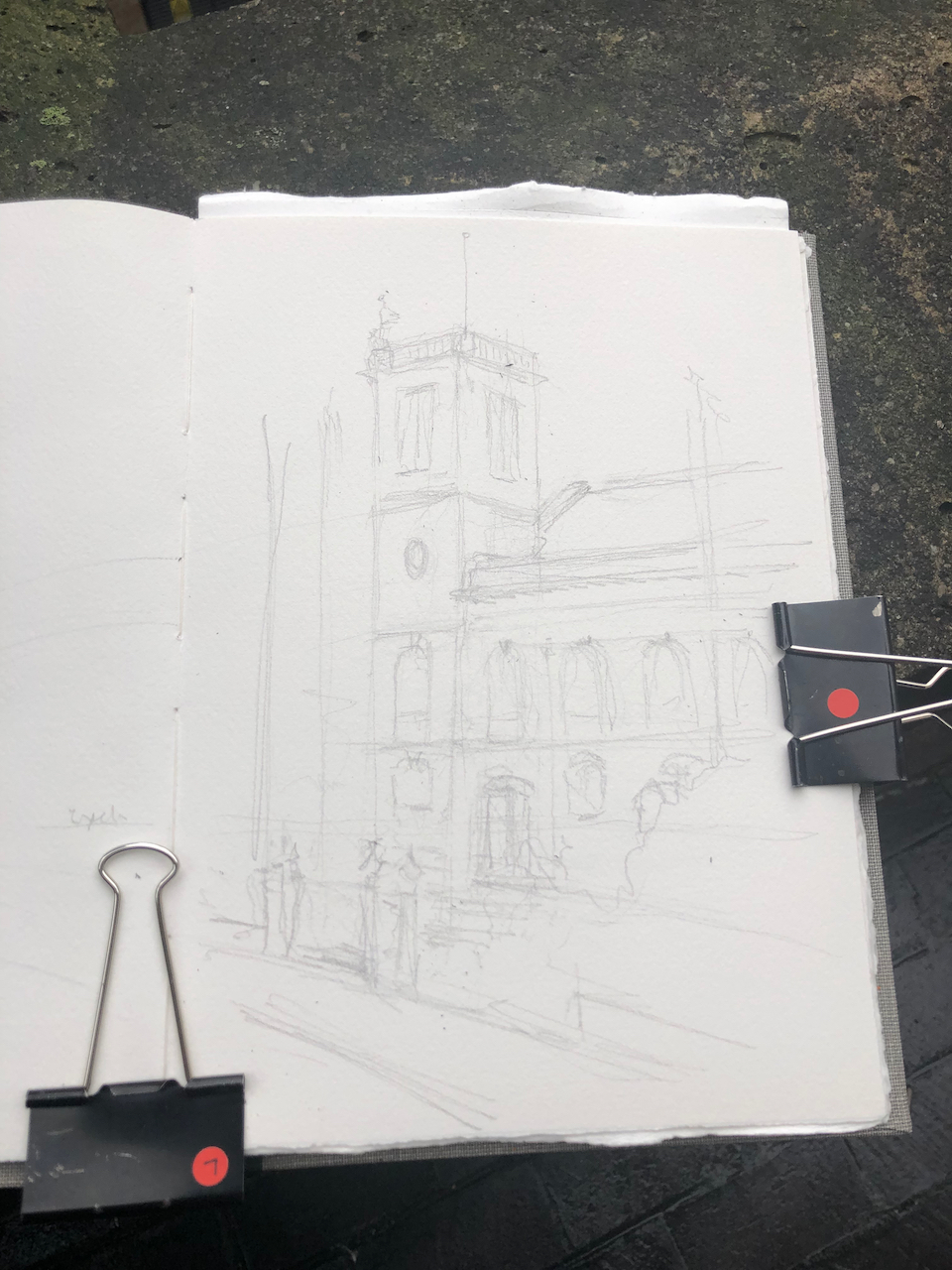
St Andrew by the Wardrobe EC4, 29th December 2021 2pm. 10″ x 7″ in Sketchbook 11

This church was first recorded in 1244, destroyed in the fire of London 1666, rebuilt by Christopher Wren in 1685-93, then destroyed again in the 1939-45 conflict, rebuilt again, and re-hallowed in 1961. It is now closed for refurbishment, and due to reopen in May 2022. When it re-opens it will become the London Headquarters of the Egyptian Coptic Orthodox Church, this use being shared with the Anglican parish activities. I read this news on the church website.

Note the magnificent trees! These trees should feature on any London Tree Tour. I think they are larches but I am not an expert.

Yesterday, London was quiet. I sketched the church from podium level on Baynard House on the other side of the road. Baynard House is a 1970s office block currently occupied by BT (British Telecommunications, as was). Next to St Andrews on the East is the Church of Scientology. On the West side of St Andrews is a cocktail bar, Rudds.

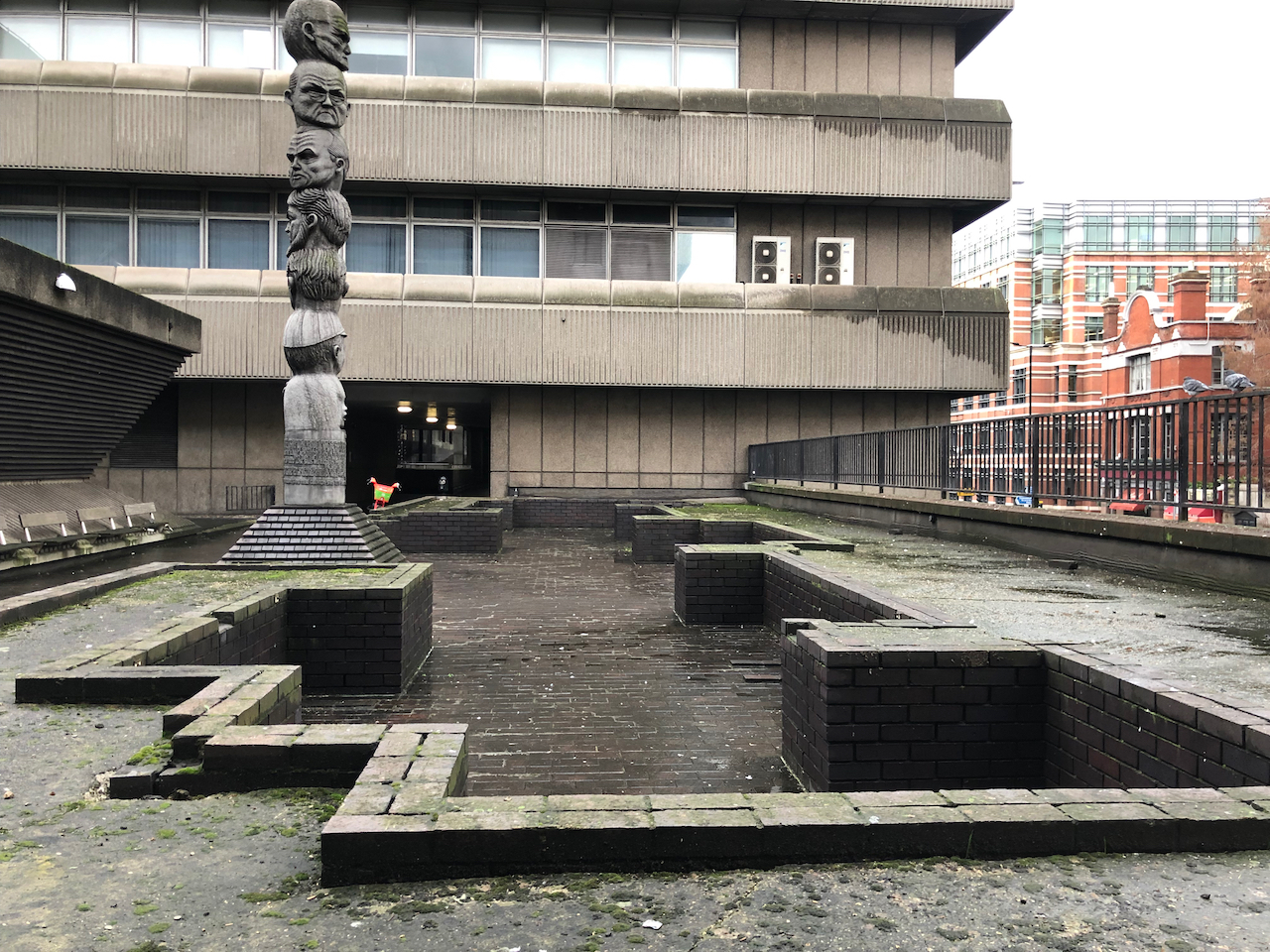
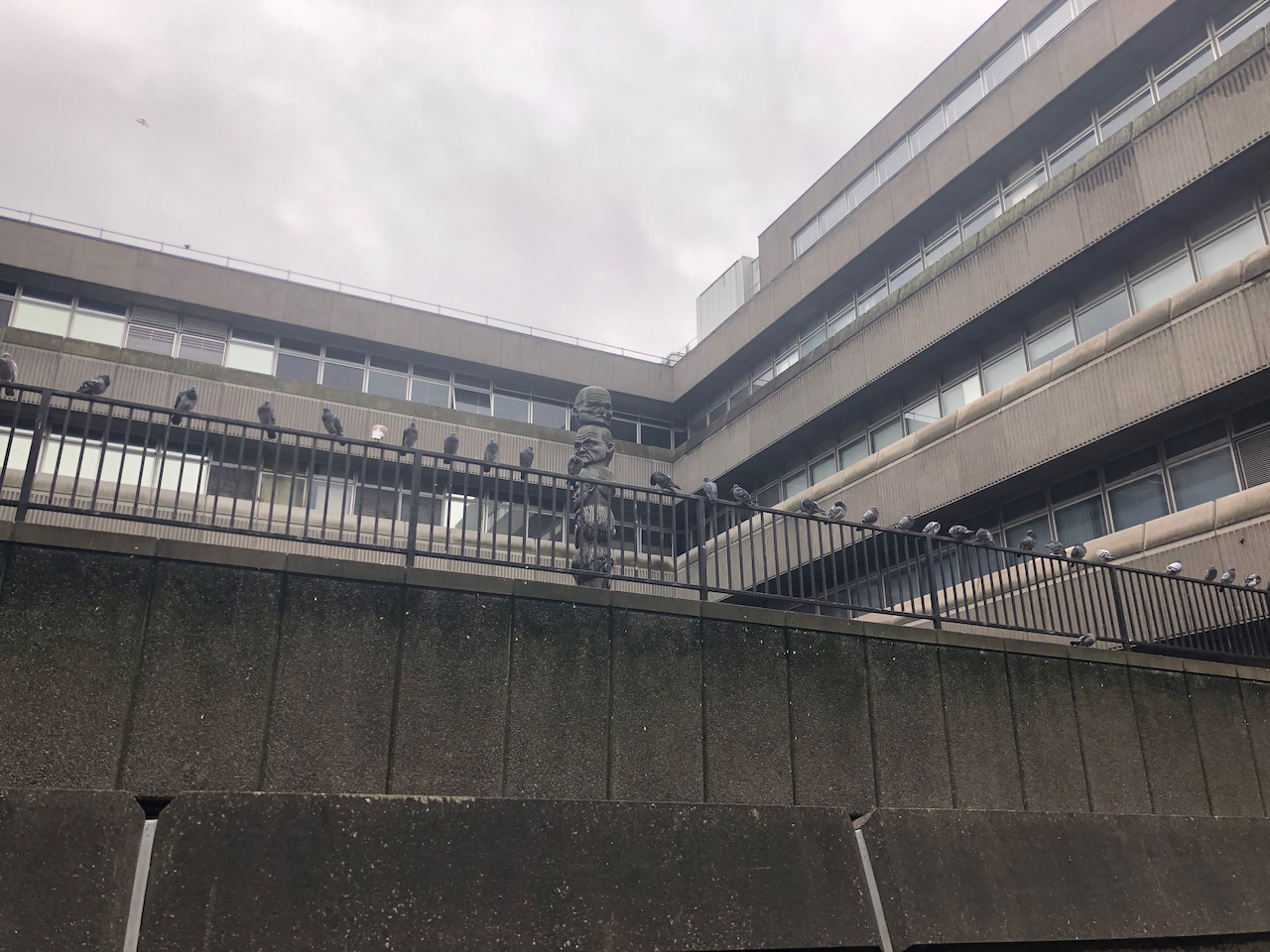
Baynard House, where I was sketching, is a strange and mysterious place. There is a podium-level walkway through the block. There are odd structures, like remnants of a lost civilisation.

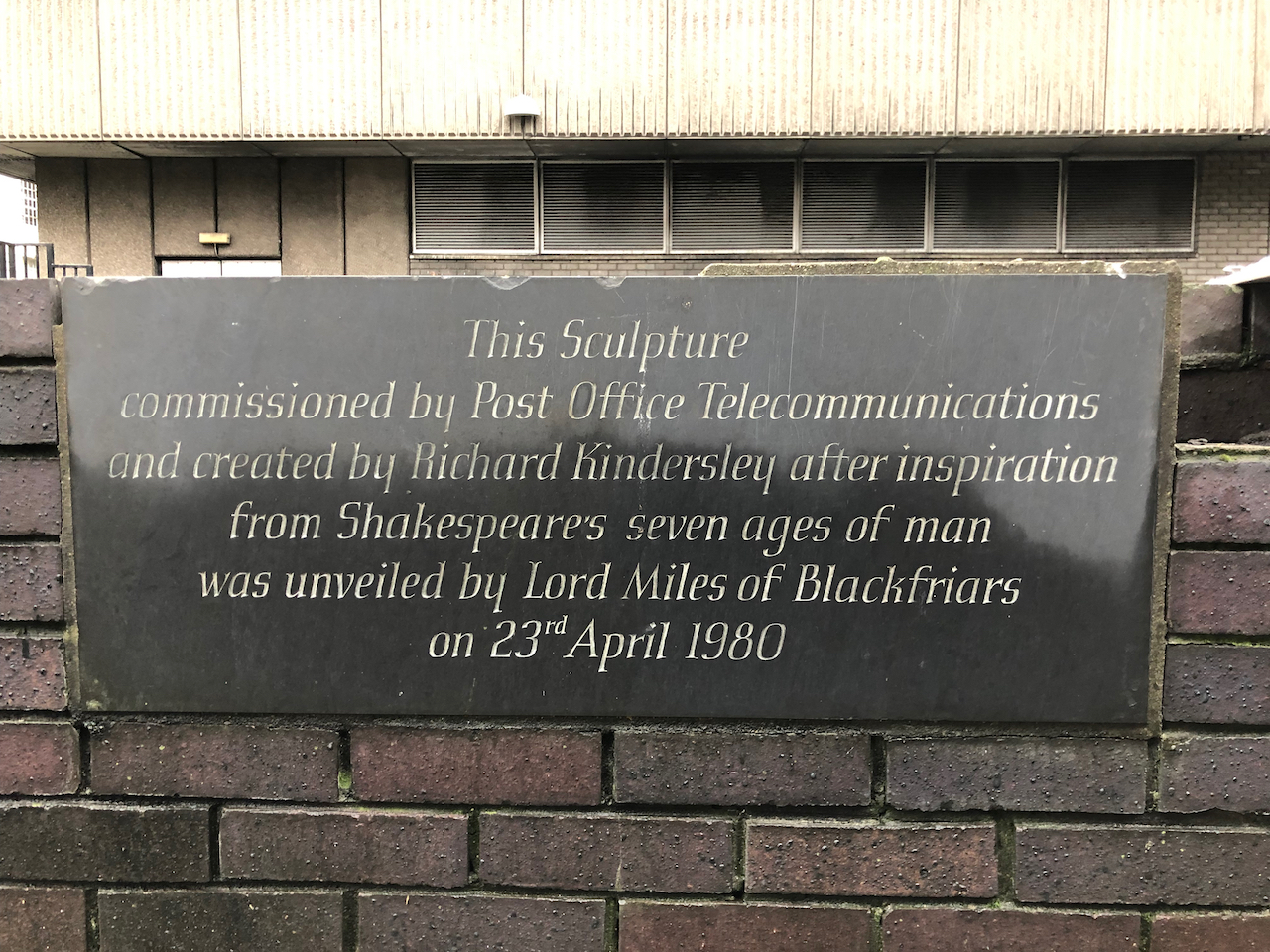
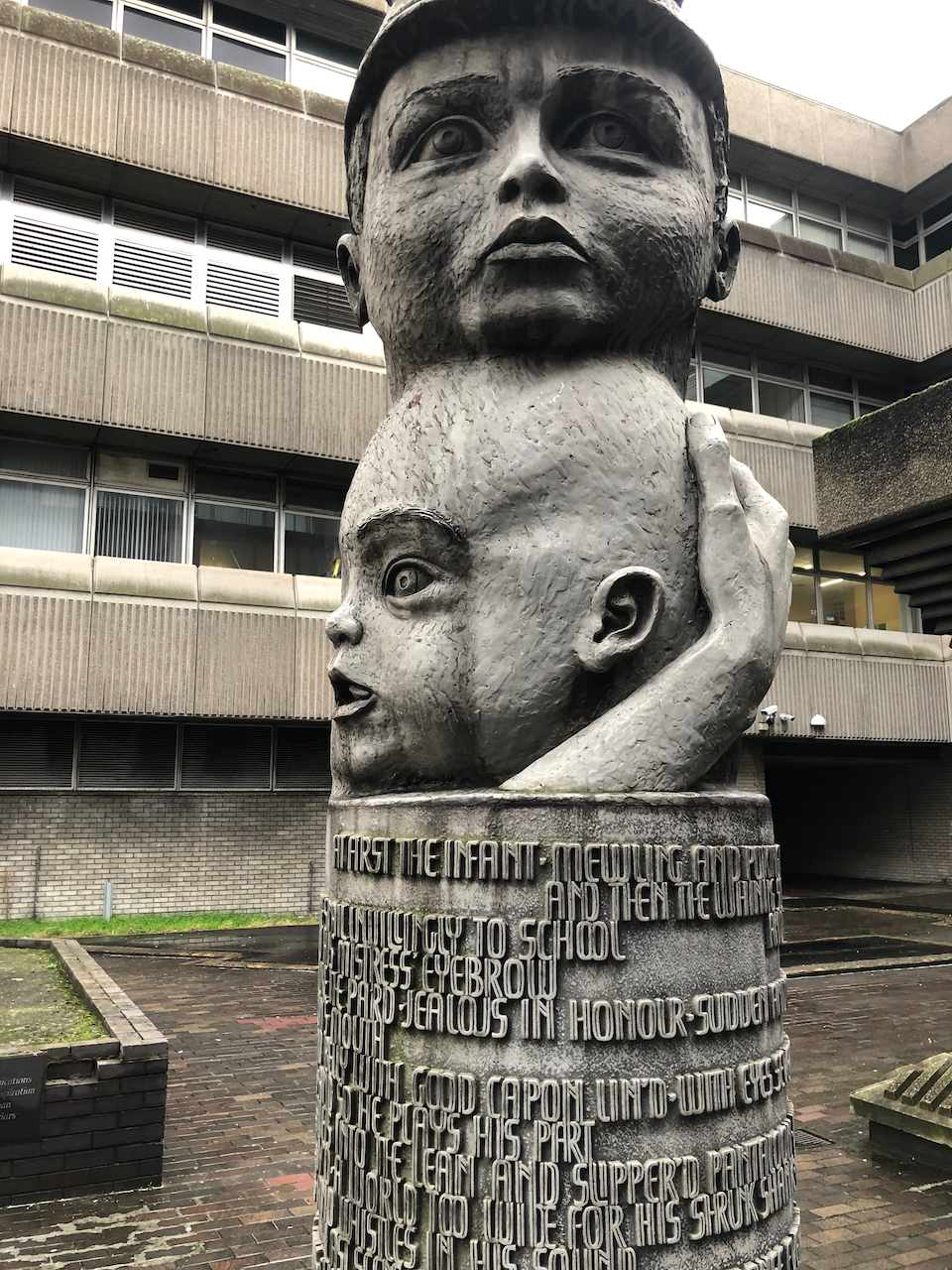
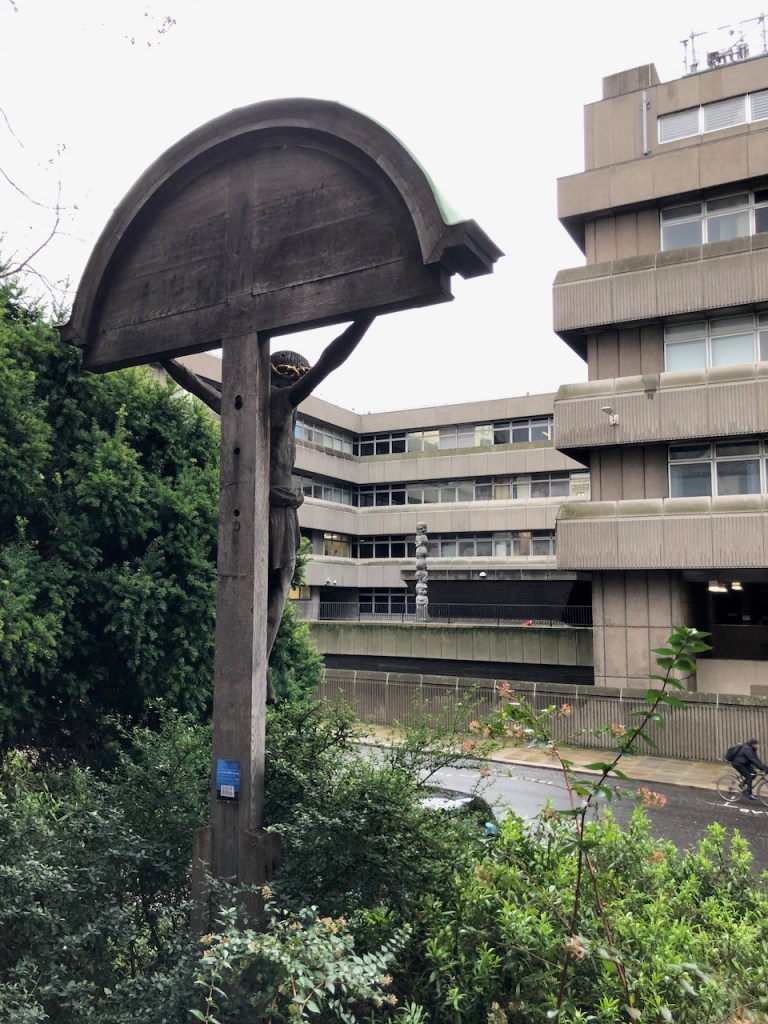
The church has a steeply sloping garden, with a wooden crucifix, just visible in the drawing. This looks across to the “seven ages of man” sculpture on Baynard House.

Looking South from St Andrews towards Baynard House, “Seven Ages of Man” sculpture by David Kindersley is visible in the centre of the picture.

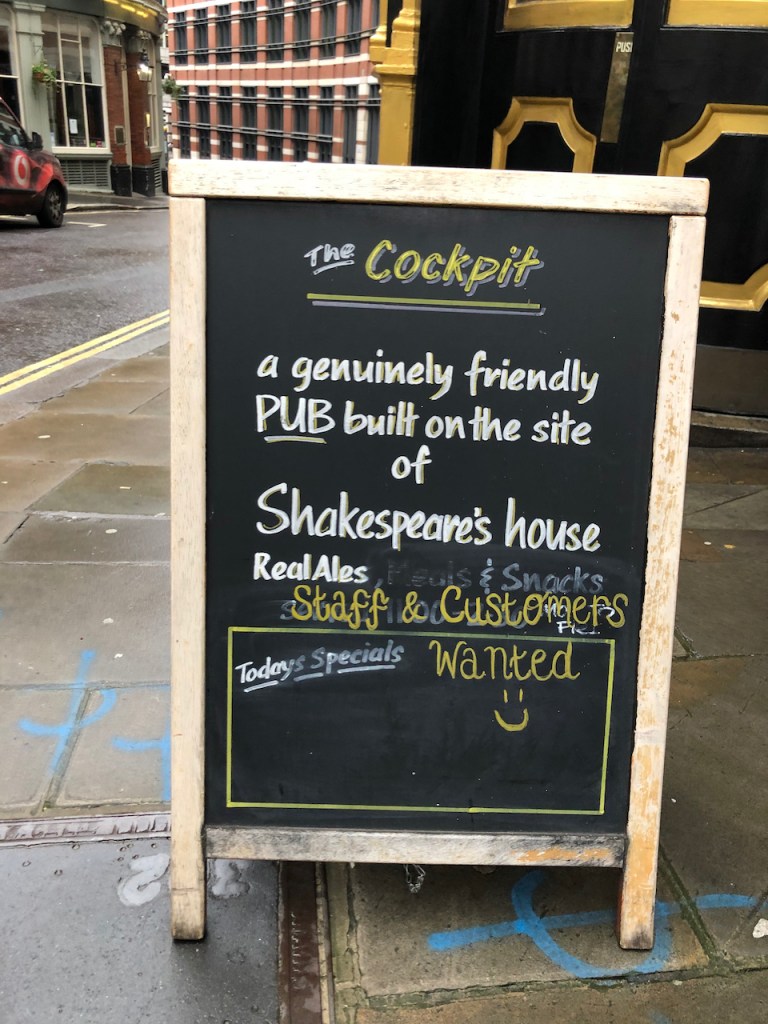
Walking up St Andrew’s Hill, I passed the “Cockpit” pub, on the site of Shakespeare’s house. It had a notice outside: “Staff and Customers Wanted“.

Royal Courts of Justice from Bell Yard

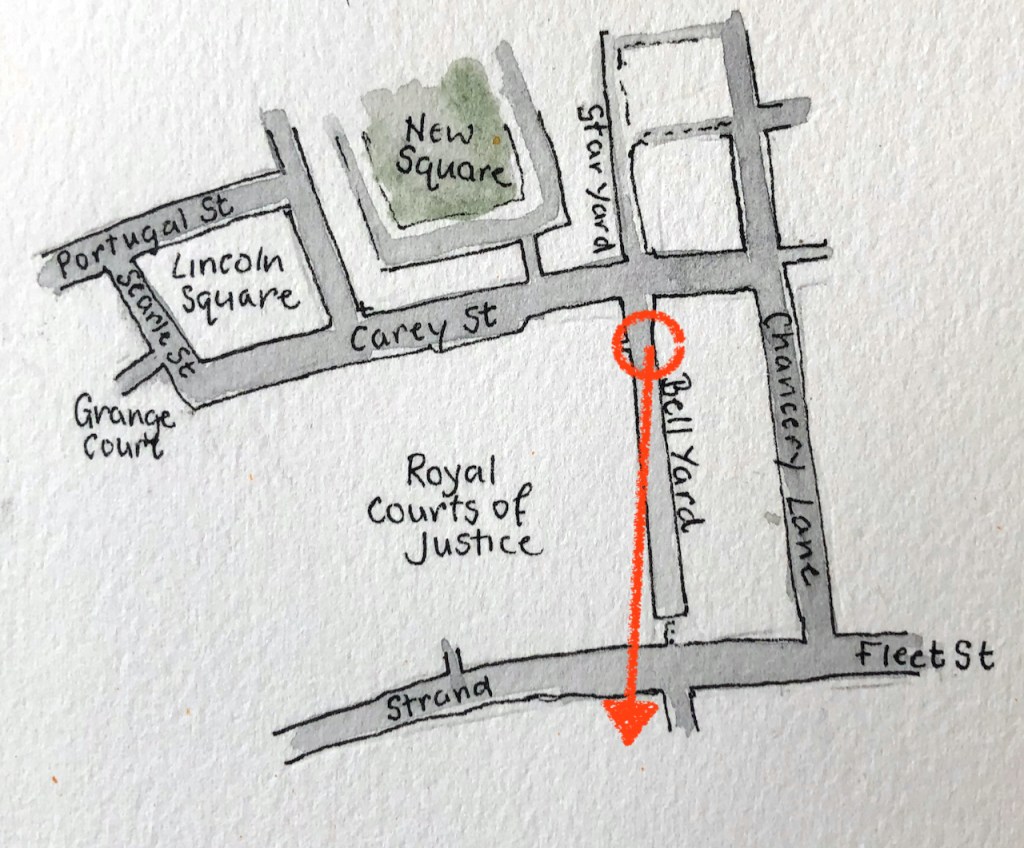
It was morning. As I walked down Bell Yard the sun streamed into the alley.

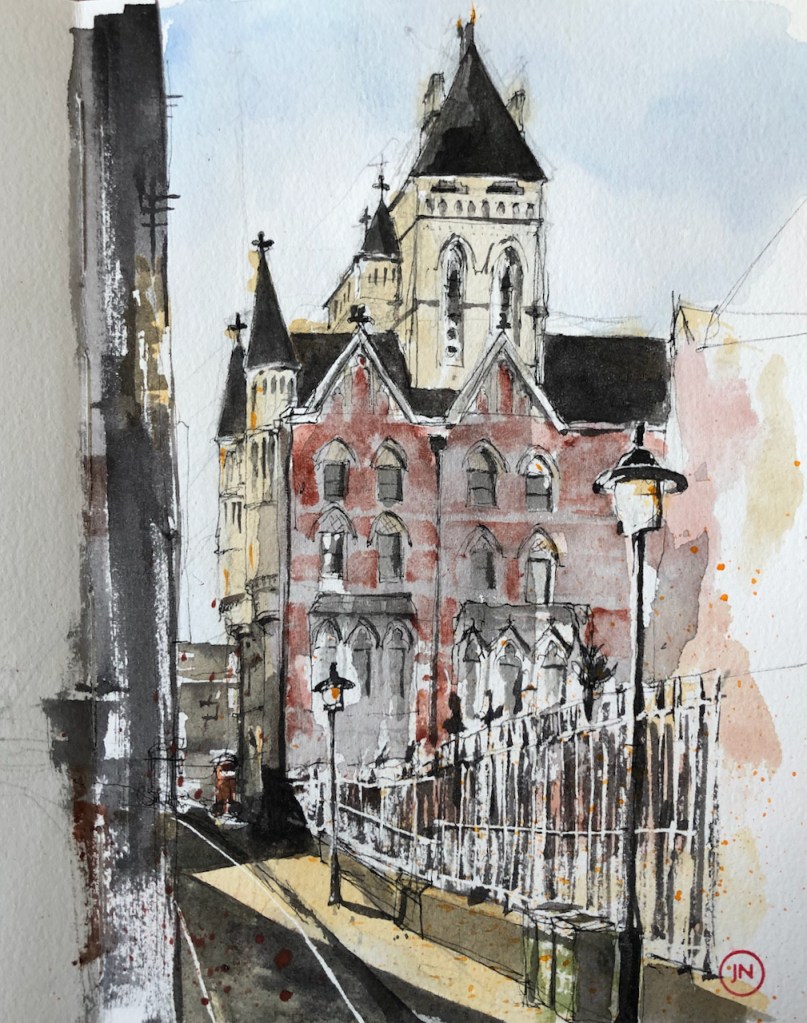
Royal Courts of Justice from Bell Yard, 16th November 2021, 10:45

Later, I visited the Royal Courts of Justice. During the week, the Courts are open, and you can go in. I put my backpack on the conveyor belt. The friendly security guard asked me to drink from my water bottle: “The Sip Test” he called it, to check that my bottle did not contain a noxious substance. It didn’t. The equally friendly and welcoming person at the enquiry desk issued a photocopied information sheet setting out a self-guided walk around the building, which I followed.

It’s well worth a visit. It is an extraordinary example of Victorian architecture. And, of course, it contains working law courts. Photography is not allowed, and they were not enthusiastic when I suggested I might do a drawing inside, so I didn’t. People are at work, and court sessions are in progress, so respect is in order. The Café was not open, which was a pity.

My drawing shows the Eastern part of the building. I sketched it on location in about 40 minutes and did the colour later at my desk.

I sketched the Royal Courts of Justice from Carey Street earlier in the week, under an overcast sky:

Royal Courts of Justice from Carey Street

The Royal Courts of Justice are a huge campus of buildings of Victorian gothic style, between The Strand to the south to Carey Street to the north. Here is a view from Carey Street. The Royal Courts of Justice are the High Courts for England and Wales, and the Court of Appeal. The High Courts…
Royal Courts of Justice from Carey Street

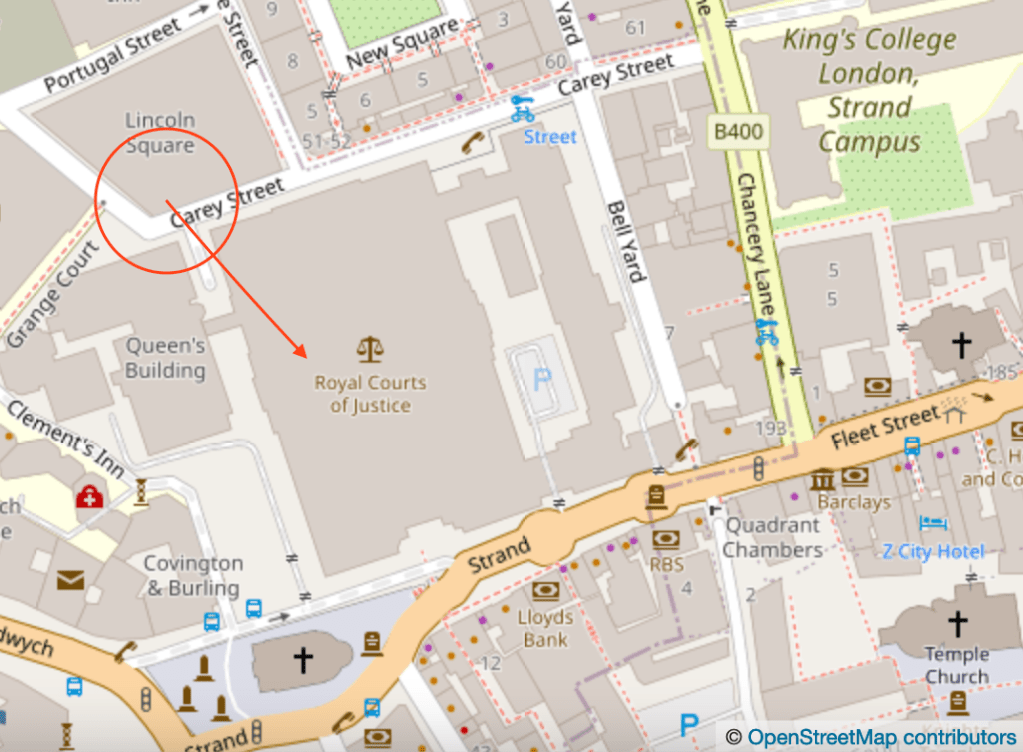
The Royal Courts of Justice are a huge campus of buildings of Victorian gothic style, between The Strand to the south to Carey Street to the north.

Here is a view from Carey Street.

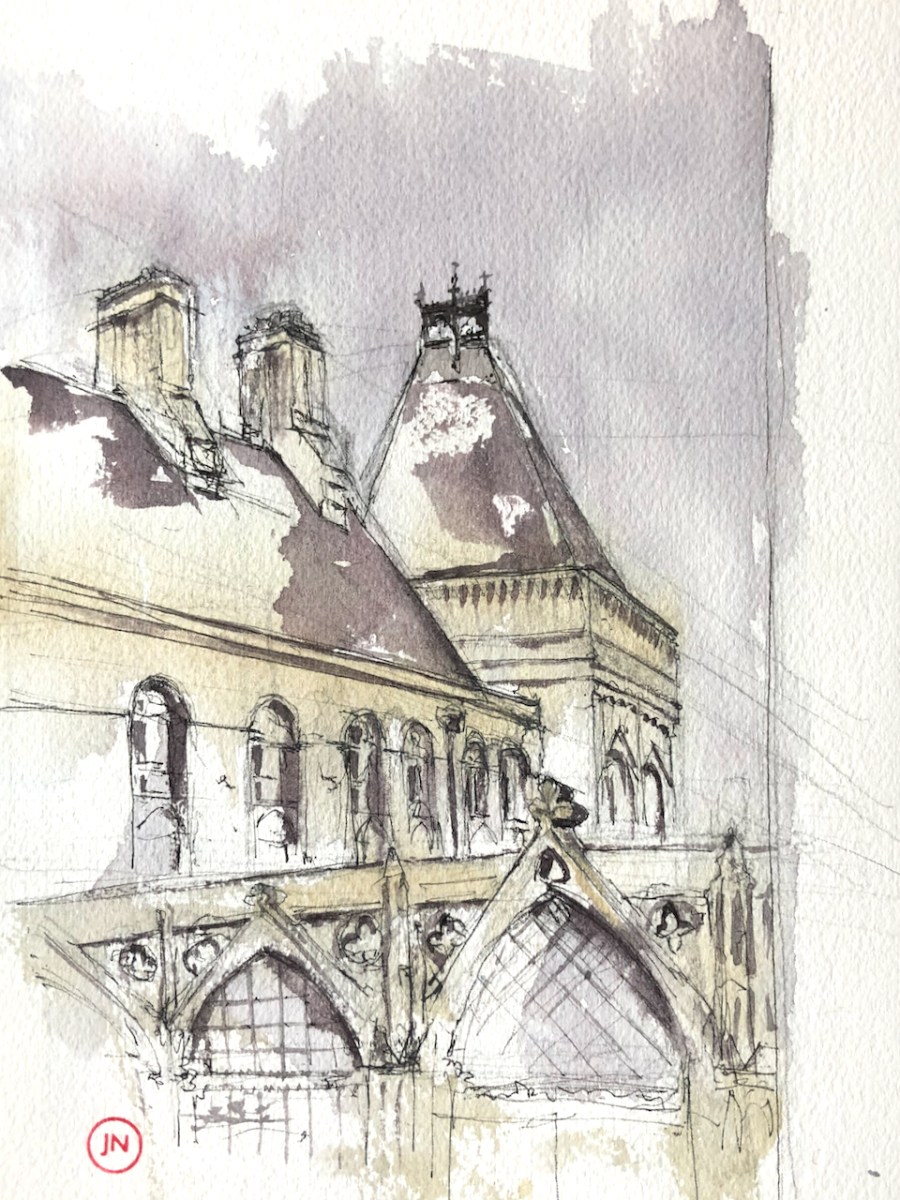
Royal Courts of Justice from Carey Street, 12 November 2021, 1:45pm 10″ x 7″

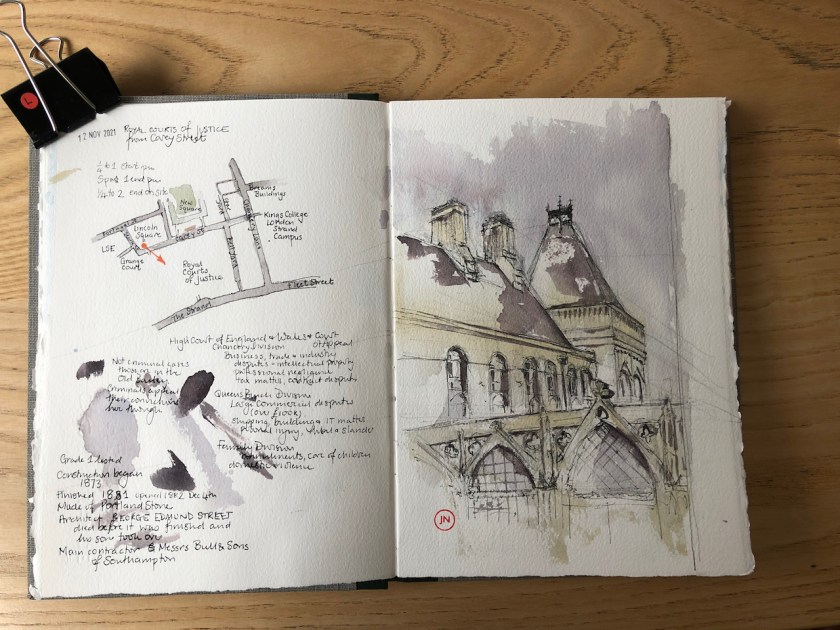
The Royal Courts of Justice are the High Courts for England and Wales, and the Court of Appeal. The High Courts are for civil cases, such as breaches of contract, personal injury claims, libel and slander. There is also a family division for cases of matters such as marriage annulments and care of children. Criminal cases, such as murder, are tried in the Old Bailey, down the road. Criminal cases are appealed in the Royal Courts of Justice Appeal Court. I learned this from an entry in Chambers Student website.

The construction of this building started in 1873. It was opened by Queen Victoria on December 4th 1882. The architect was George Edmund Street. The main contractor was Messrs Bull and Sons of Southampton.

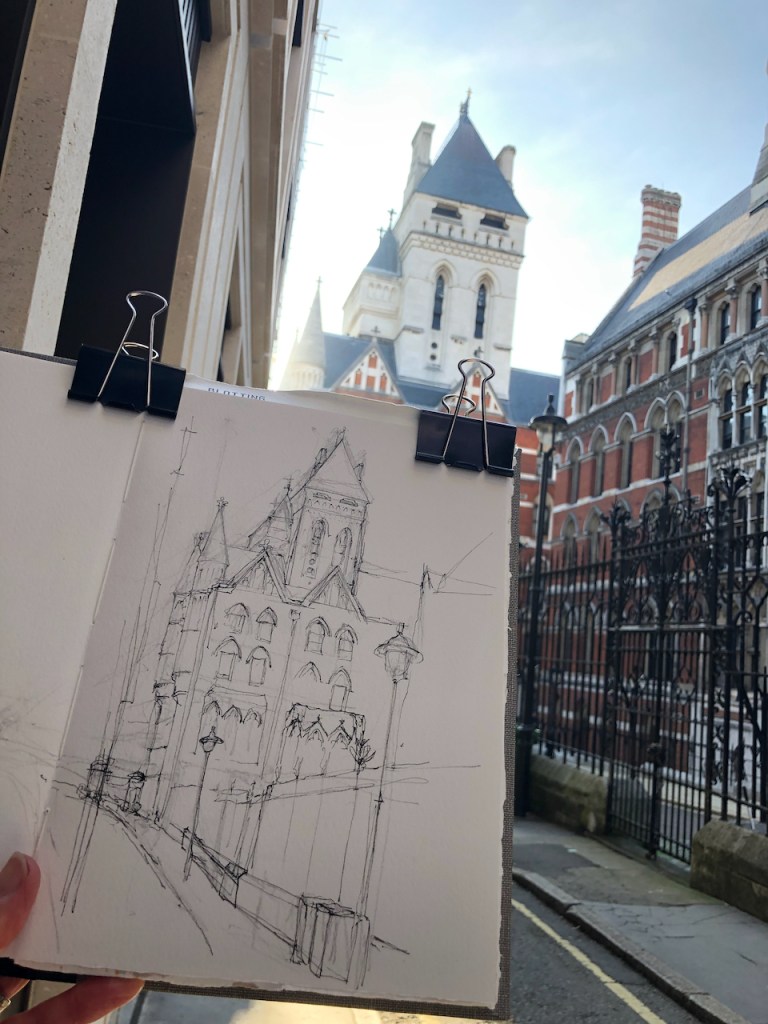
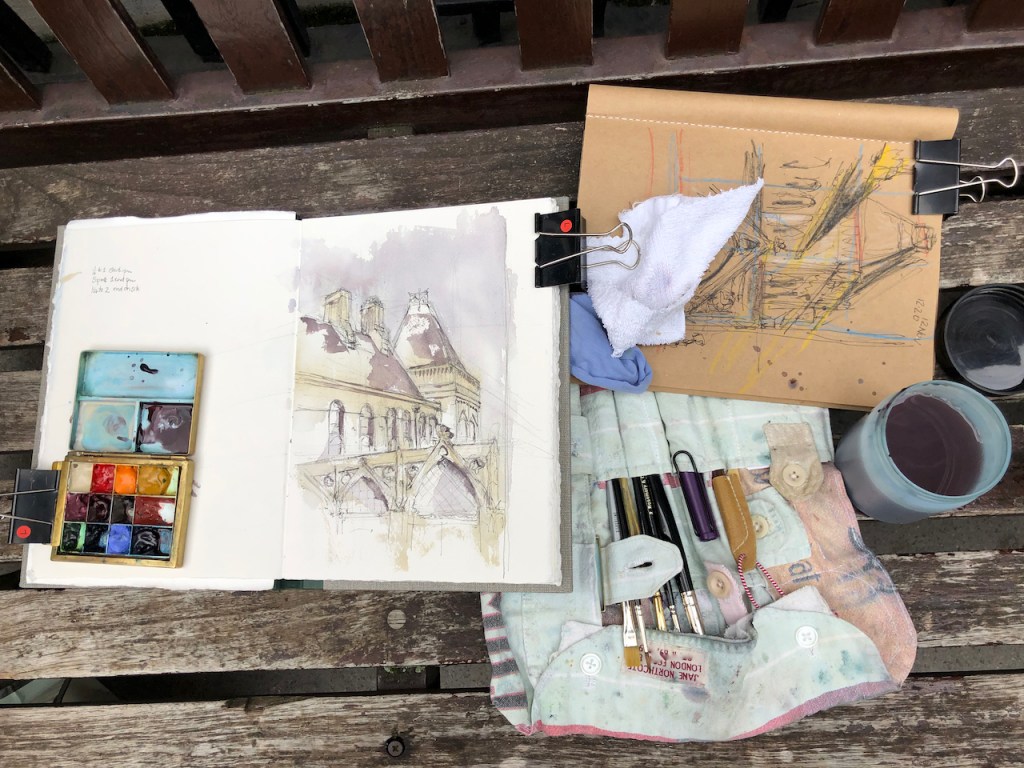
Drawn and coloured on location. I used Buff Titanium for the Portland stone, and the grey is a mix of Perylene Maroon and Prussian Blue. This drawing took about 1 hour 15 mins. I also did a preliminary sketch to explore the perspective.

Sketchbook made by Wyvern Bindery, Hoxton.

123 Cheapside, EC2

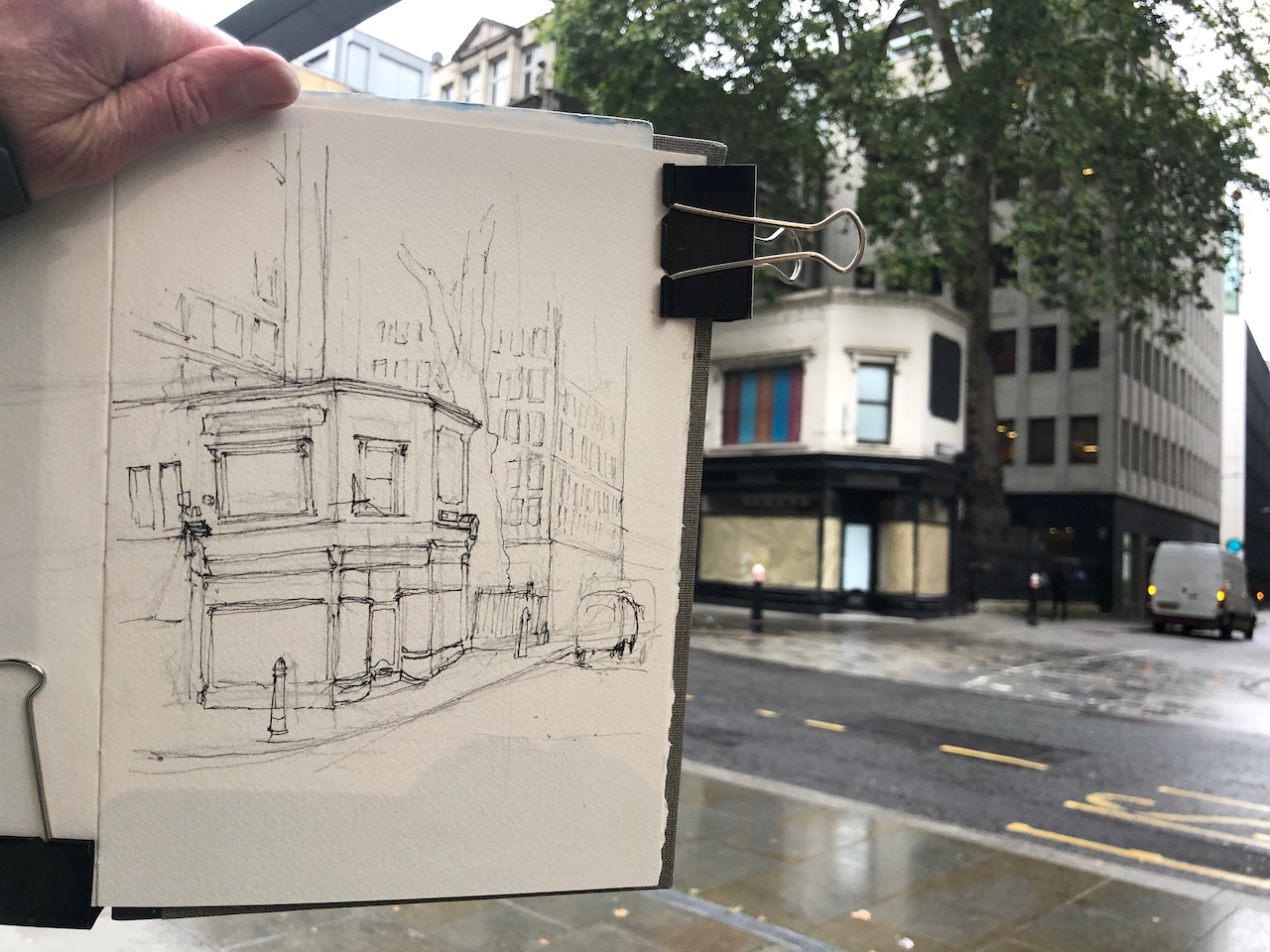
In “A London Inheritance” I read a fascinating article about this corner of Cheapside and Wood Street, near St Paul’s Cathedral. When I passed the corner last week I noticed that the shop had closed down. Fearing that this closure would presage demolition of this interesting building, and replacement with a 39-story office block, I rushed to draw the corner shop while I could. It was raining. But I could find a bit of shelter under the glass canopy of M&S in One New Change opposite.

123 Cheapside, from across the road. 2nd October 2021, 10″ x 7″ in Sketchbook 10

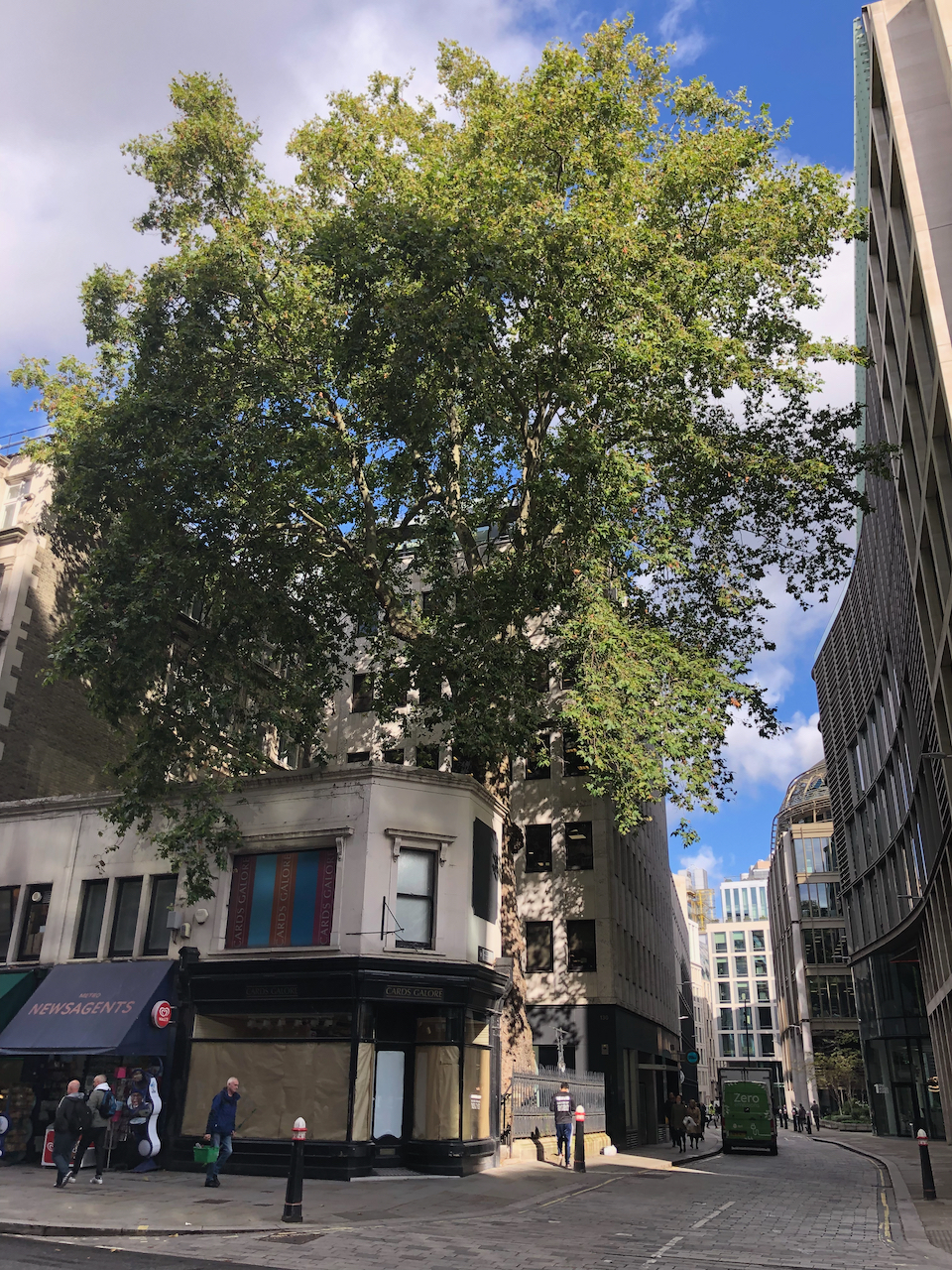
This is a very ancient row of shops. The shop on the corner was, from before 1908 and until at least 1986, L.R. Wooderson Shirtmakers. In recent years it has been “Cards Galore”, but is now closed and the windows are obscured with brown paper.

The corner shop is a wonderful little building. I especially admire the curved glass of the two windows either side of the door, which seem to invite you in. Curved glass windows are rare, especially at street level, so these deserve recognition and admiration. Even more amazing is the mirror on the ceiling! If you step between the curved glass windows and look up, you see that this entrance space is reflected in a mirror. Perhaps this was a device so that if needed, you could see your newly purchased shirt or hat from above?

L.R. Wooderson is shown in a London Metropolitan Archives photo from 1908 (below).
The author of “A London Inheritance” photographed it 78 years later, in 1986. In his 1986 photo, the notice on the side of the shop says “Est 1884”. He has further information about L.R. Wooderson and the Wooderson family on his blog entry, and there’s yet more information in the comments on his article.

Here’s the photo from 1908:

123 and 124 Cheapside, 1908
LCC Photograph Library image © London Metropolitan Archives (City of London)
Record number 38726 Catalogue number: SC_PHL_01_006_79_7728
Accession number: 0577c . Used with permission.

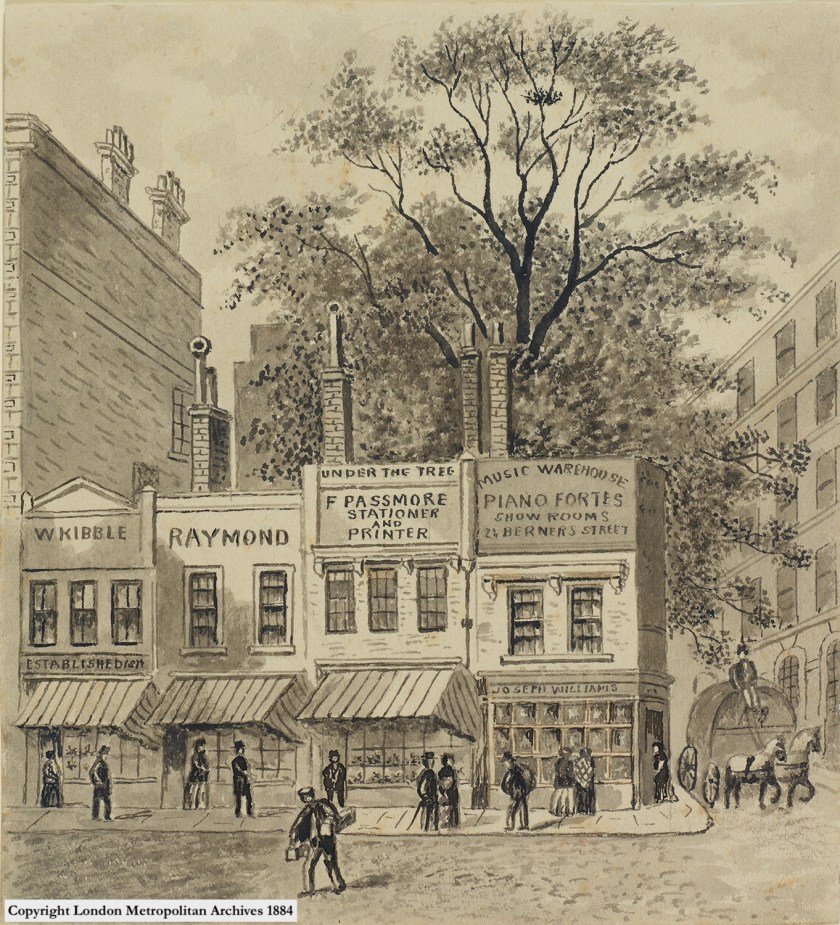
Here’s the same row of shops circa 1870, showing a predecessor of L.R. Wooderson.: Joseph Williams, seller of “pianofortes”, with a warehouse in Berners Street in the West End.

View of shops and figures on Cheapside, also shows the corner of Wood Street, c1870
by WH Prior image © London Metropolitan Archives (City of London)
Record Number: 1884 Catalogue number:q2824343. Used with permission.

You see that “F. Passmore Stationer and Printer”, describes itself as “under the tree” – see the notice high up on a hoarding. This huge plane tree is famous, and at that time clearly famous enough to help in locating the shop. The commentary on the 1908 photo (above) in the London Picture Archive says:

124 Cheapside, City of London, by Wood Street. Front and side elevations of a two-storey shop, L & R Wooderson hosiers. In view is a street lamp. Towering above the premises is a Plane tree. The tree sits in the churchyard of St Peter Cheap. It’s thought the tree could date from the 1760s and is currently protected so can’t be cut down. The church of St Peter Cheap perished in the 1666 Great Fire and missed out on being rebuilt by Sir Christopher Wren.

There is much more about the tree in an article on the “London Walking Tours Website” on this link.

I was interested to note how the tree size changes. In the 1870 drawing it is already huge. 40 years later, in the 1908 photo, it seems smaller, and more compact. I wonder if it was pollarded? Today it is again enormous. Here are the photos above again, with a modern picture to compare.

It remains famous. It is no. 1 in the “Top Ten Trees” of the City of London according to the “Friends of City Gardens”.

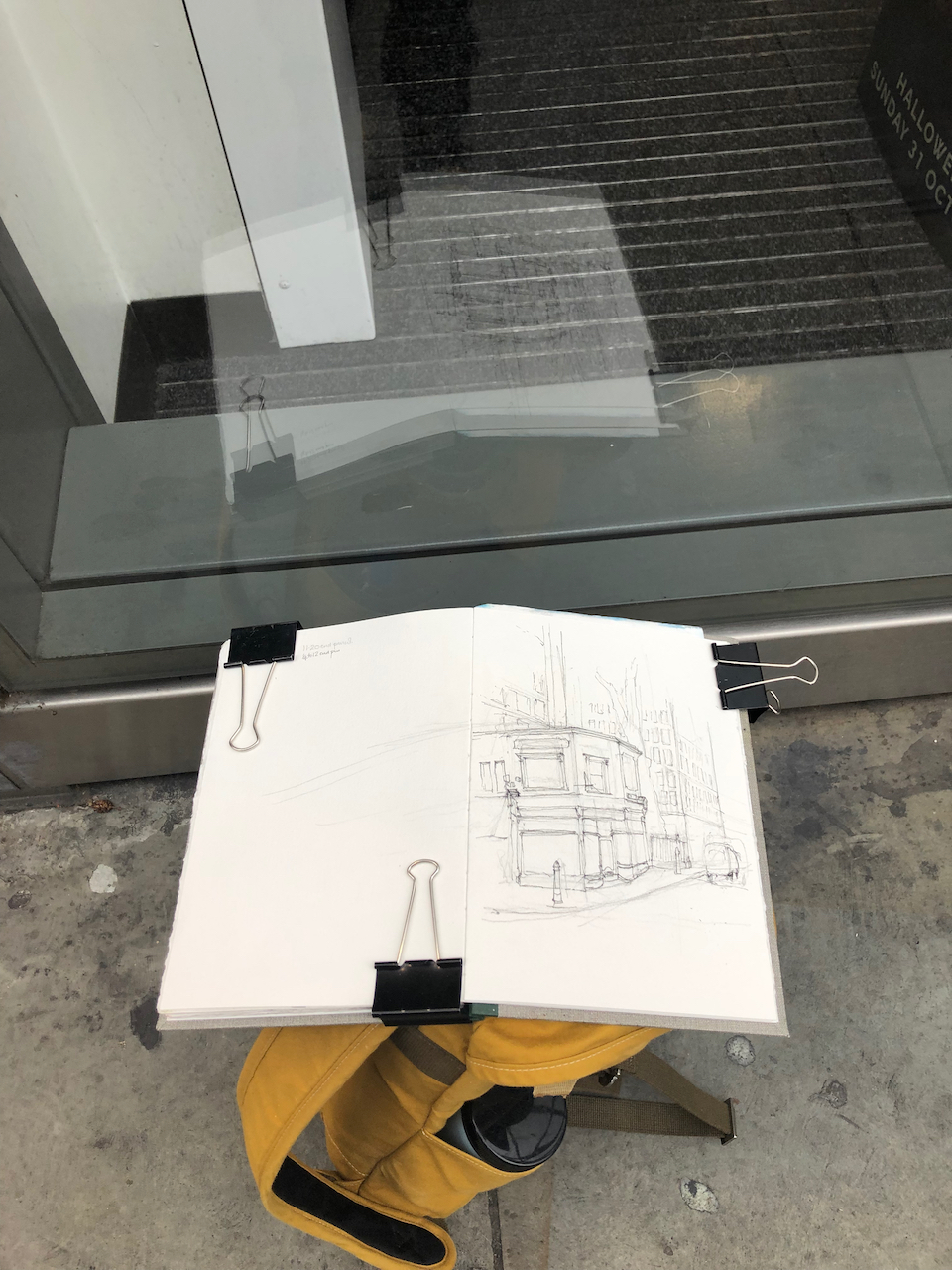
I completed the pen and ink of my drawing outside M&S, and then retreated from the rain and added the colour at my desk.

The colours are:

  • Perylene Maroon and Prussian Blue for the greys, with a bit of Transparent Brown Oxide in the the road,
  • Buff Titanium for the white of the shop with some Mars Yellow,
  • Green Apatite Genuine and Green Gold for the tree, and
  • a tiny bit of Transparent Pyrrol Orange for the City of London bollard tops and refections.

Guildhall Yard, London EC2

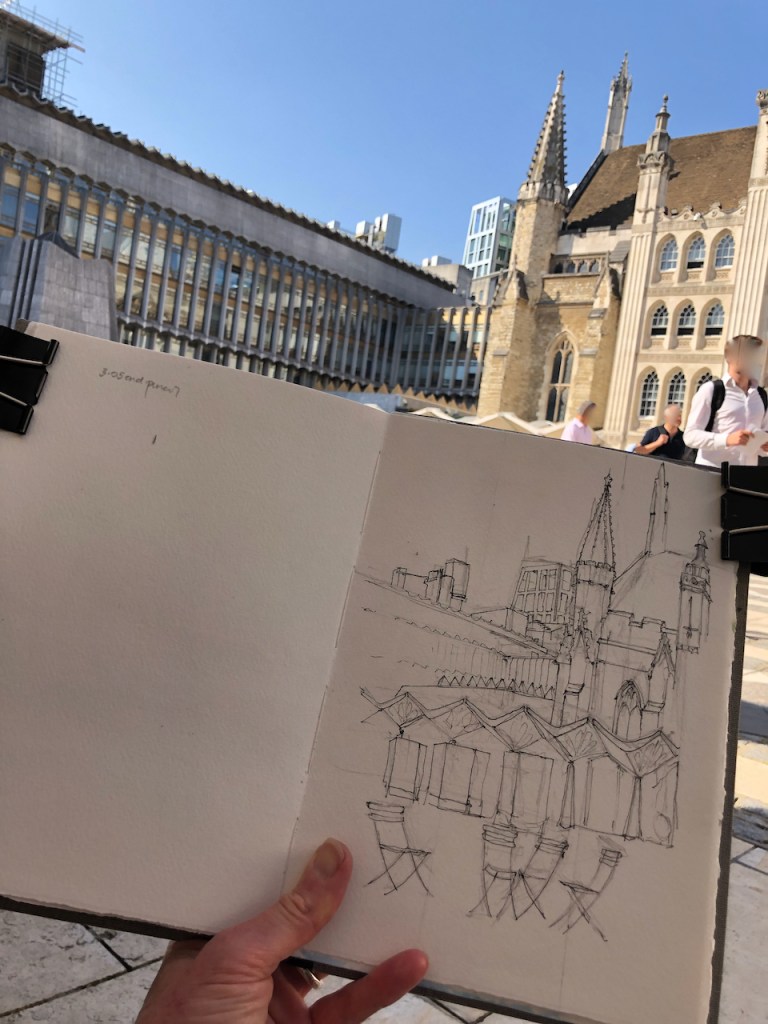
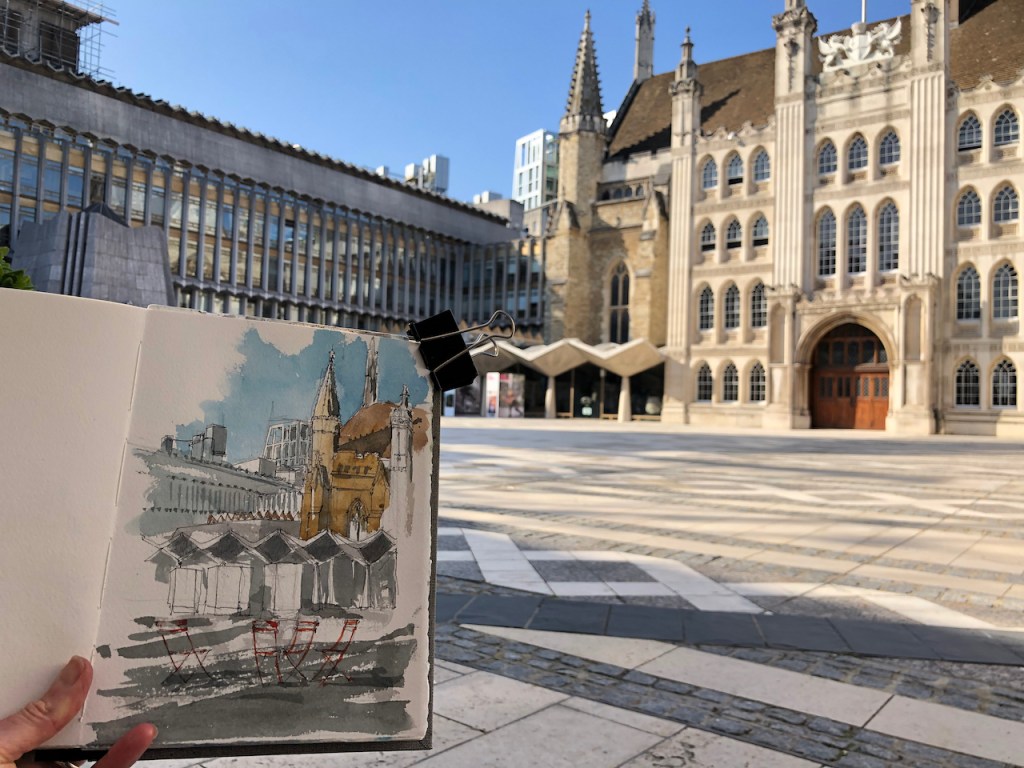
Here is the North West corner of the Guildhall Yard. The modern part is designed by Richard Gilbert Scott (note 1). What we are looking at, in pale concrete, is the Guildhall Library, and offices of the City of London Corporation. Behind it, you see the tops of the buildings on Wood Street.

In yellow stone, on the right of the drawing, is the old Guildhall, built in 1411 (note 2).

In the foreground you see the chairs, generously provided in the Guildhall Yard by the City of London, for public use. I commandeered a chair and a table and set myself up in a nice shady position next to the South East wall of the yard, between two gigantic plant pots.

Guildhall Yard, North West corner. 7th Sept 2021, 7″x10″ in Sketchbook 10

While I was drawing, someone took up residence the other side of the gigantic plant pot, and started a long and fascinating conversation on their phone. They were a recruitment agent, and embarked on a forceful sales pitch to a potential recruit. They were recruiting on behalf of a large bank in the City. They described the proposed future restructuring of said bank, and the nature of the forthcoming vacancy that was to be filled. They named the bank, which I will not do here. They aired details of the potential salary and work locations. After completing this gripping conversation, they immediately called a work colleague and gave an alarmingly candid opinion on the potential recruit they’d just been talking to. If you are thinking of having a conversation of this nature, the Guildhall Yard is perhaps not the most discrete place to choose!

At 3:45pm precisely, workers arrived and removed the chairs. I completed my drawing sitting on the flagstones.

This drawing took about 1½ hours, sketched and coloured on location. The main colours are Mars Yellow, Phthalo Blue Turquoise, and Transparent Brown Oxide, with some Perylene Maroon to make the greys. The chairs are Transparent Pyrrol Orange.

The screens, shown white in my drawing, advertise a performance of dance entitled “Black Victorians”, which is part of the Greenwich and Docklands International Festival.

Note 1: The obituary of Richard Gilbert Scott refers to his work on the Guildhall Art Gallery and the Guildhall West Wing. It is here: https://www.theguardian.com/artanddesign/2017/jul/12/richard-gilbert-scott-obituary

Note 2: The original Guildhall building has a long history, and has been rebuilt and enhanced several times, most recently after bomb damage in the 1939-45 conflict. Its original completion date of 1411 is quoted in this article from 1848: https://www.british-history.ac.uk/old-new-london/vol1/pp383-396

I’ve sketched around the Guildhall often. Also I’ve sketched 65 Basinghall Street, which is another design by Richard Giles Scott.

Guildhall North Wing

From the site of the former St Mary Aldermanbury, I looked across towards the Guildhall, the offices of the City of London. It is dark and green in the former Nave of the church, whose pillars you can see on the right.…

Read more….

Guildhall from St Mary Aldermanbury EC2

At the junction of Love Lane and Aldermanbury in the City of London, there is a small park. If you are in the area, it’s well worth a visit. The parklet is on the site of St Mary Aldermanbury. A large marble…

Read more….

Gaslight in Guildhall Yard

The winter evening settles down With smell of steaks in passageways. Six o’clock. The burnt-out ends of smoky days. And now a gusty shower wraps The grimy scraps Of withered leaves about your feet And newspapers from vacant lots; The showers beat…

Read more….

65 Basinghall St EC2 from the plaza

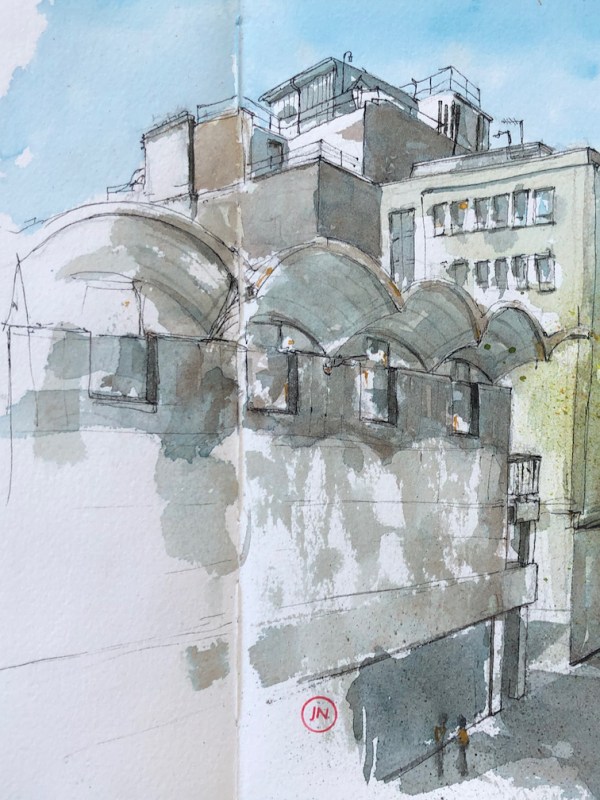
In a previous post I presented a drawing of 65 Basinghall Street done from the bridge which is on the North side of the building. Here is the south side. 65 Basinghall Street is the building in front, with the scalloped arches.…

Read more….

65 Basinghall St EC2 from the bridge

This is a view from the bridge over Basinghall Street, looking at the back of 65 Basinghall Street. There is much of interest in this view. There are the wonderful arching shell-like structures of 65 Basinghall Street. This was built in 1966-7…

Read more….

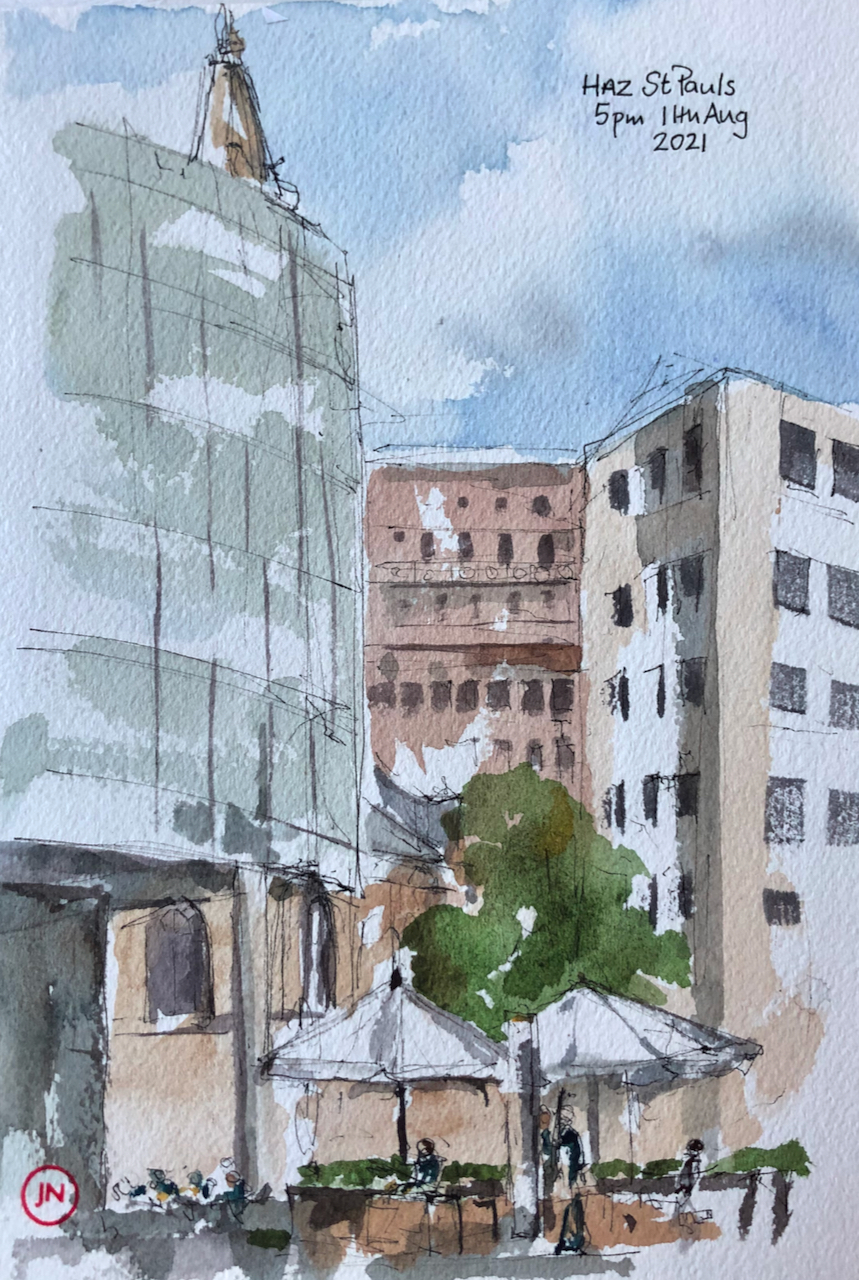
Haz St Pauls EC2

Here is the restaurant “Haz St Pauls“, 34 Foster Lane, London EC2.

“Haz St Pauls” Foster Lane, EC2, sketched from across the road, in Sketchbook 10, 11th August 2021

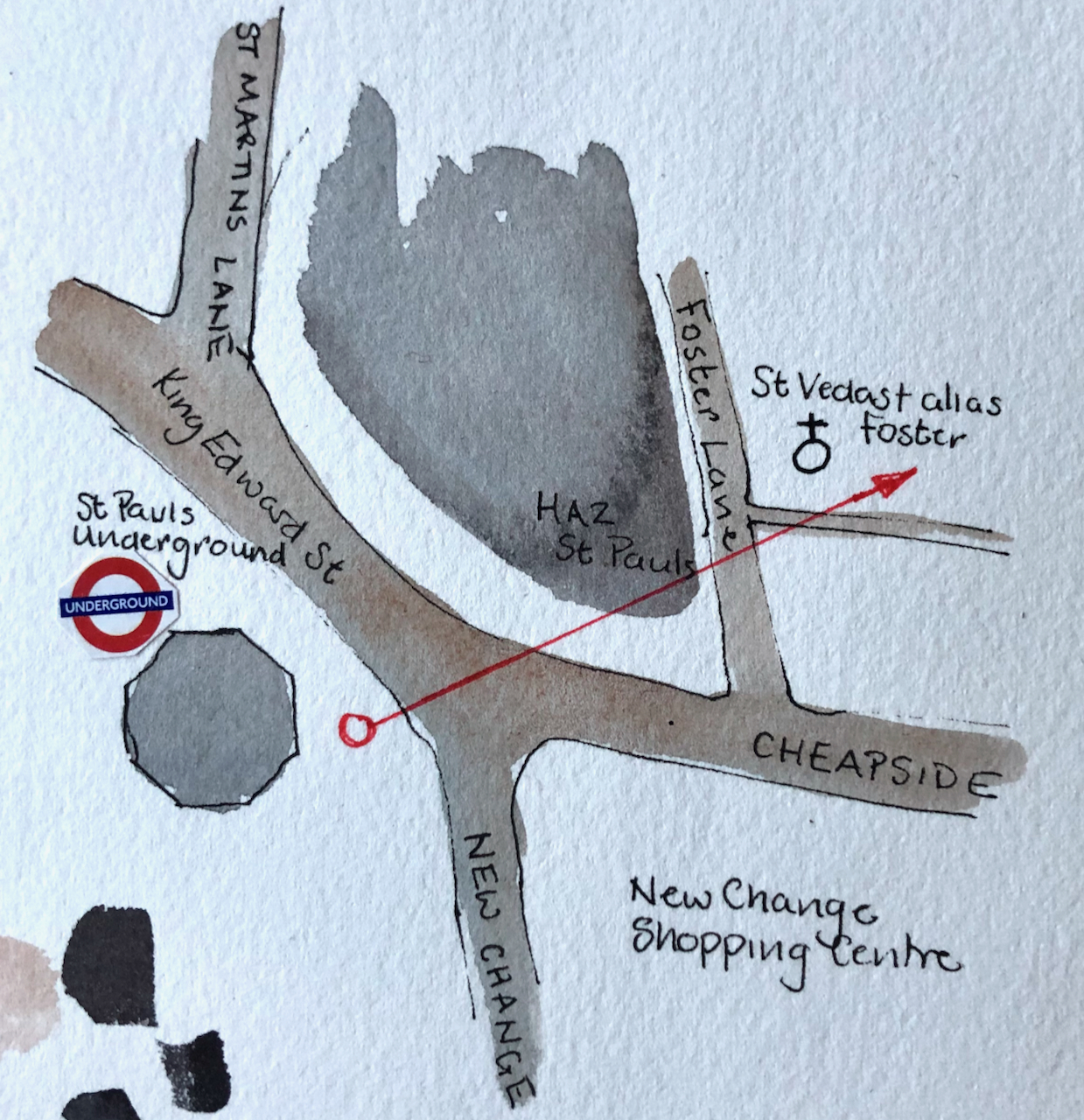
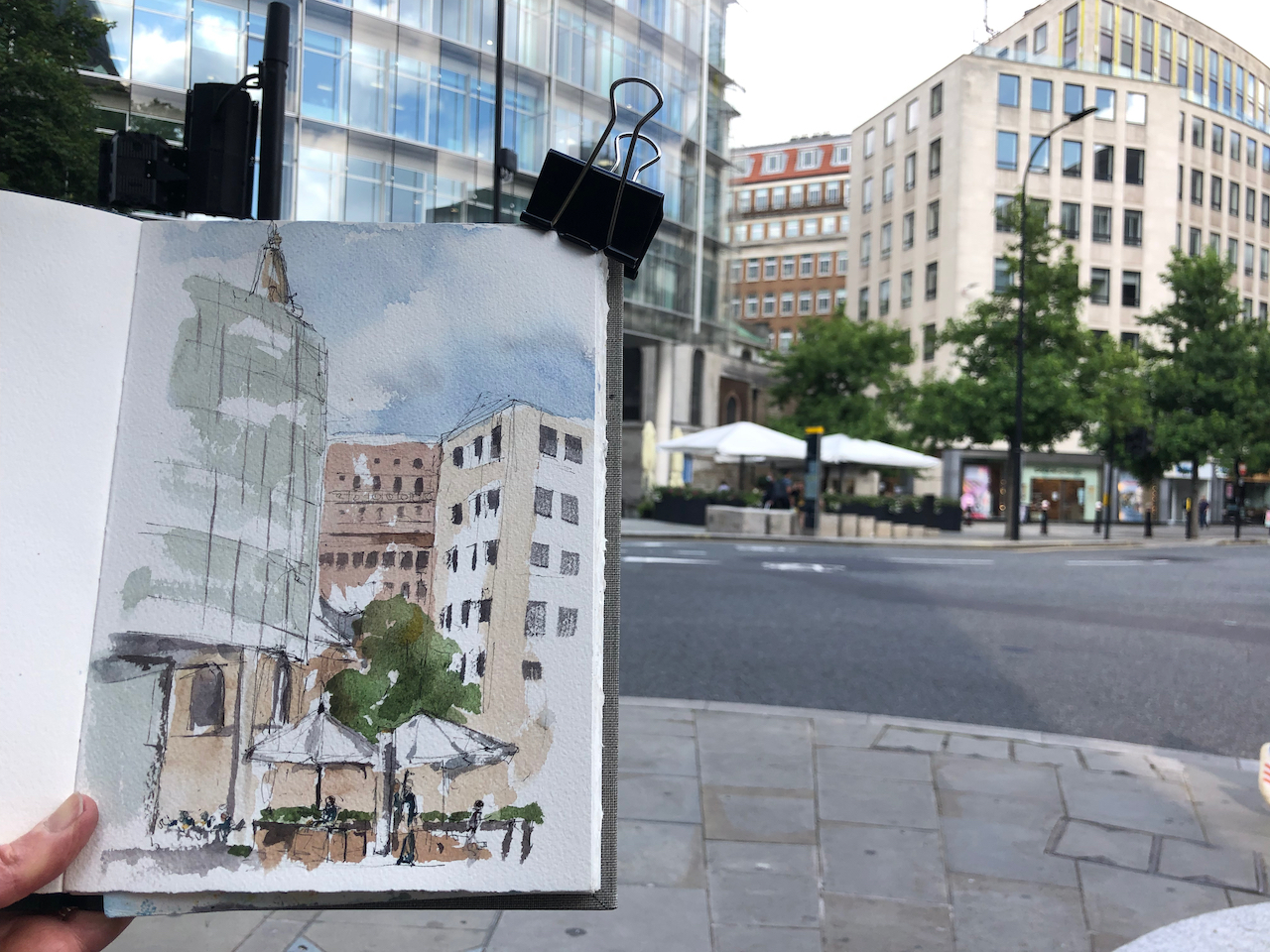
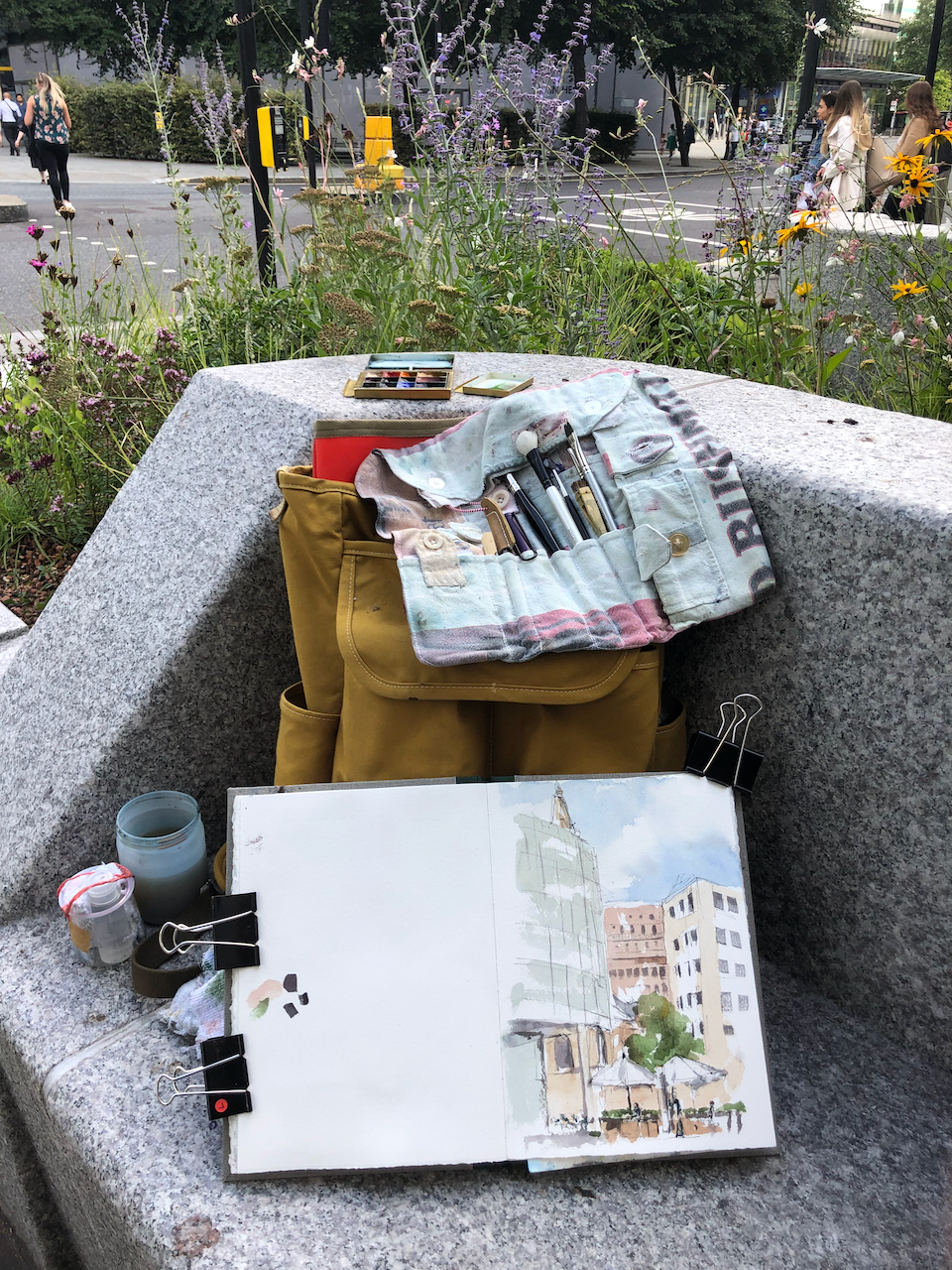
The restaurant has created a wonderful outside seating area on a part of the pavement. This corner has modern offices, the Haz restaurant, a coffee bar (Costa), and a church, St Vedast alias Foster. I sketched it from a new stone seat near St Pauls Underground station.

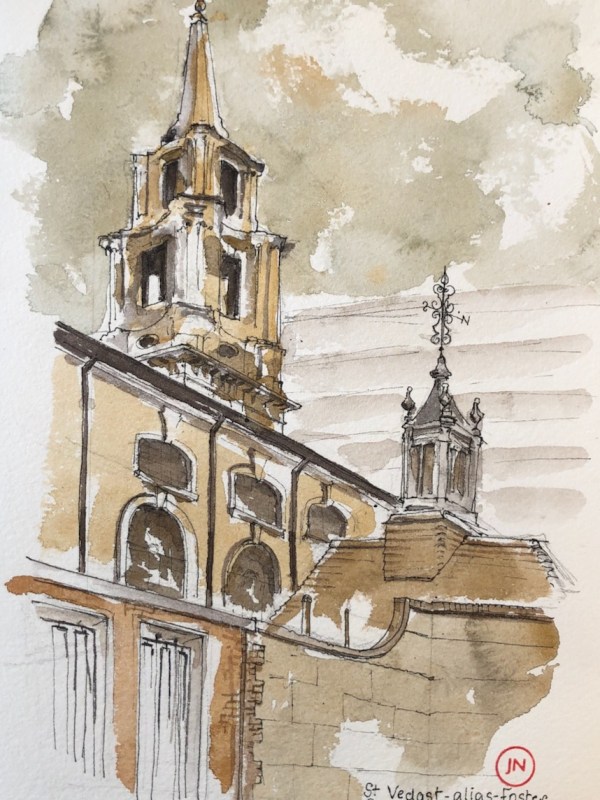
I have sketched St Vedast previously:

St Vedast-alias-Foster, EC2

Here is the Anglican Church of St Vedast-alias-Foster, in the City of London, viewed from Priest’s Court. Before I drew this, I paused a while in the Fountain Court, a tranquil courtyard next to the church. In the shadow,…

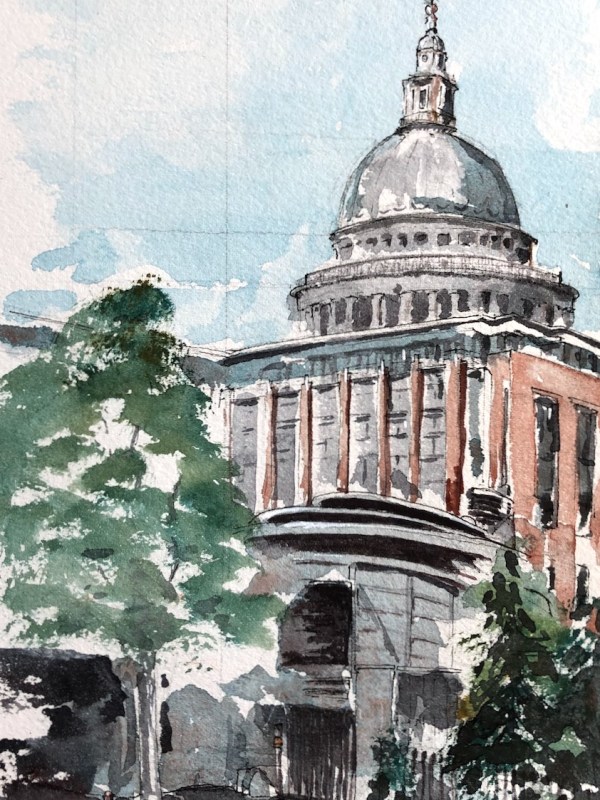
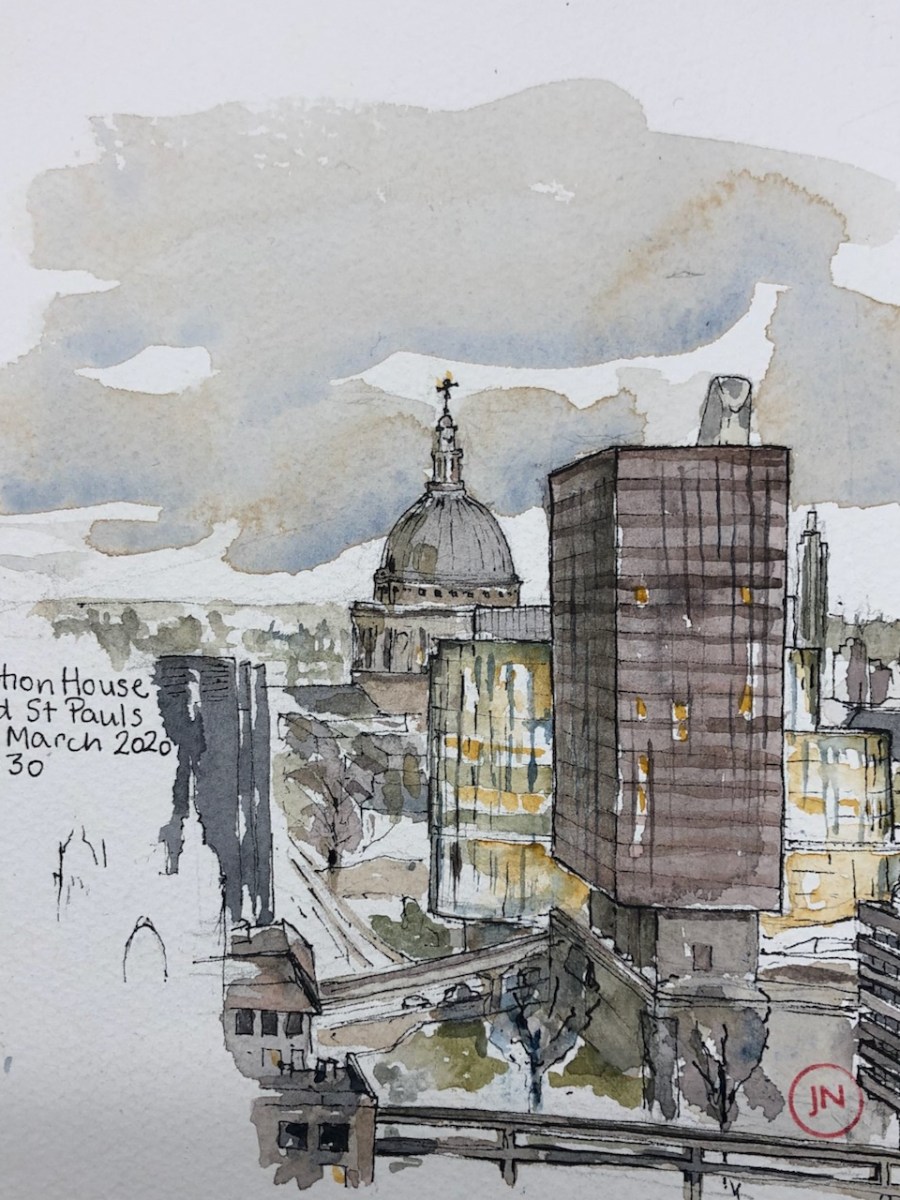
Here are some of my sketches of St Paul’s Cathedral, which was behind me as I sketched Haz.

St Edmund the King EC3

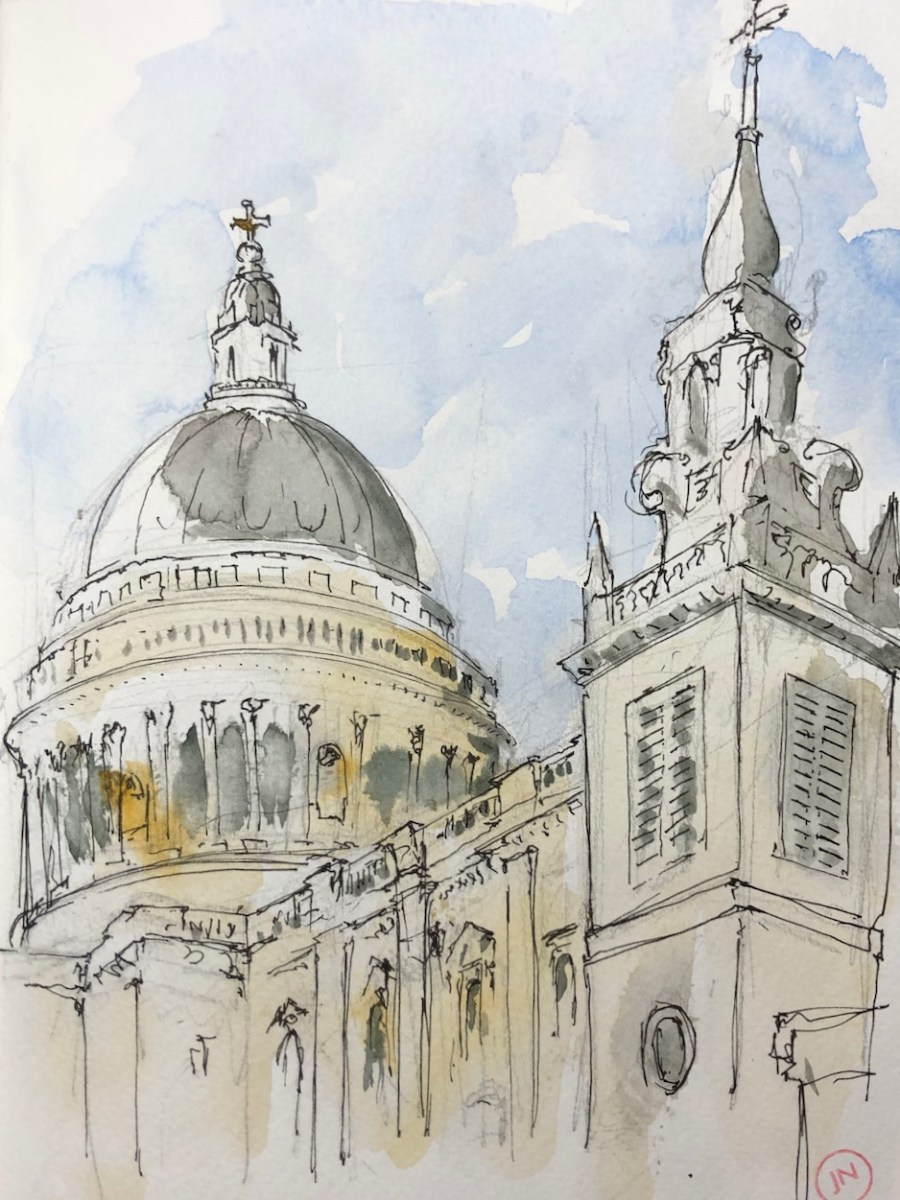
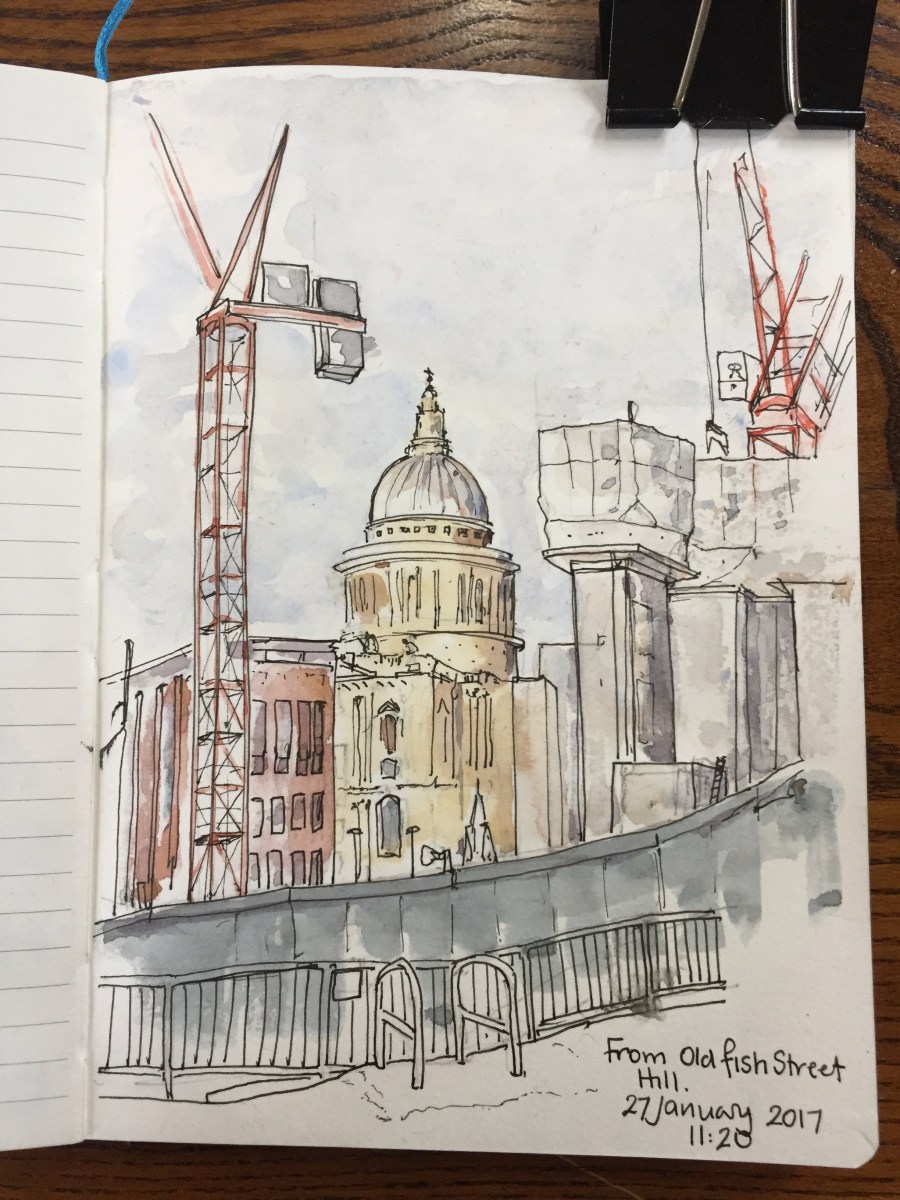
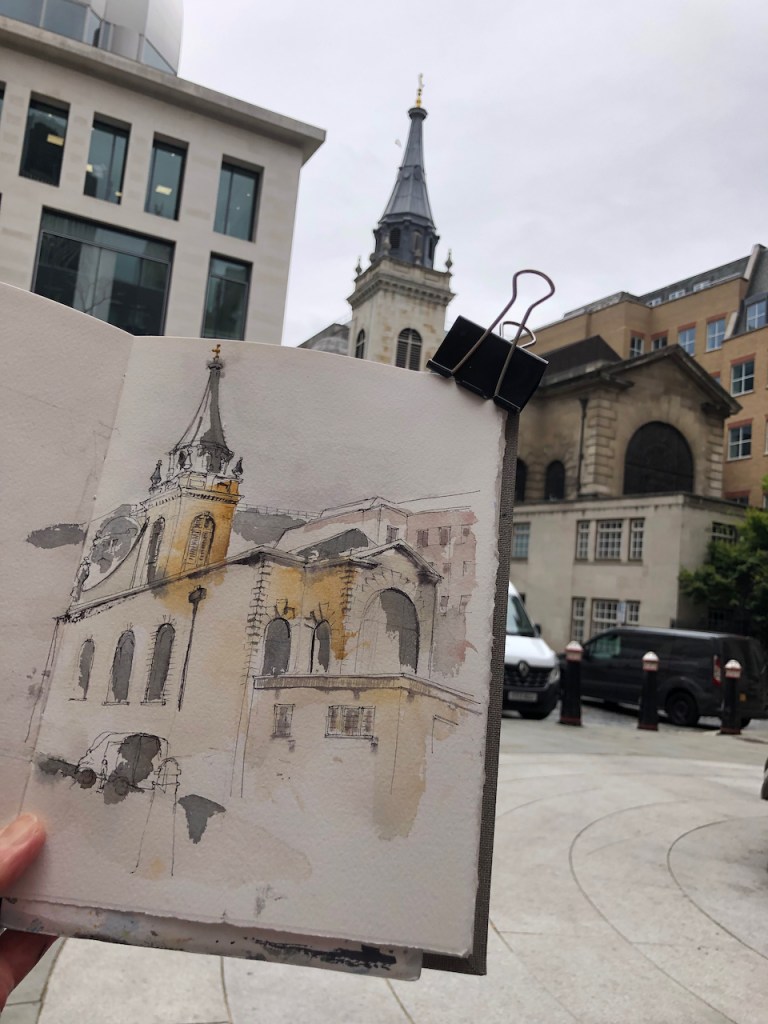
Here is a sketch of the church of “St Edmund King and Martyr” which is on Lombard St, City of London.

St Edmund King and Martyr, Lombard Street, from George Yard, EC3. 7″ x 10″ in Sketchbook 10

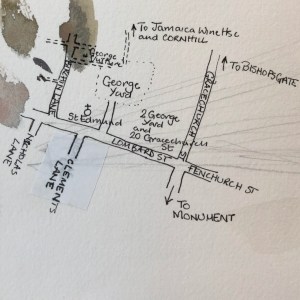
George Yard is at the intersection of a number of city lanes, one of which leads West to “The George and Vulture”, and another leads North to the Jamaica Wine House.

Also in George Yard is a marvellous leafy garden. In the garden, shaded by vegetation, is the tombstone of “Sir Henry Tulse”. Below the tombstone is the inscription telling you about its incumbent:

"Sir Henry Tulse was a benefactor of the Church of St Dionis Backchurch (formerly adjoining)
He was also grocer, Alderman, and Lord Mayor of this City.
In his memory, this tombstone was restored November 1937 by
"The Ancient Society of College Youths" during the 100th year of the society's foundation.
He was also Master of the Society during his Mayoralty in 1684"

St Edmund King and Martyr is an active church. The Church is, according to the notice on Lombard Street, “The Gregory Centre for Church Multiplication”. Church Multiplication has a clear mission statement on their website: “We equip and resource the Church to reach new people, in new places, in new ways with the good news of Jesus Christ.”

The Vestry Hall is the cubical building on the right of my drawing.

Just off the drawing to the left is 2 George Yard and 20 Gracechurch Street, a modern building, where a long list of companies are registered with financial sounding names: “The Close Investment 1988 Fund “A” “, “The Greater Mekong Capital Fund”. This is the City of London, with all its contrasts and juxtapositions.

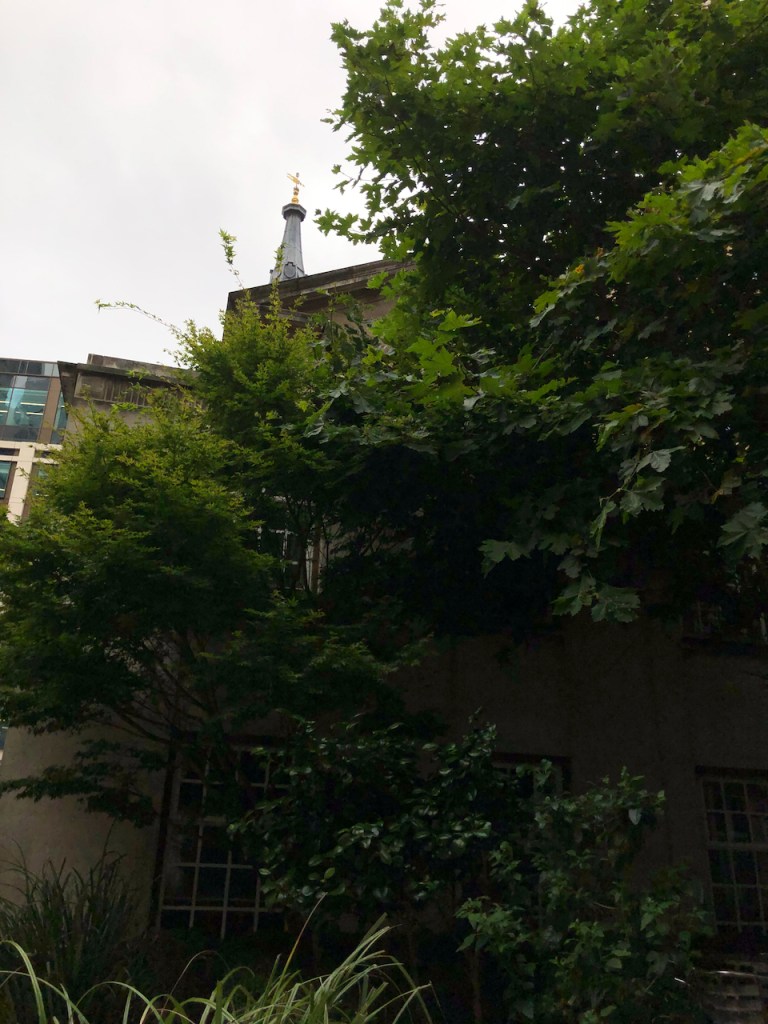
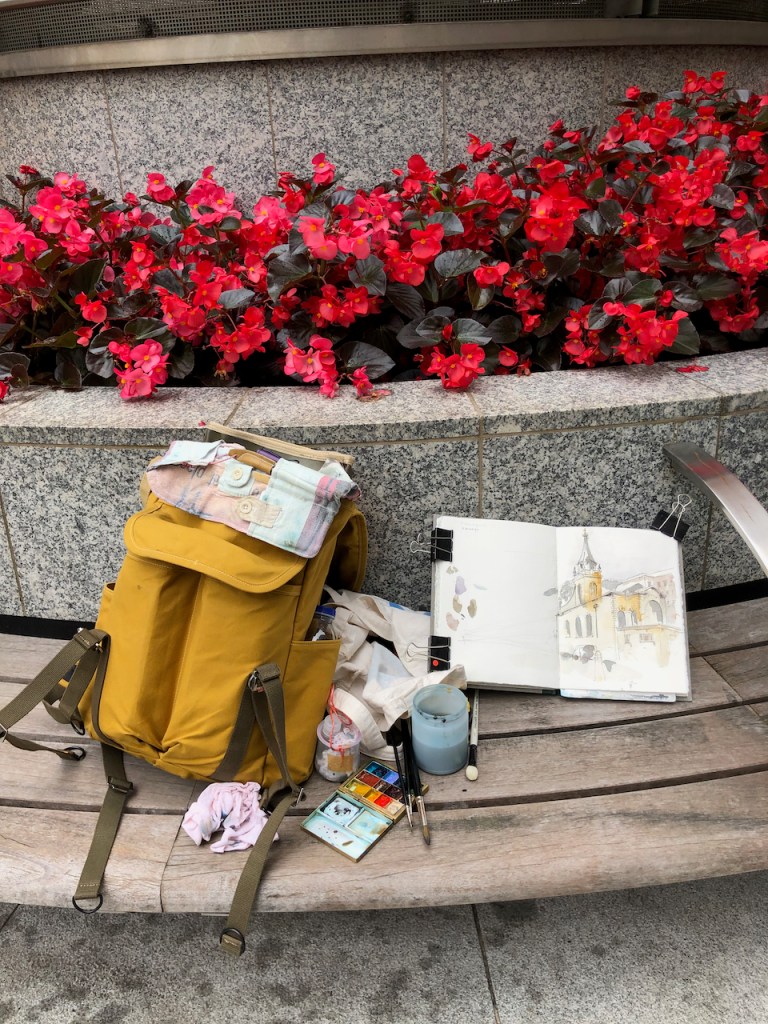
Here is work in progress on the drawing, and a view of the Church from the leafy garden.

This drawing took about 1 hour and 20 mins. The colours are Mars Yellow, Perylene Maroon, and Phthalo Blue Turquoise.

Guild Church of St Benets, EC4

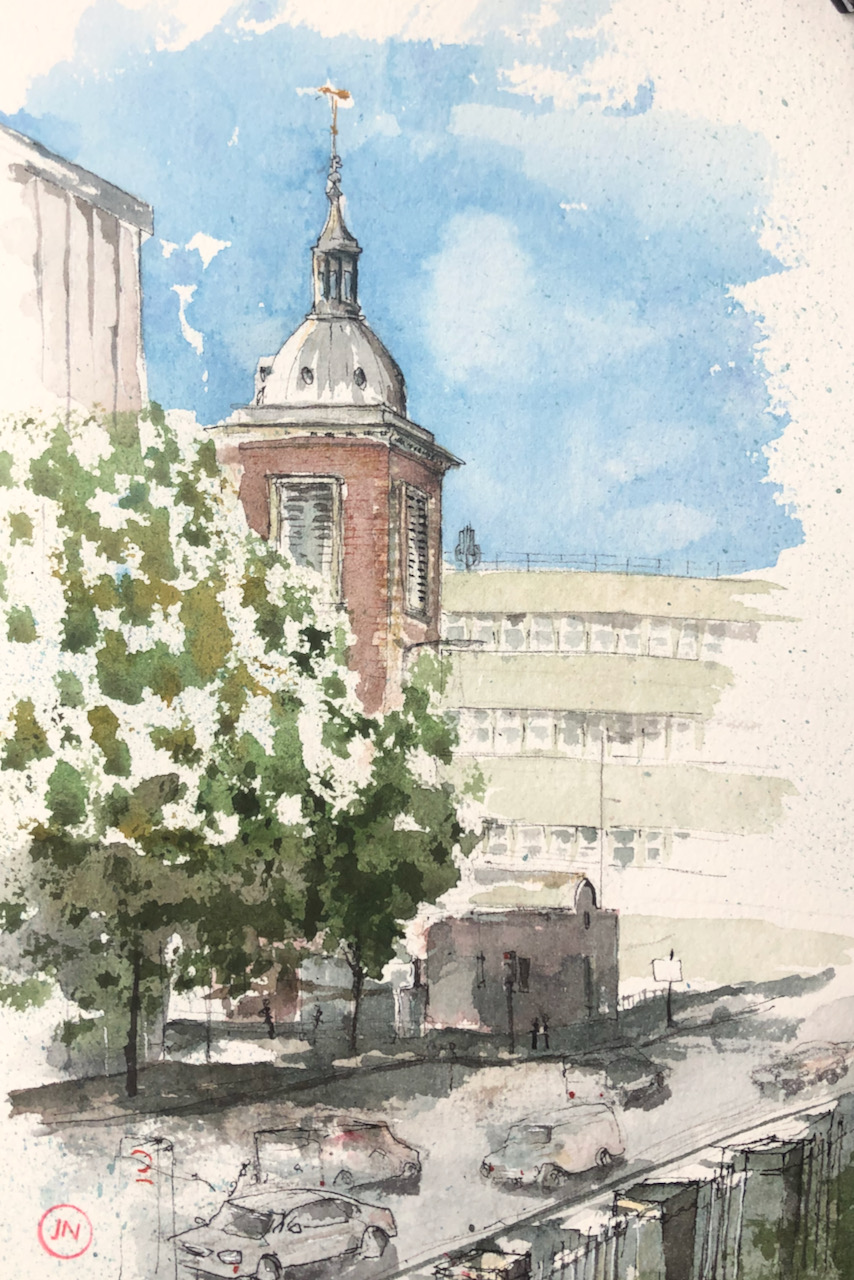
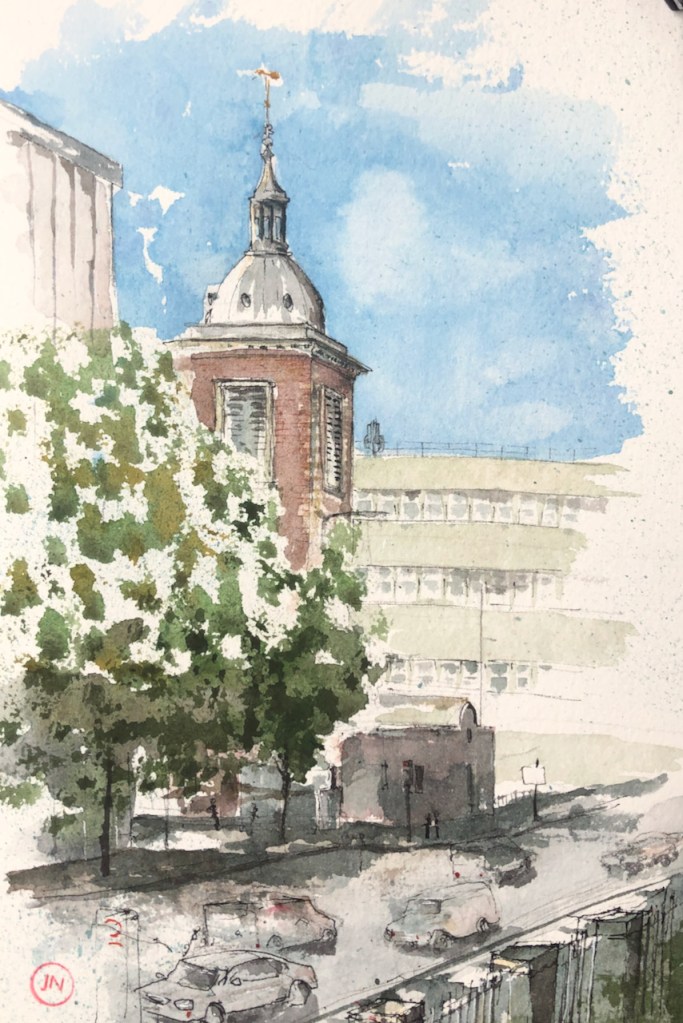
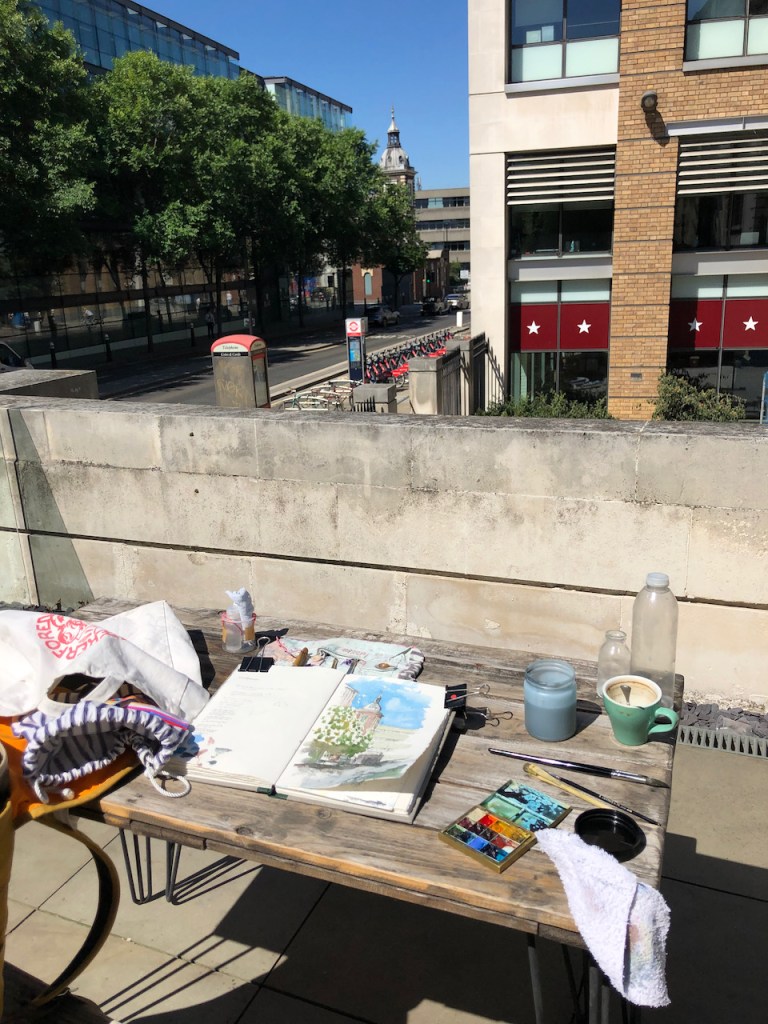
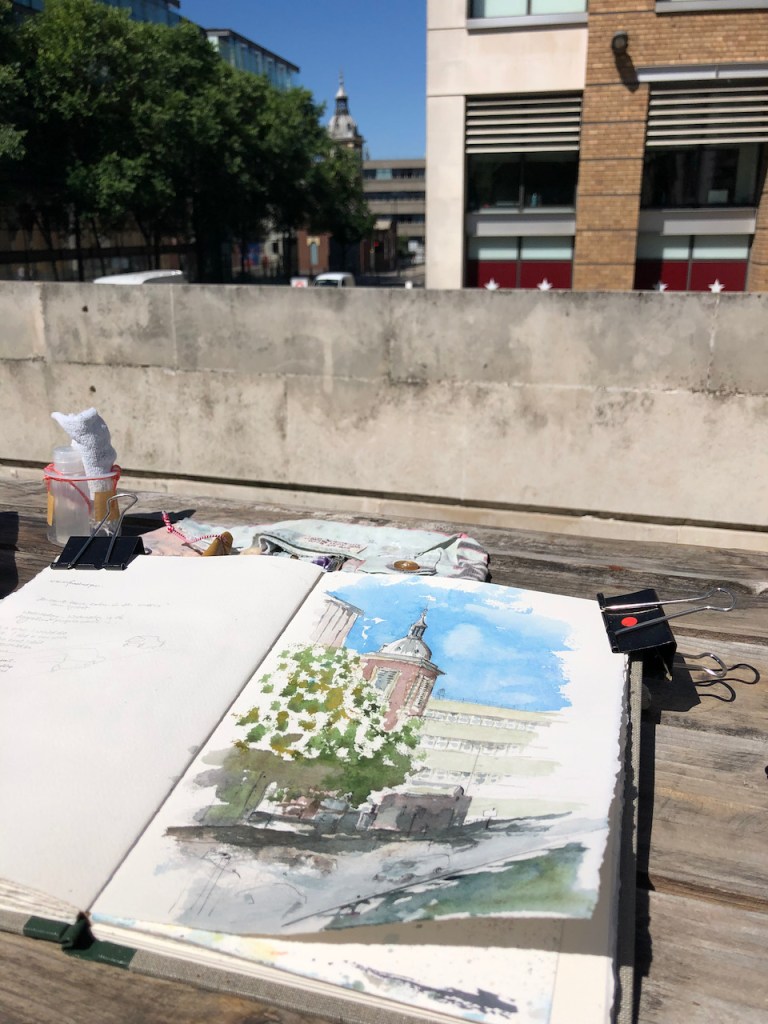
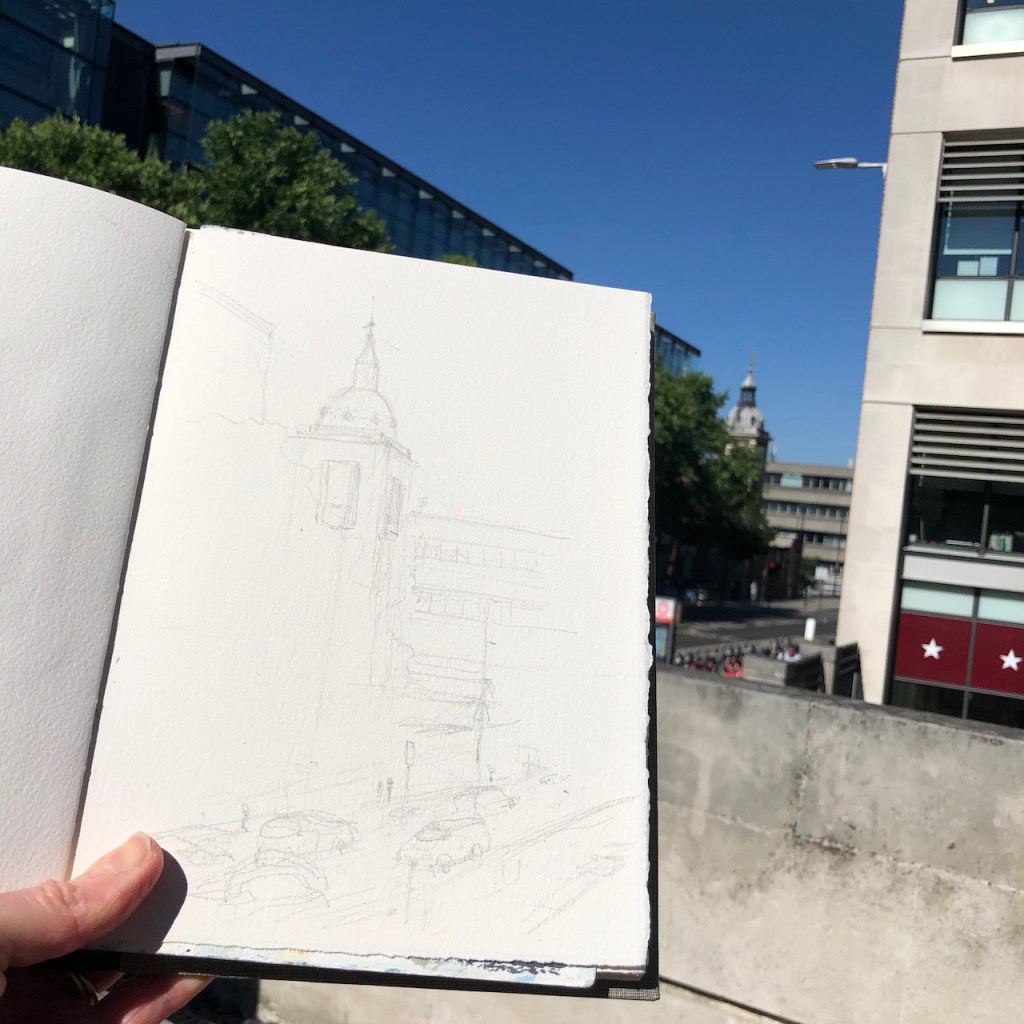
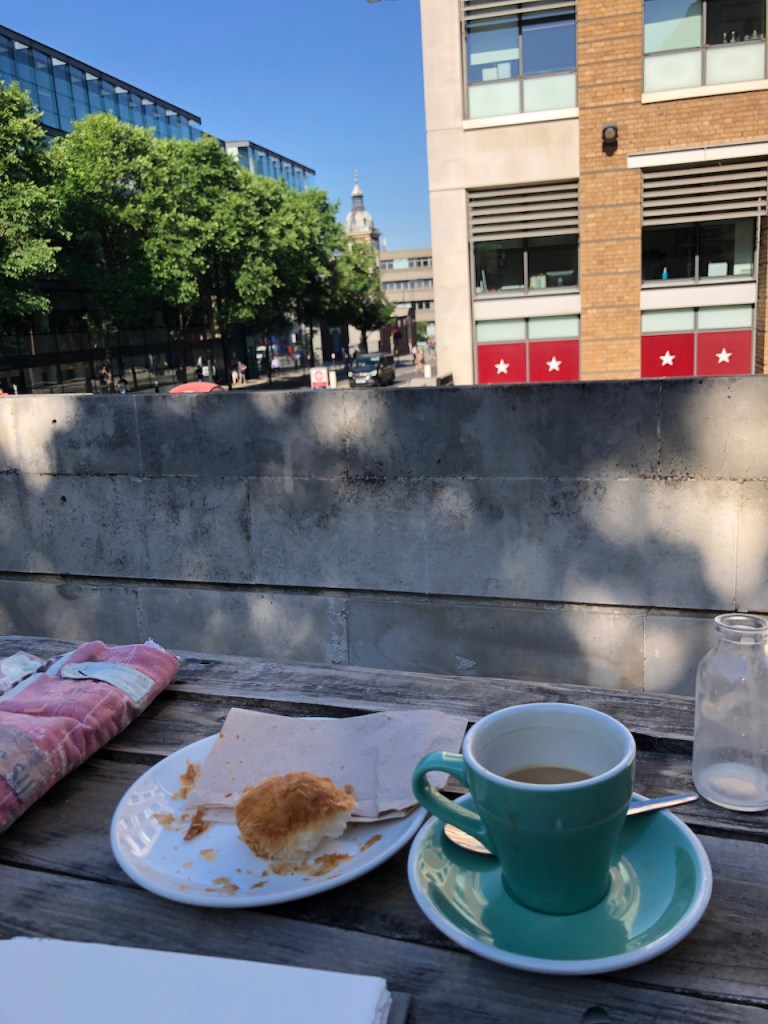
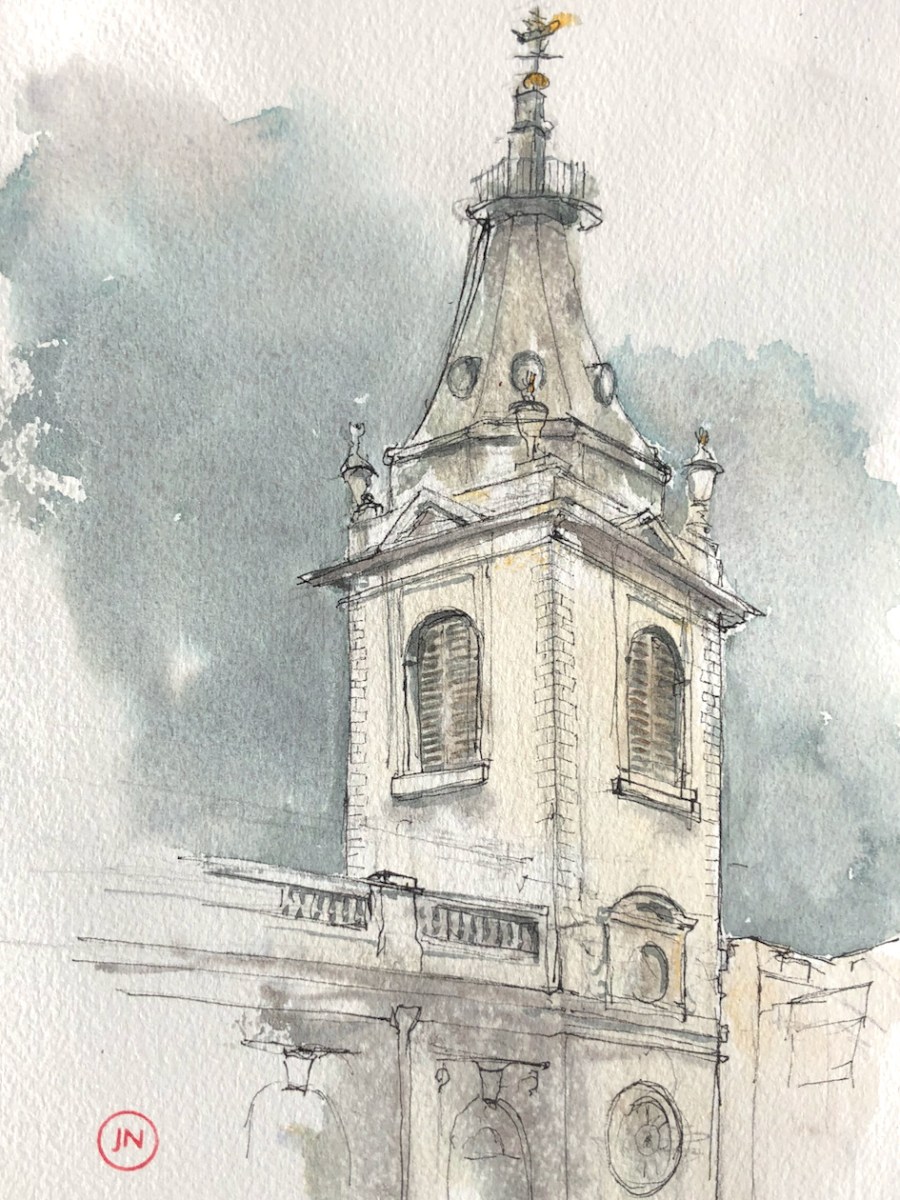
On a lovely sunny morning I walked to the Wren café for breakfast. The Wren is in Saint Nicholas Cole Abbey church on Queen Victoria Street. There is a terrace high above Queen Victoria Street. It commands an excellent view of St Paul’s Cathedral, but I chose to look along the busy road and sketch the Guild Church of St Benets.

Guild Church of Saint Benets, from St Nicholas Cole Abbey, Queen Victoria Street EC4. 16th June 2021, 08:30 – 10:45am, 10″ x 7″ in sketchbook 10.

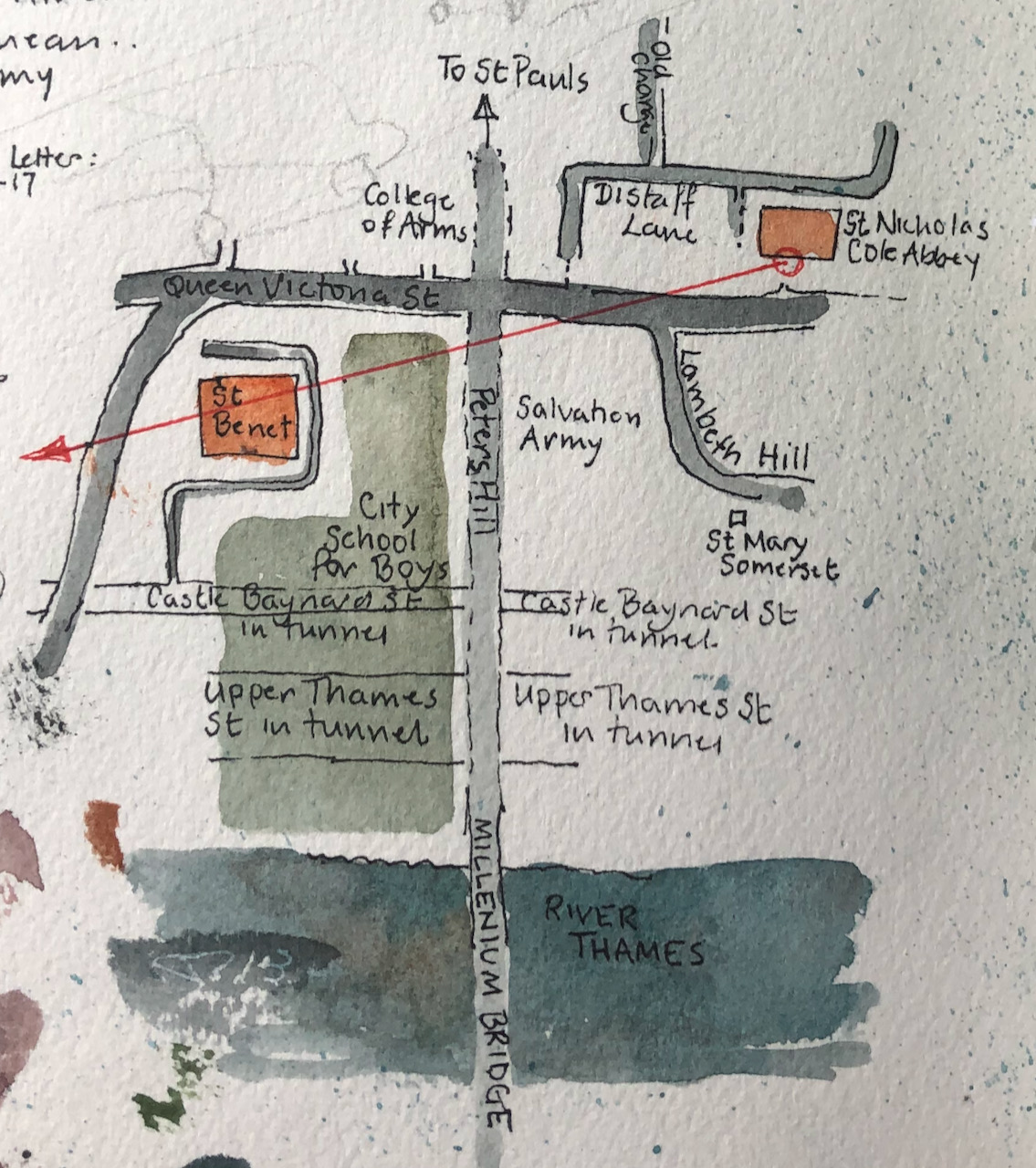
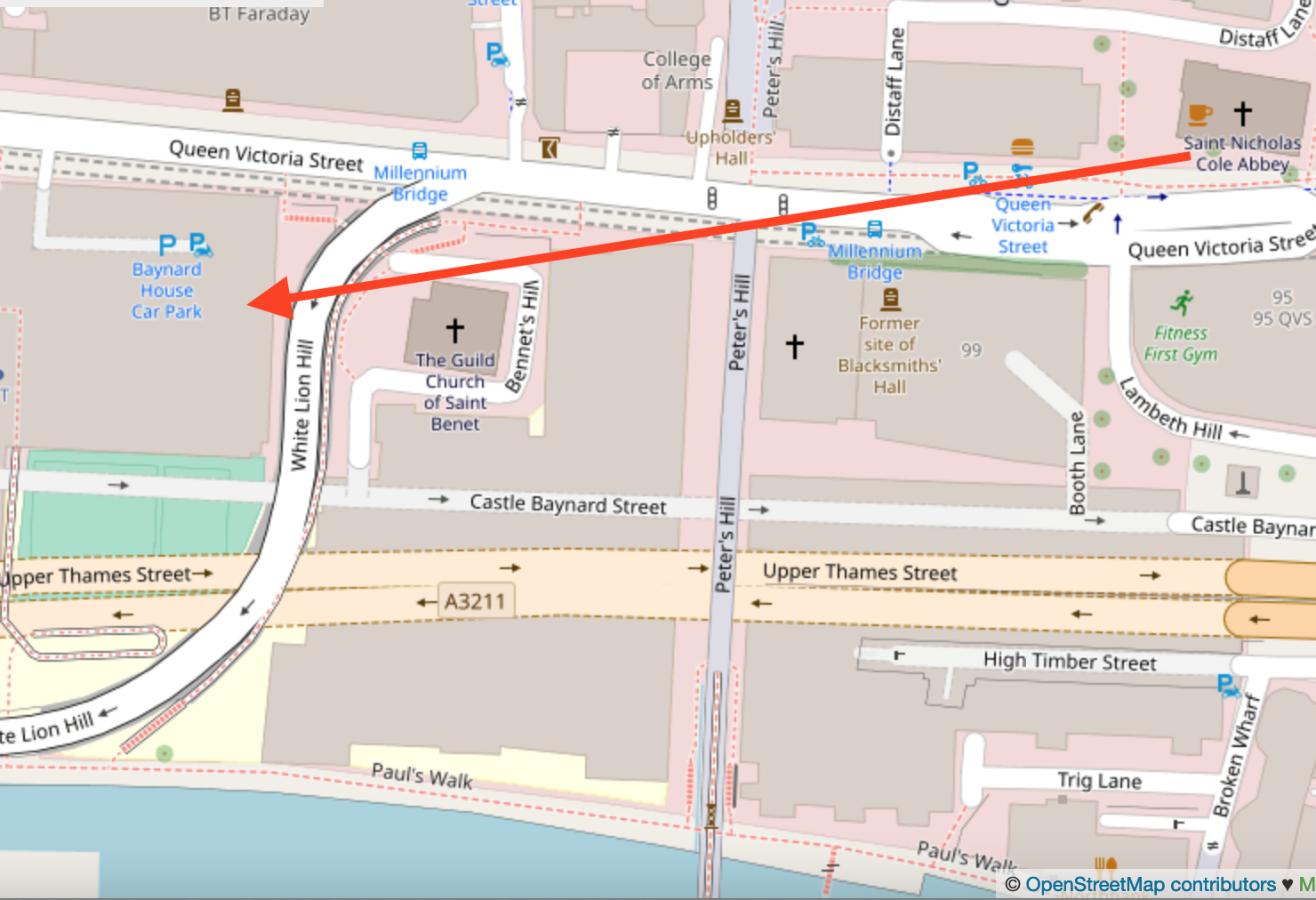
The building in the background is Baynards House, a BT building. In front of the church is the City of London School for Boys. Here are maps:

The Guild Church of St Benets is an active church with services in Welsh. It is a Wren Church, listed Grade I. The listing on the Historic England site says that this is “one of the least altered of Wren’s churches”, since it was not damaged in the 1939-45 war.

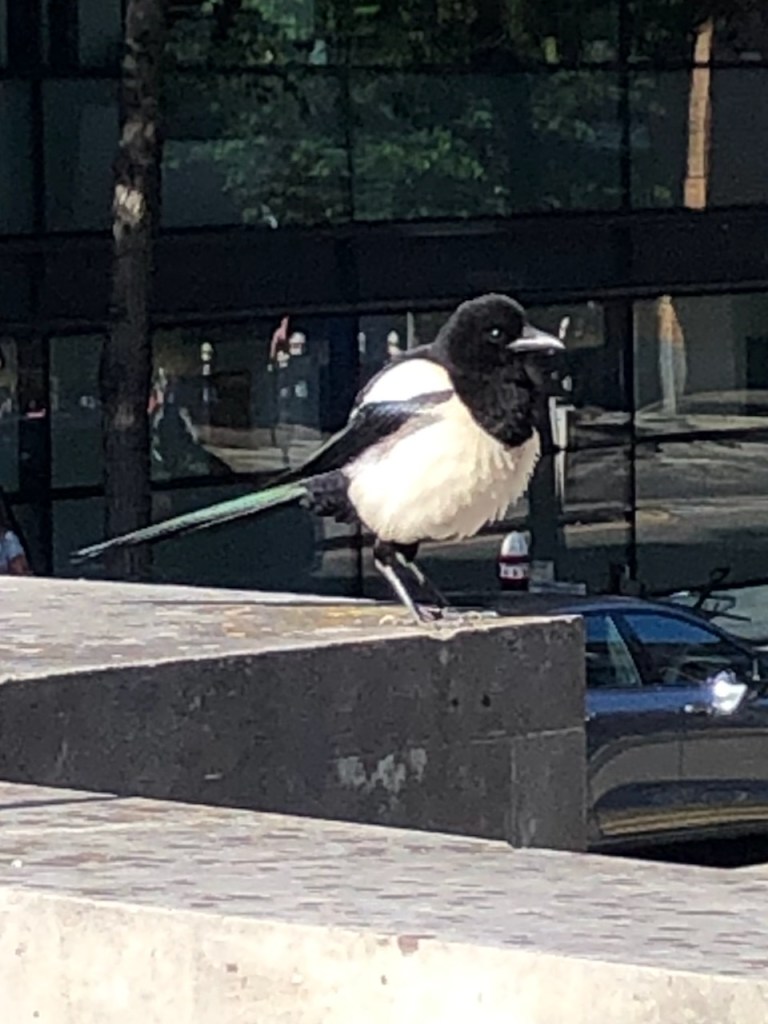
Here are a few photos of work in progress on the drawing, and a portrait of a magpie who came to look at my croissant:

I’ve sketched the view of St Paul’s from the same location:

St Paul’s Cathedral from Wren Coffee

Wren Coffee has re-opened! This is a marvellous coffee shop in the Church of St Nicholas Cole Abbey, on Queen Victoria St. I went there and sat…

I also drew a picture of St Nicholas Cole Abbey, from the North side, in a rainstorm:

St Nicholas Cole Abbey EC4

St Nicholas Cole Abbey is at 114 Queen Victoria Street, EC4V 4BJ.  The City of London entry for this church tells me: The church is dedicated to the…

Monument EC3, on a hot day

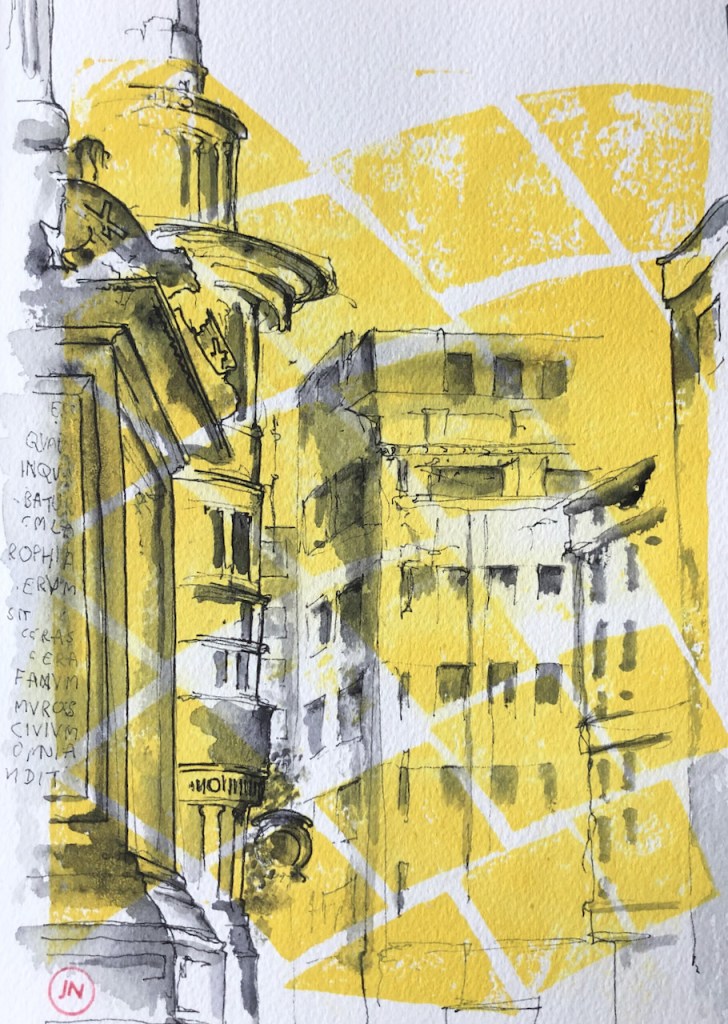
Le Pain Quotidien at Monument was open on Sunday. I found a table in the shade and sketched.

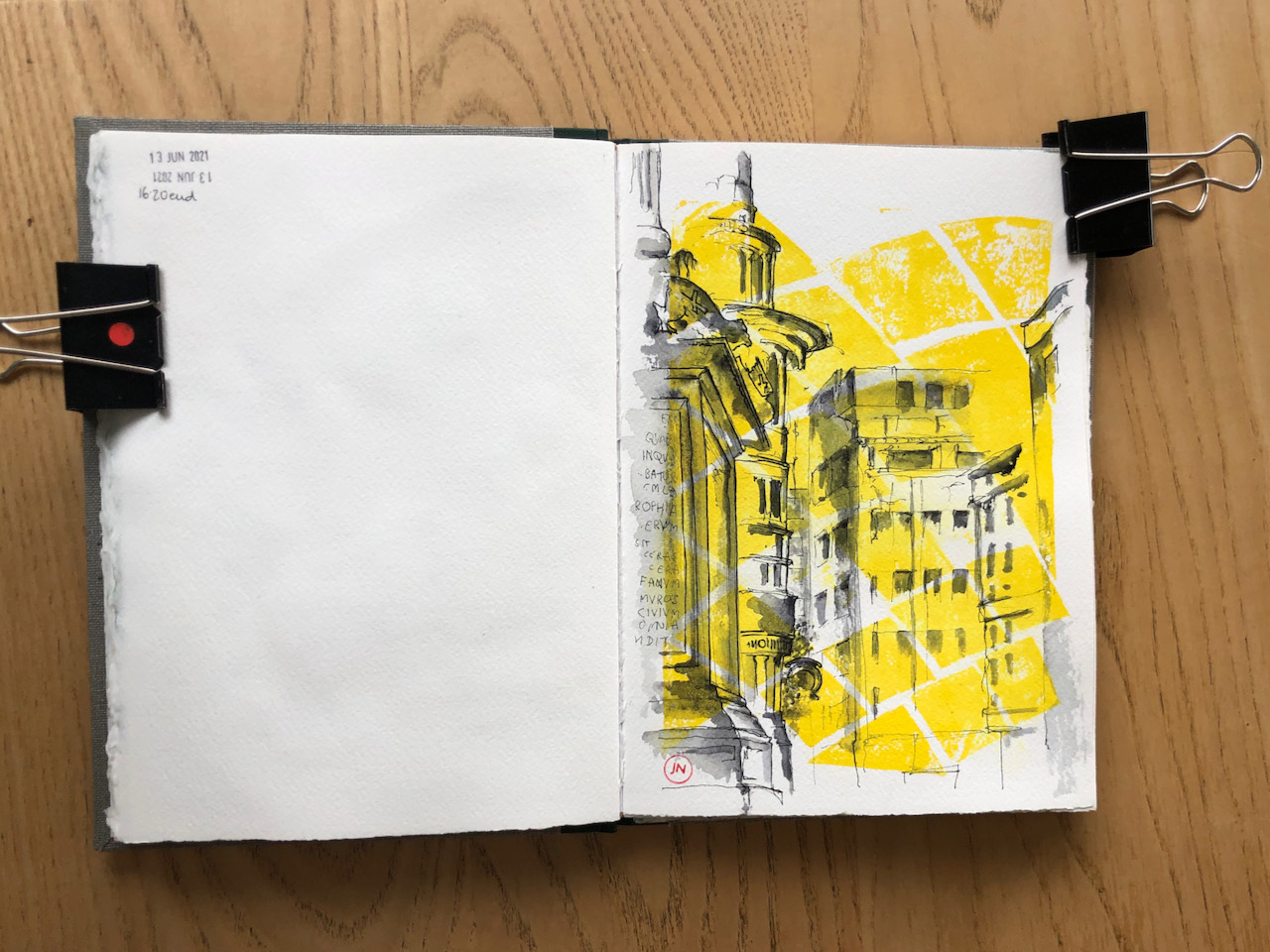
Back at home I added tone and an experimental print background. What do you think?

Drawing: waterproof ink and watercolour Neutral Tint.

Print: Plate made from cut cardboard. Printed using Schmincke relief ink: “Aqua Linodruck #19210 permanent yellow”. Printed directly into the sketchbook.