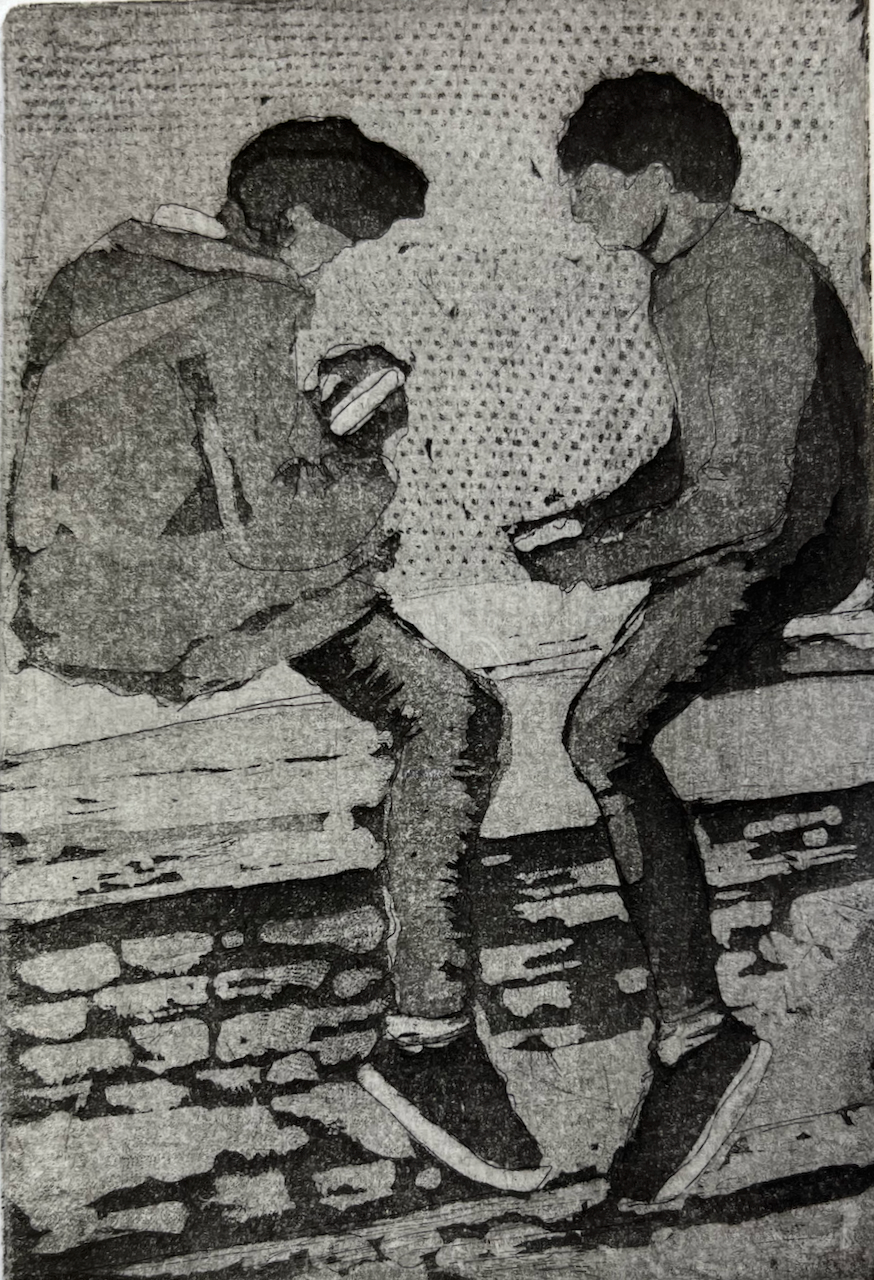
Two boys

Here’s a print I made at East London Printmakers last week.
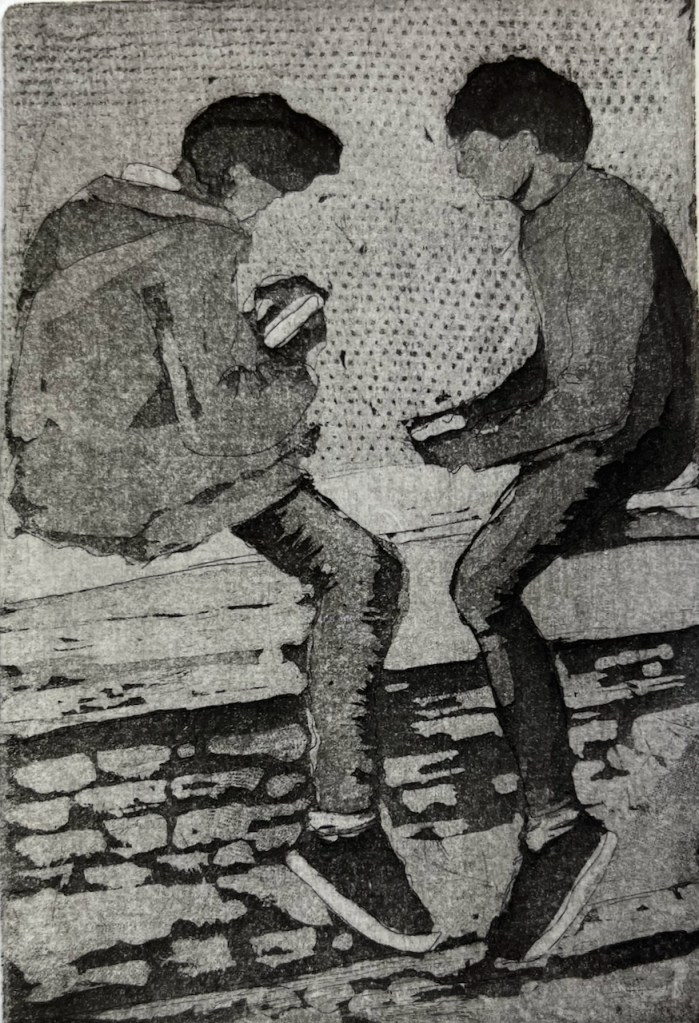
Two boys, etching, image size about 5inches by 3inches

I wanted to show how concentrated these people were, immersed in what they were doing, sitting on the wall.

It is printed on Fabriano Unica paper, using Charbonnel F66 traditional etching ink. Here is the copper plate:
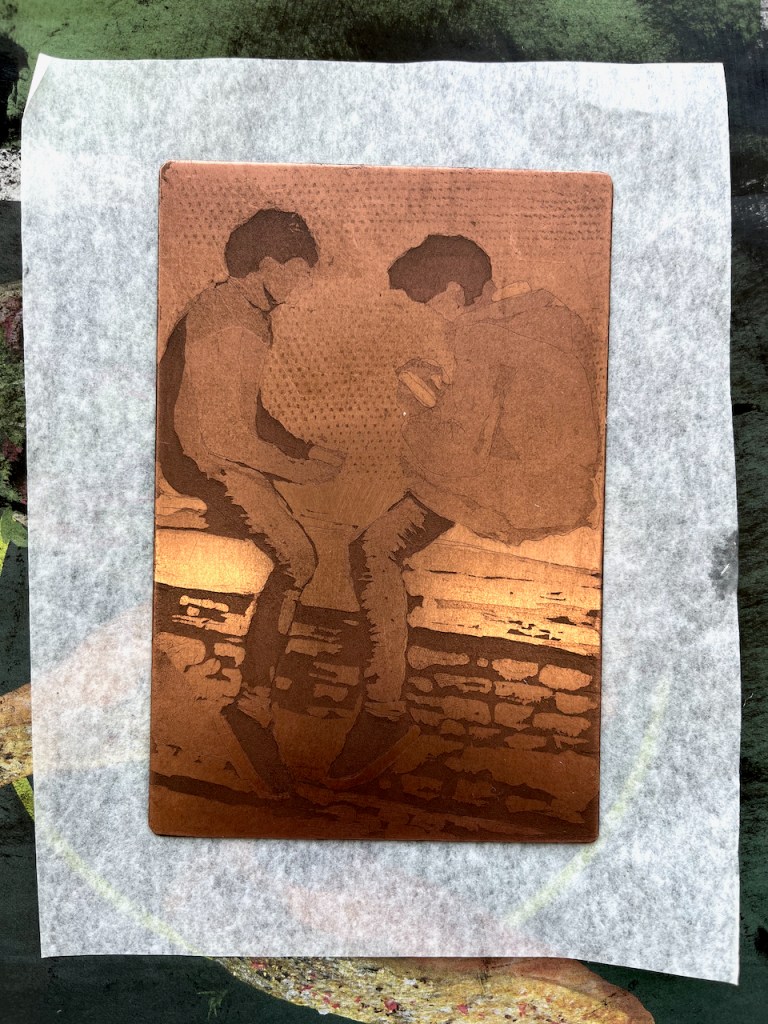
The plate is made with hard ground lines, soft ground patterns, and three aquatint sessions.

I made some variations of this print. Here is one, using chine-collé.
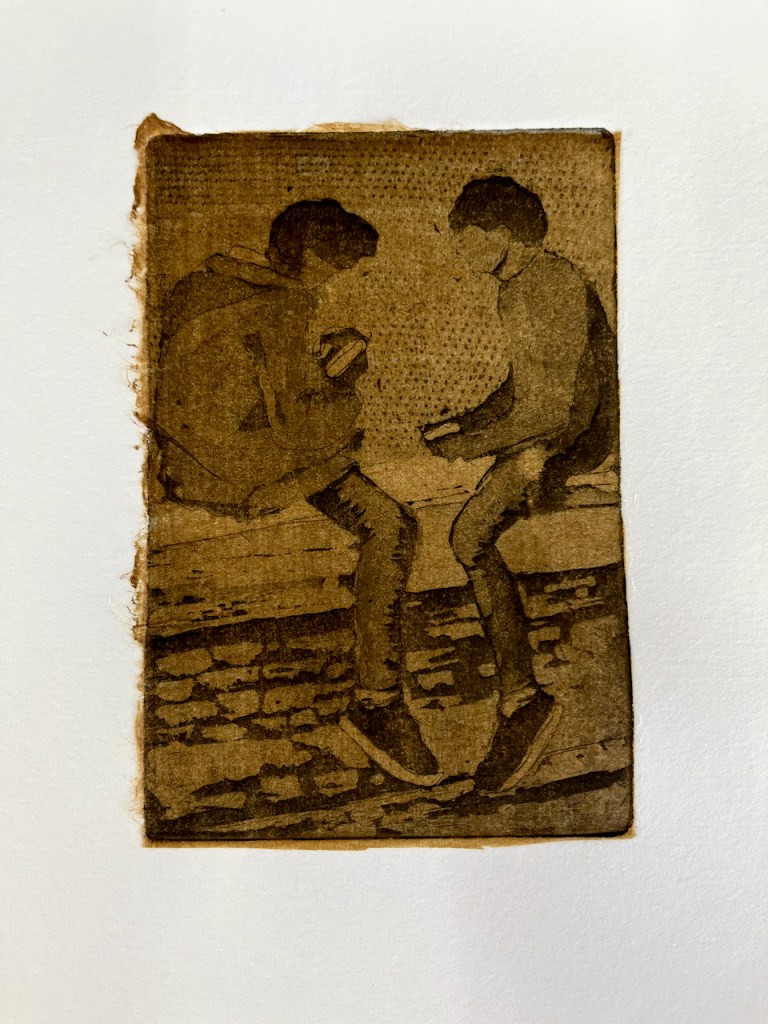
Two boys, warm brown chine-collé

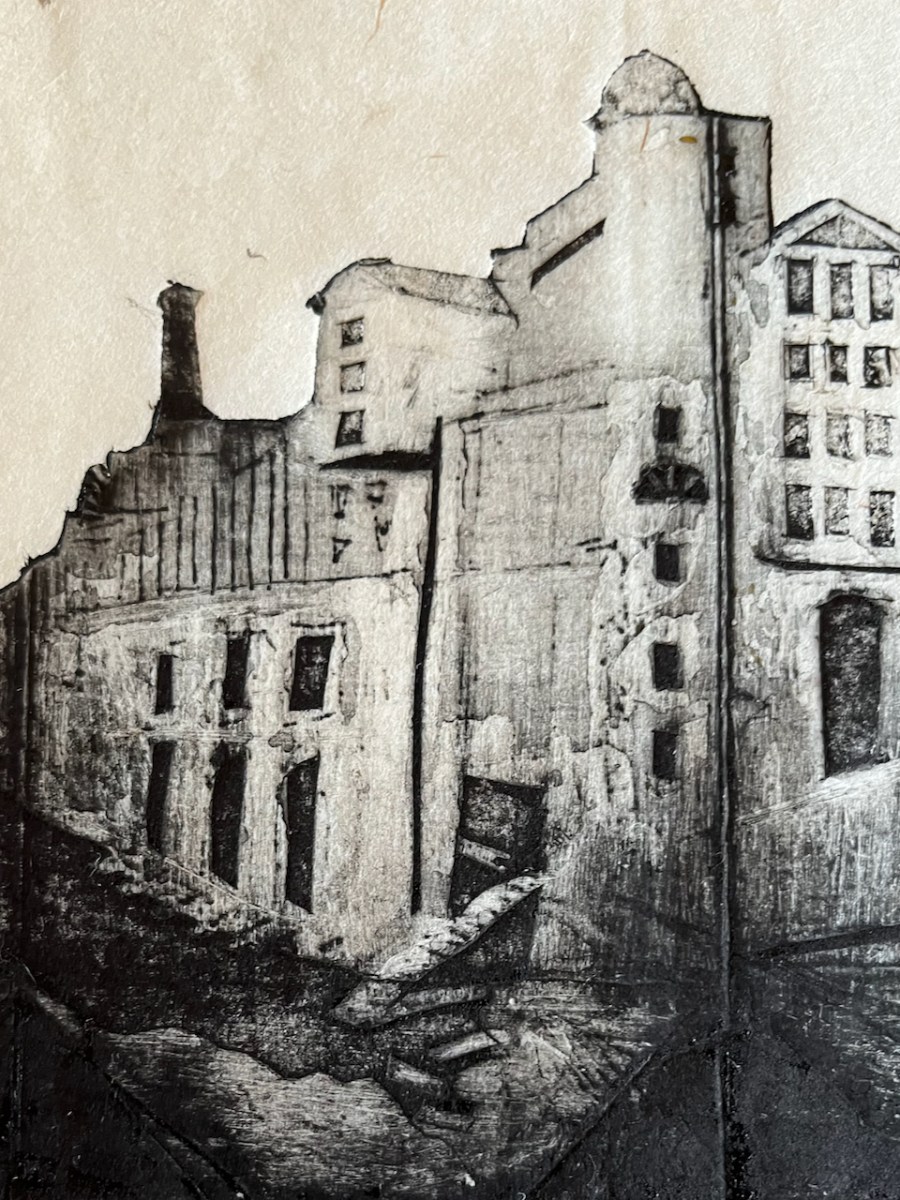
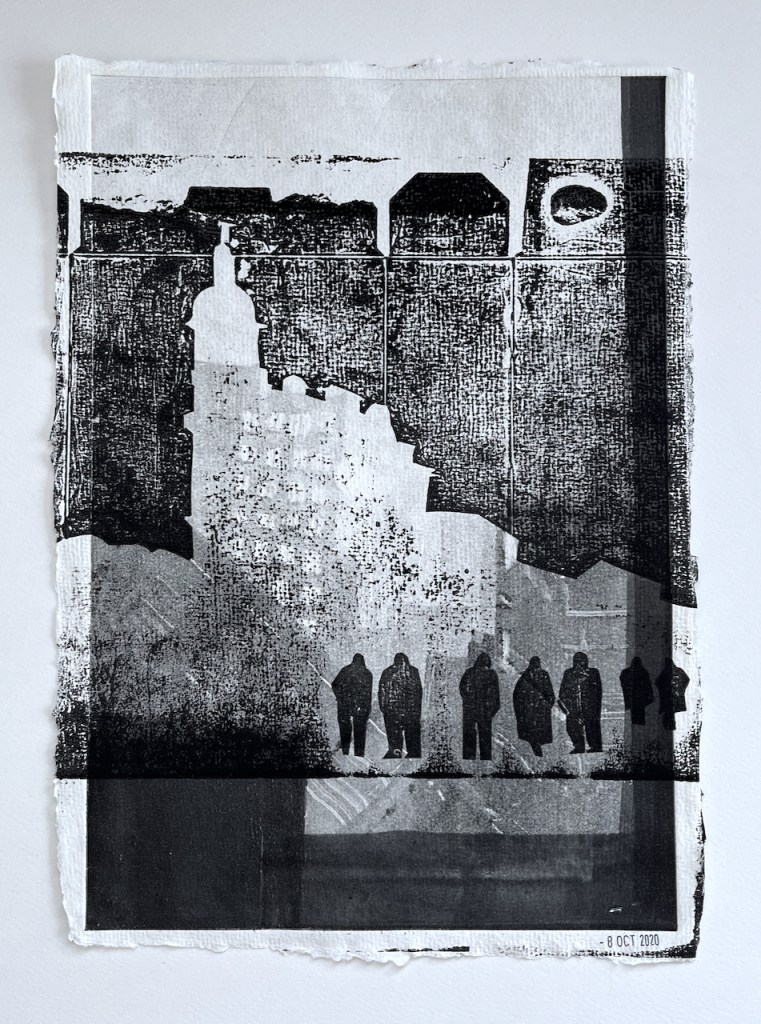
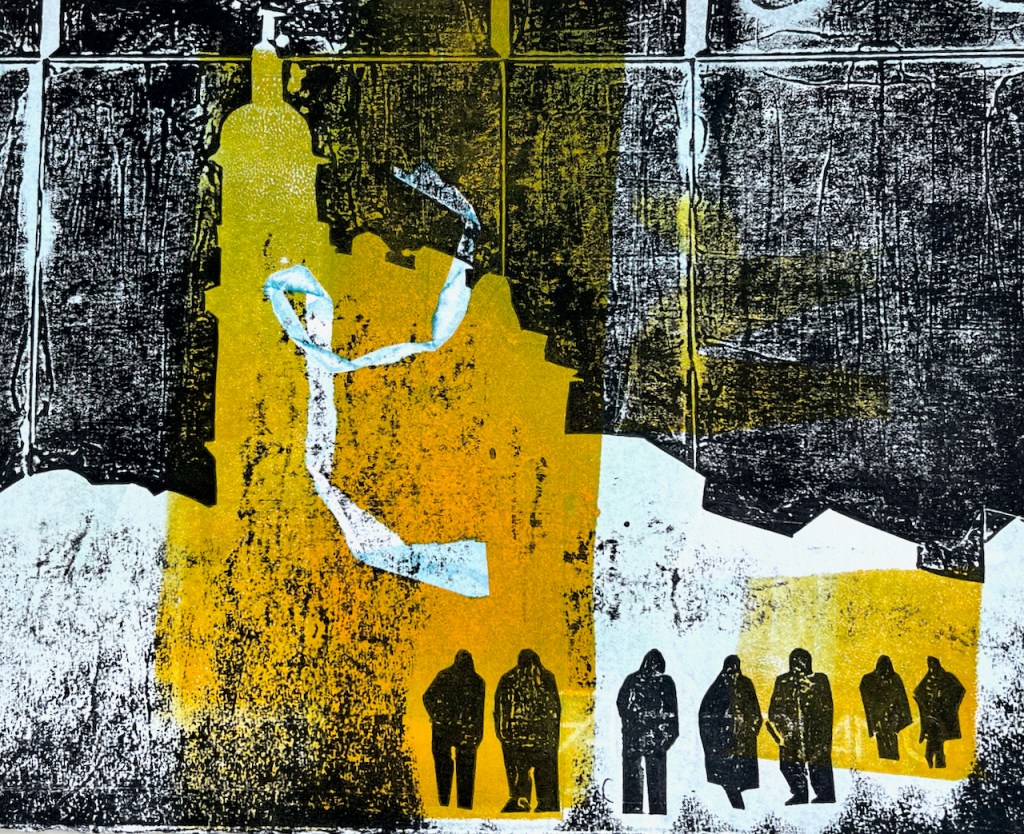
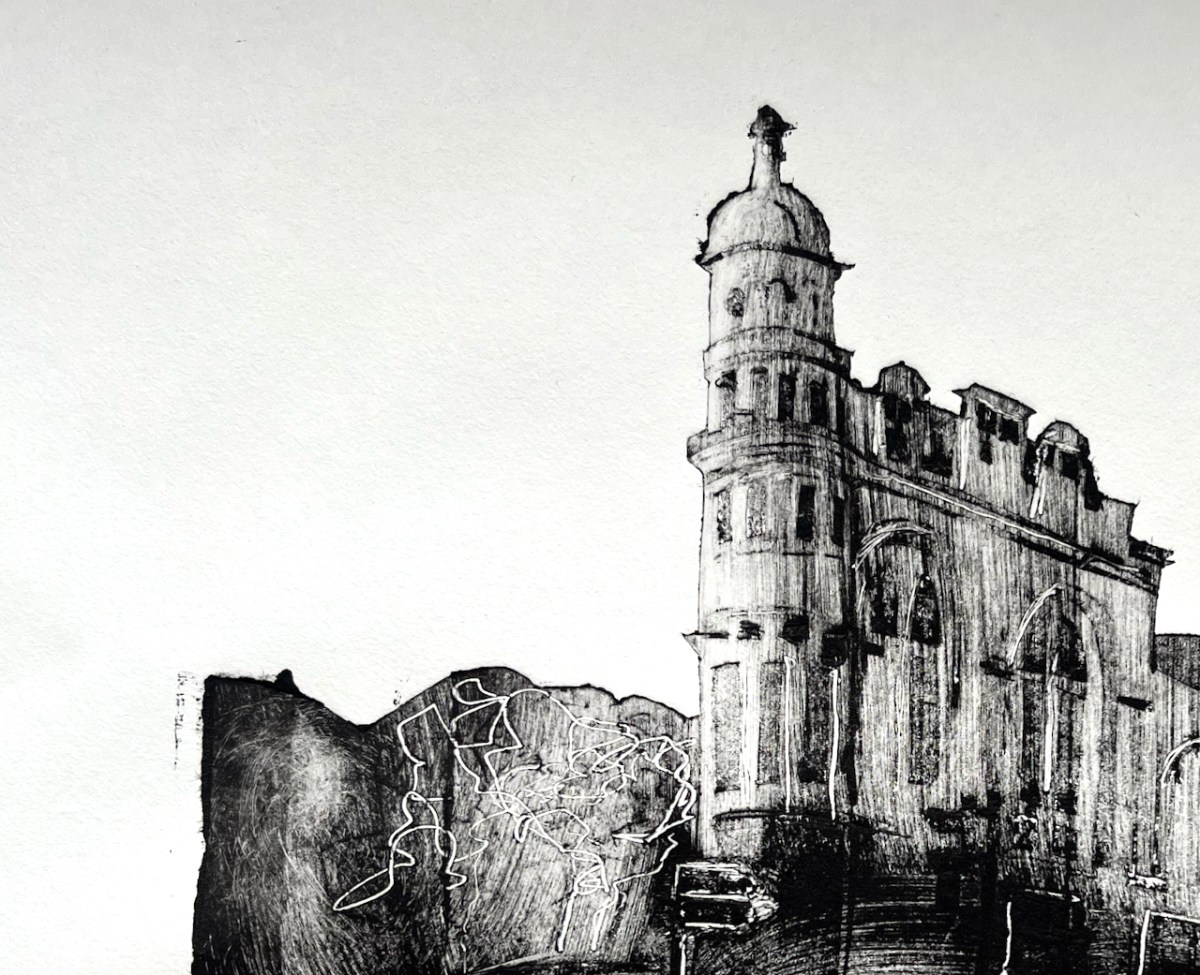
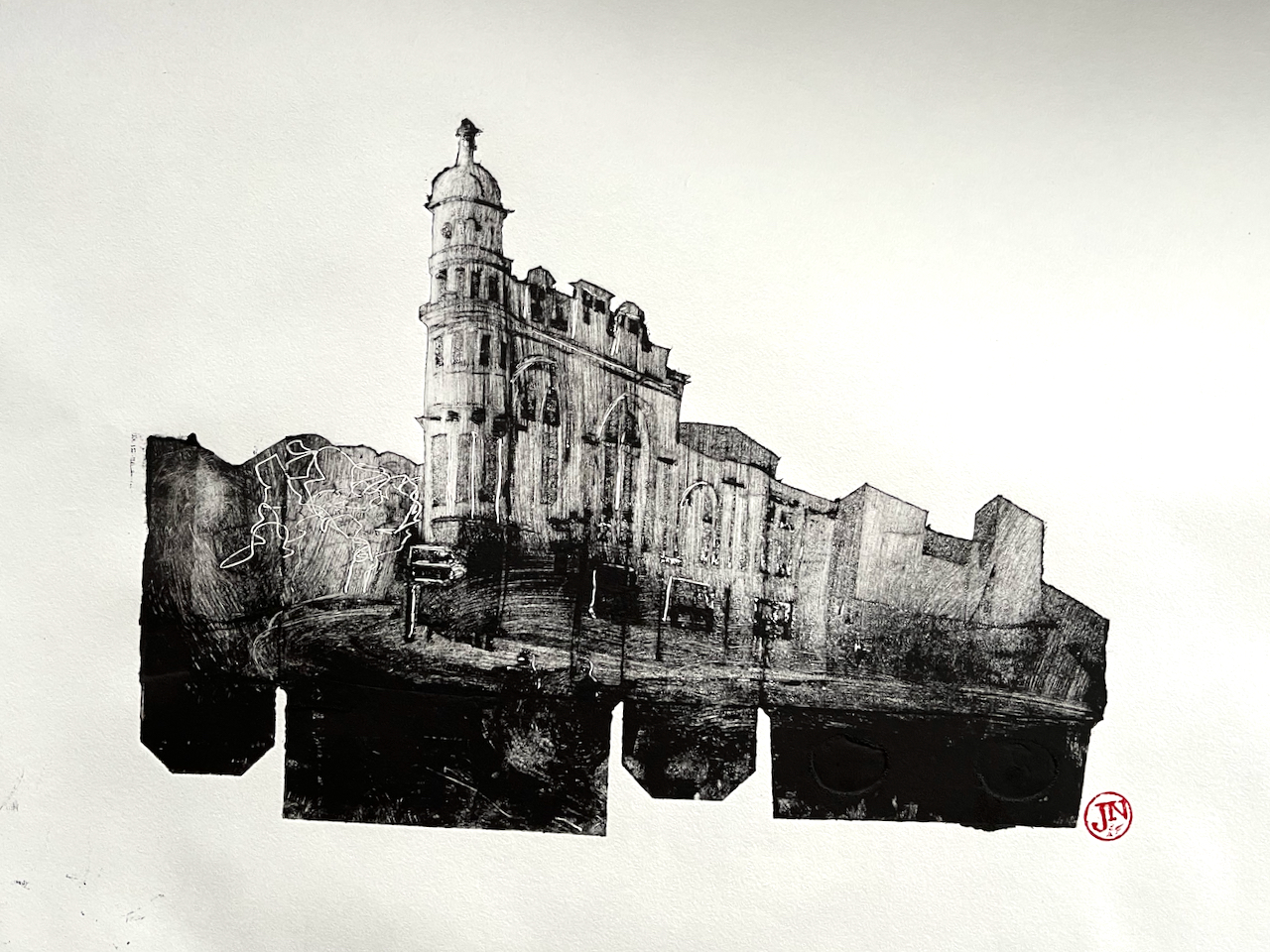
Sometimes in the printing process, magic happens. As I was packing for this print session, searching for paper, tissues, gloves, and other printing essentials, I encountered a thick envelope labelled “Old Prints”. I pulled out one of those, a street scene, with a vague idea of overprinting it. It is a drypoint I made years ago. The vague idea turned into a plan, and then a print. Here it is. I was really pleased with how it came out. The chine-collé is also a leftover from another project.
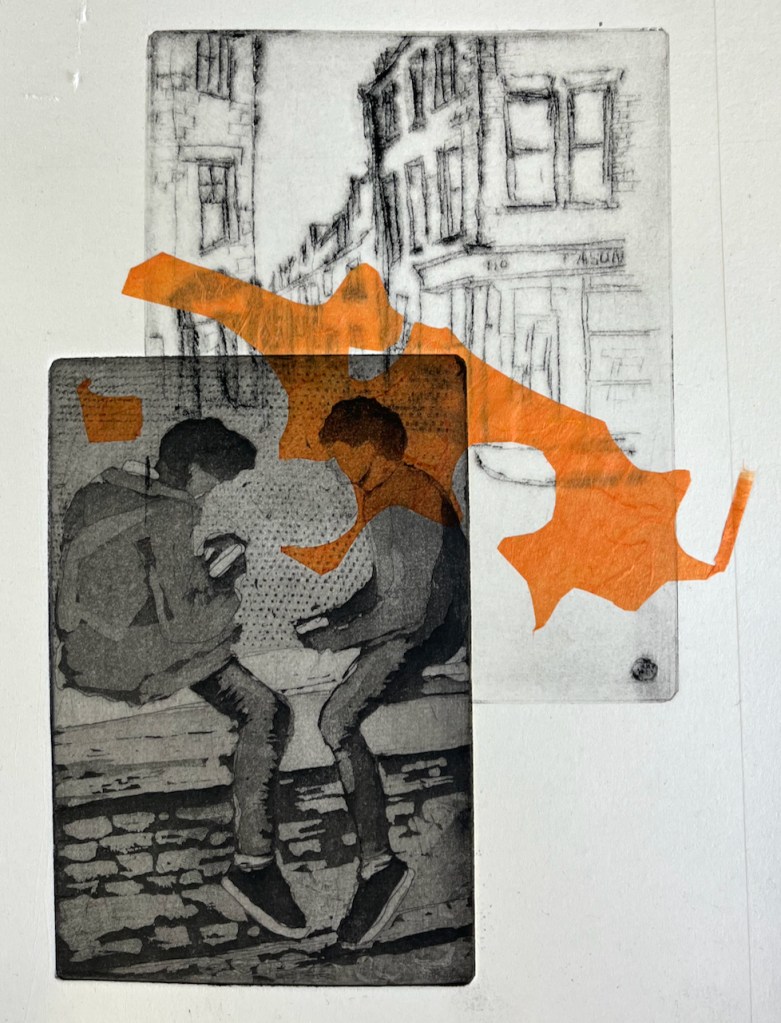
Two boys and street, combined image size about A5. Etching, drypoint and chine-collé.

St Pancras Old Church NW1

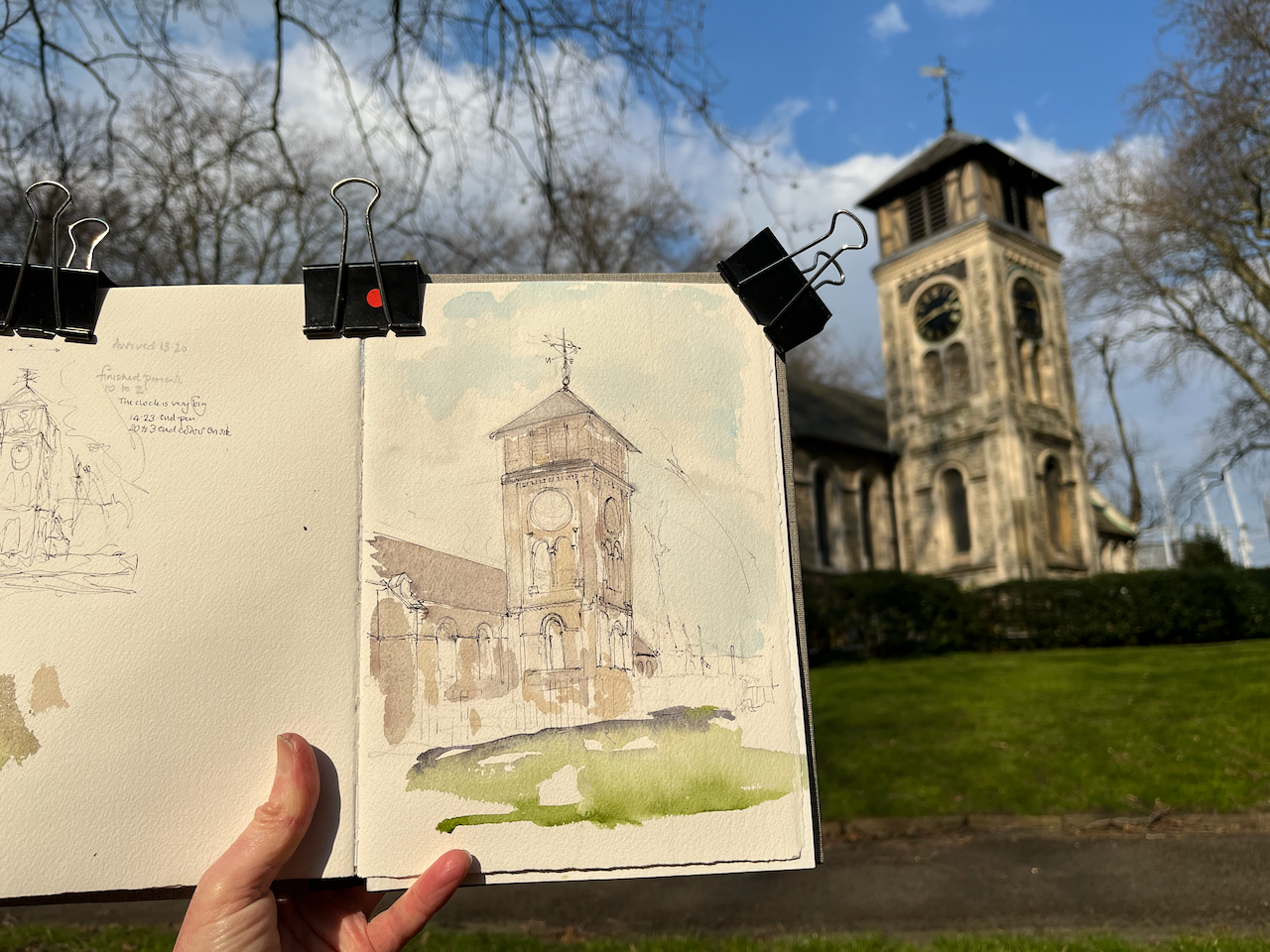
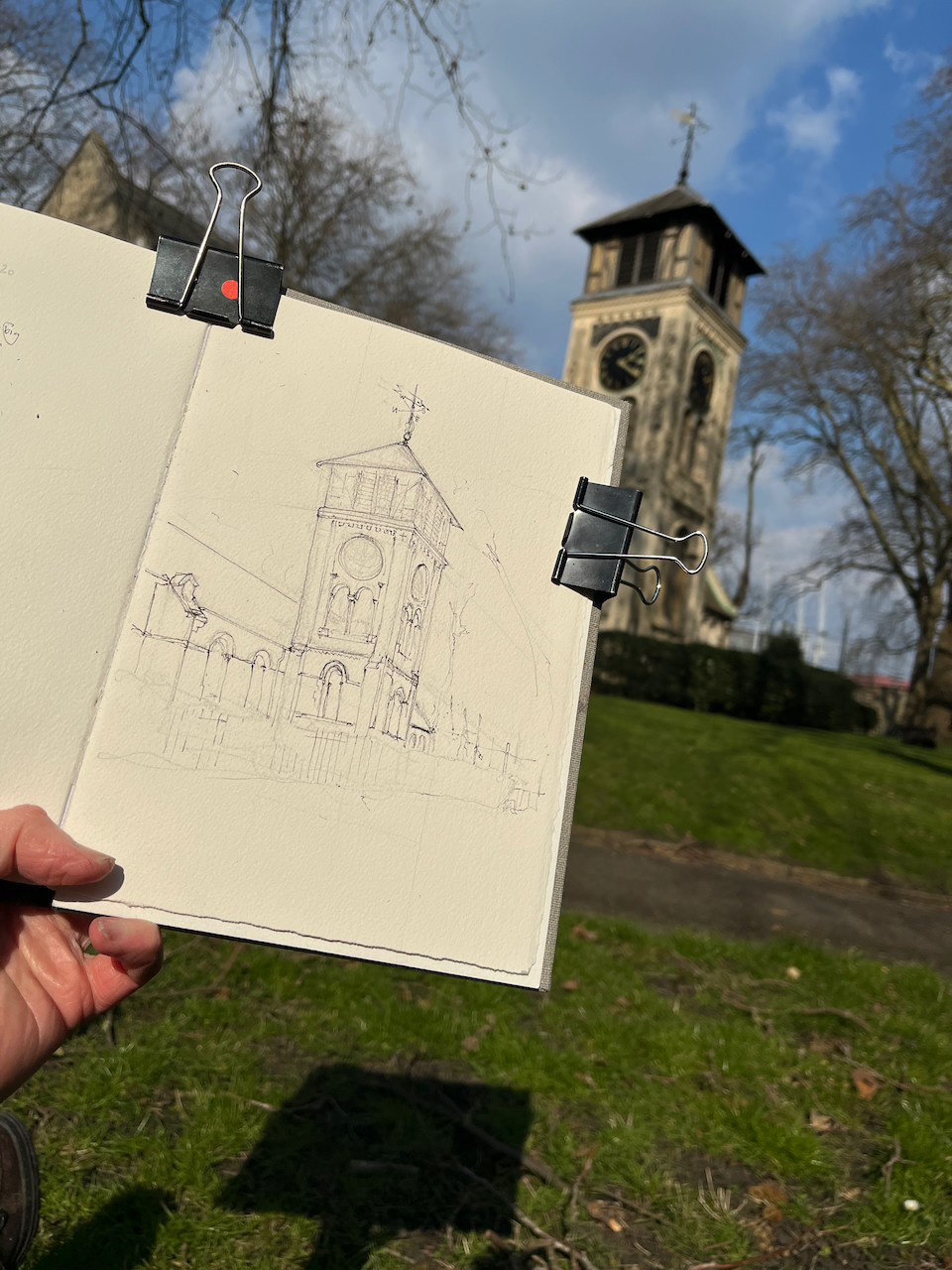
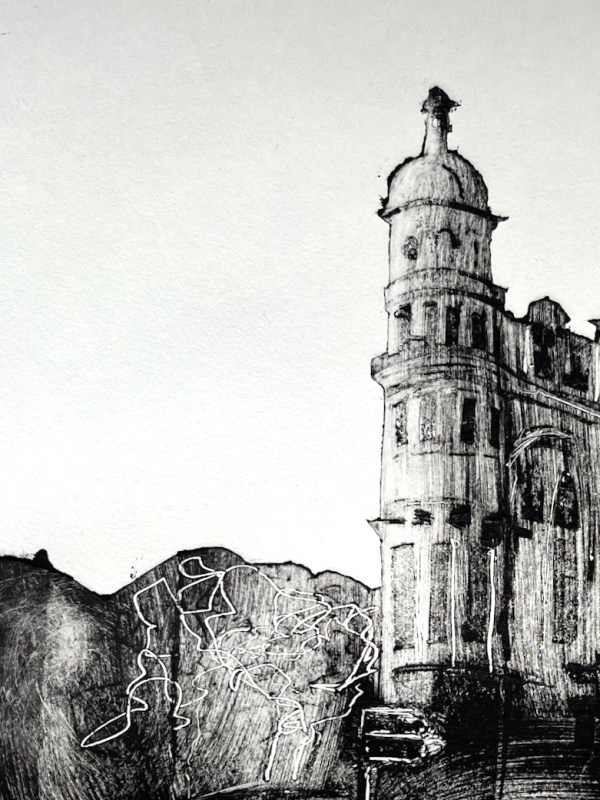
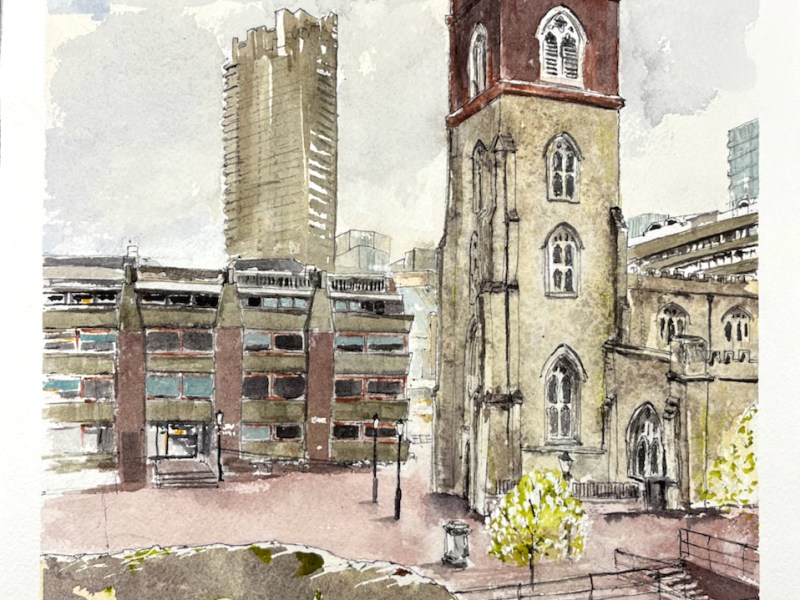
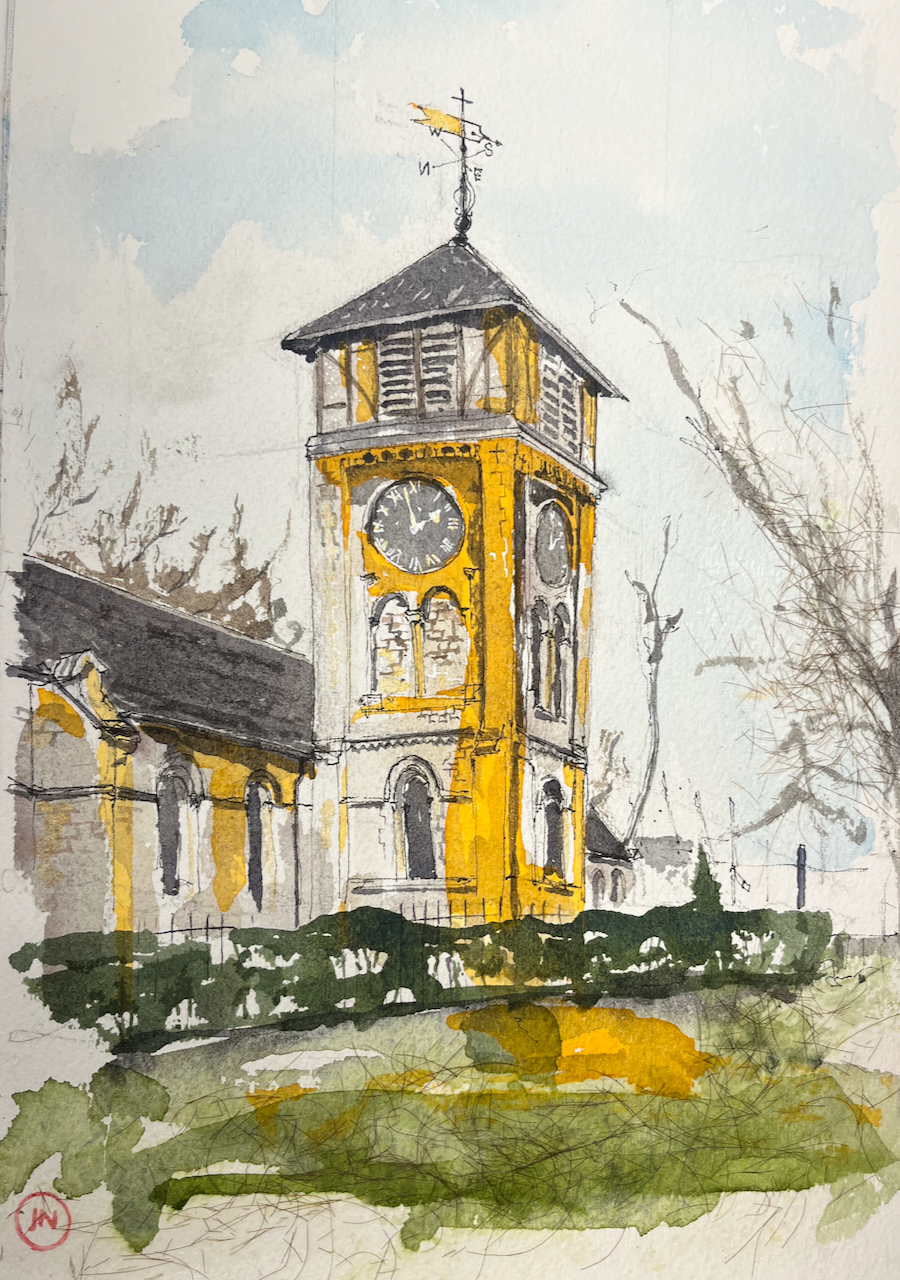
On a sunny day I went to draw a church tower in a country churchyard. The churchyard is near Kings Cross and the church tower is that of St Pancras Old Church.

St Pancras Old Church, tower. 20th March 2022 10″ x 7″ in Sketchbook 11

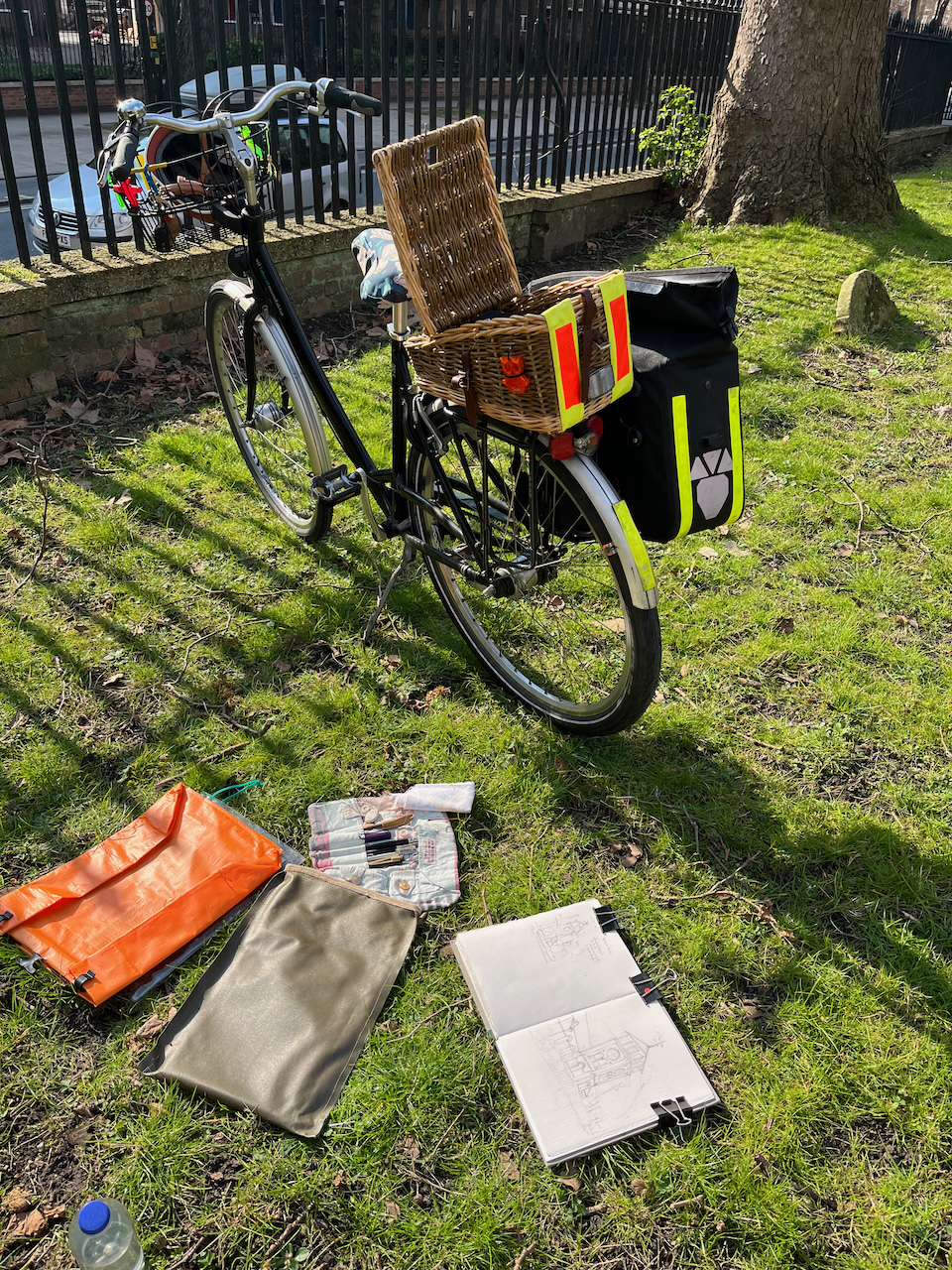
I sketched sitting on the grass beside the River Fleet, while the river flowed behind me, in my imagination.

It’s a real river though. These days it’s under St Pancras Way. But it used to flow by the church.

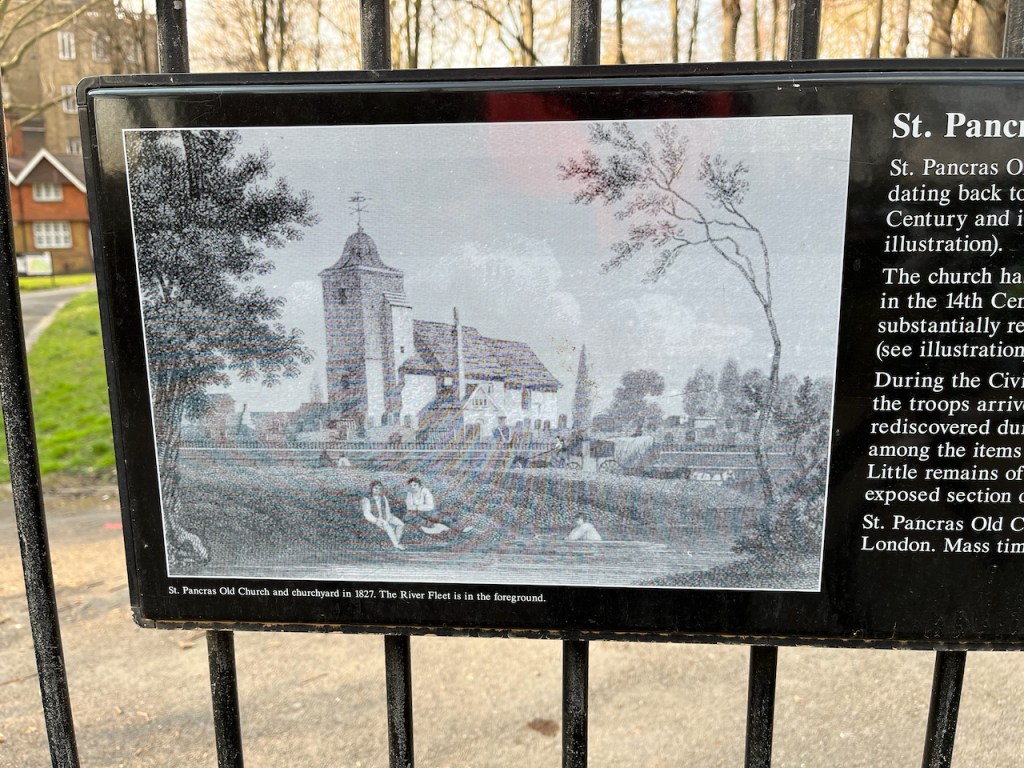
“St Pancras Old Church and churchyard in 1827. The River Fleet is in the foreground.” notice on the railings of the churchyard.

As you see from that picture, in 1827 the church looked very different. The south tower which I sketched is not as ancient as it looks. It was constructed in 1847 to the designs of A.D. Gough.
The church site itself is very ancient. According to the church website, this is one of the oldest sites of Christian worship in London, possibly dating back to the 4th century:

The suggestion that St Pancras Old Church dates back to Roman times has a long tradition, with most suggesting that it was founded in 313 or 314. Most churches in England named for the martyr St Pancras have, or may have, ancient origins, suggesting that veneration of the saint spread quickly after his death in 304.

https://stpancrasoldchurch.posp.co.uk/history/church-history/

Today it is an active church, and a music venue. The churchyard is a glorious green space, much used. Many people wandered past on the paths. No-one paid any attention to me drawing. The dogs did though. I was inspected and approved by each dog that went past.

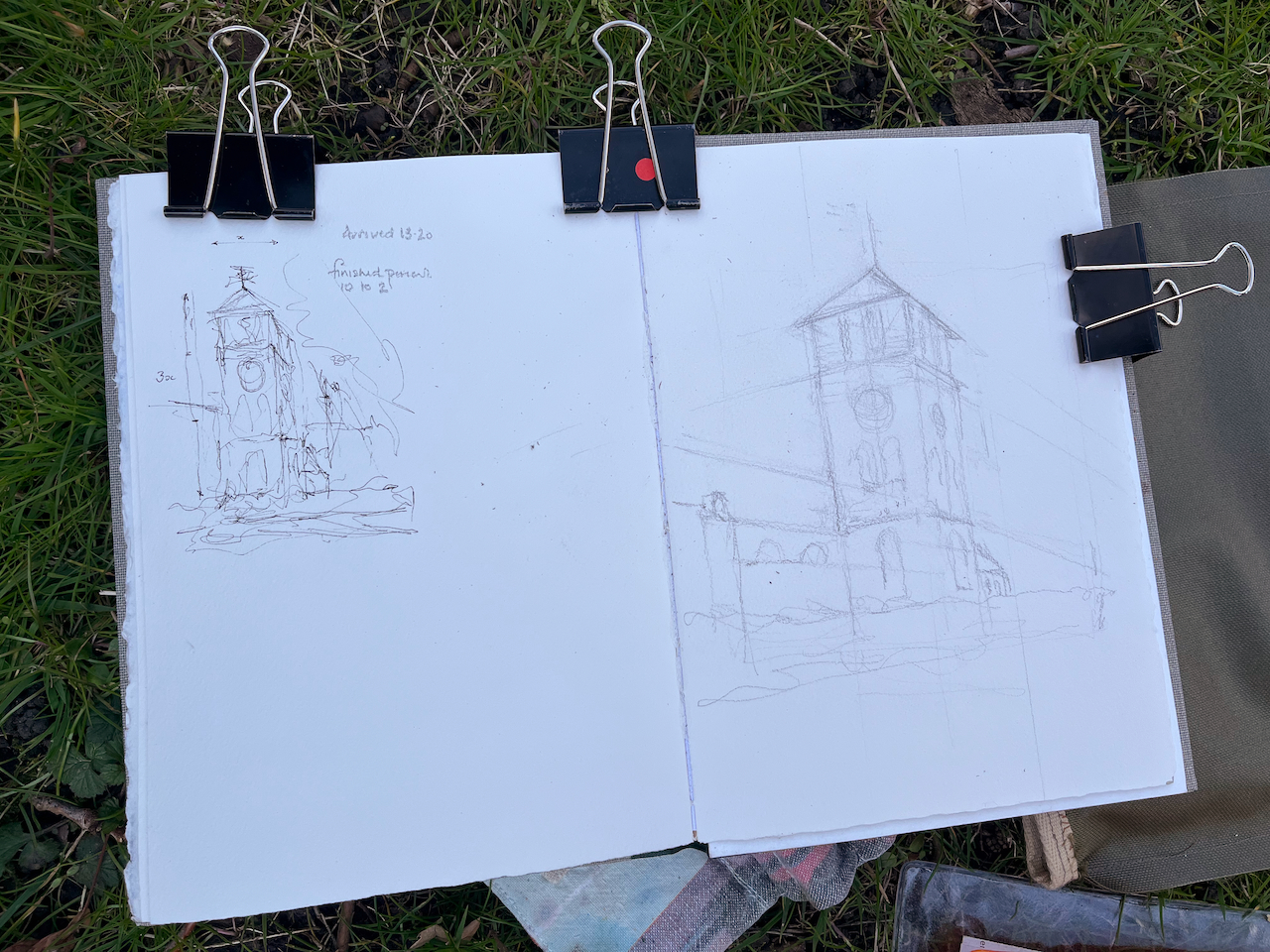
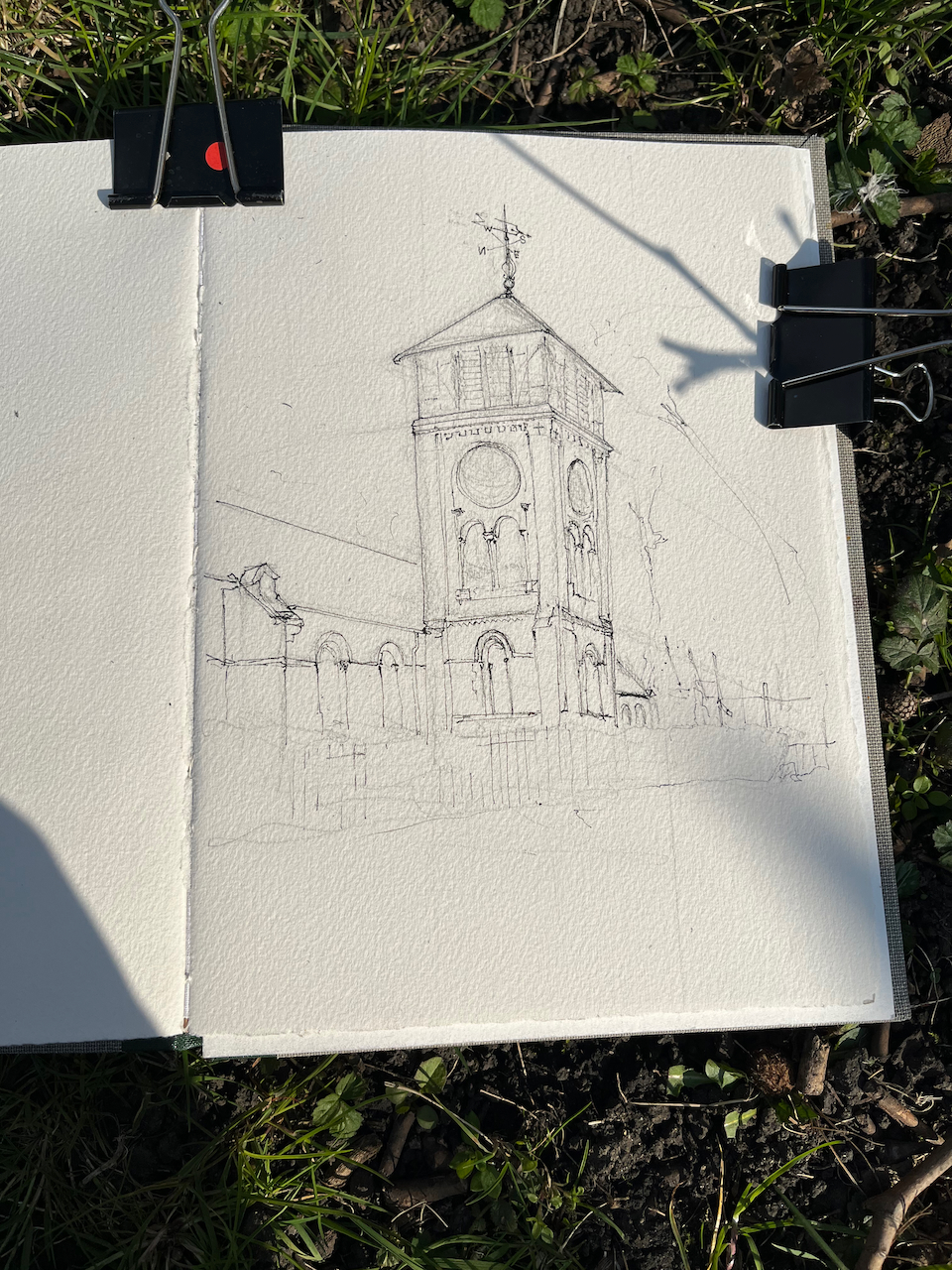
Here is work in progress and a map (click to enlarge the image)

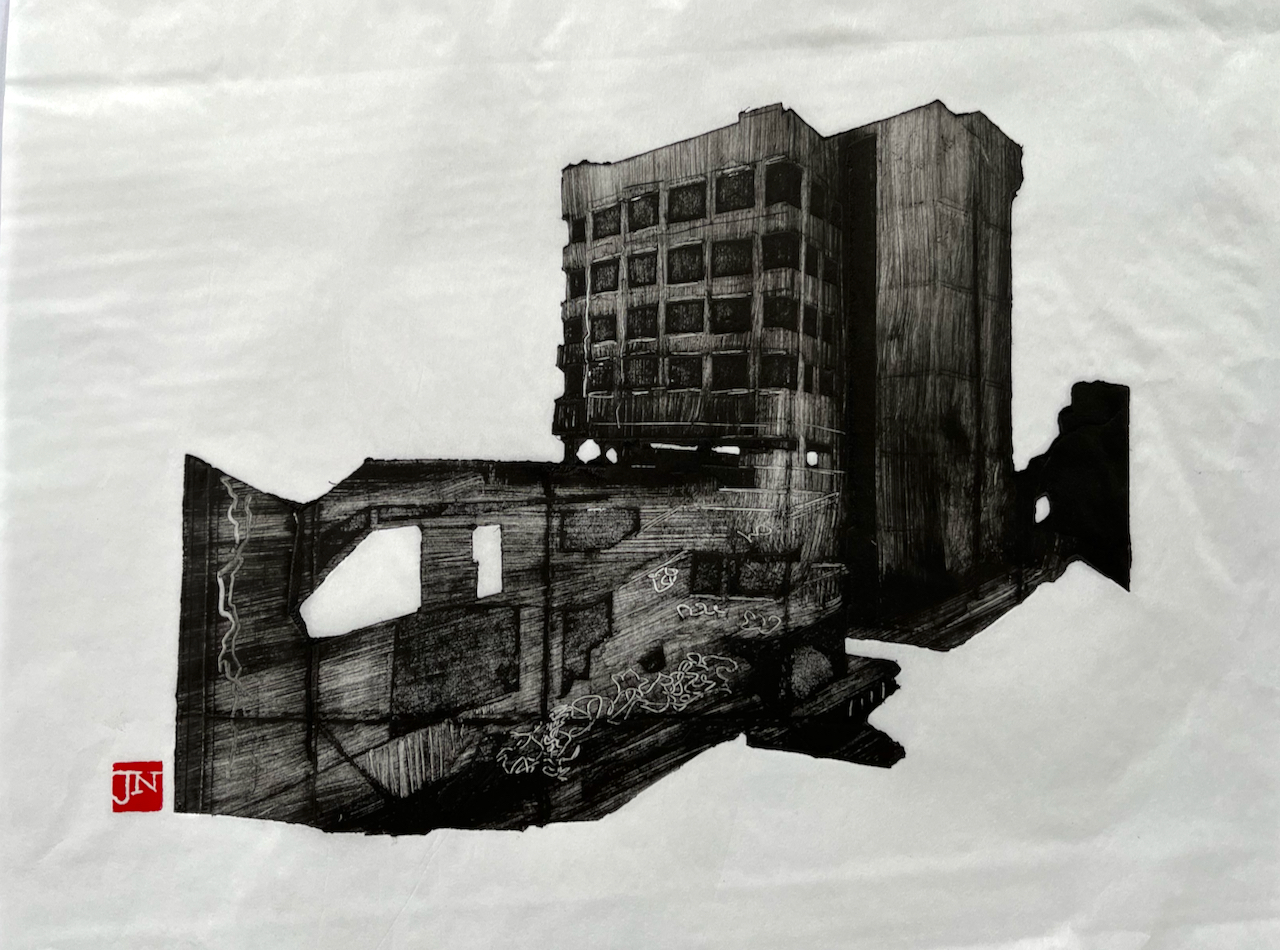
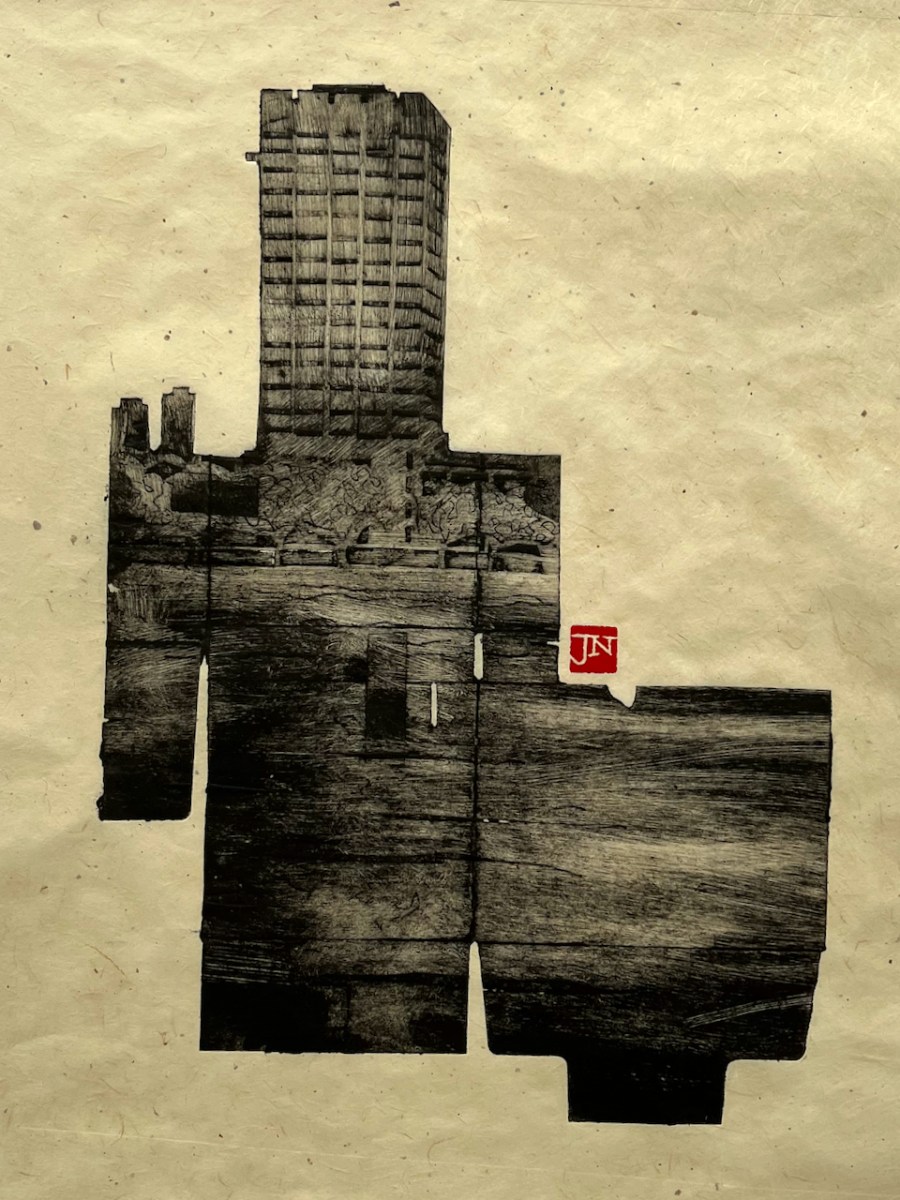
Colechurch House – monoprint

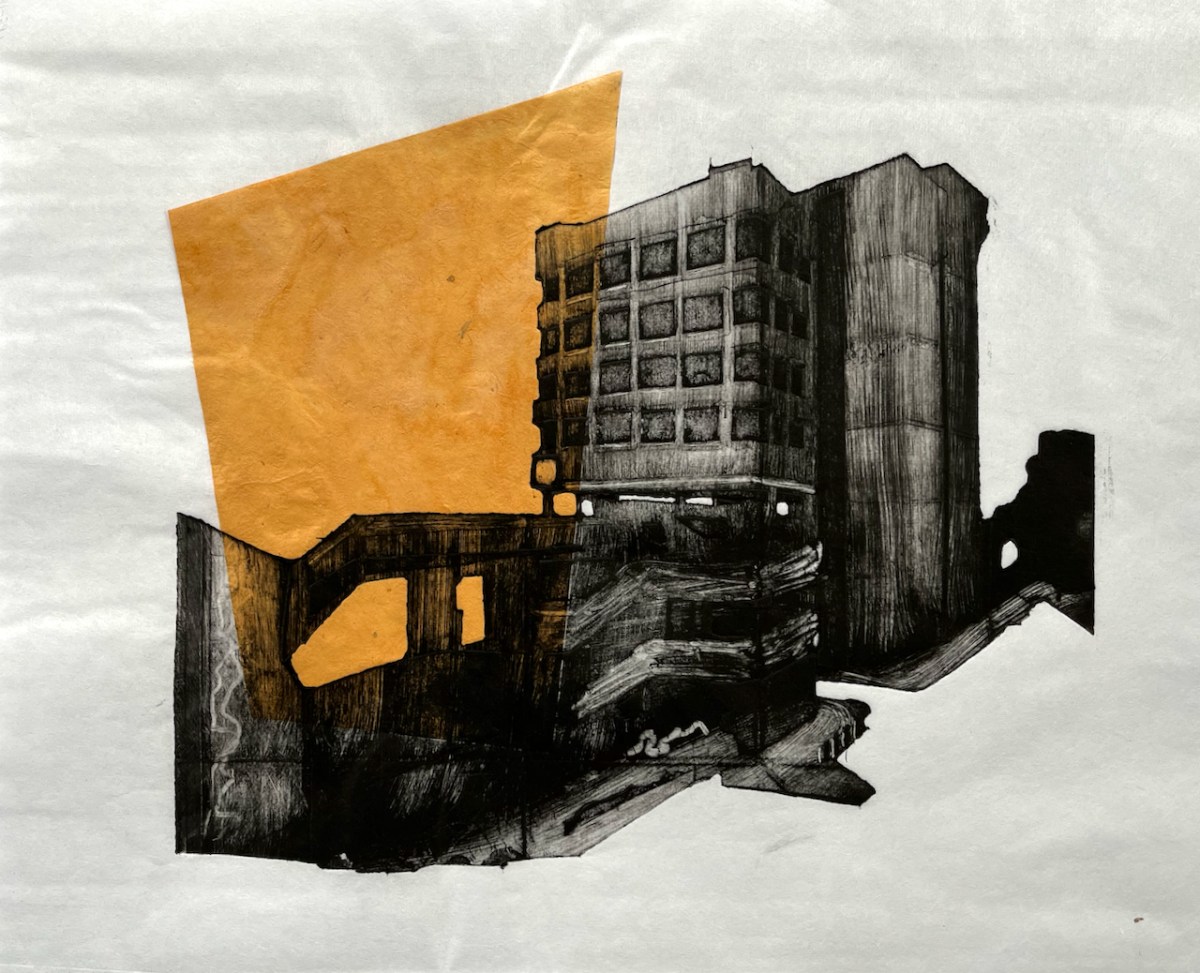
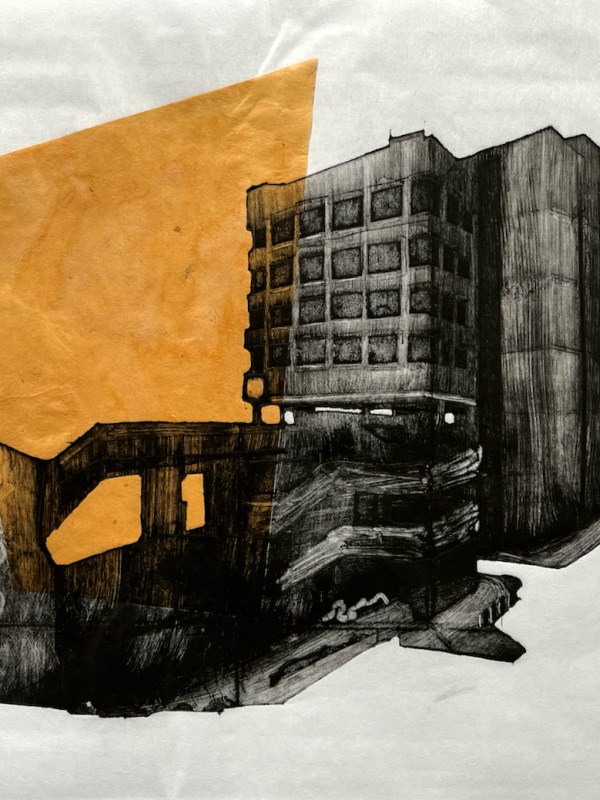
Colechurch House on the South Bank is a brutalist office block. It makes a good subject for a packaging print. Since it is a a 1960s block, I added a 1960s type shape in chine collé.

Colechurch House – monoprint and chine collé, paper size,15″ x 12″ Shoji Baku Japanese Paper

The chine collé paper is Khadi Lokta Coloured saffron washi paper from Atlantis Art (ref: KPNI SA). The background paper for this print is Shoji Baku paper from Shepherds Bookbinders (ref: LRG 1859). The ink is Charbonnel traditional etching ink. I printed this on the Henderson Press at East London Printmakers. Here is a video of the “print reveal” (17seconds, silent):

Thanks to Evonne at East London Printmakers for filming me!

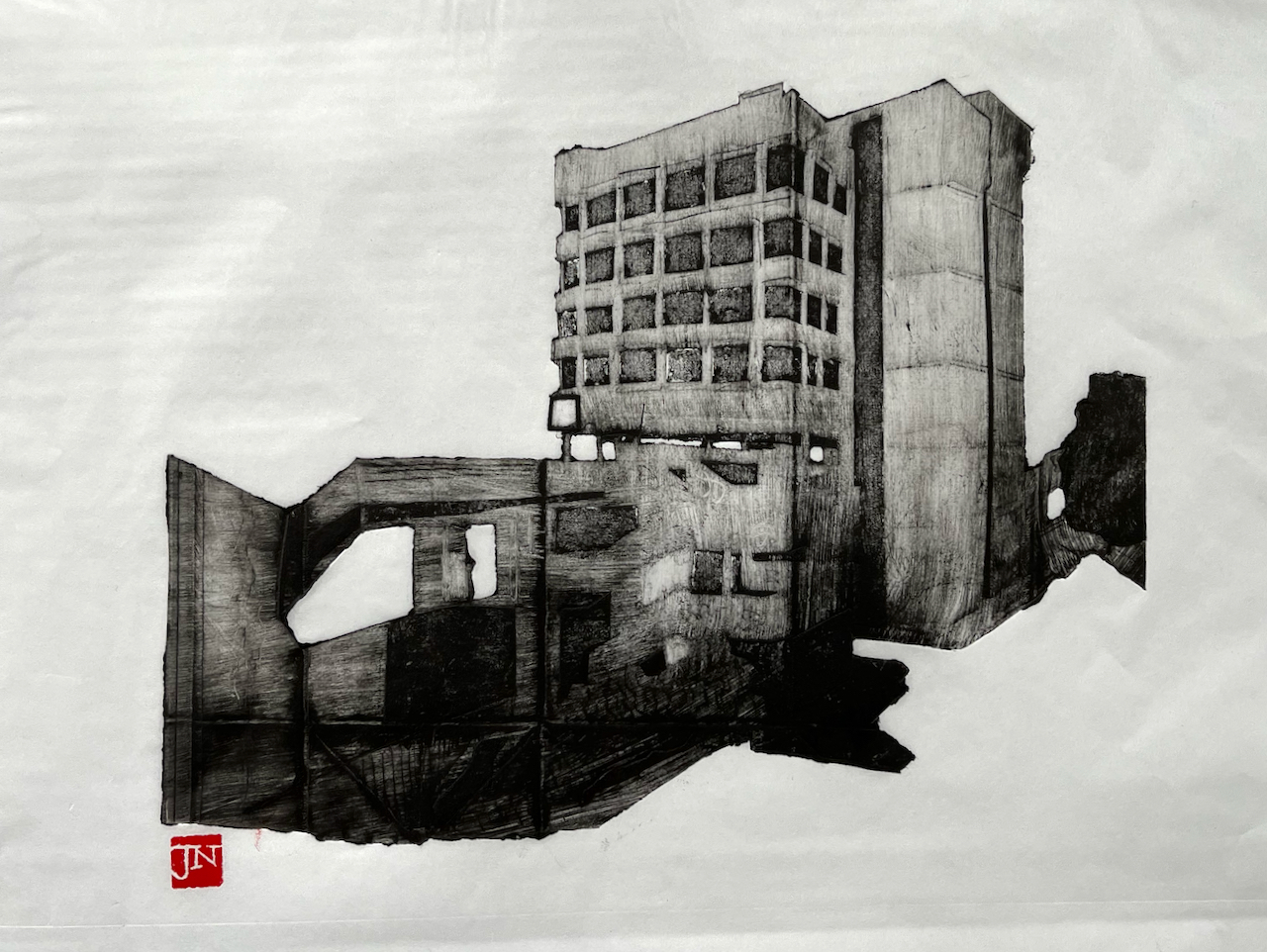
Here are the other 4 prints from this plate. They are all on a different, but similar paper: Tosa Washi from Shepherds, (ref: J632180)

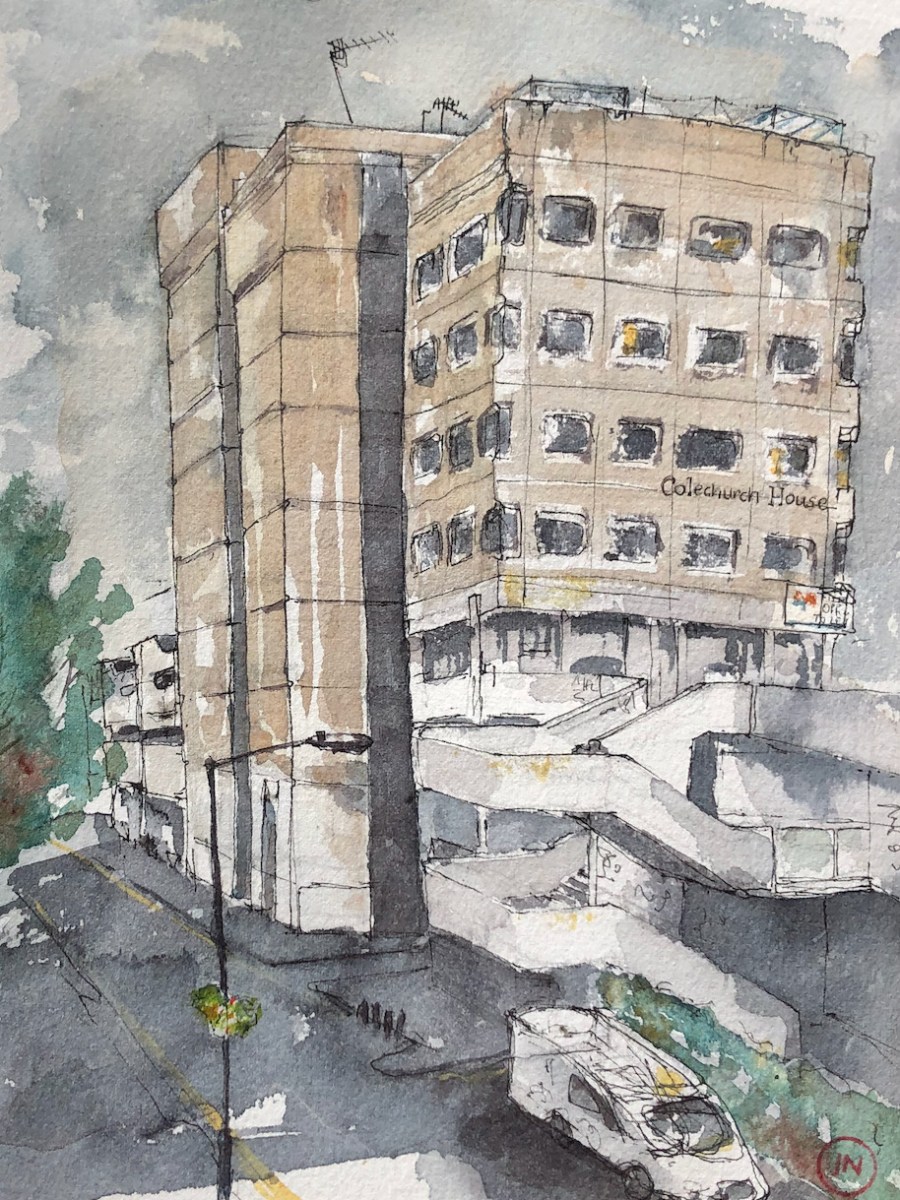
The print was based on a sketch of Colechurch House last year. See this post:

Colechurch House, London Bridge SE1

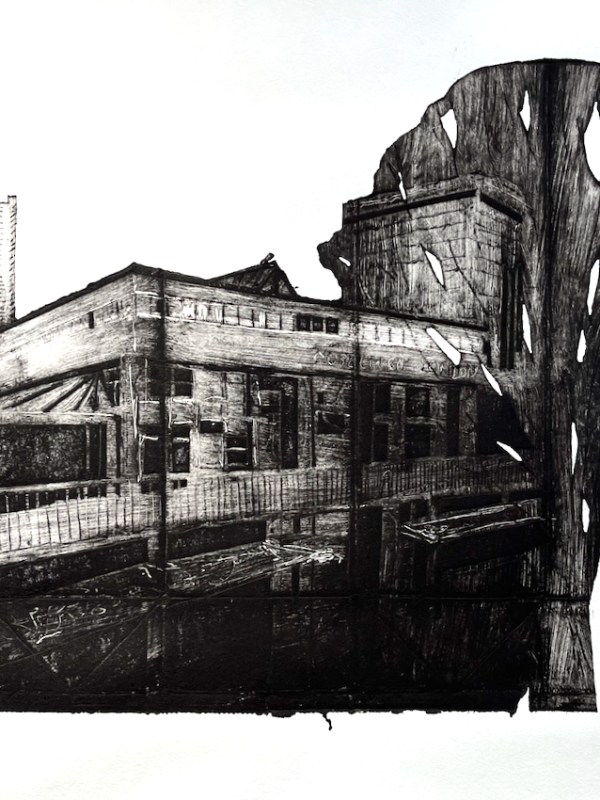
Aficionados of 20th Century brutalist architecture need to hasten to appreciate Colechurch House. It is due for demolition and redevelopment. This month’s post in the marvellous “London Inheritance” site informed me about the planning application, so I rushed over there to draw a picture before the building became swathed in plastic. I drew this picture looking over the railings from London Bridge. This position commanded an excellent view of Colechurch House, but…

Here are more examples of the technique using a plate made from packaging material. I have written about the process here.

Cornwall Road, London SE1 – packaging print

Here is another packaging print. This one shows Bridge ELR-XTD Structure 20 on Cornwall Road (N) between Charing Cross and Waterloo East, South East London. The road that leads off to the left is Sandell…

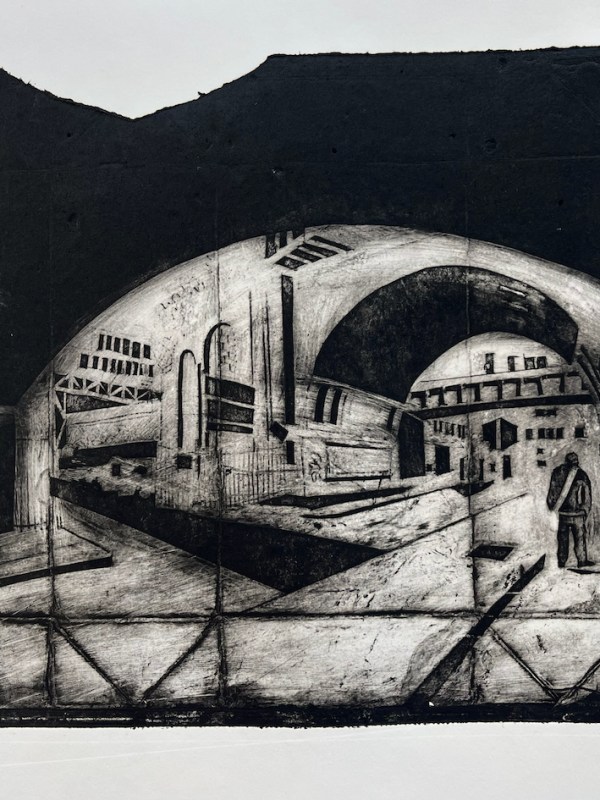
Great Suffolk Street, Railway arch

Huge brick arches carry the railway lines into Waterloo Station. Here is a view looking North up Great Suffolk Street. This is a packaging monoprint. It is an intaglio print from a “plate” made from…

Colechurch House – monoprint

Colechurch House on the South Bank is a brutalist office block. It makes a good subject for a packaging print. Since it is a a 1960s block, I added a 1960s type shape in chine…

The Boston Arms – monoprint

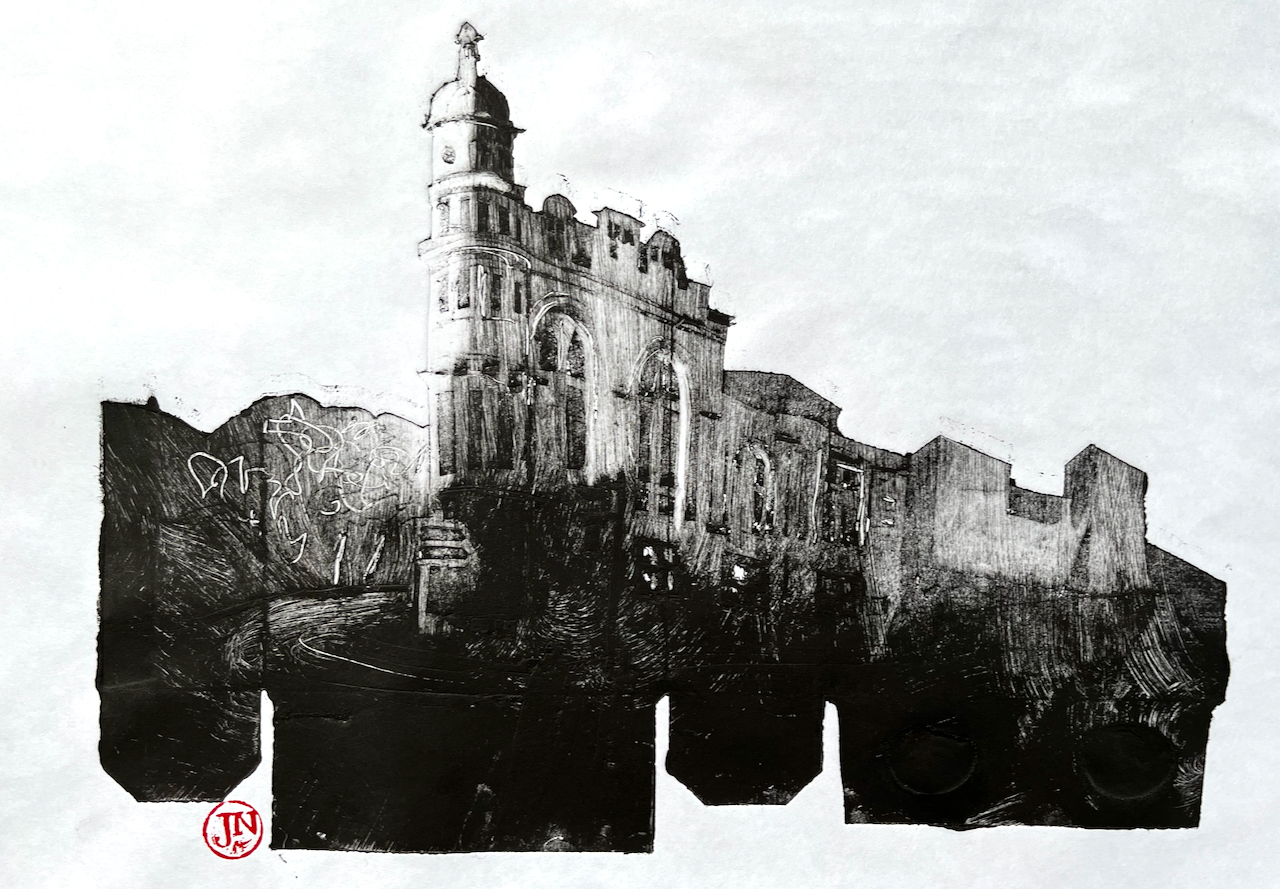
The Boston Arms is in Tufnell Park, London, 178 Junction Road N19. I love the way this building presides over the junction. This is one of five prints I made with this plate made from…

Museum of London EC2 – monoprint

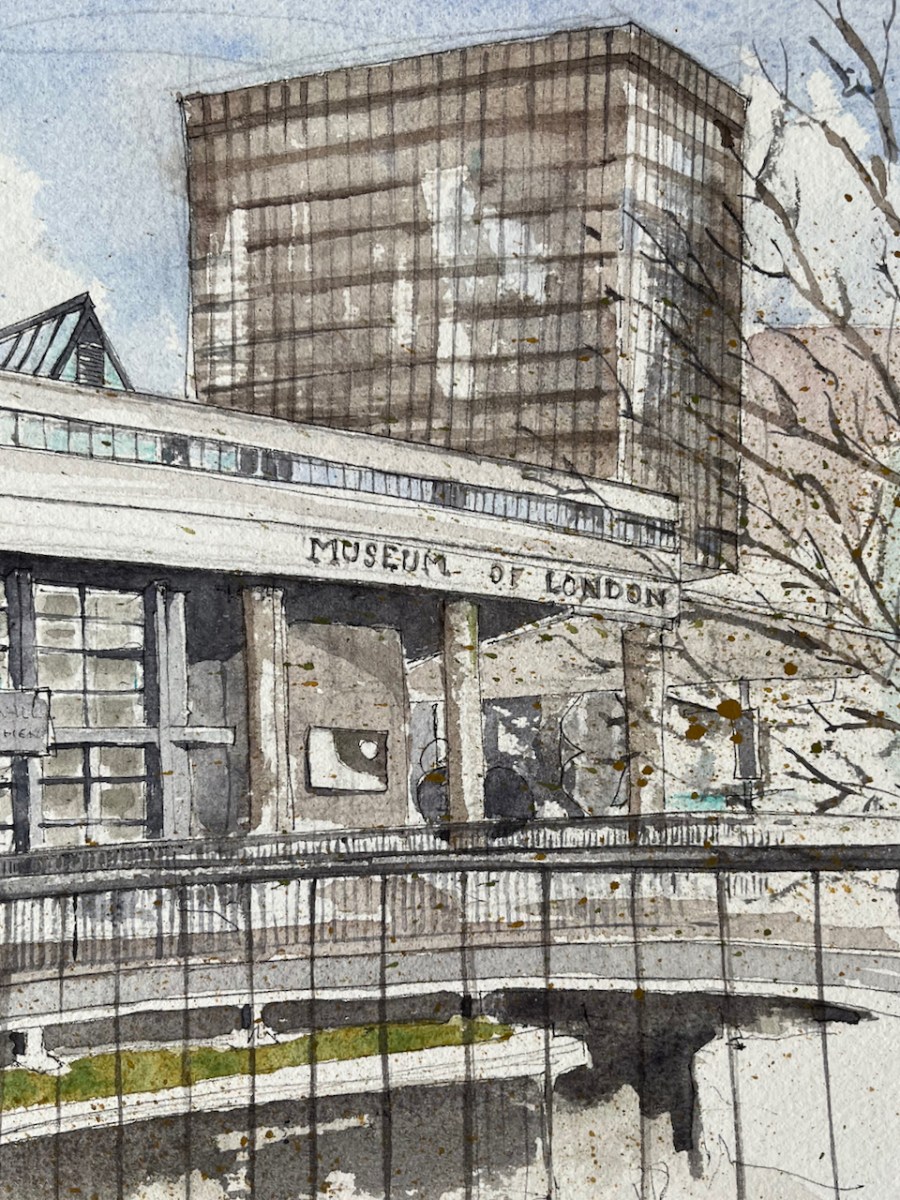
Here is an image of The Museum of London, in the south west corner of the Barbican: The “plate” is made from a UHT milk carton. Here is the back of the used plate: Here…

London Television Centre – monoprint

Here’s another “packaging” monoprint. This was made using an empty box of tissues. This is a tower block on the South bank of the river Thames, seen from the North bank. That’s the river in…

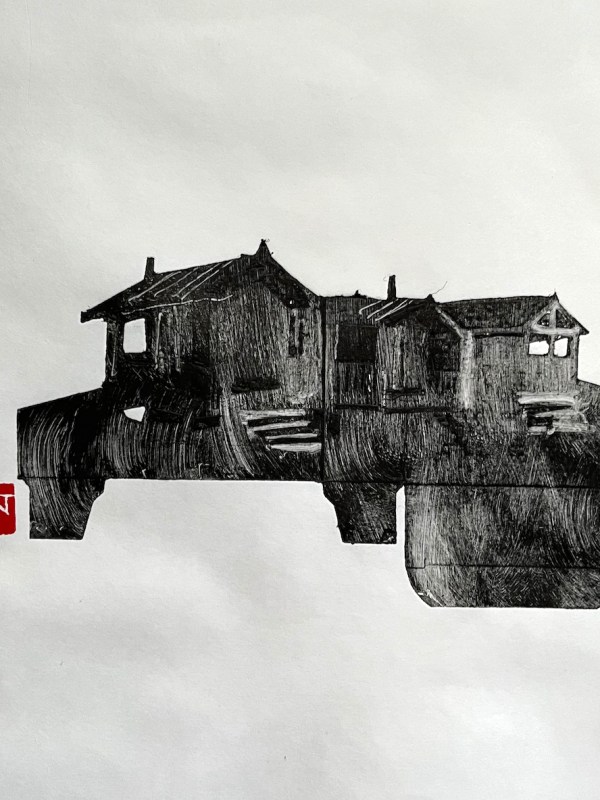
Walberswick Huts – monoprint

Here is a “packaging” monoprint I made of the huts in Walberswick. The print is made using a discarded carton from a box of aspirin. It looks like this: The brown colour is shellac, a…

Anchor Brewhouse, Horselydown Old Stairs, SE1

I am trying an experimental monoprint technique. The idea is to use packaging material to make intaglio “plates” which are then printed using an etching press. This is the first one. I printed it yesterday…

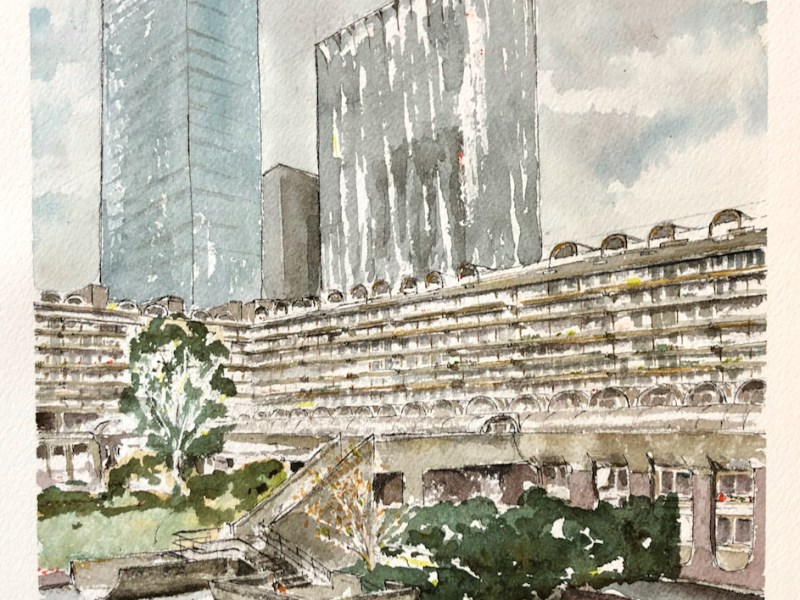
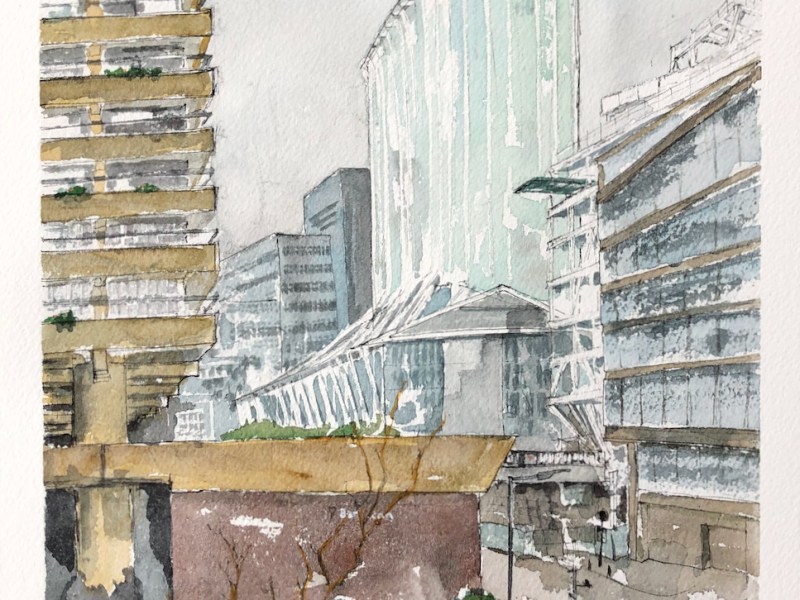
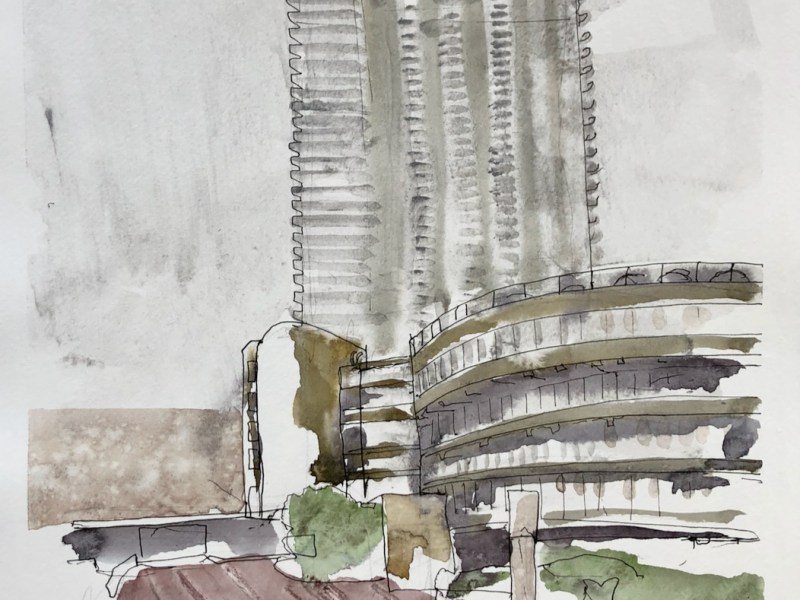
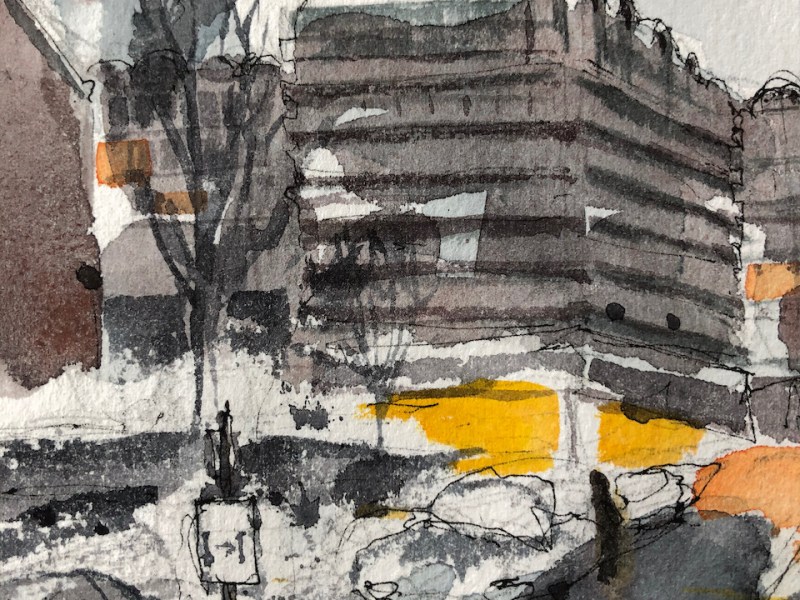
Shakespeare Tower, Barbican EC2

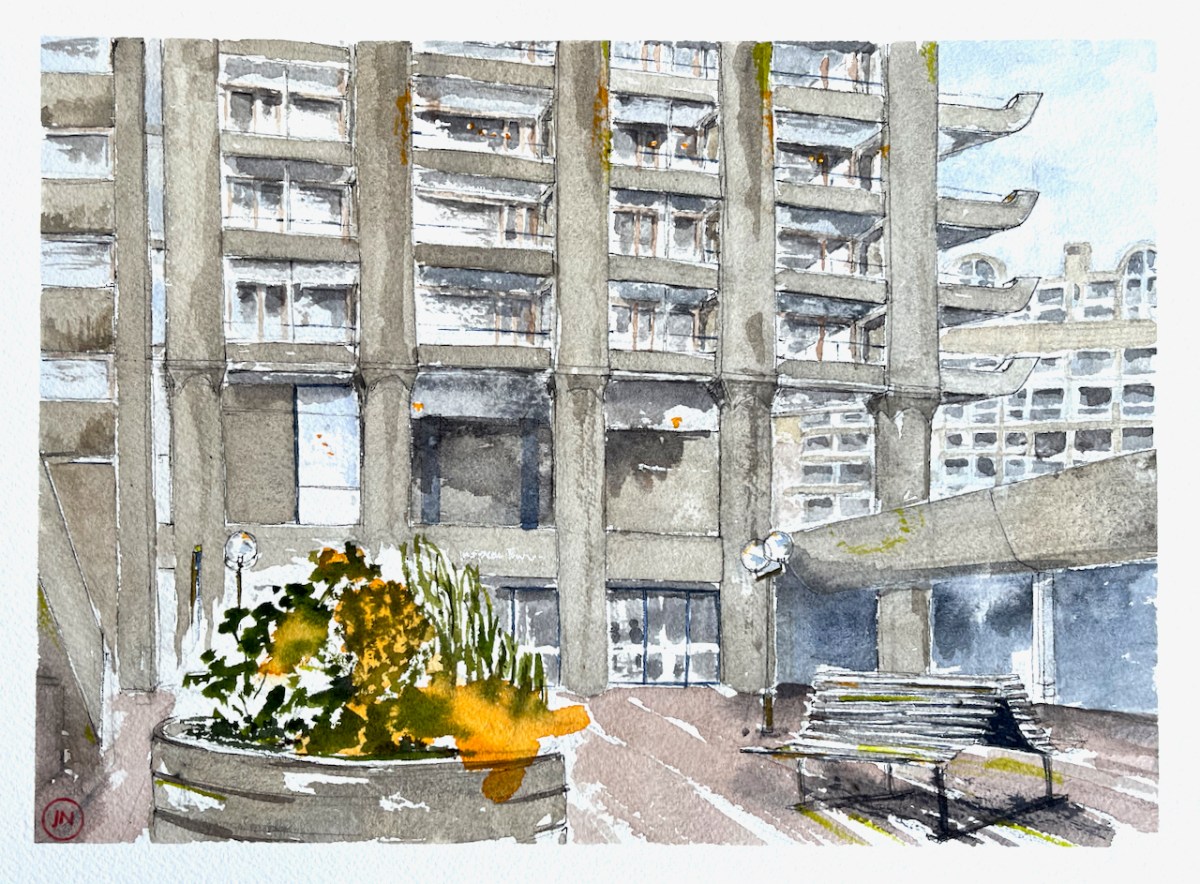
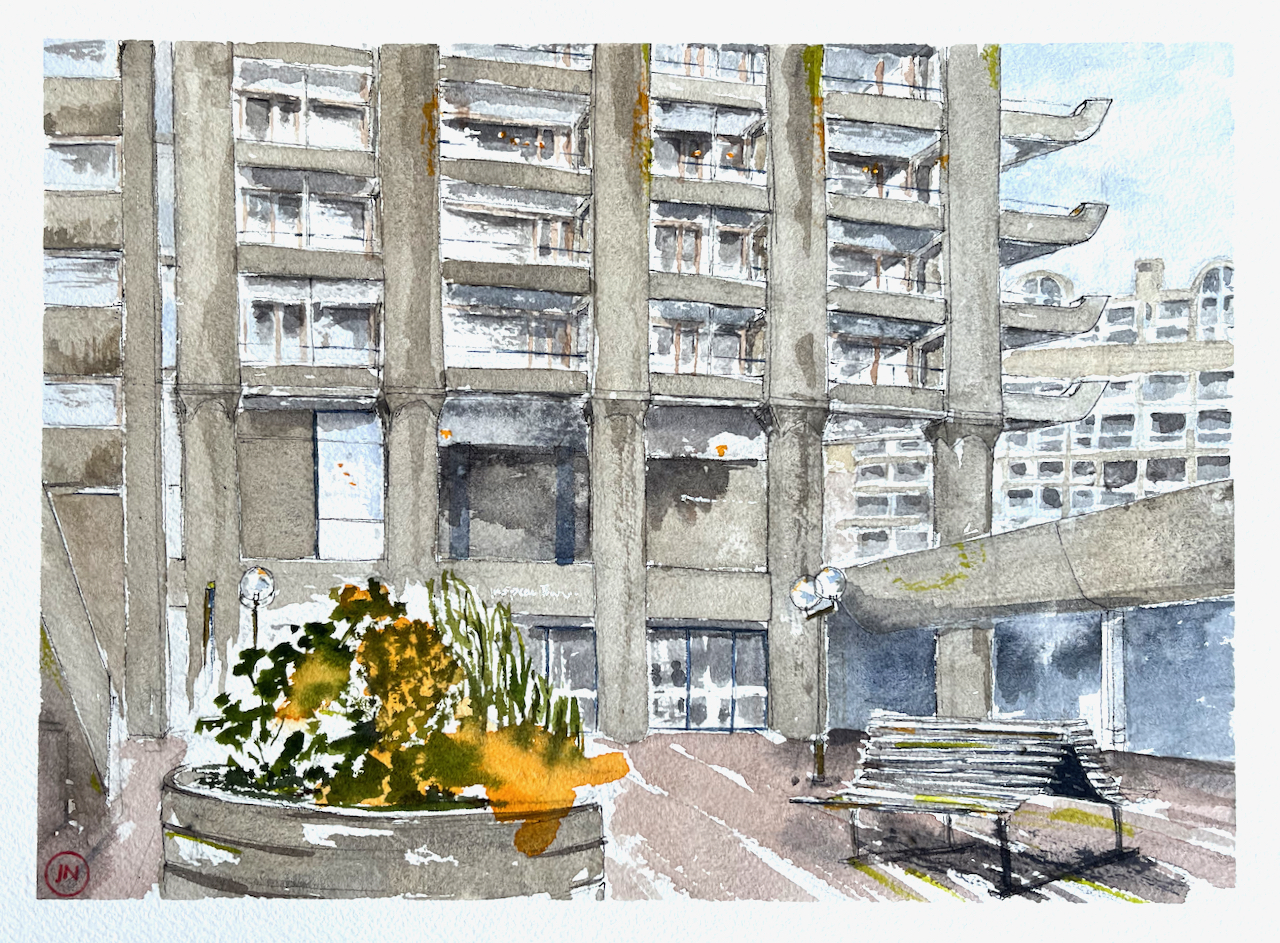
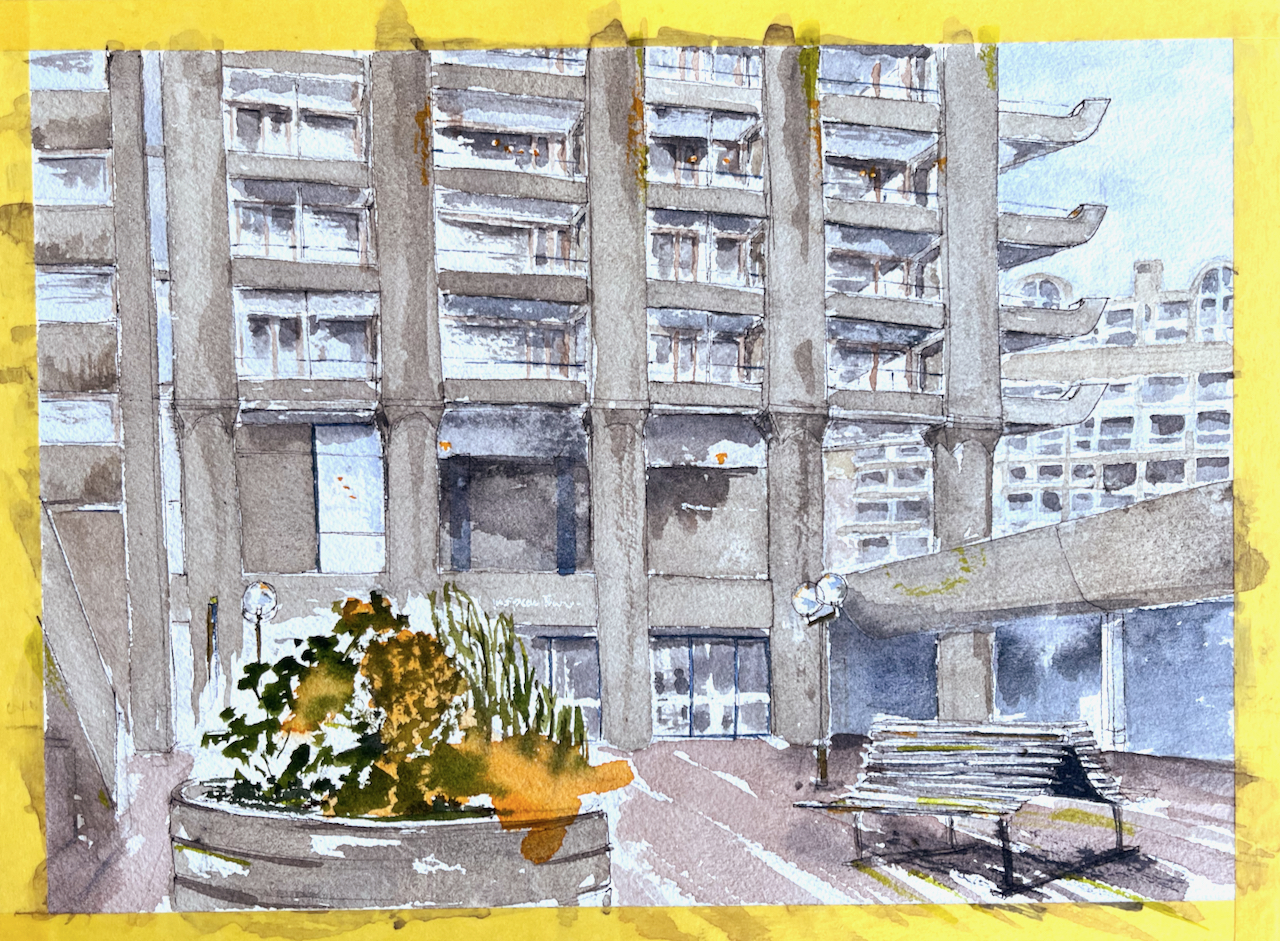
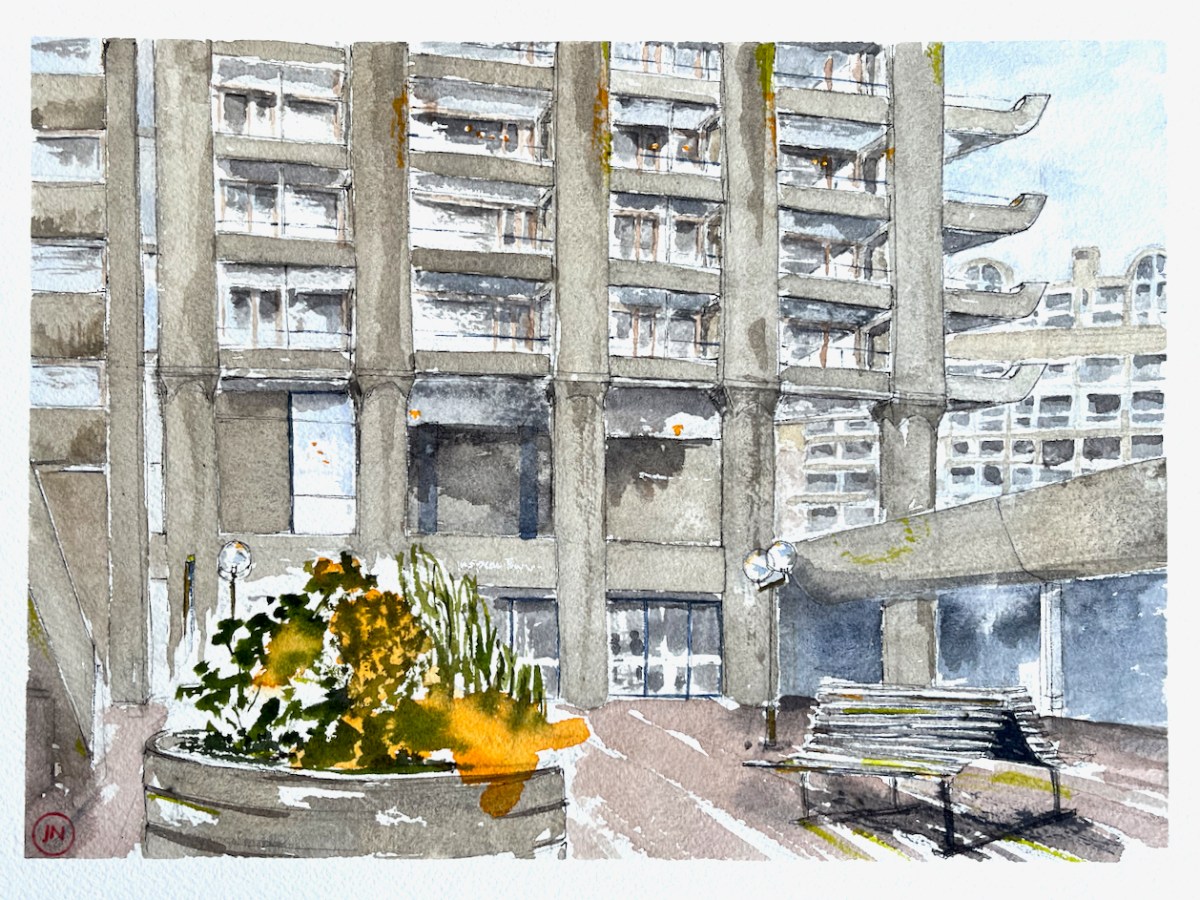
Here is a view of the east face of Shakespeare Tower, Barbican, from Defoe Place, near the Barbican Centre. You can see the main entrance to the tower. On the right is Cromwell Highwalk, and Ben Jonson House beyond. On the left you can just see the stairs that go down into Defoe Place from the highwalk.

Shakespeare Tower from Defoe Place, 12″ x 9″ [commission]
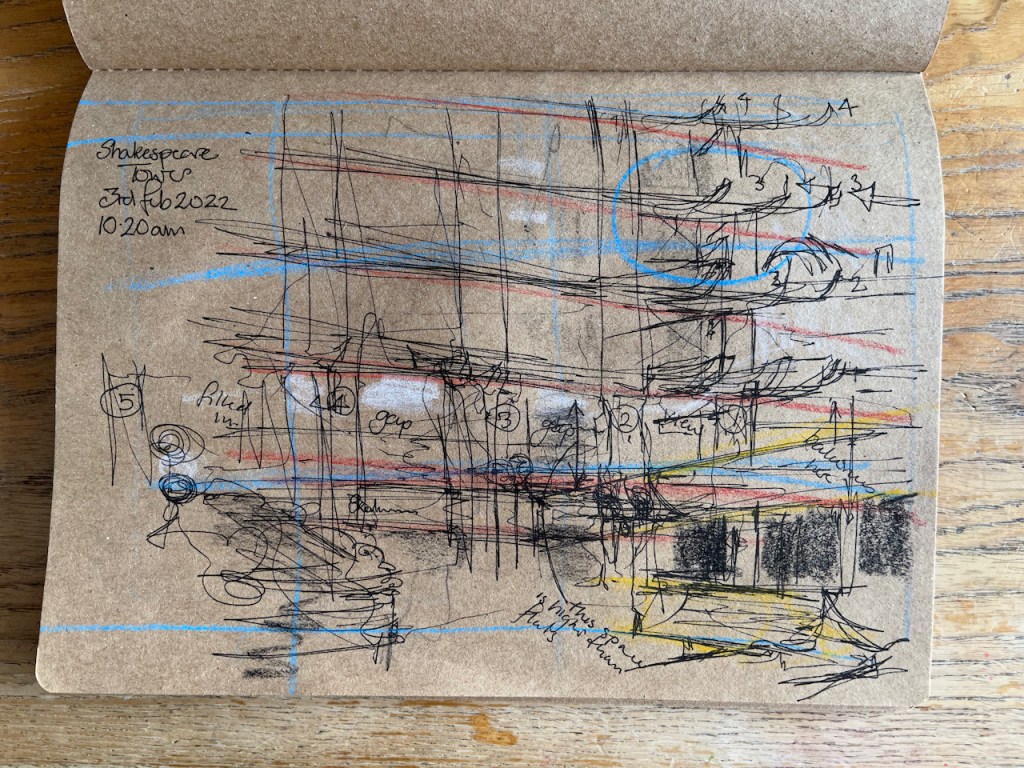
Preliminary sketch

I wanted this picture to give an impression of what it is like to walk around the Barbican. There are different depths, and sharp contrasts of dark and light, and large open spaces. Workers from the library looked out of their windows, saw me drawing and came to look at the picture. This was drawn in February, but still there were some flowers in the planters, even though this particular planter was in a shaded and windy place. The smell, however, was not of flowers but cigarette ends. People evidently use the area under the stairs as a smoking area, and drop their butts. So that’s the Barbican: people who talk to you, soaring towers, great perspective views, wide open spaces and a certain shabbiness around the edges.

Here is the pen-and-ink compared with the colour:

Before and after the colour went on

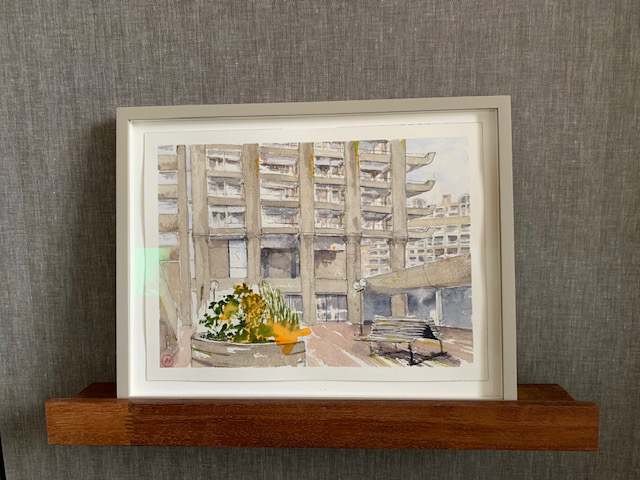
This was a commission. I am grateful to my client for the prompt to examine the Tower from this unusual angle. And also for sending me this photo of the framed watercolour:

Framed watercolour. Photo credit: NM

A collection of my drawings of the Barbican is here:

Something went wrong. Please refresh the page and/or try again.

Boston Arms – relief print

This image is a by-product of the packaging print plate of the Boston Arms.

After I had cut out the packaging print plate of the Boston Arms, I was left with the “negative”: the top part of the plate. As it was on its way to the bin, I realised that I could use this to make another picture. So I retrieved it, and made this plate:

Relief plate*: top half is made of a biscuit packet. The bottom half of the biscuit packet was used to make the packaging print – see this post

I added a few people. This is a pub, so these are some people on their way to the pub.

I used this cardboard plate to make some prints. I painted it with shellac, to make it stronger.

Here are the prints, made on the Albion press at East London Printmakers. The prints are”collographs”: relief* prints.

I made the prints on top of some experimental monoprints made last year.

*A “relief” plate is one in which the ink is rolled onto the raised part of the plate. The raised parts print dark. A potato print, a lino print, woodcut or an ordinary rubber stamp is a relief print. This is by contrast to an “intaglio” print, in which the ink is wiped into the indentations and into engraved lines on the plate. The raised parts print light, and the lower parts print dark. My etchings and packaging prints are intaglio prints.

The Boston Arms – monoprint

The Boston Arms is in Tufnell Park, London, 178 Junction Road N19. I love the way this building presides over the junction.

Boston Arms monoprint 1, packaging print, paper size 21″ x 17″, on Shiramine Select Japanese paper

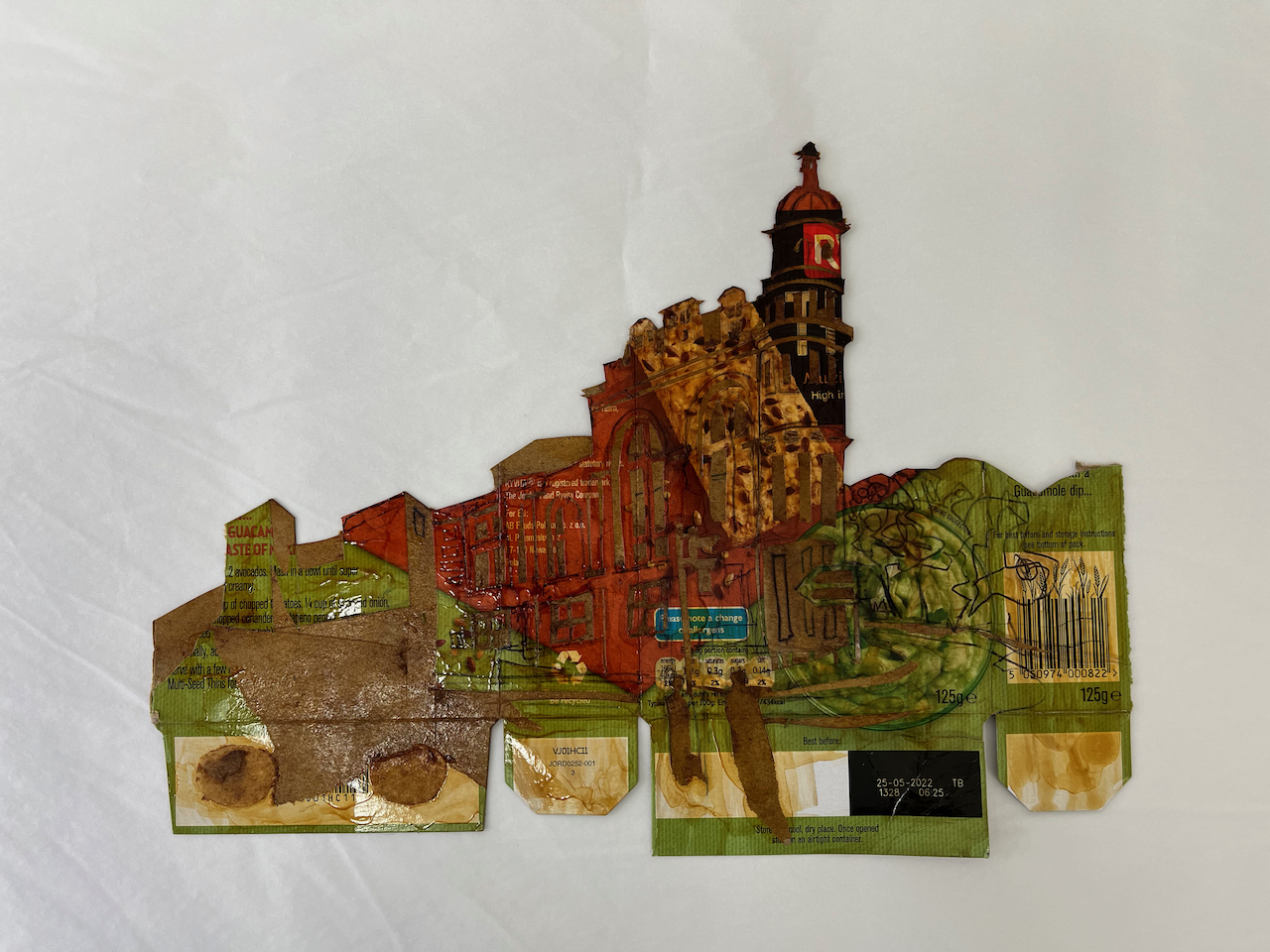
This is one of five prints I made with this plate made from a cardboard box of biscuits, experimenting with the “packaging print” technique.

The technique produces a twilight atmosphere, which I like very much, and seems suitable for a pub in winter. Here is a different print using the same plate.

Boston Arms monoprint 2, packaging print, paper size 14″ x 10″ Awagami Washi Masa Japanese paper

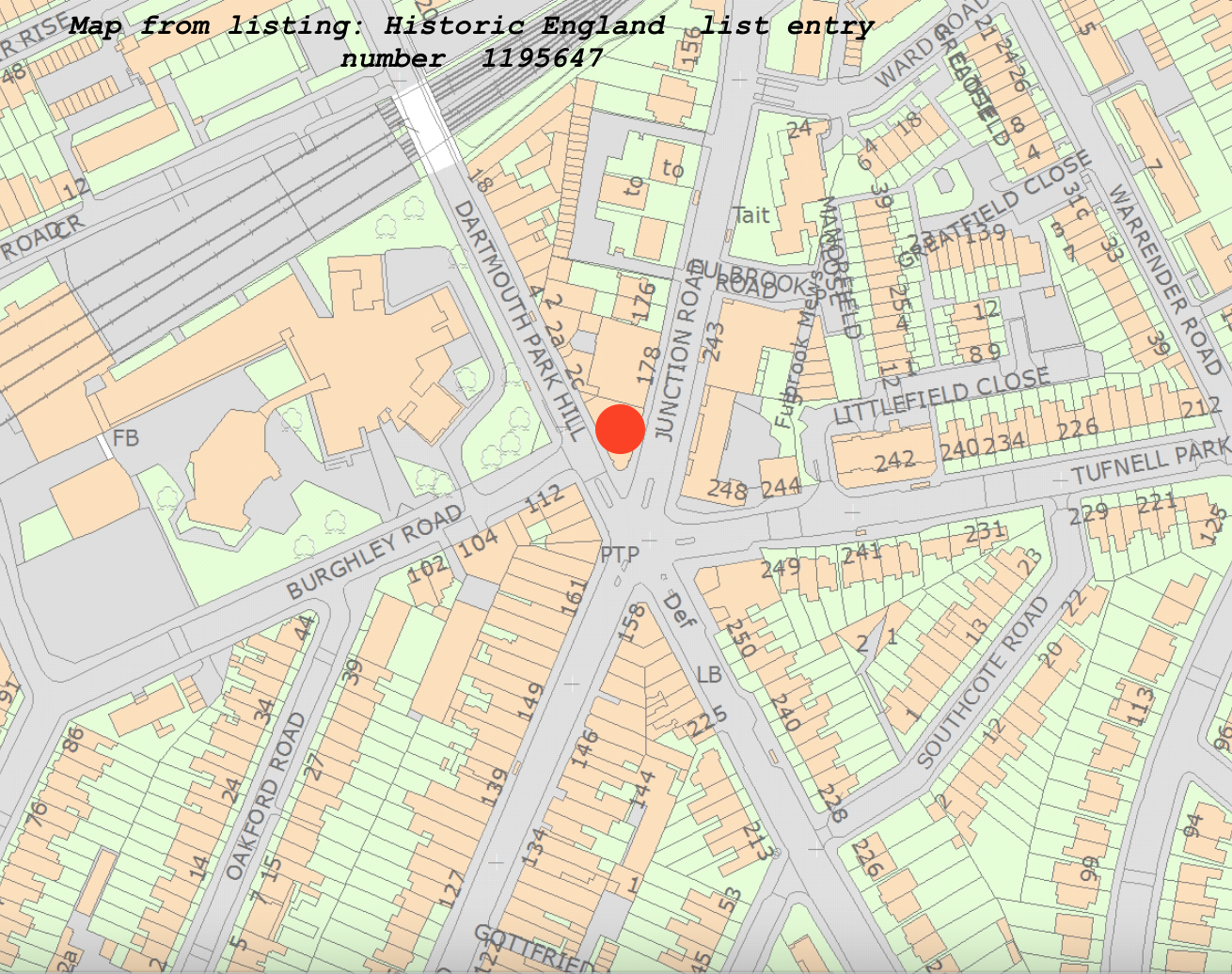
The Boston Arms is a Grade II listed building. The listing says “Dated 1899 in a panel on the Junction Road front. Designed by Thorpe and Furniss”, and goes on to describe its “Corinthian pilasters to the flat frontages, engaged Corinthian columns to the bow, all of black polished granite, supporting a fascia; scrolled pediments over former entrances with subsidiary pedimented panels between the scrolls,…”. It concludes on rather a flat note: “The interior has no original features of interest.”

It looks like a good pub. I’ve passed it lots of times, usually on an early-morning run, but I’ve never been inside.

Here is the map from the listing, showing the location:

Location of the Boston Arms (Historic England, listing)

Here is the plate from which I made the prints:

Print plate made from a soup carton
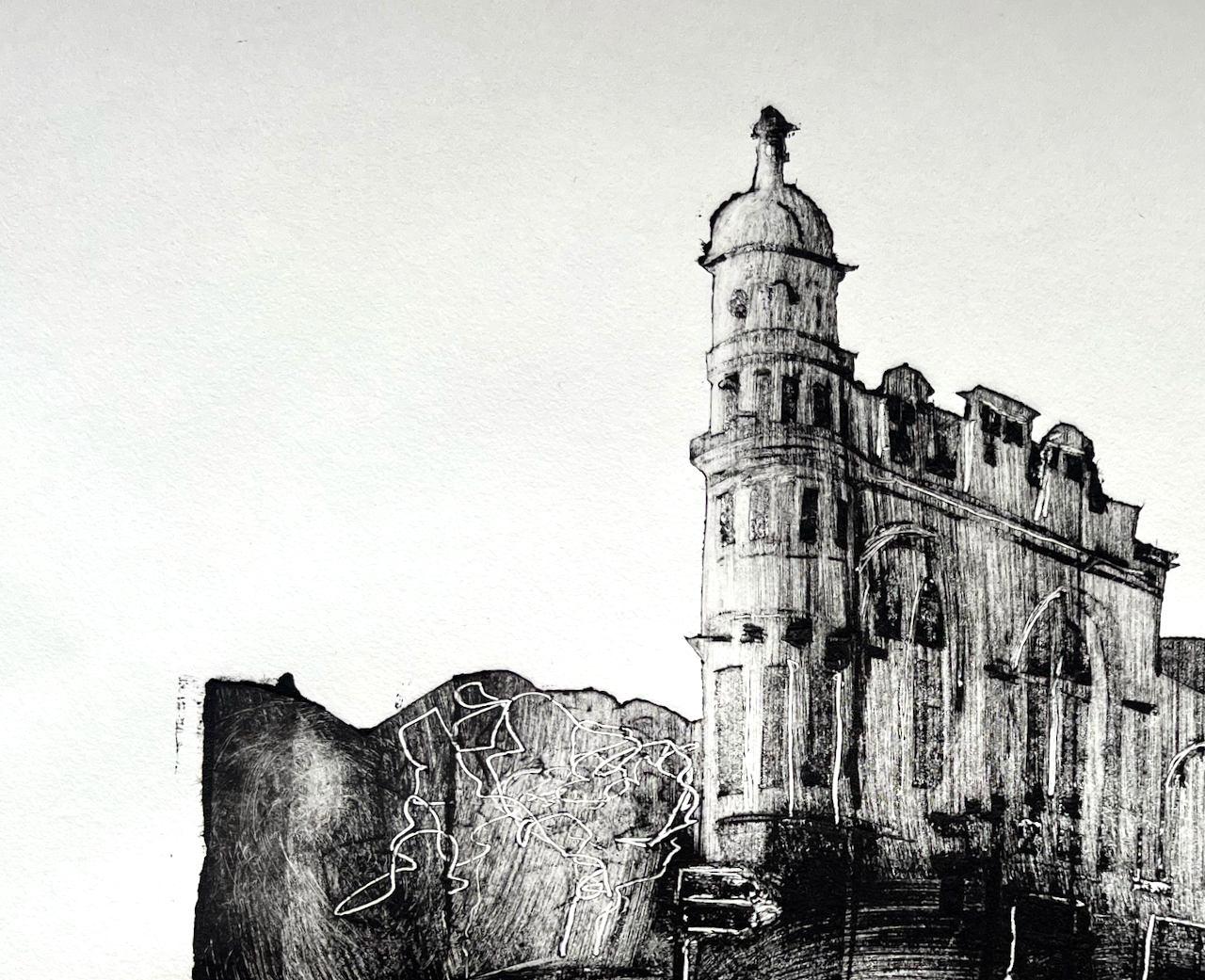
Boston Arms print, detail

St Mary Le Strand, WC2

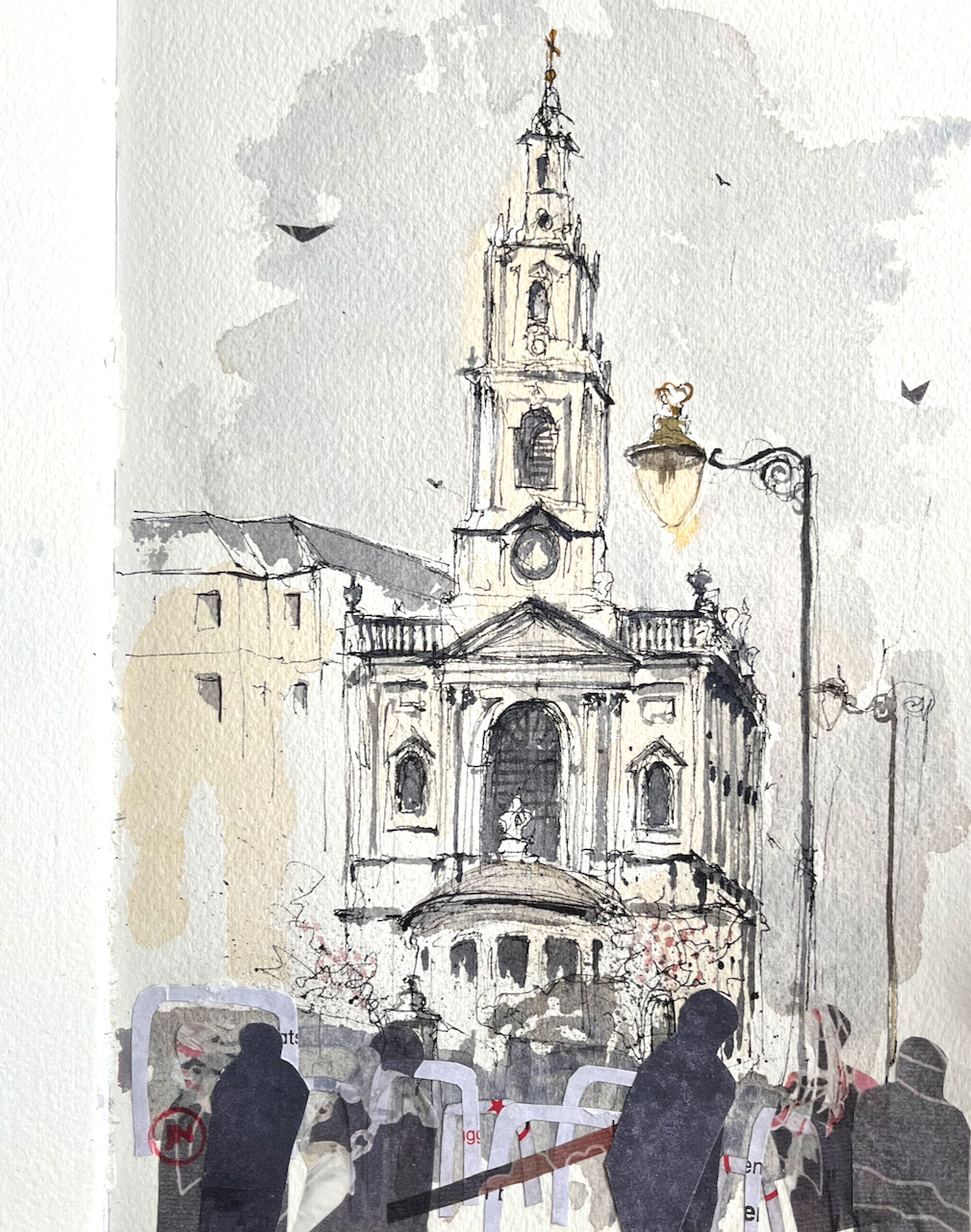
Here is a sketch of St Mary Le Strand, which is the church in the middle of the Strand at Aldwych. I sketched this from outside Somerset House. As you see it was really busy there. The south part of Aldwych is being closed off to motor traffic and made a pedestrian-only route. It will be great when it’s finished, but right now it means that the busy pavements are narrowed with barriers and there are many types of confusion.

St Mary Le Strand WC2, 1st March 2022, 10″ x 7″ in Sketchbook 11

The foreground is collage, added after the drawing.

Here is work in progress and a map.

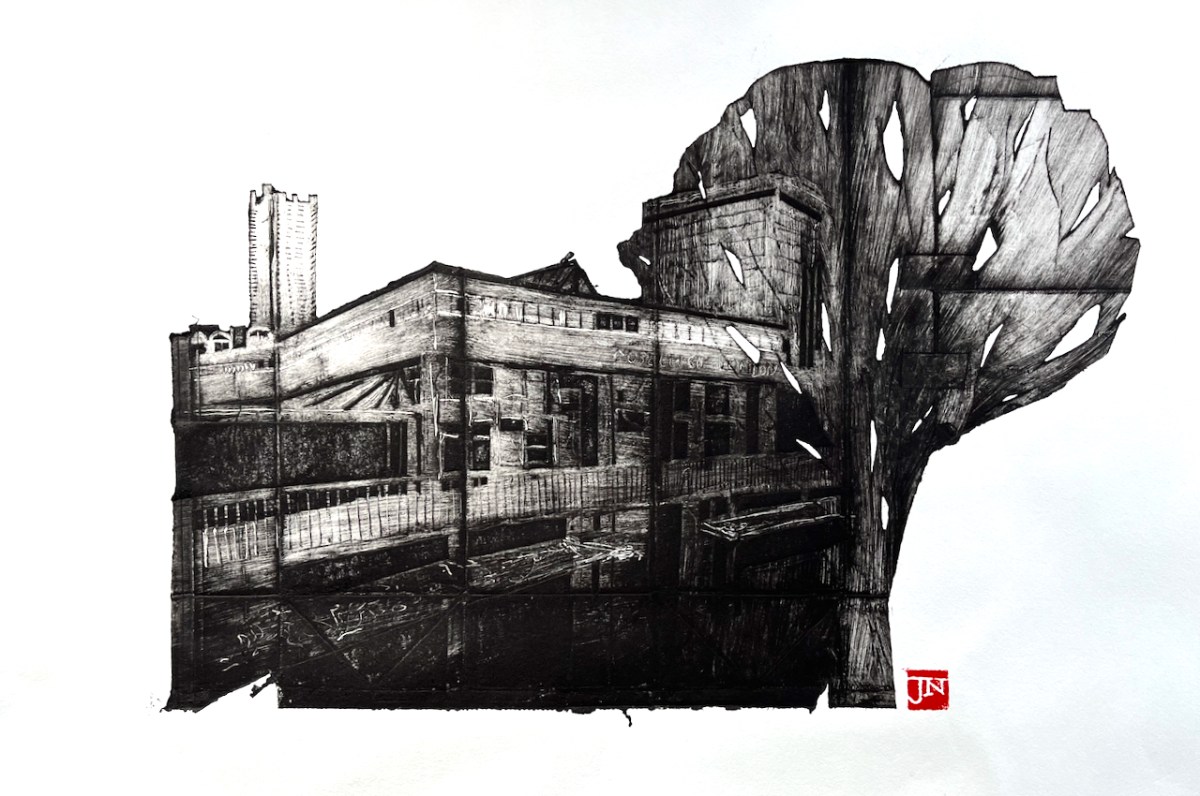
Museum of London EC2 – monoprint

Here is an image of The Museum of London, in the south west corner of the Barbican:

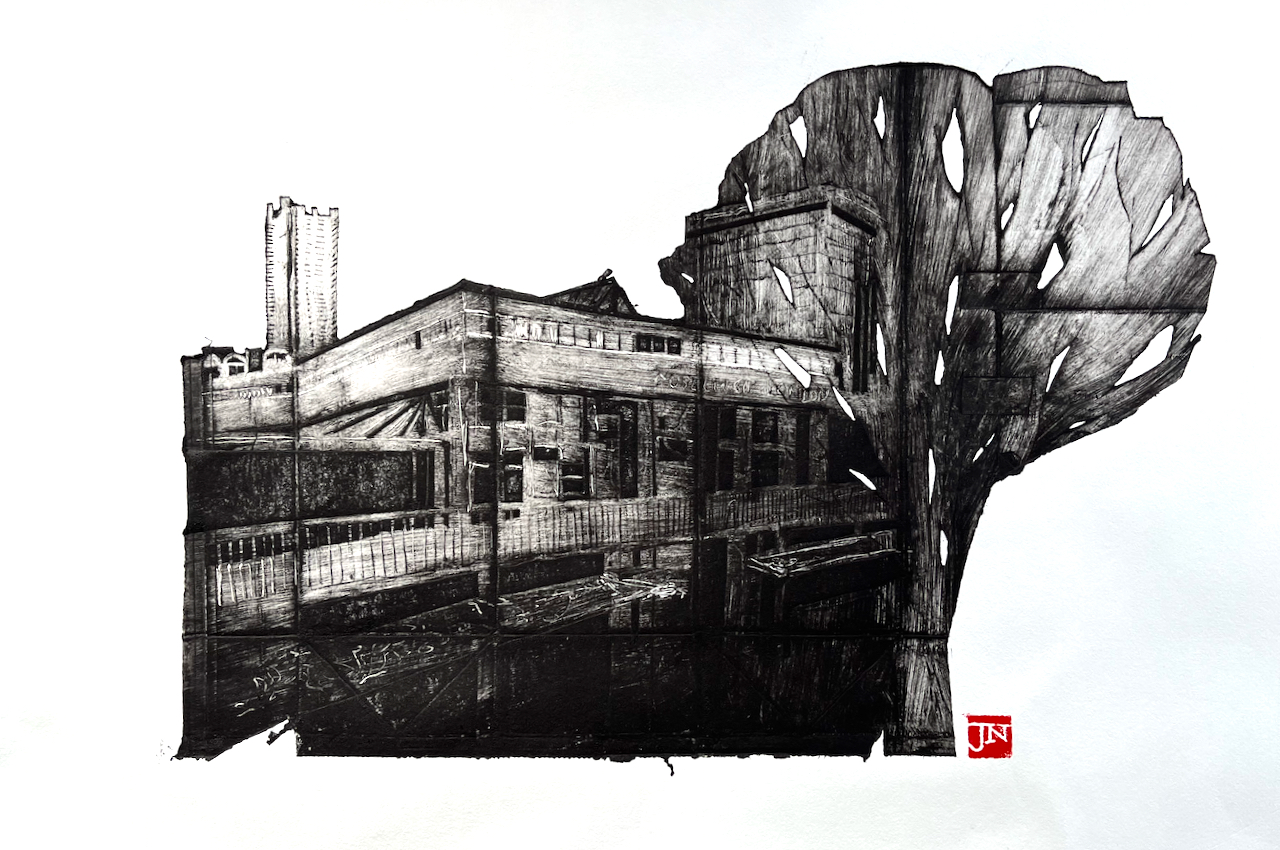
Museum of London, packaging etching, paper size 21″ x 17″, on Shiramine Select Japanese paper.

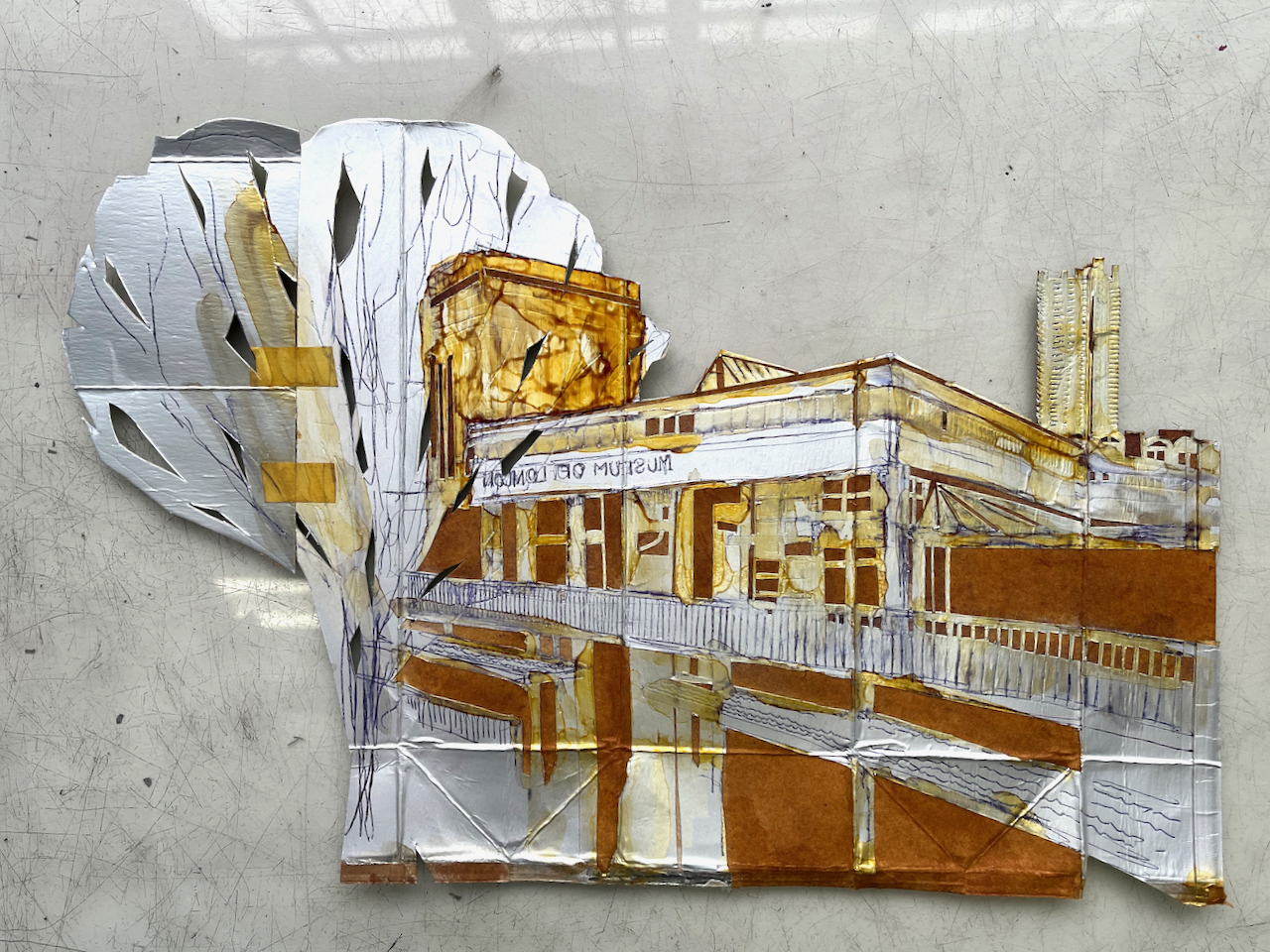
The “plate” is made from a UHT milk carton. Here is the back of the used plate:

Back (unprinted) side of the plate.

Here is the front (print side) of the plate, before inking:

Front (print side) of the plate

To find out more about this technique, have a look at this page on my website (click link):

Print plates made of packaging

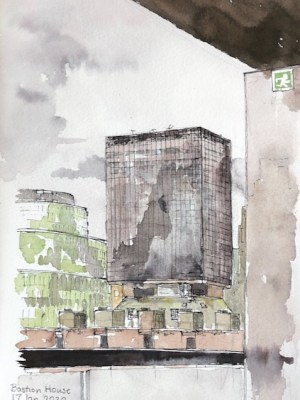
I have also sketched the Museum of London area:

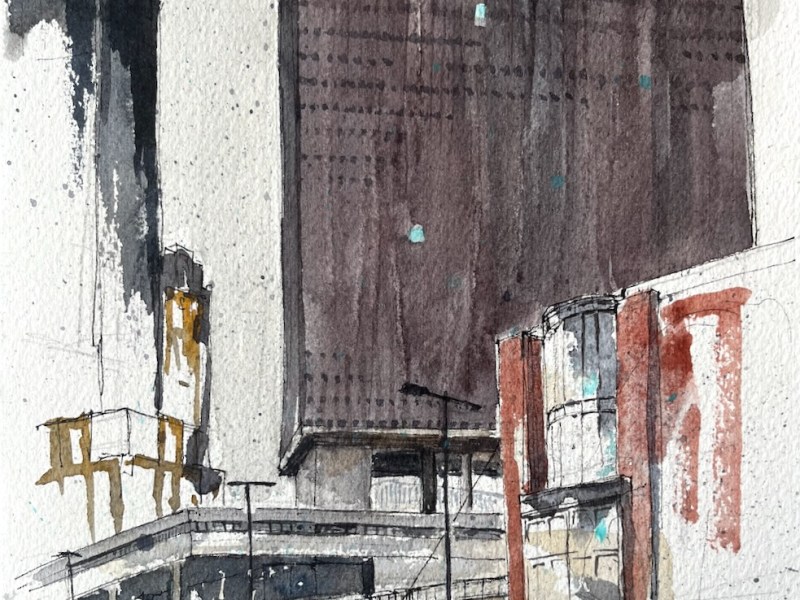
The Museum of London EC2

From the highwalk on the Rotunda there is a really amazing view of the Museum of London and Bastion House. This whole view going to change radically, if the City of…

Read more…

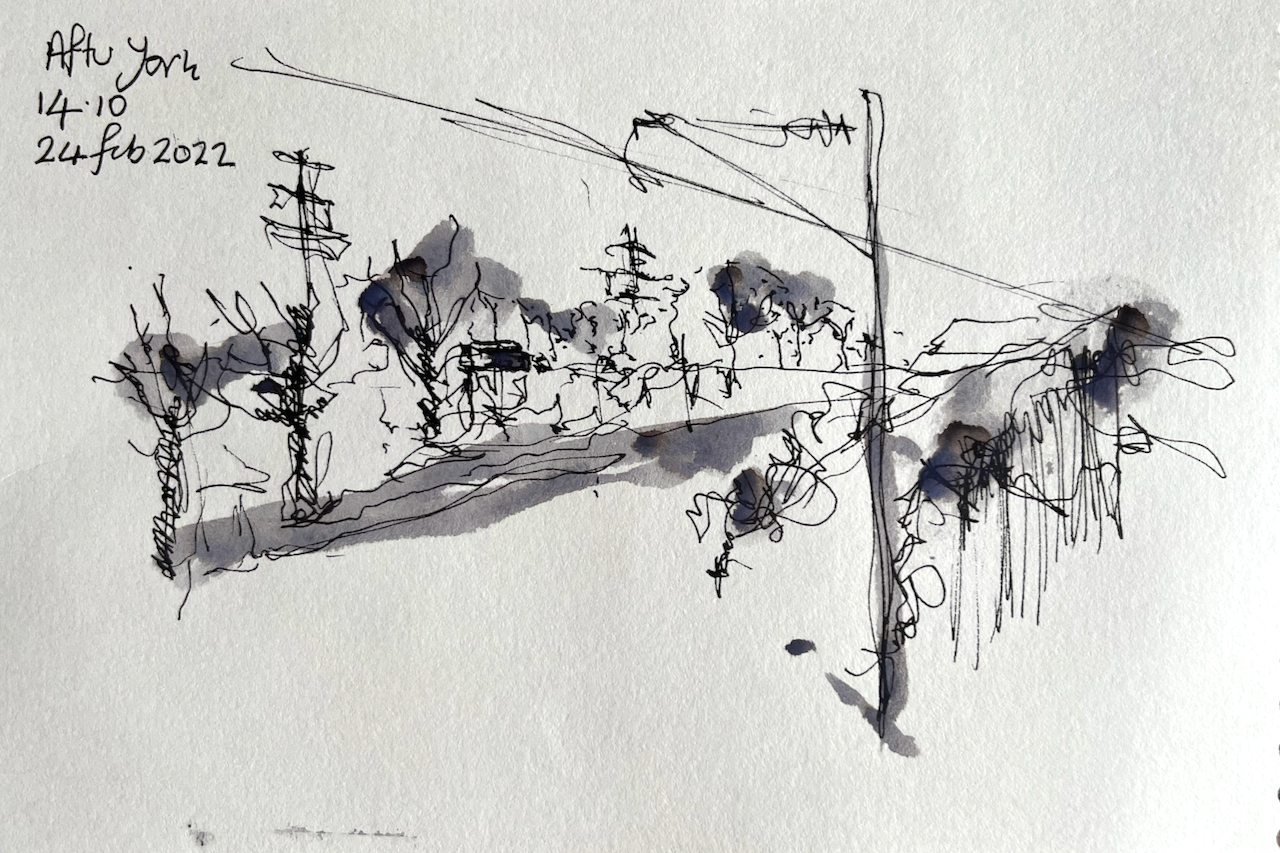
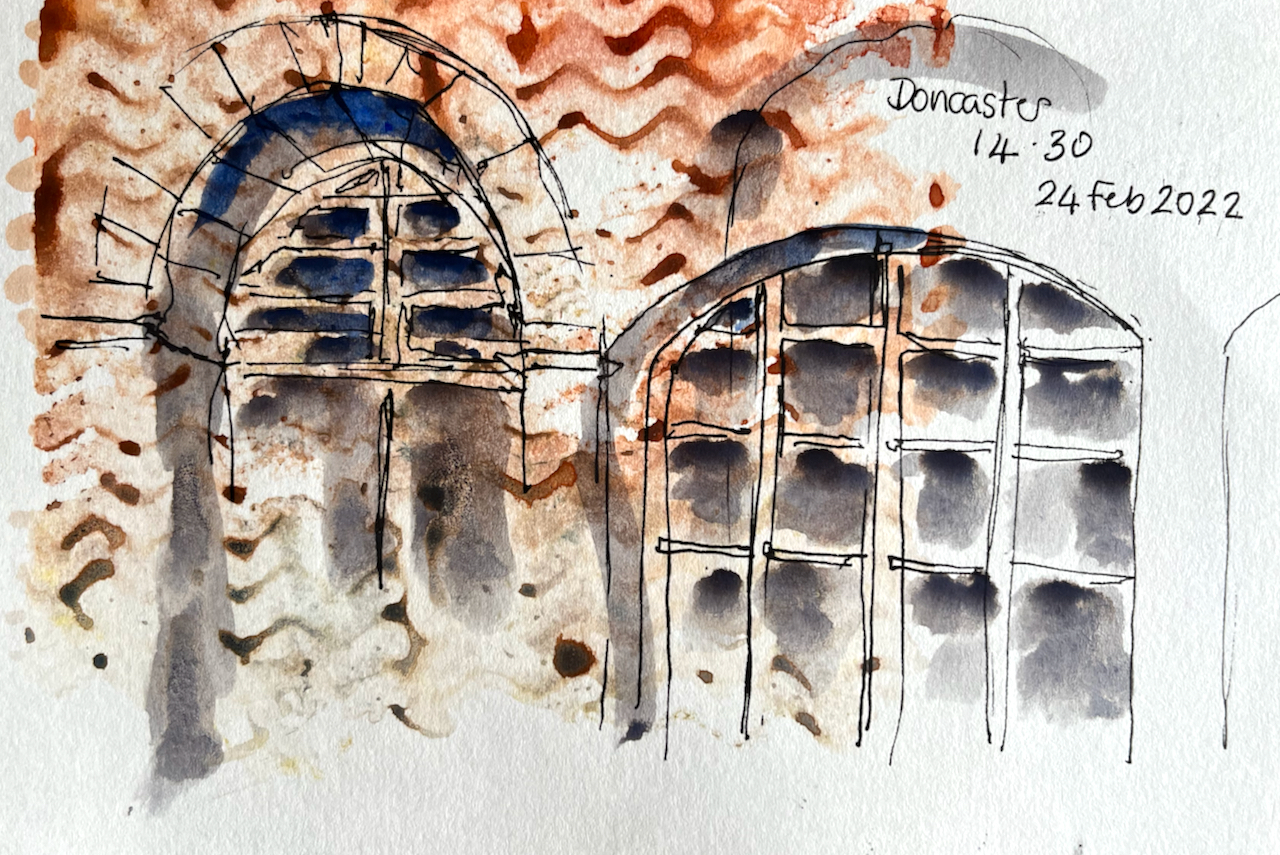
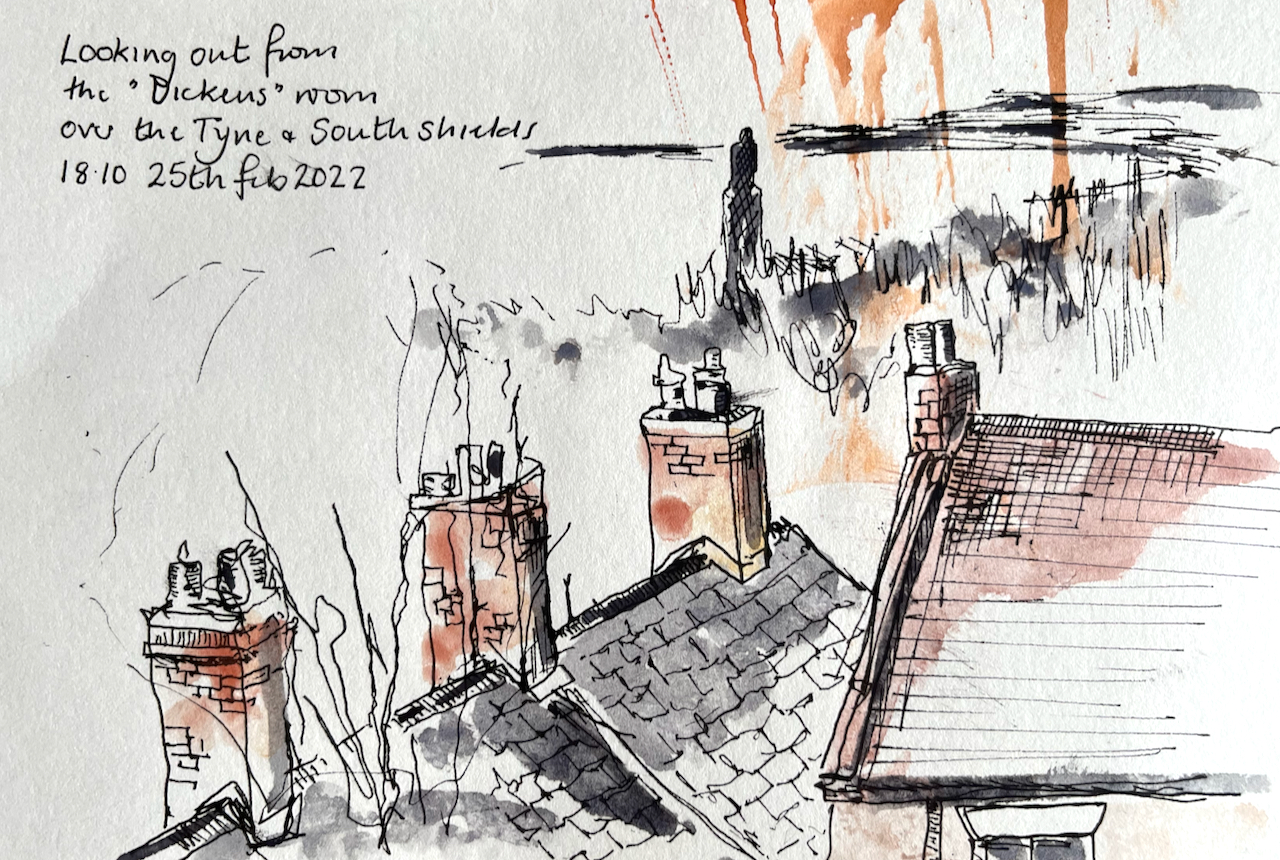
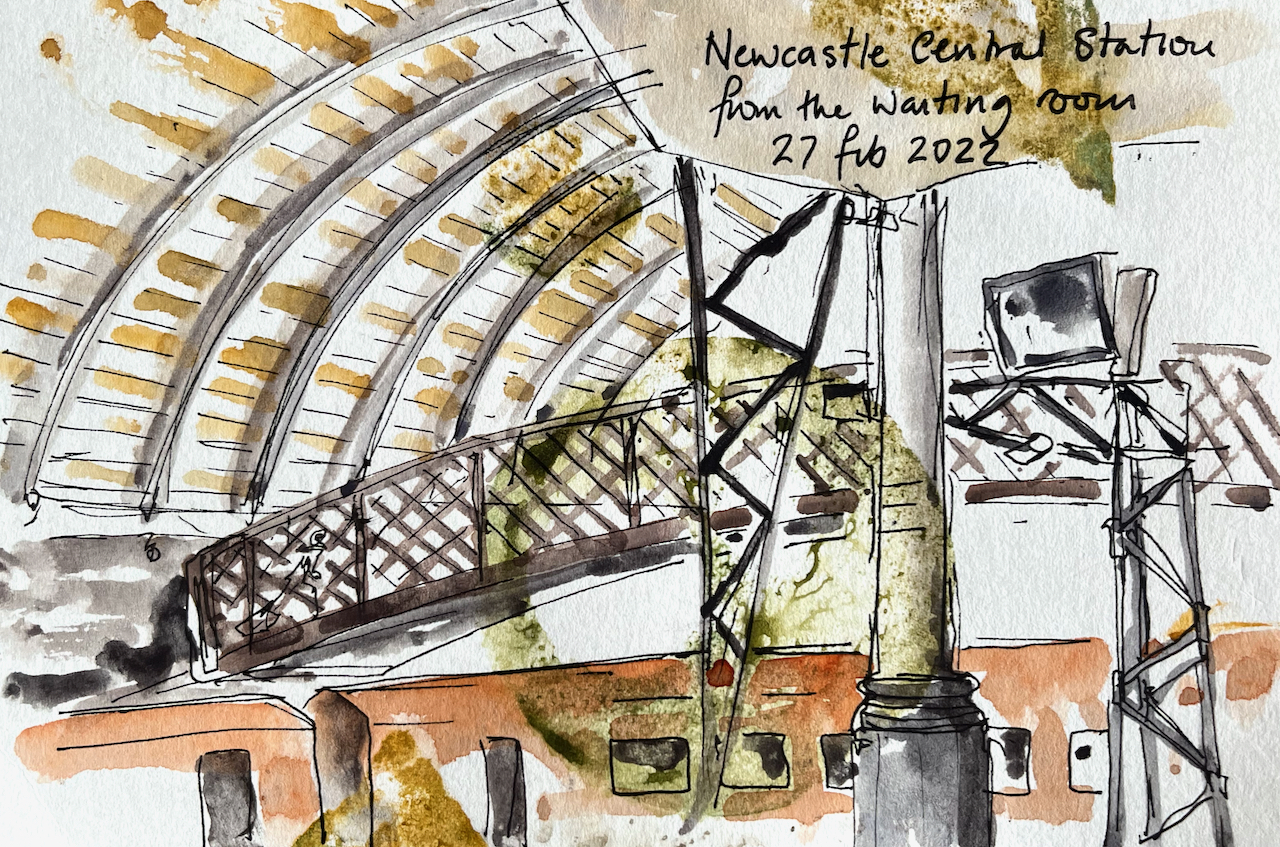
Train journey to Newcastle

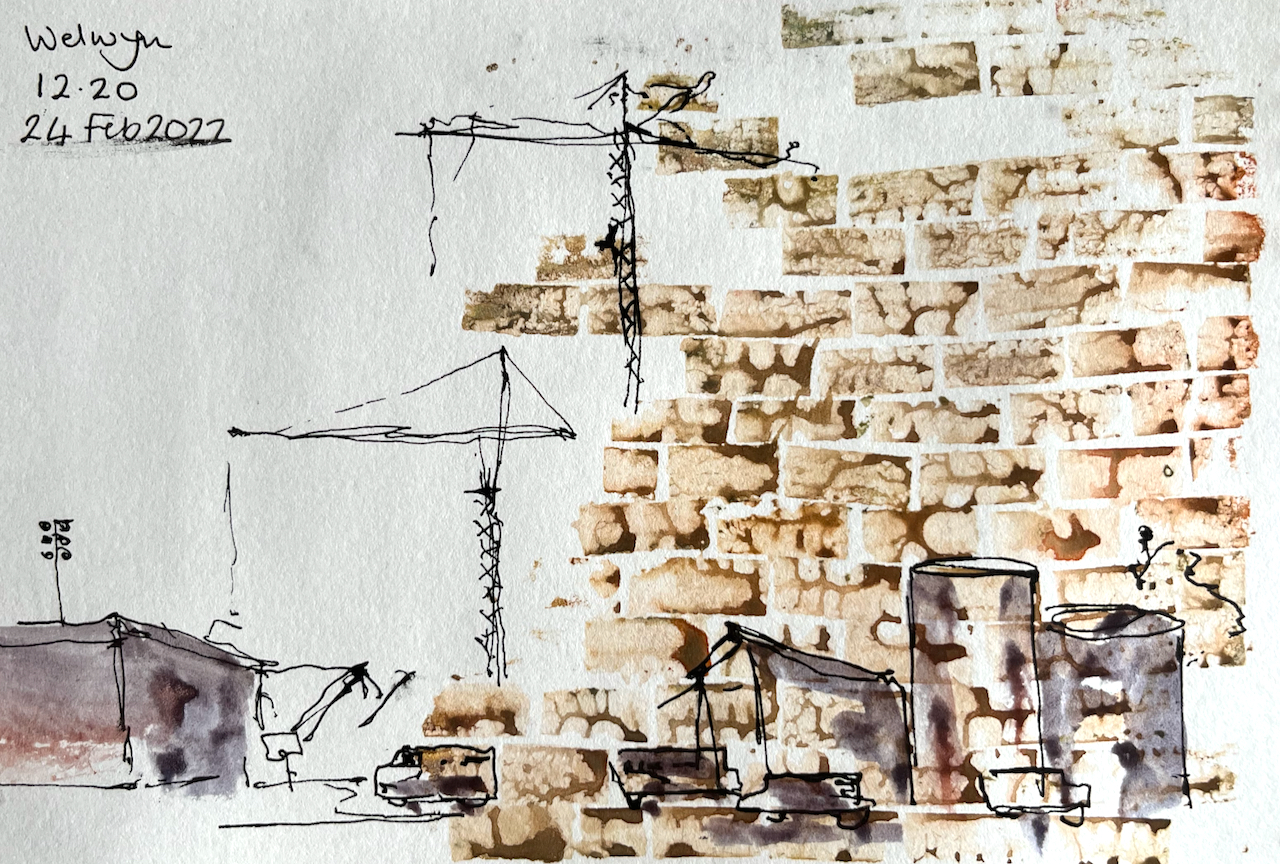
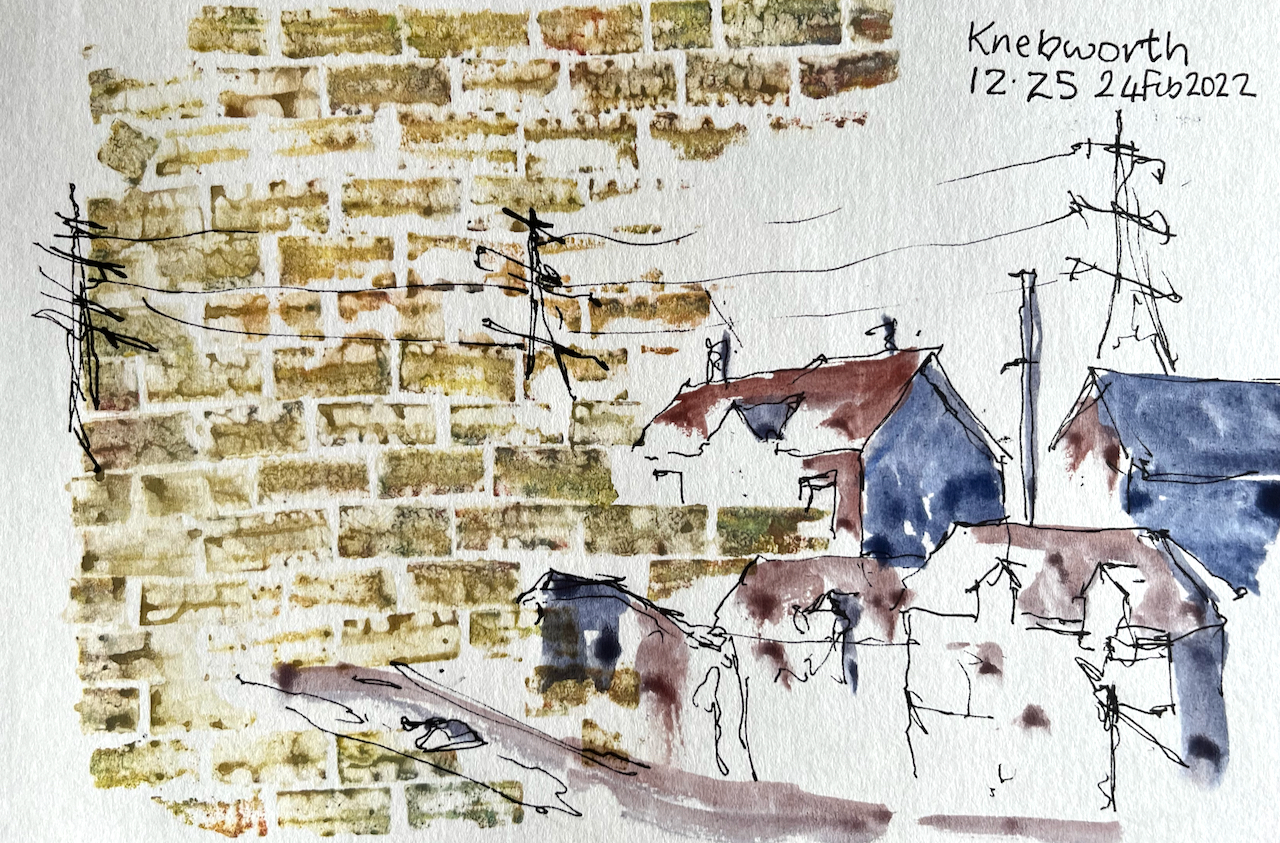
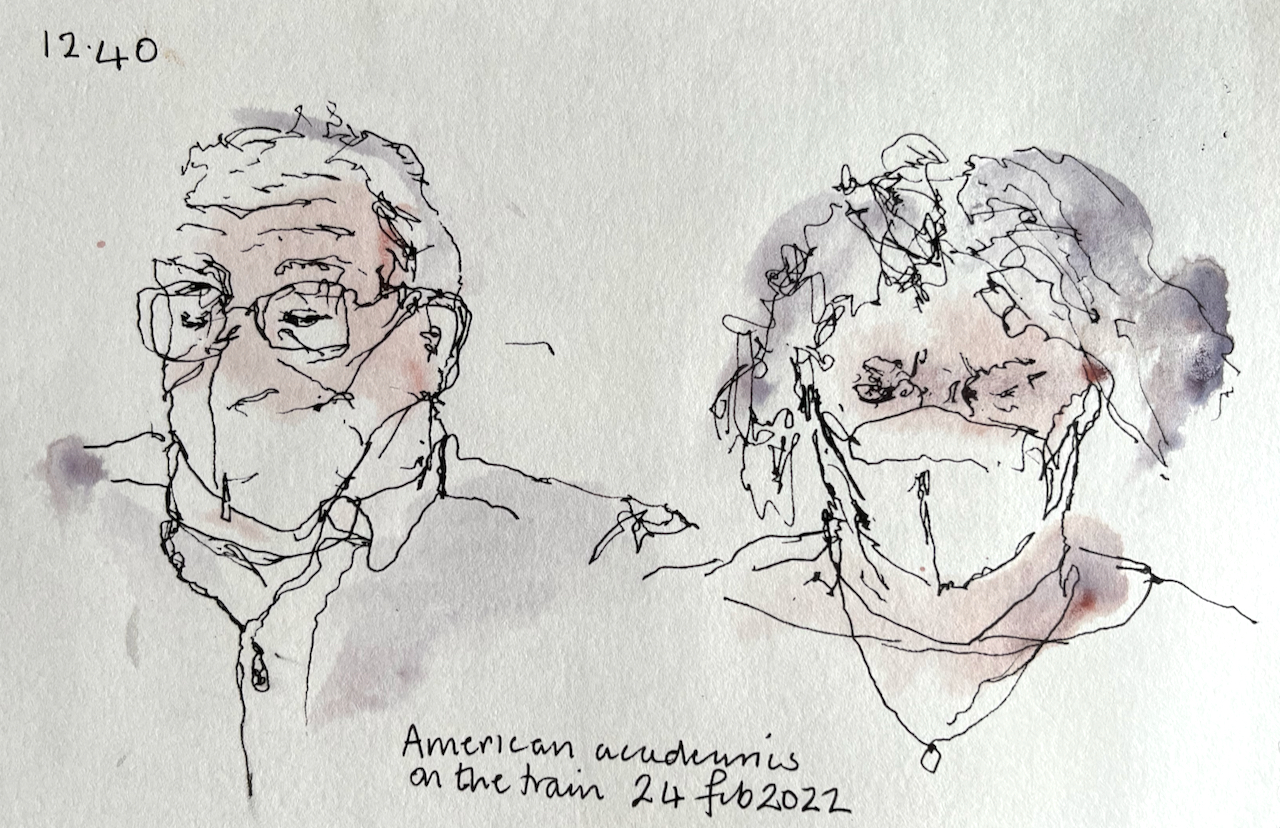
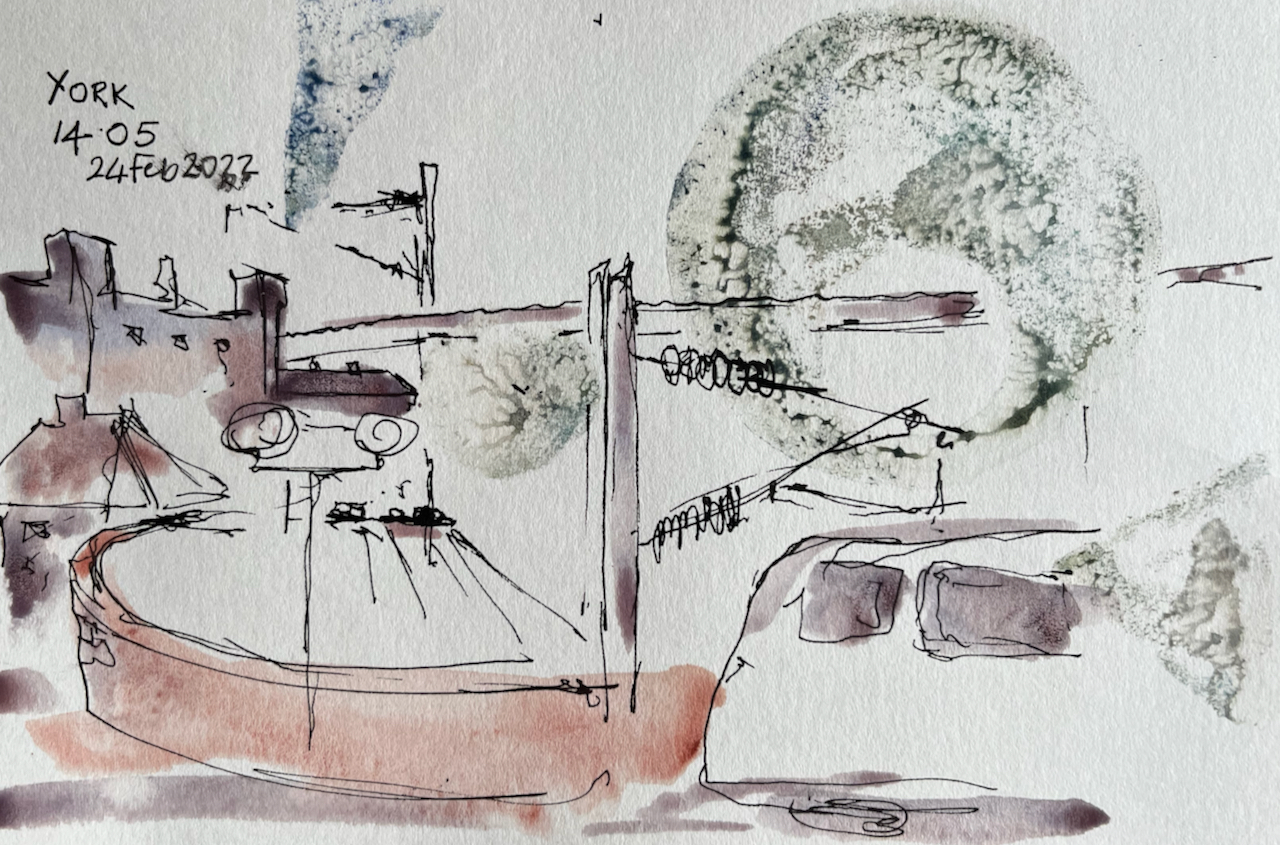
Before the journey, I printed patterns on the pages. Many of these drawings are done on the train.

I did drawings in a “Traveler’s Company” spiral bound notebook.

St Mary Le Bow

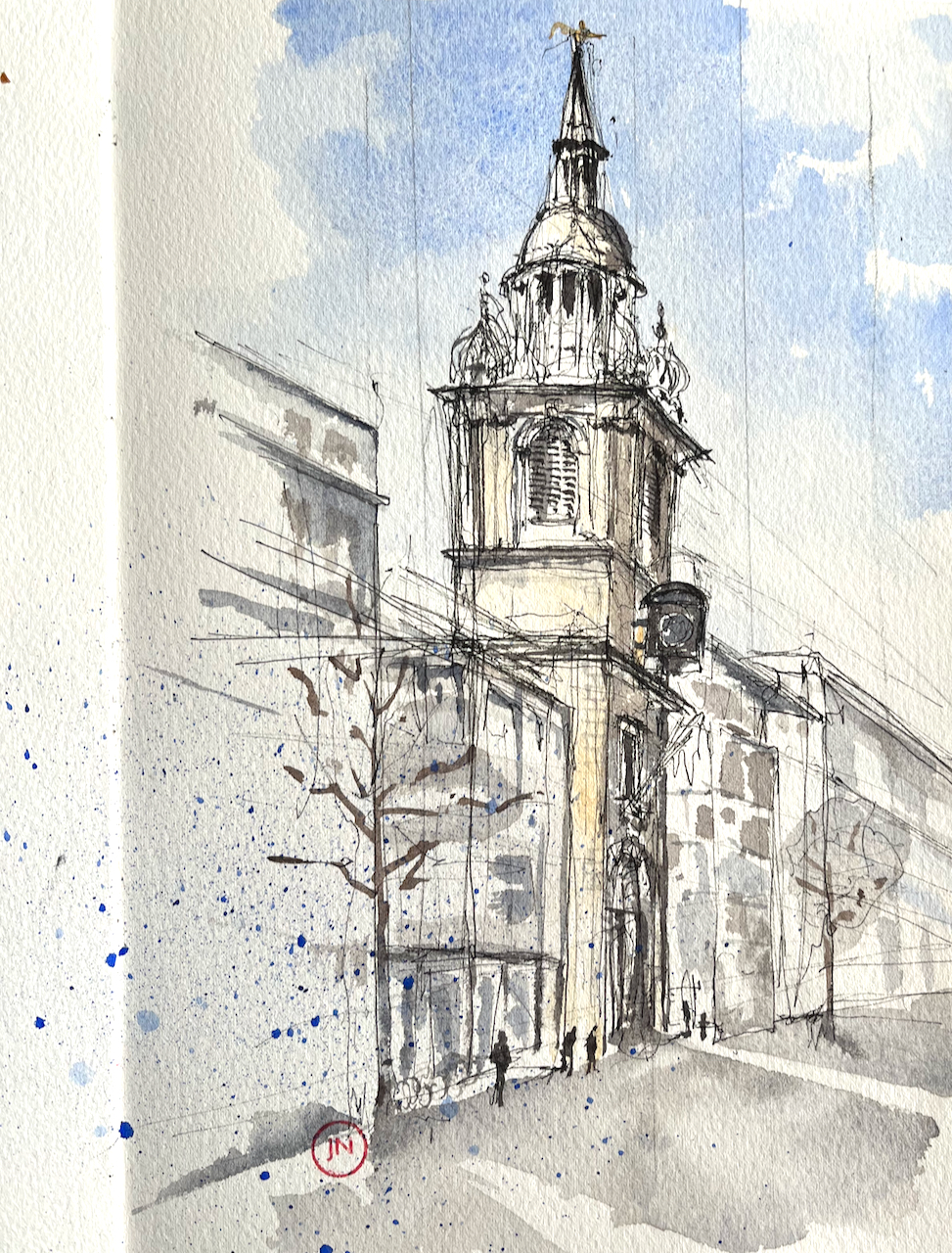
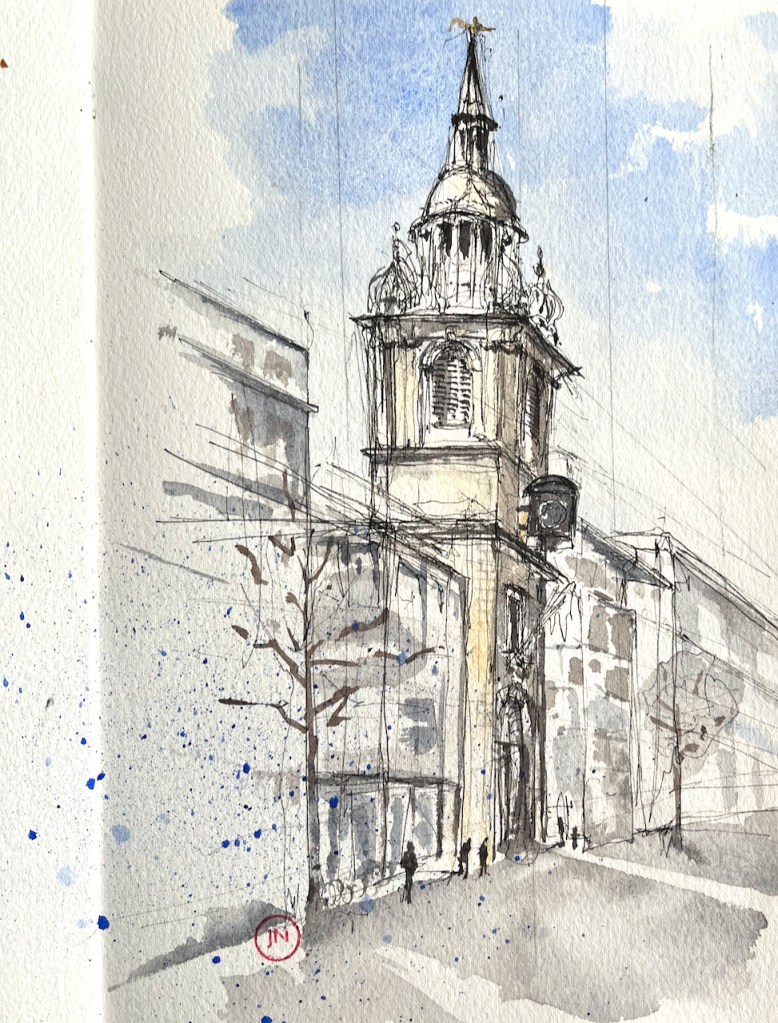
A quick sketch of St Mary Le Bow on Cheapside, London EC2

St Mary Le Bow, from Cheapside 23 Feb 2022 10″ x 7″ in Sketchbook 11

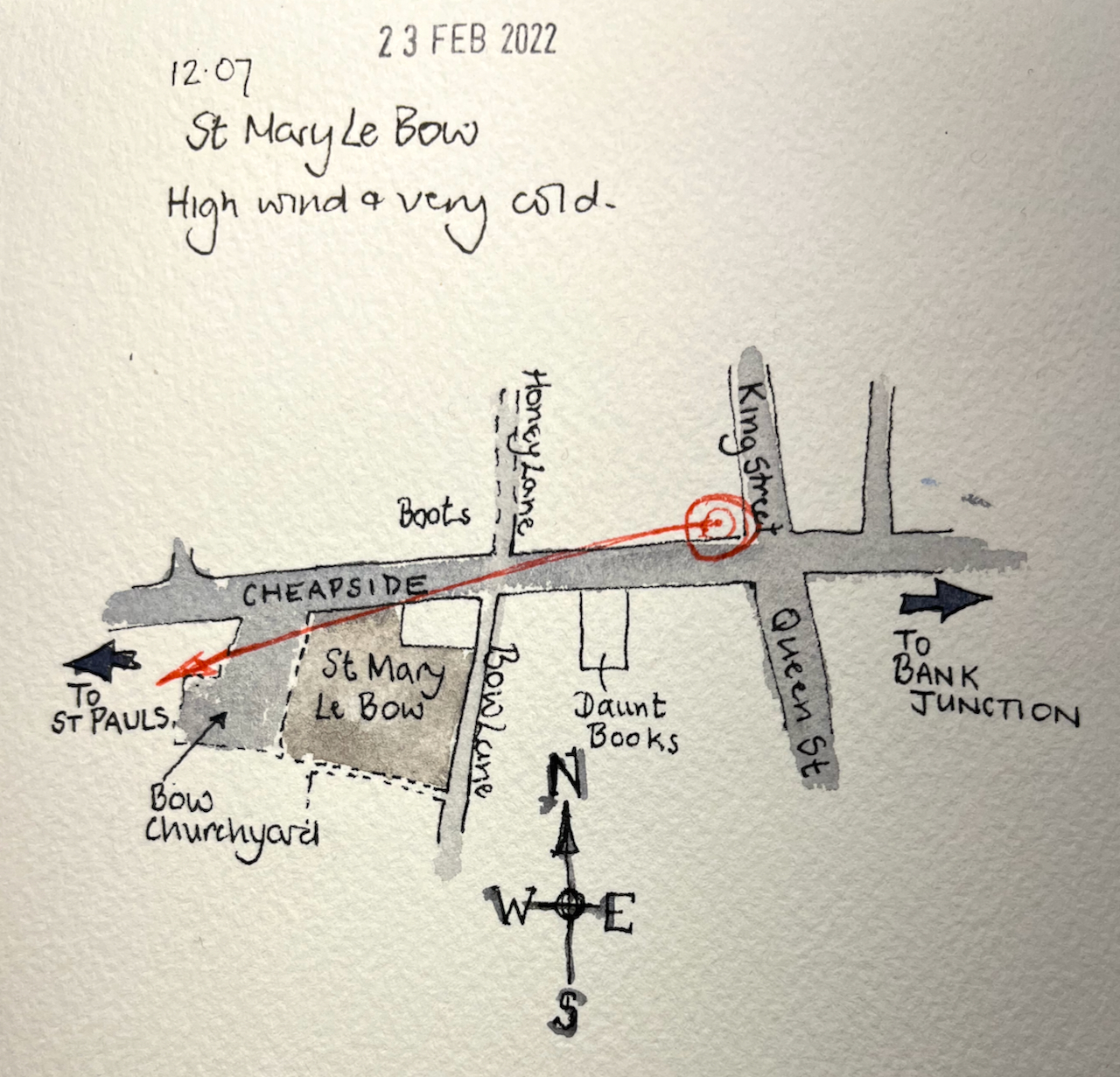
I drew this from the corner of Cheapside and King Street. This seemed like a really good place to stand, since there was a tall junction box next to me, and I could fit myself into a corner of a window. It rapidly became apparent that I chosen the windiest corner in London. My eyes streamed. Everyone coming round the corner took a short cut my side of the junction box, and funnelled past me, their heads down, phones in hand. I felt in the way.

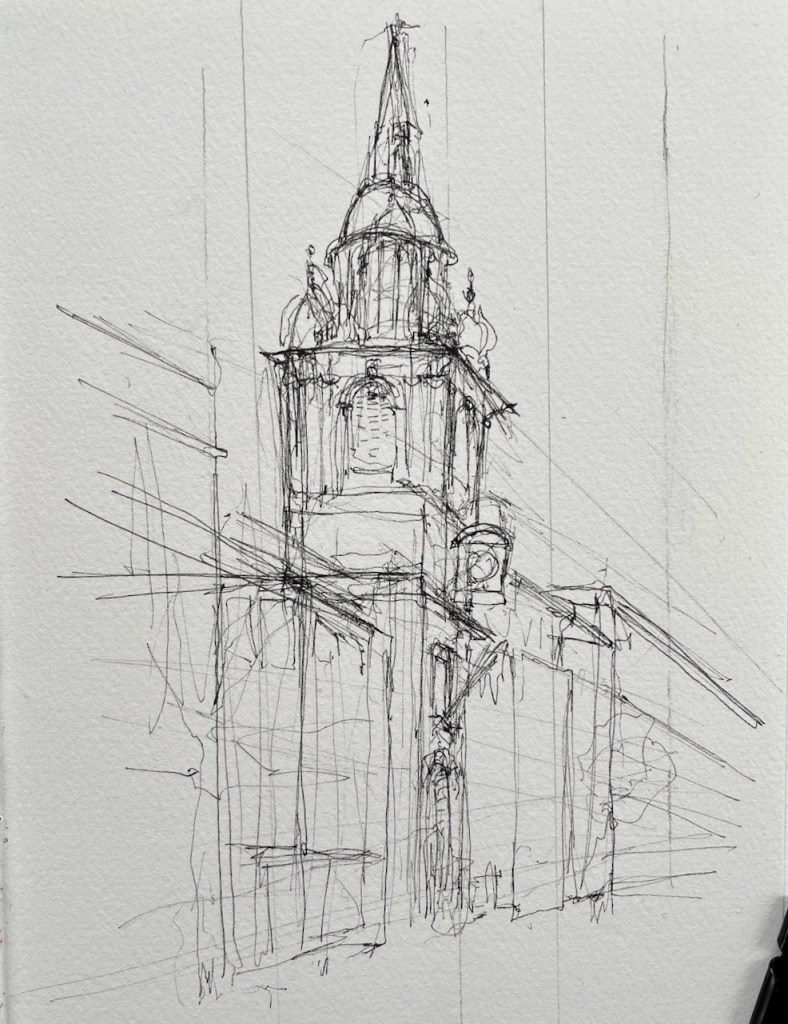
But I persisted. I finished the pen. I did not put the colour on using the convenient top of the junction box, as I had planned, since no paper was going to stay still for a moment in that wind. I retreated, and coloured it at my desk.